After visiting WAIC, I found that AI is also "looking for jobs".
From July 17 to 20, 2026, the World Artificial Intelligence Conference (WAIC) took place as scheduled. The 35℃ summer heat mingled with surging crowds flooding into the venue, making the exhibition halls packed shoulder to shoulder. Large models, humanoid robots, smart terminals... all kinds of cutting-edge achievements intertwined, and an atmosphere of AI accelerating into real life filled the entire exhibition space.
Attendees wandered between various booths, walking 20,000 to 30,000 steps a day, with snippets of casual chatter drifting by: "The robots' movements are getting smoother and smoother", "So young, so many of today's entrepreneurs are post-2000s."
Standing on site, one particularly distinct observation is that: The boundaries of AI are continuously expanding.
Aside from AI Native companies, consumer brands like Luckin Coffee and L'Oréal also appeared in the exhibition halls, while traditional industries including automotive, manufacturing, finance, and retail all showcased their AI achievements. AI is no longer just an independent track, but is becoming a foundational capability shared across all industries. It seems that no matter which field you are in today, it is difficult to enter this new wave of competition without engaging with AI.
Against this backdrop, the highlights of this year's WAIC are no longer merely "who released a new model", but who has truly integrated AI into specific industries and real scenarios. Different zones in the exhibition halls also reveal several increasingly clear development trajectories, reflecting new changes unfolding in the AI industry.
01
Robots Shift from Demonstrating Skills to Competing on Real-World Scenarios
Unitree Robotics' robots dancing, Fourier Intelligence's robots climbing stairs, Evolving Robots playing soccer... the embodied intelligence exhibition zone had crowds surrounding nearly every booth. Some people held up their phones to record videos, others exclaimed in amazement, and every complex movement from the robots drew rounds of applause. Compared to last year, the movements demonstrated by this year's robots are more fluid, stable, and visually impressive.
Beneath the buzz, there is one keyword repeatedly mentioned by enterprises — scenarios. While what actions a robot can perform is important, what matters even more is where exactly it can work, and whether it can genuinely create value.
Amid the numerous robot performances, Nzero chose to showcase a relatively basic grasping capability of their robots: picking up snacks from one storage bin and placing them into another, without any flashy extra interactions. "Our company's robots have already been deployed in commercial scenarios such as unmanned retail stores, unmanned front warehouses, data collection and training centers, and educational research institutions." During on-site exchanges, the staff repeatedly emphasized two terms: "implementation" and "practicality". They also noted that the company will continue to expand into areas like home services in the future, and has plans for international expansion — but only on the premise of identifying real demands that can form a closed commercial loop.
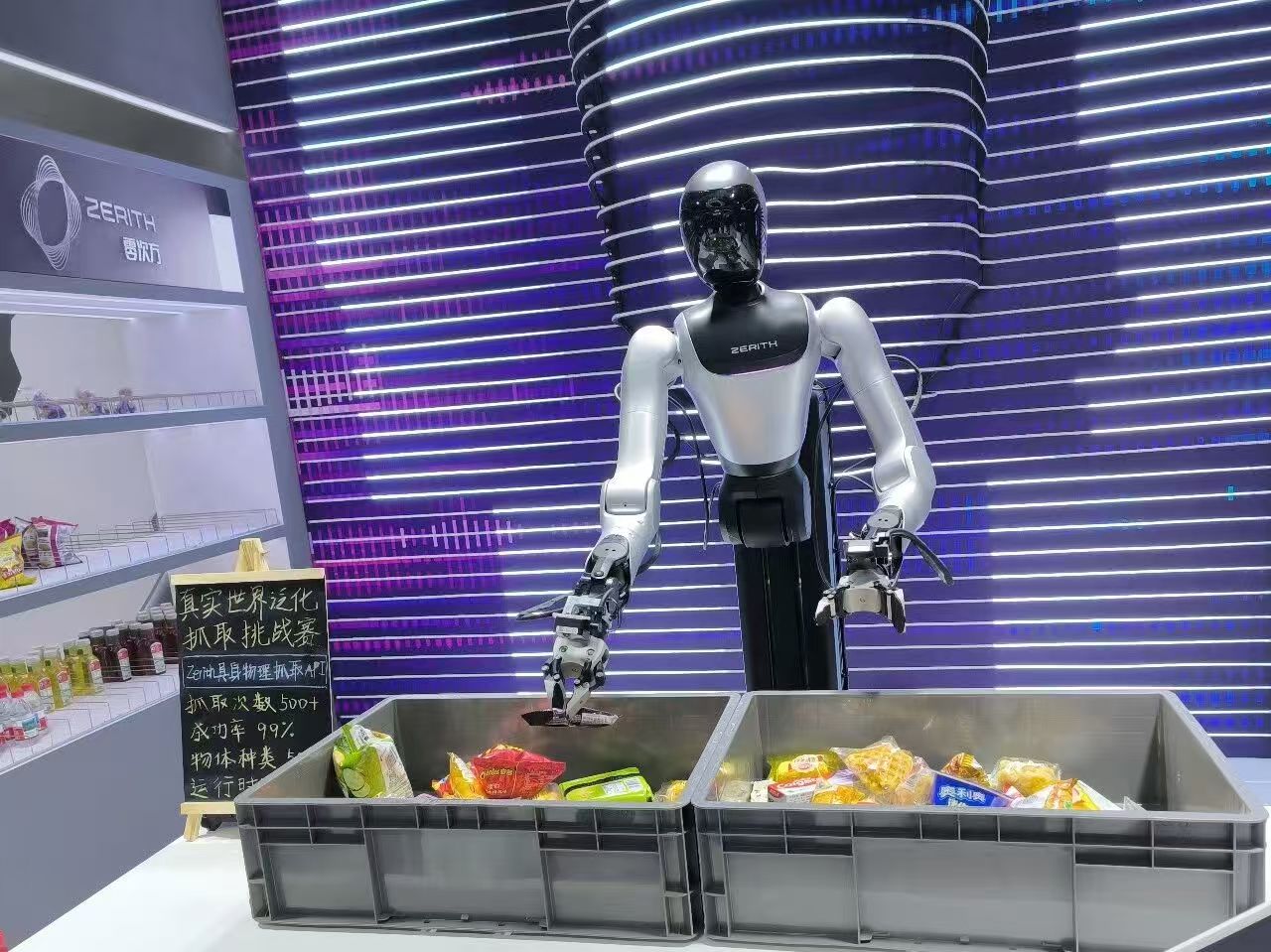
Nzero robot demonstrating its grasping capability
"Starting from the second half of this year, embodied intelligence will enter a phase of genuine competition centered on real scenarios. More and more clients from traditional industries will enter this market, and the industry will face a reshuffle." From Nzero's perspective, enterprises without real orders or support from commercialized scenarios will struggle to survive. The core of future competition will lie in who can be the first to deploy robots into factories, warehouses, and retail outlets, and truly establish a viable business model.
Explorations focused on scenario implementation can be seen everywhere across the embodied intelligence exhibition zone. Xixiang Technology brought their AI-powered cafeteria into the exhibition hall, demonstrating AI chefs' applications in the catering sector from automatic ingredient dispensing and unmanned cooking to automated meal serving. Ant Group built a smart pharmacy on site, where three robots collaboratively complete workflows including order processing, medicine retrieval, and packaging. Leju Robotics focuses on manufacturing scenarios such as industrial depalletizing and material loading, while Fourier Intelligence showcased real-world applications where their robots undertake security check guidance and consultation services at Guangzhou Metro. Meanwhile, Zhifang demonstrated robots making ice cream and beverages live on site... From factories and warehouses to pharmacies and retail stores, more and more enterprises are beginning to showcase which real work scenarios their robots can access, rather than only having them perform a single difficult trick.
Different from many fields that focus on industrial and commercial scenarios, Fourier Intelligence moved an entire "home" into the exhibition hall. A domestic living area made up of sofas, dining tables, and kitchen spaces attracted many visitors stopping to watch robots deliver items and assist with household chores. These familiar daily scenarios paint a more concrete picture of how robots can integrate into family life, with some people remarking emotionally: "It would be wonderful if robots could really take care of people someday."
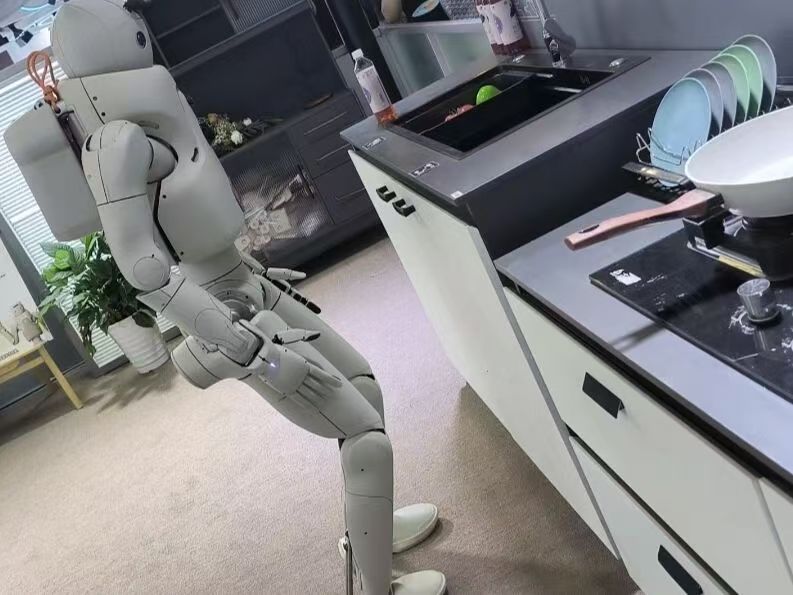
Fourier Intelligence's home scenario robot
However, home scenarios are not Fourier Intelligence's sole focus. On-site staff introduced that the company's rehabilitation medical robots have already entered professional settings such as hospitals and elderly care institutions.
As scenario implementation continues to advance, a growing number of embodied intelligence enterprises are also setting their sights on overseas markets. "We began planning our overseas footprint as early as 2018, and after obtaining EU certification, our business saw rapid growth in Europe." According to Fourier Intelligence, taking robots global is not just about selling products abroad — more importantly, the products must meet local standards, be deployed in real application scenarios, and generate sustainable commercial value.
This aligns perfectly with the viewpoint put forward by Xiaguang Society in their report *AI Fission: 2026 Insights on Global Growth Capabilities of Chinese Brands*, which states that "deep localization will become the key for brands to establish long-term roots in local markets, and the only core capability that cannot be easily replicated by AI." The report also points out that brands should "redo five things" in 2026, among which "redefining products" and "rebuilding compliance foundations" are precisely the core paths for current embodied intelligence enterprises as they shift from showcasing technical feats to deepening scenario operations, and from simply selling equipment to building overseas compliance systems.
Looking across the entire embodied intelligence exhibition zone, two major trends have become increasingly clear: on one hand, enterprises are accelerating efforts to deploy robots into real scenarios to verify their commercial value; on the other hand, many enterprises are treating overseas markets as a new growth direction.
02
Office Agents Have Become the Universal Solution
Entering the booths of major internet companies, Tencent, Baidu, and Alibaba all placed office Agents at the core of their displays. Rather than showcasing model parameters or generative capabilities, these products emphasize another priority — how to truly integrate AI into workflows, completing the full closed loop from understanding requirements, invoking tools, to delivering final results.
Tencent mainly exhibited WorkBuddy, an AI assistant tailored for office scenarios; Baidu brought their recently launched "Baidu Buddy", defined as a general-purpose intelligent agent that enables users to complete various execution tasks within a single Agent, such as making PPTs, analyzing spreadsheets, and organizing documents. According to staff descriptions, the biggest change to their product is not that it "chats better", but that it can understand requirements and directly deliver final outputs.
Alibaba newly launched Qwen Work, integrating multiple previously scattered AI products into a unified entry point that covers capabilities including document processing, PPT creation, website building, and audio-video generation, while deeply integrating with the DingTalk ecosystem to allow AI to directly access enterprise data and tools such as schedules, documents, and AI spreadsheets.
Continuing to explore further, you will find that many AI enterprises are also pursuing similar directions.
Iflytek focused on government and party administration office scenarios. Staff introduced that the core scenarios for their product are "three handling and two inquiries" — handling documents, handling meetings, handling affairs, policy inquiries, and data inquiries. "Given a document outline, the full official document can be generated in just a few seconds." However, Iflytek places greater emphasis on localization and information security, aiming to deploy Agents in scenarios with higher requirements for independent controllability.
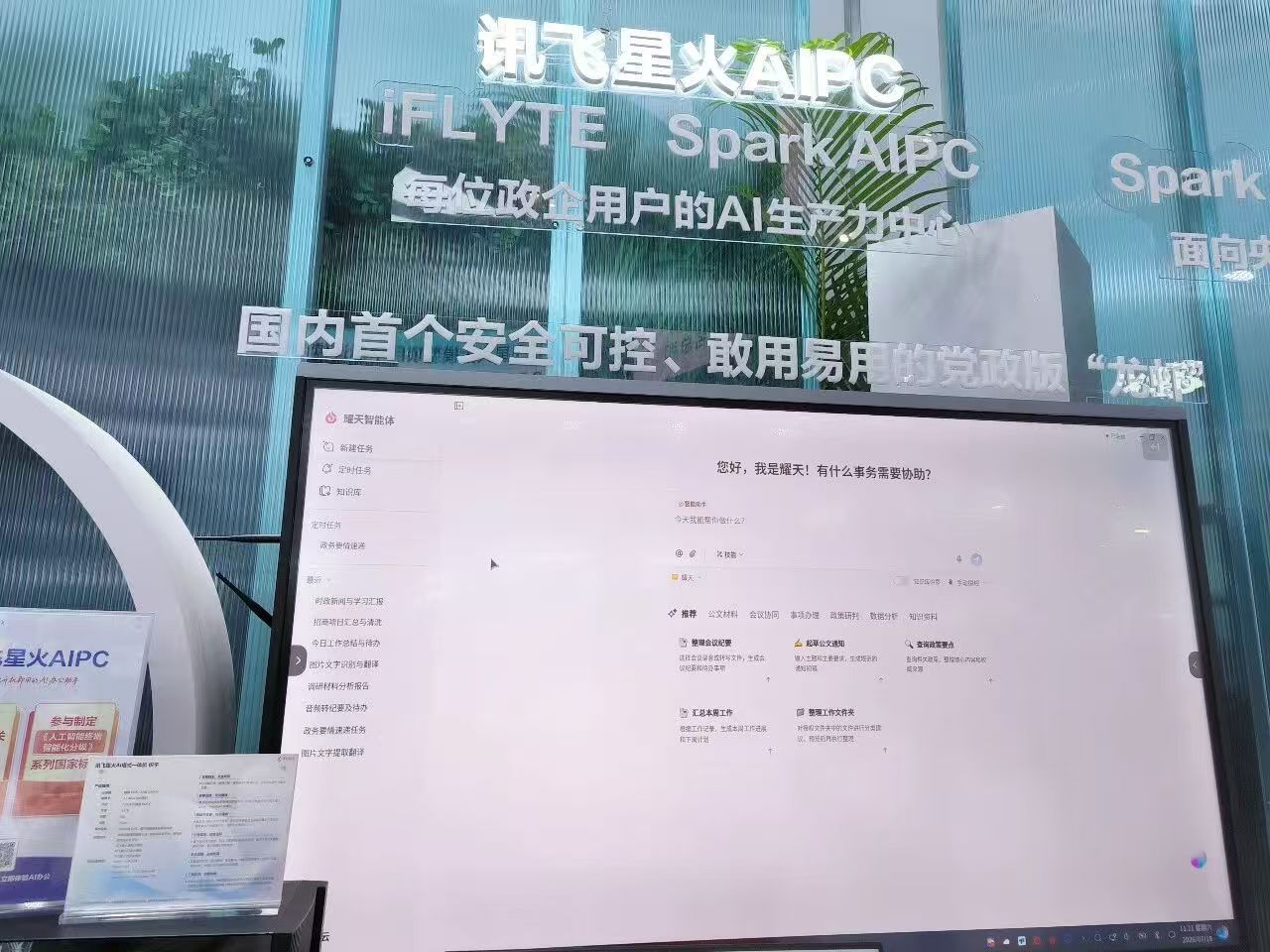
Iflytek's government administration version "Crayfish"
SenseTime targeted data analysis scenarios. "From Excel data processing to analysis, and then to PPT generation, the entire workflow can be completed." Staff demonstrated on site that after uploading a spreadsheet, the Agent can not only perform data cleaning and analysis, but also provide business insights and directly generate presentation materials, stringing together processes that previously required multiple different tools.
Intsig Information brought Agents into the supply chain field. Its product Qixin Huiyan Agent is mainly oriented toward enterprise risk control and procurement sourcing: "As long as a user describes their needs in one sentence, the AI can automatically complete risk analysis, find alternative suppliers, and provide analytical recommendations." Processes that previously required collaborative work across multiple departments such as risk control and procurement now form a closed loop on a single platform via the Agent, allowing AI to genuinely participate in enterprise decision-making.
Overall, although different enterprises have different entry points, their shared direction is very clear: AI is no longer just for chatting, but is starting to design Agents around specific workflows, and combine their respective strong ecosystems and industry capabilities to truly connect every office task segment together.
03
AI+ is Reinventing Every Industry
Apart from AI-native enterprises, an interesting phenomenon is that companies in sectors like finance, consumer goods, and beauty are all trying to redesign their products and services using AI.
Guotai Haitong showcased Lingxi, the securities industry's first AI-native smart APP. Staff emphasized that this is not "just adding an AI feature to a traditional APP — the entire product has been redesigned from the ground up based on intelligent agents and analytical methodologies." Centered around the full investment lifecycle, different business capabilities are encapsulated into multiple intelligent agents, covering market sentiment analysis, hotspot interpretation, anomaly analysis, intelligent order placement, and account diagnosis, spanning the complete pre-investment, during-investment, and post-investment process. "General large models can do a little bit of everything, but we hope to embed professional securities analysis methodologies to make our vertical intelligent agents more specialized."
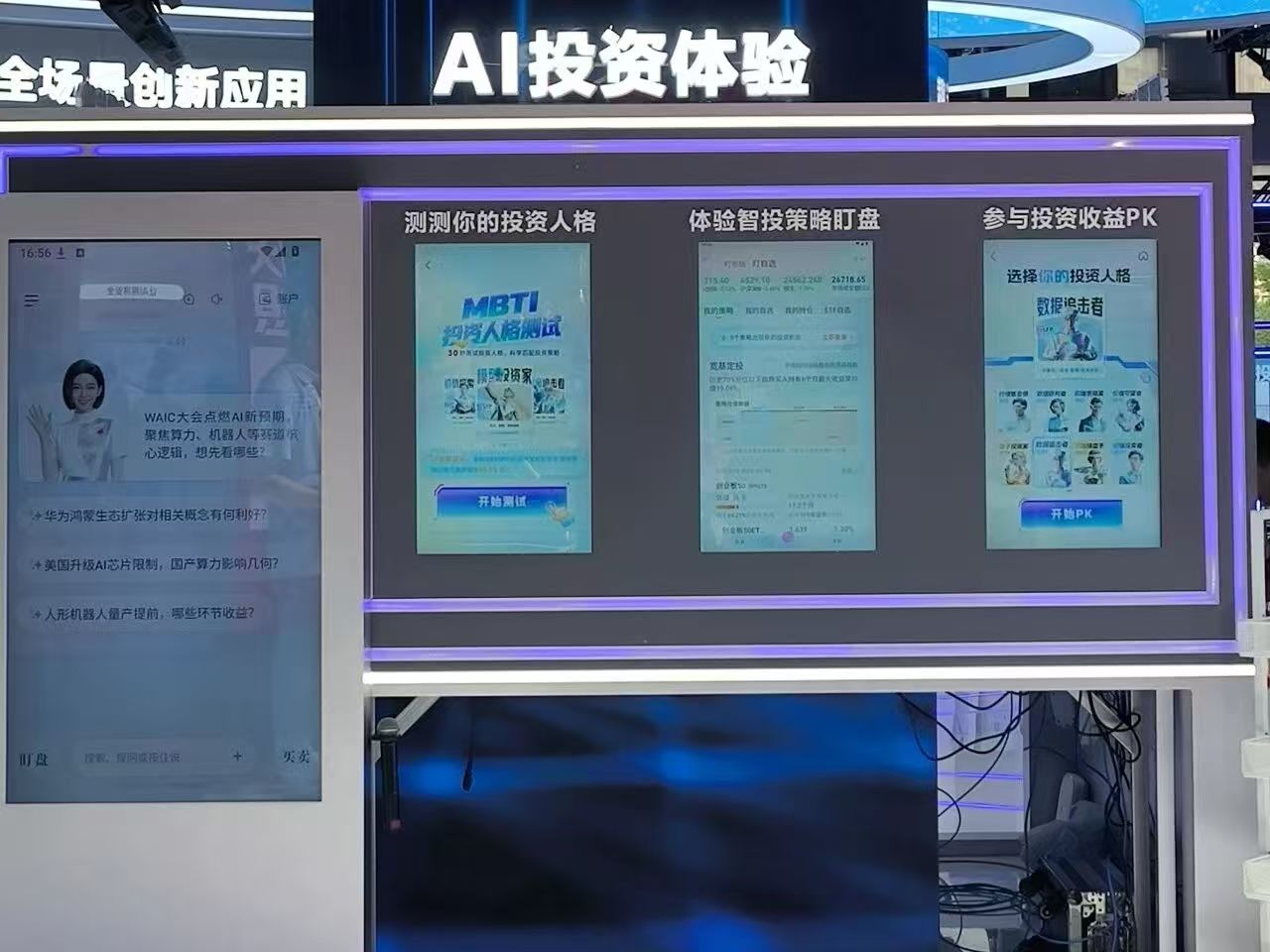
Guotai Haitong's AI investment application
L'Oréal brought AI into its R&D laboratories. One of the most popular on-site experiences was an AI skin analysis application: by taking a photo and filling out a lifestyle questionnaire, the system simulates the skin's condition 15 years later and provides targeted skincare recommendations. "This is only the part visible to consumers — the greater value lies in the R&D side." Staff explained, "In the past, scientists had to constantly test and screen ingredients, but now AI can predict in advance which ingredients will be more effective for people with different skin types and age groups. Leveraging years of accumulated data and algorithms, AI is helping R&D teams shorten development cycles and make personalized skincare solutions more precise."
Somewhat surprisingly, even Luckin Coffee has started working with AI. In the "Luckin · SmartBrew Full-Chain Cabin" exhibition zone, visitors can experience the "AI Lucky" intelligent agent. HarmonyOS users simply need to say to Xiaoyi: "Use Luckin to order a Coconut Latte", and the intelligent agent will automatically complete the entire process of product selection, ordering, payment, and meal pickup — no need to open the app and follow step-by-step operations, with zero app jumps throughout the whole process.
This makes it clear that AI+ is moving from concepts to real industry practices. Different enterprises are leveraging their own unique data, scenarios, and business advantages to explore AI application paths tailored to their respective industries.
04
Post-2000s Generation Takes the Entrepreneurial Stage
On the B1 floor of the exhibition hall, a large number of startups are gathered — this is the most dynamic area of the entire venue. The booths here are relatively small, but packed with young entrepreneurs, many of whom are recent post-2000s graduates with technical backgrounds. These people, with all kinds of imaginative ideas, are turning small daily pain points into new AI entrepreneurship directions.
"Blow-drying hair is such a hassle." The entrepreneurial story of Zero Zero Tech started from exactly this kind of everyday frustration.
Nearly all members of the founding team are post-2000s, and two of the female co-founders found that blow-drying their hair was "an extremely painful chore", so they came up with the idea of using a robotic arm to do the task instead. "In the future, we hope to build an integrated bathroom solution that can not only automatically dry hair, but also perform tasks like teeth brushing and shaving." The product is currently in the Demo stage, with capabilities for customized development based on specific requirements.
On the other side, a company named "IDontCare" has set its sights on the AI companionship track. Instead of building a simple AI-human chat interface, they aim to make AI a connector that enhances relationships between real people.
According to the company's founder, she initially developed an emotional companionship product targeted at young women, but accidentally discovered that a large group of heavy users were mothers using the app together with their children. This led her to redesign a parent-child Agent: children interact with AI through a plush toy, while parents can set growth goals and view growth diaries in the accompanying app. Based on the interactions between both parties, the AI helps parents discover their children's interests and developmental changes. "We don't just want AI to chat with kids — we want AI to help families have better real-world interactions."
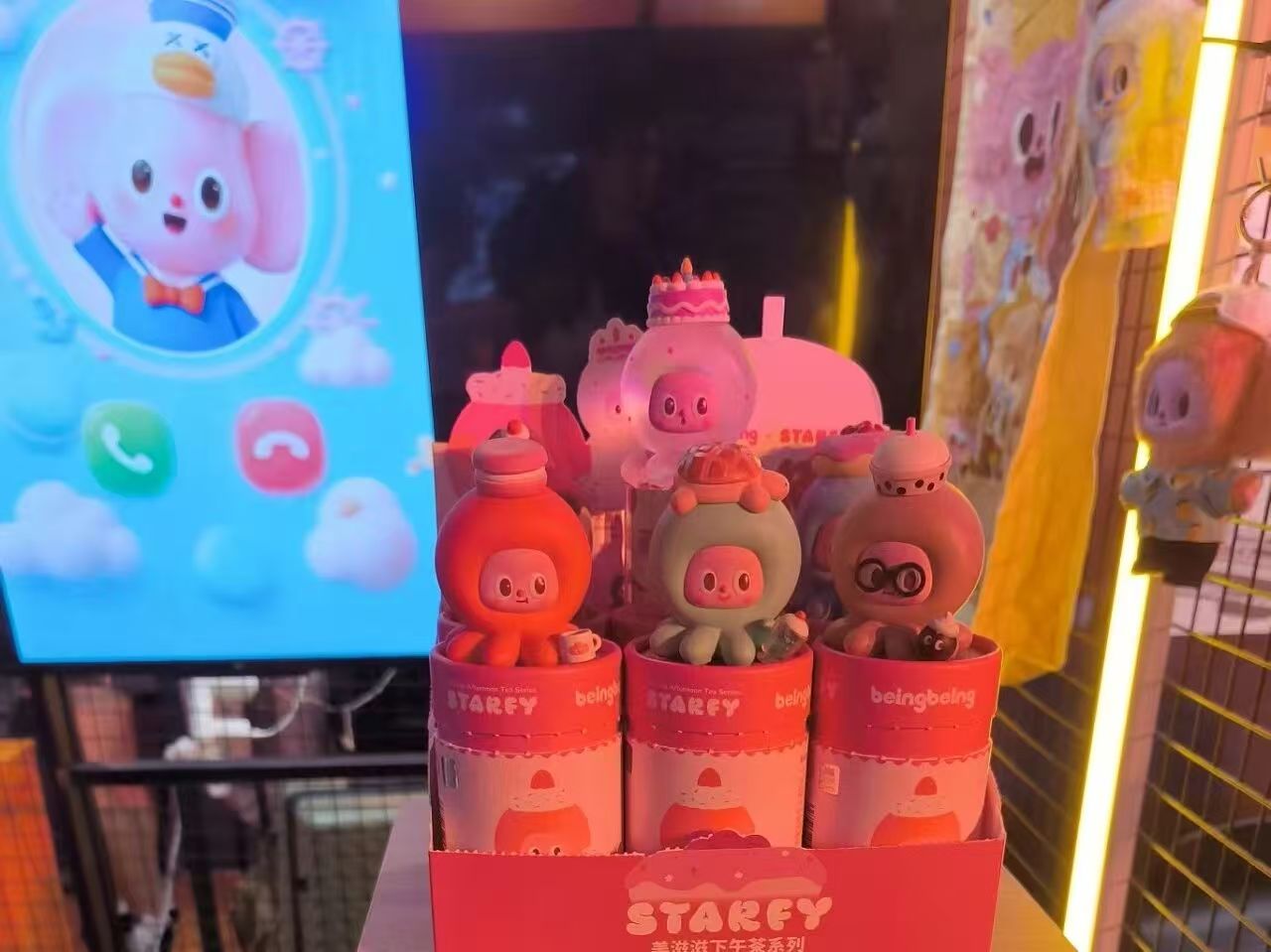
IDontCare's AI parent-child interaction product
Another startup focused on children's scenarios is Shanghai Rongyin. The founder, who just graduated from university not long ago, is already a serial entrepreneur. This time he showcased an AI magnifying glass on site. During the demonstration, he pointed the lens at a bottle of mineral water to take a photo: after the AI recognized the object, it not only voiced "this is mineral water", but also reminded the child to throw the empty bottle into the trash can, or pass the full water bottle to their hardworking parents.
"Telling children what an object is is not difficult — we want to teach children how to treat the world." To achieve this, the product incorporates a "character guidance design", allowing AI to not only identify objects, but also provide children with more positive value guidance.
Zhejiang Paike also chose the AI companionship direction, developing an AI trendy toy product. According to staff, the product consists of hardware, a cloud emotional brain, and a "digital soul" in the app. After purchasing it, users essentially own a digital companion that can grow continuously over time. "The more you chat with it, the better it understands you, and its personality will gradually develop." This product integrates multiple mainstream large models, with capabilities including sentiment analysis, intent recognition, and voice interaction, aiming to make companionship feel more authentic and sustainable.
