Insights into the darkest hour of China's domestic new energy vehicle startups from Tesla's Q2 financial report
On July 22 Eastern Time, Tesla released its Q2 2026 financial report, posting total revenue of $28.24 billion, a 26% year-over-year surge that far exceeded market expectations. Among this, automotive business revenue reached $20.52 billion, marking a 23% year-over-year increase.
However, the key detail is that net profit attributable to shareholders stood at only $1.111 billion, down 5.21% year-over-year, with an operating margin of merely 1.4%.
After the earnings release, as of the screenshot timestamp on July 23, Tesla's stock price dropped 6.10% in a single day, indicating investors are not optimistic about this "revenue-beating" financial result.
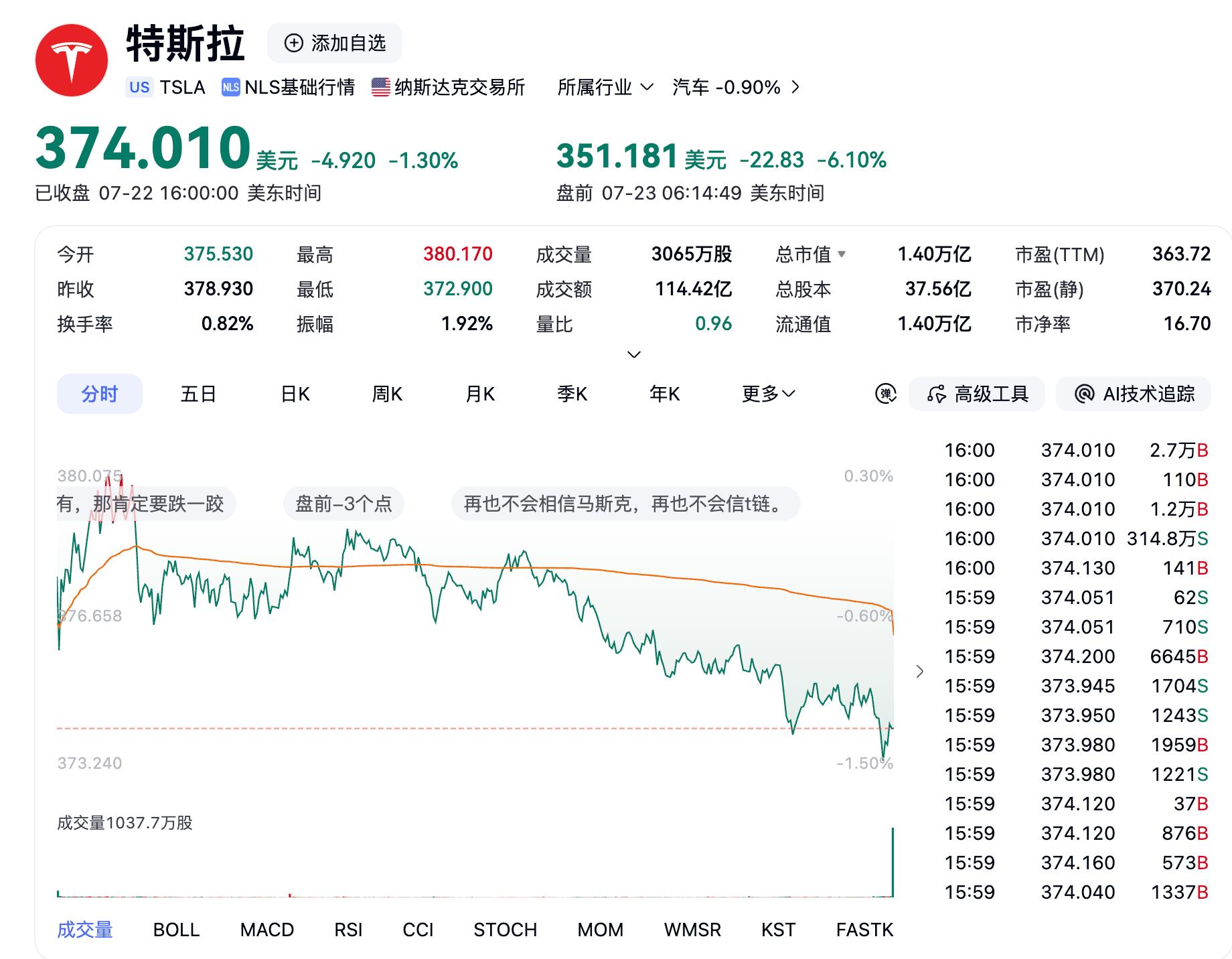
(Source: Screenshot from Baidu Stock Connect)
In terms of new vehicle production and delivery, Tesla's global factories produced a total of 451,000 vehicles in Q2, representing a year-over-year increase of over 10%, with deliveries exceeding 480,000 units, up roughly 25% year-over-year.
Despite the sharp rise in both sales volume and revenue, Tesla's net profit attributable to shareholders declined year-over-year for two core reasons: first, Tesla adopted a "price-for-volume" strategy to boost sales, squeezing per-vehicle profit margins, with gross margin falling to 16.8%; second, Tesla's business is undergoing full-scale expansion, with massive capital invested in projects such as FSD training, Cybercab autonomous taxis, Optimus humanoid robot production lines, and battery factories.
From the perspective of EV Insider (ID: dianchetong233), it is the first factor that forced Tesla to explore new businesses, and the huge investment required for new business development in turn led to a continuous decline in Tesla's net profit attributable to shareholders. One of the reasons for Tesla's price-for-volume approach comes from competitive pressure.
Domestic Automakers "Besiege" Tesla, Cementing Its Status as the "Arch-Rival"
In China's new energy vehicle industry, Tesla has long played the role of the "arch-rival". Many automakers including XPeng and Xiaomi frequently mention Tesla at new car and new technology launch events, drawing comparisons to the Model Y and FSD.
For example, at the Xiaomi YU7 GT launch event some time ago, Lei Jun, Chairman of Xiaomi, stated that when the YU7 was released, he believed there was a strong chance to beat Tesla. However, in the 10-month monthly sales "showdown" that followed, the Xiaomi YU7 posted 8 losses and only 2 wins against its rival.
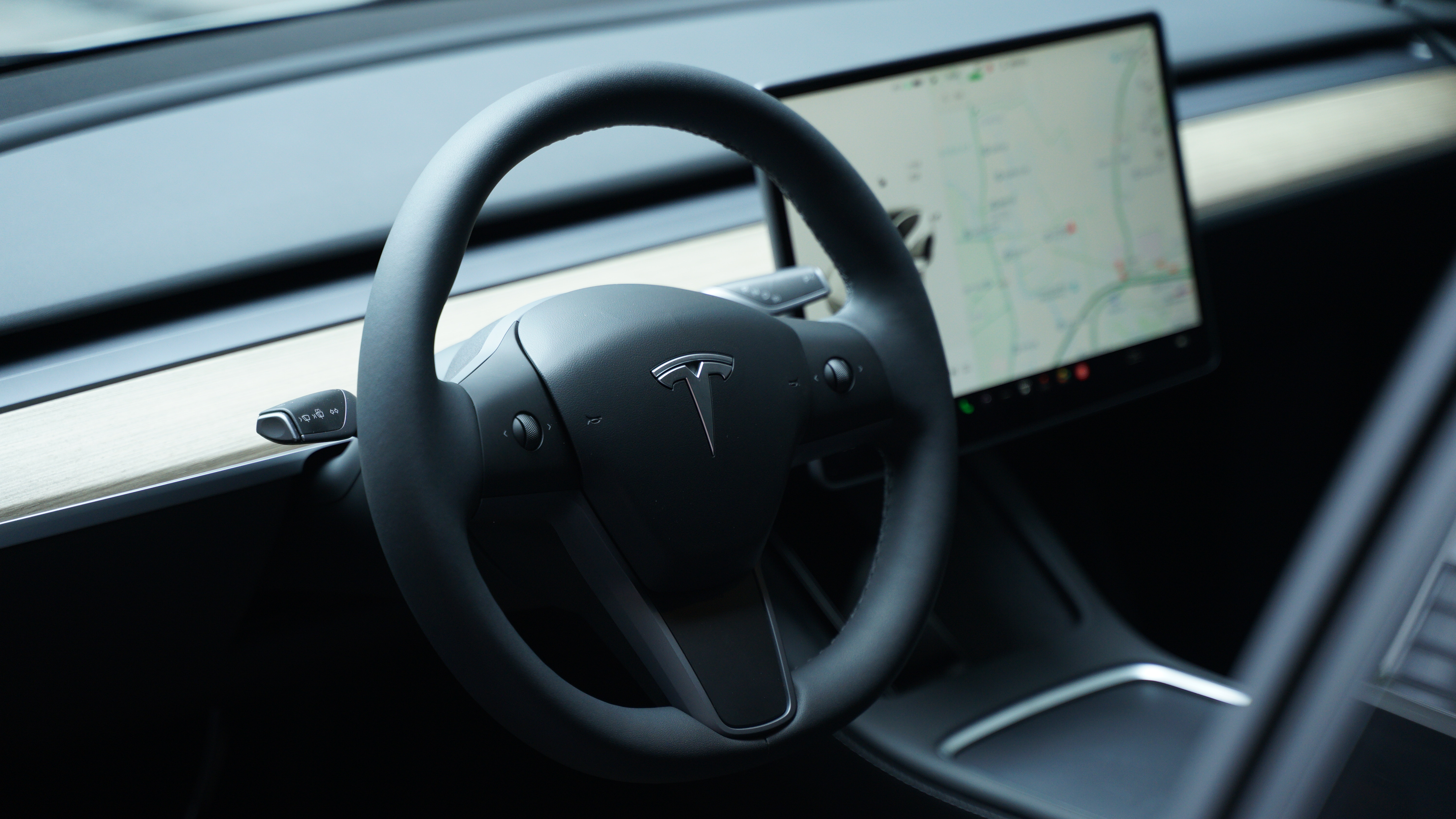
The reason why Tesla's Model Y receives so much attention from competitors is that since its launch, it has long occupied the top spot in SUV sales rankings, only being surpassed by other models in a handful of months. It is undoubtedly Tesla's core model.
(Source: Photographed by EV Insider)
Since Tesla has not released official segmented market sales data, we refer to statistics from Auto Pacific. In the domestic market in Q2 this year, the Model 3 recorded 35,602 cumulative deliveries, while the Model Y reached 90,555 cumulative deliveries, a very noticeable gap.
While the Model 3 is also a regular top-5 performer in sales rankings, it is far less impressive than the Model Y.
Targeting Tesla's core Model Y, domestic automakers have launched numerous sporty, spacious models to compete against it, including the Xiaomi YU7, Luxeed R7, and Zeekr 001.
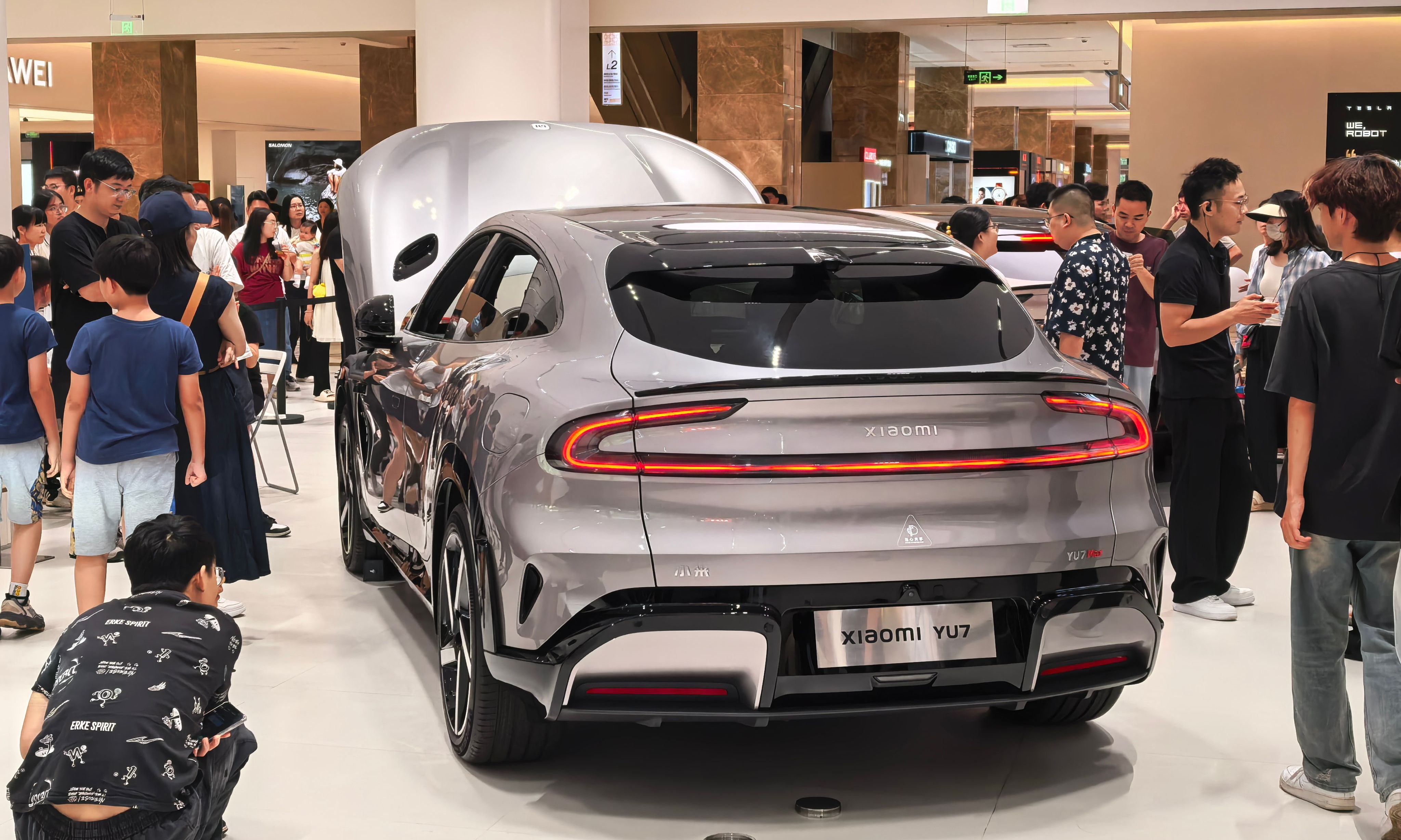
Among these, the Xiaomi YU7 is the strongest rival to the Model Y. The two products have similar pricing and positioning, and both have a CEO with extremely high online popularity. Elon Musk can be regarded as the world's top internet celebrity, while Lei Jun is known in China as the "Godfather of the Internet". Both have huge fan bases, with more than enough consumers willing to support them.
(Source: Photographed by EV Insider)
This is precisely why the Xiaomi YU7 managed to surpass the Model Y in a few months and claim the SUV sales crown.
Although the Model 3's sales are not as high as the YU7, it also faces no shortage of competitors. Models including the Xiaomi SU7, XPeng P7, Luxeed S7, Zeekr 001, and Avatr 12 all compete directly with the Model 3. Moreover, after the new version of the Xiaomi SU7 launched, its sales surged, firmly outperforming the Model 3.
Being treated as a competitor by a large number of automakers clearly demonstrates Tesla's strength and the excellence of its products. Yet Tesla's net profit continues to decline, showing just how severe the situation the entire automotive industry is facing has become.
From Profit to Loss: The Automotive Industry Enters Its "Darkest Hour"
Even a global giant like Tesla is seeing its net profit decline, let alone domestic automakers.
Li Auto, the first new EV startup to turn a profit, slipped from profitability into a loss in Q1 this year, with losses reaching as high as 2.29 billion yuan. Seres, which staged a comeback and became profitable relying on its AITO brand, estimates a net loss attributable to shareholders of 1.5 billion to 1.8 billion yuan in H1 this year, with a non-GAAP net loss of 2.2 billion to 2.5 billion yuan.
As the world's top-selling new energy vehicle manufacturer, BYD recorded 700,463 new energy vehicle sales in Q1 this year, down 30.01% year-over-year. Its net profit attributable to shareholders was 4.085 billion yuan, a 55.38% year-over-year drop; its non-recurring profit and loss-adjusted net profit attributable to shareholders was 4.148 billion yuan, down 49.24% year-over-year.
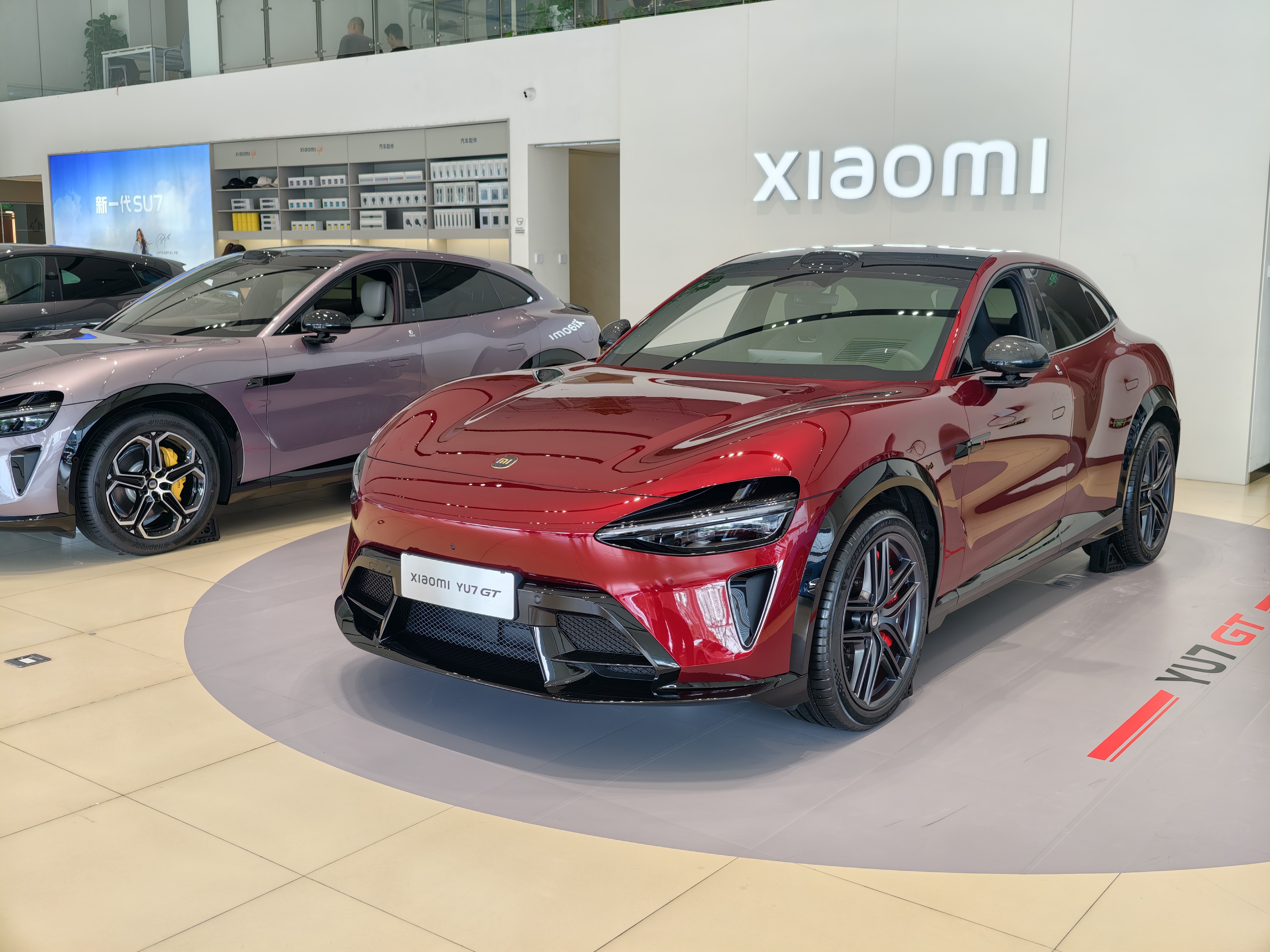
Xiaomi Auto, which carries high expectations, is also facing a tough situation. Financial reports show that in Q1, Xiaomi's automotive and AI innovation business posted a single-quarter loss of 3.1 billion yuan, after recording a profit of 900 million yuan in 2025.
(Source: Photographed by EV Insider)
Leapmotor is one of the few automakers whose sales are still growing sharply, but the company, whose core competitiveness lies in cost performance, is struggling amid rising prices of storage chips and lithium carbonate. Financial information shows that in Q1 this year, Leapmotor's gross margin was only 9.4%, down 5.5 percentage points year-over-year, with a net loss attributable to shareholders of 390 million yuan — three times the loss in the same period of 2025.
The sharp net profit decline and swing to losses across multiple automakers stem from three main reasons: first, the price war forced automakers to cut promotions and continuously squeeze per-vehicle profit margins. Li Auto's gross margin fell to 6.1% in Q1 this year, a world away from its 18.7% full-year gross margin last year; second, market consumption potential has been overdrawn, with both domestic passenger vehicle production and sales declining year-over-year in H1 this year; third, the prices of automotive-grade storage chips and lithium carbonate have continued to rise. The price of automotive-grade storage chips has increased by nearly 400%, while battery-grade lithium carbonate has soared from 80,000 yuan/ton to 180,000 yuan/ton, before recently falling back to around 150,000 yuan/ton.
Faced with this situation, domestic automakers are trying to ease pressure by expanding into overseas markets. Brands including BYD, Xiaomi, Li Auto, XPeng, NIO, Great Wall, and Leapmotor are all accelerating their overseas expansion.
Even as BYD's new vehicle sales fell sharply in Q1, its revenue only declined by 11.82%, which is closely related to the fact that overseas sales account for nearly half of its total sales. However, boosting revenue via overseas markets does not necessarily mean earning more money.
What EV Insider (ID: dianchetong233) fears most is that domestic independent brands will replicate the domestic market situation overseas: endless price wars will infinitely squeeze profit margins, and combined with export tariffs, transportation, and sales costs, this will leave domestic brands unable to make money either at home or after expanding abroad.
It is not just domestic independent brands. Influenced by the new energy trend, automakers around the world are having a hard time.
Two giants, Volkswagen and Toyota, have announced plans to streamline their product lineups. General Motors and Ford have axed a large number of pure electric vehicle projects. Cadillac, facing sluggish new energy vehicle sales, has decided to revive the gasoline-powered XT6. Stellantis, the world's fourth-largest automotive group, has pinned almost all its hopes on Leapmotor, trying to leverage Leapmotor's strength to gain a say in the European and American markets.
Car Sales Are No Longer Profitable, Automakers Set Sights on Robotaxi and Robots
Despite the net profit decline, EV Insider (ID: dianchetong233) still found some bright spots in Tesla's financial report.
Elon Musk once said that in the future, profits will no longer come from hardware, but from software. Tesla is living up to this vision: in Q2, revenue from services and software surged 50% year-over-year, and FSD subscription users increased to 1.48 million.
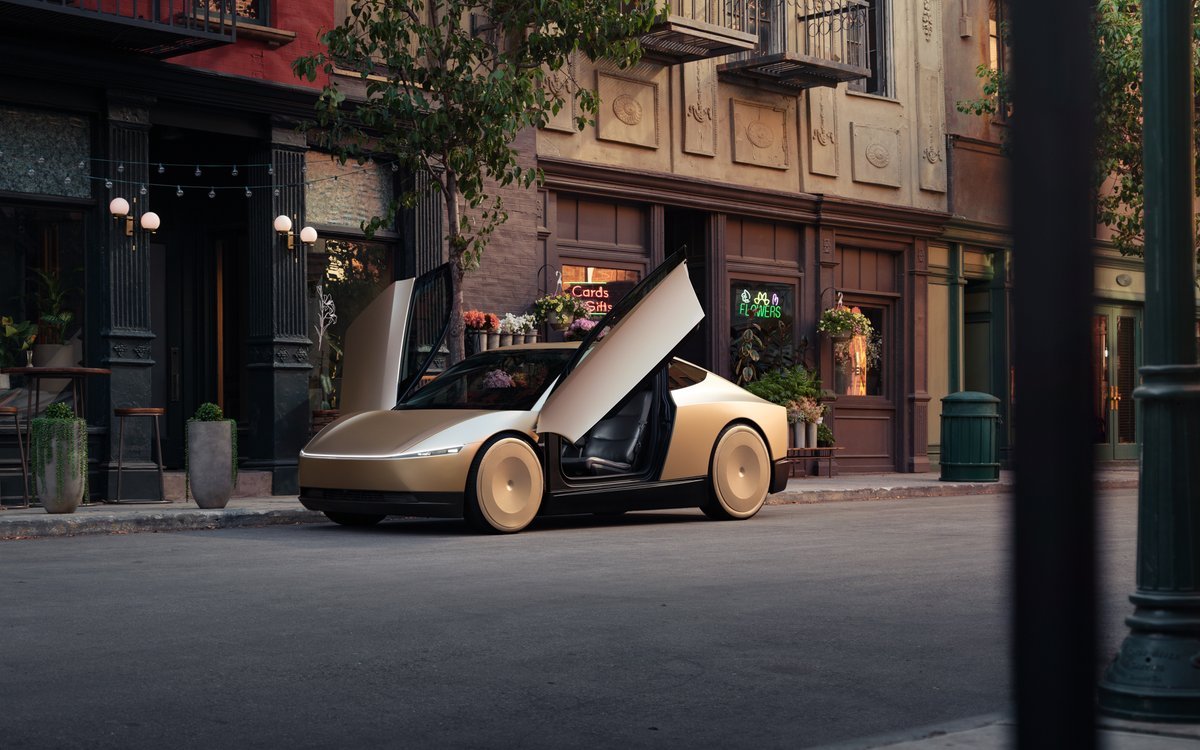
Moreover, Tesla's Robotaxi service has been widely deployed in Texas, and in July it expanded to cities including Miami, Orlando, and Tampa. The Cybercab, a vehicle purpose-built for Robotaxi operations, has also entered small-batch production and road testing.
(Source: Tesla)
In addition, preparations for mass production of the Optimus humanoid robot have been confirmed, with small-scale production expected to start at the Fremont factory later this year. Tesla's energy storage business is developing rapidly: in Q2, revenue from the energy storage and solar energy segments grew 13% year-over-year, giving Tesla great confidence as the third-generation Megapack is about to enter production.
According to Tesla executives, humanoid robots, Robotaxi, energy storage, and chips have become the four major business segments outside the automotive business, with chips primarily providing local computing power support for vehicles and humanoid robots.
Robotaxi itself is built on Tesla's vehicle production and manufacturing capabilities, as well as its autonomous driving technology, complementing the automotive business. The large AI model for humanoid robots is also closely related to intelligent driving technology. The vast amount of road and behavioral data collected by millions of Tesla vehicles on the road will provide sufficient data support for Tesla to train AI large models adapted for robots.
Domestic automakers are naturally unwilling to lag behind. Although most companies do not have as broad a business scope as Tesla, they are also working hard to develop new revenue streams.
Humanoid robots are an area the entire industry is exploring. Executives at BYD have confirmed that the company is developing humanoid robots. Li Auto has added three secondary departments responsible for embodied engineering, embodied interaction, and embodied behavior technology R&D, with its first-generation humanoid robot codenamed "Nexus". XPeng, which has long been passionate about cutting-edge technology R&D, has already showcased its Iron humanoid robot, with the goal of putting it in offline stores next year.

(Source: XPeng)
In the Robotaxi field, XPeng is also one of the automakers that has made the most progress. Its top-tier flagship GX has a version equipped with four Turing chips purpose-built for Robotaxi, delivering a total computing power of up to 3000 TOPS. He Xiaopeng stated that in H2 this year, XPeng's Robotaxi service will first launch in Guangzhou, the location of its headquarters.
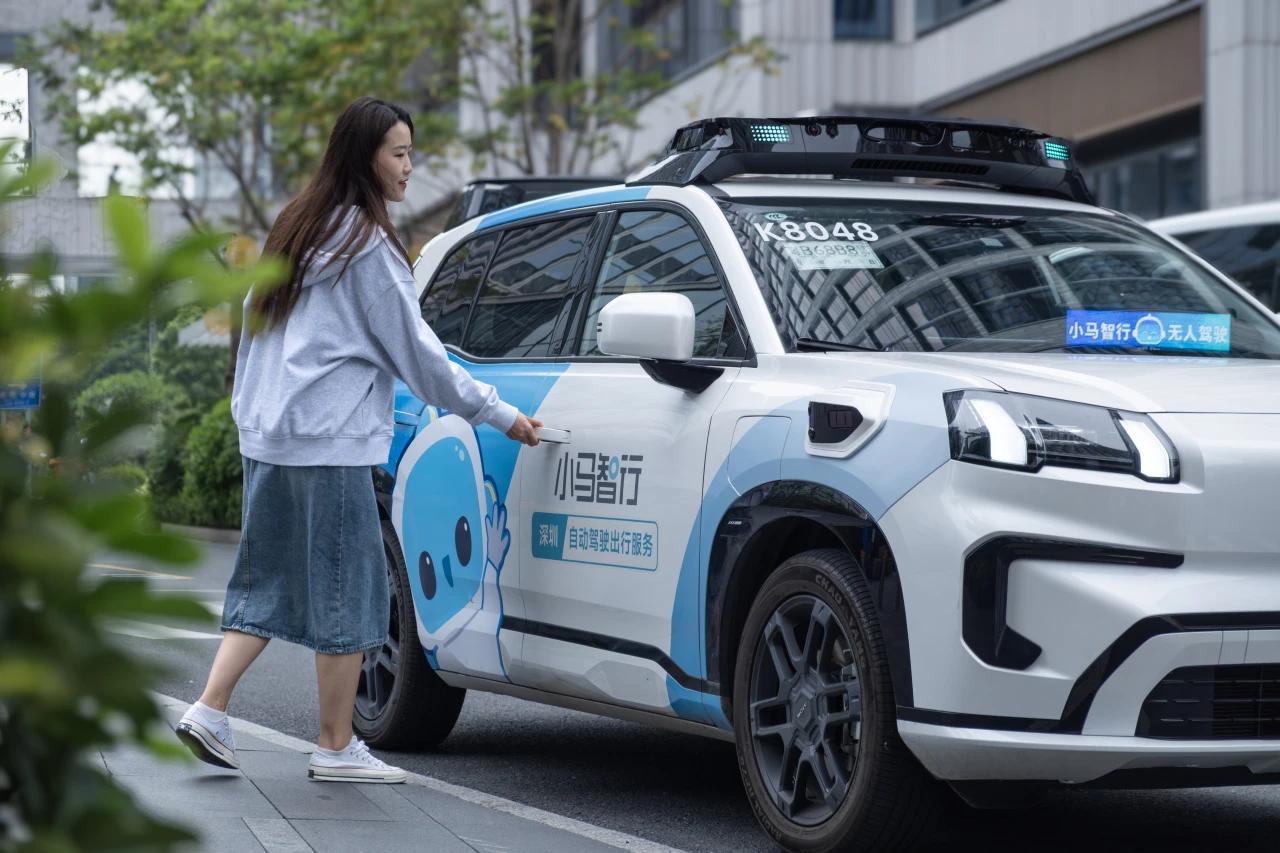
GAC Group partnered with Didi to develop the Robotaxi model R2, operated by Ruqi Travel. This model officially rolled off the production line earlier this year and is now operating in regions including Guangzhou and Shenzhen. BAIC Group, using its Arcfox brand as the carrier, jointly developed a Robotaxi system with Pony.ai, with more than a thousand vehicles already in operation in Beijing Yizhuang, Shenzhen, and other locations.
(Source: Pony.ai)
The Eva Cab, a deeply customized Robotaxi model developed by Geely in partnership with Caocao Mobility, was unveiled at the Beijing Auto Show in April this year. At the recent WAIC event, SAIC Motor announced that it will jointly develop a purpose-built Robotaxi model with Momenta and Xiangdao Travel, with the earliest public appearance scheduled for next year.
Energy storage is a key revenue growth area for domestic automakers. As a giant in the battery industry, BYD has inherent advantages, with energy storage shipments exceeding 60 GWh in 2025. Some time ago, BYD announced that it had secured a supply order from UAE energy firm Masdar, for an energy storage battery capacity of 11.2 GWh — enough to equip roughly 180,000 new energy vehicles with 60 kWh batteries.
Automakers including NIO and Geely are also ramping up their energy storage business. NIO's integrated solar, storage, charging, and swapping project in partnership with LONGi Green Energy Technology has been launched in Jiaxing, while Geely has established a wholly-owned subsidiary called Flash Battery in Baoji, with business scope covering power battery manufacturing and energy storage supporting services.