36Kr Exclusive | Tongji University PhDs develop geometry and physics AI to reconstruct design and manufacturing, securing total financing of over 300 million yuan
Source / Enterprise
This article contains approximately 1,400 words, with an estimated reading time of 3 minutes
Author丨Ou Xue
Editor丨Yuan Silai
36Kr has learned that Xushu Tech, a supplier of industrial AI design, research and development solutions, has recently officially completed a Series B financing of over 100 million yuan, with total accumulated financing exceeding 300 million yuan. Investors include Shenzhen Industrial Investment, He Ding Gong, and existing shareholder Yonghua Investment, among others. The raised funds will be used for market expansion (including overseas expansion) and core model technology research and development.
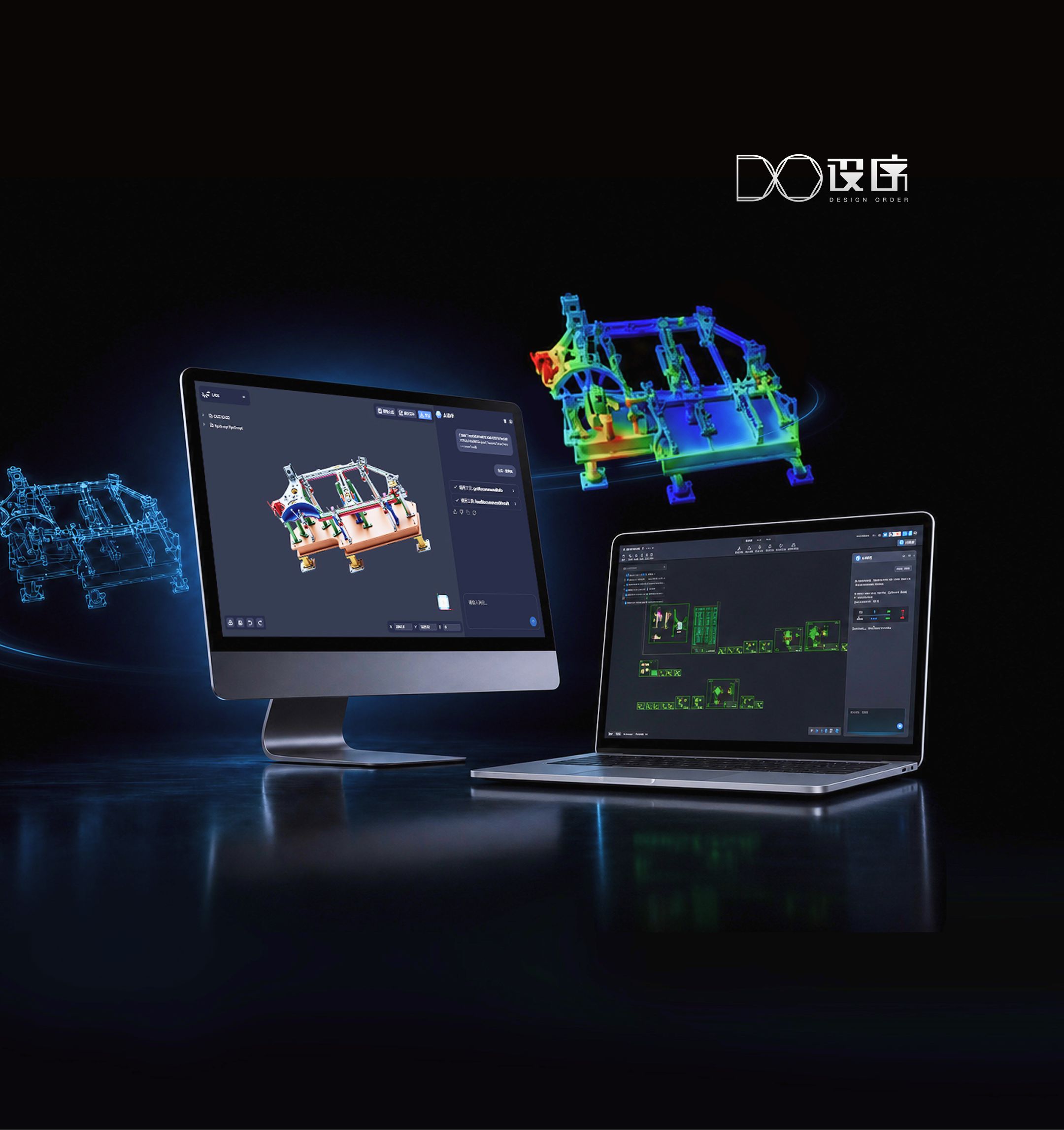
Founded in 2020, Xushu Tech's core product "Zexing AI" is an intelligent platform for hardware engineering design and development, built on self-developed industrial world models and natural language large models. It provides intelligent generation of 3D design solutions and 2D engineering drawings under a cloud architecture. The founder and CEO, Wu Yongrong, holds a doctorate in advanced manufacturing from Tongji University, and previously served as a researcher at the General Advanced Manufacturing Laboratory and an intelligent manufacturing expert at NIO.
Compared to last year, Xushu's original two product lines of 3D generation and 2D generation have undergone in-depth agent-based upgrades. Currently, the geometry AI-based 3D Agent and manufacturing AI-based 2D Agent have completed technical transformations, quickly helping engineering users create greater value. The physical AI that connects geometry AI and manufacturing AI has also entered the stages of technical research and development and POC verification. In fact, physical AI is not a unique concept in the field of embodied intelligence; physical AI that combines industrial mechanisms to perform industrial-level precise calculations on specific physical fields is equally important.
Wu Yongrong explained the internal logic of this evolution to 36Kr: "We want to build a universal AI entry point for hardware engineering. Users inform AI of their requirements, and AI executes in three steps — first, geometry AI designs an accurate geometric shape based on the requirements, then physical AI calculates the physical properties of this geometric shape, such as strength, stiffness, flow field, or magnetic field, and finally, manufacturing AI assesses its manufacturability."
In terms of performance, Xushu Tech's contract value in the first half of this year increased by approximately 70% year-on-year, with the full-year figure expected to approach 200 million yuan, nearly doubling compared to last year. The RAAS (Result as a Service) delivery model has become a key growth driver, accounting for roughly one-third of annual revenue.
At present, the Zexing AI product has been applied in core industries such as automotive, 3C, and energy, and has expanded to emerging fields including commercial aerospace and embodied intelligence. Its major clients include leading enterprises such as Honda, Dongfeng, China Automotive Engineering Research Institute, Yutong, and CRRC.
In terms of overseas expansion, Xushu Tech has designated 2026 as its first year of global expansion, focusing on the European market. It has already signed its first seed customer in Germany, its initial market. In the first half of the year, the company primarily completed pre-launch work such as EU data compliance, and in the second half of the year, it will strive to secure around 10 initial customers. Next year, the company plans to scale up operations in Europe while preparing for entry into the Japanese, South Korean, and Southeast Asian markets.
The following is an edited excerpt from an interview between 36Kr and Wu Yongrong, the company's founder:
36Kr: How have customers' attitudes toward industrial AI changed in the past two years?
Wu Yongrong: Customers who used to be very conservative have now been educated to the point of being somewhat "radical." This is reflected not only in their budget allocations but also, more importantly, in their mindset. Previously, many customers thought that "using AI in this scenario is almost impossible," but now they proactively initiate POCs before the scenarios are fully mature, and it is even common for them to allocate budgets for POCs. There are three main driving factors: first, they are continuously exposed to and educated by the advancements in foundational large models; second, they do face numerous real pain points in their daily work; and third, they have clearly witnessed the substantial value AI has created in our already deployed scenarios.
36Kr: Will industrial AI eventually replace engineers?
Wu Yongrong: We have repeatedly emphasized an internal viewpoint: before the arrival of AGI (Artificial General Intelligence), humans will not be replaced. However, engineers who cannot use AI will be replaced by those who can. The core value of engineers has never been "operating software," but rather "making professional judgments," including selecting appropriate benchmarks, setting reasonable tolerances, and balancing cost and performance.
These decisions require a complete context that integrates experience, specific scenarios, and the full lifecycle of hardware products from design and R&D to production, processing, and maintenance — something AI cannot achieve in the short term. The ideal state in the near future is that AI handles 80% of repetitive tasks, allowing engineers to focus their energy on the remaining 20% of creative judgment and exception handling.
36Kr: When do you think the "GPT moment" for industrial world models will arrive? What are your criteria for judging it?
Wu Yongrong: At most 3 to 5 years. The judging criterion is that the intelligence level can reach the so-called L4 or L5 level in autonomous driving. When L2 or L3 can be mass-produced on a large scale, and the data obtained from mass production feeds back to upgrade higher-level models, the progress will be extremely fast. Industrial scenarios are consistent with natural language, images, and videos in the dimension of first principles of AI. When the amount of data accumulates to a certain level, combined with appropriate model technologies, high-level intelligence specific to this modality will emerge. The challenges still lie in data, model technology, and the advancement of mass-produced business (as it can not only polish model technology but also generate a data flywheel). We are already at the forefront of this development.