Shortlisted in the innovative medical device program for 60 consecutive days, why are we taking a full step ahead of the United States in this fierce competition for brain-computer technology?
In just two months, two brain-computer interface (BCI) products have been admitted to the Special Approval Procedure for Innovative Medical Devices.
Prior to this, China approved the world's first commercial invasive BCI medical device in March. Meanwhile, on June 30, the National Medical Products Administration (NMPA) released two guiding principles for medical device products, namely the Guiding Principles for Classification Definition of Brain-Computer Interface Medical Devices and the Guiding Principles for Naming of Generic Names of Brain-Computer Interface Medical Devices, which for the first time clarified the definition of BCI medical devices.
This is by no means a coincidence. Two years ago, even the most optimistic practitioners would not have dared to predict the tremendous progress BCI has made today. In the medical device industry, the signals released by such high-density events are quite clear, indicating that the policy inclination of national regulatory authorities towards such medical devices has entered a substantive acceleration period.
Brain-computer interface is ushering in an era of batch approvals.
01
Two Products Selected in 60 Days + World's First Approved
As of July 2026, a total of four BCI products from domestic enterprises including NeuroSky, Zhiran Medical, and Tijie Medical have entered the Special Review Procedure for Innovative Medical Devices.
NeuroSky was the first to enter the Special Approval Procedure for Innovative Medical Devices. As early as 2024, its Implantable Brain Acquisition and Stimulation System (Neo System) became the first BCI medical device in China to enter the Special Approval Procedure for Innovative Medical Devices.
In March this year, this medical device was officially approved for Class III certification under the name of "Implantable Brain-Computer Interface Hand Motor Function Compensation System", becoming the world's first invasive BCI medical device to be marketed with approval.
It took NeuroSky about 18 months from entering the innovation channel to obtaining the certification. In the field of Class III medical device approval, this is already a fairly fast speed. In comparison, the average approval cycle for traditional Class III medical devices is usually 3 to 5 years.
Even among innovative medical devices, this speed is considered fast. According to public statistics, the average time for China's Class III innovative medical devices from selection to approval is about 28 months, with a median time of about 23 months. NeuroSky has obtained approval faster than at least half of the innovative medical devices.
This shows the high level of attention the regulatory authorities pay to BCI.
Following NeuroSky, the speed at which BCI products enter the Special Approval Procedure for Innovative Medical Devices has begun to accelerate. From 2025 to 2026, BCI products from three other enterprises including Tijie Medical and Zhiran Medical also entered the Special Approval Procedure for Innovative Medical Devices.
Predicted based on NeuroSky's approval cycle, these products may be officially approved next year and the year after next respectively.
The industry generally holds a positive view on these signals. Song Qi, Founder and CEO of Zhiran Medical, stated that both the first certification approval and the successive entry into the Special Approval Procedure for Innovative Medical Devices convey a very clear signal.
"The approval of the first certification itself represents the country's improved efficiency in reviewing innovative medical devices and its high emphasis on this track. Especially the improvement of approval efficiency is not just a matter of speed; it releases a sense of certainty. For entrepreneurs, certainty is more important than any resource. The country's willingness to give the green light to genuine innovation shows that this direction is correct, and that investing time and resources in this direction can yield expected returns. This is the biggest dividend for this generation of entrepreneurs."
Regulators are also laying a solid foundation for the upcoming review of BCI medical devices.
Last September, NMPA released the Medical Devices Using Brain-Computer Interface Technology - Terminology (YY/T 1987—2025). This is also the first industry standard for BCI medical devices. Shortly after, the Medical Devices Using Brain-Computer Interface Technology - Implantable Neurostimulators with Closed-Loop Function - Sensing and Response Performance Test Methods (YY/T 1996—2025) was also released in the same month.
On June 30 this year, NMPA officially released the two guiding principles for BCI medical devices, the Guiding Principles for Classification Definition of Brain-Computer Interface Medical Devices and the Guiding Principles for Naming of Generic Names of Brain-Computer Interface Medical Devices, which came into effect on the date of release.
According to the newly released classification definition guiding principles, invasive BCI medical devices will be uniformly managed as Class III medical devices. As for non-invasive BCIs, they also need to be managed as Class III medical devices when used for disease treatment or function compensation, and can only be managed as Class II medical devices under the strictly limited condition of being used for stroke limb rehabilitation training without artificial intelligence algorithms.
In fact, before the guiding principles were officially released, some approved products with "brain-computer interface" in their names that had already obtained Class II medical device certification have successively renamed themselves, removing the words "brain-computer interface" to avoid the new classification requirements.
This means that in the future, the vast majority of BCI products in the true sense can only be approved through the Class III medical device path, which has higher thresholds and stricter reviews.
This signal clearly demonstrates the regulatory authority's strict regulatory attitude towards BCI medical devices. This approach is exactly the same as the regulatory path for AI medical devices in the past: rather than setting high standards in the early stage of the industry, it prevents low-quality products from eroding the industry's credibility. Considering that BCI involves highly sensitive technical links such as intracranial implantation and neural signal decoding, this prudent stance is completely understandable.
02
China Leads by a Nose in Global BCI Approvals
Looking at the global landscape, the trend that China and the United States are leading the way in BCI has become increasingly obvious.
The United States once took a substantial lead in the process of BCI medical device commercialization. As early as 2020, Synchron's BCI obtained the Breakthrough Device Designation. This mechanism is similar to China's Special Approval Procedure for Innovative Medical Devices.
By the end of 2022, 4 BCI products had obtained the FDA Breakthrough Device Designation. Based on the progress at that time, the United States was far ahead of the rest of the world.
As of now, public information shows that 7 products have obtained the FDA Breakthrough Device Designation. Except for Germany's CorTec and Belgium's ReVision Implant, the other 5 enterprises are all American companies.
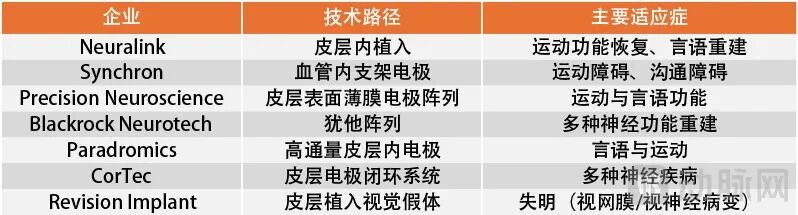
Incomplete statistics on BCI medical devices that have obtained FDA Breakthrough Device Designation
However, to date, these products are still in the clinical trial stage and have not obtained FDA PMA certification (equivalent to China's Class III certification). Taking Synchron, which was the first to obtain the Breakthrough Device Designation, as an example, it has now completed the feasibility study and announced that it will launch the pivotal trial within this year.
Except for Precision Neuroscience's Layer 7 BCI, which was marketed last year via the FDA 510(k) pathway for up to 30 days of cortical recording, monitoring, and stimulation, Neuralink, Paradromics, and Blackrock are still in the clinical trial stage.
The industry consensus is that the approval window for the first PMA of an invasive BCI in the United States is roughly between 2028 and 2030. Although the FDA has opened the door to the innovation channel, its review standards in terms of clinical evidence, long-term safety, and risk-benefit assessment are quite strict.
Of course, if the scope is broadened, the FDA is not without approved BCI products. As early as April 2021, Neurolutions' upper limb rehabilitation system became the first non-invasive BCI robot for rehabilitation approved by the FDA via the De Novo pathway. At the end of March last year, Precision Neuroscience's Layer 7-T also obtained 510(k) certification.
As for other countries and regions including the European Union, Japan, and South Korea, there are very few approved BCI medical device cases, all of which are non-invasive BCIs.
China is currently in a leading position in the review of BCI medical devices globally.
03
Is BCI Driven by Technological Leadership or Institutional Dividends?
An obvious question arises: although domestic BCI medical devices are leading in approvals, is their technical level also leading globally?
Faced with this question, Song Qi gave an affirmative view: "Overall, I think the current technical level of domestic BCI in China is partially leading, keeping pace globally as a whole, and following in some areas."
"At some specific points, such as our stretchable flexible electrodes, because we noticed problems early in primate experiments and made targeted optimizations, we have some leading advantages in the long-term signal stability and signal acquisition efficiency. However, in terms of engineering capabilities, we still have a certain gap compared with the best teams in the world, but it is not an insurmountable gap. In this track, we are moving relatively fast," he said.
From the perspective of clinical progress, leading domestic BCI enterprises are indeed at the same level as foreign counterparts. Taking Zhiran Medical as an example, its ultra-thin flexible deep electrode uses micron-level thin-film technology. In November 2024, it completed the world's first human implantation surgery at the Second Affiliated Hospital of Zhejiang University School of Medicine, realizing the long-term stable acquisition of high-throughput neuron-level signals in deep brain regions for the first time. In December 2025, Zhiran Medical launched the long-term implantation of a wireless BCI system based on invasive flexible electrodes. In May 2026, the multi-center registration clinical trial of Zhiran Medical's implantable wireless BCI system was officially launched, which is in the same generation as foreign enterprises.
NeuroSky has even taken a different path from Neuralink's intracortical penetration technology route. Its epidural minimally invasive implantation route chooses to place the electrode outside the dura mater, striking a balance between signal quality and safety. This also allows it to obtain a smoother review path in terms of risk-benefit ratio.
However, it must be acknowledged that there are still gaps between domestic leading enterprises and American leading enterprises such as Neuralink and Blackrock Neurotech in basic links such as chip technology, biocompatible materials, and long-term implantation stability verification.
In addition to technological progress, China's current leading position in BCI medical device commercialization is also inseparable from interconnected institutional designs.
At the top-level design level, BCI has been elevated to a national strategy and included in the outline of the 15th Five-Year Plan as one of the six future industries. Meanwhile, the national major science and technology project "Brain Science and Brain-Inspired Intelligence Research" was launched within this year, clearly requiring relevant projects to complete the Class III medical device registration clinical trial and submit a registration application within the project cycle.
At the review system level, the existing Special Review Procedure for Innovative Medical Devices provides institutional dividends for BCI. By moving review resources to the R&D stage, review can be carried out simultaneously with R&D without lowering the standards for safety and effectiveness. Especially for innovative products like BCI that have no precedents to follow, this model allows regulators and the industry to jointly explore review standards.
Song Qi affirmed China's progress in BCI medical device review in an exchange with Arterial Network: "The fact that domestic enterprises can temporarily take the lead in the commercialization progress of BCI medical devices shows that China has indeed taken the lead in the review efficiency of innovative medical devices, policy support, and the engineering advancement and clinical implementation capabilities of domestic enterprises. This is a good starting point."
However, he also said that this is only a temporary phenomenon, and more efforts are needed in the future: "Our current lead does not mean that we can maintain it tomorrow. This track is a global competition. The speed of technological iteration, the depth of clinical advancement, the degree of patient benefit, and the right to speak on standards... these are the things that determine the long-term landscape. As an enterprise, we need to continue to deepen our technology, make clinical practices more solid, and ensure that products truly bring clinical benefits. We also hope that Chinese enterprises can continue to lead in this track, and Zhiran is confident in contributing to this continuous leadership."
Song Qi also stated that obtaining certification is only a necessary condition for industrialization, not a sufficient condition. He believes that it will take at least 3 to 5 years for BCI to develop from product approval to a truly mature industrial ecosystem, and supporting facilities in at least three aspects need to keep pace synchronously.
"The first is the medical insurance payment system. Without a sustainable payment mechanism, it will be difficult for products to achieve large-scale implementation even after entering hospitals. At present, some regions have carried out explorations in medical insurance coding and diagnosis and treatment project allocation, but a nationwide and stable payment framework is still under construction."
"The second is clinical pathways and standards. As a brand-new category, BCI currently lacks mature clinical pathways, diagnosis and treatment specifications, and efficacy evaluation standards. These standards need to be gradually established in clinical practice, and the establishment of standards itself is an important symbol of industrial maturity."
"The third is ethical norms and data security frameworks. BCI directly involves the collection and interpretation of neural signals, so privacy and security issues are more sensitive than general medical devices. A sound ethical review mechanism and data security regulations are the bottom-line guarantee for the sustainable development of the industry."
"Obtaining certification only opens the door. After entering, the road still needs to be paved step by step," he added.
04
What Else Is Needed to Transform Approval Advantages into Industrial Victory?
In the first half of 2026, China took the lead in achieving breakthroughs in BCI medical devices. The world's first certification, the successive admission of multiple enterprises to the Special Approval Procedure for Innovative Medical Devices, and the release of the classification definition guiding principles, together form a complete commercialization chain for medical devices, reminiscent of the artificial intelligence medical device sector a few years ago.
This chain provides clear path expectations for subsequent enterprises to enter the market. When the regulatory framework, review channels, and payment mechanism of an industry are all in place, the willingness of capital and talents to enter will be greatly enhanced. The obvious warming of financing in the BCI field in the past one or two years is clear evidence of this.
However, approval advantages do not equal industrial victory. China's BCI industry still faces global competition in clinical evidence, payment systems, and technological iteration, especially strong competition from the United States. BCI is a long-distance race, and medical device commercialization is only a milestone, not the finish line.
Moving forward, the industry needs to prove with clinical data, product iterations, and real-world efficacy that this wave of institutional dividends can be transformed into sustainable industrial competitiveness.
The country has paved the road to the doorstep. Whether enterprises can run fast enough is the key to the next chapter.
This article is from the WeChat official account "Arterial Network" (ID: vcbeat), written by Chen Peng, and published with authorization from 36Kr.