XPeng "teaches" Europeans to build global cars
On the afternoon of July 16th, at the home stadium of Bayern Munich, in the art center adjacent to Munich's Allianz Arena, He Xiaopeng, Chairman of Xpeng Motors, announced the starting price of the Xpeng Mona L03 in Germany in English with a strong Hubei accent:
35,600 euros, equivalent to approximately 275,000 RMB.
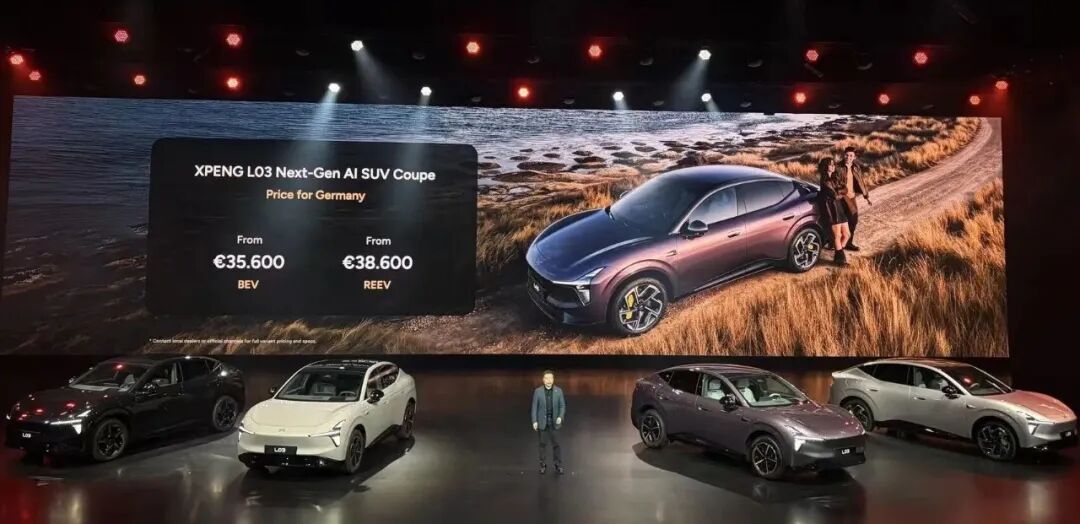
Meanwhile, the domestic live stream was switched to an exclusive segment for Chinese audiences: the domestic starting price of the L03 is 129,800 RMB.
The Chinese price of the L03 was not presented at the German launch event. Some attendees joked that this was to protect Europeans — after the launch, many European media outlets described the L03's pricing in Europe as "aggressive".
One hour later, the number of paid reservations for the L03 in the Chinese market reached 46,859 units. In the interview area, a European media outlet posed a counterintuitive question to He Xiaopeng:
Compared with China, what remaining prominent advantages does the European automotive industry still have?
He Xiaopeng reassured them in Mandarin, "At least in the automotive industry, China is still more like a student."
In turn, this seems to be an inspiration for the slightly anxious Europeans not to fear "paying tuition fees" again. After all, when it comes to selling cars to Europe, Xpeng spent six years paying its tuition before finally getting the hang of things.
01
From Grand Fanfare to Strategic Restructuring
In September 2020, 100 units of the G3i boarded westbound ships bound for Norway, kicking off Xpeng's European expansion.
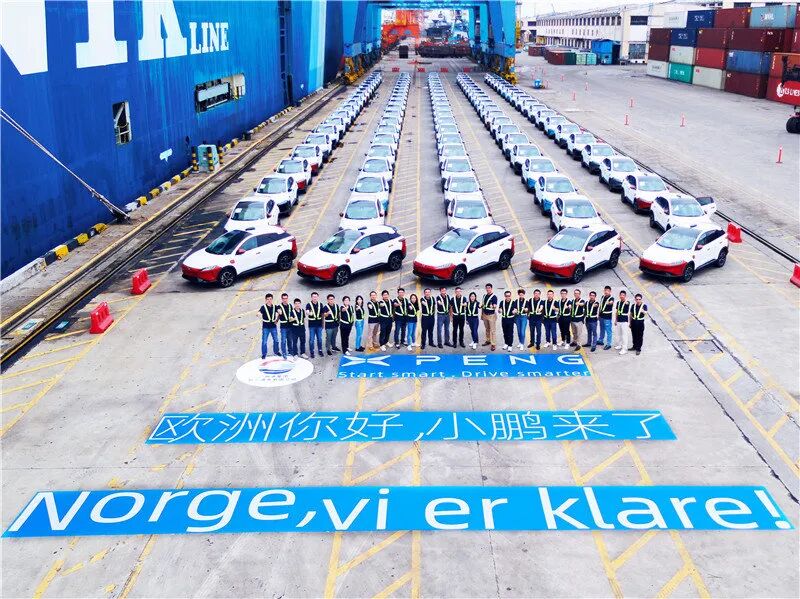
Xpeng's European expansion in September 2020
As the European country with the highest new energy vehicle penetration rate, Norway is often selected by Chinese automakers as the first stop for European expansion — using Northern Europe, which boasts strong policy support and well-developed charging infrastructure, as a springboard to enter major European automotive consumer markets such as Germany, France, the UK, and Italy. Xpeng was no exception.
In August 2020, Xpeng successfully listed on the New York Stock Exchange, with its market capitalization once exceeding 50 billion U.S. dollars. Amid optimistic sentiment, vigorously expanding into overseas markets was put on the agenda.
In 2021, Xpeng recruited He Liyang, former Head of the Western Europe Enterprise Business Department of Huawei, to serve as Vice President of Overseas Business. He established an overseas business division of nearly 300 people, set up offices across Europe, built a sales and operation system, and prepared for a major push. Xpeng's German office was also established in mid-2021.
However, in the following two years, Xpeng's sales in Europe did not deliver favorable results. Even in Norway, this "novice protection zone", Xpeng's sales in 2021 were only 438 units[2].
The reason was that in 2021, the overall pure electric vehicle penetration rate in Europe was only 10%, and new car buyers mostly adopted a wait-and-see attitude towards pure electric models. At that time, for Europeans, Xpeng was a mysterious Eastern automaker with no brand recognition, mature product lineup, or comprehensive sales and service system. Consumers only occasionally tried its products, but had no incentive to place large-scale trust in it.
On the other hand, after 2022, Xpeng entered a turbulent period. Around the unsuccessful launch of the first-generation G9, He Xiaopeng launched continuous reforms. The original executive system and organizational structure were dismantled and restructured, including the overseas business. The then head He Liyang left the company, and the overseas business division was downsized. Xpeng's German team was once reduced to only a few people.
Employees of Xpeng's overseas business who experienced this turmoil later reviewed that Xpeng's first round of overseas expansion did not choose the right timing. It acted too hastily when its domestic product and supply chain foundations were not yet stable,
It was not until Wang Fengying joined in 2023 that the new management system led by He Xiaopeng, Gu Hongdi, and Wang Fengying was finalized, and Xpeng restarted its overseas business.
In April of that year, He Xiaopeng decided to restart overseas expansion. Wang Fengying took over the overseas business and led the formation of an overseas product matrix. Wu Meng, product manager of the first-generation G9, was dispatched to Europe to work with Xpeng's German team to promote Xpeng's next phase of overseas plans:
Sell models such as the G9 and P7 to major European markets.
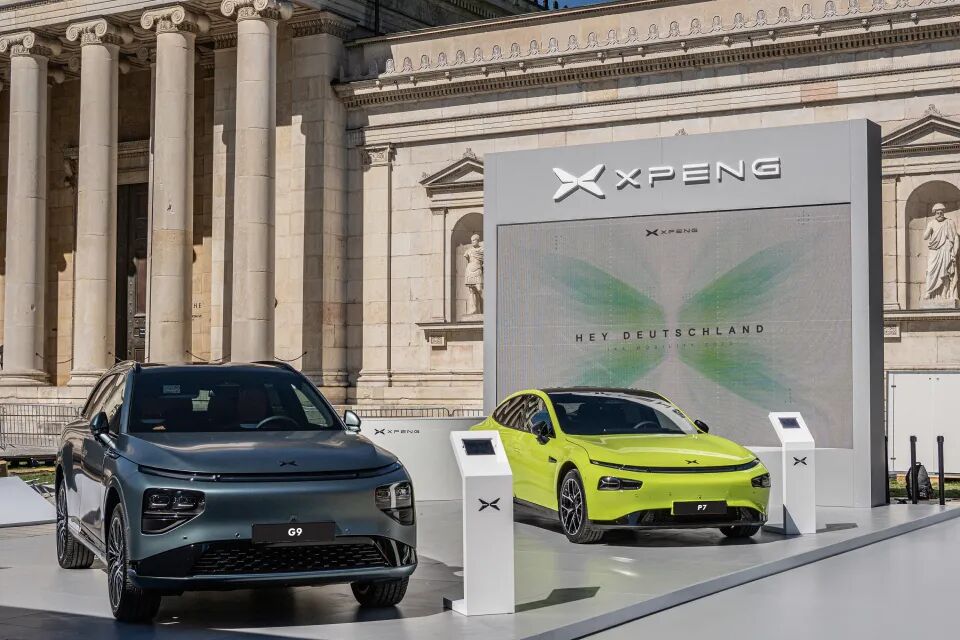
The G9 and P7 enter Germany
In 2023, Xpeng, which was facing financial constraints, could not allocate many resources to expand its engineering R&D team for overseas business. Instead, it adopted a method to maximize the use of existing development resources:
The German team inputs European requirements — the domestic team modifies the products — then conducts testing, verification, and iteration in Europe.
This cross-timezone and cross-team collaboration method was prone to inefficient wrangling, but the support and promotion from He Xiaopeng, the top leader, allowed the European localization adaptation of the G9 and P7 to advance rapidly. In September of that year, Xpeng G9 and P7 were launched in four Northern European countries.
In March 2024, the two models were launched in Germany, followed by the G6 and X9 also landing in Germany.
02
From Critical Acclaim to Commercial Success
Selling mass-produced cars in Germany is often regarded as a special milestone by Chinese automakers.
It is the birthplace of automobiles and a high ground of the global automotive industry. Securing a foothold in the German automotive market not only captures a high-value market, but also potentially earns a proof of strength and a "passport" for further expansion.
An employee of Xpeng Germany said, If a successful experience is developed in the German market, it is equivalent to solving 90% of the problems of adapting to the European market.
But the premise is: how to achieve real success in Germany?
Those successful experiences that helped domestic automakers gain advantages over international automakers in the Chinese market have limited applicability in Germany. For example, Xpeng's early direct sales system and shopping mall stores in China helped build the brand and direct connections with consumers, but they did not work in Germany.
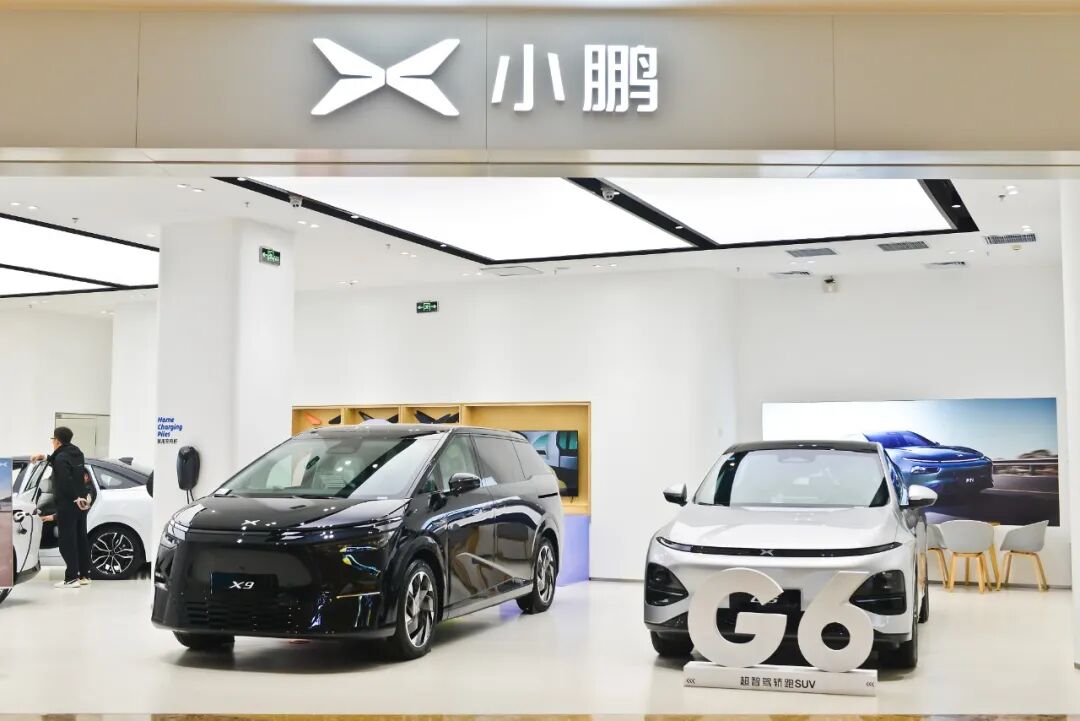
Domestic-style shopping mall stores are rarely seen in Germany
On the one hand, Germans are not enthusiastic about the beautifully decorated experience centers of Eastern automakers. They are more accustomed to driving to the suburbs of cities to buy cars from local dealers whose services may have even served their parents' generation.
On the other hand, if Xpeng builds a Germany-wide sales network in the form of a direct sales system and shopping mall stores, its sales revenue will not be able to cover the high store construction costs.
Therefore, when entering Germany, Xpeng chose the model of cooperating with dealers from the very beginning. This not only leverages German consumers' trust in local dealers, but also allows German dealers to help Xpeng absorb costs.
However, German automotive dealers have long cooperated with major European automakers and attach great importance to risk: consumers are afraid that new Chinese automakers will disappear, and dealers also worry that new Chinese automakers will not operate well.
Qian Kai, General Manager of Sales at Xpeng Germany, said, The lease term for a store of a German automotive dealer is 10 years, so they are particularly cautious when finalizing automaker partners.
Fortunately, Volkswagen's 700 million U.S. dollar investment in Xpeng in 2023 and its strategic cooperation relationship with Xpeng reduced Xpeng's explanation costs when facing German dealers. Qian Kai said that Xpeng's first dealer in Germany took the initiative to seek cooperation and helped Xpeng open its first sales store in Munich — this dealer also sells Mercedes-Benz.
The reason why German dealers are willing to place Xpeng cars alongside Mercedes-Benz in the same store is that Xpeng's outstanding configurations and ultra-fast charging technology in Europe play an important role. More importantly, the G9, P7, X9 and other models sold by Xpeng in Europe have actually adopted the "Premium" (which is also the positioning of BBA in Europe) pricing and positioning, and the cheapest G6 has a starting price of 43,600 euros.
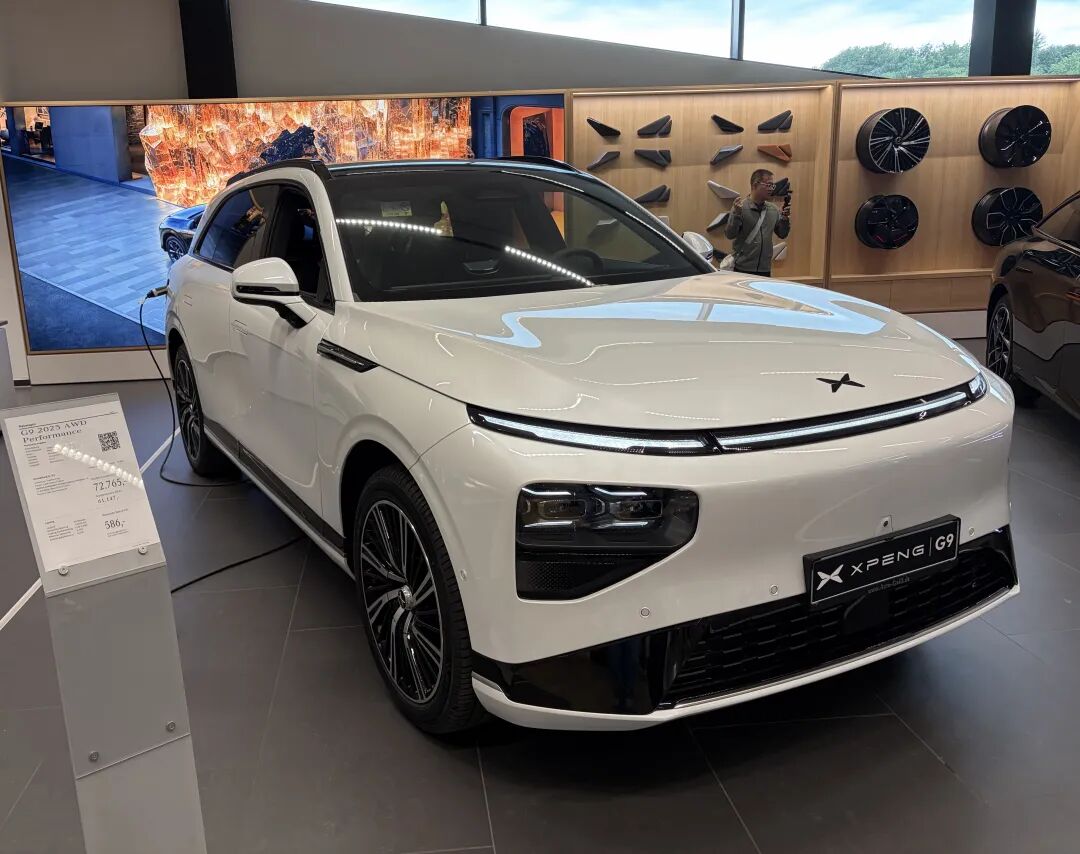
Xpeng G9 in a German dealer store, priced at 61,100 euros
Priced 50% higher or even double than in China, Xpeng is able to offer dealers gross profit margins comparable to selling Mercedes-Benz and BMW vehicles.
With a more comprehensive overseas product system and overseas sales channels, Xpeng's overseas sales increased to 23,000 units and 45,000 units in 2024 and 2025 respectively.
In Germany, Xpeng's dealer stores have expanded to more than 50, and its sales in Germany increased to more than 3,600 units in 2025, most of which were sold to high-income and well-educated groups with an average age of over 50 — such as engineers who have been deeply involved in the automotive industry for a long time.
However, although Xpeng has temporarily established a high-end positioning in Germany, to a large extent, this has also caused it to miss the mainstream market that accounts for the majority of sales.
In Germany's annual new car market of less than 3 million units, 55% of sales come from models priced below 50,000 euros. At the same time, only one-third of new cars are sold to individuals, and two-thirds are sold to the B2B sector. This means that only by tapping into the market below 50,000 euros and B2B sales can Xpeng stably establish a long-term presence in the German automotive industry.
This is one of the reasons why the Xpeng Mona L03 was born, and also the reason why the L03 chose to hold its global launch in Munich, Germany. This also marks the first time He Xiaopeng chose to speak entirely in English at a new car launch —
Facing the European people, the effect of adapting to local customs in language is completely different from suddenly adding a high-pitched "in Europe, For Europe" in the middle of long Chinese paragraphs, demonstrating distinct levels of sincerity.
03
The First Smart Stylish SUV for Middle-Aged Germans
As one of the gestures of sincerity to European consumers, the L03, which is nominally the SUV version of the Mona M03, has a detail that is not typically Chinese: its body length is 135 millimeters shorter than the M03.
In China, SUVs are often lengthened to meet Chinese people's preference for interior space. But the L03 did the opposite, precisely because it is "Xpeng's first truly global model".
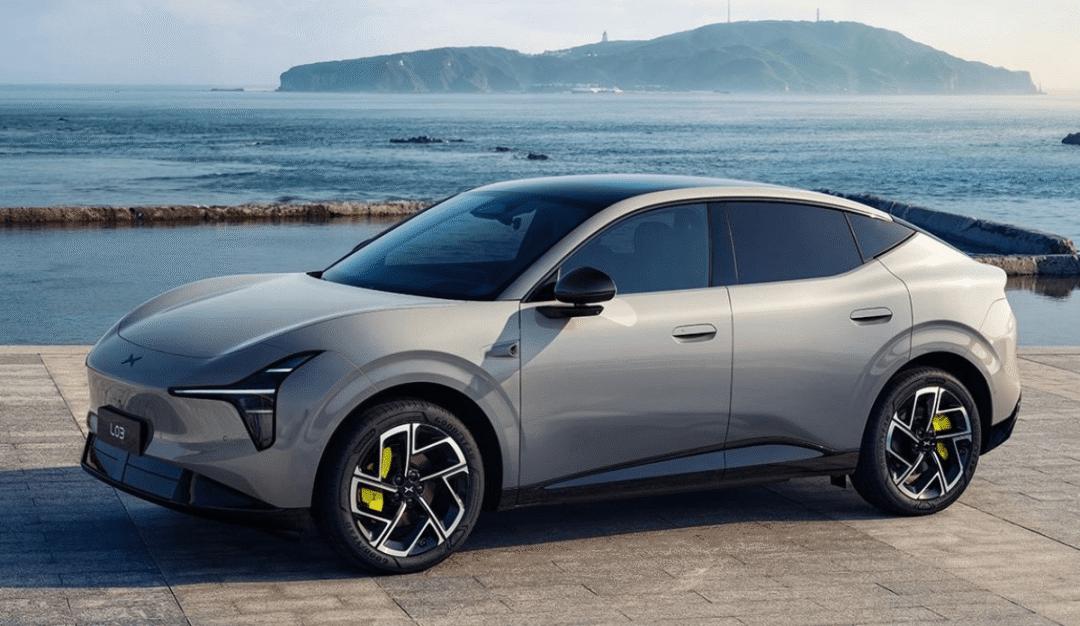
The Mona L03 breaks the convention of lengthening domestic SUVs
Xpeng's German team said that if the globalization of an automaker is divided into stages, the practice of the first stage is usually to build domestic models, spend a year or two making slight modifications, ship them overseas, and sell them.
In the second stage, the overseas team must intervene as early as the product definition stage, jointly define global models with the domestic team, and achieve local production overseas.
The third stage is to establish a comprehensive brand sales and service system, cultivate brand loyalty among existing car owners, and develop a stable used car market.
Selling adapted models such as the G9 and P7+ to Germany means that Xpeng has established basic globalization capabilities. Building the L03 with a unified size for the global market and promoting its simultaneous global launch is Xpeng's effort to move towards the second stage of globalization.
To meet European users' preference for small cars, Xpeng's German team initially suggested a body length of 4.3-4.4 meters for the L03, which is one of the most common body sizes on European roads. However, the domestic team did not adopt this suggestion, believing that such a length would almost cut off the L03 from the domestic market, where people prefer larger cars. After several rounds of tug-of-war between domestic and foreign teams and multiple revisions to the design, the L03's body length was set at 4.65 meters, which is not too short for Chinese people and not too long for Europeans.
With the same body length, the positioning of the L03 at home and abroad is not consistent.
In China, the L03 is "the first smart stylish SUV for young people", focusing on appearance and "spacious interior" — intelligent driving is the core selling point, and it comes standard with zero-gravity seats.
In Europe, the main target users of the L03 are young and middle-aged people aged 30-40, and it is exclusively offered with a dual-motor four-wheel drive version and a rear-mounted bicycle rack — for Germans, driving to a cycling destination is a common lifestyle.
This reflects another huge difference between the Chinese and German new car markets:
China's new car consumer group is getting younger, especially young people account for a higher proportion in the mainstream price range