The first major MAU assessment of 2026: Roco Kingdom ranks first, Goose Goose Duck ranks second with more than 9.04 million MAUs, and Astral Ring ranks sixth.
In 2026, the mobile gaming industry seems to have reached a new level of cutthroat competition, with a flood of new titles and skyrocketing user acquisition spending, yet players are becoming far harder to fool. No longer blindly chasing top chart rankings, they are now far more willing to spend money on innovative gameplay and genuine developer dedication. In this existing user market, a clear divide has emerged: some games are genuinely retaining players through high-quality content, while others are holding their ground via long-term operations and gameplay innovation.
Over the past six months, the impetuous hype has faded, and great products are finally speaking for themselves. Just yesterday morning (July 21), QuestMobile released its 2026 H1 Mobile Gaming Industry Insight Report, which provides a detailed analysis and summary of the overall market size of the gaming industry in the first half of this year.
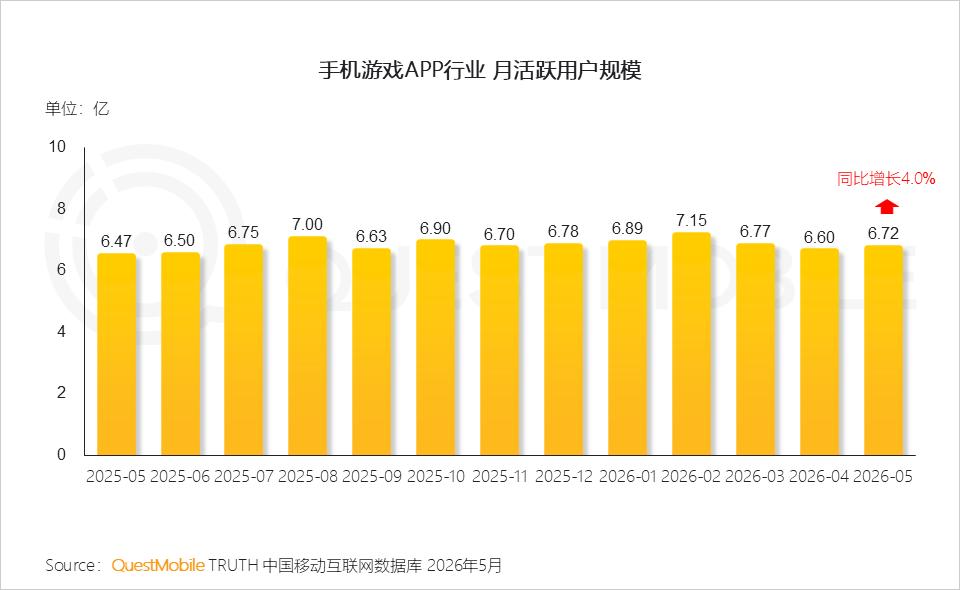
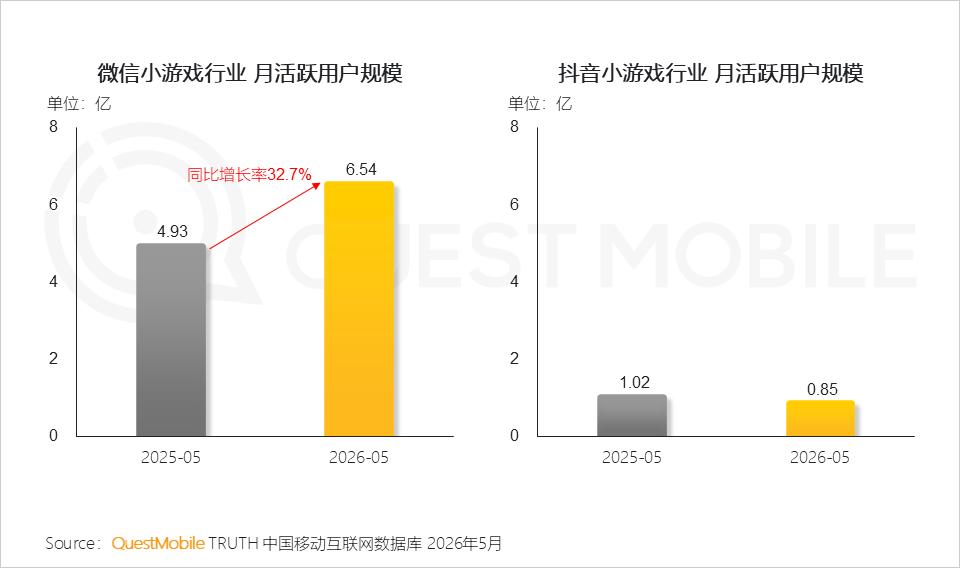
The report shows that as of May, the monthly active user (MAU) base for mobile game apps reached 672 million, a 4.0% year-on-year increase; WeChat mini-games recorded 654 million MAUs, up 32.7% year-on-year; Douyin mini-games hit 85 million MAUs, signaling that the mini-game sector has entered a phase of deep cultivation in the existing user market.
On the new game front, diversified content offerings have spawned multiple hit titles. As of May, Roco Kingdom: World, Goose Goose Duck, Color Splash World, and CrossFire: Future claimed the top four spots in MAUs among new releases, with respective MAU figures of 17.482 million, 9.04 million, 7.162 million, and 6.309 million. This proves that the combination of nostalgic IP appeal and gameplay innovation remains an effective path for new games to stand out in the crowded market.
Meanwhile, competition for long-standing blockbuster titles has shifted from traffic grabbing to in-depth cultivation and operation of core highly engaged users. Classic mobile games generally boast a core user penetration rate of over 20%, while WeChat mini-games are also doubling down on existing users, stabilizing their core traffic base with traditional board and casual games.
Here, we will organize and summarize the key findings of the report. It is certain that the industry is steadily shifting from a traffic-driven model to one powered by product strength. The competitive logic for the second half of the year is likely to be clearer, and far more unforgiving, than that of the first half.
01
Mobile Game Apps Hit 672 Million MAUs
Significant Growth in Users' High Online Spending Power
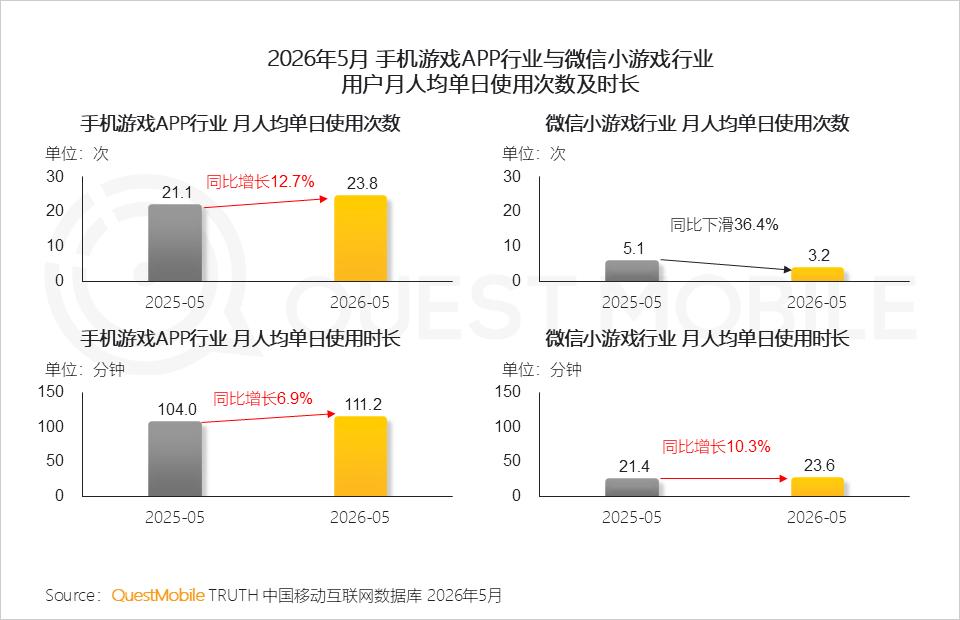
The report points out that the mobile gaming industry currently exhibits two major characteristics: "higher frequency" and "longer session duration". The improvement in user stickiness is mainly reflected in increases in both the number of daily uses and total playtime. In May this year, the average number of daily uses per user for mobile game apps rose 12.7% year-on-year to 23.8 times, while the average daily playtime per user increased 6.9% year-on-year to 111.2 minutes.
In contrast, the improvement in stickiness for WeChat mini-games is primarily driven by longer single-session playtimes, with user behavior shifting toward mid-core and hardcore game genres.
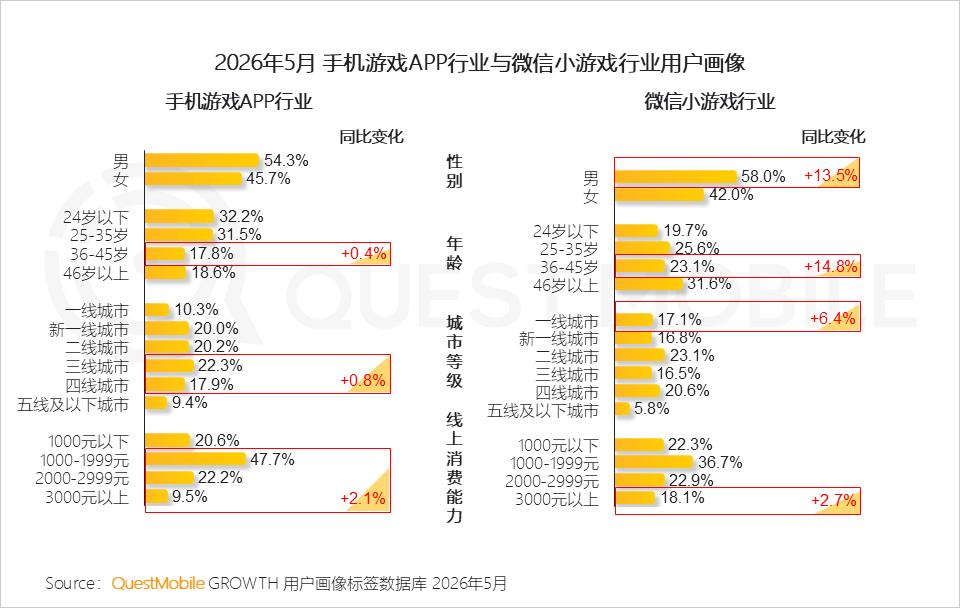
Looking at user demographics in detail: for mobile game apps, users under 24 account for over 30% of the total, and users with online spending power below 2000 yuan make up as high as 68.3%, highlighting the prominent traits of a young user base with moderate to low spending power. Compared to the same period last year, the share of users aged 36-45, users in tier-3 and tier-4 cities, and users with online spending power over 1000 yuan has seen a slight increase, showing that the overall user base is expanding gently.
WeChat mini-games, leveraging advantages such as easy access points and social sharing among acquaintances, have reached a broader age demographic, while their user share in tier-1 and tier-2 cities has risen to 57%. Notably, the proportion of male users, users aged 36-45, users in tier-1 cities, and users with high online spending power has grown significantly.
It is worth mentioning that the report dedicates considerable attention to the penetration of AI in the gaming industry.
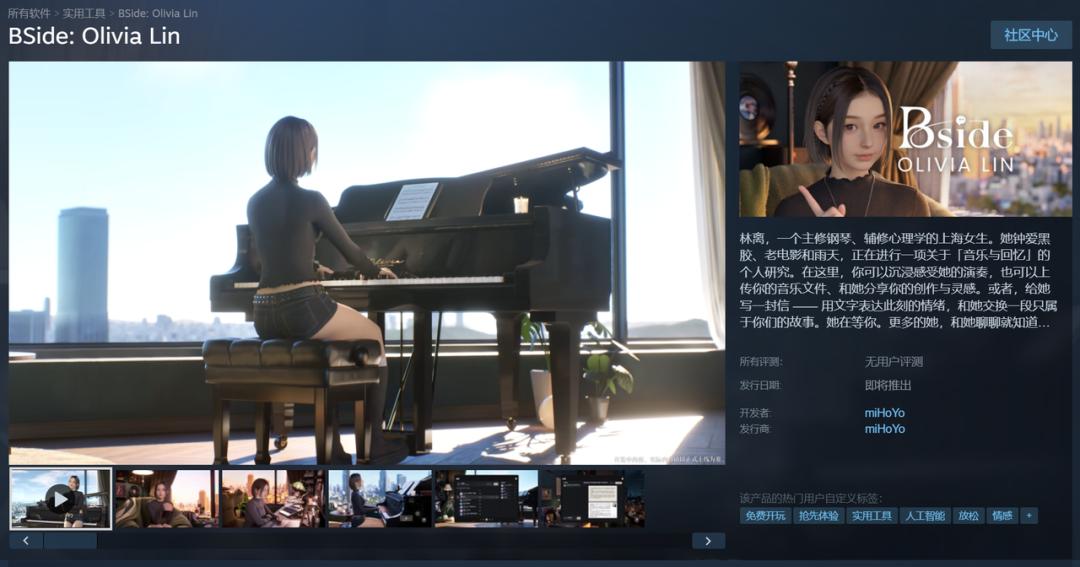
Over the past year, AI has evolved from a behind-the-scenes efficiency-boosting tool to a front-stage role that reshapes game products and business models. More and more developers are deploying AI across multiple paths, including creation platforms, self-developed products, and production pipelines. For example, Tencent's Photon Studio Group launched the "Creation Workshop" AI creation platform; NetEase Games has implemented AI-native gameplay such as intelligent NPCs, AI teammates, and studio-style modes in multiple flagship titles; miHoYo also recently unveiled its AI-powered interactive companion application BSide: Olivia Lin.
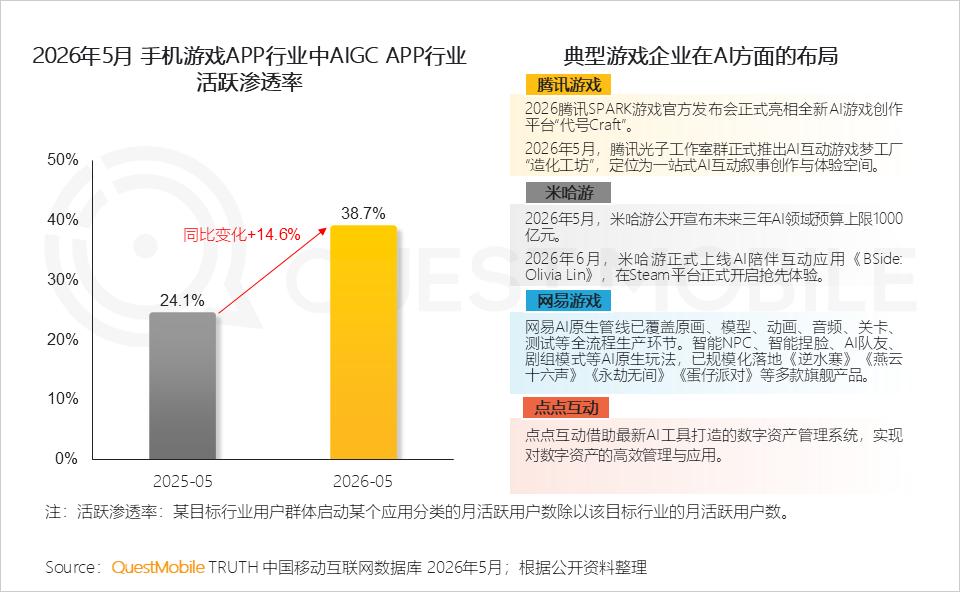
Report data shows that in May 2026, the active penetration rate of AIGC features in the mobile game app industry has reached 38.7%, a 14.6% year-on-year increase. The focus of industry competition is gradually shifting toward AI-native interactions and virtual world ecosystem development.
02
Diverse New Game Genres
Goose Goose Duck and Roco Kingdom Emerge as Breakout Hits
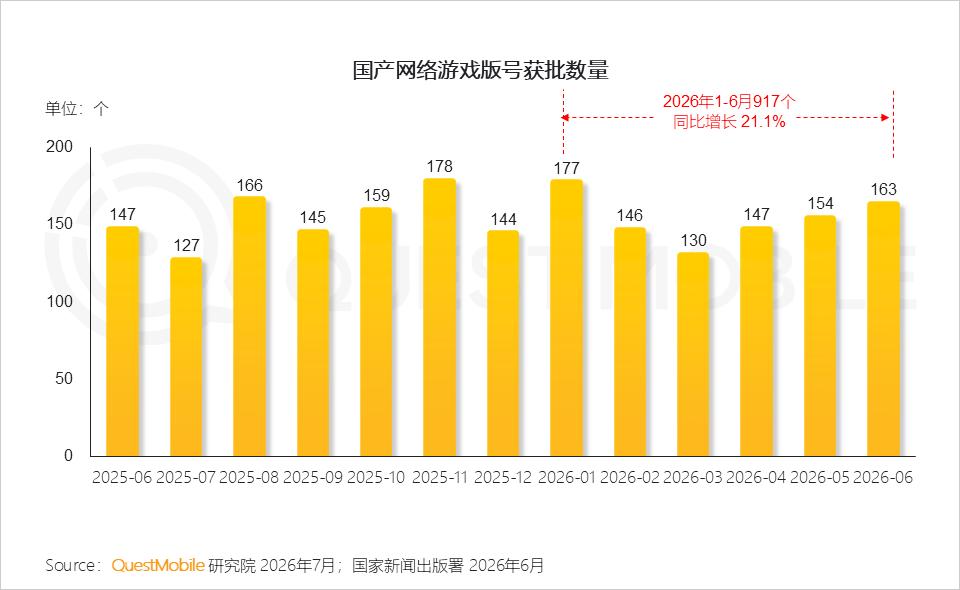
Thanks to the steadily expanding volume of game approvals, the total number of licensed titles in H1 2026 increased 21.1% year-on-year. The continuously released game licenses have provided ample space for new game creation and commercial expansion, giving rise to many promising breakout titles.
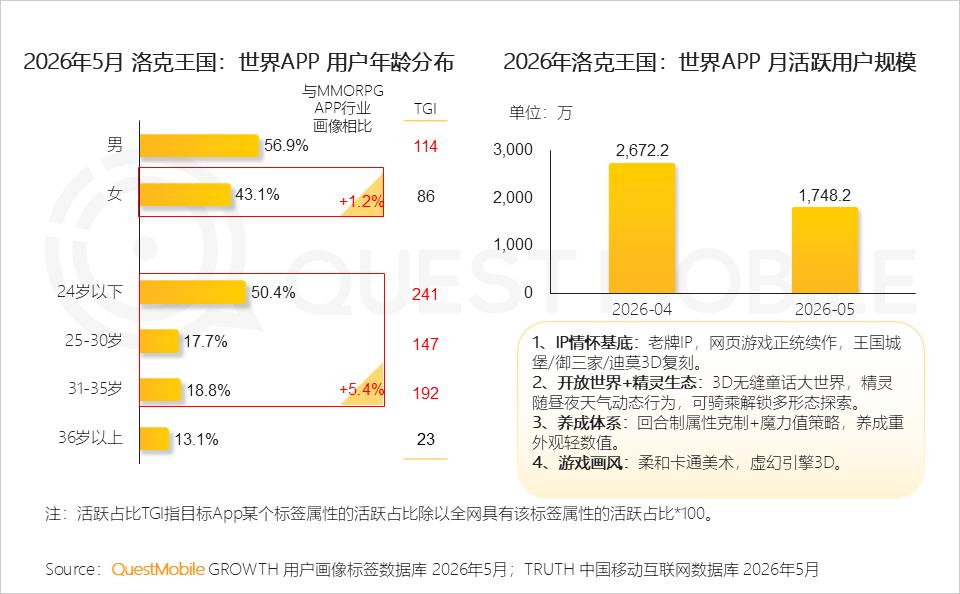
Many high-popularity new mobile games launched this year, with the top 10 new releases featuring relatively diverse genre layouts. Notably, hardcore long-cycle games have attracted a large number of users. Roco Kingdom: World leverages its accumulated gameplay experience and nostalgic IP appeal to gain a traffic advantage, recording 17.482 million MAUs in May, with its user base primarily consisting of people under 35, and a higher proportion of male players. The lightweight cartoon style inherent to its IP has effectively expanded the audience boundary of traditional MMORPGs, and among similar titles, its share of female users is also above the industry average.
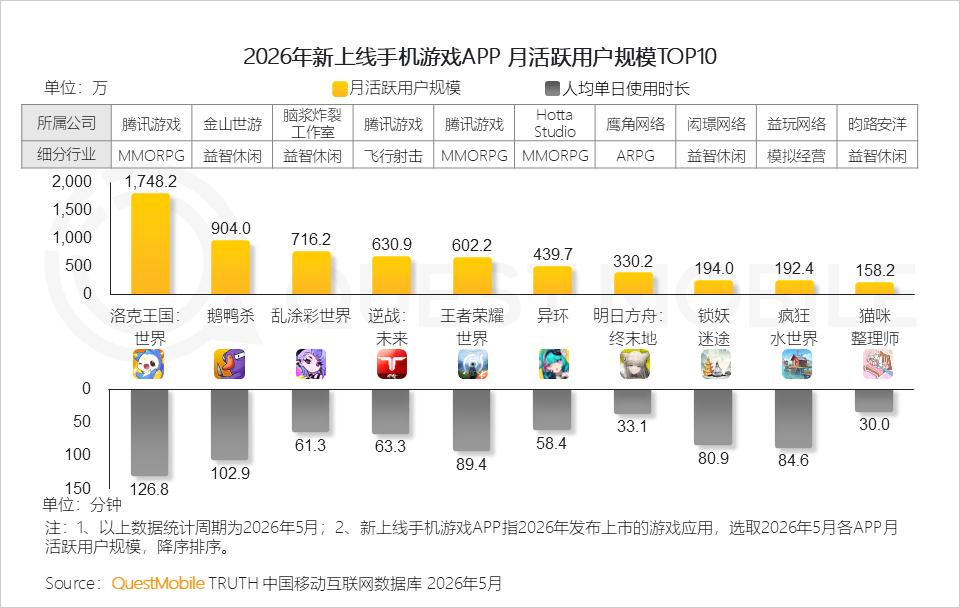
Puzzle and casual new games performed exceptionally well on this list, taking up four spots in total, making it the most concentrated genre in the top 10. This clearly demonstrates the strong appeal of lightweight gameplay in the current market.
Among them, Goose Goose Duck, which ranks second in MAUs, is exactly such a genuine "casual social dark horse". With its lighthearted, quirky multiplayer deduction and interaction mechanics, the game precisely taps into players' social needs. Just 6 days after its public beta launch in early January, it hit 10 million users, with its peak concurrent users exceeding the historical peak of the PC version. It still recorded an MAU of 9.04 million in May.
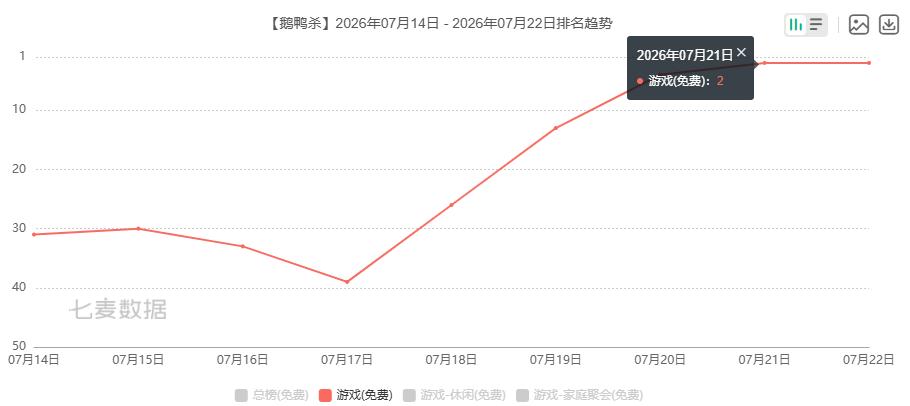
The huge user base, combined with the highly interactive nature of social deduction gameplay, has brought massive community traffic to the game. Recently (July 20), Goose Goose Duck launched a collaboration event with CCTV's classic 1986 TV series Journey to the West, integrating Journey to the West elements into multiplayer party scenarios, and reimagining the classic characters such as the Tang Monk and his three disciples in the signature "Goose Goose Duck" art style. The event quickly pushed the game to the second spot on the iOS free games chart, and it still has potential to further break into the mainstream public view.
Another coloring and creation title, Color Splash World, meets players' fragmented relaxation needs with its extremely low operation threshold and stress-relieving attributes, expanding the imaginative possibilities of the puzzle and casual genre in its niche experience, with 7.162 million monthly active users.
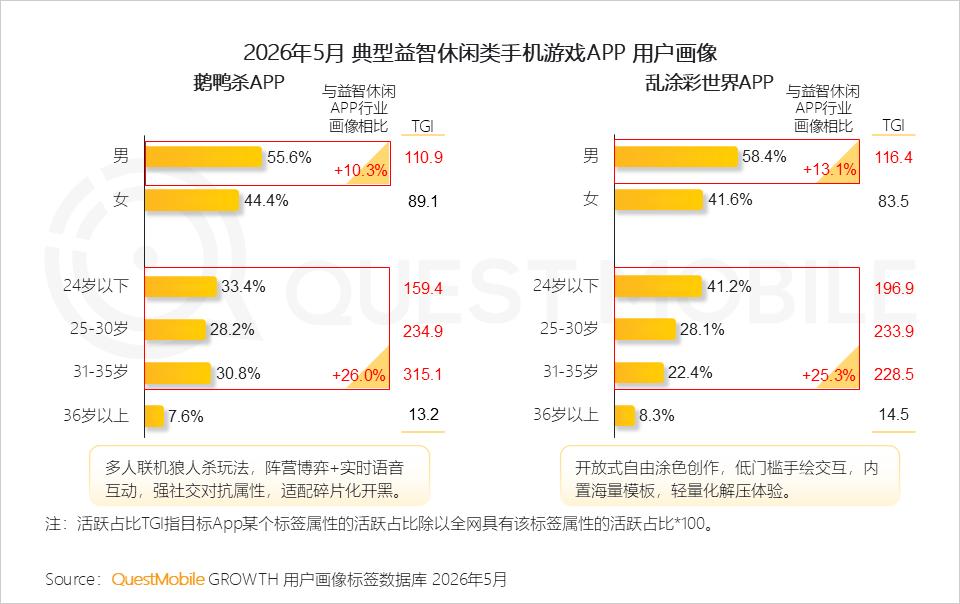
The report shows that the users of Goose Goose Duck and Color Splash World are both concentrated in male groups under 35, and their active user shares are higher than the industry average for puzzle and casual games. Whether it's social interaction or stress-relieving creation, the depth of engagement of young male users in the casual gaming track is rising. The user duration and stickiness that lightweight gameplay can support may be far more considerable than the industry previously realized.
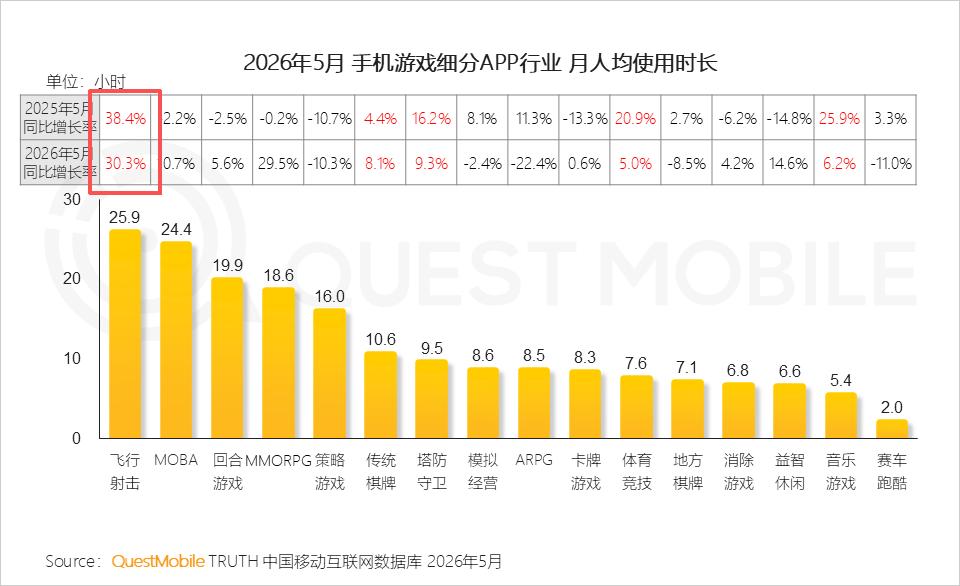
The casual gaming segment focuses on broad audience coverage, while long-term progression-based products have greater advantages in terms of user immersion depth. Among them, the flight shooting genre stands out particularly, with per capita usage duration maintaining double-digit growth for two consecutive years.
The report shows that in May, the top 10 flight shooting mobile games presented a "one dominant, multiple strong" pattern. Tencent's Delta Action boasted a user base of nearly 70 million, firmly occupying the top spot; other new Tencent titles Valorant: Energy Action and CrossFire: Future also delivered impressive performances. For other titles, games such as Elite Mini Shooter, White Noise 2, and Thunder Fighter: Assembly achieved year-on-year user growth, making the genre increasingly competitive.
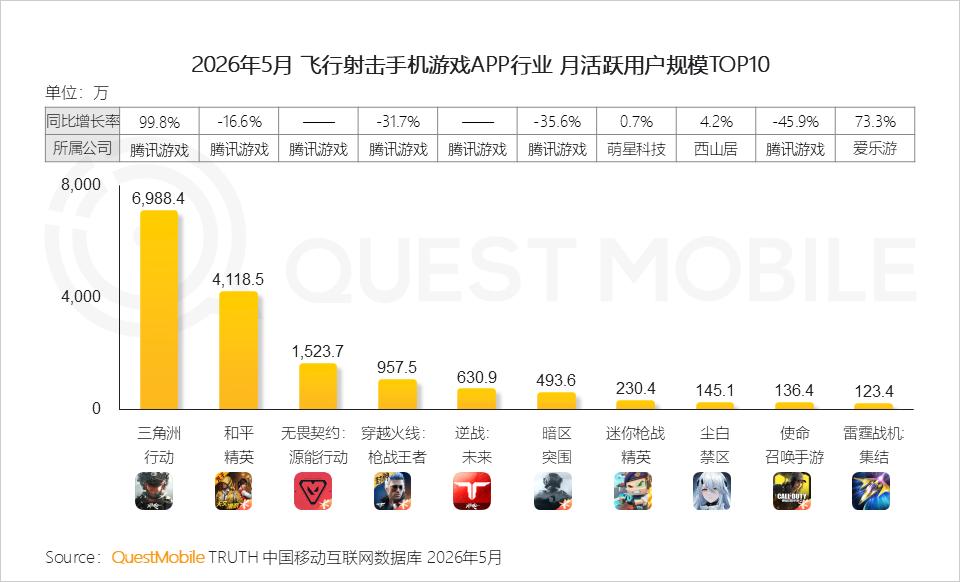
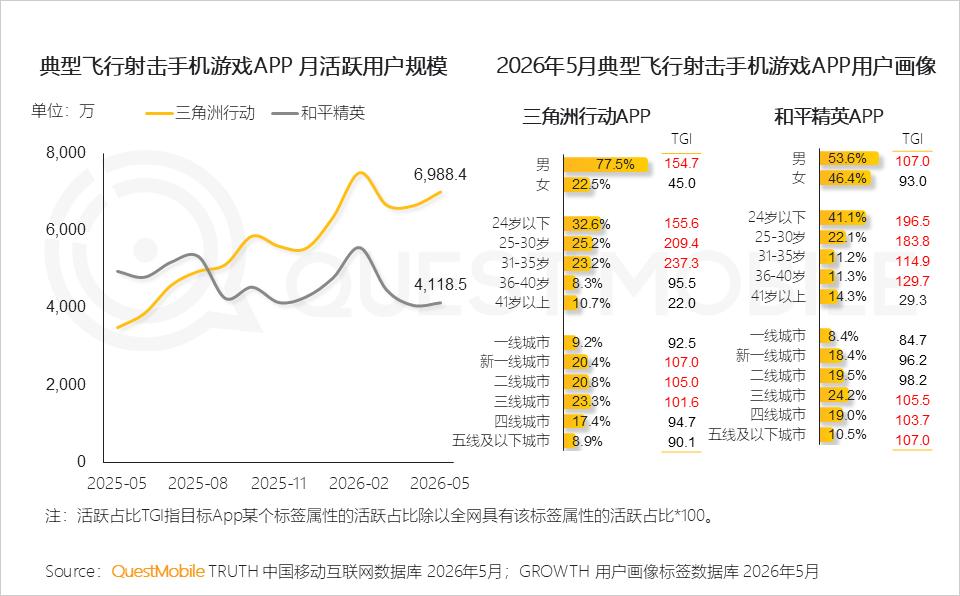
From a product structure perspective, Tencent's two top shooting games complement each other with distinct differences. Delta Action focuses on hardcore realistic tactical content, attracting over 70% male users under 35; while PUBG Mobile has a more gender-balanced audience, and the game has deepened its presence in lower-tier markets to stabilize its existing user base. Together, they form a genre landscape where "new titles drive growth, while established titles secure the core user base".
Notably, Thunder Fighter: Assembly has carved out a differentiated niche track with its retro vertical air combat level-clearing gameplay, relying on its classic IP. The game's main audience consists of male users under 40 in tier-1 and tier-