Can smart rings measure blood pressure? This is either a boast or a scam.
If we at 3eLife were to select the most "overhyped" tech products of the past two years, smart rings would definitely be on the list.
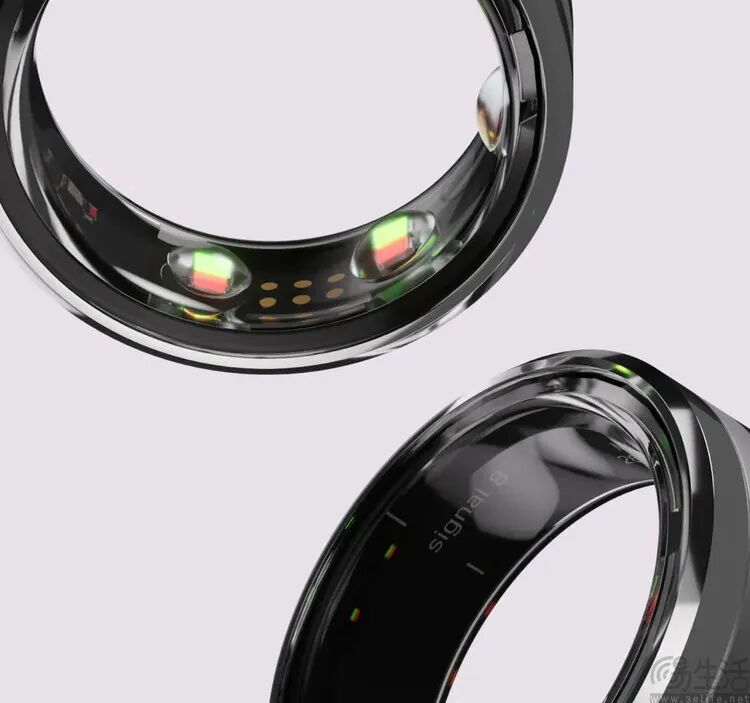
Why are smart rings unreliable? Their tiny form factor means that at present, they simply cannot be equipped with truly high-precision, sufficient sensors, nor can they accommodate high-performance main control chips capable of complex calculations.
Constrained by their compact size, the battery capacity of smart rings is also very limited at this stage. This not only results in extremely short battery life, but on some devices can even cause the battery to age and swell quickly, creating potential safety hazards.
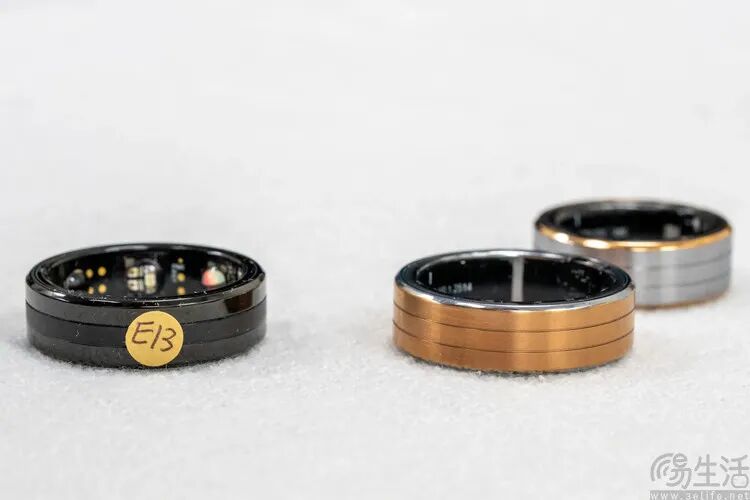
For this reason, the vast majority of leading manufacturers currently maintain a cautious attitude toward smart rings. Even the few brands that have launched related products only emphasize that smart rings are lighter and more unobtrusive to wear (compared to watches and bands), and will never highlight any practical "advantages in health monitoring".
Yet a niche brand claims its ring can measure blood pressure
Recently, a smart ring startup named "Signal" has drawn widespread attention and skepticism due to its wildly exaggerated marketing claims.
According to reports from Bloomberg, the company seems to be "spinning a fairy tale". The startup claims its founder is a California-based tech professional who launched the company "dedicated to revolutionizing blood pressure measurement" after a delayed hypertension diagnosis nearly cost him his life.
What's even more suspicious is that Signal, in its public statements, has essentially criticized all mainstream blood pressure measurement methods in use today. In their words, traditional cuff-style sphygmomanometers can produce inaccurate readings due to improper wearing, sudden nervousness, or even occasional dietary differences.
As for most of the current smart watches and bands that claim to measure blood pressure without a cuff, Signal says these devices cannot actually obtain a real "blood pressure value", but can only roughly detect whether the user's blood pressure is rising or falling. Moreover, to keep this function relatively accurate, users still need to regularly "calibrate" the devices with a cuff sphygmomanometer, making them neither practical nor easy to operate.

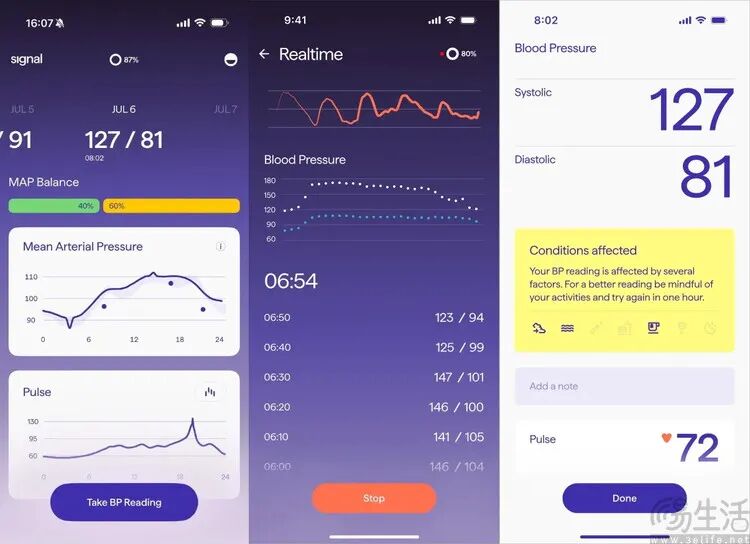
Of course, after criticizing competing products across the board, Signal's ultimate goal is to promote its own solution. The company claims that its "Signal Ring" smart ring can achieve continuous cuff-free, calibration-free blood pressure monitoring that can output specific blood pressure readings.
Obviously, this marketing approach is far too overt, leading many overseas media outlets to accuse Signal of making empty boasts. A Bloomberg report noted that its journalists tested the Signal blood pressure smart ring and found the measurement data to be inaccurate, further fueling public doubts about the company.
Signal's official website alone is full of flaws
Is the Signal Ring blood pressure ring reliable? Initially, since the product was unavailable for purchase, we had no way to conduct any testing.
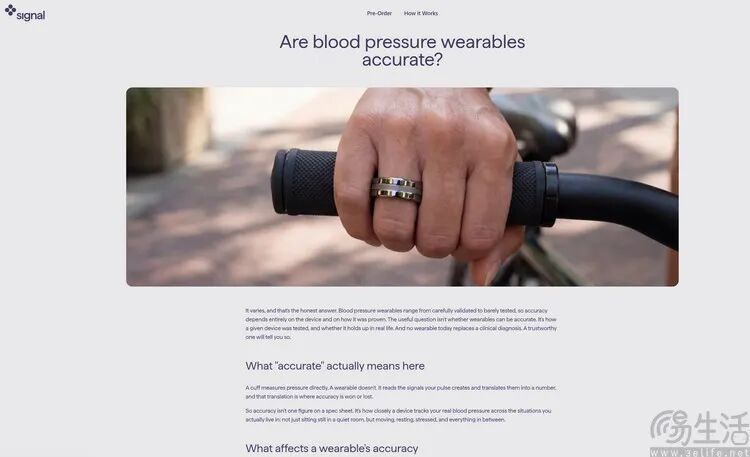
Fortunately, Signal published an article on its official website that explains in detail "why traditional cuffless watches are inaccurate for blood pressure measurement" and "why their product works". After reviewing the article, we indeed found loopholes in this so-called "blood pressure ring".
First, there is a fundamental question to clarify: is it even possible to measure blood pressure without a cuff, using only an optical heart rate sensor?
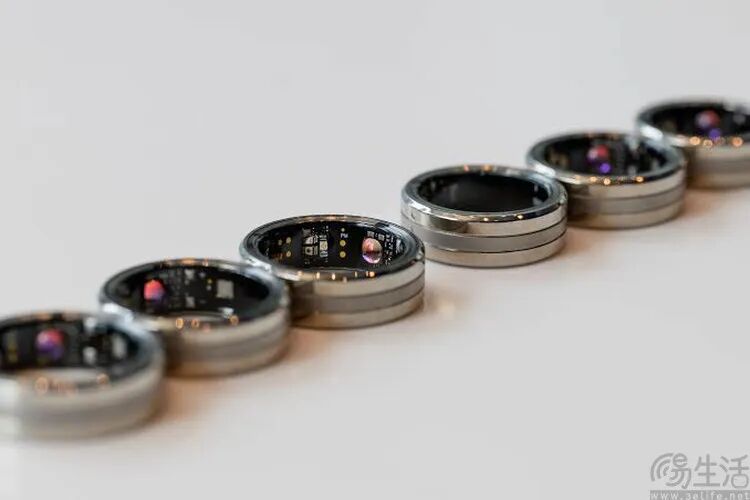
Theoretically, this is possible. The medical community has long had a core relevant formula (the Moens-Korteweg equation), which can be used to estimate changes in blood pressure based on variations in pulse waves, and pulse waves can be detected by an optical heart rate monitor.
If that is the case, why are there still no reliable cuffless optical sphygmomanometers available? Because this formula has an inherent flaw: changes in pulse waves are affected not only by blood pressure, but also by blood vessel diameter and vascular stiffness, and these three factors are coupled variables.
Put more simply: if your blood vessels constrict due to cold weather, or if you suffer from arteriosclerosis, the resulting changes in pulse waveform will be exactly identical to those caused by elevated blood pressure, making it impossible to distinguish the two scenarios from the waveform alone.

Therefore, when Signal claims that using "a sensor four to five times faster than ordinary models" allows them to measure blood pressure, they are essentially dismissing the established scientific formula, and even demonstrating a lack of basic physical knowledge.
That's not all. Signal also states in the article that their ring "does not require regular calibration". How is this supposedly achieved? In reality, Signal has simply built a general population algorithm model into the device, while traditional devices require manual user calibration to create a personalized algorithm model.
Which is more accurate: a general model or a personalized one? The answer is self-evident.

Furthermore, aside from the unsolvable signal differentiation problem inherent in the technical principle itself, factors affecting the blood pressure measurement accuracy of wearable devices also include wearing tightness, skin color, arm position, subcutaneous fat thickness, medications, and dietary habits. Signal makes no mention of these interfering factors in its article, and only hypes up its two so-called selling points: the "high-speed sensor" and "no calibration required".
A dedicated blood pressure wearable is not entirely impossible, but a blood pressure ring is unrealistic for now
If you truly need a smart watch or band that can monitor blood pressure anytime, anywhere, there are viable solutions available today.
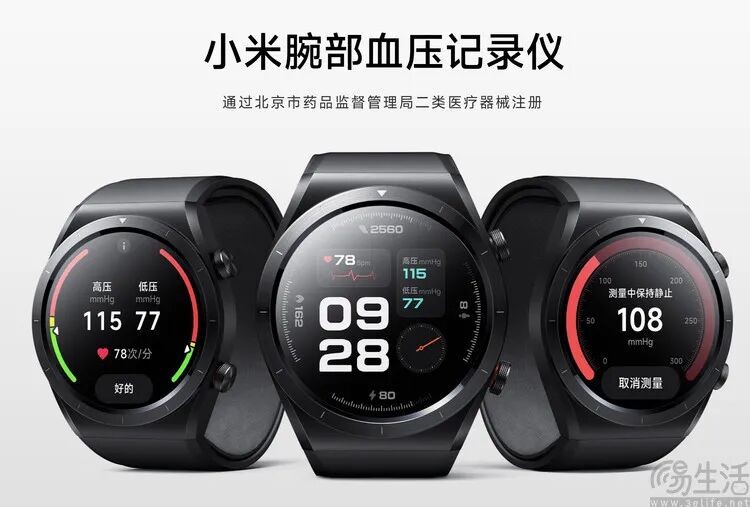
The best choice is of course devices equipped with an independent airbag, as they directly use the most traditional airbag inflation method to measure blood pressure, which theoretically delivers the most authentic monitoring data comparable to that of a cuff sphygmomanometer. Naturally, such devices also have obvious shortcomings: first, the airbag inside the watch strap is highly non-breathable, and second, measurements must be taken while sitting still, making it impossible to perform monitoring during physical activity.
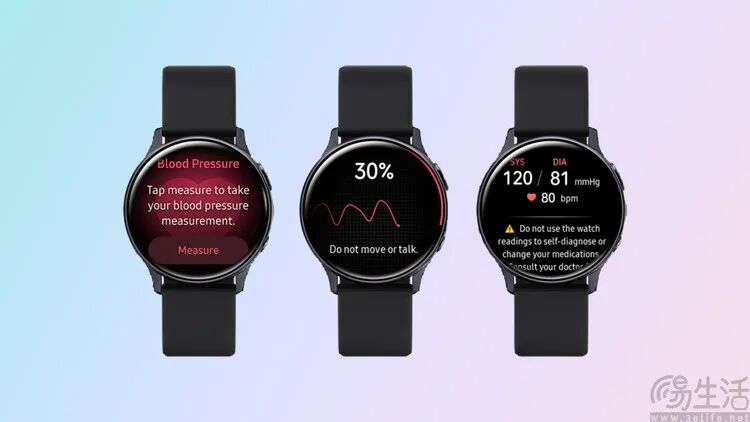
If you are not fond of such medical-grade devices, you should at least choose a well-known brand's full-featured smart watch that explicitly supports blood pressure monitoring. As mentioned earlier, such devices cannot measure perfectly accurate blood pressure values, but with regular calibration, they can at least tell you whether your current blood pressure has risen or fallen relative to the baseline, which can serve as a useful reference.
And why a full-featured smart watch specifically? Because this measurement method is highly computationally intensive, and light smart watches with insufficient performance will see their accuracy drop even further.
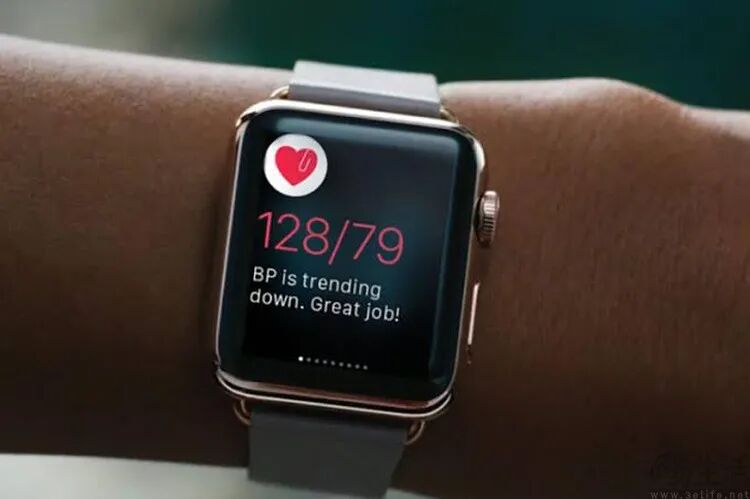
According to current industry rumors, wearable blood pressure monitoring devices that combine pulse wave and ultrasonic dual sensors are indeed under development. Such devices can use ultrasonic sensors to measure vascular elasticity and diameter, which can effectively avoid the "inherently inaccurate" problem of the pulse wave formula. However, related products are still not on the market, so all "mass-produced products" claiming to use this technology can currently be considered fraudulent.
As for smart rings? Their low performance and extremely limited number of sensors mean that even for basic daily measurements like heart rate and blood oxygen, they cannot guarantee the validity of the data, let alone measure blood pressure.
Looking at the market landscape, on one hand, smart rings are indeed more "novel" than smart watches and bands, making them more appealing to consumers who lack technical knowledge and only seek emotional value. On the other hand, precisely because smart rings have inherent shortcomings in hardware specifications and practical functions, related manufacturers—especially niche brands—have greater incentives to make false boasts and deceive consumers to cover up their insufficient product capabilities.
This article is from the WeChat Official Account "3eLife" (ID: IT-3eLife), written by 3eJun, and published by 36Kr with authorization.