Seven months after the collapse of Huiwang, the Southeast Asian guarantee platform industry has witnessed a major reshuffle.
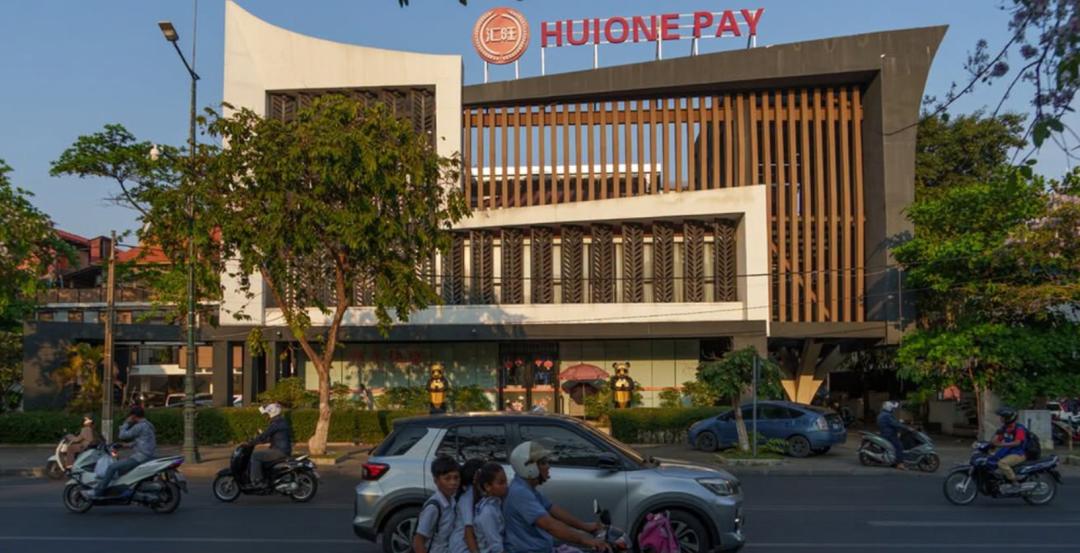
On December 1 last year, Huivang Pay, widely known as the "Alipay of Southeast Asia", officially collapsed.
Since then, the vigorous "era of unregulated finance in Southeast Asia" has come to a complete end. Contrary to expectations, the "war of escrow platforms" did not end here; instead, it kicked off a new round of aggressive market expansion. More escrow platforms rose to prominence, absorbing the users and market left by Huivang, and opening a new chapter of intertwined elements such as "finance and freedom, illicit industries and money laundering, trust and escrow".
To this day, escrow platforms including Xinbi, Jinbei, Dali, and FullyLight have gradually stepped into the spotlight, inheriting Huivang's legacy: on one hand, they open wide the doors for illicit and gray-area industries and money laundering businesses; on the other hand, they continue to act as the commercial role of "trust intermediaries".
In the land of Southeast Asia, which boasts both openness and conservatism, another storm involving money, dreams, and danger has already begun.
The Fall of Huivang: $15 Billion in BTC Seized by the US, 900,000 Users Lose All Their Investments
Four years ago in 2021, Huivang was just an obscure currency exchange platform in Cambodia, with an early peak business throughput of around $2-3 billion. Four years later, this currency exchange platform transformed quietly, expanding into an underground financial empire centered on escrow platforms that handled hundreds of billions of dollars in funds — according to the *UNODC May 2025 Report*, it had received over $24 billion in cumulative crypto funds. Underpinning the operation of this system were 900,000 registered users, 9,289 public Telegram groups, and the gray and illicit industry network behind these groups, woven together by scam compounds, human trafficking, and pig-butchering scams.
Behind this massive web of interests was Zhi Chen, the actual controller of the Prince Group. In October 2025, the US Department of Justice and the Department of the Treasury filed criminal charges against Zhi Chen and issued a global arrest warrant, seizing 127,000 bitcoins under his name (valued at about $15 billion at the time), setting the record for the largest single crypto asset seizure in US judicial history. The Prince Group has since become a thing of the past. (Recommended reading: *$15 Billion BTC Changes Hands: US DOJ Dismantles Cambodia's Prince Group, Which Transformed Into the World's Largest BTC Whale*.)
The collapse of the Prince Group almost immediately rippled through Huivang. With the fall of the Prince Group, its largest funder and liquidity provider, Huivang's capital chain broke: on December 1, 2025, Huivang issued a statement on deferred redemption; two days later, the National Bank of Cambodia claimed that its license had been revoked back in 2024 and the company had completed liquidation. The once bustling offline scene of "issuing over a thousand new accounts every day, with users queuing to withdraw cash" ultimately turned into a string of numbers on the books, ranging from thousands to hundreds of thousands of dollars, that could never be withdrawn again.
A gray industry practitioner lamented that taking down Huivang was "shaking the foundation of Cambodia's gray industries". But beneath that foundation, new escrow platforms had long been growing like wild grass in the shadows.
After Huivang, Who Are the Candidates for the "Next Alipay of Southeast Asia"?
As early as May 14, 2025, security firm Elliptic pointed out in a report that the Telegram platform had banned thousands of crypto crime groups and channels related to "XinBi Escrow". By 2024, this platform had processed over $8.4 billion in suspicious transactions in total, ranking alongside the Huivang Group as one of the "largest crypto black markets".
After Huivang's collapse, Xinbi and many second-tier escrow platforms took greater care to hide their escrow businesses behind a variety of self-operated platforms.
Xinbi: The Most Promising Escrow Platform to Become the "Second Huivang", With Total Revenue Exceeding $1.6 Billion
In early July this year, a "$1.7 Million Crypto Exchange User Asset Theft Case" brought Xinbi back into the public spotlight.
Through a series of on-chain investigations, security firm Bitrace found that the attacker transferred the stolen funds in multiple transactions to the same user address on the Newpay platform. It is understood that this entity is a crypto payment tool launched by Xinbi Escrow, whose predecessor was Xinbi Wallet, a Telegram Bot-based no-KYC payment tool launched in 2025 (Note from Odaily Planet Daily: After Xinbi developed its self-operated application Xinbipay, that channel was shut down, users were migrated to a mobile app, and finally the platform renamed it Newpay to evade supervision).
According to Bitrace's monitoring, the Xinbi Escrow platform, founded in 2022, has generated total revenue exceeding 1.6 billion USDT. After the collapse of the Huivang Group, its business growth rate has been particularly rapid.
Linghang / Tiger Escrow: A Human Trafficking Escrow Platform Operating Under the Guise of "Overseas Labor Services"
Among the top escrow platforms in Southeast Asia, Linghang Escrow is the only one that operates "public groups and exclusive groups for overseas labor services" (Note from Odaily Planet Daily: Public groups refer to open groups that provide long-term transaction escrow services, while exclusive groups refer to private groups that provide temporary transaction escrow services, similar to large groups and small groups on WeChat), and the platform explicitly states that it provides escrow services for "forced abduction transactions" (Note from Odaily Planet Daily: "Forced abduction" is industry jargon referring to kidnapping).
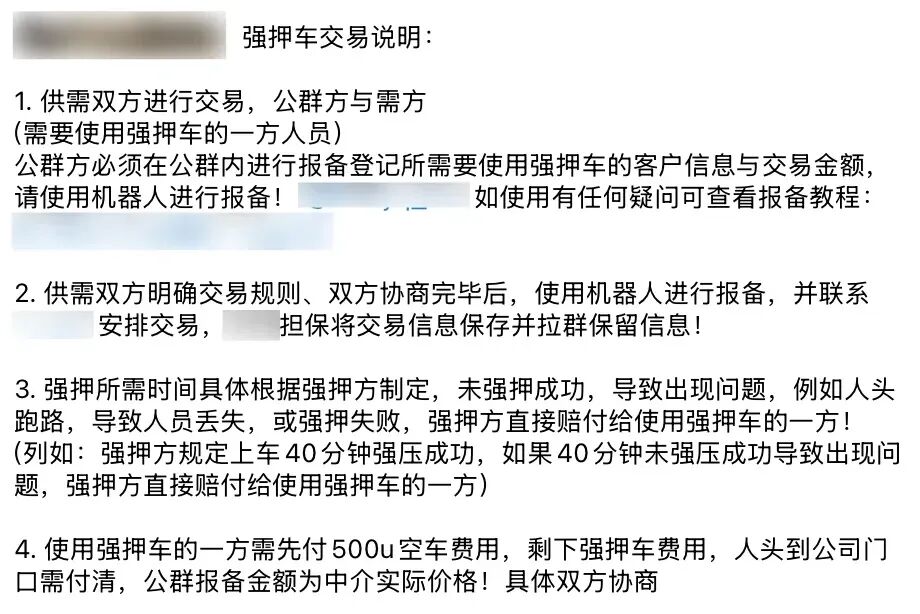
According to Bitrace's monitoring, the collateral address of a certain exclusive group on Linghang Escrow was activated on February 23, 2025. In less than 5 months since then, over 100 million USDT has flowed into this address, and this is only the deposit submitted by merchants operating "forced abduction escrow business" under Linghang Escrow to the exclusive group address. Within the deposit limit, merchants can repeat their operations, so the actual transaction volume and the amount of funds related to transnational human trafficking in Southeast Asia far exceed this figure.
Jinbei / Jinbo: An Escrow Platform Focusing on Online Gambling
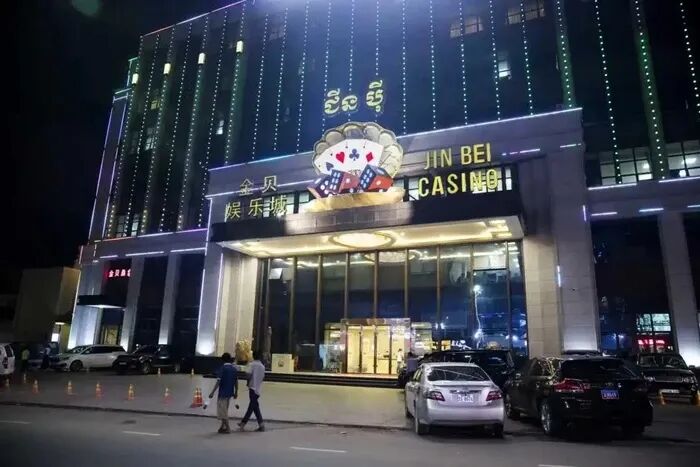
This platform was originally co-founded by Zhi Chen, the founder of the Prince Group, and the children of powerful Cambodian government figures, with its full name being Jinbei Cambodia Investment Co., Ltd. To cover its tracks, the company is said to be closely linked to Zhi Chen's casino business in Sihanoukville, Cambodia, so it has long focused on escrow services related to online gambling.
Affected by events such as the collapse of the Prince Group, Jinbei was previously sanctioned by the US government. Last year, the Cambodian Gambling Regulatory Board and Cambodian police once launched a severe crackdown and shut down some of Jinbei's casinos. But according to insiders who later revealed: "Only Jinbei 1 and Jinbei 3 casinos were closed, and the 6 affiliated compounds under Jinbei are still operating as usual." At present, Jinbei has been renamed Jinbo Escrow Platform.
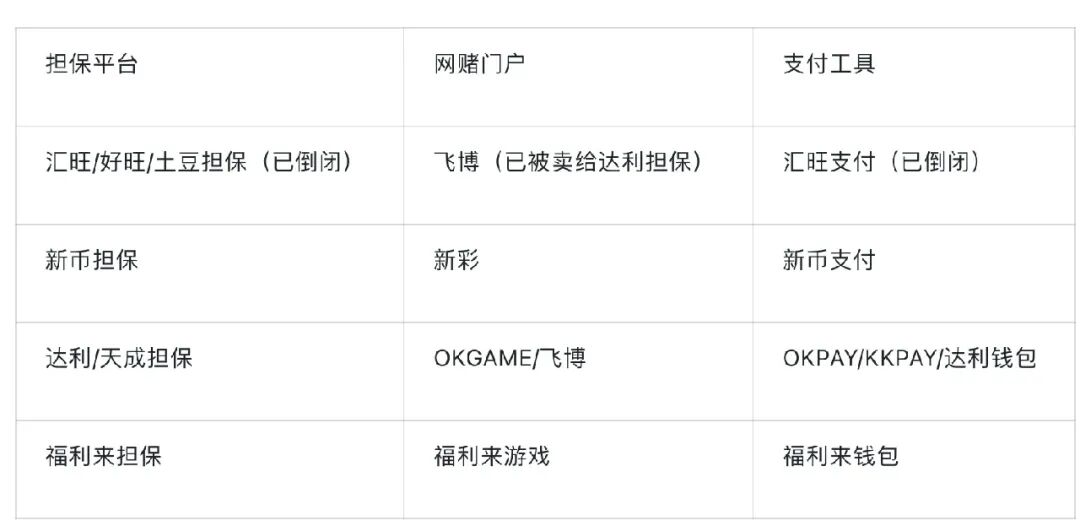
Dali / Tiancheng Escrow: Inheriting Huivang's Potato Escrow Business
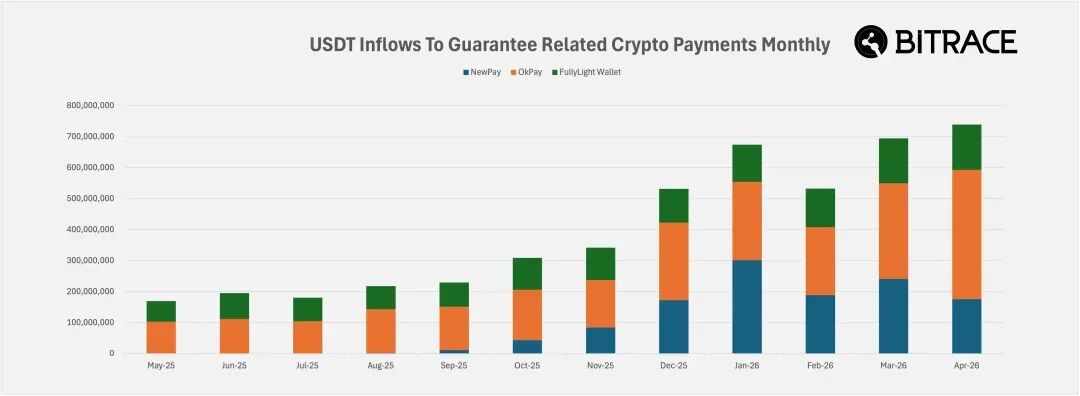
According to Bitrace's monitoring, after Potato Escrow and Huivang (Haowang) Pay suspended redemptions, the user scale of Xinbi Escrow, Dali Escrow, FullyLight Escrow and their respective payment tools increased significantly. Among them, OkPay under Dali Escrow inherited a large number of public groups from Potato Escrow, showing the largest growth.
According to statistics, between May 2025 and April 2026, the three payment tools NewPay, OkPay, and FullyLight Wallet collectively received over 4.8 billion USDT in funds. At present, Dali Escrow is mainly active in the market under the name of Tiancheng Escrow.
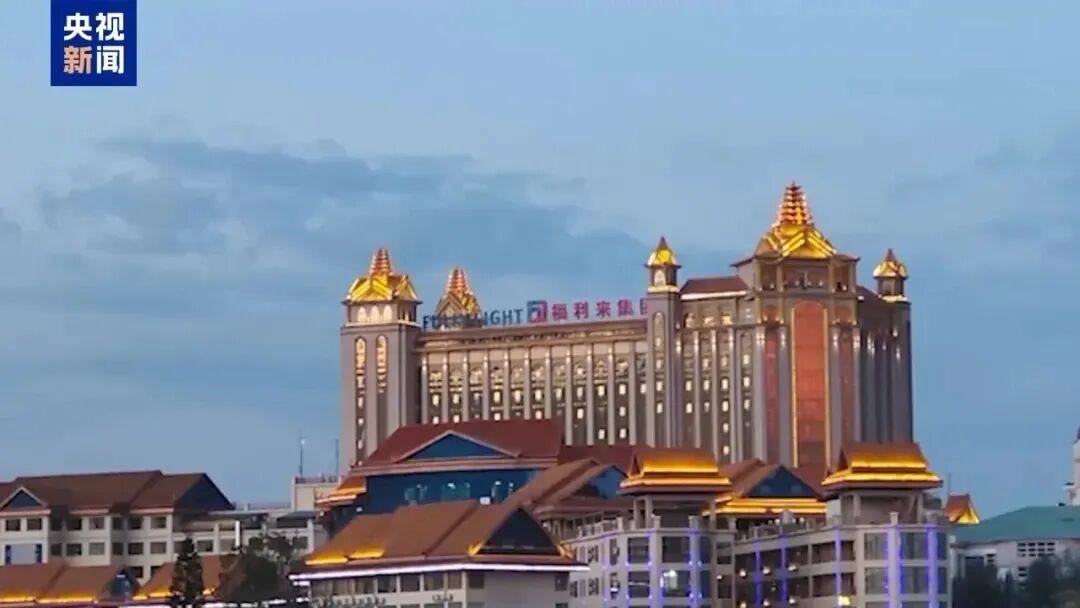
FullyLight Escrow: The Industrial Chain of a Compound Affiliated to One of the Four Major Families in Northern Myanmar
In 1996, after completing the primitive accumulation of capital through early drug trafficking, Zhengxiang Liu (formerly known as Liu Abao) founded the FullyLight Group in the Kokang Autonomous Region of Myanmar. Later, the group's business expanded to cover multiple fields including cultural tourism, hotels, real estate, and entertainment, gradually becoming the core enterprise of the Liu Abao family, and step by step driving its growth into "one of the four major families in Northern Myanmar".
In 2025, the Ministry of Public Security cracked the case of the Liu family criminal group, finally verifying that the family was involved in over 2.6 billion yuan in scam funds, over 8 billion yuan in gambling funds, more than 17 million yuan in extortion proceeds, and more than 16 million yuan in illegal income from organizing prostitution.
It is worth mentioning that FullyLight Escrow was established mainly to serve the major local scam compounds and meet their "labor demand". At present, the Liu family criminal syndicate has been dismantled.
When Escrow Platforms Become Illicit Industry Intermediaries, the "Southeast Asia Alipay" Label Is Just a Facade
In June this year, Elliptic, in coordination with the FBI during the implementation of "Operation Riptide", updated the data related to the Huivang platform. Among the figures, the Huivang escrow market received a cumulative total of over $310 billion in funds; Huivang Pay processed over $1.03 trillion in cryptocurrency payments. Huivang Escrow has become the largest online illegal market in history, far exceeding previous dark web markets such as Silk Road ($216 million), AlphaBay (over $1 billion), and Hydra (over $5 billion).
Looking back at the 5 escrow platforms mentioned above, they are just a little-known hidden corner of Southeast Asia's "distorted financial ecosystem". On this rapidly developing land that has not been fully prepared in terms of infrastructure and systems, financial services have become a hotbed for crimes such as human trafficking, compound scams, pig-butchering scams, and online gambling.
The so-called "Alipay of Southeast Asia" is just a joking nickname from the outside world, by no means a commercial achievement.
Right now, they may be enjoying the glory of earning millions of dollars every day, but justice will not be absent.
References:
The Rise and Fall of a Telecom Fraud Empire Behind $15 Billion
http://www.ifengweekly.com/detil.php?id=25975
Bitrace Releases 2026 Investigation Report on Illegal Cryptocurrency Transaction Escrow Platforms
Behind Myawaddy: The Singularity Moment of Asian Illicit Industries and the Global Underground Society's Shift of Power from West to East
https://www.huxiu.com/article/4783294.html
US Department of the Treasury Financial Crimes Enforcement Network: Advisory on Money Laundering Activities of the Huivang Group
https://public-inspection.federalregister.gov/2025-07837.pdf
This article is from the WeChat Official Account "Odaily" (ID: o-daily), author: Wenser, published by 36Kr with authorization.