Haidilao and Trump are making aggressive bottom-fishing moves on brands like Sushiro.
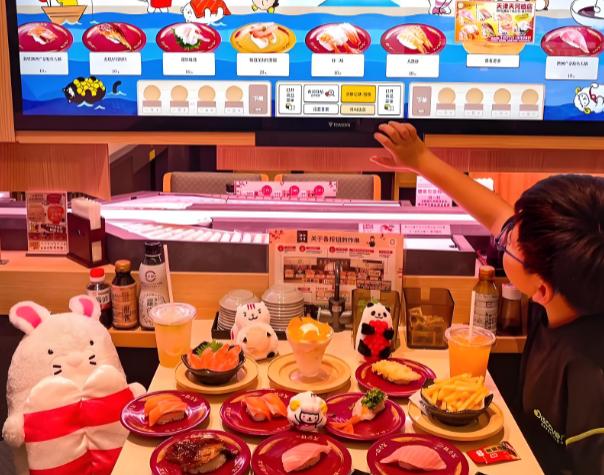
On July 20, Sushi You, a sushi brand under Haidilao, opened two new stores in Wuhan, marking its first entry into the Central China market. Together with its first store launched in Hangzhou last October, the brand is gradually transitioning from validating its single-store model to small-scale chain expansion.
Coincidentally, Trump, who is on the other side of the ocean, also shares a strong optimism for the sushi market alongside Haidilao.
From January to March this year, he spent 160 million to 800 million Japanese yen (approximately 6.83 million to 34 million RMB) purchasing stocks of Kura Sushi USA, the U.S. subsidiary of the Japanese sushi chain Kura Sushi.
He does not like eating raw fish at all, and even his former colleague President George H.W. Bush once spat out sashimi at a state banquet. However, this does not stop both him and Haidilao from targeting the $30 billion global sushi market.
Influenced by Sushiro?
"8 yuan, 9.9 yuan, 15 yuan, 19.9 yuan, 28 yuan. The average customer spend is generally 88 yuan."
This is the pricing structure set by Haidilao's Sushi You. Its main price range falls between 9.9 yuan and 15 yuan, which is slightly cheaper than Sushiro's average per-person spend of 120-130 yuan.
The menu mainly features Norwegian salmon, red shrimp, sweet shrimp, tuna, and other ingredients.
An insider in the sushi industry told Muhe Business & Finance that, simply judging from the official order of ingredients, placing salmon at the front actually caters to Chinese consumers' different preferences for sushi.
"In Japan, tuna is the most popular. But in China, people prefer salmon. In addition to eating raw fish, they also favor seared sushi. Therefore, after entering the Chinese market, Sushiro also prioritized salmon in its offerings."
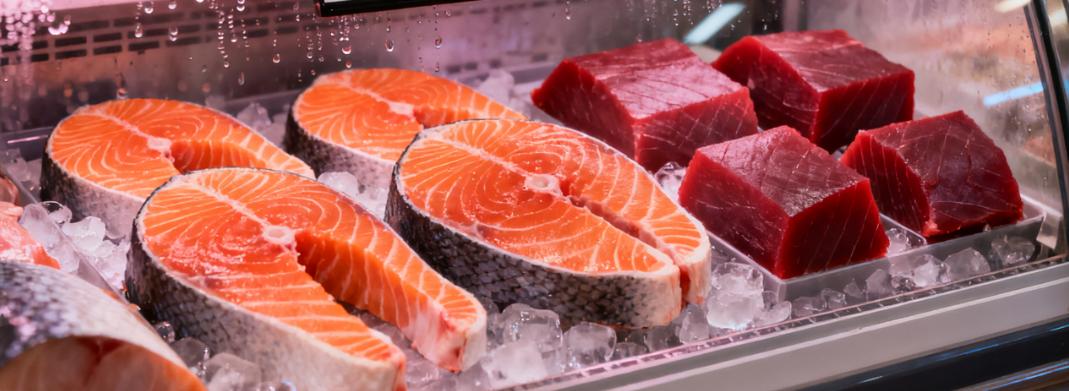
Figure | Compared to tuna, Chinese consumers seem to prefer salmon
In store operations (such as controlling fresh food waste and enhancing interactive experiences), Sushi You also adopts the same "electronic self-ordering system" as Sushiro, which reflects the fierce competition in the catering industry where the cost of imitation is very low.
The aforementioned sushi industry practitioner stated that the key to running a sushi restaurant lies in the competition of supply chain capabilities. Sushiro stands out for its fresh ingredients and low operating costs. "Haidilao's supply chain has the same capabilities and can be directly reused."
The so-called "capabilities" refer to the increasingly mature supply chain for Japanese restaurants in China, which includes both local domestic suppliers and direct global fresh food imports. This is the common industrial foundation for the development of chain Japanese restaurants in China, and Haidilao is no exception.
Furthermore, Haidilao's exclusive Shuhai Supply Chain, a "super ingredient supplier" and "logistics manager" specially built for Haidilao's core catering business, can also be fully "reused" to support Sushi You.
Different from Haidilao's direct operation of physical sushi restaurants, Trump, as an investor on the other side of the ocean, bought the stocks of the U.S.-listed Japanese Kura Sushi USA through stock trading.
The company opened its first store in California in 2009 and was listed on NASDAQ in 2019. It currently operates 89 stores in the U.S. but has not been profitable for many years.
Trump chose to enter the market at this time because the company's losses have recently narrowed and its stock price is at a low level. Given the expanding sushi consumption in the U.S., Trump likely believes it is "profitable" to buy at the bottom.
So, why do both Haidilao and Trump favor the sushi business? What is the core underlying logic?
Sushi is on the rise in East Asia and the United States
When talking about this sushi boom, Sushiro cannot be ignored.
In December 2025, Sushiro opened two consecutive stores in Shanghai, with 700 tables waiting in line and the longest waiting time reaching 14 hours, causing a stir in the domestic and global catering industry.
In recent years, domestic consumption has not been fully prosperous, and public consumption has shifted from "pursuing high-end experiences" to "pursuing cost-effectiveness". Hot pot priced at 19 yuan, Hunan cuisine at 19.9 yuan, and prices are continuously declining to find growth curves, reflecting that consumers are reluctant to spend money.
However, Sushiro did not adopt a low-price strategy. With an average per-person spend of 120-130 yuan, it positions itself in the mass market between cheap sushi restaurants (priced at around 10 yuan) and high-end omakase handcrafted sushi restaurants. It is not particularly cheap, but it is still highly favored by the consumer market.
Sushiro is a rare non-typical catering brand that "achieves huge success in the Chinese market". Overseas markets led by China have made huge contributions to its performance: in 2025, the group's overall revenue increased by 42.6%, with business from China accounting for 30%. The Japanese headquarters then set an ambitious goal of opening 500 stores in China by fiscal year 2035. To put this number in perspective, Saizeriya, a Japanese-style Italian restaurant chain, took 23 years to reach this scale in China.
For Haidilao, the "sushi boom" is clearly an unavoidable attempt to create its second growth curve.
From 2023 to 2025, Haidilao's overall performance showed a pattern of "revenue growth without profit growth". Its core hot pot business has entered a "stock stage" of slow growth, and the table turnover rate has also decreased, from 4.1 times per day in 2024 to 3.9 times per day in 2025.
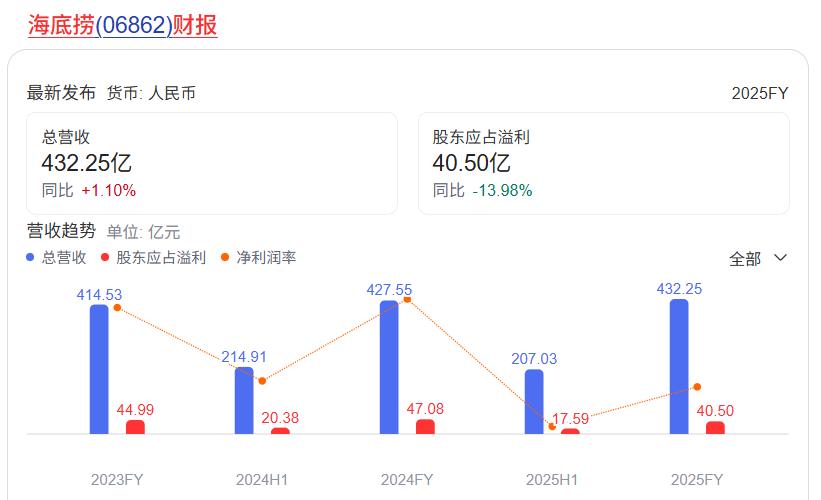
To seek new growth, Haidilao launched the internal entrepreneurship program "Pomegranate Plan" in August 2024, and successively launched sub-brands such as Flame Grill, Flame Master, and Five Grains Daily.
Since the sushi track has been validated by Sushiro's success, Haidilao naturally will not miss this opportunity. Multiple industry reports indicate that China's sushi market size exceeded 90 billion RMB in 2025, compared with about 85 billion RMB in 2023, showing an obvious growth trend. By 2032, China's sushi market size is expected to exceed 200 billion RMB, with a compound annual growth rate estimated at 10% to 12% from 2025 to 2032.
In the U.S., Americans have a longer history of eating sushi than Chinese people. As early as the 1990s, Japanese sushi began to penetrate the U.S. market.
The key to sushi's popularity among Americans lies in two aspects: first, localized flavors. Different from Japan's light taste preference, Japanese sushi brands in the U.S. added seasonings such as sweet chili sauce, avocado, and mayonnaise according to American tastes, and also introduced tempura, ramen, and udon into sushi restaurants, turning them into representatives of "pan-Japanese food". Second, the introduction of conveyor belt sushi systems and IP co-branding to meet the dining needs of families with children.
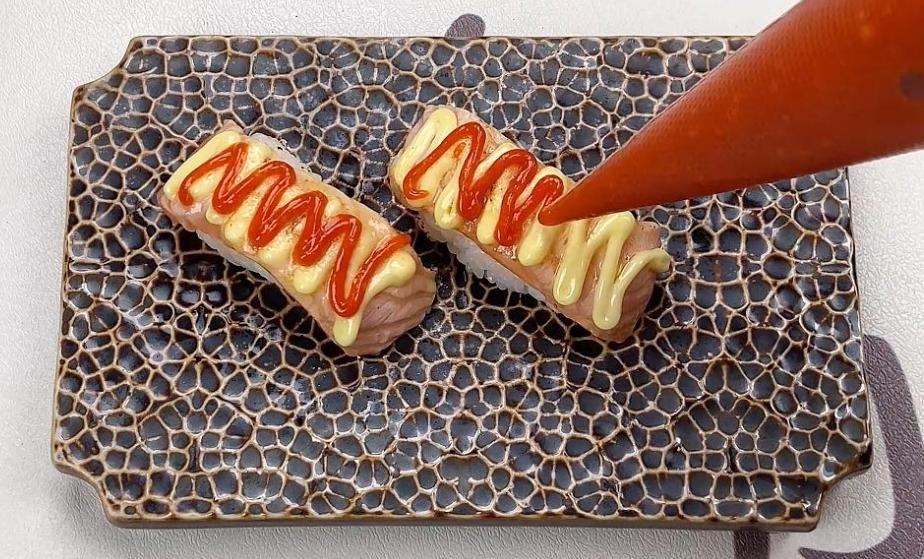
Figure | Sweet chili sauce and mayonnaise are the two favorite seasonings for Americans eating sushi
According to multiple industry reports, about 34% of U.S. adults eat sushi regularly, and this proportion is as high as 47% among millennials. In 2024, the U.S. sushi restaurant market was valued at about $28 billion, and the compound annual growth rate is expected to exceed 6% from 2025 to 2030. Some industry reports even predict that the total market value will exceed $37 billion by 2031.
In summary, sushi consumption in both China and the U.S. is currently on the rise, so it is not surprising that Haidilao and Trump have entered this market.
Risks in the sushi business
While sushi is booming in China and the U.S., its performance in its home country Japan is relatively mediocre. Japan is currently facing the dilemma of K-shaped differentiation in sushi consumption.
The upper part of the "K" refers to high-end handcrafted sushi restaurants that target the premium market, where a single meal costs thousands or even tens of thousands of RMB. The lower part of the "K" refers to conveyor belt sushi restaurants, which are usually large-scale chains with strong risk resistance and can minimize ingredient costs.
In contrast, non-chain mid-tier sushi restaurants on Japanese streets are facing a wave of closures. According to industry surveys, 16 mid-tier sushi restaurants in Japan closed down from January to June this year.
In 2025, 18.8% of sushi restaurants were loss-making. Although this loss rate is the lowest in nearly 20 years, the proportion of sushi restaurants with reduced profits rose to 33.9%, an increase compared to two years ago.
The risks faced by Japanese sushi restaurants include two aspects: first, the decline in demand from overseas tourists, especially the sharp reduction in Chinese tourists who are big spenders in Japan. Second, the sharp rise in costs such as fuel, packaging, and labor shortages, which has been exacerbated by the crisis in the Strait of Hormuz, increasing operating costs.
In China, although the overall sushi track is growing in consumption, it does not mean that all players in this track can achieve good performance.
For example, after opening three stores in China, another Japanese sushi chain Kura Sushi suffered huge losses and withdrew from the market. Its development in China encountered two major setbacks.
First, its first store in Shanghai was affected by the COVID-19 pandemic. Second, after it finally got on track, the Fukushima nuclear contaminated water crisis damaged its public reputation.
When Sushiro became popular, the negative public sentiment caused by the nuclear crisis had weakened. In addition, China has established a complete raw material supply chain system from Dalian to Zhejiang, Jiangsu, and Guangdong (for example, China has advantages in supplying seaweed and eel), as well as a food safety inspection mechanism for imported seafood (such as sweet shrimp and tuna). This has made consumers more confident and supported the growth of sushi restaurants.
However, even with these favorable conditions, domestic players still need to make efforts to build a brand reputation around the concept of "freshness" in consumers' minds to succeed in the sushi business.
Japanese food is mainly targeted at the middle class who are particular about ingredients and pursue fresh tastes. They form the core consumer group of Sushiro. Although Haidilao's affordable sushi restaurants have cost-effectiveness advantages, it does not mean that the public is willing to abandon their pursuit of "freshness". This tests the efficiency and quality of Haidilao's supply chain.
Speaking of which, Sushiro has also experienced major crises. In Japan, there was a period when delinquent teenagers popularized spitting on rotating sushi plates, an act called "sushi terrorism".
After the incident was exposed, the stock price of Sushiro's parent company F&LC plummeted by nearly 5% in a few days, with a market value loss of about 16 billion Japanese yen (approximately 800 million RMB). However, this accidental incident still did not stop Sushiro from achieving a V-shaped recovery by relying on its "fresh" product positioning.
Haidilao's supply chain has reached a relatively top level in China, but the public still remembers the hygiene issues in its store kitchens and the occasional viral news about the freshness of its ingredients.
This shows that running a good sushi business is far more than just building a good supply chain. As Sushi You expands its scale in the future, front-line product quality control and management will also become critical.
This article is from the WeChat official account "Muhe Business & Finance", written by Gong Zheng, and authorized for release by 36Kr.