Disenchantment of the Itamae Counter Dining Experience
With a U-shaped bar where diners sit around in a circle, watching the owner cook food right in front of them, hand over plates, and chat a little about life, this kind of humanized dining scene once touched countless Chinese people thanks to the Japanese drama *Midnight Diner*.
Back then, however, people did not know this dining format was called "Itamae" — meaning the chef prepares dishes live behind the bar directly facing customers, who can enjoy their meal while observing the entire cooking process.
Today, from Nikunohi consistently ranking as the "queue king" in shopping malls, to Baozaihuang planning to transform all its outlets into the itamae format, and even hot pot restaurants, noodle shops and dumpling houses all embracing the "itamae" concept by coincidence, a powerful trend of "everything can be itamae" is sweeping across the catering industry.
How did this once niche model become a new hot spot in the catering sector? Is it feasible to make every dining format itamae?
01
Demystifying Itamae
To understand the rise of itamae, we must trace back to its origin and evolution. In Japan, the term "itamae" originally referred to a cutting board, and later became an honorific title for chefs at Japanese restaurants.
In the broader Chinese context today, "itamae" generally refers to a dining format where chefs cook live directly facing customers.
By this definition, itamae can be found everywhere in Japan. The common bar seats at ramen shops, where diners are separated from the noodle-boiling chef only by a counter, represent the most basic form of itamae; bar-style dining at izakayas and yakitori restaurants has long been a daily consumption scene for the public.
However, when this format was introduced to China, it was first adopted by high-end Japanese Omakase restaurants, which endowed it with a strong sense of ritual and high price tags, making it a synonym for "high-end dining" in the minds of Chinese consumers.
Later, the itamae model gradually expanded beyond Japanese cuisine to fusion dishes and high-end Chinese food. For example, "Rongyan", a brand under Xinrongji, integrates Taizhou cuisine, Japanese food and Italian dishes in an itamae setup, with only over ten seats and a per-person consumption of up to 1,000 yuan.
Nevertheless, the high-end market has a limited audience and is hard to replicate quickly. The key factor that broke the itamae barrier and made it accessible to the general public is affordability.
The trend was led by affordable Japanese specialty restaurants.
Nikunohi, a Japanese-style hamburger steak brand, emerged at the end of 2022. With its on-site meat mincing and fresh grilling of hamburger steaks, it took the market by storm at a price point of around 70 yuan per person, with long queues becoming a common sight. Lonely Sukiyaki offers itamae-style single-person fast-food sukiyaki with set meals priced at 58 yuan, 78 yuan and 98 yuan respectively, and now operates over 10 outlets. Boten Ten Ten Tempura Steak Rice serves itamae-style freshly fried tempura paired with steak rice sets, keeping meal prices around 60 yuan, and has also opened more than 10 stores.
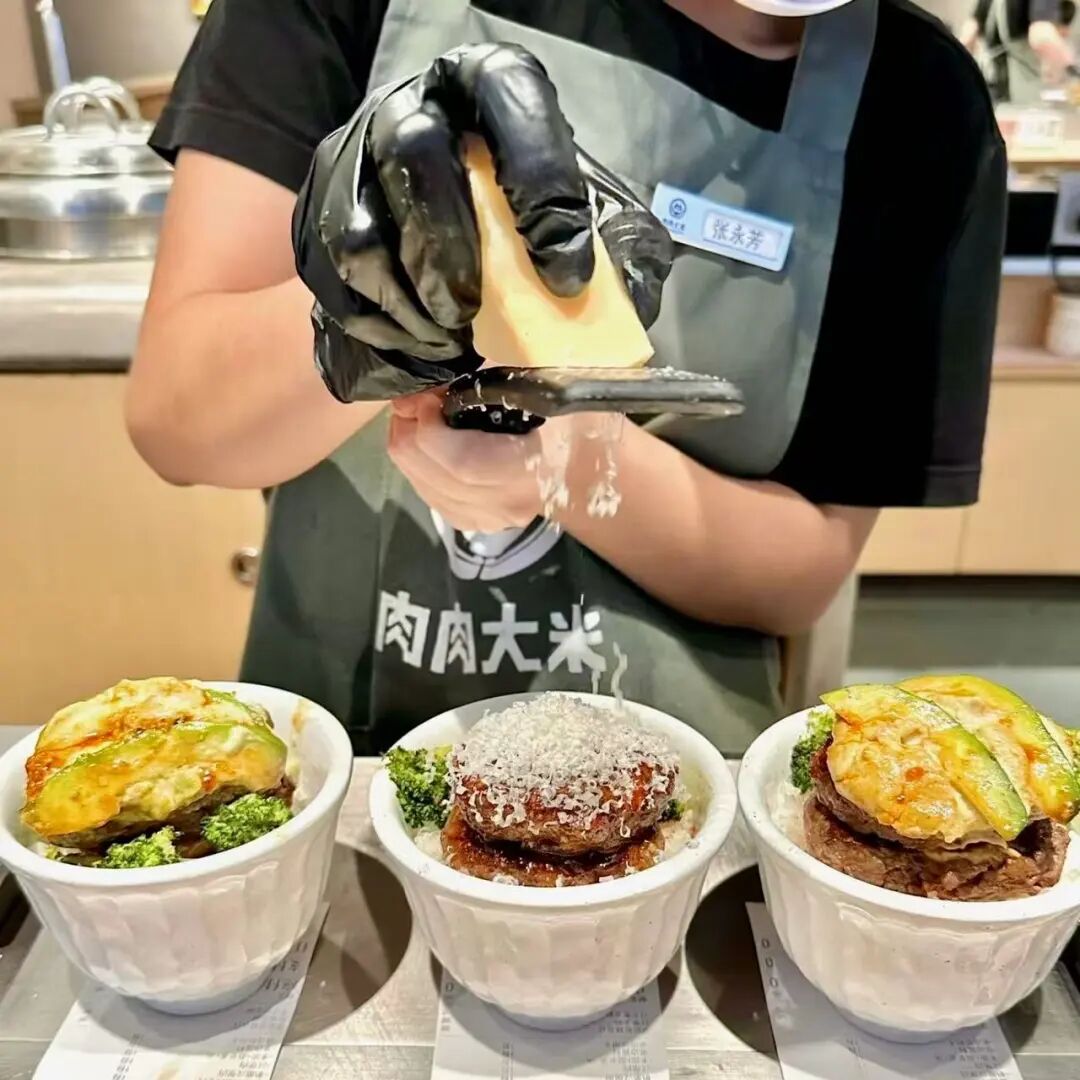
Nikunohi, on-site cheese grating. (Source: Xiaohongshu @Bingzi)
It is clear that these Japanese specialty restaurants generally have a per-person spending of 60 to 80 yuan, higher than regular fast food but lower than mid-to-high-end Japanese cuisine. Their stores are mostly around 100 square meters, with only bar seats to reduce initial investment costs, and they are usually located in popular and mid-to-high-end shopping malls to drive significant foot traffic.
Soon, Chinese fast food brands also discovered the potential of the itamae model and began to test and roll it out rapidly.
Baozaihuang, a cured meat claypot rice brand, launched its transformation in February 2024, moving the claypot stoves from the back kitchen to directly in front of customers to launch a "round-the-stove" format with freshly cooked claypot rice, at a per-person price of around 35 yuan. The brand plans to gradually transform all its over 200 national outlets into the itamae format within the next year and a half.
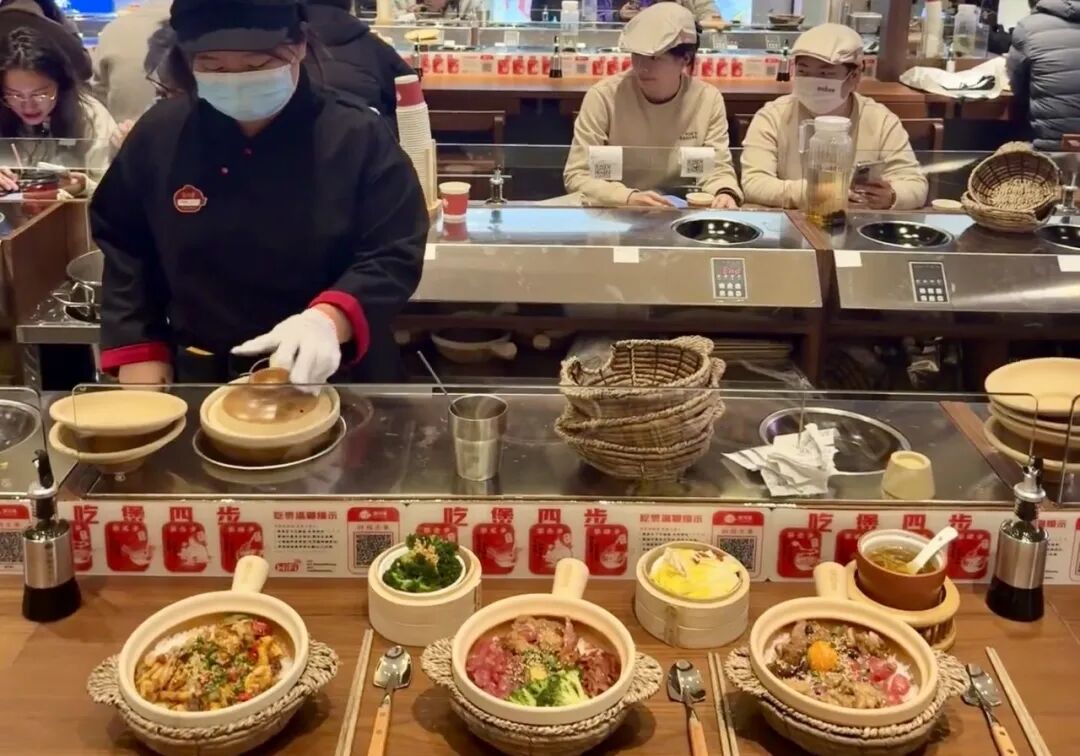
Baozaihuang's round-the-stove format, freshly cooked claypot rice. (Source: Xiaohongshu @Shaoxing Xiaonengtan)
What is even more surprising is the unlimited expansion across categories: Fanyunyijia · Shengtang in Nanjing turned spicy hot pot into an itamae format with freshly blanched ingredients; Loushiming, also in Nanjing, uses a hot iron plate to quickly stir-fry itamae-style grilled meat rice; Manhuo Skewer Grill in Xiamen combines self-selected ingredients with itamae grilling; Ganshiji Chengdu Pork Intestine Noodles opened an itamae outlet at Chunxi Road, turning the intangible cultural heritage craft of "handmade fresh noodles" into a live performance; dumpling brand Nie Nie Hu offers dumplings at a price of 20+ yuan per person, allowing customers to watch the whole process of handmade dumpling wrapping; Xijindao in Shanxi moved the traditional hand-sliced noodles to the itamae counter...
These new Chinese fast food entrants have basically adopted Japanese-style visual systems from store decoration to chef uniforms, seemingly replicating the Japanese itamae model, but in essence, they have moved the previously closed food preparation processes in the back kitchen directly in front of consumers.
Data also proves that the itamae model can indeed drive high foot traffic and high conversion rates. Taking Ganshiji Chengdu Pork Intestine Noodles as an example, its official data shows that the itamae format increased store entry rate by 30% to 40%, and the table turnover rate stabilized at 12 to 15 rounds per day.
At this point, the itamae model, which was once associated with high-end positioning and a strong sense of ritual, has been demystified by a large number of affordable catering brands and given a brand new definition.
02
From Price Parity to Experience Parity
Yao Zhe, founder of Hezhonghe, once mentioned in a public speech that the rise of the itamae model reflects the upgrading of consumer logic: "Long-shelf-life products are inferior to short-shelf-life ones, short-shelf-life products are inferior to fresh ones, fresh products are inferior to freshly made ones, and freshly made products are inferior to those made right in front of you."
With ingredients being freshly cut, stir-fried and plated in full view, the fully transparent operation process eases consumers' anxiety over food safety and ingredient freshness. The itamae model perfectly caters to consumers' pursuit of "on-site preparation".
On this basis, the emotional value brought by experience innovation has become the core appeal of affordable itamae. Whether it is the performance element during cooking, or the instant interaction between chefs and customers, it fully creates a sense of ritual, allowing ordinary consumers to feel valued and respected.
At the same time, this visualized cooking process and the cozy, lively atmosphere are naturally perfect for shooting and social sharing, making a visually appealing meal an important social currency for young people.
Previously, affordable catering mainly focused on lowering prices, providing products close to high-end dining quality through cost control, supply chain optimization and model simplification. For example, Saizeriya as an affordable Western food option, conveyor belt sushi as an affordable Japanese food option, and self-service small hot pot as an affordable hot pot option are all examples of price parity.
The popularization of the itamae model in affordable catering breaks away from pure price competition and shifts to value competition in experience and trust. This is also one of the possible evolution directions for affordable catering.
However, we must face the fact that there is an inherent paradox between experience and large-scale expansion, which is the core challenge facing affordable itamae.
Among the brands that currently focus on the itamae model, only Nikunohi has nearly 80 outlets, while most other brands have a low level of chain operation, with only a dozen stores at most. Baozaihuang started its first itamae transformation two years ago, but only dozens of stores have completed the transformation so far.
According to a public interview with Yangno Kato, CEO of Japan Monogatari Group, which owns Nikunohi, he believes there is still room for around 100 more Nikunohi stores in the Chinese market. This means that as a leading brand in the hamburger steak category, Nikunohi's maximum scale in China may be around 200 outlets, and the market capacity for this single category is not very large.
At the same time, whether it is affordable Japanese food represented by Nikunohi, or Chinese itamae brands like Baozaihuang, most of them have streamlined their menus to set meals. While this brings advantages in simplified operations and improved efficiency, this highly standardized model has also greatly lowered the industry entry threshold, easily attracting a flood of new followers and exacerbating homogeneous competition.
Taking Nikunohi as an example, its stores are mainly concentrated in first- and second-tier cities, with a large presence in East and South China. However, in regions where the brand has not yet expanded, many imitators have already emerged. For example, in Yunnan, there is a brand called Rometo Aged Wagyu Rice, which serves both freshly grilled hamburger steaks and freshly fried tempura, and has already opened 3 outlets.
Following Nikunohi, Japan Monogatari Group also launched a tempura specialty store called "Tiantian". Just like Nikunohi, Tiantian Tempura adopts a full bar seating format with live tempura frying, with a per-person price of around 70 yuan, and currently operates fewer than 10 stores in China.
Interestingly, from set meal pricing, itamae experience to store decoration, Tiantian Tempura is highly similar to Boten Ten Ten Tempura Steak Rice. The two brands' first Beijing stores even opened one after another at Chaoyang Hopson One — Boten Ten Ten Tempura opened in December 2025, while Tiantian Tempura opened in February this year.
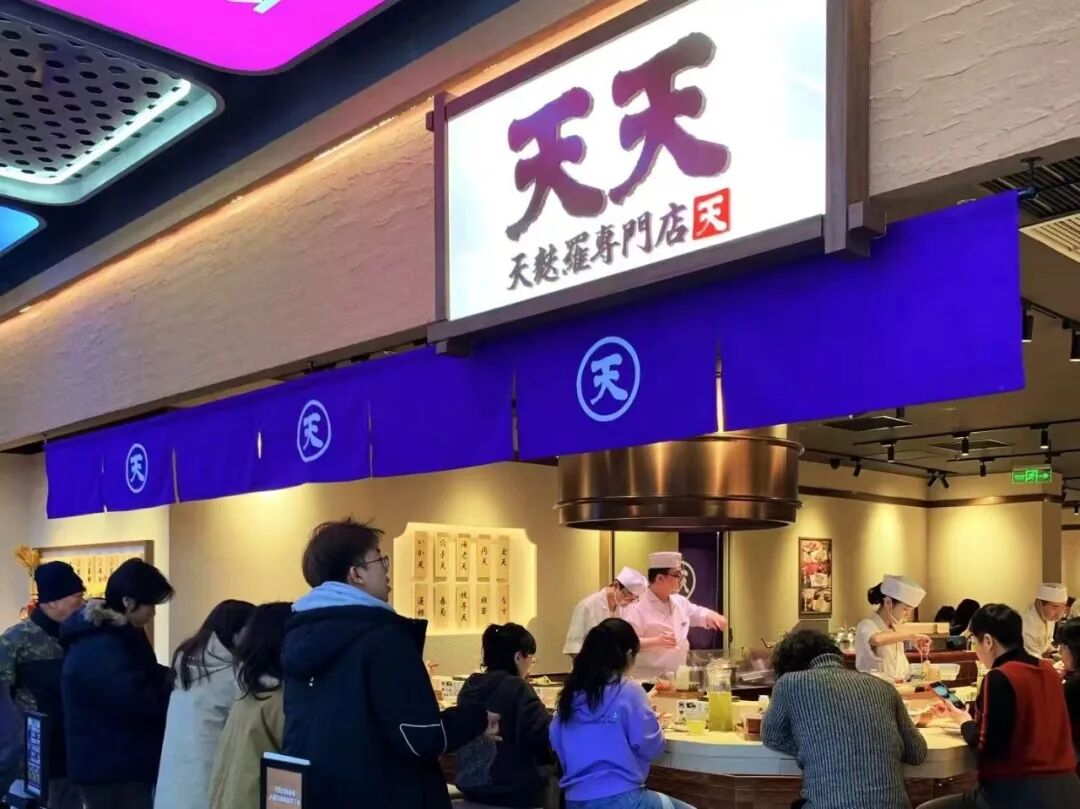
Tiantian Tempura outlet. (Source: Xiaohongshu @Banxia Surf Camp)
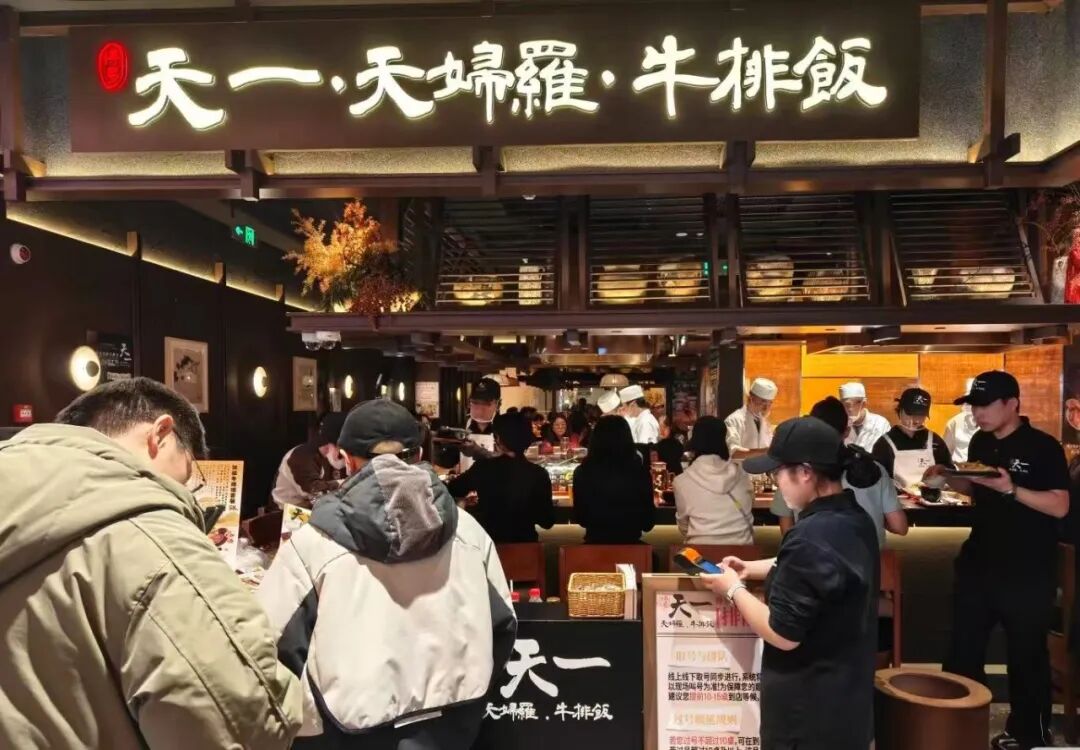
Ten Ten Tempura Steak Rice outlet. (Source: Xiaohongshu @Huijian Wanxiang)
At present, both stores are still in the novelty-seeking stage where consumers visit them out of curiosity. When this novelty fades, whether they can truly retain customers still depends on whether their product quality and dining experience can remain consistently stable.
03
Can Everything Be Itamae?
Despite the current popularity of the itamae model, it is not a universal solution for the catering industry to achieve breakthrough growth.
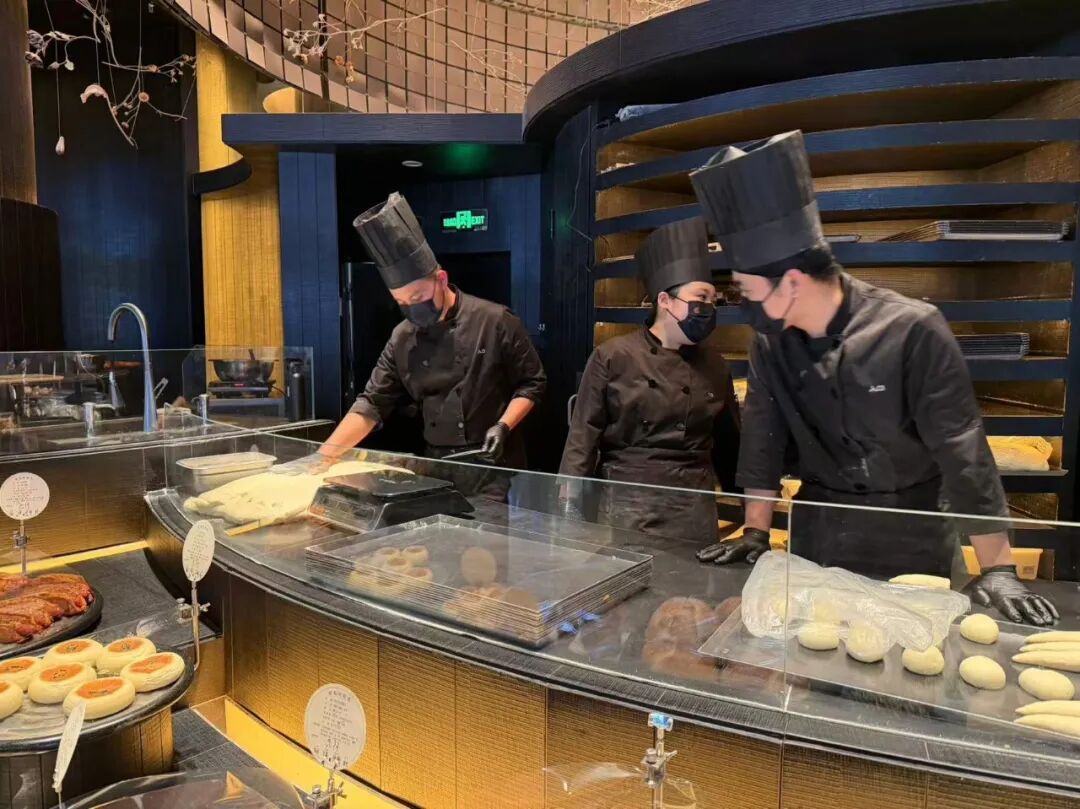
Itamae-style bakery. (Photography by Sun Jiacheng)
In terms of categories, the currently proven successful models, such as hamburger steak, claypot rice, grilled meat rice and spicy hot pot, are all categories with relatively simple production processes that are easy to standardize.
For many traditional Chinese cuisines with complex cooking procedures that require collaboration between multiple roles, compressing all operations into one open workstation is likely to cause workflow congestion and reduce food delivery speed. And efficiency is precisely the lifeline of affordable catering.
In addition, the fully transparent operating environment means that any minor hygiene flaw or non-standard action will be fully visible to customers, which sets stricter requirements for daily store management and staff training.
For example, according to a report from Nikkei Asia, Nikunohi is equipped with AI cameras in its stores, which can capture and analyze the subtle movements of staff, generate reports on whether they follow standard operating procedures, and provide targeted guidance to employees once problems are detected, so as to maintain stable store operation quality. However, not all affordable catering brands have the ability to implement such a technology-driven management system.
Rather than fully adopting the itamae format across the board, industry practitioners are also working hard to avoid formalism of "doing itamae for the sake of itamae", and exploring more adapted solutions.
First, partial itamae or itamae for key processes. Instead of making the entire back kitchen transparent, brands can only showcase the most visually appealing and most representative "freshly made" links. For example, Xijindao puts the noodle slicing process in the itamae area, while the complex stir-frying of toppings is still completed in the back kitchen, which retains a sense of ritual and social sharing highlights while avoiding efficiency issues caused by complicated workflows.
Second, make itamae an optional choice. In fact, brands like Nie Nie Hu and Xijindao are trying this approach: besides setting up bar seats as an itamae experience zone, they also add regular dine-in seats, making itamae a flexible optional experience bonus.
Third, position itamae outlets as experience-oriented benchmark stores. The itamae model is more suitable for flagship or benchmark stores that focus on building brand image and conveying product value, emphasizing experience upgrading and brand communication, rather than blindly pursuing large-scale expansion.
Admittedly, there are still many challenges to overcome before the itamae model can evolve from a passing trend to a sustainable business model. But in essence, this is a pragmatic innovation across the catering industry in an environment where consumers are increasingly rational — creating higher perceived value at lower costs, and meeting more segmented demands with a more lightweight model. This is undoubtedly worthy of recognition.
This article is from WeChat Official Account "BrandPrism", written by Su Min, edited by Tian Tian, and published with authorization from 36Kr.