Trendy toy phone chains: how on earth do they dare to price the product from 3 yuan with free shipping all the way up to 129 yuan?
While phone manufacturers are still emphasizing how slim and lightweight their products are at launch events, consumers are busy applying screen protectors, fitting phone cases, sticking on phone mounts, and hanging a bunch of phone charms, showing no mercy to the hard work of product managers.
Young people's eagerness to decorate their phones is just like a grandma packing meals for her grandchild — there's always a little more space to squeeze something in. And phone charms, these accessories that can hold as much as you can carry, perfectly capture the unplaced personal taste of young people.
Using a bare phone has become a niche hobby. Now is the heyday of maximalism: people who love life should adorn themselves with the most saturated accessories possible.
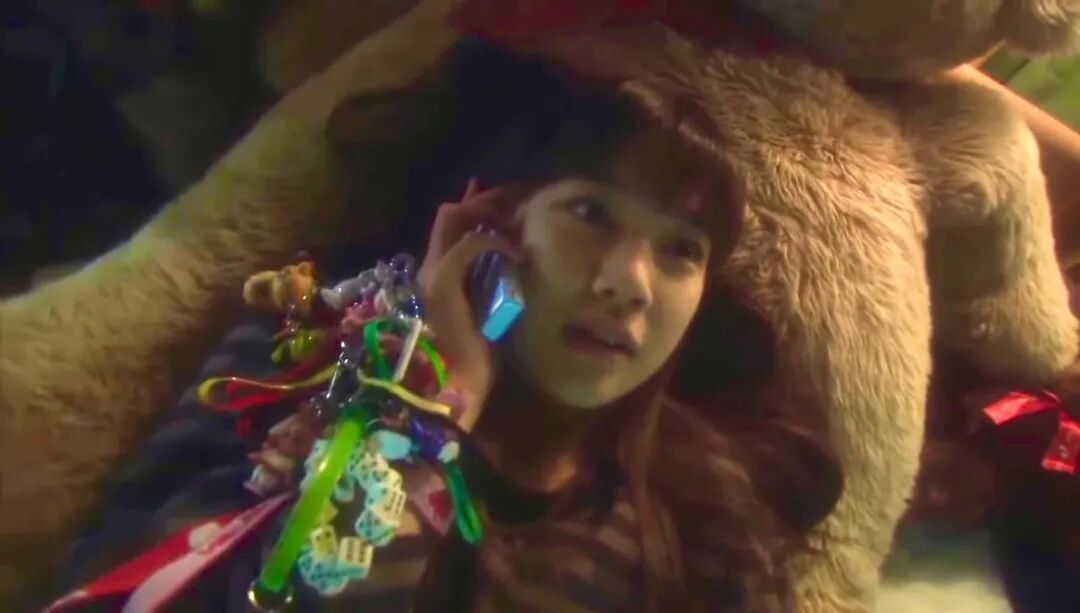
Shiori Tsuda finally finds her kindred spirit after 25 years. Source: the movie *All About Lily Chou-Chou*
Over the past few years, phone charms were mainly the domain of individual craft enthusiasts and Yiwu's small commodity wholesale market. However, Hedgehog Commune (ID: ciweigongshe) has noticed that currently, most trendy toy brands are launching their own phone charms, trying to grab a share of the niche market of phone decorative accessories.
Expanding from trendy toys to phone charms seems like a reasonable growth path. But what considerations are behind trendy toy brands choosing to enter a category that has developed for years and long coexisted independently with blind boxes? What advantages do they have, and what shifts in the trendy toy market does this reflect? We talked with Paipai, a toy designer working at a trendy toy company, to sort out these questions one by one through an insider's perspective.
Phone Charms: A New Battlefield for Trendy Toys
If you start paying attention to the phones around you, you'll find that phone charms have always been actively around us in a subtle, pervasive way.
The history of humans using phone charms is far longer than that of smartphones. In the ancient era of button phones, there were even standard lanyard holes. It wasn't until the first-generation iPhone came out that Apple, the minimalist that even removed the headphone jack, directly eliminated the lanyard hole.
As smartphones fully entered the era of integrated design, brands no longer reserved separate holes for lanyards, and phone charms were once sealed away along with button phones as a memory of the millennium.
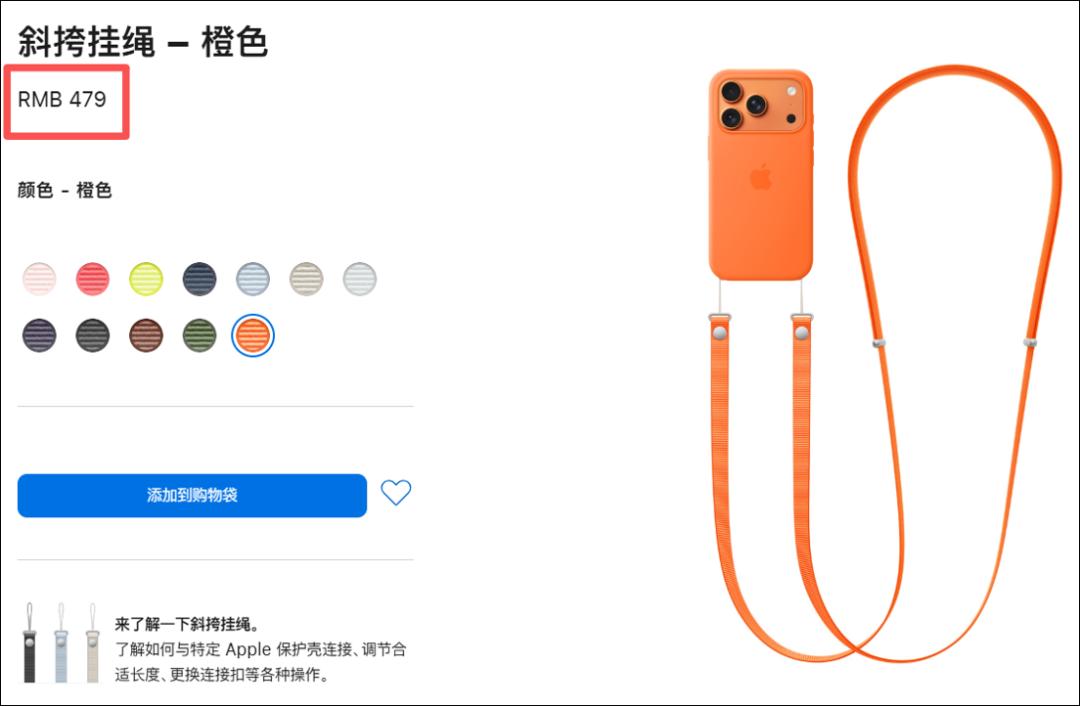
Apple, you sly one, you're now selling a phone lanyard for 479 yuan all by yourself? Source: Apple official website
But what smartphone manufacturers didn't anticipate is that Chinese people are just too obsessed with spinning and playing with beaded items.
The older generation is keen on spinning beaded items, eager to string every piece of wood, stone, and fruit pit found in nature into beads to polish a glossy patina. Chinese people's obsession with spinning beaded items will never disappear — it will only shift. The new generation has moved their beaded pastime from their hands to phone charms, switching from natural materials to man-made materials, with the only constant being that their hands can never stay idle.
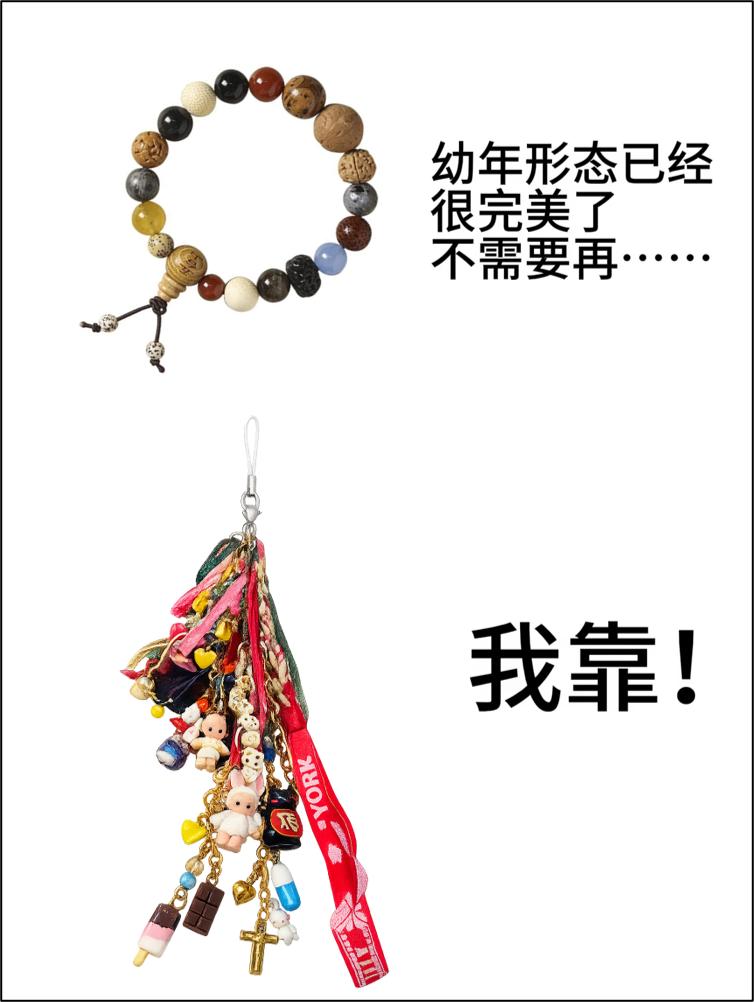
According to statistics from Feigua Data, from January to October 2025, the growth of "phone accessories" on Douyin Mall exceeded 200%, with the year-on-year growth of "phone lanyards/phone charms" doubling, and total sales exceeding 100 million yuan.
How popular is the phone charm trend? In addition to phone case merchants adding lanyard holes to their products, an unprecedented new product has emerged on the market — phone gaskets. One end of the thin sheet is sandwiched between the phone case and the phone, and the hole on the other end can hang any phone charm. Phone charms have thus forced the market to adjust, making a grand comeback.
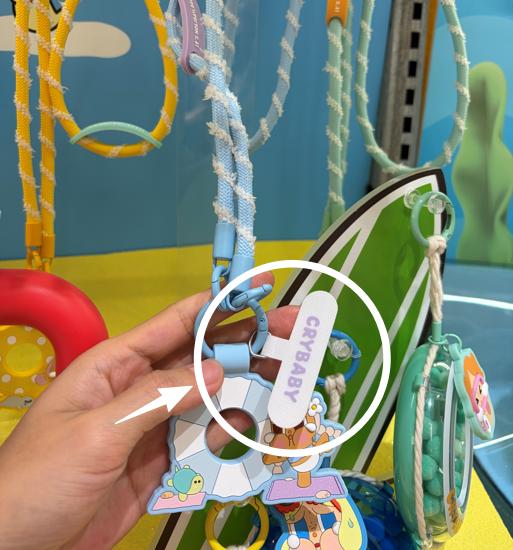
The white circle marks the phone gasket
Trendy toy brands are also fueling this trend. Hedgehog Commune surveyed 44 brands on the market, including trendy toy brands such as Pop Mart, 52TOYS, and TOPTOY, as well as lifestyle general merchandise brands with self-operated trendy toy products like MINISO and Sanfu. As of now, only JOTOYS, 1983, OHKU, and FUNCINATING have not launched related products, while the remaining 40 brands have introduced phone charm or phone lanyard products.
The prices of trendy toy phone charms range from over 20 yuan to over 100 yuan, with the highest official price reaching 129 yuan for a long phone lanyard under Pop Mart's IP CRYBABY.
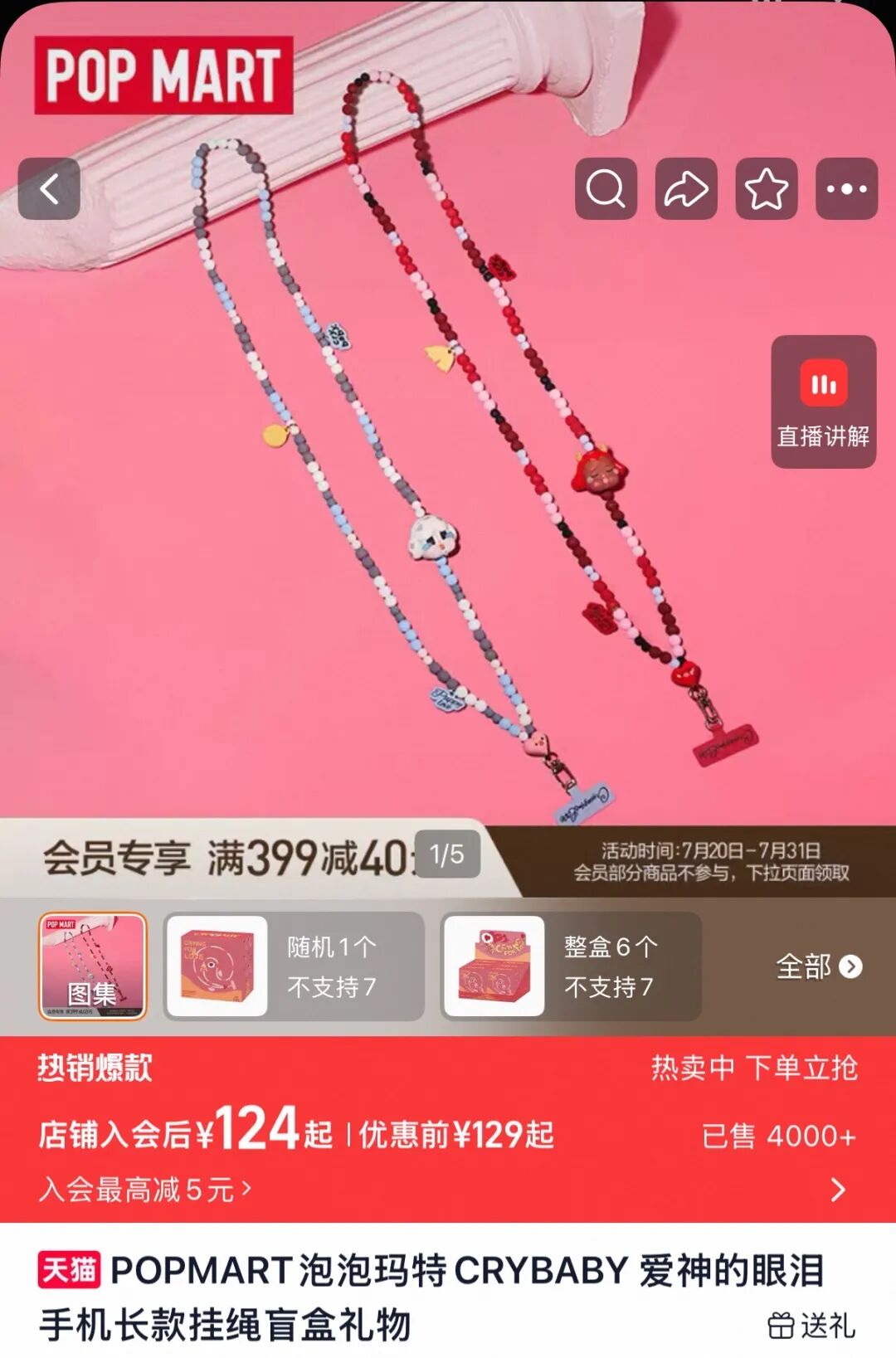
Source: Taobao
Toy designer Paipai told us that most phone charms are mainly made of beaded strings, with painted beads, electroplated beads, silicone beads, plush pom-poms and other common materials. The way they are matched depends on the color scheme and texture the designer wants to achieve. All these beads can be found on 1688, with the lowest wholesale price being just a few cents for 100 beads — the material and price are completely transparent.
"What allows phone charms to be sold from a few yuan with free shipping to three-digit prices is design and customization. Beads are ready-made and can be purchased directly, as this is already a very mature industry. But the gaskets on phone charms, whether made of metal or silicone, need to be separately customized with factories. Adding cute mini figurines or other pendants will make it more expensive, and the value of the IP also needs to be considered."
Trendy toy brands' phone charms can stand out from no-name products and achieve differentiation, relying on their own design and IP empowerment. The gaskets and pendants with original design patterns and brand logos are the real cost drivers.
Branded Products Sell for "Emotional Value"
Consumers won't calculate the cost logic behind this. For ordinary people, the biggest feeling is that once you start buying phone charms, you can never go back.
After buying beaded charms, you feel like you're missing a woven lanyard; you can't miss your favorite IP; you need a separate long lanyard for citywalk. Young people who have developed "multiple phone charm syndrome" watch their money flow away like water, yet still feel it's totally worth it.
This is just like people who buy Hermès Birkin and Kelly bags — they will always buy a Hermès Twilly silk scarf to wrap around the bag handle. After spending hundreds of thousands on a bag, it's reasonable to spend thousands more on a silk scarf to match it. The same sense of "deserved match" applies even to a tiny phone charm.
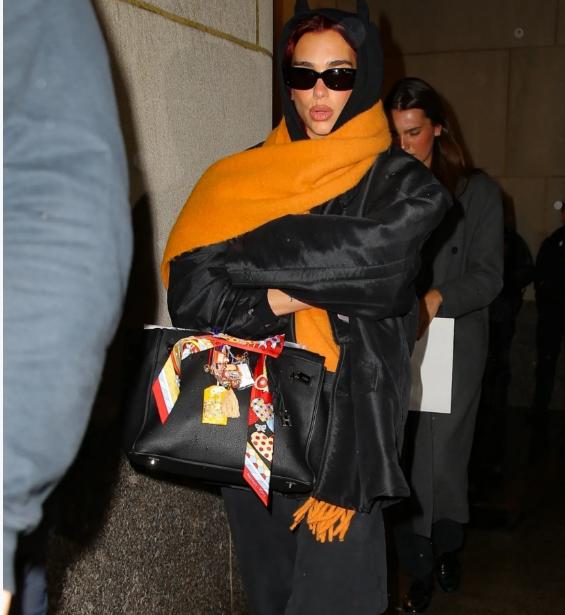
In 2025, China's mobile phone shipments reached 307 million units, which means nearly 10 new phones are "born" every second on average. The phone is the most expensive piece of OOTD most people carry. Buying a dozens-of-yuan phone charm for a thousands-of-yuan phone is just a natural way to "love your old phone".
In the past, consumption upgrading mostly meant buying more expensive and larger items. However, many young people's consumption logic is changing. Compared with cost-effectiveness, "emotional value for price" has become a more important measurement standard. They don't necessarily need to complete an expensive upgrade all at once, but are willing to use low-cost small items to add more personal traces to their daily lives.
Therefore, trendy toy brands entering the phone charm market is not just a Y2K retro revival. Compared to pure low prices, consumers have a greater need for emotional value satisfaction.
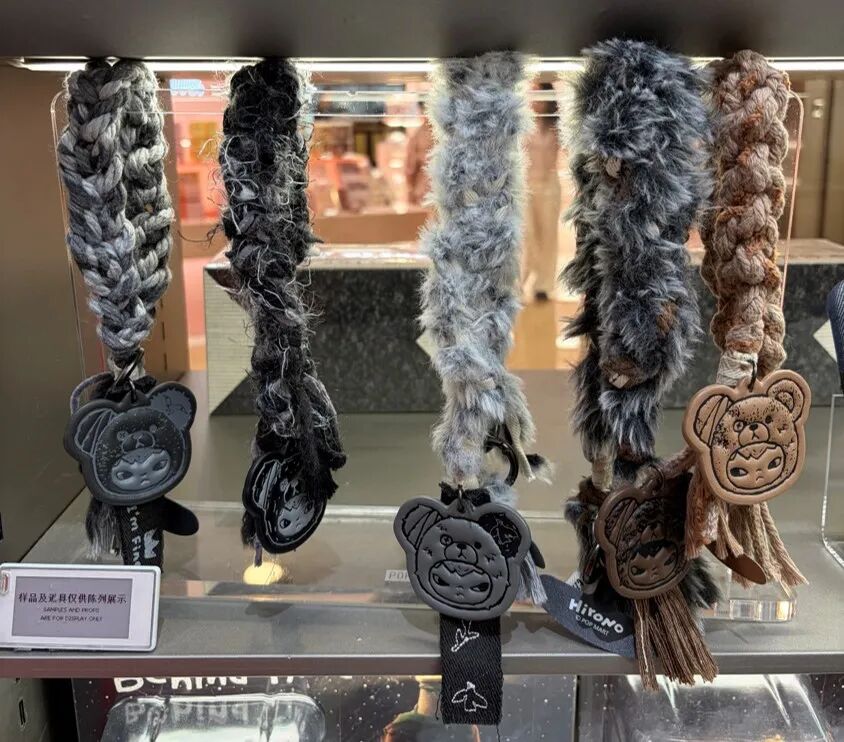
In the eyes of insiders in the trendy toy industry, phone charms actually open up more categories and opportunities for the IPs in brands' hands, giving consumers an extra way to take their favorite IPs out with them.
When a regular doll ornament is placed next to a doll with a lanyard, people are more willing to spend 69 yuan on the one with the lanyard. After all, you can hang the doll on your bag or phone, and you can also remove the lanyard separately to use it as an ornament — it's equivalent to paying for one thing and getting two. Brands make consumers feel like they're getting a good deal, not necessarily by using lower prices, but by creating the perception that buying this way is more profitable.
Every IP can be remade into a phone charm. In 2015, LABUBU, created by artist Long Jiasheng, was born, bringing the THE MONSTERS series. In January this year, Pop Mart launched the 10th anniversary commemoration of THE MONSTERS series, which included phone lanyard blind boxes. The LABUBU figurine also added a hanging structure, making it easy to hang on bags and phones.
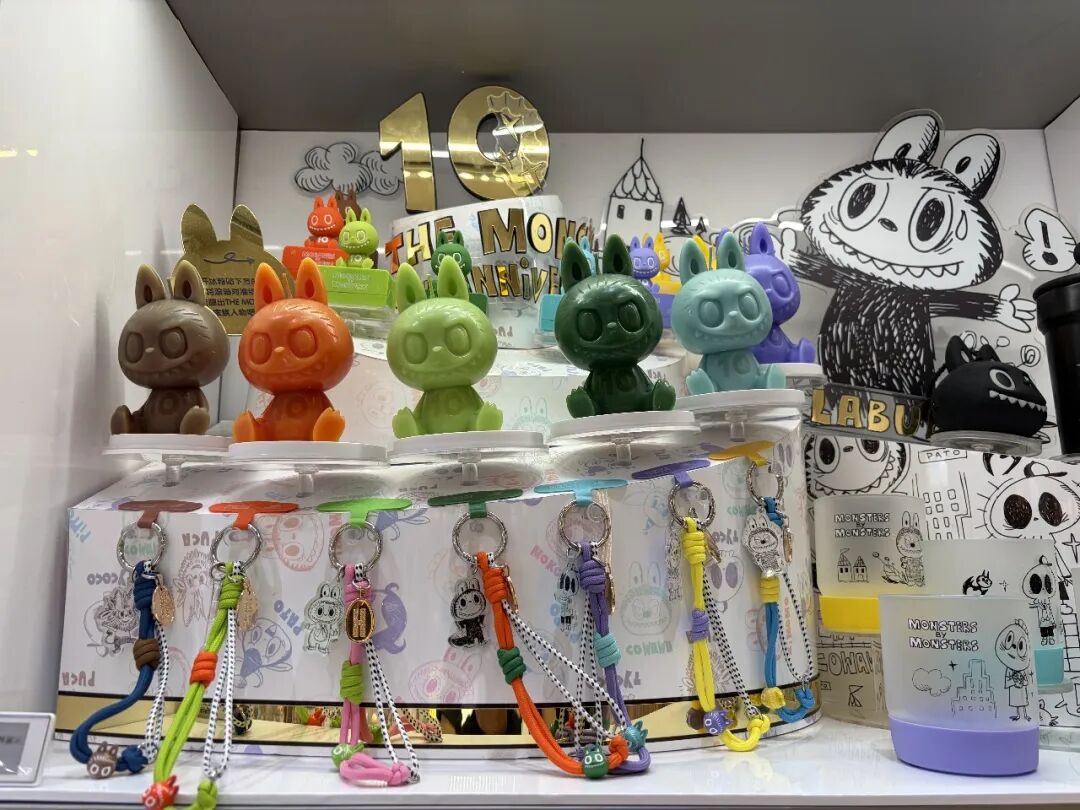
Traditional collectible blind boxes and figurines are private displays placed at home. Hanging them on the phone is equivalent to carrying your display cabinet with you, showing off your preferences and taste at any time — this is why many people buy different styles of phone charms for the same IP to switch between.
The phone is the item you hold in your hand every day, and it's the one others see the most. Plus, phone charms can be changed at any time according to your outfit and the season, which maximizes the "being seen" value of phone charms. In the past, people expressed their identity by buying bags and watches; now young people use smaller, lighter phone charms to achieve the same goal.
Today you can hang a cute character to express relaxation and childlike innocence; tomorrow you can switch to a collaborative limited-edition charm to show your recognition of a certain cultural symbol. IPs have transformed from collectibles into companions, and trendy toys are also more closely tied to consumers' daily lives through phone charms.
To Make Trendy Toys, You Need to Add an "Extra Boost"
The *2025 Report on China's Blind Box Toy Market Status* shows that since 2020, the size of China's blind box market has continued to expand, reaching 58 billion yuan in 2025, but the growth rate has been slowing down year by year, dropping from 59.1% in 2023 to 20.8%. Among them, although the traditional blind box market still accounts for as high as 65%, its growth rate has slowed to 15%. In contrast, the functional blind box market, which accounts for 35% of the share, has a growth rate as high as 40%, showing stronger and deeper development potential.
The market is gradually becoming rational, and trendy toy brands need to find more solutions beyond blind boxes. If an IP can only monetize through blind boxes and figurines, its consumption frequency is actually limited. How to integrate IP into daily life is a problem that the trendy toy industry has long been thinking about.
As a result, bag charms became popular in 2025. Adding a hanging ring to plush dolls turns countless people's bags into display stands. You can't walk down the street holding a 30cm-tall vinyl doll, but you can randomly pick four bag charms to match your mood of the day.
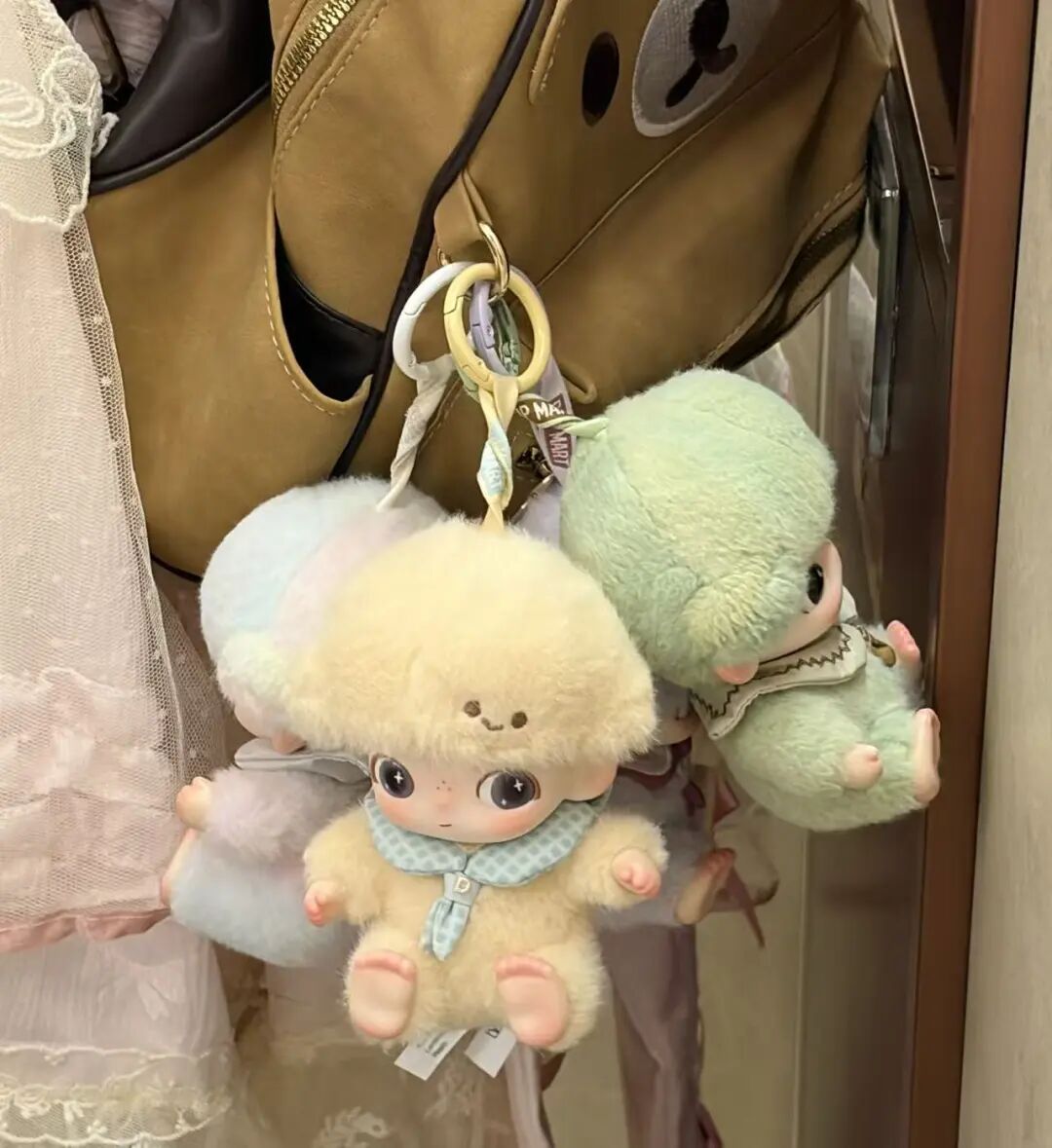
This year's phone charms are another solution. Consumers may only buy a few blind boxes a year, but they use their phones every day. This high-frequency companionship makes phone charms a trigger that arouses more people's desire to buy trendy toys.
In the past, trendy toys satisfied the desire to own; now, phone charms and bag charms solve the problem of "sense of participation". Being small doesn't mean lower value. On the contrary, being small means more flexibility and easier integration into life. From a business perspective, the closer a product is to the human body, the higher its consumption frequency; the closer it is to daily scenarios, the stronger the vitality of the IP.
