The "King of Price Crashes" in the digital industry is here: prices of phones and computers are skyrocketing, while camera prices have plummeted.
The price hike of digital products is no longer a new topic. Phones, computers, and game consoles are all raising prices in unison.
However, amid this "universal price surge," digital cameras, once jokingly hailed as the "best wealth management product of the year," have not followed suit. Instead, they have seen widespread price drops. Many popular mirrorless cameras that once required thousands of yuan in premiums and half a year of waiting are now not only readily available in stock, but even sold at discounts below their launch prices on e-commerce platforms.
Why are phones, PCs, and game consoles getting more expensive at the same time, while cameras are bucking the trend and even cutting prices? Leitech (ID: leitech) wants to share its views on this today.
The key reason cameras are not getting more expensive: no heavy reliance on storage
To understand why cameras are not seeing price hikes, we must first figure out what exactly is driving up costs for phones and computers. If we take apart a smartphone or laptop and calculate component costs one by one, we will find the main culprit behind this round of price increases is highly consistent: storage.
In previous years, due to weak global consumer electronics demand, upstream storage giants had to adopt large-scale production cuts to maintain prices in order to preserve profits. But after entering the AI era, the continuous expansion of AI infrastructure by these giants has caused a surge in storage demand. The limited production capacity of storage giants is prioritized for the AI sector, creating a supply shortage of storage in the consumer electronics industry.
The skyrocketing price of storage directly hits the core pain point of phone manufacturers. For mid-range smartphones, the standard starting configuration is basically 12GB+256GB, and flagship models frequently feature the 16GB+1TB combination. When the procurement costs of LPDDR5X RAM and UFS 4.0 flash memory keep doubling, the overall cost increase of the device becomes unavoidable.
Turning to cameras, their component cost structure is very different from that of phones and PCs. The three core hardware components of a camera are: CMOS image sensor, lens module (optical system), and image processor (DSP).
Cameras do not come with built-in mass storage. For example, a mirrorless camera contains almost no large-capacity storage devices except for a tiny amount of cache in the camera body for firmware operation. Cameras do not come with large-capacity flash memory as standard, and consumers need to pay extra to buy an SD card.
Therefore, no matter how high the price of flash memory chips rises, this part of the cost pressure is directly passed on to consumers when they purchase memory cards. The ex-factory manufacturing cost of cameras is not directly affected by fluctuations in storage costs at all.
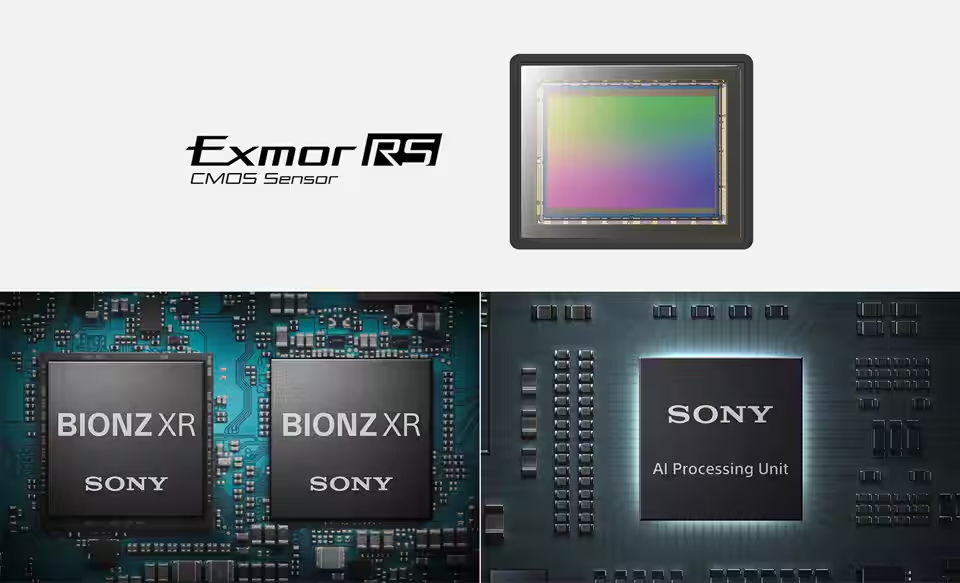
In addition, compared with devices like phones, camera chips are also relatively insensitive to manufacturing process nodes. Camera image processors (such as Sony's BIONZ XR and Canon's DIGIC X) are indeed constantly being upgraded with stronger computing power to handle high-frame-rate 8K videos and complex AI focusing algorithms. But the key point is that cameras do not need to pursue the absolute balance between power consumption and size as extremely rigorously as smartphones do.
(Image source: Sony)
Cameras have more internal space for heat dissipation and dedicated batteries for power supply. Therefore, most camera DSPs are manufactured using mature process technologies such as 14nm, 22nm, or even 28nm, and there is no need to compete with phone manufacturers for expensive and scarce advanced process production capacity.
The largest cost component of cameras actually lies in optical glass, lens polishing, mechanical shutters, image stabilization motors, CMOS, etc. These belong to the precision manufacturing and optical materials engineering sectors. The raw materials of optical glass, coating processes, and mold development all have long technology iteration cycles, and their industrial chains are extremely stable. As long as factory production capacity is fully utilized and the yield rate remains stable, the manufacturing cost of this part will be very stable without significant fluctuations.
In short, phones and PCs are "kidnapped" by wafer manufacturing processes and storage costs, while cameras are not. This physical difference leads to completely different cost structures between them.
Camera price cuts also stem from the burst of the previous premium bubble
At this point, many people will definitely wonder: Cameras were skyrocketing wildly just two years ago! Models like the Fujifilm X100V and Sony A7M4 could not be bought without paying thousands of yuan in extra premiums.
But in reality, the logic behind camera price hikes in previous years is different from the current price increases of phones and PCs. The wild surge in camera prices back then was never caused by increased production costs, but by a "scalper economy" resulting from supply-demand imbalance in the secondary market. The current price cuts of cameras are not because manufacturers have suddenly become more benevolent, but simply because the bubble has burst.
The abnormal prosperity of the camera market in previous years was caused by the superposition of several special factors.
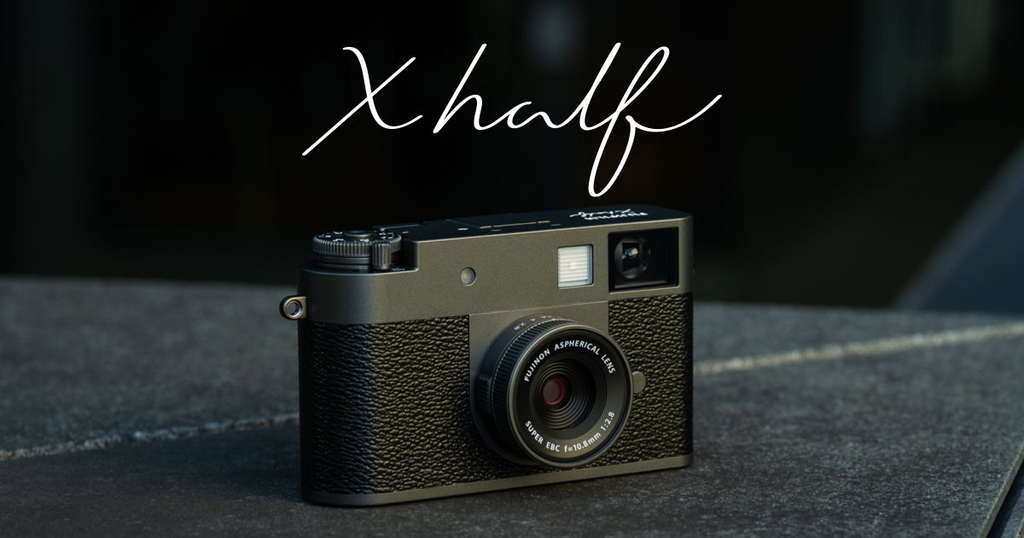
The first factor was the explosion of imaging social media. Back then, photography and vlogging were extremely popular on platforms like Xiaohongshu and Douyin, attracting countless users who were previously uninterested in photography (especially female users and young people) into the camera market. Tags like "Fujifilm colors" and "vintage street photography" became high-traffic concepts with strong social attributes, directly transforming the relatively niche camera market into a mass consumer market.
(Image source: Fujifilm)
Secondly, the camera supply chain encountered problems at that time. For example, due to special circumstances, global logistics was disrupted, and industries like automobiles competed for mature process chips (such as power management ICs), severely limiting camera production capacity.
In addition, the involvement of scalpers further artificially exacerbated the supply-demand imbalance of cameras. In the secondary market, scalpers with keen senses joined in, frantically hoarding popular models on the market to artificially create scarcity. Consumers could not grab cameras at the original price through official channels at all, and could only pay premiums to buy them in second-hand markets and on social platforms.
So why are cameras getting cheaper now? These factors have all changed.
The production lines of camera manufacturers such as Sony, Canon, Nikon, and Fujifilm have long been fully restored, and they have even significantly expanded production capacity for popular models. When a steady stream of new cameras is pushed to the market, scalpers are the first to be unable to hold on.
Moreover, consumers have become more rational when purchasing cameras. When the wave of consumers who bought Fujifilm and Ricoh cameras on a whim find that their cameras are left unused most of the time, when the supply side's production capacity is fully ramped up and the demand side gradually calms down, the premium bubble is bound to burst as supply and demand change.
To avoid being stuck with unsold inventory, scalpers have no choice but to start selling their stock at fair prices or even at a loss. E-commerce platforms, in order to boost sales, have also begun to offer various subsidies and discounts based on the official pricing. As a result, the phenomenon we see in the market is: the once unaffordable "wealth management product" has finally fallen from its pedestal, with prices continuously declining.
Under price differentiation, what are consumers paying for?
Phones, PCs, and game consoles are getting more expensive, while cameras are getting cheaper. On the surface, this is due to the physical differences in their respective supply chains. At a deeper level, different types of electronic devices are taking different paths in the AI era.
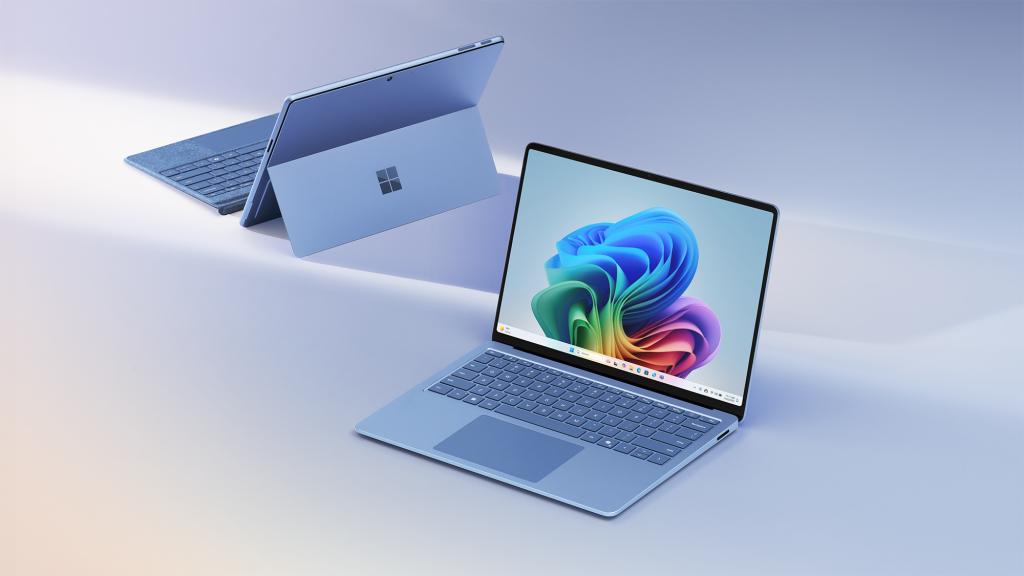
For consumers, when buying a flagship phone or laptop in 2026, a large part of the amount they pay goes to the "AI tax" that manufacturers forcefully bundle with their products. To run local large language models and handle AI agent tasks, current phones and PCs not only have higher storage requirements, but also demand AI computing units such as NPUs.
All these increased costs have already been factored into the device's selling price in advance. Users are not just buying a communication tool or productivity tool, but also a ticket to the AI era.
(Image source: Microsoft)
In contrast, cameras are, in a sense, "antiques" that stand apart from the AI wave. While smartphone photography is inevitably moving toward heavy computational photography and even using AI to "create something out of nothing," cameras, due to their underlying optical logic, adhere to the traditional mode of capturing real light and shadow. In this internet world where AI-generated content is becoming increasingly popular, a camera that can record reality has instead become something of a rarity.
In addition, we can also find that ordinary consumers have different needs for phones, PCs, and cameras.
Smartphones and PCs have long been necessities for modern people, the most essential of essential products. They are either "digital organs" that users use with high frequency every day, or core productivity tools that cannot be replaced in work processes. Therefore, they can support a much larger consumer market.
But cameras are different. For most consumers, the willingness to buy a camera is more interest-driven, not a rigid necessity. If camera prices remain at a high level and consumers' spending attitudes become more pragmatic, and cameras still maintain the outrageous high premiums seen in previous years, the ideal choice for consumers will be to give up buying a camera or use a smartphone to fill the camera photography scenarios.
Finally, if we extend the device life cycle, we will find that their purchase and usage costs are also different.
Electronic devices like smartphones have a shorter life cycle. Even high-priced flagship phones cannot avoid problems such as reduced smoothness caused by battery degradation, system updates, and other factors. Their optimal service life is usually only 2-3 years, and their value in the second-hand market will gradually decrease. Ultimately, this is because the iteration speed of smartphones is so fast that the time for a phone to go from being cutting-edge to outdated is very short.
In comparison, cameras are more "value-preserving." An entry-level mirrorless camera priced at around 10,000 yuan will hardly experience a sharp decline in mechanical and optical performance within five or six years, as long as its shutter life is healthy and it has no water damage or mold. Even after two or three years of use, its price in the second-hand market can still remain around 6,000 yuan. In general, the high cost of phones and computers comes with high depreciation rates and storage premiums; the current affordability of cameras is not only reflected in the lower entry threshold, but also in their long-term asset value retention rate as optical devices.
This article is from the WeChat official account "Leitech", written by Leitech, and authorized for release by 36Kr.