China's auto exports surge 65%, with 10 million units set to be achieved this year
"China's automobile exports will reach 10 million units."
Guo Chaogang, then General Manager of China National Automobile Import and Export Co., Ltd., stated this in 2023.
Data from the China Association of Automobile Manufacturers shows that in the first half of 2026, China's automobile exports hit 5.096 million units, surging 65.3% year-on-year.
Barring any unexpected disruptions, Guo Chaogang's projection is likely to be officially realized by the end of this year.
Yet the course of history is never smooth sailing. Deliberate policy fluctuations in some regions have presented new challenges for China's automotive industry in the era of de-globalization.
"I get the feeling they've been pretty much beaten into submission."
As a member of the public relations team at a domestic Chinese automaker, Mr. K regularly monitors foreign media, especially the public sentiment toward China's auto exports in major Western mainstream outlets.
Since the start of 2026, Mr. K has keenly observed that unlike the reactive panic they displayed when facing the Chinese automotive surge in 2024 and 2025, Western media and industry figures now appear to have accepted reality, acknowledging their growing inability to compete effectively against Chinese automakers.
Western media increasingly recognizes that low price is only the superficial advantage of Chinese vehicles, with the core strengths lying in economies of scale, supply chain mastery, and innovation capabilities.
As a result, while they still call on their governments to implement more protectionist policies, they are also increasingly considering collaboration with China's automotive industry, demonstrating a more pragmatic and realistic attitude.
In the end, Mr. K summed it up in three words:
"They've accepted their fate."
Coincidentally, a senior Chinese executive at a European-funded automaker operating in China shares a similar sentiment.
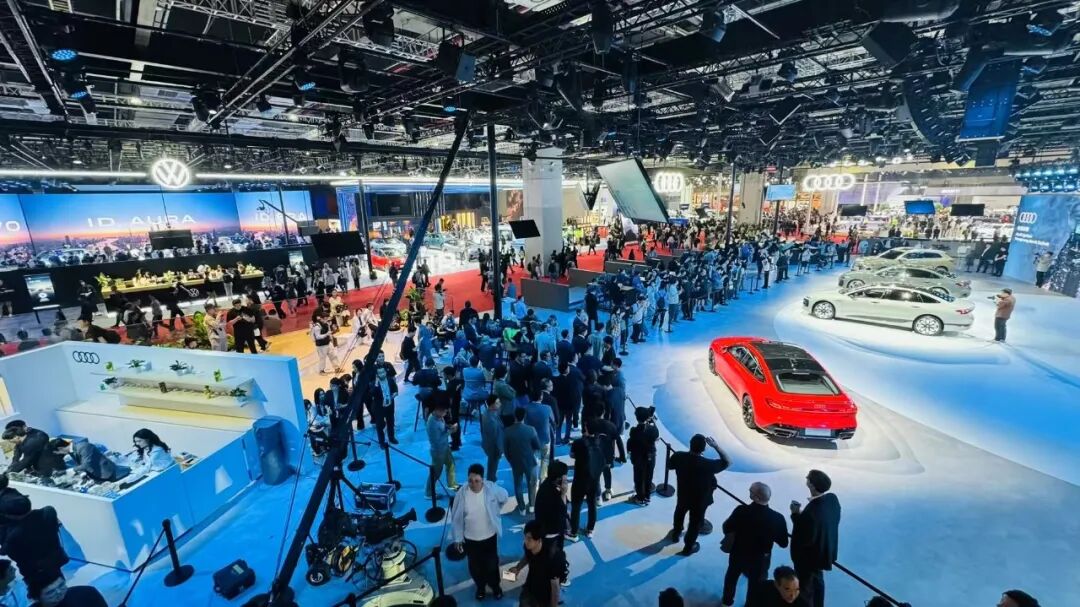
Ahead of the Beijing Auto Show, this European automaker organized a group of European journalists to visit China, hoping to help them gain a deeper understanding of China's automotive industry.
These European journalists also aimed to uncover the secrets behind the rise of Chinese automobiles through this visit. But after several days of tours and inspections, the senior Chinese executive described the state of these Western journalists as:
"They arrived full of confusion and left dejected."
These Western media outlets are far from the only ones left dejected.
Even Toshihiro Mibe, President of Honda Motor, has been left at a complete loss.
According to a Nikkei Asia report, last April, Toshihiro Mibe led a team on an inspection tour in China. After visiting a complete vehicle and components enterprise in Shanghai, the Honda president told his entourage: "Against this level of strength, we stand no chance of winning."
On the other side of the Pacific, a similar story is unfolding.
Doug Field, former head of Ford's electric vehicle business who participated in the development of the Apple Car and Tesla Model 3, once warned CEO Jim Farley: "Ford's parts release system, IT architecture, and CAD design tools are 25 years behind the times. What do you have to compete against Chinese automobiles?"
It is precisely by relying on extremely strong innovation capabilities and the cost advantages of the full industrial chain that Chinese automobiles have achieved explosive growth in the global market.
The Hidden Chill Behind 10 Million Units
"China's automobile exports will reach 10 million units."
Guo Chaogang, then General Manager of China National Automobile Import and Export Co., Ltd., stated this in 2023.
Since Chinese automakers have already taken a leading position globally in electrification and intelligentization, their data projections show that it is only a matter of time before China's auto exports surpass Japan and hit 10 million units.
Facts have proven that Guo Chaogang's judgment was largely accurate.
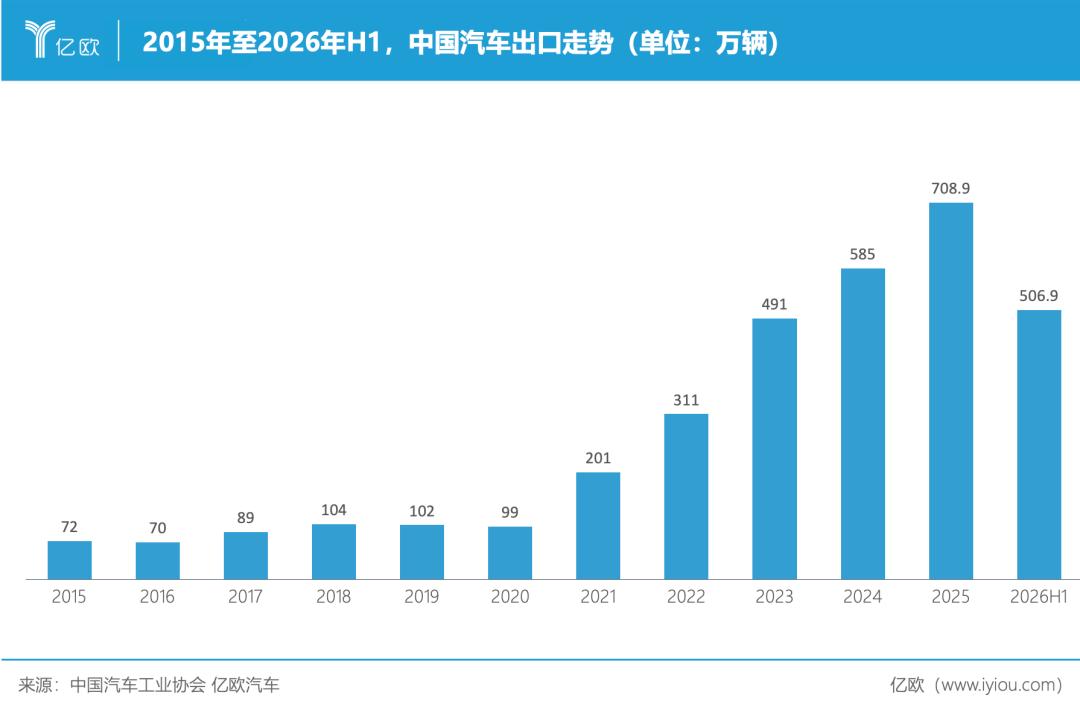
Data from the China Association of Automobile Manufacturers (CAAM) shows that in the first half of 2026, China's automobile exports reached 5.096 million units, marking a staggering 65.3% year-on-year increase.
Faced with such a promising situation, institutions including CAAM have all predicted that China's automobile exports are expected to exceed 10 million units in 2026.
Indeed, with auto exports surpassing 5 million units in the first half, as long as the trend is maintained in the second half, China's auto exports breaking the 10 million-unit barrier is a foregone conclusion.
Then why is Guo Chaogang's 2023 prediction described as "largely accurate"?
Because at that time, Guo Chaogang predicted that the point when China's auto exports reach 10 million units would be 2030.
Reality has outpaced expectations by a full four years.
In comparison, when CAAM forecast auto exports at the start of 2026, it stated that due to uncertainties in geopolitics, intensifying economic and trade frictions, and factors such as regulating the export of zero-kilometer used cars, the growth rate of China's auto exports in 2026 might slow down or even decline.
However, in the face of the reality of rapid growth, CAAM Vice Secretary-General Chen Shihua revised his description of China's auto exports as "growth exceeding expectations." Behind this over-expectation performance, technological innovation and cost control capabilities have served as the cornerstone.
On the other hand, it must also be noted that the downturn in China's domestic market has indirectly accelerated the export process of Chinese automobiles, turning what was once an "optional path" into a "mandatory path" today.
"Go global or get eliminated" is becoming a harsh business reality, and even many foreign-funded enterprises in China have begun to join this historical trend.
In a recent interview, Li Fenggang, General Manager of Beijing Hyundai, revealed three key "life-saving" strategies, the first of which is export. Taking the Hyundai Elantra as an example, this model that loses money in the domestic market can achieve substantial profits through exports. Beijing Hyundai can use these profits to reinvest in domestic new energy R&D and channel construction. The new energy products developed by Beijing Hyundai in China will also be included in the "to global" plan in the future.
Apart from Beijing Hyundai, multiple multinational automakers including Nissan, Volkswagen, and Ford have successively finalized their China export strategies.
For Chinese automakers, the proportion of exports in total sales is growing higher and higher.
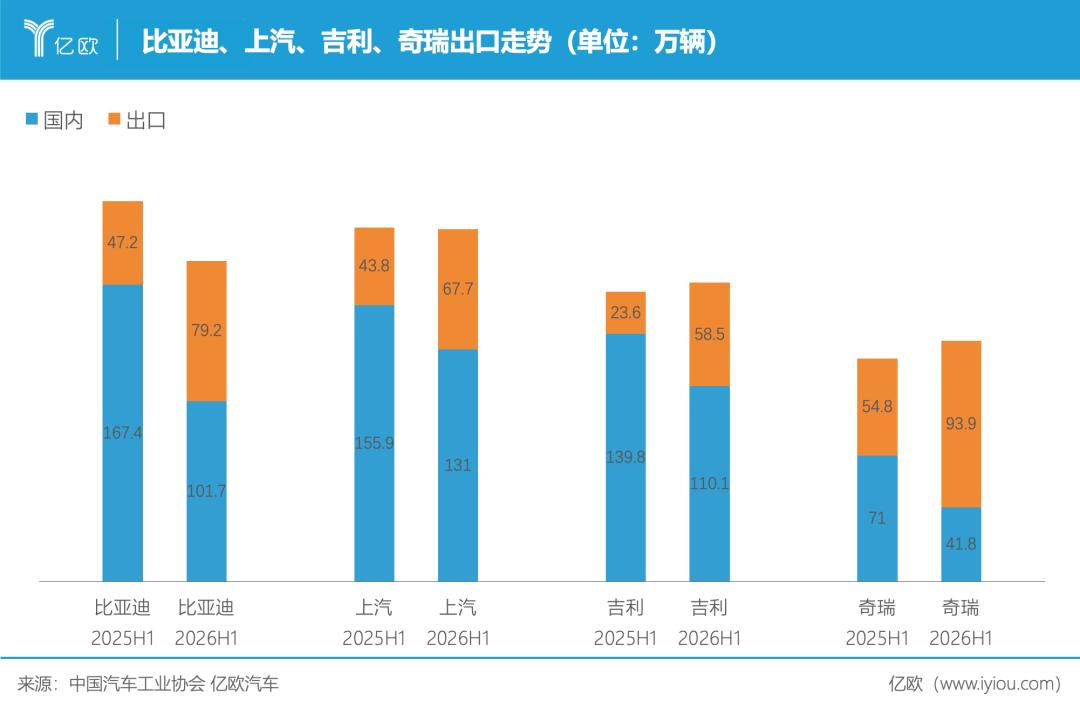
According to CAAM's first-half statistics, exports accounted for as high as 33.3%, 34.6%, and 43.7% of total sales for Geely, SAIC Motor, and BYD respectively, representing increases of 18.9, 12.7, and 14.4 percentage points compared to the same period last year. Chery's situation is even more remarkable: out of its total 1.357 million units sold, 939,000 units were exported, accounting for nearly 70% of its total sales.
Even with a slight trend of prioritizing overseas markets over the domestic one, multiple industry insiders still recognize the value of the export path: "The cost of idle production capacity is far too high. We can use exports to revitalize our capacity and stay afloat."
An internal employee at one automaker even told Yiou Auto bluntly that a key factor behind the company's loss in the first half of the year was that "due to interference from non-market factors, our high-quality products face great difficulties in being exported."
"I have a bold argument," noted well-known automotive blogger Zhu Yulong. He believes that if a Chinese automaker in 2026 only relies on 6 to 9 months of best-selling models and limits itself to cutthroat competition in the domestic market without pursuing exports, "it will be extremely difficult to make money. The chill in the automotive industry is an objective reality."
But compared to the chill in the domestic market, the malicious hostility in overseas markets catches people even more off guard.
The Hostile Scheme of "Fattening Before Slaughtering"
"Supply reliability is relatively worse,"
said Zeng Yuqun, Chairman of CATL, when expressing concerns about the supply of power battery mineral resources last June. "For example, a certain country might suddenly issue a ban that prohibits ore exports. Then another country might introduce a separate regulation that imposes quotas."
In fact, what Zeng Yuqun described was not just a concern, but real problems that have already emerged.
In 2020, the Indonesian government attracted a large number of Chinese enterprises to invest locally, hoping to turn Indonesia into the global growth center for nickel metal, a key raw material for power batteries.
With the joint efforts of the Indonesian government and Chinese enterprises, Indonesia's share of global nickel ore production has surged from just over 30% in 2020 to more than 60% in 2025.
However, in May 2026, the China Chamber of Commerce in Indonesia suddenly sent a letter to the Indonesian president. According to publicly available information, the sudden tightening of nickel ore mining allocation was one of the key issues raised. More importantly, the chamber of commerce hopes that the local government can create a more stable, fair, transparent, and predictable business environment, correct unreasonable policies and law enforcement practices, and improve the government-business communication mechanism.
Similar stories are also playing out in the wave of Chinese automobiles going global.
According to statistics from the Automotive Distributors and Mobility Association of Turkey (ODMD), sales of Chinese automobiles in Turkey reached 15,000 units in the first quarter of 2026, down 12.8% year-on-year, with a noticeable decline in market share.
There are even reports that three Chinese automakers are preparing to or have already withdrawn from the Turkish market.
In this sharp decline, tariffs have become a key variable.
Initially, automobiles exported from China to Turkey only needed to pay a 10% base tariff. But in March 2023, Turkey announced an additional 40% surcharge on imported electric vehicles from China.
In June 2024, Turkey expanded the scope of the 40% additional tariff to fuel and hybrid passenger vehicles. On July 5, Turkey shifted its policy again, announcing that as long as enterprises invest in building factories in Turkey, they will be exempt from the previously imposed 40% additional tariff, and only need to pay a 10% tariff.
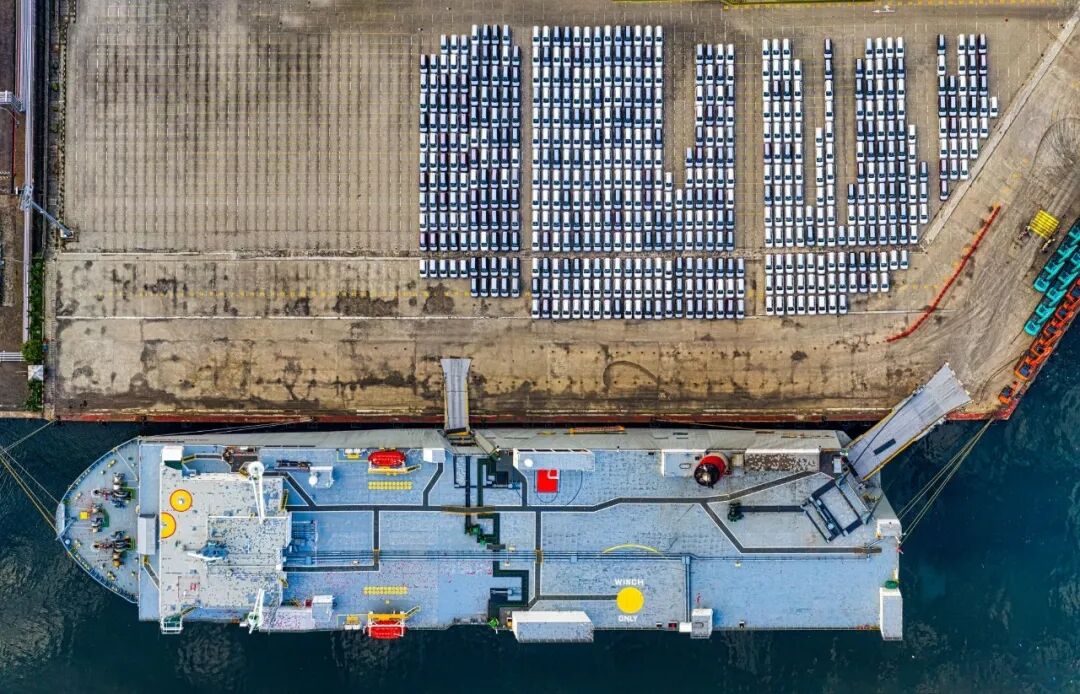
On July 8, BYD announced that it would invest 1 billion US dollars in Turkey to build a factory with a designed annual capacity of 150,000 units and an R&D center, scheduled to start production by the end of 2026.
However, a supplier who has worked in Turkey for many years told Yiou Auto that the real intention of the Turkish side is to exchange market access for technology. "They have set their sights on China's three core electric vehicle technologies, using this policy to support Turkey's own emerging automaker Togg."
In response to these unreasonable demands from the Turkish side, BYD has announced the suspension of construction of its Turkish factory, stopped launching new models in the local market, and initiated legal proceedings against Turkey's trade barriers.
Similar stories have also taken place in multiple countries including Russia, Thailand, and Mexico. The story of Chinese automobile sales in Russia soaring and plummeting repeatedly is already commonplace.
In Thailand, the local government has even introduced a "capacity bet" regulation: for every one vehicle imported, two new vehicles must be produced locally in Thailand, otherwise the importer will face fines.
Mexico has gone even further: it has not only raised the import tariff on Chinese automobiles from 20% to 50%, but also increased tariffs on auto parts from 10% to 50%, which has dealt a heavy blow to Chinese enterprises that entered the Mexican market in earlier years.
A supplier representative operating in Mexico told Yiou Auto that they initially entered Mexico hoping to use it as a springboard to access the North American Free Trade Area, but the U.S. government's tariff policies invalidated this strategy. Even after readjusting their strategic focus to the Central American, North American, and even South American markets, the company still faces considerable challenges.
"Because the costs are truly high," the supplier representative said. High local labor costs are acceptable, but even for the most basic components like screws, "the cost of local production is several times higher than shipping them from China."
Even so, "going global" remains a mandatory course for Chinese complete vehicle manufacturers and suppliers. This is true even as the wave of de-globalization sweeps across the world, and even as economic nationalism has become the policy cornerstone of some countries.
After all, while many countries' automotive industries have not yet completed the first half of the electrification transformation, Chinese automakers have already entered a new era of AI-defined vehicles. This generational lead in innovation capabilities and technological strength is the foundation of confidence that enables China's automotive industry to compete globally.
Don't forget that even those once-arrogant Western media outlets have already been beaten into submission.
This article is from the WeChat official account "Yiou Auto", author: Guo Huaiyi, editor: Hao Qiuhui, published with authorization from 36Kr.