Which Beijing shopping malls that have been open for a full year have achieved explosive sales and which ones have fallen behind?
How are Beijing's commercial projects that have been open for a full year performing now?
From January to June 2025, Beijing's commercial market saw a small boom in new openings. Coinciding with a structural inflection point in the market, stock redevelopment has overtaken new construction projects as the mainstream, making the competition in the existing market even more turbulent. A year later, all these projects that opened in the first half of 2025 have celebrated their first anniversaries.
From the combined operations of the east and west zones of Super Hopson One, the highly anticipated Zhongguan Village Grand Joy City by Haidian residents that became a hit across Beijing, to Zhonghai Dajixiang which refreshed the look of commercial blocks within the Second Ring Road, multiple stock redevelopment projects under Xinchen Commercial entering the market, and the launch of two JD MALL stores in Beijing, large-scale commercial complexes, cultural-tourism-commercial districts, benchmark redevelopment projects, reopened community businesses, and new commercial formats have all been fully unleashed.
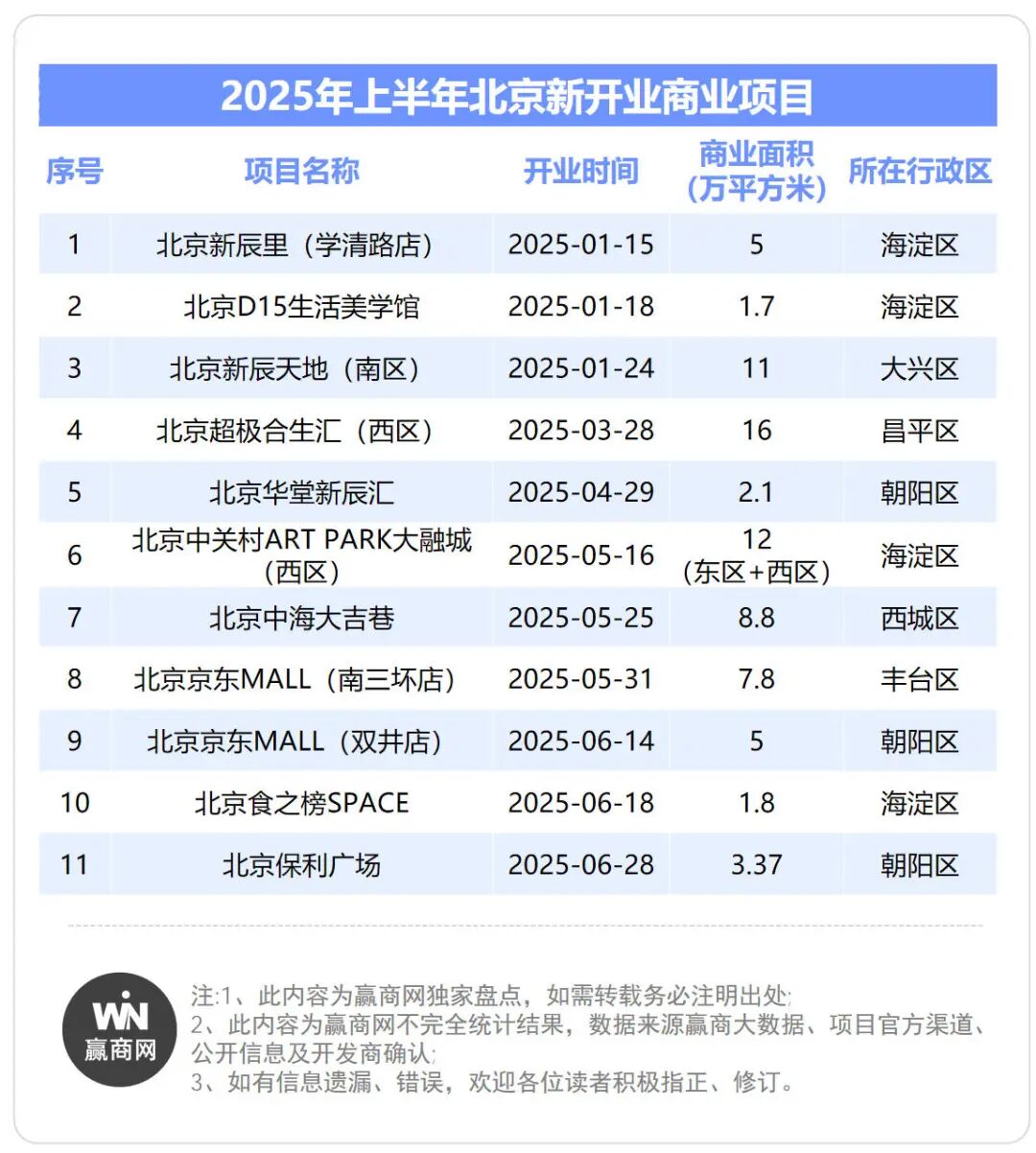
When the novelty of opening fades and operations return to daily routines, the actual operational capabilities of management teams begin to emerge. What kind of "first anniversary report cards" have these high-profile commercial complexes submitted?
Winshang Network reviews representative commercial projects that entered the Beijing market in the first half of 2025, attempting to answer several questions: After one year of operation, which projects live up to their reputation? Which ones have fallen behind? Has the "internet celebrity hype" from opening been transformed into long-term "retained customer assets"? Has the content reconstruction during stock redevelopment brought sustainable foot traffic and revenue?
01.
Popularity "Midterm Quiz"
With stock redevelopment projects becoming the absolute main force, whether foot traffic has increased significantly after reopening and whether this growth is sustainable has become an important criterion for measuring the initial success of revitalized projects.
According to Winshang Big Data, the top tier of popular projects among those opened in the first half of 2025 includes Super Hopson One, Zhongguan Village ART PARK Grand Joy City, and Zhonghai Dajixiang. These three projects are regulars on Beijing's top popular shopping mall rankings, with influence often radiating across the entire city.
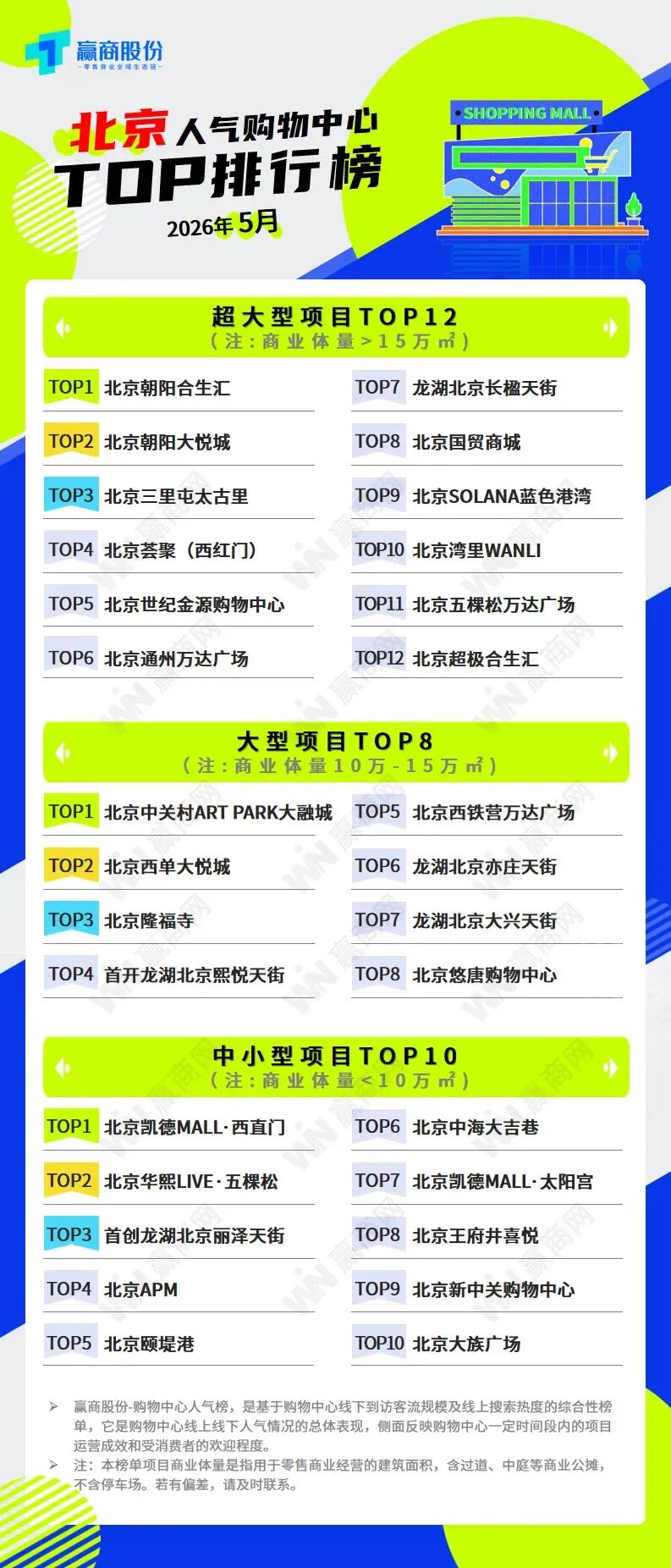
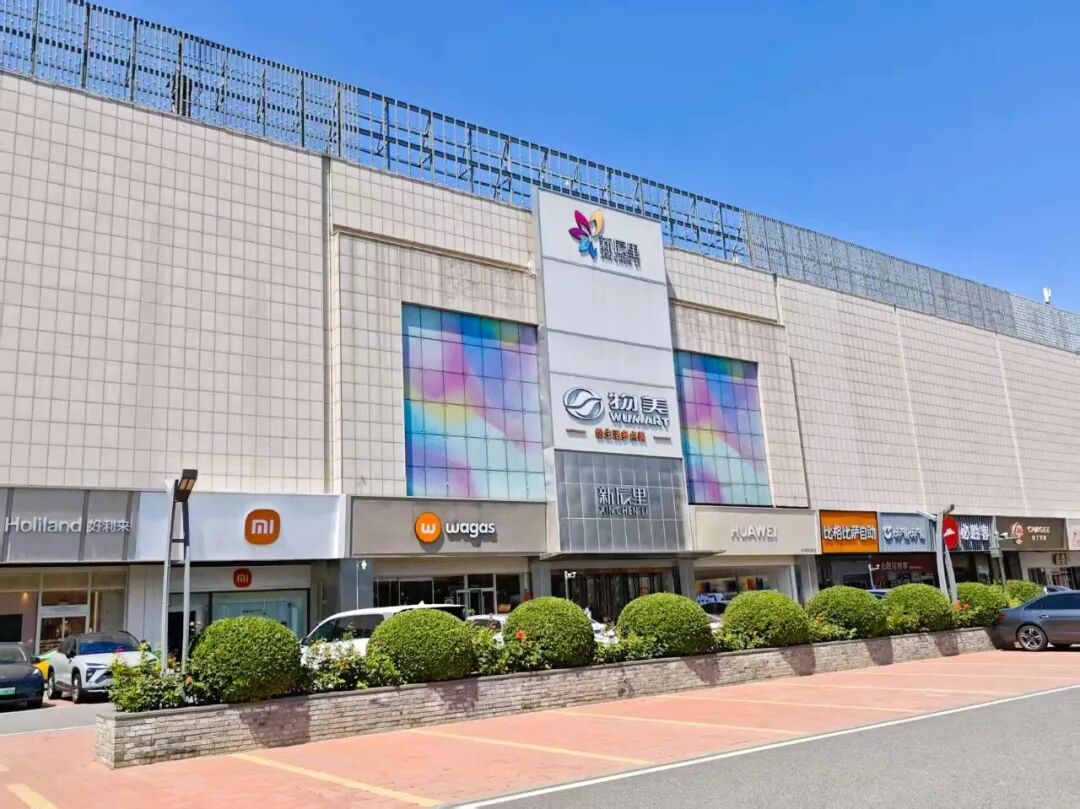
In the middle tier are three redevelopment projects taken over by Xinchen Commercial: Xinchen Li (Xueqing Road Store) transformed from the original Shengxi No.8, Xinchen Tiandi (South District) redeveloped from Bailian Qingcheng Shopping Center, and Huatang Xinchen Hui revitalized from the former Ito Yokado Yayuncun Store. After a short adaptation period, these projects have seen gradually increasing foot traffic, driving the upgrading of commercial quality in their respective regions.
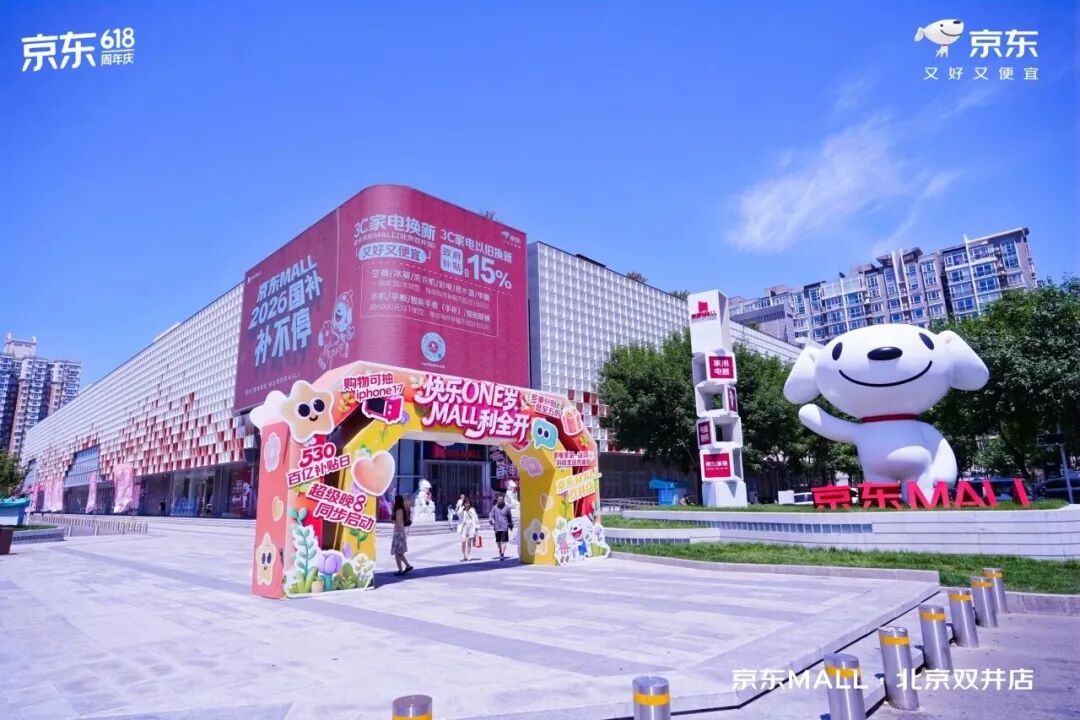
JD MALL (Shuangjing Store) and JD MALL (South Third Ring Road Store) opened almost simultaneously. The former, leveraging its core location in the CBD business district and a larger base of young customers, has slightly higher natural foot traffic than the latter.
There are also some projects that failed to capitalize on the opening bonus period, and their market visibility has gradually faded into obscurity.
02.
After a Complete Makeover and High-Profile Launch,
Have Operations Kept Up?
Super Hopson One: Steady-State Operation Challenges for the 460,000 sqm Giant Complex
Since the full integration of the east and west zones in March 2025, Super Hopson One has maintained strong commercial resilience and growth vitality, consolidating its position as a regional commercial benchmark and its positioning as an "urban cultural-tourism-commercial complex". It has gathered a large number of exclusive and first-to-market experience formats, including the Beijing first store of National Geographic Ocean Park, the country's first Happy Twist theater restaurant "Jianghu Fanjv", the country's first 8,000 sqm MELAND Super Star Factory, and the country's first China (Beijing) Aerospace Science Center. Paired with surrounding hotel clusters, it has successfully created a closed-loop "two-day, one-night" one-stop leisure and vacation experience.
At the same time, Super Hopson One continues to enhance member services across all consumption scenarios. Building on the foundation of adding more than 50 free member experience and entertainment projects in 2025, the project has further upgraded its services and care measures in 2026, including free parking for members, exclusive rights for daily life services, full pet-friendly facilities and services, and improved basic convenient public services.
Last year, the project completed nearly 30% of brand adjustments, with the total number of various first stores and flagship stores exceeding 100. In the first half of this year, more than 60 new brands were continuously adjusted, including 20 various first stores. With the full release of scale effects, Super Hopson One achieved sales revenue of 2.2 billion yuan in the first half of 2026, a year-on-year increase of 25%; foot traffic reached 25 million person-times, a year-on-year increase of 36.5%; the single-day peak exceeded 400,000 person-times, setting a new record for Beijing shopping malls.
Zhongguan Village ART PARK Grand Joy City: Making Haidian "Stylish" Too
As the largest urban renewal commercial complex within Beijing's Fourth Ring Road, Zhongguan Village ART PARK Grand Joy City has mainly addressed long-standing pain points in the core Zhongguan Village area, such as strong industries but weak commerce, fragmented and depressing commercial spaces, and severe consumption outflow.
By introducing more than 300 brands (including over 100 first stores at various levels such as Beijing first stores, western Beijing first stores, and Haidian first stores), Grand Joy City fills the gap of high-quality international trendsetting and social dining in the region, realizing the concept of "spending the money earned in Haidian within Haidian" and effectively alleviating consumption outflow. The introduction of formats such as dining bars and late-night canteens has built a full-time consumption scenario chain, changing the quiet and empty state of Zhongguan Village at night and activating nighttime vitality.
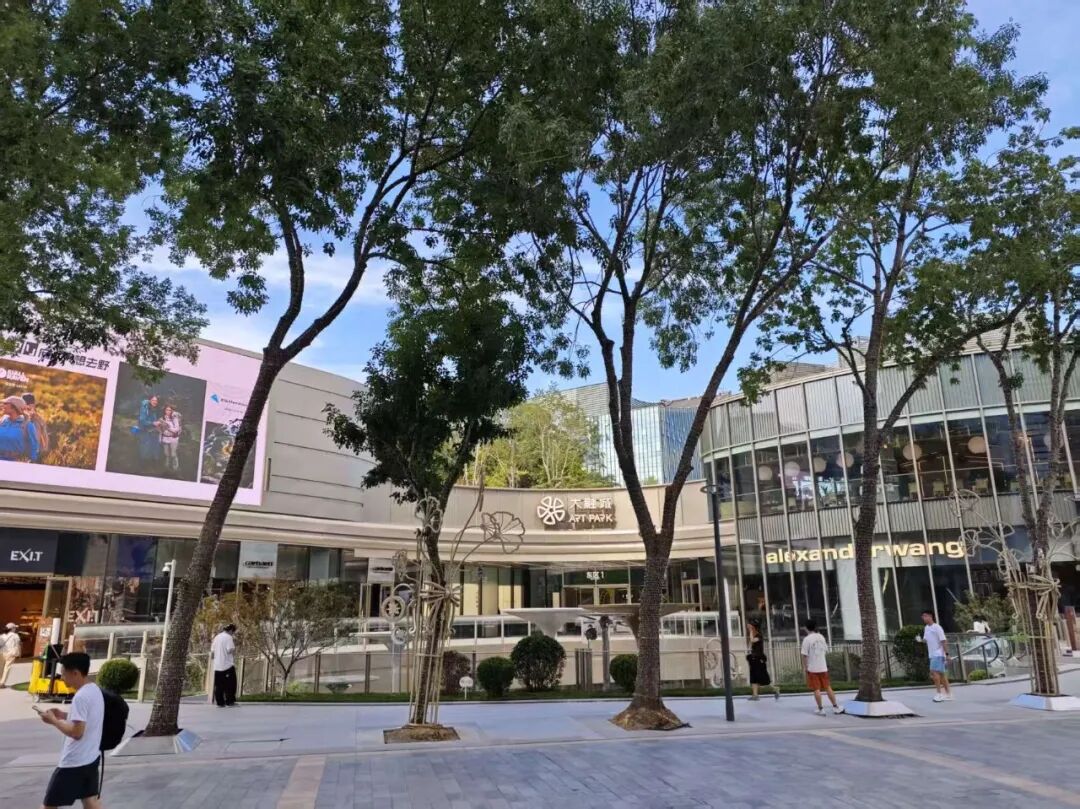
The complete form of "independent retail blocks + themed districts + urban park" seamlessly connects commerce, blocks, and urban parks, providing scarce ecological leisure and social spaces. In particular, the design of five sunken plazas and glass skylights introduces natural light to underground spaces, realizing "ground-level experience for underground spaces" and completely breaking the enclosed feeling of traditional box-style commercial complexes.
During the urban renewal process, the project also retains local cultural symbols such as the DNA double helix sculpture, ancient trees, and imperial roads, transforming historical memories into commercial IPs, solving the problem of missing emotional connections in old business district renewal, and preserving the unique sense of belonging exclusive to Zhongguan Village.
Zhonghai Dajixiang: Deep Integration of Historical Cultural Context and Modern Commerce
In the urban renewal of Beijing's core urban area, balancing the conflict between preservation and development is one of the most important topics. Zhonghai Dajixiang adopts a composite commercial format of "cultural preservation district + commerce + office + park", deeply rooted in the cultural heritage of southern Xuanwu, mending the city like restoring cultural relics, representing a successful interpretation that combines cultural depth and commercial vibrancy.
In addition to the three-dimensional development strategy of courtyard-style blocks, sunken plazas, and double-first-floor design, Dajixiang has also created 12,000 sqm of urban green space, integrating low-carbon gardens, flexible theaters, forest terraces, etc., to provide scarce open leisure and social scenarios, creating an ecological public space with strong community cohesion.
Since the beginning of this year, the Spring Festival series of activities "New Rhythm of the Central Axis, Grand Year at Dajixiang - Visiting the Fair in Dajixiang" has made it the most festive and lively New Year's check-in spot in Beijing. The early-spring "Dajixiang Flower Music Festival" injected spring vitality and humanistic warmth into the streets, the May Day holiday "Dajixiang Fashion Festival" created a five-sensory immersive urban life experience venue, and the retirement lifestyle carnival "Vigorous Festival" actively explored new scenarios for silver-friendly cities.
According to official project data, within the first year of opening, cumulative foot traffic exceeded 20 million person-times, member registrations exceeded 220,000, and total sales revenue exceeded 900 million yuan. The project achieved full occupancy of stores for operation, with first stores and customized characteristic stores accounting for more than 50%. Its excellent operational performance demonstrates the project's innovative vitality and development potential among Beijing's distinctive commercial blocks.
In June, the one-year anniversary themed art exhibition "Dajixiang - Gathering the World" of Zhonghai Dajixiang also won the Gold Award at the London Design Awards, which attracts global attention in the design industry. This marks that its capabilities in scenario creation and space design in the urban renewal field have received international authoritative recognition.
Two JD MALL Stores in Beijing: After the Peak of Foot Traffic, "Adaptation" and "Sustained Conversion" Matter More
The JD MALL South Third Ring Road Store and Shuangjing Store both celebrated their first anniversaries in the middle of this year. From foot traffic monitoring and actual on-site experience, the Shuangjing Store is relatively stable, while the South Third Ring Road Store may underperform expectations.
The Shuangjing Store is located in the mature business district of East Third Ring Road in Chaoyang District. Although its scale is smaller than the South Third Ring Road Store, it features "non-typical home appliance" formats such as MUJI, PAGEONE Bookstore, and trendy video game venues. With a large number of young white-collar workers and middle-class customers in surrounding office buildings, the project only needs to find its own ecological niche and become a differentiated supplement in the business district, so as to precisely capture customers from the existing foot traffic pool.
The South Third Ring Road Store is located at the intersection of the South Central Axis and South Third Ring Road. Although transportation is convenient, the commercial ecosystem in the region is weak, and family customers in southern Beijing prioritize practicality and cost-effectiveness in consumption. After more than a year of operation, the supporting formats such as catering (B1-B2) are still insufficient. Relying solely on low-frequency consumption like home appliances and furniture cannot extend customers' stay time or increase their visit frequency.
However, the two JD MALL stores actually face the same problem: when the opening bonus fades, national subsidy policies gradually diminish, and consumers' novelty wears off, can they always maintain their unique experience and differentiated competitive moat?
03.
Beyond the So-Called "Blockbusters", It's Mostly About Daily Operations
When we turn our attention to some region-focused projects, we will find that although a "huge opening boom" can be artificially created, "sustained steady growth" is the more common normal state.
Xinchen Commercial's counter-cyclical expansion in recent years has been remarkable, especially in Beijing where it has built well-reputed projects such as Huatang · Xinchen Hui, Xinchen Li (Yayuncun Store, Jiuxianqiao Store, Xueqing Road Store), and Xinchen Tiandi (Daxing Store) (Wangjing V-HUB is yet to open), becoming an innovator deeply engaged in the community commercial sector.
Mr. Wang Chun, Co-founder & COO of Xinchen Commercial Group, has repeatedly pointed out in industry exclusive interviews that "the redevelopment of community commerce is not a scaled-down version of large shopping malls". His business logic of "one policy for one store", "focus on major aspects and relax on minor ones", "rapid iteration", "build strong categories", and focusing on customers within a 1.5-2 km radius has played a very practical role in the redevelopment and revitalization of old commercial projects.
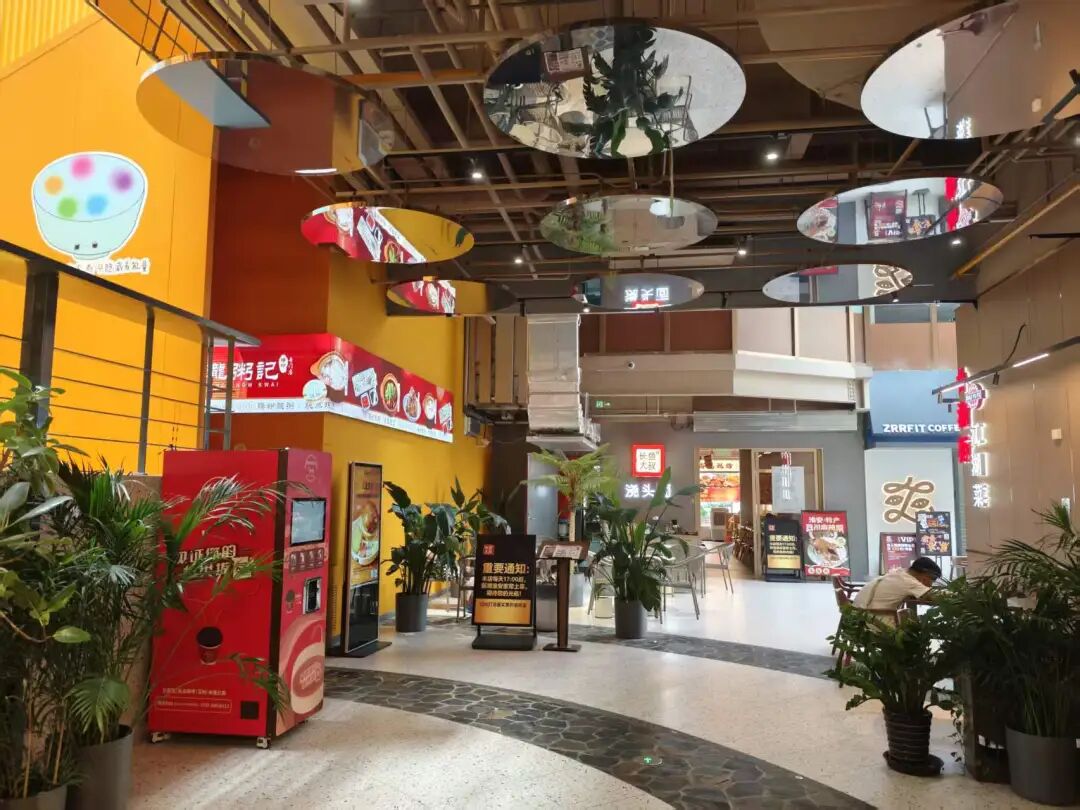
For example, the Huatang Xinchen Hui project focuses on catering as its strong category, forming differentiated clusters with no overlapping brand types; it reduces some children's and women's clothing formats, supplements sports and leisure formats to make up for deficiencies in early planning; at the same time, it holds hundreds of community activities throughout the year with a single event cost of only about 1,000 yuan, which not only strengthens interactions between in-mall brands, but also enhances the daily visit loyalty of surrounding customers.
Xinchen Li (Xueqing Road Store), surrounded by dense universities and communities, opened more exterior walls during the redevelopment process, making the multi-scenario catering combination the facade of the mall. It introduced more trendy brands, children's entertainment, and training formats. Coupled with "weekly events" and "exclusive discounts for college students", the project has seen gradually increasing foot traffic, and its customer base has gradually become younger, firmly capturing the hearts of surrounding college students and family customers.
In addition, the office complex project Beijing Poly Plaza steadily outputs the combination of "first stores + independent brand owners", precisely reaching young customers through scenario-based marketing. Centered around the positioning of "art immersion + community hub", it has built a 15-minute quality life circle for surrounding residents, finding its own position in the Wangjing business district.
Shizhibang SPACE, redeveloped and upgraded from the original hotel and factory building complex, adopts the innovative model of "must-eat list food cluster + refined business travel + leisure entertainment", creating a one-stop composite consumption destination that meets diverse needs such as friends gathering, business banquets, young people's leisure entertainment, and business negotiations, injecting new vitality into regional commerce.
D15 Life Aesthetics Museum