What else can real estate companies do if they don't sell houses?
In recent years, the industry as a whole has shown a notable feature of "under pressure on profits and structural differentiation".
During the in-depth adjustment period of the industry, apart from "selling houses", what else can real estate enterprises do?
Property management, agency construction, commercial operation, leasing, cultural tourism, technology, senior care... Are these familiar "second curves" just "gimmicks" or "real value drivers"?
Looking at the four major central SOEs with top-ranking sales scales in the industry, namely Poly Development, China Overseas Land & Investment (COLI), China Resources Land (CR Land), and China Merchants Shekou, all four central SOEs have been continuously developing "non-residential businesses" to nurture their "second growth curve" in recent years.
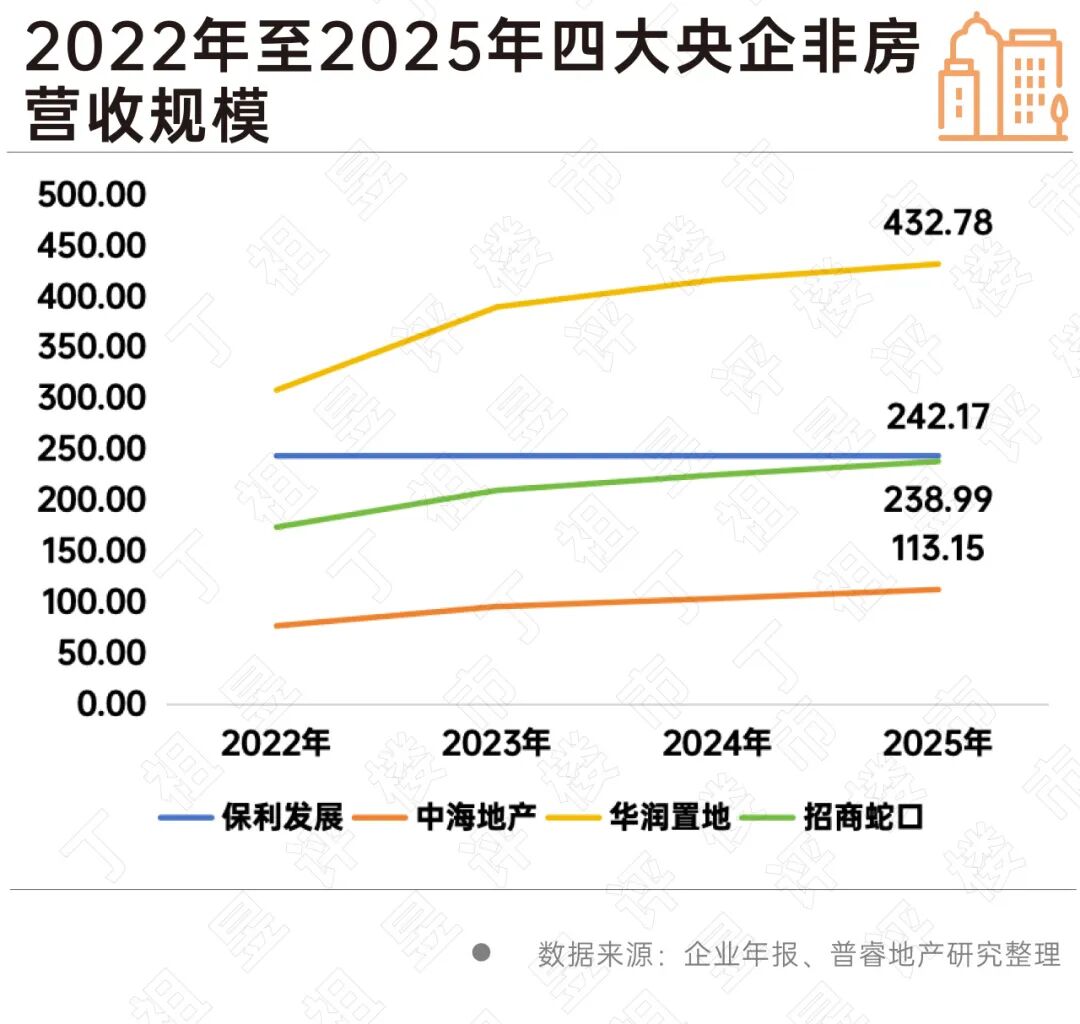
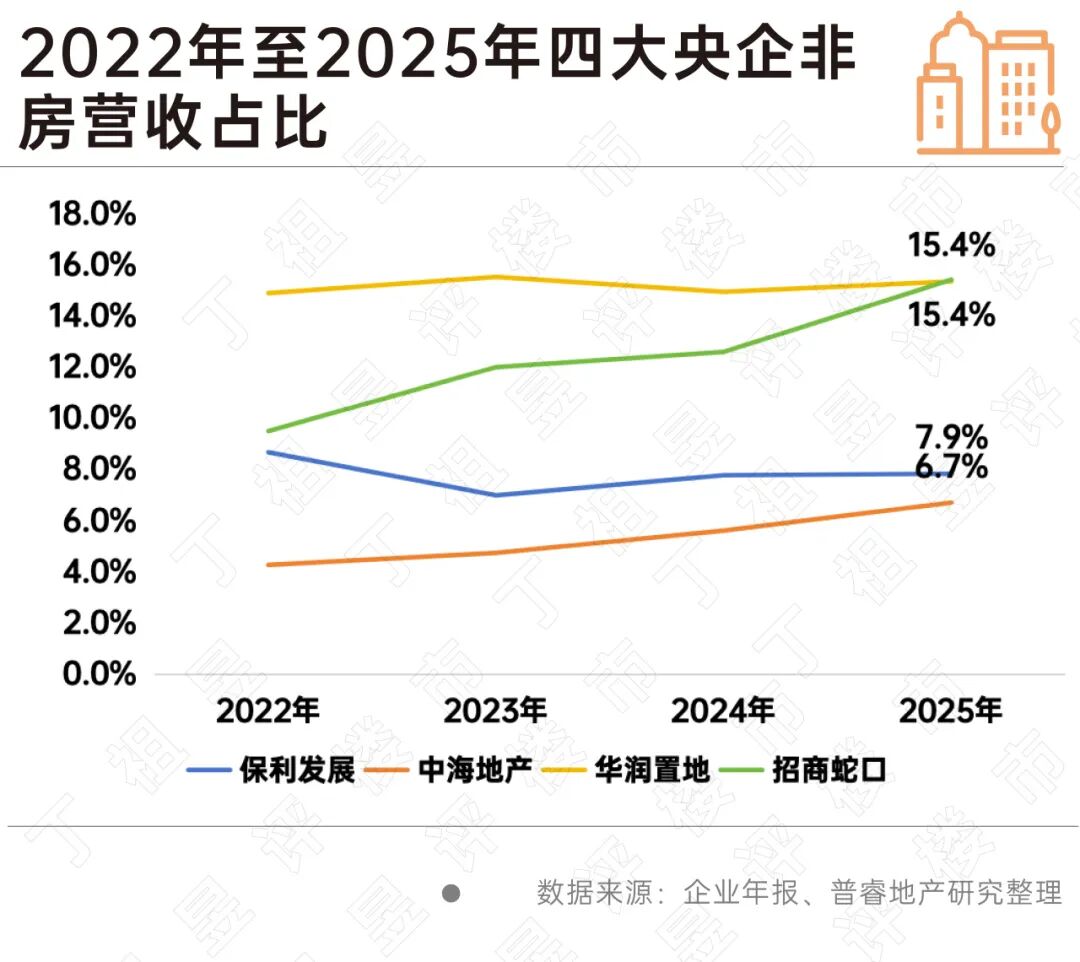
In terms of revenue scale, CR Land's "non-residential business" revenue is far ahead; in terms of revenue proportion, the non-residential business revenue of CR Land and China Merchants Shekou accounts for 15.4% of their total operating revenue; for office buildings, a sector that the industry has long struggled to perform well in, COLI boasts the highest revenue proportion.
Combined with the profit margin of non-residential businesses, as well as their proportion in total revenue and total profits, non-residential businesses have exerted distinct impacts on the overall profit margins of the four major central SOEs.
Against the backdrop of peaking development business and shrinking overall industry scale, real estate enterprises still have a long way to go beyond "selling houses".
01
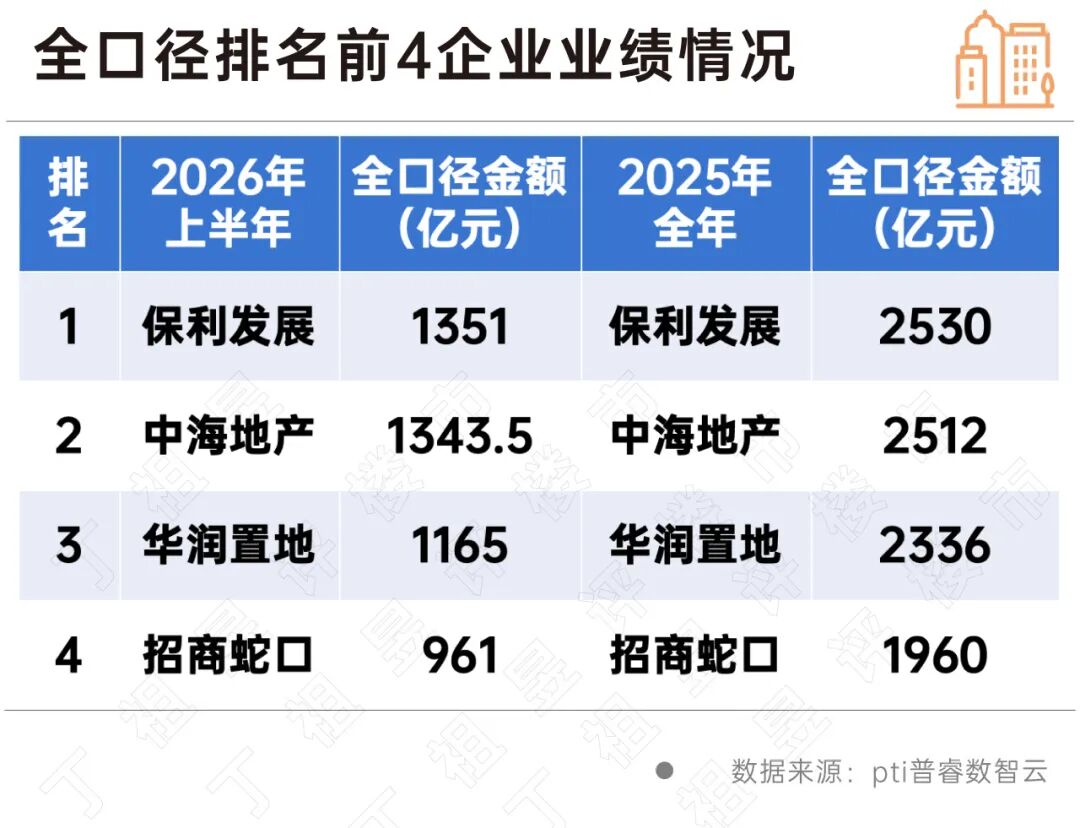
Since 2025, the internal competition among leading real estate enterprises has become white-hot, especially for the top 4 enterprises in full-caliber ranking. Among them, CR Land and China Merchants Shekou have always firmly occupied the third and fourth positions, maintaining a certain scale gap with the top two enterprises and the fifth-ranked enterprise. Meanwhile, the cumulative sales amount gap between COLI and Poly Development under various statistical calibers remains extremely small, showing a stalemate competition situation.
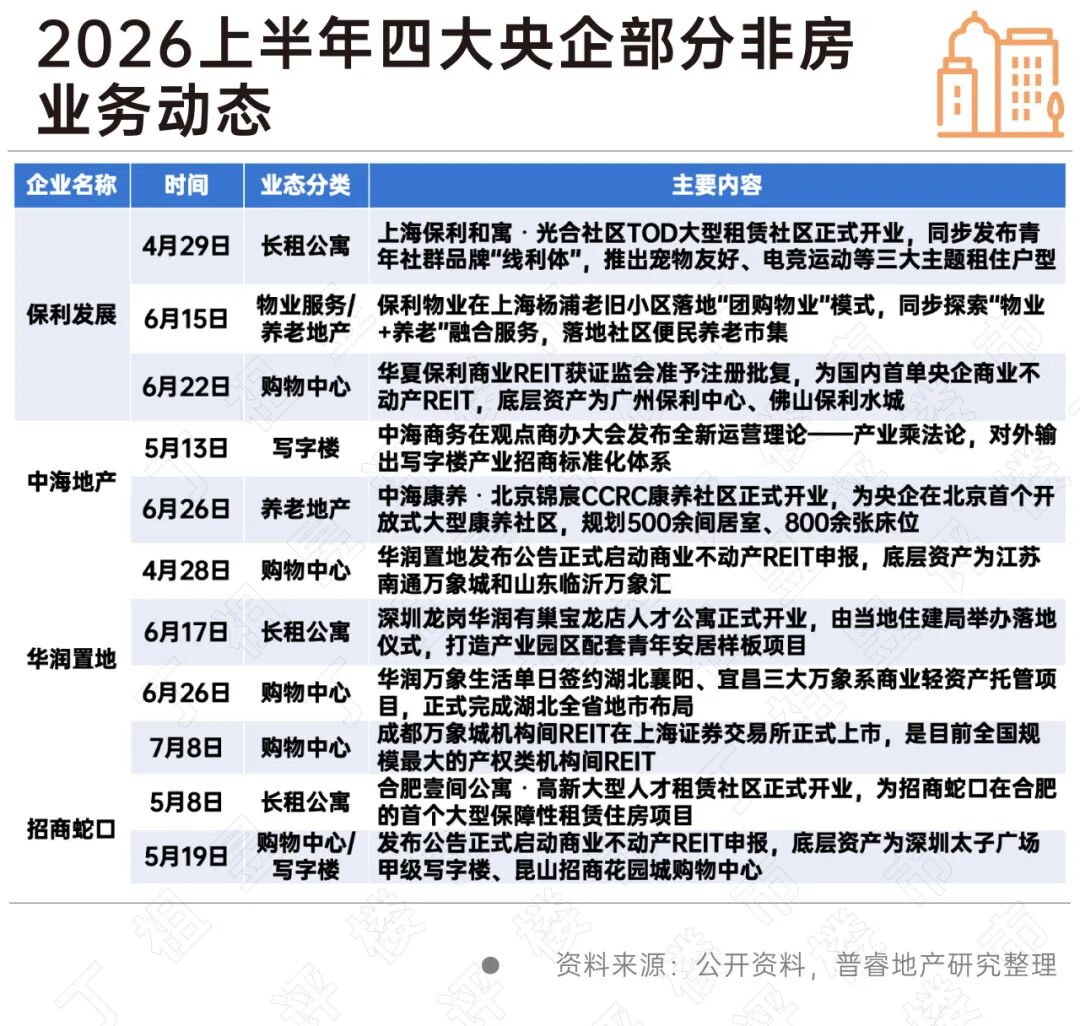
Against the backdrop of peaking traditional development business scale and intensifying competition, major enterprises have been making efforts in diversified non-residential businesses. From the perspective of the four central SOEs, frequent actions have been taken in fields such as commercial REITs, affordable rental housing, senior care, and commercial light assets.
In the first half of 2026, Poly Development obtained the country's first REIT registration approval for commercial real estate of a central SOE, launched a new "property + elderly care" community model, and opened a large-scale TOD community for long-term rental apartments; COLI released a new theory of commercial office operation and launched Beijing's first large-scale open senior care community developed by a central SOE; CR Land initiated the application for its first commercial real estate REIT, completed full coverage of commercial light assets in prefecture-level cities in Hubei, added new affordable rental housing talent apartment projects, and successfully listed the largest equity inter-institutional REIT across the country in July; China Merchants Shekou also participated in commercial real estate REITs and launched Hefei's first large-scale affordable rental housing project.
The four major central SOEs have all opened up the closed loop of "investment, financing, management, and exit" in the operation track, realizing quality improvement and upgrading of multiple business formats.
02
Against the background that the four major central SOEs are vigorously promoting "non-residential businesses", how exactly do these enterprises' non-residential businesses support their overall profitability?
As of press time, only China Merchants Shekou has officially released its 2026 first-half performance forecast, so we mainly refer to the 2025 annual data for analysis.
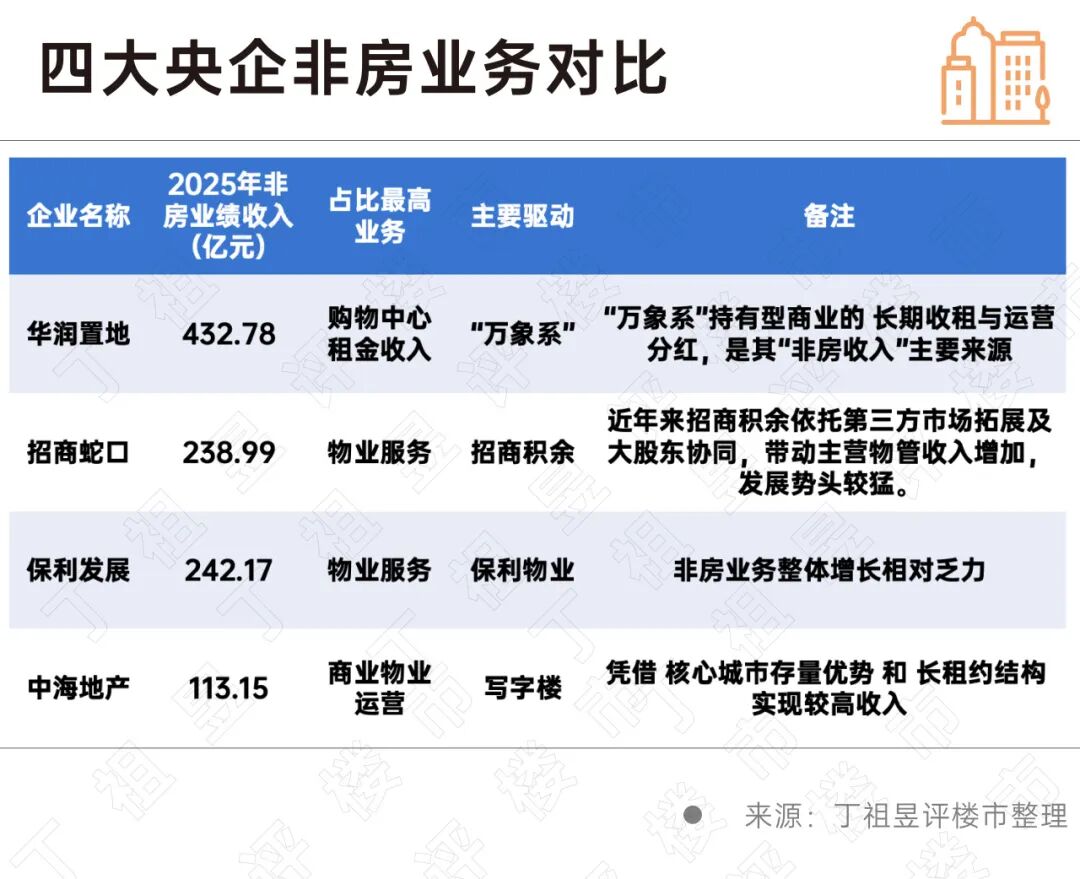
In terms of revenue scale, CR Land's non-residential business revenue is far ahead, reaching 432.78 billion yuan. Poly Development and China Merchants Shekou are neck and neck, with non-residential revenues of 242.17 billion yuan and 238.99 billion yuan respectively, while COLI lags relatively behind with only 113.15 billion yuan.
In terms of overall revenue contribution, the non-residential business revenue of CR Land and China Merchants Shekou accounts for 15.4% of their total operating revenue, representing a relatively high contribution, while the proportion for Poly Development and COLI stands at only 7.9% and 6.7% respectively, showing a significant gap.
For individual enterprises, CR Land's non-residential revenue continues to rise, leading the industry in scale all year round.
Among its non-residential revenue, the operating real estate rental business generates the highest revenue, reaching 254.4 billion yuan, accounting for 59% of the total non-residential revenue. This revenue mainly comes from shopping mall rents, which make up 86.2% of the rental business revenue.
The second largest source is the light asset management fee-based business, with revenue reaching 178.3 billion yuan and accounting for 41% of the total non-residential revenue, which mainly comes from the light asset management business of its listed subsidiary China Resources Mixc Lifestyle.
For CR Land, the long-term rental income and operation dividends from its "Mixc series" of self-owned commercial properties such as "Mixc World", "Mixc Place" and "Mixc Park" are the main sources of its "non-residential revenue".
China Merchants Shekou's non-residential revenue has also been rising steadily, reaching 238.99 billion yuan in 2025. Of this total, property service revenue stood at 167.3 billion yuan, accounting for 70% of the non-residential revenue and representing a year-on-year increase of 8.5%, which mainly came from its property management and light asset operation service platform, China Merchants Prosperity (CMSD).
In addition, the asset operation business including the operation and asset management of self-owned properties such as commercial offices, apartments and hotels, as well as industrial parks, and businesses like convention and exhibition and cruise operations, generated a revenue of 76.3 billion yuan.
Compared with CR Land and China Merchants Shekou, the non-residential business growth of Poly Development and COLI is relatively weak. Poly Development's non-residential revenue has remained in the range of 240-245 billion yuan in recent years, with a slight year-on-year decline. Specifically, Poly Property achieved a total property revenue of 171.3 billion yuan in 2025, and its asset operation businesses covering construction, leasing, hotels, commercial properties, design and exhibitions generated a revenue of 51.4 billion yuan in 2025.
It is worth noting that Poly Property outperformed CMSD in both contracted area and total revenue in 2025, but in recent years, CMSD has maintained a strong development momentum by relying on third-party market expansion and synergy with its major shareholder to drive the growth of its core property management revenue.
Finally, COLI has seen a steady growth in its non-residential revenue, with its proportion in total operating revenue increasing slightly year by year, but both the scale and the proportion are the lowest among the four major central SOEs.
However, it should be noted that COLI recorded a non-residential business revenue of 113.15 billion yuan in 2025, of which commercial property operation revenue was about 72 billion yuan, accounting for approximately 64% and covering the total interest expenditure for the first time. Of this 72 billion yuan, office buildings generated the highest revenue, reaching 34.7 billion yuan, followed by shopping malls with a revenue of 23.9 billion yuan.
Currently, the office building market is under overall pressure due to oversupply and weak demand. However, COLI has achieved high revenue against the industry headwinds by virtue of its stock asset advantages in core cities and long-term lease structure. In 2026, COLI's office building business signed 1.105 million square meters of new leasing area within the period, with 81% of the area covered by leases of more than two years, 80% occupancy rate for mature projects, and an operating profit margin of 56%.
03
It can be seen that the four major central SOEs have different focuses in their "non-residential businesses", and these differences have widened the gap in their gross profit margins.
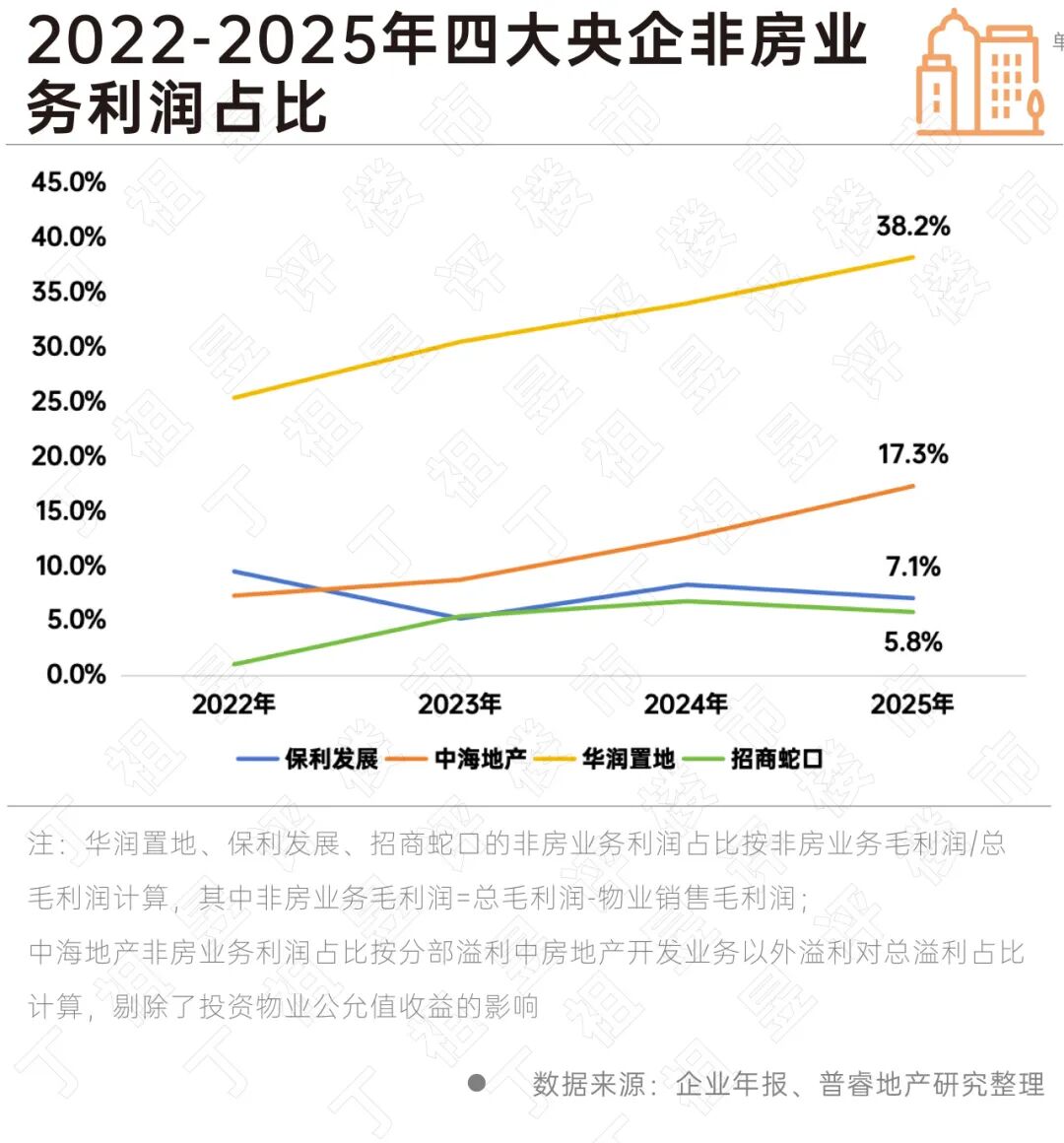
While CR Land has seen its non-residential revenue continuously rise, its contribution to total gross profit has also been steadily increasing, with the proportion climbing year by year from 25.4% in 2022 to 38.2% in 2025.
Although COLI has a small non-residential business revenue scale, its non-residential profit proportion is relatively high, gradually increasing from 7.3% to 17.3%, showing a steady and rising supporting effect on the enterprise's profitability.
The non-residential profit proportion of Poly Development has declined significantly, falling back from 9.5% to 7.1%, and the profit hedging capacity of its non-residential sector has continued to weaken.
Although the non-residential profit proportion of China Merchants Shekou has increased significantly compared with 1.02% in 2022, it has always hovered at a low level below 7%, with a limited driving effect on overall profits.
Combined with the profit margin of non-residential businesses, as well as their proportion in total revenue and total profits, non-residential businesses have already exerted distinct impacts on the overall profit margins of the four major central SOEs.
CR Land has seen its non-residential gross profit margin rise year by year. Coupled with the steadily increasing business proportion, this has continuously provided positive support to the total gross profit margin, keeping its overall gross profit margin at a high level in the industry for a long time.
The non-residential gross profit margins of Poly Development and China Merchants Shekou have dropped sharply, weakening the hedging effect of their non-residential sectors and accelerating the decline of their overall gross profit margins, which may be related to their business structures dominated by property services.
Since COLI only discloses the pre-tax profit level of each business segment in its segment performance, according to the pre-tax profit margin of non-residential businesses after excluding the fair value gain of investment properties, COLI's non-residential business profit margin is slightly inferior to CR Land's profit level which has been continuously rising under the same statistical caliber, but still higher than the non-residential gross profit margins of Poly Development and China Merchants Shekou.
It can be seen that compared with business structures dominated by property services, the non-residential businesses of CR Land and COLI, which are dominated by asset operation, have relatively stronger profitability.
On the whole, whether the non-residential business as the "second curve" can improve an enterprise's profitability depends on the combined effect of multiple factors such as its own profit level, business scale, and business structure.
CR Land's diversified businesses have a prominent effect in hedging the profit decline of its core business, while COLI, Poly Development, and China Merchants Shekou still have room for improvement.
In the future, as the real estate incremental market gradually shrinks, the sales competition among real estate enterprises may continue to be white-hot, and non-residential businesses will become a key leverage to determine long-term profitability.
Subsequently, real estate enterprises need to continuously optimize the profit model of diversified business formats, balance the development of core business sales and asset operation, and achieve stable and long-term development by relying on the second growth curve.
This article is from WeChat official account"Ding Zuyi Reviews the Real Estate Market", authored by the Editorial Department and Prism Research, and published with authorization from 36Kr.