Innolight leads a Series A round for a post-90s entrepreneur from Tsinghua University
A rare robot financing deal has emerged.
PE Daily has learned that Sihe Robotics, a developer of intelligent high-altitude robots, has secured hundreds of millions of RMB in a Series C financing round. The round was jointly led by Qiangang Capital and Innolight, with Guangtou Capital, Guohai Securities, and Juntong Capital participating as follow-on investors, while existing shareholder Fosun RZ Capital continued to increase its stake.
The founder behind the company, Xu Huayang, is a Tsinghua University PhD from Shihewan, Gushi County, Henan Province. Around 2015, he led a team to establish Sihe Robotics, entering the high-altitude special-purpose robot track. Over the past decade, the company has focused on the core technologies and application scenarios of intelligent high-altitude robots. To date, it has accumulated benchmark customer cases from more than 40 countries around the world, becoming one of the few embodied intelligent special-purpose robot companies in China's robotics industry that has passed commercial validation and entered the stage of large-scale delivery.
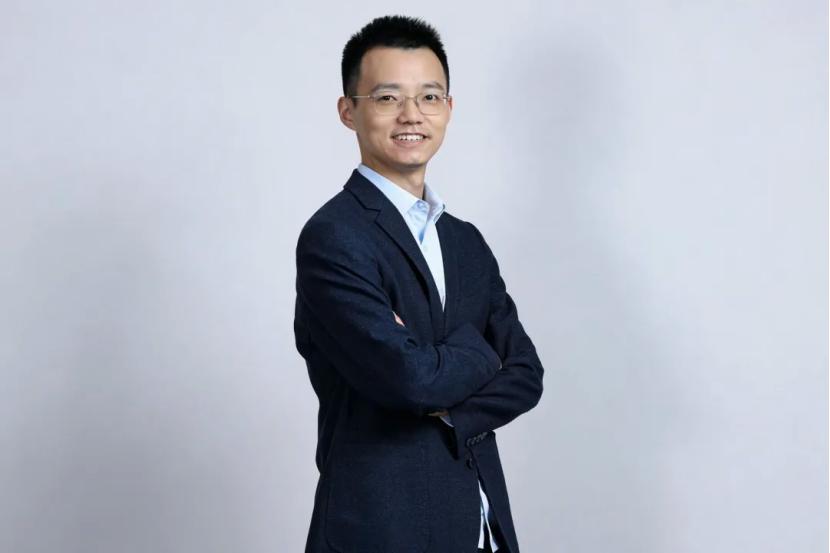
Xu Huayang, Founder and CEO of Sihe Robotics
"The essence of business is value creation and value sharing. The robotics industry is no exception — ultimately, it must return to real scenarios to create value for customers and close the business loop." Speaking about his original intention to start the business, Xu Huayang told PE Daily that Sihe aims to "empower humanity with robots and AI, eliminating dangerous and strenuous work across the world."
A Tsinghua PhD's Decade of Entrepreneurship
Devoted to Building Robots
The Shihe River, anciently known as "Jue Shui", spans Henan and Anhui provinces. It originates on the northern foot of the Dabie Mountains, flows through Jinjiazhai and Meishan in Anhui Province, Gushi in Henan Province, and empties into the Huai River at Sanhejian.
Xu Huayang grew up by the Shihe River, where he loved swimming in the water and playing on the riverbank as a child. He completed his undergraduate studies at the School of Mechanical and Electrical Engineering of Central South University, then pursued his master's, doctoral, and postdoctoral degrees at the Department of Mechanical Engineering of Tsinghua University. Years later, when he was naming his startup, the first name that came to his mind was "Shihe", which evokes the meaning of a "long river of history that flows on continuously". He hoped the company would enjoy lasting prosperity and develop healthily and sustainably.
In Xu Huayang's memory, it was at Tsinghua that he truly witnessed the heights an individual's life could reach. Apart from spending time in the library, working on projects, and conducting scientific research, his greatest hobby during his Tsinghua years was attending lectures and sharing sessions by top industry leaders. Entrepreneurs including Jack Ma, Pony Ma, Lei Jun, Wang Xing, and Peter Thiel, as well as Nobel laureates, Fields Medal winners, and academicians from the Chinese Academy of Sciences and Chinese Academy of Engineering, all once delivered speeches on the Tsinghua campus.
"A great university is defined not by grand buildings, but by great masters." These experiences broadened Xu Huayang's horizons and slowly nurtured the seed of entrepreneurship in his mind. Later, he came to a conclusion: in peacetime, the best path to realizing self-worth might well be starting a business.
His first entrepreneurial venture took place on the Tsinghua campus. Inspired by *Steve Jobs' Biography*, Xu Huayang launched a "Mini PC All-in-One" optical computer project, developing optical interaction and display devices based on VR interaction. In early 2015, he formed a team of around 10 people, secured the first round of financing in the middle of the year, and completed small-batch trial production by the end of the year. In 2016, the project was acquired by an industrial investor. This experience allowed Xu Huayang to fully go through a complete entrepreneurial closed loop for the first time.
In mid-2017, Xu Huayang graduated with his PhD. Before graduation, he never submitted a single job application or attended a single job interview. After graduation, he had no hesitation at all about continuing his entrepreneurial path. The day after his graduation, he rented an office in Wudaokou and embarked on a new entrepreneurial journey.
In his second startup, driven by personal interest and guided by his vision, Xu Huayang naturally chose the robotics sector. He is an avid fan of science fiction novels, with Isaac Asimov's *Foundation* and *Robot* series having a profound impact on him. Works such as *The Hitchhiker's Guide to the Galaxy*, *2001: A Space Odyssey*, *Journey to the Center of the Earth*, and *The Three-Body Problem* also continuously expanded his imagination of the future world. Combined with his years of robotics research at Tsinghua, Xu Huayang developed the idea of building a world-class robotics company back then.
Xu Huayang likes a quote from *Tao Te Ching*: "Confront the difficult while it is still easy; accomplish the great task by a series of small acts. All difficult things in the world must be dealt with when they are easy; all great things in the world must be handled when they are trivial. Therefore, the sage never strives to do great things, and thus he can achieve greatness." Even the most grand vision must start with a specific, practical entry point.
At that time, robotics entrepreneurship was far from quiet. DJI had already emerged as a leader in the drone space, while a number of companies focused on ground mobile robots for scenarios such as power inspection; underwater robots were still far from large-scale commercialization. Xu Huayang led his team to repeatedly investigate mobile robot opportunities across "land, sea, air, and space" scenarios, and Sihe finally targeted a little-noticed field — the high-altitude facade scenario.
According to the national standard GB 3608-2025 *Classification of Work at Height*, all operations carried out at a height of 2m or more above the datum level of fall height that carry a fall risk are uniformly defined as work at height. Shipyards, petrochemical plants, wind farms, thermal power plants, and building facades all have massive demand for such operations. The scenarios are sufficiently large, and extremely high-risk. There are over 50 million skilled workers engaged in high-altitude operations worldwide, with China's workforce estimated to exceed 10 million. Years of safety statistics from the Ministry of Emergency Management show that falls from heights have long ranked first among fatal work safety accidents in the industrial, mining, and commercial sectors.
Beyond the inherent dangers, there are more practical changes: workers are becoming increasingly difficult to recruit, labor costs are rising, and work quality is hard to maintain consistently. High-altitude operations are gradually becoming a scenario that needs to be redefined by robots.
However, identifying the right scenario is only the first step.
In the following years, Sihe went through trial and error with different technical routes and experimented with multiple niche scenarios. The team worked on cleaning high-speed railway pillars, washing wind turbine towers, and inspecting thermal power boilers. After repeated trial and error, Sihe gradually converged to its current technical architecture and product layout. Over the years, the company has filed more than 480 intellectual property applications, and has been successively recognized as a national-level "Little Giant" enterprise specializing in refined, unique, and innovative products, as well as a national intellectual property advantage enterprise.
The ship hull derusting robot was the product that truly allowed Sihe to break through the market.
Ship hull derusting is an unavoidable, rigid demand in the ship repair industry. Ocean-going vessels sail at sea for long periods, making corrosion and rust inevitable. Against a broader backdrop, China has become one of the world's most important shipbuilding and ship repair markets. According to data from the Ministry of Industry and Information Technology and the China Association of the National Shipbuilding Industry, China's completed shipbuilding output reached 53.69 million deadweight tons in 2025, accounting for 56.1% of the global total; in 2024, 10,532 ships of 10,000 deadweight tons or more were repaired worldwide, with China accounting for 54.1% of the global total.
For shipyards, the math is straightforward. The dry dock is the core asset of a ship repair yard, and derusting is the process that occupies the longest dock time. Therefore, faster derusting allows subsequent painting, maintenance, and delivery to proceed earlier. The higher the dock turnover rate, the better the shipyard's economic benefits.
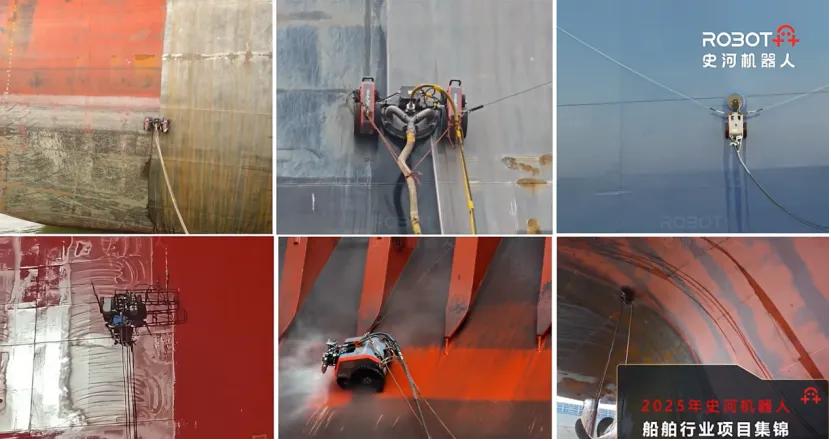
Sihe Ship Hull Derusting Robot
Today, the ship hull derusting robot has become one of Sihe's core products. According to Sihe Robotics, the shipment volume of this single product ranks among the top in the world, with a 70% to 80% market share in China's niche segment. During operation, the robot attaches to the hull surface and uses ultra-high-pressure water jets to complete derusting, achieving 5 to 6 times the efficiency of manual labor.
Building on its ship hull derusting capabilities, Sihe is extending its reach to more high-altitude special operation scenarios, including the maintenance of petrochemical storage tanks, energy equipment, bridge infrastructure, and building curtain walls. In the shipbuilding and repair industry, scenarios such as derusting, spraying, and grinding require a balance of efficiency, cost, safety, and environmental protection; in the petrochemical industry, operations like derusting and spraying the inner and outer walls of storage tanks, as well as grinding and inspecting the inner and outer walls of pressure vessels, impose high requirements on equipment explosion-proof performance, safety approval, and quality consistency; in the energy industry, scenarios such as inspecting welds on wind turbine towers and examining the water-cooled walls of thermal power boilers require equipment to have flexible movement, precise positioning, efficient detection, and remote data acquisition capabilities; in the construction industry, cleaning building facades and glass curtain walls has long relied on "spider workers", which carries huge safety risks, with prominent constraints such as labor shortages and high labor costs; in bridge operation and maintenance, the inspection and maintenance of structures such as large steel box girders and steel bridge towers require robots to have the ability to adapt to complex structures and ensure high reliability.
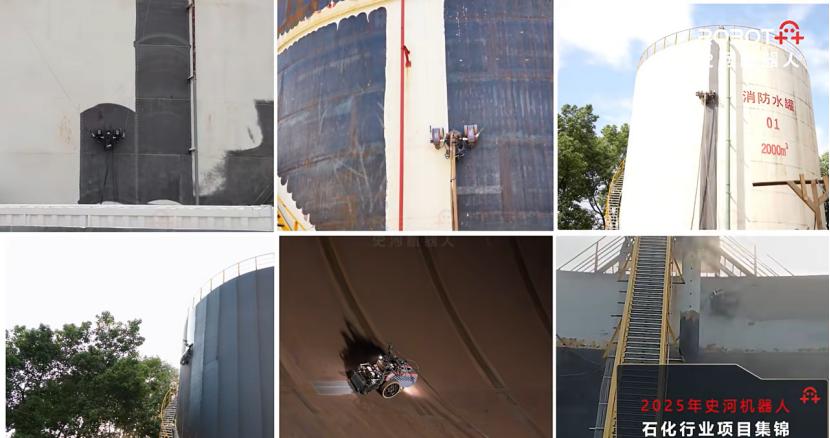
Sihe Chemical Tank Maintenance Robot
After a decade of practical experience, Xu Huayang's team has come to realize that for the intelligent special-purpose robot business to succeed in the long run, the core principle is "One Robot for Multiple Uses, Closed-Loop Process". To enhance the company's overall competitiveness, it cannot rely solely on individual products — it must eventually form a serialized product matrix and complete, packaged solutions.
It is reported that the company has successively served customers including COSCO Heavy Industry, CSSC, China Merchants Industry, PetroChina, Sinopec, CNOOC, Wanhua Chemical, Vopak from the Netherlands, and Saudi Aramco, accumulating hundreds of millions of RMB in overseas orders.
Behind these orders lies the time a hardware company must invest to grow. Xu Huayang later summarized the rhythm of hardware development: three years to gain familiarity with the industry, five years to master it, and ten years to become a leading player. Hardware entrepreneurship follows its own rules: the first two years are spent building the team and accumulating technology; the third and fourth years are dedicated to refining products and iterating on upgrades; the fifth and sixth years focus on commercial implementation; the seventh and eighth years bring entry into the first echelon; and only after around ten years can a company have the opportunity to rank among the top in its industry. Many things cannot be rushed. The more a robotics company focuses on heavy scenarios, large-scale delivery, safety, quality, and reputation, the more it must stay grounded and patient — only in this way can it withstand the test of time.
Over the past decade, Sihe did not wait for industry trends to arrive. The scenarios it addresses are not glamorous, but they are highly rigid in demand; the work it replaces has long been overlooked, yet it is closely related to efficiency, cost, and safety.
Robots changing the world may well start from these very places.
Backed by Innolight and Meituan Strategic Investment
Unveiling the Financing Story
In Xu Huayang's memory, the financing process in the first few years was not particularly difficult.
At that time, the innovation and entrepreneurship wave was in full swing, and Sihe quickly secured its first angel round of 6 million RMB, with investors including Panda Capital and Eagle Fund. Later, Baidu Ventures entered the market, quadrupling the company's valuation.
By 2020, the company completed a 100 million RMB Series A financing round, led by ZH Capital, with follow-on investment from Hotland Venture Capital, while existing shareholders Baidu Ventures and TusStar continued to increase their stakes. At this point, Sihe had gone through the early trial-and-error phase, with industrial scenarios such as ship hull derusting and chemical anti-corrosion starting to take initial shape.
"The pain points of high-altitude operations are clear enough: low efficiency, high cost, and high risk," said Yao Anmin, Partner at ZH Capital, noting that this is exactly the type of rigid demand scenario where robots are most suitable for deployment. Sihe has deep experience in this field, with products already put into practical use and recognized by customers.
Han Zhou, Managing Director of Hotland Venture Capital, values Sihe's team background and platform technology capabilities. In his view, Sihe originated from Tsinghua, has achieved large-scale application in ship hull derusting, and still has the potential to expand into more high-altitude operation scenarios in the future.
During the Series B round, Sihe encountered a critical juncture. In 2021, the company underwent a management restructuring, with early co-founders exiting, and negotiations lasting for months. At that time, Meituan Strategic Investment had already expressed its intention to invest. Xu Huayang did not avoid the situation, and truthfully updated the investor on the progress. After learning about the situation, the investors from Meituan Strategic Investment continued to firmly support Xu Huayang: as long as the equity issues are resolved smoothly, we remain optimistic about the team and the business direction, and our investment decision will not change.
In the end, Sihe achieved a smooth transition. A few months later, Meituan Strategic Investment participated in Sihe's Series B financing as promised.
Sihe's roadshows often do not take place through PPT presentations, but at actual operation sites. When investors step into the dry dock, many judgments begin to take concrete shape. A hundreds-of-thousands-ton giant vessel rests at the bottom of the dock, its hull stretching out along the line of sight, with rust spots and old paint layers covering the steel plates. Standing below, people have to stand on tiptoe and look up to see where the robot is operating.
The more industry-savvy a person is, the easier it is to understand the value of this company. In subsequent rounds such as B+ and B++, industrial capital and local state-owned assets including Hefei Xingtai, Jiujiang Venture Capital, Zhe Energy Capital, and Zhejiang Seaport Group successively entered the market.
The latest Series C financing round was jointly led by Qiangang Capital and Innolight, with joint investment from Guangtou Capital, Guohai Securities, and Juntong Capital, while existing shareholder Fosun RZ Capital continued to increase its stake.
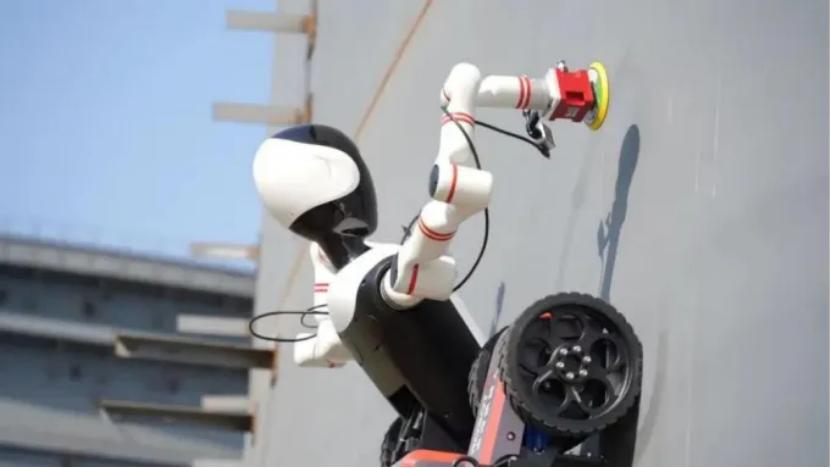
Sihe Professional-Grade Embodied Intelligent Special Robot
"Sihe Robotics is one of the companies