Innolight, Zhejiang State-owned Capital and Guangxi State-owned Capital jointly placed their bets, and Striverobotics completed hundreds of millions of yuan in Series C financing.
There are no dazzling robot exhibition halls, nor videos of humanoid robots dancing. Walking into the office building of Shihe Robotics, the most prominent spot on the first-floor hall bears a line: "To become the most respected robotics enterprise."
Recently, domestic intelligent special robotics enterprise Shihe Robotics announced the completion of its Series C financing, led by Qiangang Capital under the Zhejiang state-owned assets system, with joint investment from "new king of AI computing power" Zhongji Xuchuang, Guangtou Capital, Guohai Securities, Juntong Capital and other institutions, while existing shareholder Fosun RZ Capital continued to increase its stake.
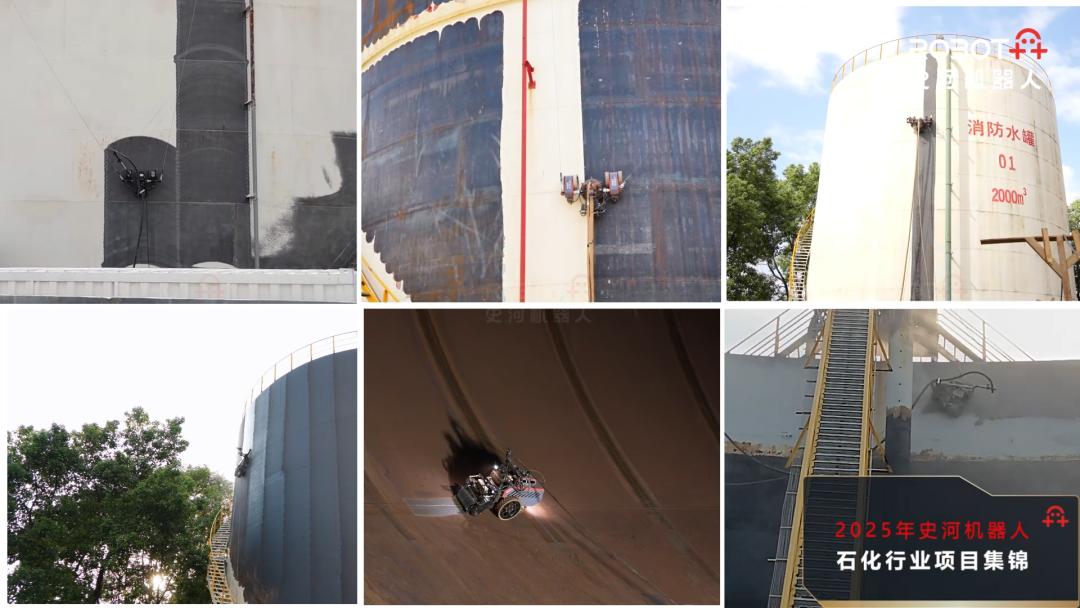
From a capital perspective, this is a robotics company that has already proven its business model. Founded in 2015 and pivoted to the robotics industry in 2017, Shihe Technology originated from the Department of Mechanical Engineering of Tsinghua University. When founder Xu Huayang founded the company during his doctoral studies, he put forward a simple yet firm mission — "To eliminate dangerous jobs in the world." In shipbuilding, chemical, energy, bridge, construction... and other dangerous operation sites where humans have to climb to heights of dozens or even hundreds of meters to complete tasks, this company has already delivered impressive results.
Taking ship maintenance as an example, Shihe's ship rust removal robots have served more than 100 large shipyards at home and abroad, with a market share of over 70%. They have cumulatively completed rust removal operations for more than 10,000 cargo ships of 100,000-ton class and above, covering over 98% of the hull area. Compared with traditional manual methods, the robot operation efficiency is increased by 5 to 6 times, and the overall cost is reduced by 30% to 50%, making it one of the few enterprises in the global high-altitude robotics track that have achieved large-scale commercial implementation.
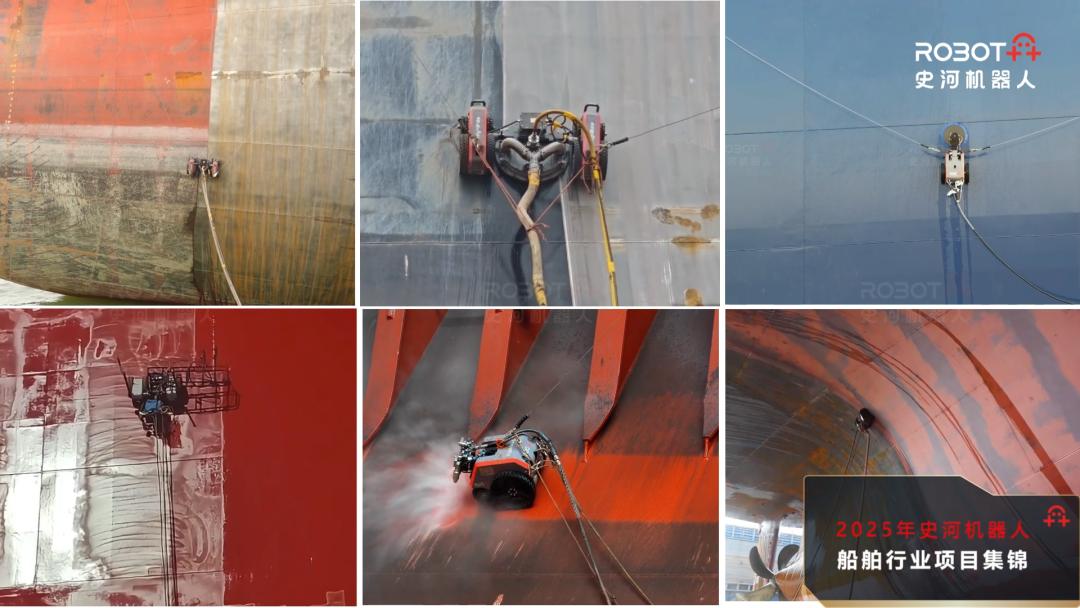
However, in Xu Huayang's view, these achievements are only the first stage.
While the industry is still discussing how VLA, world models and embodied intelligence can be implemented, Shihe Robotics aims to build a globally scarce vertical world model for industrial scenarios. Xu Huayang stated that what truly widens the competitive gap in the next phase is no longer just the robot body itself. With the development of embodied intelligence, high-altitude robots are gradually evolving from industrial equipment that can perform fixed actions into a new generation of industrial intelligent agents with environmental understanding, autonomous decision-making and continuous learning capabilities.
The "DJI" in the embodied high-altitude robotics track
In the past few years, humanoid robots have almost absorbed all the limelight. High-altitude robots have long been a nearly invisible track. But in Xu Huayang's view, their commercial value is even more clear.
According to the classification of the International Federation of Robotics (IFR), high-altitude robots are an important branch of mobile robots. Through the combination of adsorption, movement and operation capabilities, they extend the robot's activity space from the ground to vertical surfaces — this is not a niche market. According to the national standard "Classification of Work at Heights", any operation performed at a height of 2 meters or more from the reference surface belongs to high-altitude work. Ship rust removal, chemical anti-corrosion, wind power operation and maintenance, thermal power inspection, bridge detection, building cleaning... almost all dangerous jobs that require people to complete at heights are application scenarios for high-altitude robots.
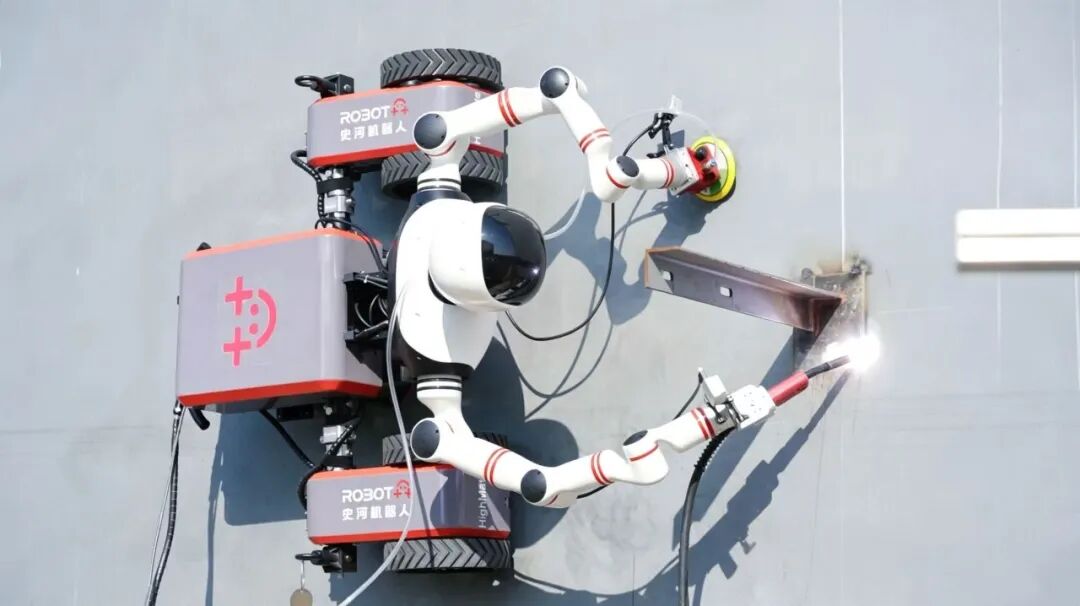
More notably, high-altitude robots do not only solve efficiency problems — they are replacing high-risk labor. In China alone, there are over 10 million high-altitude operation practitioners, and the global figure is close to 50 million. Falls from heights have long accounted for a significant proportion of all work safety accidents, making it one of the highest-risk and highest-labor-cost fields among all blue-collar occupations.
It is precisely for this reason that Xu Huayang abandoned the then more popular directions at the very beginning of his entrepreneurship. "Competition for ground robots is too fierce, DJI already dominates the sky, and the underwater robot market is not yet clear. Only high-altitude operations represent a market with sufficiently large demand but almost no mature products." In his view, this is a typical "large track with little competition". Calculated based on 50 million high-altitude operation personnel worldwide, the labor cost alone corresponds to a market worth trillions of yuan.
However, at that time, there were almost no domestic high-altitude robotics enterprises capable of large-scale mass production. Thus, Shihe set a goal for itself — to become the "DJI" in the high-altitude robotics field.
Xu Huayang introduced that, on the technical level, Shihe Robotics can achieve a load-to-self-weight ratio of 3:1 — a 100kg robot body can carry a 300kg load, which is significantly higher than the industry average. Its curved surface adaptation radius can be reduced to 0.5 meters, covering more complex curved structures. When facing vertical obstacles such as welds and bolts, the robot can cross a minimum of about 5cm, and maintain stable operation through self-developed dynamic real-time regulation technology.
Behind these parameters lies stronger scenario adaptability. Ship outer walls, chemical storage tanks, wind power towers — every type of industrial facility has different curvatures, materials and stress conditions. Only when robots can adapt to complex curved surfaces, cross obstacles and maintain stable adsorption can they truly replace humans to complete operations. These capabilities are not achieved by a single algorithm. Shihe has established a complete core technology system for vertical robots at the underlying layer, including key technologies such as the three-force balance algorithm for magnetic force, gravity and motion control, multi-physics field simulation, vertical surface positioning and navigation, autonomous process planning, and energy consumption control, ultimately forming a complete high-altitude robotics platform capability.
At present, the company has deployed more than 480 intellectual property rights, and is one of the few domestic high-altitude robotics enterprises that hold the qualifications of both National Intellectual Property Advantage Enterprise and National-level Specialized, Refined, Differential and Innovative "Little Giant".
Star capital from port & shipping and manufacturing sectors place collective bets
Compared with financial investment institutions, what draws more attention in this round of Shihe Robotics' Series C financing is the lineup of industrial capital.
The lead investor Qiangang Capital has long been deeply rooted in the port and shipping industry; Fosun RZ Capital, as an existing shareholder, continues to increase its investment; global optical module leader Zhongji Xuchuang makes its first strategic entry; and Guangtou Capital hopes to accelerate the company's overseas expansion with the help of its ASEAN industrial network.
These investors come from different links of port & shipping, manufacturing and the industrial chain, yet they have placed their bets on Shihe Robotics.
The reason is not complicated — behind the capital bets is the strong support of commercial data. Compared with many robotics companies that are still in the Demo stage, Shihe's biggest feature is that it has already established a stable commercial closed loop. Its ship rust removal robot series has occupied 70-80% of the domestic market share, and its chemical robots have also become the first product in China to obtain explosion-proof certification, and continue to expand overseas. In the past five years, the company's revenue has grown nearly tenfold. Particularly noteworthy is the overseas market, where overseas business grew 4 times year-on-year last year — which means overseas revenue has shifted from supplementary income to the second growth curve.
Shihe's model is sales-oriented. With high customer concentration in China, it adopts a direct sales model, while overseas it mostly uses channel sales.
In Xu Huayang's words, the overseas strategy he understands is "globalization + localization". "Globalization must be done, but the people doing it must be locals. In the short term, we still need to focus on the channel model, because we do not have enough resources overseas. Overseas competitors also operate through sales or leasing. Leasing equipment is a relatively mature business model overseas."
Nowadays, more and more new orders for the company come from repeat purchases by existing customers and industry referrals. Online, it continuously obtains leads through search engines, AI search and short videos. Offline, it builds a customer acquisition network through global exhibitions, channel partners and customer referrals, and continuously improves transaction rates with on-site demonstrations, short-term trials, high-level exchanges and other methods.
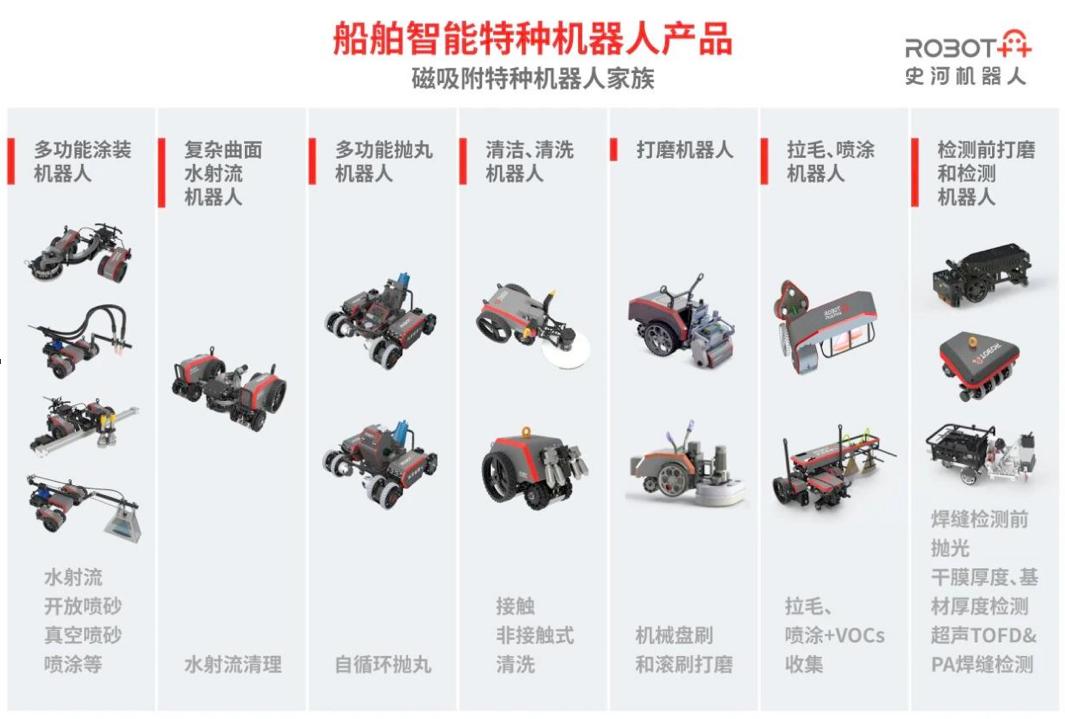
The company has cumulatively obtained hundreds of millions of yuan in orders at home and abroad, covering multiple high-risk industrial scenarios such as shipbuilding, chemical engineering and energy. In the domestic market, it has won the bid for a multi-million-yuan energy project order from China National Offshore Oil Corporation. In addition, multiple embodied intelligence solution orders in fields such as shipbuilding, wind power and chemical engineering are in-depth negotiation stages, providing clear project support for subsequent performance growth. At the same time, Shihe is accelerating the layout of its sales network in core Southeast Asian and European markets, building regional spare parts warehouses and local service teams, and upgrading from product export to localized operation. The multi-million-yuan order for Vietnam's NOSCO Shipyard has been implemented, marking that overseas business has officially entered a new stage of "going global with integrated solutions" — this breakthrough also verifies the strong competitiveness of Chinese intelligent equipment in the ASEAN market, and has obtained clear recognition from local industrial capital (Guangtou Capital). Leading shipyards such as Dubai Drydocks World and Singapore ST Marine have also reached stable cooperation, and the overseas market replication capability is being continuously verified.
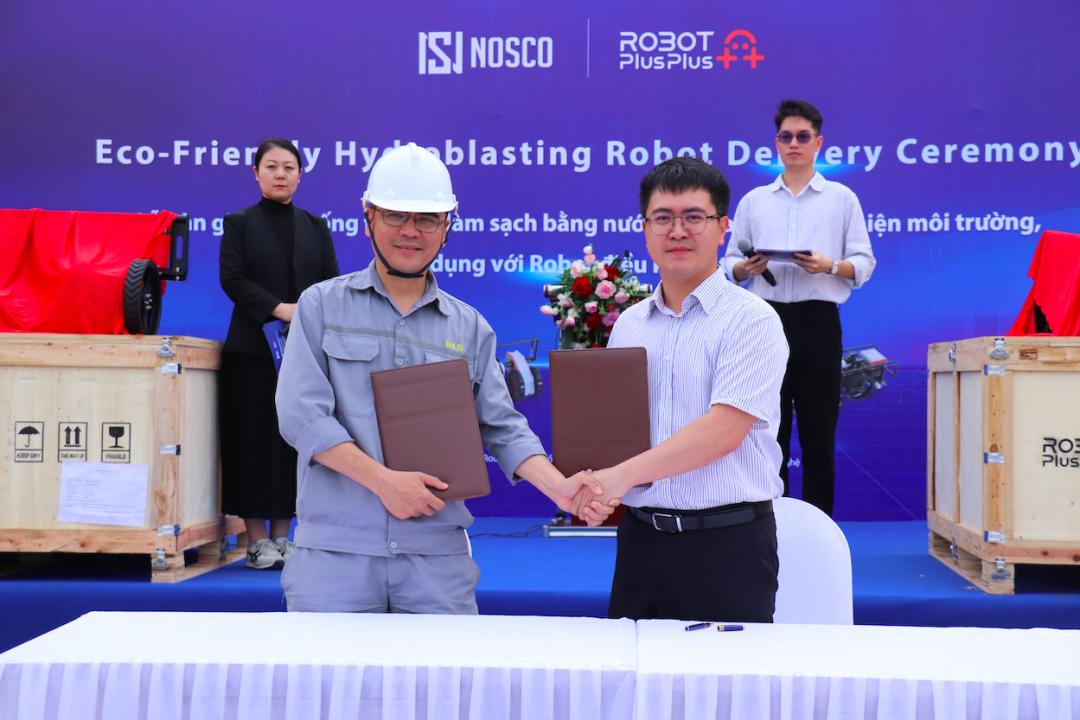
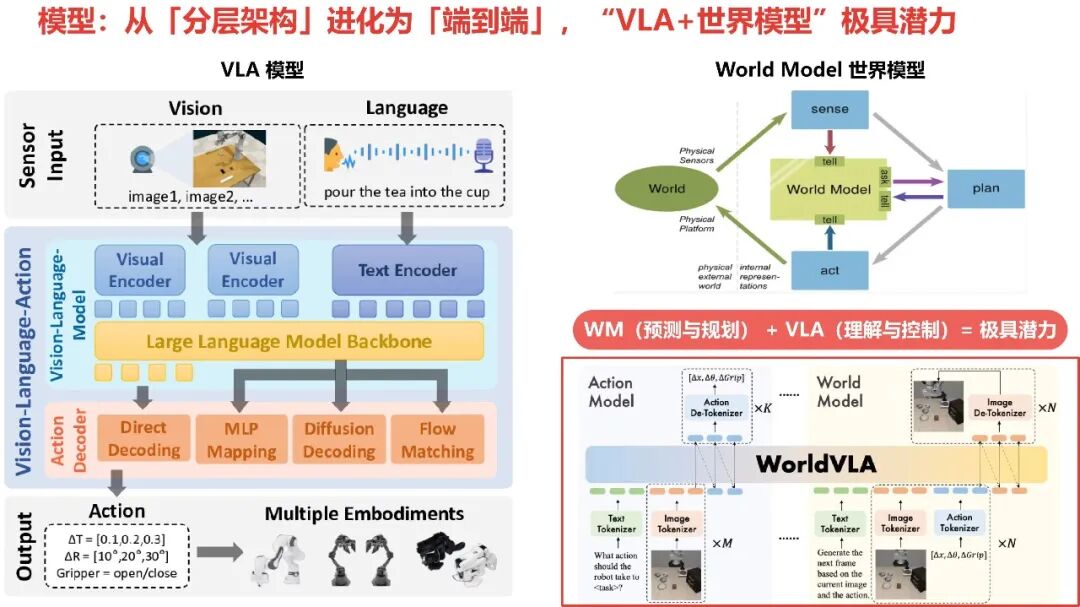
This logic is also Shihe's most important strategy in the next stage. In the past, industrial robots mostly relied on pre-set rules to operate, and engineers needed to write logic in advance for every environment and every action. Nowadays, with the development of technologies such as VLA, world models and reinforcement learning, robots are beginning to have stronger generalization capabilities, and can complete end-to-end learning relying on a large amount of real data.
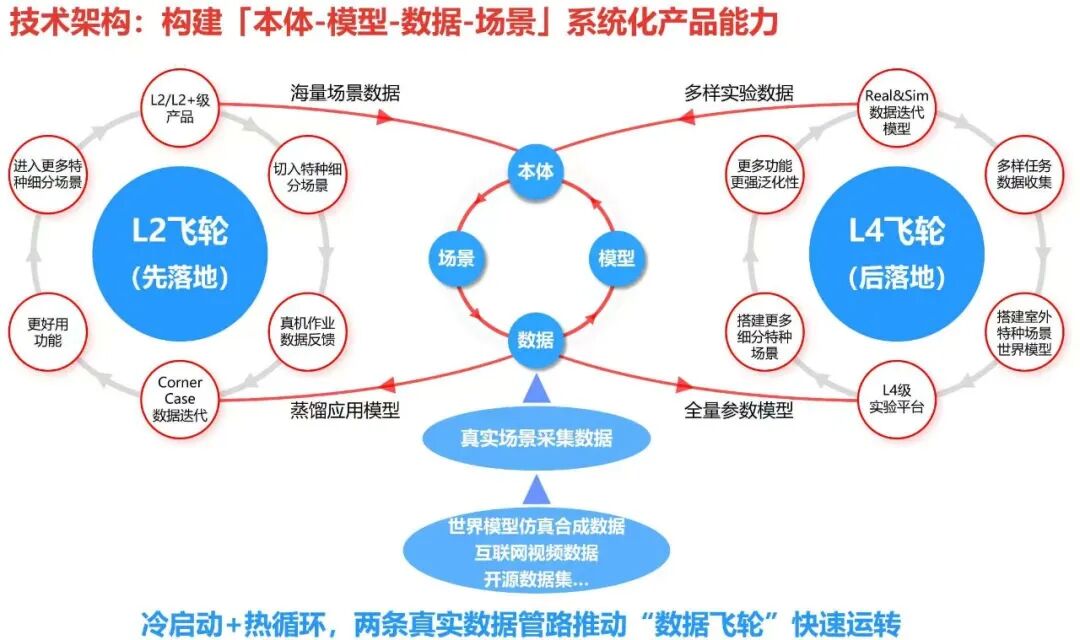
Shihe has been synchronously collecting industrial data during real operation processes. From shipbuilding, chemical engineering to energy, the company has accumulated tens of thousands of centimeter-level 3D scene models, and synchronously recorded data such as robot motion trajectories, process flows, and multi-modal perception. In his view, only data generated in real production environments has real training value. As of now, the company's cumulative operation duration has exceeded 2 million hours.
"Operation equals collection, and collection is always effective," Xu Huayang summarizes. Every time the company completes a commercial service, customers not only pay for the robot operation, but also help Shihe complete a high-quality data accumulation. In other words, robots create commercial value, commercial scenarios continuously generate data, data trains robots, and robots then enter new sites — this is a continuously evolving flywheel.
Globally, this logic is being verified by the capital market. US high-altitude robotics company Gecko Robotics has a post-money valuation of about $2 billion from its latest financing round, doubling within two years, even exceeding that of many humanoid robotics enterprises. Gecko's core value is not the robot body itself, but the continuously accumulated industrial site data and the AI prediction capabilities it builds. In February this year, the power plant inspection project that the company cooperated on with NAES was further advanced from $100 million to $250 million. Behind Gecko's multiplied valuation growth is exactly the imagination space brought by digital assets and AI capabilities. This logic is also Shihe's most important strategy in the next stage.
Xu Huayang revealed that Shihe is building a globally scarce vertical world model for industrial scenarios. When developing new products in the future, there is no need to repeatedly go to the site for trial and error. Instead, reinforcement learning and simulation training can be completed in a virtual environment first, and then deployed to real scenarios, greatly improving the R&D efficiency of robots and the success rate of on-site operations.
Post-90s Tsinghua postdoctoral fellow's 10-year entrepreneurial journey
Walking into Shihe Robotics' office, Xu Huayang's workstation faces a portrait of Steve Jobs. On the bookshelf, in addition to professional books on robotics and mechanical engineering, there are more readings on business, management and enterprise operation.
Different from the imagined scientific researcher, he speaks unhurriedly with few pauses. When discussing technology, his logic is meticulous; when talking about commercialization, products and markets, he is extremely decisive. He has the gentleness and refinement of a scientific researcher, and also exudes the temperament of an entrepreneur who has been deeply involved in the industrial frontline for a long time.
Xu Huayang, born in 1990, graduated from the School of Mechanical Engineering of Central South University with a bachelor's degree, and then entered the Department of Mechanical Engineering of Tsinghua University to complete his master's, doctoral and postdoctoral research. In the winter of 2014, when Xu Huayang, who was still pursuing his doctorate at Tsinghua, finished reading "Steve Jobs", he seriously thought about entrepreneurship for the first time. In his view, the power of an ordinary person changing the industry and the world through entrepreneurship is far more attractive than papers and laboratories.
He is also a loyal reader of science fiction writer Isaac Asimov. The future vision of symbiosis between humans and robots in the "Robot" trilogy made him start thinking for the first time: robots should not only be scientific research achievements in the laboratory, but truly enter the real world and become human assistants.
This ideal quickly turned into action. In 2015, while pursuing his doctorate, he and his classmates tried to start a business making smart hardware products. The project obtained Enlight Investment just over a month after its launch, and was acquired a year later. Although this experience was short-lived, it allowed him to complete the leap from the laboratory to the business world for the first time.
After graduating with his doctorate in 20