The World Cup takes place every four years, and sports IP is increasingly becoming part of daily-life consumption.
Nowadays, sports IPs are leveraging the continuously accumulated fan affection for teams and athletes to unlock long-term commercial value that is no longer constrained by match schedules.
As the final whistle blew at the New York New Jersey Stadium, the 2026 FIFA World Cup final officially came to a close. After 16 years, Spain reclaimed the FIFA World Cup Trophy with absolute dominance on the pitch.
In the stands, fans clad in Spain's red jerseys intermingled with Argentina's blue-and-white supporters, forming a surging sea of colors. Beyond the screens, an estimated 1.8 billion global TV viewers tuned into the final, while FIFA projects the total reach to exceed 3 billion people — including countless fans in China who stayed up until 5 a.m. to catch the match.
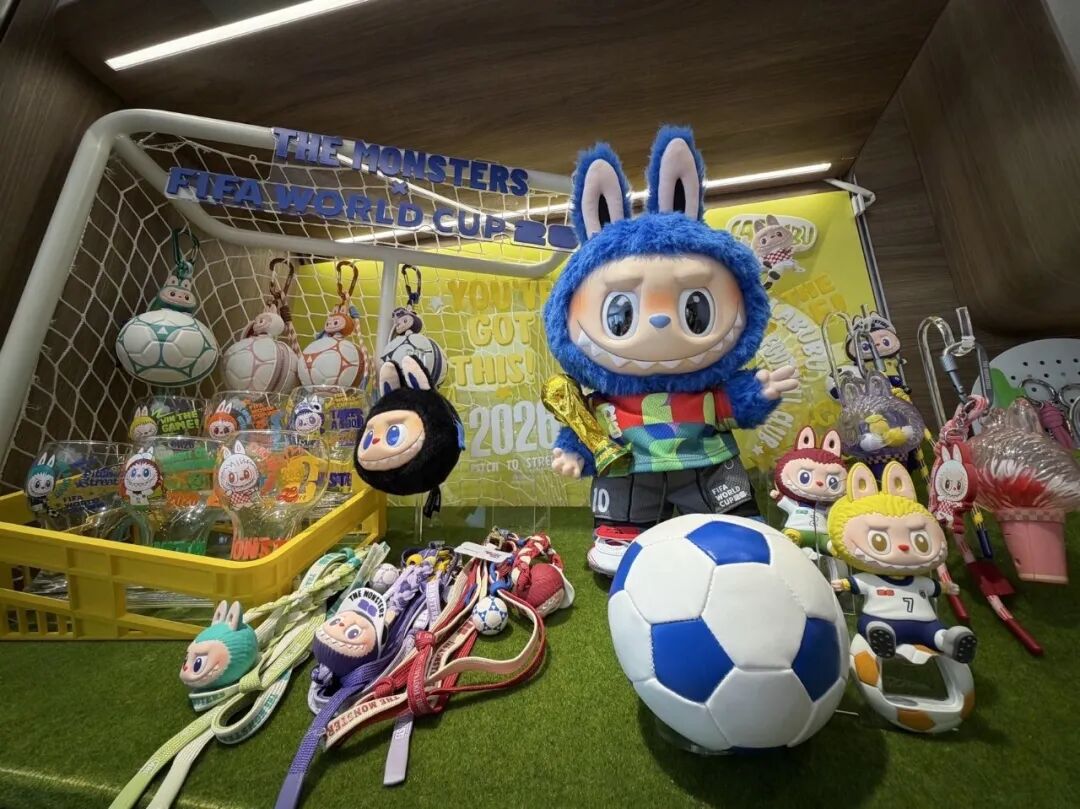
The quadrennial World Cup remains one of the world's top-tier sporting events, boasting the highest emotional intensity and mass participation across the globe. Leveraging the influence of major tournaments to run short-term, festival-style marketing targeting the general public is a traditional path for brands to capitalize on sports IP value. This logic is evident in everything from FIFA global partners like Adidas and Coca-Cola sponsoring the tournament, to Pop Mart featuring LABUBU in the opening ceremony.
However, another dimension of sports IP value is now being amplified: treating teams, clubs, and sports stars themselves as IP assets, and conducting long-term IP operations rooted in continuously nurtured fan affection.
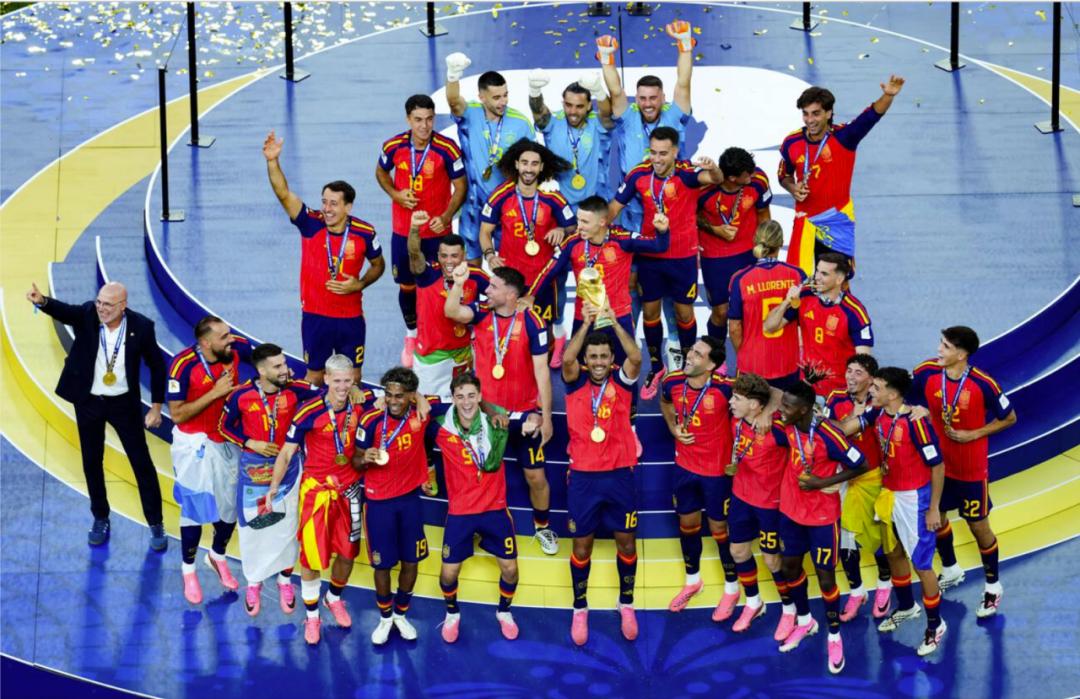
For a long time, sports IP consumption was limited to event-specific merchandise such as jerseys, flags, and cheering accessories, with consumption patterns heavily tied to major tournament cycles. But around this World Cup, diverse categories including trendy toys, home goods, fashion apparel, and pet peripheries have fully exploded, becoming carriers for fans to express their identity and cultural belonging.
"Sports IP consumption is evolving from 'tournament souvenirs' to 'lifestyle consumer products'," summarized Luo Bin, founder of StarryU Sports, who has over a decade of experience in the sports industry, describing the shifts in consumption trends during this World Cup.
StarryU Sports currently holds over 35 global sports IP licenses, boasts more than 10,000 SKUs, and operates over 200 offline stores. As the company continues to build its IP operational capabilities, Luo Bin has observed that the commercialization of Chinese sports IPs has gone through stages: early event-driven business fueled by traffic and resources, the crude IP licensing and peripheral merchandise phase, and now a systematic stage of full-channel consumer product operations.
Sports IPs are arguably a uniquely distinct category of assets in the IP consumption market. They feature real people, real matches, and real memories. Fan loyalty does not vanish between tournaments, yet major events like the World Cup act as amplifiers of collective emotion, igniting the passion and consumption impulse of global audiences.
"The true commercialization of sports IPs is not about one-off monetization of traffic, but about translating public adoration into a long-term, sustainable lifestyle-focused consumption relationship."
1
Sports IP Consumption Is Becoming More Daily
A viral "Haaland Song" created by Chinese netizens using homophone wordplay spread from Douyin to overseas platforms, sweeping across TikTok and YouTube to amass over 1 billion global views. Even many users who did not watch the World Cup came to know this rising football star through its catchy melody and lighthearted meme-friendly vibe.
Haaland's explosive popularity has driven sales of his personal peripherals — for instance, his signature hair ties were resold for 69 yuan each, with over 100,000 units sold across platforms. The jersey orders for his Norwegian national team skyrocketed from 50,000 units last year to 250,000 units.
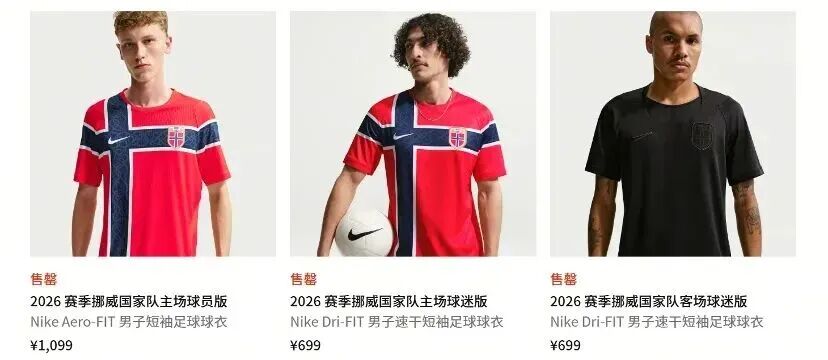
Manchester City, the Premier League club where Haaland plays, is one of the licensed IPs under StarryU Sports. According to Luo Bin, Manchester City's explosive growth in recent years, combined with Haaland's cross-over appeal, has attracted a large young student demographic whose consumption preferences lean toward lightweight, collectible, and aesthetically pleasing products. As a result, StarryU Sports has developed a wide range of "goods-style" products for Manchester City, including badges, acrylic stands, and small plush toys, designed with the trendy toy logic familiar to young people at more accessible price points.
This aligns with the broader changes seen across the entire IP consumption market in recent years. Today's young people no longer pay solely for product functionality; they seek to showcase their identity and what they are passionate about. Consuming different IP products is an act of self-expression and a way to signal belonging to specific communities.
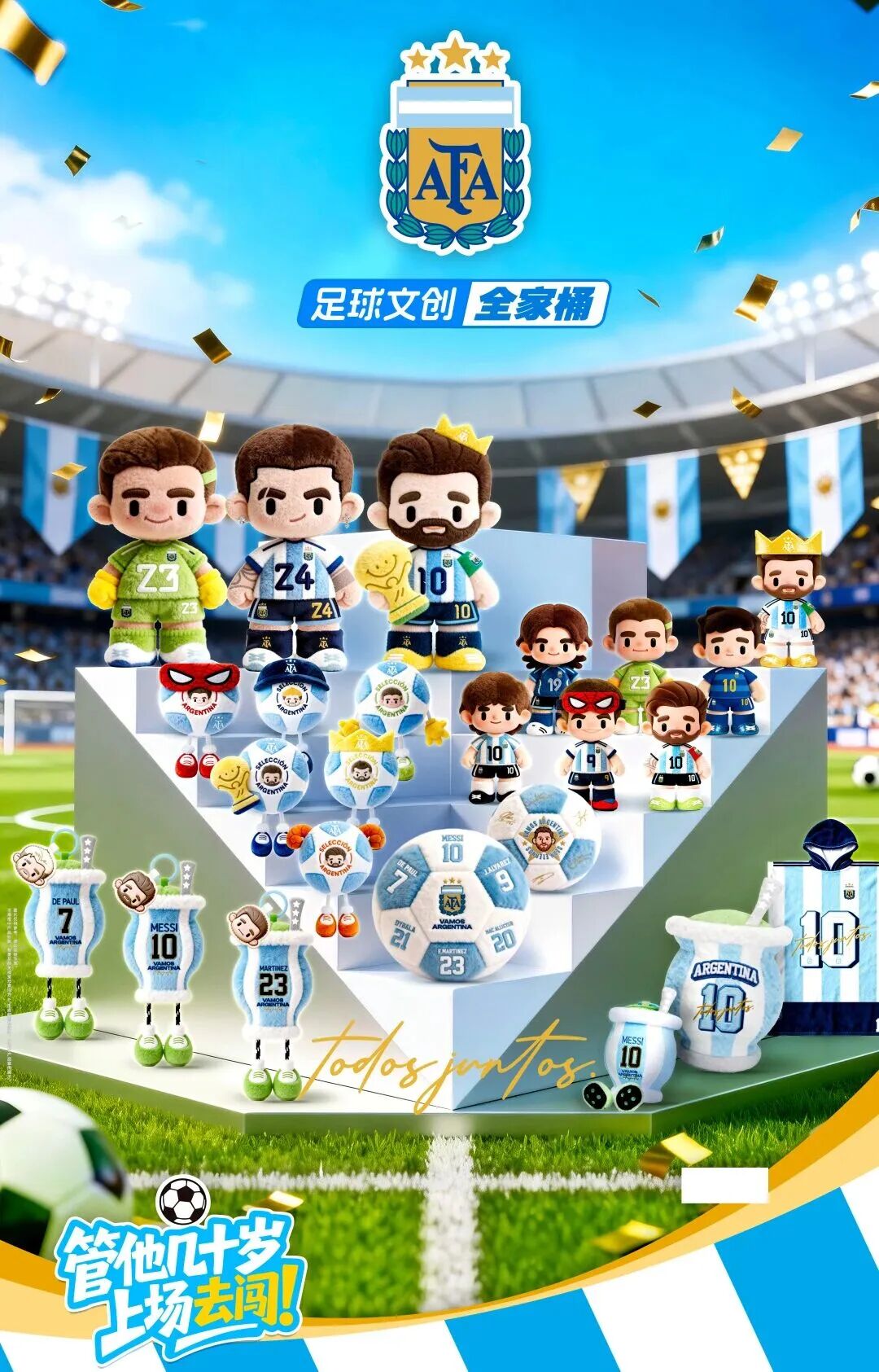
From Luo Bin's perspective, "Sports IPs have the highest emotional intensity among all IP types." A Messi plush blind box might carry the emotions of the 2022 championship night, serving as a life marker for a specific moment. Moreover, a fan who supports a team at age 20 is unlikely to change their allegiance even in old age, meaning consumers are willing to repeatedly pay for the nostalgia accumulated over years and the enduring sense of identity.
There is a consensus within StarryU Sports that in the past, sports peripheries sold match memories, while today sports IPs sell lifestyles. Brands that better understand user community expression and align with young people's aesthetic preferences will unlock new growth opportunities.
Following this logic, brands have broken free from the limitations of traditional event merchandise, launching systematic product development across categories including apparel, drinkware, plush toys, bags, accessories, blind boxes, and match-viewing supplies. All product designs balance daily practicality with emotional expressive value, ensuring sports symbols naturally fit into ordinary people's everyday scenarios.
Data validates the feasibility of this strategy. For StarryU Sports, orders for core 2026 World Cup IP products increased by 50% to 80% compared to the previous tournament, with overall order volume 3 to 5 times the daily average. Luo Bin revealed that compared to the 2022 Qatar World Cup, GMV from this year's US-Mexico-Canada World Cup orders "has grown by at least five times". While the company's total order volume for past World Cups was only in the millions, its overall investment in World Cup products this year has reached hundreds of millions of yuan.
Underpinning this change is the expansion of the user base. In the past, the core demographic of sports IP consumers were male users and diehard fans. Now, female consumers, casual fans, and family scenarios are fully entering the market.
First, female users are making a strong entrance. Compared to match tactics and on-field performance, they pay more attention to the wearability, aesthetic quality, and practicality of products in daily life. Meituan data shows that during peak match-viewing hours, female consumers accounted for 51% of orders, surpassing male consumers for the first time. Female consumers now make up over 40% of StarryU Sports' customer base. In Luo Bin's view, "Female users are not marginal incremental consumers in the sports IP market — they are helping define the aesthetic standards of sports IPs."
Second, the casual fan demographic is on the rise. In this era of fragmented information, a consumer may not watch a full 90-minute match, but can be moved by the World Cup atmosphere, national team culture, or player stories, leading them to purchase a more design-focused, lightweight product. FIFA data indicates there are over 3.5 billion football enthusiasts worldwide, with 40 million registered players across 211 member associations.
Compared to mature overseas markets with year-round normalized sports consumption and mass participation, China's sports IP market still has huge potential for expansion. The fact that "each World Cup brings 20 million new fans" demonstrates that public penetration and integration into daily scenarios are still on an upward trajectory.
2
More Brands Are Continuously Entering the Market
This year, FIFA significantly relaxed its peripheral merchandise licensing policies, doubling the number of World Cup licensees from the previous tournament. With entry thresholds ranging from tens of thousands to millions of yuan, more players have gained access to the market.
Development paths have since diversified. Pop Mart secured the FIFA global event license with LABUBU, becoming the first Chinese trendy toy IP to appear at the World Cup opening ceremony. Miniso, KAYOU, and Fude partnered with brands like Wuliangye to obtain event derivative licenses, launching series such as tournament-exclusive blind boxes, trading cards, and co-branded liquor. Among these, the Wuliangye championship blind box liquor drove over 1.6 billion yuan in sales of co-branded products.
Luo Bin believes that the growing number of non-sports brands participating in the World Cup reflects that the commercial value of sports IPs is being re-recognized across more industries. In the past, many viewed sports IPs as a business limited only to fans, but now people realize they can connect trendy toys, fashion, pet products, music, cultural tourism, retail, content, and communities. "A truly expanding industry does not thrive when there are fewer participants, but when more excellent players are willing to join."
International giants are also accelerating their market presence. Fanatics, with annual revenue of approximately $130 billion and a valuation of $310 billion, has built a full-chain IP merchandise ecosystem covering over 900 sports organizations. It is not only the exclusive trading card issuer for MLB, NBA, and NFL, but also operates official on-site retail for all 104 matches during the 2026 World Cup.
For a long time, China's domestic sports IP market has remained at the shallow stage of event-focused marketing, lacking professional players dedicated to deep cultivation of team and athlete IPs to build long-term consumer product ecosystems. This massive market gap has created unprecedented growth opportunities for local enterprises.
Back around 2017, when StarryU Sports operated players' social media accounts, the team received countless private messages from fans urging for lifestyle-focused peripheries every day. This made them realize that consumer demand for IP merchandise was genuine and urgent. "People just might not know a Barcelona mug exists — but once they see it, the price becomes almost irrelevant."
This realization directly shaped their business strategy. Taking the 2019 licensing of the Argentina national team as a turning point to validate their business model, StarryU Sports has since gradually secured top-tier national team and club IPs, embarking on a direct-to-consumer path of signing IPs, independently developing products, and building its own distribution channels.
During product development, StarryU Sports also discovered that the fan emotional structures behind different national team IPs are completely distinct. For example, Argentina fans have extremely high emotional intensity, so products need to emphasize a sense of devotion and championship memories. The French national team has a younger, trendier, street-style vibe, making it ideal for light fashion apparel. Spain's IP features technical playing style, youthful energy, and the narrative of rising new-generation stars, suitable for younger, brighter, and lighter designs. Many Portugal fans developed their connection to the team through Cristiano Ronaldo, valuing spiritual strength, so products need to convey a distinct attitude.
Nowadays, meme content popular in fan communities has become a key source of creativity for product development. The hit "Messi GOAT" plush is a typical example. It essentially stems from fans' emotional expression for Messi. GOAT (Greatest Of All Time) represents the best player in history, while the lamb image combines Messi with a sheep character, conveying both humor and warmth.
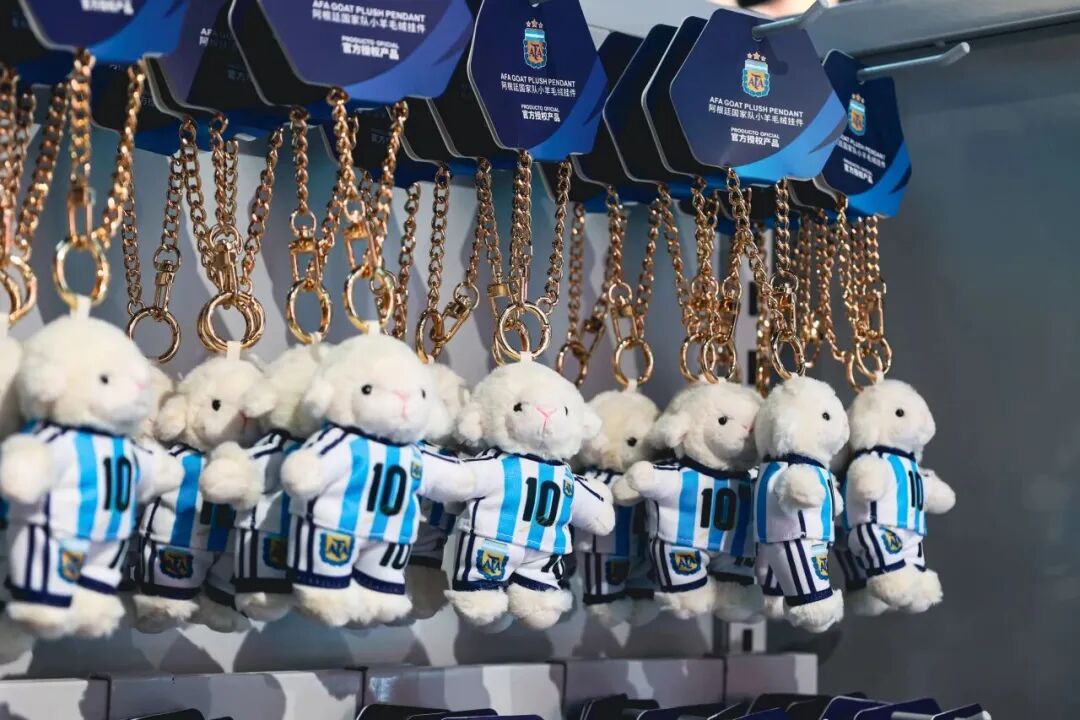
"Sports IP consumption is not a unified market, but a collection of diverse communities, emotions, and lifestyles," Luo Bin summarized. "Only by better understanding these differences can we create better products."
3
Focus on Long-Term Operations and Distribution Channels
In Luo Bin's view, the commercialization of Chinese sports IPs has gone through three stages: the earliest was event-driven business focused on chasing traffic and exposure; then came the licensing and peripheral merchandise phase, characterized by crude products and limited categories; now it has entered the consumer product operation stage, where sports IPs are no longer just logos, but a set of consumer assets that can be designed, developed, retailed, and operated through content and community engagement.
This transformation requires the industry to build new consumer infrastructure that allows users to access products, experience sports culture, and connect with like-minded people even on non-match days. Offline stores and global expansion are key components of this infrastructure.
In China, the offline presence of sports IPs was previously limited to stadium stores or event pop-ups, characterized by short cycles and narrow coverage. But in recent years, sports IPs have begun to break these boundaries.
During this World Cup, StarryU Sports accelerated its offline expansion with its FanTown store network, opening 10 new stores in a single month. In total, its permanent and pop-up stores surpassed 200 locations across over 40 shopping malls in 19 Chinese cities, almost all situated on the ground floor of commercial complexes.
The foot traffic and sales potential from offline stores far exceeded expectations. StarryU Sports once recorded daily sales of 2 to 3 million yuan in a single store, with customers queuing for 2 to 3 hours outside. Such foot traffic directly boosted overall consumption in shopping malls — for example, restaurant table turnover rates rose significantly, leading malls to offer more favorable partnership terms.
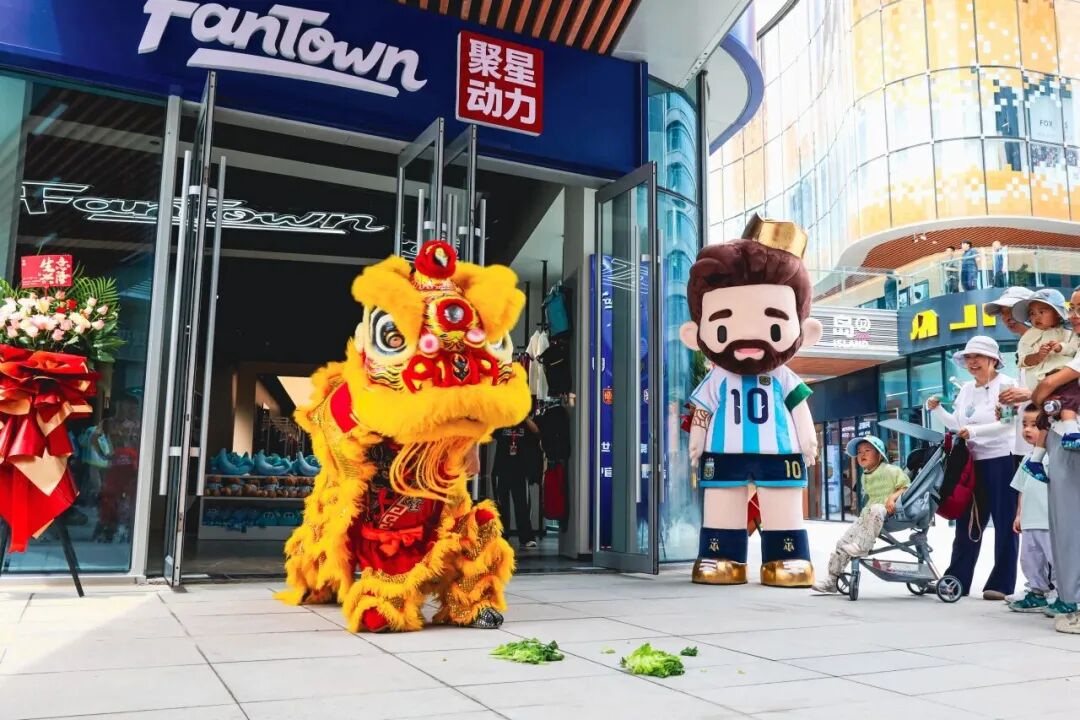
In more mature overseas markets, the offline retail of sports IPs has already established proven business models. Fanatics operates over 2,000 retail points globally, with customers queuing for over 4 hours on the opening day of its London flagship store. FC Barcelona's peripheral merchandise revenue reached 277 million euros in 2025, ranking first across Europe.
When sports IPs appear in core business districts just like trendy toy stores and lifestyle brands, they signal the huge potential of sports IPs as daily consumer goods.
Offline spaces also reinforce product recognition. The fan demographic varies widely across cities: some cities have a high concentration of Argentina fans, while others have more active Premier League club supporters. Stores need to curate IPs and product categories based on local preferences, rather than adopting a one-size-fits-all inventory strategy nationwide.
Meanwhile, offline operations reveal consumer insights that are invisible online. For example, StarryU Sports discovered that children's clothing sells extremely well in physical stores — "When a dad sees Messi printed on a kid's shirt, he has to buy it. Offline stores are like a man's obsession with Ultraman." This insight has led the company to further expand its product categories and optimize channel strategies, forming a feedback loop from end-user experiences to product R&D.
Luo Bin believes that the key to expanding sports