The opportunities for next-generation companies lie in this matter
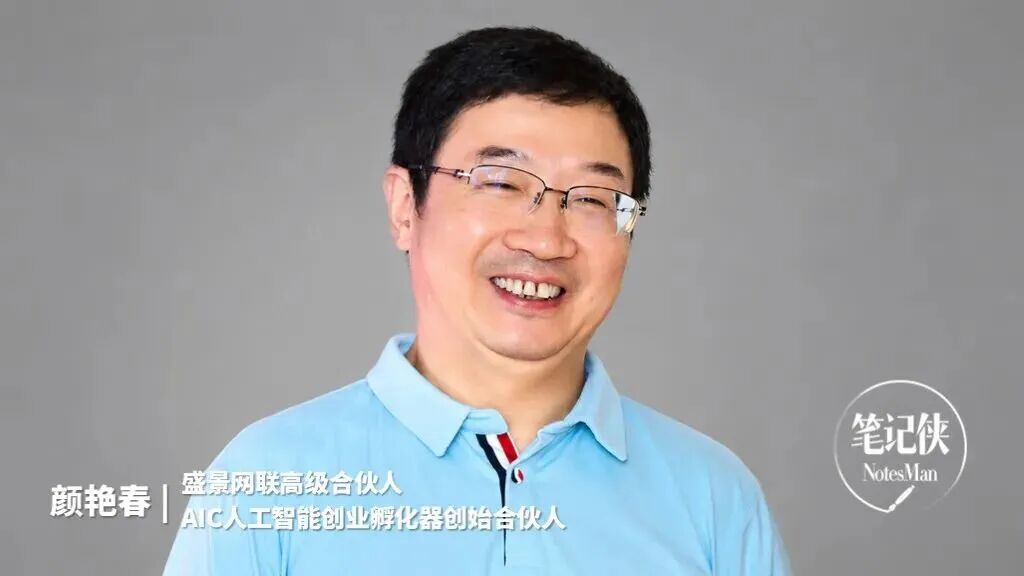
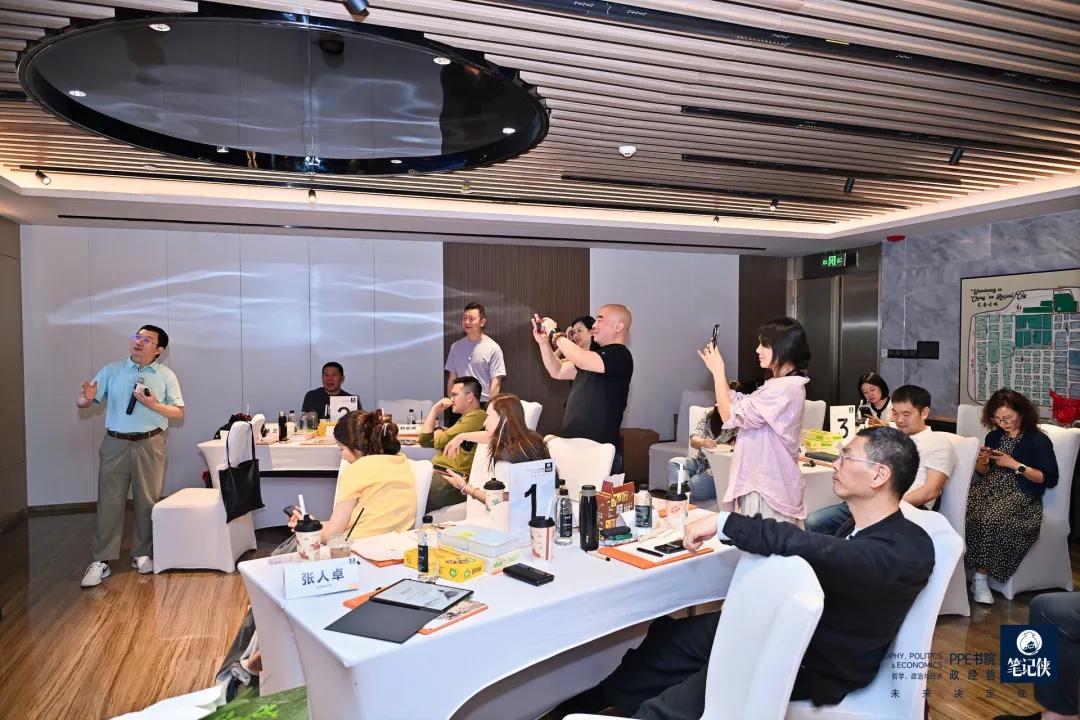
Content source: This is a curated excerpt from the lecture delivered by Yan Yanchun during the second module "Scientific Economy" of the PPE (Politics, Economics, Philosophy) program hosted by Notesman PPE Academy in Xi'an on June 13-14, 2026. Published with authorization from Mr. Yan.
Guest Speaker: Yan Yanchun, mentor of the 2026 "Scientific Economy" cohort of Notesman PPE (Politics, Economics, Philosophy) program, Senior Partner of Shengjing Wanglian, and Founding Partner of AIC AI Startup Incubator.
After selling a bed, why do enterprises still have no idea who is sleeping in it, how well they rest, and what further needs they will have?
In our previous article about turning a "one-off transaction" into a lifelong business, the answer lies in four core points. As Mr. Yan Yanchun pointed out, this reflects the "disconnection syndrome" plaguing many traditional businesses: once the goods are sold and payment is received, the relationship with the user is completely severed.
Truly AI-native entrepreneurship means rebuilding your business as a continuous pipeline. Mr. Yan pioneered the concept of i2X (Intelligence to Everything), which has a simple core: starting from a user's single statement or genuine need, mobilize data, professional capabilities, intelligent agents and offline services to ultimately deliver an outcome that truly solves the problem.
In today's second part of the series, we will take this line of thinking a step further: when production is no longer "manufacture first, then find buyers," but instead "understand what people need first, then organize resources to fulfill it," how will industries evolve? How should entrepreneurs re-evaluate trial and error, property rights, accountability, and human judgment?
We hope today's content will bring you valuable insights.
I. The Future Logic of Business:
Intent Comes Before Delivery
The business logic of the industrial era was to manufacture products first, then find users. Enterprises predicted demand, designed standard products, organized production, cut costs, established distribution channels, launched marketing campaigns, and cleared inventory.
The core action was: I make the product first, then you (the customer) choose from what I have made.
The logic of the intellectual civilization era will completely reverse this: human intent emerges first, and the system then organizes data, design, skills, intelligent agents, tools, manufacturing, delivery, auditing, and settlement around that intent.
The core action becomes: you clearly state what you need, and I organize the corresponding results for you, placing the individual user's intent at the very center of production from the start.
In reality, a group of pipeline-based pioneers have already emerged. They may not all brand themselves as i2X, but their directions are highly aligned: shifting from selling tools to selling organized outcomes.
In the industrial era, production comes first, then find consumers; in the intellectual civilization era, understand intent first, then organize production. A more radical transformation than the fast-response supply chain is taking place in the deepest layer of manufacturing.
How does this work?
Organize global designers, ordinary consumers, material suppliers, equipment vendors, store owners, manufacturing nodes, traffic providers, and auditors into an instant consumption community: those with creativity contribute ideas, those with traffic bring orders, those with equipment provide production capacity, those with sites offer space, those with materials supply materials, and the platform provides routing, bookkeeping, revenue sharing, and risk control services.
Traditional consumer products in the past had to go through demand forecasting, mass production, warehousing and inventory, and channel distribution before waiting for users to purchase; the future logic will be completely reversed: the user's intent appears first, and the product is "born" closest to the user.
The i2X (Intelligence to Everything, hereinafter referred to as i2X) pipeline economy aims to promote a new production paradigm of single-customer consumption and single-customer manufacturing: everyone can have an exclusive consumption-manufacturing pipeline, every community store and local workshop can develop instant manufacturing fulfillment capabilities, and every produced item comes with complete model source records, material batch information, production node logs, quality inspection certificates, and revenue sharing paths.
The real moat of this network does not lie in the number of 3D printers, but in auditable digital model assets, a trusted distributed node network, a continuously looping data flywheel, and a fair revenue sharing system that encourages all participants to co-build in the long term.
Ultimately, it will rewrite not just the 3D printing industry, but how consumer products are created, why offline stores exist, how manufacturing moves closer to people, and how a tiny intent from an ordinary person can be reliably turned into reality.
II. i2X: Reinventing Invention
1. Invention Was Once a Privilege
"Reinvent everything" sounds arrogant, but such phrases are not rare in the technology era.
With every emergence of new tools, someone always declares that the old world is over and a new world is about to begin. Later, people find that the world is not so easily overturned. Factories are still there, hospitals are still operating, schools are still running, and land, energy, materials, laws, human bodies, and time all still exist.
The real transformation of civilization lies in how people work, create, distribute responsibilities, bear consequences, and understand why they are needed.
Therefore, "reinventing everything" does not mean reinventing light bulbs, cars, mobile phones, medicines, clothes, movies, schools, and cities. What it truly aims to reinvent is the act of "invention" itself.
In the past, invention was a rare social privilege. For an idea to enter reality, it had to go through many heavy barriers. You needed a laboratory, a team, capital, a factory, a supply chain, distribution channels, regulatory approval, and enough capital to absorb failure losses.
Even if an ordinary person identifies a real problem or has a small, precise intuition, they often cannot validate it in the real world.
A maintenance worker knows that certain equipment always malfunctions prematurely in humid weather; a caregiver knows that elderly people are most likely to fall when getting up at night; a small shop owner knows that what customers really dislike is not the price, but the waiting time; a child imagines a more convenient learning tool; an artisan knows the optimal temperature for a certain material through hands-on experience.
In the past, most of these insights could only remain at the level of personal experience. They might be mentioned over dinner, sighed about in the workshop, or fleeting in the dead of night, before disappearing completely.
It is not that these insights have no value, but that they have no access to the opportunity of being tested.
Industrial civilization unleashed enormous creativity, but it also channeled that creativity into a small number of institutionalized containers: laboratories, corporations, factories, research institutes, publishing houses, film and television companies, pharmaceutical firms, and space agencies.
Invention was split into departments, creation into job positions, judgment into procedures, and responsibility into approval processes. A complete closed-loop creation process was fragmented into R&D, design, procurement, manufacturing, quality inspection, sales, and after-sales service.
Each person is only responsible for a small segment, and efficiency comes from extreme proficiency in partial operations. The cost is that many people gradually lose the qualification to initiate a complete project on their own.
Industrial civilization gives people order, salaries, social status, and employee badges, but it also turns many people's imagination into a muscle that only waits for instructions.
Over time, people begin to believe that the world is inherently designed such that a few invent and the majority execute; a few define problems and the majority complete tasks; a few own factories and pipelines, and the majority fill job positions.
The crack that i2X opens is right here.
2. i2X Gives More Ideas a Chance to Be Tested
The starting point of i2X is not a small number of approved projects, but every single individual's idea across the whole society.
This idea can stem from a real unmet need, or from curiosity, intuition, aesthetics, dreams, and even unrealistic fantasies.
It can be a family's concern about nutrition, an enterprise's anxiety about the supply chain, a city's doubt about public services, a science enthusiast's curiosity about abnormal signals, a creator's imagination of a character's fate, or an ordinary person's question of "why can't we do it this way".
i2X does not require the idea to be mature at the very beginning. Its first priority is to turn vague thoughts into discussable, verifiable, and constrained intents. What it undertakes here is not just design functions, but also the generation and identification of demand signals.
It translates "I feel something is wrong", "I seem to need something", "maybe we can try this way" into clear problems, boundaries, constraints, budgets, risks, and minimum verification plans.
Next, A2A (Agent to Agent, hereinafter referred to as A2A) allows intelligent agents with different capabilities to form temporary teams around this intent. Some are responsible for retrieving information, some for generating solutions, some for risk identification, some for cost estimation, some for invoking professional skill packages, and some for finding supply nodes in the real world.
They do not necessarily belong to the same company, nor are they bound by long-term contracts. Instead, they form temporary collaborations within a specific pipeline.
Finally, judgments from the digital world are connected to the physical world. Designs can be sent to flexible factories, maintenance demands can be routed to nearby service nodes, short dramas can be fed into content distribution networks, nutrition suggestions can be connected to procurement and fulfillment within authorized scopes, and scientific research hypotheses can be sent to simulation, observation, or experimental nodes.
Intents no longer stay trapped on screens, but gain the opportunity to reach the real world.
But this does not mean every idea is worth realizing. On the contrary, the maturity of i2X first lies in knowing what cannot be directly implemented. It gives more ideas access to low-risk testing, rather than granting all desires the right to be immediately put into practice.
The real change is: the testing capabilities that were once exclusive to a small number of laboratories, factories, and large corporations are now being broken down, made more affordable, operated in parallel, and opened up to the public.
Many things can first be simulated, deduced, and prototyped in the digital world, before entering real-world verification in a small-scale, low-cost, and reversible manner.
This is the first layer of meaning behind i2X reinventing invention: invention is no longer just the privilege of a few, but has become a socialized experimentation process accessible to more people.
3. Rewriting the Economics of Trial and Error
Many people misunderstand i2X, assuming its value lies in drastically increasing the success rate of innovation, turning ideas into reality with guaranteed outcomes.
This is an understatement of its true value. What i2X truly transforms is not the success rate, but the economics of trial and error.
Humanity is not short of imagination, but of the access to validate that imagination in the real world. In the past, an idea without capital backing, a professional team, industrial chain connections, and sufficient time would usually remain trapped in people's minds, because trial and error was extremely costly.
A single prototype, a single sampling trial, a single experiment, a single marketing launch, a single clinical trial, or a single factory production line modification could incur exorbitant costs. As a result, most people do not even get the chance to fail.
This is a hidden form of inequality: the vast majority of people do not have the qualification to try and make mistakes.
i2X is rewriting this very equation.
An idea can first enter low-cost simulation to generate prototypes, sketches, workflows, storyboards, molecular candidates, product patterns, budgets, and risk lists. It can run multiple iterations in a digital twin environment before proceeding to limited real-world verification. It can first invoke a skill package, test a small sample, and obtain real feedback, without requiring people to invest all their savings upfront.
Of course, a random whim from an ordinary person is unlikely to function smoothly across the entire industrial chain; a vague direction from a startup team is also very likely to be falsified during the verification phase. But that does not matter. The advantage of i2X is that it allows more pipelines to run parallel attempts, so that failures leave reusable experiences.
If a pipeline cannot operate as expected, the process data can be preserved as a counterexample; the invoked skill package can be revised once; the intelligent agent can accumulate an anomaly handling experience; the verification path can help the next pipeline avoid the same dead end.
Success pushes the pipeline forward, and failure lets the system learn from mistakes.
Industrial civilization excels at doing one thing stably for a million times, while the intellectual civilization era begins to excel at letting a million possibilities be tried once at the same time.
As trial and error becomes more affordable, the costs of scientific research, innovation, new product development, and even entrepreneurship will drop to 1% or even 0.01% of their original levels. For the first time, the vast majority of tiny ideas gain the qualification to enter real-world verification.
4. New Jobs and New Property Rights
The real transformation is more like a long, uneven fault line: some