Walking 30,000 Steps at WAIC: Over 300 Robots "Work" Side by Side
If you stepped into the WAIC exhibition hall in Shanghai this July under the nearly 35℃ heat along the Huangpu River, you would probably have the exact same physical experience as I did: queuing for the elevator until you questioned your sanity, being squeezed so tightly at the booths that your feet barely touched the ground, and your mobile signal flickering in the interference of dense crowds and various wireless devices, easily pushing your step count past 20,000 steps.
How explosive was this year's conference?
The regular ticket, originally priced at 168 yuan, was even scalped for as high as 2,000 yuan. This is undoubtedly the most popular year in WAIC's history.
What's more striking, however, is the vibrancy of the robotics track — stretching from Hall H3 all the way to Xuhui West Bund, over 200 robotics companies and more than 300 real robots were operating side by side right in front of your eyes.
This is without a doubt the most bustling edition of WAIC ever held. But if you stay on-site a little longer, you'll find that the "style" of robots this year has completely transformed.
Hall H3 is Packed! Over 200 Robots Let You See More Than Enough
When you walk into the World Expo Exhibition & Convention Center, you can truly experience what an "AI bazaar" feels like. This year, WAIC has gone all out with a grand setup of "three locations and four halls" with a clear division of labor: Hall H1 showcases intelligent agents and large models, Hall H2 competes in underlying computing power, Hall H3 is fully dedicated to robots, and Hall H4 serves as the arena for startup teams.
As you reach H1 and H2, the atmosphere is already at its peak. In Hall H1, MiniMax M3 and the anonymized intelligent agents from Inrobo Tech demonstrated their respective strengths, and Kimi even unveiled its most powerful model K3 on the very opening day. The adjacent Hall H2 is practically a hardcore computing power "parade ground": Huawei directly brought out the Atlas 950 SuperPoD, with 1024 Ascend chips on full display, pushing the total computing power scale to over 56 times that of NVIDIA's NVL144 solution — the entire venue reverberates with the roar of raw performance.
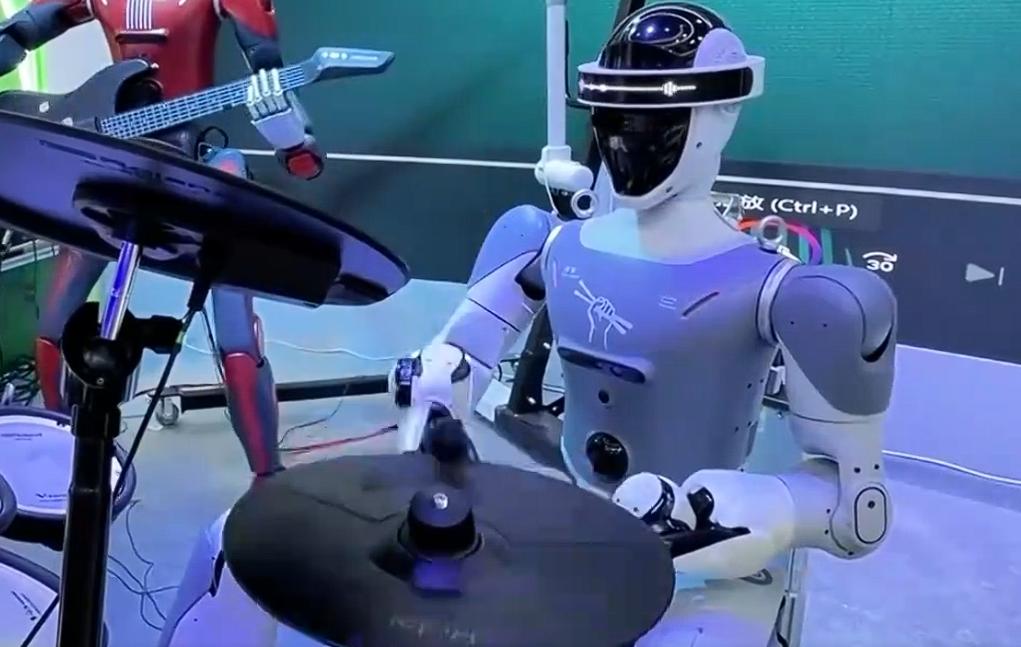
But the venue that truly swallows visitors whole, so crowded that even mobile signals vanish, is absolutely the Hall H3 robotics zone.
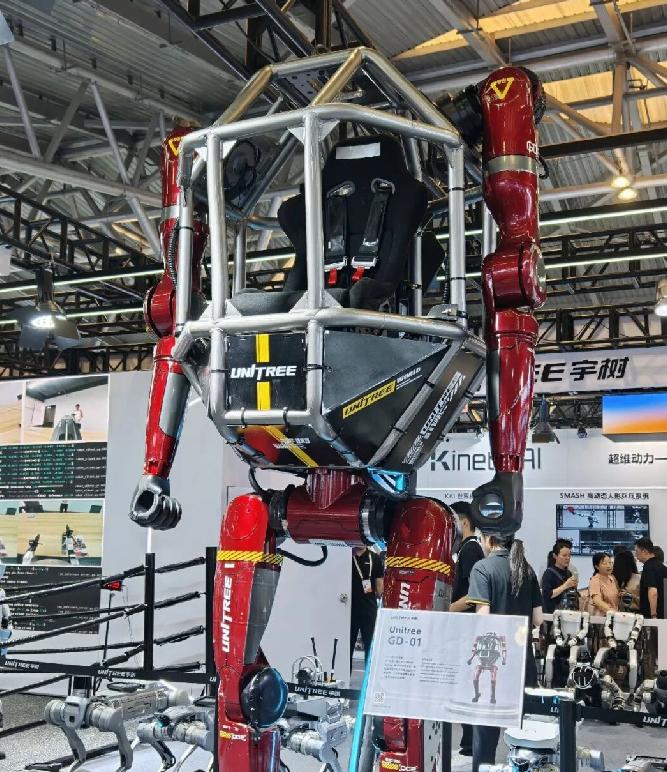
More than 200 companies, over 200 different end products, and more than 300 real robots competed side by side — a scene that truly lets you feast your eyes. Unitree Robotics directly brought sci-fi to reality with the world's first manned transforming mecha GD01, drawing crowds of people holding up their phones to take nonstop photos; Fourier Intelligence assembled a "dream work team" by dismantling a real production line and moving it straight into the exhibition hall; the A1 robot from ExRobotics demonstrated its hardcore industrial skills on-site. Alongside familiar names like UBTECH, Galbot, and Qianxun Intelligence... you'll find that robots are no longer just striking poses on platforms for performances. They're going all out to evolve from "capable of walking" to "capable of working", and the gap between flashy gimmicks and genuine functionality has become immediately obvious.
At WAIC in the previous two years, most robots were like celebrities on a fashion runway: walking on two legs, waving with two hands, occasionally doing somersaults, boxing routines, or dance performances. Back then, when developing robots, the biggest dilemma everyone faced was over their "physical form".
But at this year's booths, I noticed everyone has collectively "seen the light".
They no longer insist that robots must walk on two legs like humans. On flat factory floors and logistics warehouses, wheeled robots achieve incredible efficiency; when facing steps and ditches, wheel-legged robots make a stunning entrance — with wheels mounted under four legs, they retain the ultimate speed of level-ground driving while maintaining the flexibility to cross obstacles over rough terrain; in harsh environments with complex topography, quadruped robotic dogs become the absolute protagonists.
In the view of Node Finance, when a robot's "body" is no longer decided arbitrarily by its developers, but rather shaped by real "work" requirements, the once-frenzied technology has truly landed on solid ground.
Not only have they stopped obsessing over forms, robots' "work postures" have also changed.
Last year's robots were still performing tasks like folding clothes and pouring coffee on exhibition booths, but this year, Fourier Intelligence directly brought a real warehousing operation scenario in collaboration with JD Logistics to the venue, with robotic arms carrying out handling and palletizing nonstop for 24 hours; Ant Group Lingbo built a fully operational "smart pharmacy" at the center of its booth, where three robots independently divided tasks upon receiving orders to complete the full process of order processing, medicine dispensing, and packaging; Qianxun Intelligence enabled robots to identify and rearrange non-standard items autonomously under the command of "tidy up the living room"; while on industrial production lines, ExRobotics' A1 robot efficiently and precisely plugged and unplugged complex board and wire harness assemblies.
Nearly 60 humanoid robots have bid farewell to their status as "exhibits" and taken up scaled-up jobs to handle venue guidance and reception services. Some exhibitors even directly set up long and complex tasks such as flexible clothing sorting, box folding, and adhesive sealing right on their booths. From "being a spectacle" to "being capable of working", from "showing off tech" to "calculating costs", robots have finally cast off their vanity burdens and dived into the real economy to earnestly "work for a living".
Farewell to PPT Tech Flair: When Large Models and Robots Start to "Crunch Numbers"
While robots are working busily on the front lines, the underlying business logic has become increasingly "pragmatic".
At the exhibition, a robotics company specializing in home organization attracted a large crowd of visitors. Its robotic hand was smoothly folding a wrinkled T-shirt on a desktop under strong light interference and dynamic background changes. To fold a piece of clothing perfectly in a complex and non-standard home environment requires extremely rigorous technical training — the team has even accumulated more than 100 million synthetic data entries to cover tens of thousands of household scenarios.
The technology is truly amazing, but from a business perspective, it cannot avoid an extremely harsh reality: the household environment is "difficult to satisfy yet low-paying". The scenarios are extremely non-standard, training costs are high, but the problems they solve are not that "valuable" — leaving clothes unfolded today to fold tomorrow won't cause any asset loss, and even if you hire a domestic helper, the cost remains limited. In contrast, industrial or logistics scenarios are "relatively standardized yet extremely high-stakes": inserting a wrong wire harness in a factory, or pausing logistics warehousing for just one hour, will generate real monetary losses.
From Node Finance's perspective, this is an industry truth unveiled by this year's WAIC: technical routes are queued by difficulty, but business routes are always queued by the bottom line. Whoever can help customers save and earn money the fastest will be the first to survive.
Once scenarios become clear, the entire industry chain's structure and context fall into place. While complete machine enterprises are exploring the frontiers, a group of highly specialized "shovel sellers" have rapidly grown in the background.
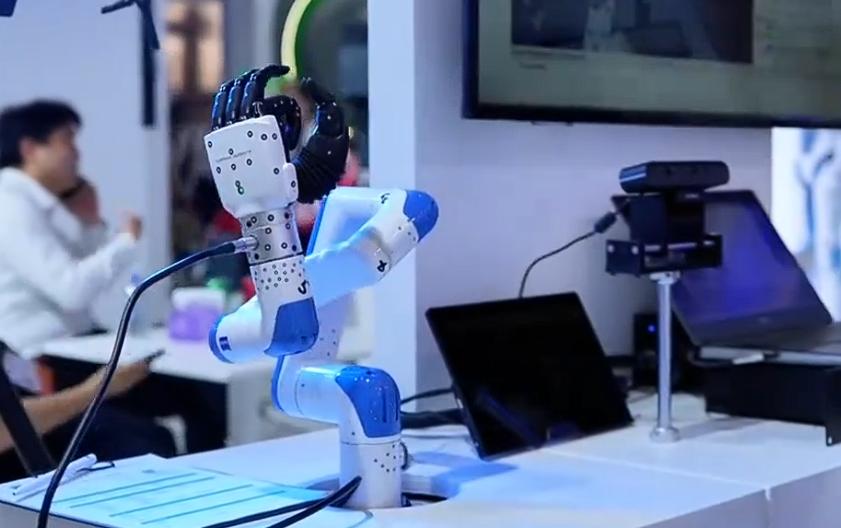
On the hardware side, a company called "Cable Muscle Dynamics" was crowded with industry clients. They don't manufacture full robots — they only make "hands". Unlike the dexterous hands on the market that stuff expensive motors into every joint, they use cables and springs to mimic the tendon structure of human hands, drastically reducing motor consumption.
This cable-controlled hand is priced at only 8,000 yuan, yet can stably grasp parcels more than a million times, while a pure motor hand with equivalent performance typically costs over 20,000 yuan. The most energy-efficient and cost-effective form turns out to be the "human hand" itself, as evolved over hundreds of millions of years.
It's not just hardware and software — industrial implementation is a remarkably prominent trend at this exhibition.
For example, Luckin Coffee also appeared in the WAIC exhibition area.
At first glance, this seems unexpected, but on second thought, it makes perfect sense. Data itself cannot generate revenue automatically. The closer it is to decisions and actions, the higher its value. Weather data precise to regional granularity, which ordinary people only use to decide whether to bring an umbrella, determines for Luckin whether it should push out a "30% off delivery coupon" precisely on rainy days; for agricultural product supply chains, microclimate data along transport routes decides how much ice should be placed in a truckload of flowers shipped from Yunnan to the Jiangsu-Zhejiang-Shanghai region — insufficient ice will make the flowers wilt, while too much ice will freeze them, and precise regulation can directly save tens of thousands of yuan in losses.
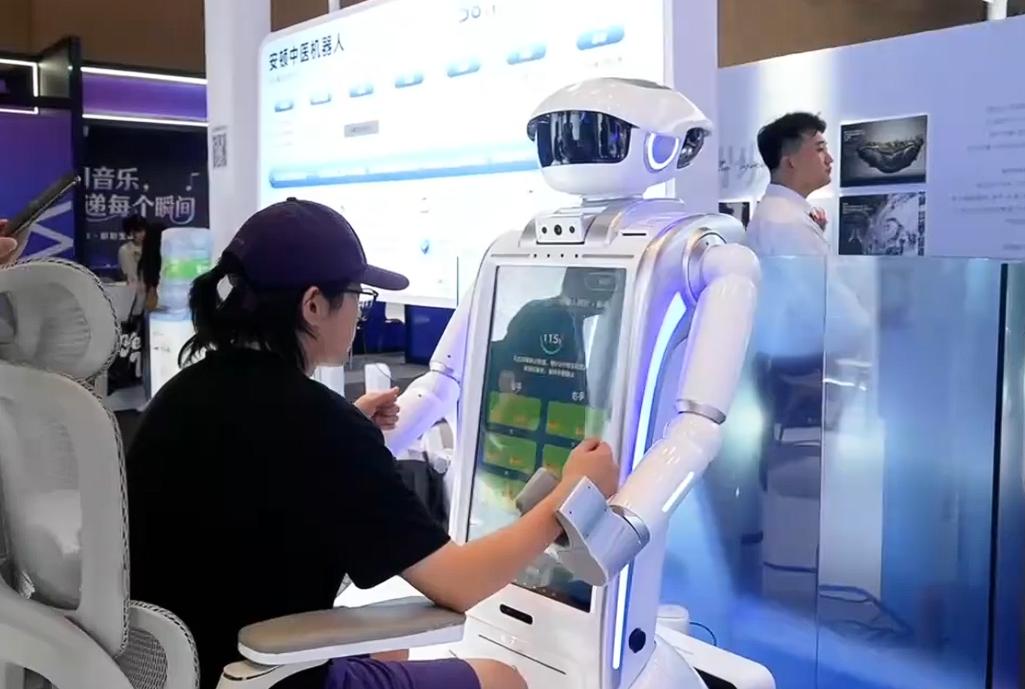
Even in traditional service industries, new production equipment is emerging. Devices equipped with multispectral sensors no longer rely on experience and subjective descriptions to guess the freshness of eggs or the age of ginseng, but use wavelength data for precise analysis; massage robots with force sensors can first scan the body's contours, then adjust their pressure and contact points based on the user's real-time feedback.
In the past, manufacturing increased production capacity by buying equipment, while service industries expanded capacity by hiring more people. Now, both mental and physical service capabilities are being reconstructed into standardized devices and Agent workbenches. Business implementation is no longer hanging in mid-air, but landing precisely on every real-money bill.
Beneath the Capital Frenzy, the AI Battle Has Shifted from "Showing Muscles" to "Head-On Collisions"
When the technological fantasies fade away, what remains is real and brutal competition.
"Let's meet at WAIC" became the unified format of WeChat statuses in tech and investment circles during those days. Over 80 top-tier institutions including HSG, GL Ventures, and ZhenFund set up camps directly in the venture capital zone, and various closed-door banquets like Booming Night and After Hours along the Huangpu River, alongside the "Gossip King Contests", lasted all night long. Investors' schedules were packed: attending computing power chip releases in the morning, holding closed-door in-depth talks with embodied intelligence founders at noon, rushing to technical route panel discussions in the afternoon, and weaving through roadshow venues in the evening.
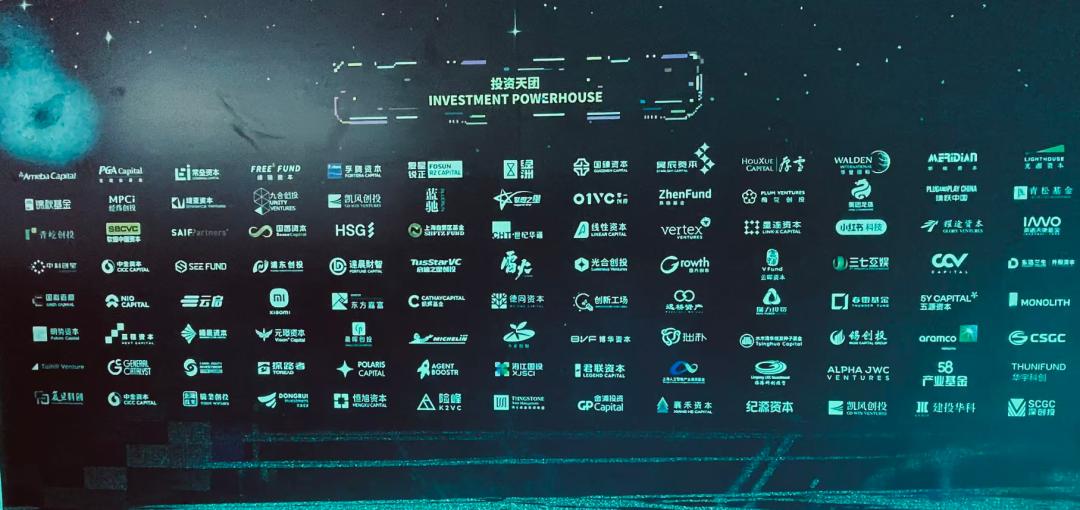
Beneath this frenzy lies striking capital data: in the first half of 2026, the total financing amount in China's embodied intelligence track has exceeded 900 billion yuan, while the entire AI track has seen investments surpassing 3 trillion yuan. From DeepSeek and Kimi to Unitree Robotics, unicorns with valuations of tens or even hundreds of billions of yuan have successively knocked on the door of the capital market, making IPO a life-or-death race for market positions.
In the view of Node Finance, beneath the frenzied capital surface, the game of technical routes has become more pragmatic.
In the past two years, the Vision-Language-Action (VLA) model was regarded as the iron law of embodied intelligence, but this year, the industry has generally hit the bottleneck of "failing to function when switching to a new scenario". As a result, the "world model" has become the new trend. At the WAIC forum, Nobel laureate Thomas Sargent compared VLA to a "Kepler-style descriptive model" and the world model to a "Newton-style structural model", calling on AI to evolve from fitting data to understanding causality.
However, entrepreneurs on the front lines are not caught up in this war of words. The founder of a leading embodied intelligence company stated straightforwardly that VLA and the world model are by no means mutually exclusive — they are integrated and symbiotic. "VLA solves the direct mapping of 'doing what you see', while the world model endows machines with the reasoning ability to 'predict what will happen after taking an action'. No matter how popular a concept is, it is just a means — the only goal is to make robots capable of generalized work."
An on-site investor revealed the screening logic behind capital: although the industry is frantically "racing to implement", in the early stages, capital's top priority remains the iteration speed of the model's underlying "brain". Only those with smarter brains and faster generalization capabilities can secure continuous ammunition; after Series B, real-money deliveries and revenue become the only pass to stay in the game.
Corresponding to the integration of technical routes is the complete reshaping of industrial competition dimensions.
Two or three years ago, the focus of competition at WAIC was still on comparing model parameters and context window lengths. Today, the dimensions of competition have fully shifted to engineering capabilities, talent density, supply chain maturity, and the real complexity of industrial scenarios.
Standing at the exit of the exhibition hall and looking out, the Huangpu River flows endlessly. From sci-fi fantasies of replacing humans to practical machines that fill labor gaps; from unattainable technical exercises to the question every enterprise is asking — "how to help you save money and how to help you make money".
This year's WAIC is like a mirror, reflecting the most authentic transformation of the artificial intelligence industry.
It is worth mentioning the weather in Shanghai during those days: scorching sun on the 18th, and heavy rainstorm on the 19th. WAIC's weather is a vivid metaphor for today's capital and industry trends — after scorching pursuit and fanaticism, what is needed is a hearty cool down to bring everything back to rationality.
The heat atop the trend can ignite the spark of innovation, but only rational thinking can let technology truly take root. Whether it is the pragmatic considerations of practitioners or the prudence and restraint of investors, these timely "cold showers" are more like a precise shock absorber installed on the rapidly advancing industry. After the carnival, the clarity brought by the rainstorm allows everyone to cast off impetuousness and see the road ahead. When the rain clears, those companies that truly understand cost accounting, are capable of working, and can withstand the test will surely take steady root in a more rational ecosystem and grow into towering trees.
This article is from the WeChat public account "Node Finance" (ID: