AI applications are "racing to the start" at WAIC: the excitement is real, but the differentiation is fake
This year's WAIC visit was a spiritual delight but a physical ordeal.
Giant ice blocks were scattered throughout the exhibition halls, alongside audiences fanning themselves with stacks of promotional flyers from the sweltering heat, and staff members lined up in corners with their cameras and professional equipment. Everyone's face was etched with exhaustion.
For the first time, the total exhibition area exceeded 100,000 square meters, and the forums and exhibitions were split into separate venues. This grand showcase reflects the "prosperity" brought by large tech firms, small startups, and entrepreneurs all pouring into the AI industry at an accelerated pace.
The times are shifting: some participants are growing in number, while others are exiting the stage.
Last year, large language models (LLMs) had already retreated to the sidelines, and this year they are even harder to find in the exhibition halls. Instead, Agent products are everywhere, alongside long queues for "AI Agent phones" and the repeated promotion of "industry brains" and "digital employees" by every exhibitor.
After touring the exhibition, Light Cone Intelligence picked up several clear signals from this year's WAIC:
LLMs no longer deserve a dedicated booth, as the spotlight shifts from parameters to real-world scenarios. The C-end is rushing to launch Agent products to seize market opportunities, while the B-end is focused on building Agent platforms, or leveraging FDE (Forward Deployed Engineer) to uncover opportunities for enterprise transformation.
Agents are blooming in full diversity, and AI hardware is not far behind. Almost every booth in the venue is promoting Agents. The booths for the "Doubao" phone and the AI Agent phone from Step Star are perpetually packed with long queues.
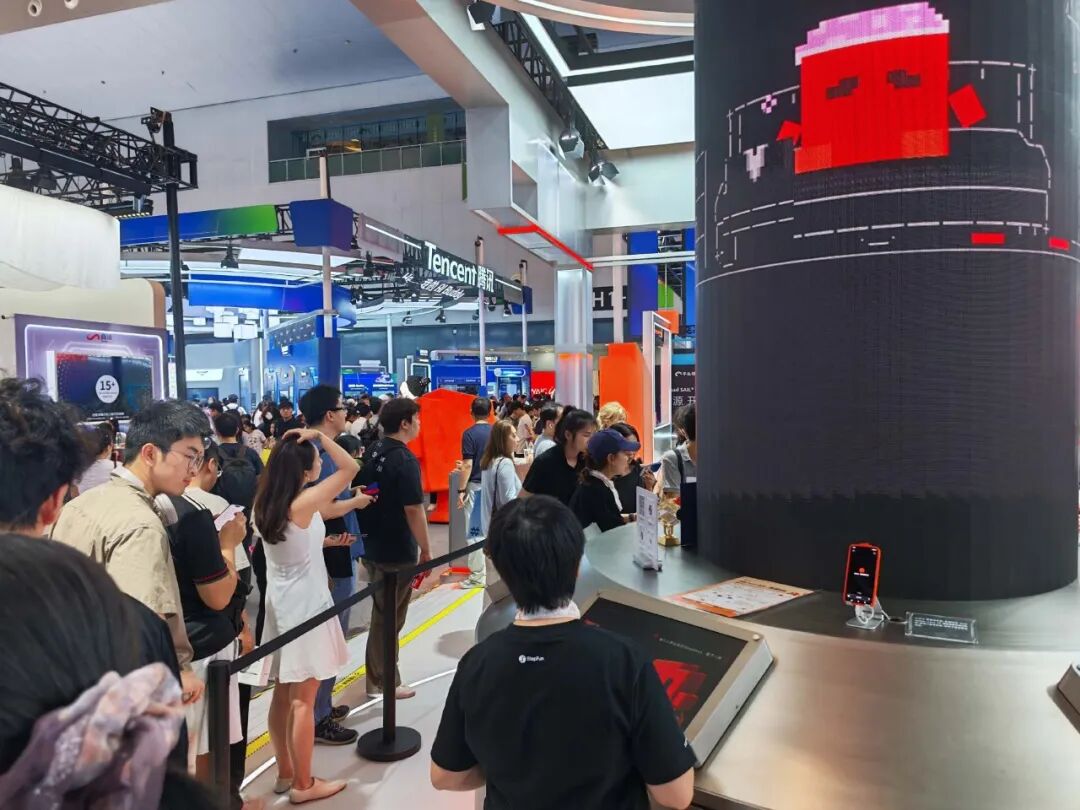
But beneath this prosperity, homogenization has become an unavoidable issue. There are countless AIGC creative platforms on site, and innumerable Agents with the "Claw" suffix. At a glance, it's hard to spot any differences. The inherent differentiation essentially relies on the accumulated ecosystem, data, and entry points of each respective platform.
"There's a lot of uncertainty, but everyone is moving forward while observing the situation," a staff member from an exhibiting manufacturer candidly told Light Cone Intelligence.
No one can accurately predict where the next breakout hit will come from, but no one is willing to miss any potential direction.
Agents Become the Absolute Protagonist, But They All Look Too Alike
The trend of AI application implementation has finally truly reached the masses. The most intuitive feeling at the venue is that users' acceptance of AI products has significantly increased, which has spurred the emergence of so many independent AI applications.
"Compared to last year, our user base has directly tripled right from the start this year," a staff member at the JD Health booth told Light Cone Intelligence.
Among the many tracks close to the C-end, AI healthcare is one of the most crowded directions this year. At the WAIC site, Ant Group's Afu attracted visitors to sign up with a 0.01-yuan offer for a weight loss scale. Products like JD Health's AI doctor "Dawei", iFlytek's AI health assistant "Xunfei Xiaoyi", and Baichuan Intelligence's "Bai Xiaoyi" are all health assistant products targeted at the C-end.
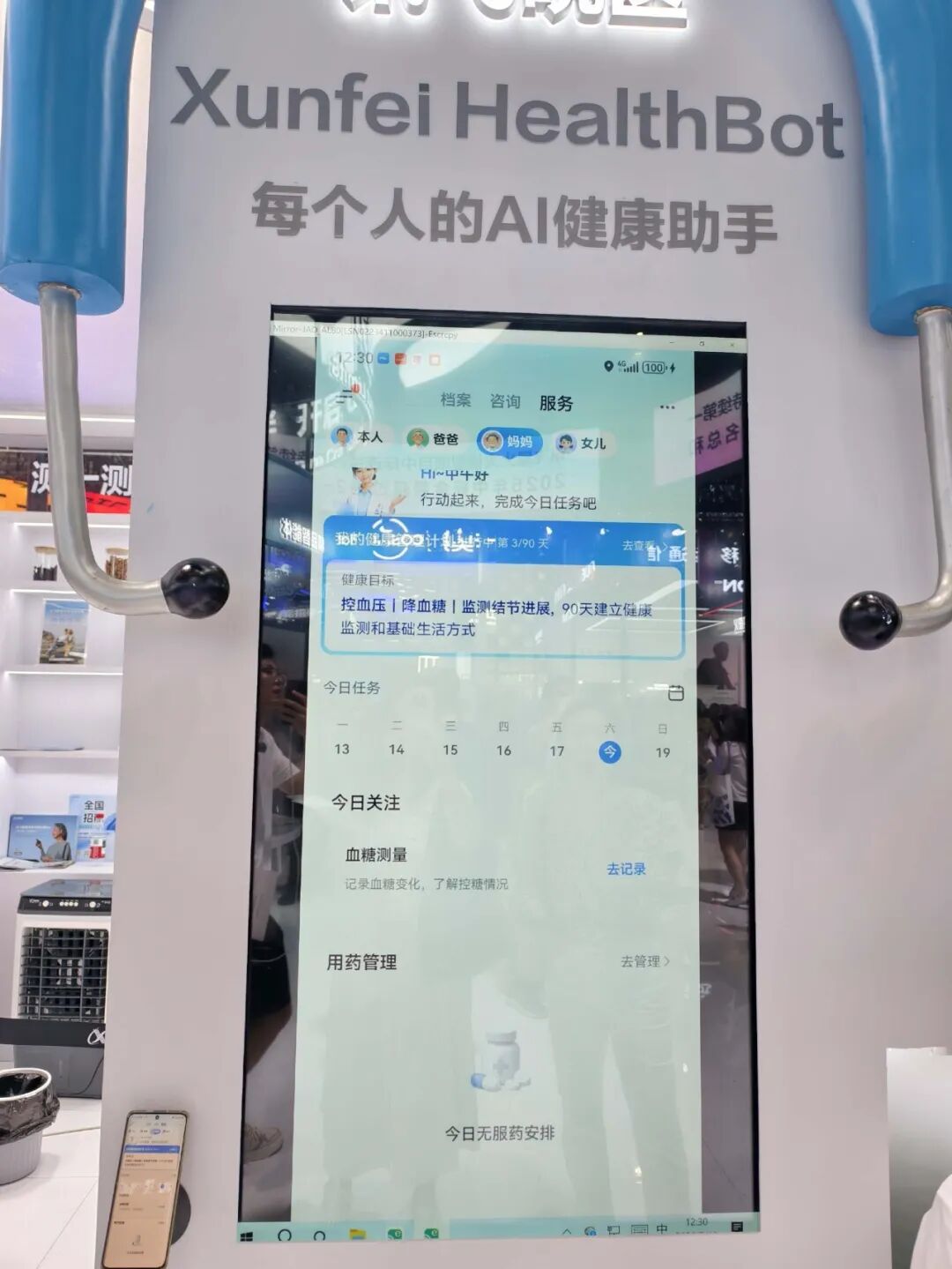
Through on-site observation and collaboration with the medical industry and supply chains, this year's AI healthcare products have evolved from their initial positioning as consultation aids to become more professional. Last year, AI could only offer "suggestions", but this year, users can chat with "digital humans" of real hospital doctors, and drug delivery services are also fully available.
Focusing on specific products, Agents are the absolute protagonists of this year's C-end offerings.
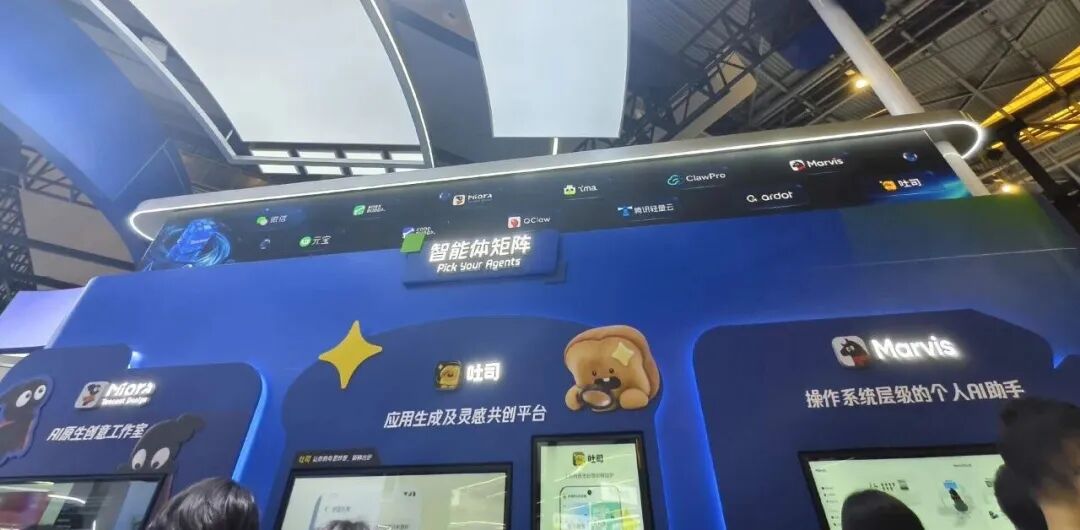
Tencent has so many Agent products that an entire wall can't contain them. In addition to WorkBuddy and QClaw launched earlier this year, there's Ardot for designers, Mavis which acts more like an AI version of a PC manager, and Toast for building independent applications manually... These explosive Agents are more like achievements that large tech firms first used internally before "pushing them out" to the public.
A staff member from Alibaba's "Miaowu Team Edition" told Light Cone Intelligence that Miaowu was born more out of internal demands. For example, the function of building applications in Miaowu received high internal demand from the very beginning. As more internal employees started using it spontaneously, the team decided to launch a C-end product. Later, due to enterprise customer needs such as creating registration forms and demonstrating features, the enterprise version was extended.
Some Agents have become independent apps through clear positioning, while others are directly integrated with their flagship products to drive paid conversions through Agent capabilities.
Baidu is a typical example. In addition to its work companion DuMate and AI application creative product Miaoda, GenFlow on display at the booth is more like a derivative of Baidu Netdisk. Taking GenFlow as an example, it can not only be activated for conversations in the central area of Baidu Netdisk, but also use Agent capabilities to help organize key information in videos, edit files, and more. When talking about GenFlow's future plans, the staff told Light Cone Intelligence that it will later be added to Baidu Netdisk's subscription paid services.
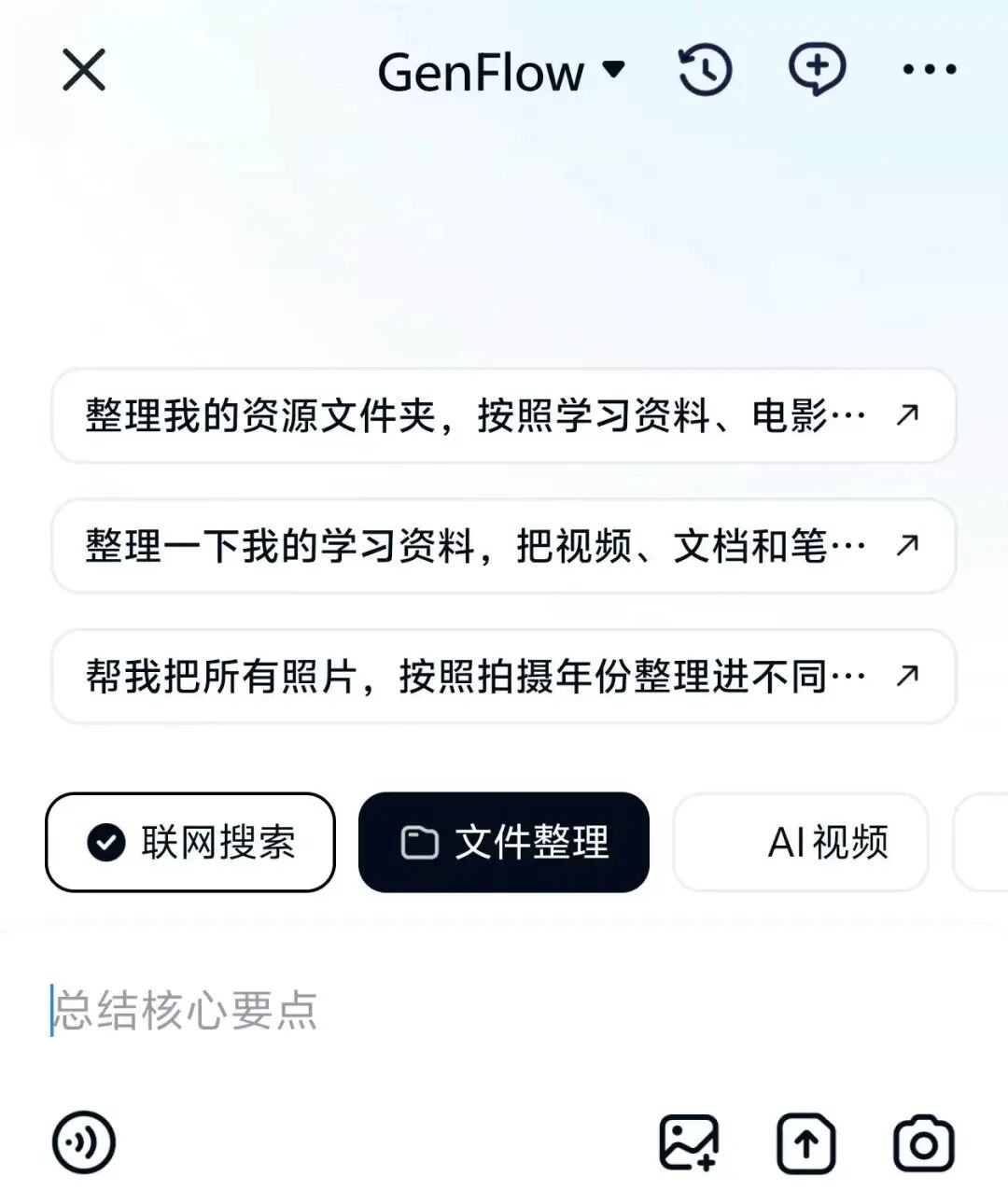
"Genflow" has been added to the central area at the bottom of the Baidu Netdisk App
However, in the midst of this Agent "prosperity", "repetition" is also very obvious.
Light Cone Intelligence toured all the AI booths on site. Although there are a dazzling variety of products, they can all be summarized into several major categories: various personal Agents with the "Claw" suffix or custom names, Agents that help you build applications manually, image/video Agents that take over AIGC content creation, and even various Agent boxes resembling Mac mini.
Taking personal Agents as an example, many products show highly identical demo scenarios, with data analysis and report writing being the "signature displays". When asked about their differentiated advantages, "supporting connection to multiple models" and "having a self-built Skill library" have almost become the "universal answers".
After the tour, Light Cone Intelligence was more impressed by iFlytek's Loomy and Facewall Intelligence's Agent — both have integrated a "database" function internally, which automatically categorizes user-uploaded files by type and uses AI to perform basic labeling on different files, making them more friendly for office workers.
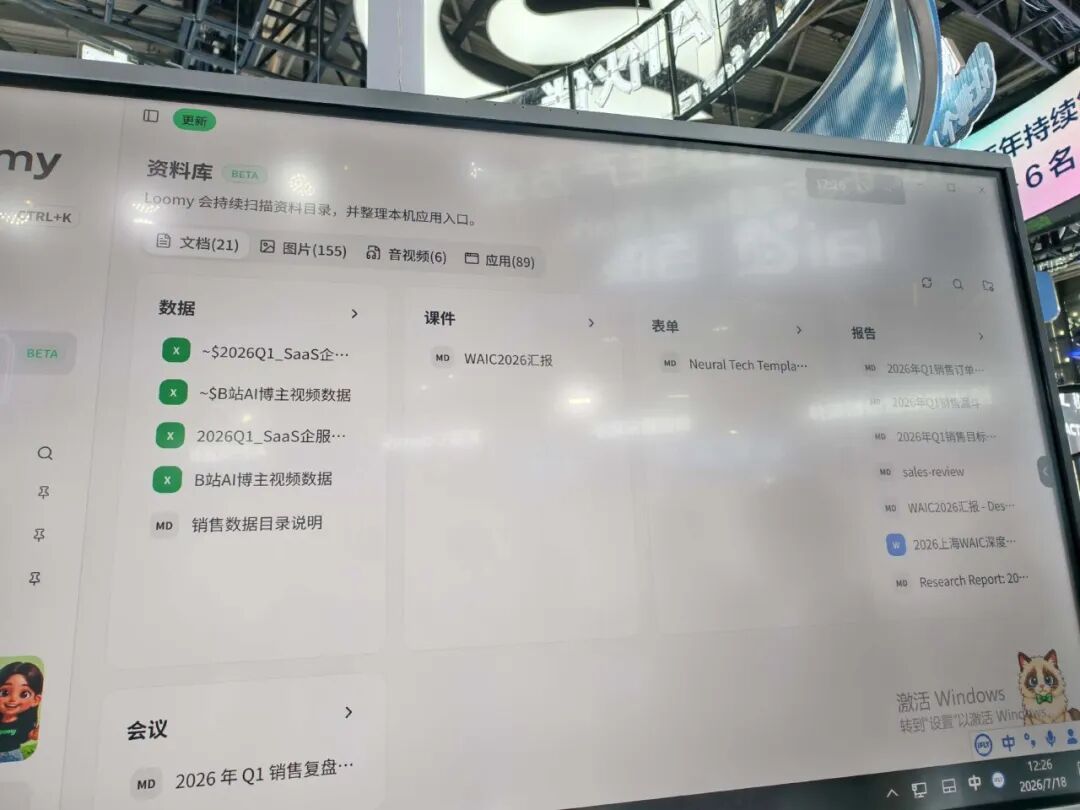
Lommy's "Database" interface
Except for a few products with clear completion and target orientation, most others are still in the exploratory stage, searching for "breakout demands".
When Light Cone Intelligence communicated with demonstrators from multiple manufacturers, we were almost always asked a rhetorical question: "What new features do you think we can add?"
"Everyone is doing the same thing, and everything is converging. Because it's so easy to copy others' features. If you see a new feature from someone else, you can just implement it. Features that are truly practical in real-world use will naturally converge," a staff member told Light Cone Intelligence.
This kind of response seems positive on the surface, but it's actually a sign of helplessness. The current prosperity of C-end Agents may not even involve a battle for scenario definition rights. Essentially, it's a feature arms race. Everyone is copying, and practical features are more or less the same. Ultimately, differentiation can only return to ecosystem, data, and entry points, rather than the product itself.
Following the launch of OpenClaw, in the "first year of Agent commercialization", every manufacturer hopes to find the next breakout scenario. This is the collective portrayal of C-end Agents — lively, but everyone is crowded together with no clear gap between them.
But it seems that prosperity should always go hand in hand with bubbles.
Digging Gold in the B-end: FDE Steps onto the Stage
If the C-end is "blooming with diversity", then the B-end is taking an increasingly certain path — packaging its own capabilities to sell to more enterprises and get them to pay. The simplest way to do this is to sell APIs, which Anthropic has already proven feasible.
At a time when LLM capabilities are still evolving according to the Scaling Law and Agent products are booming, the B-end is mostly improving its work based on existing foundations.
Last year, most enterprise Agent platforms and products were still focused on "optimizing for specific scenarios". This year, "digital employees" have become a more popular concept — categorized by role, in addition to classic roles like finance, operations, and customer service, new "AI employee" roles such as human resources and administration have been added, making a company almost fully "equipped with all necessary functions".
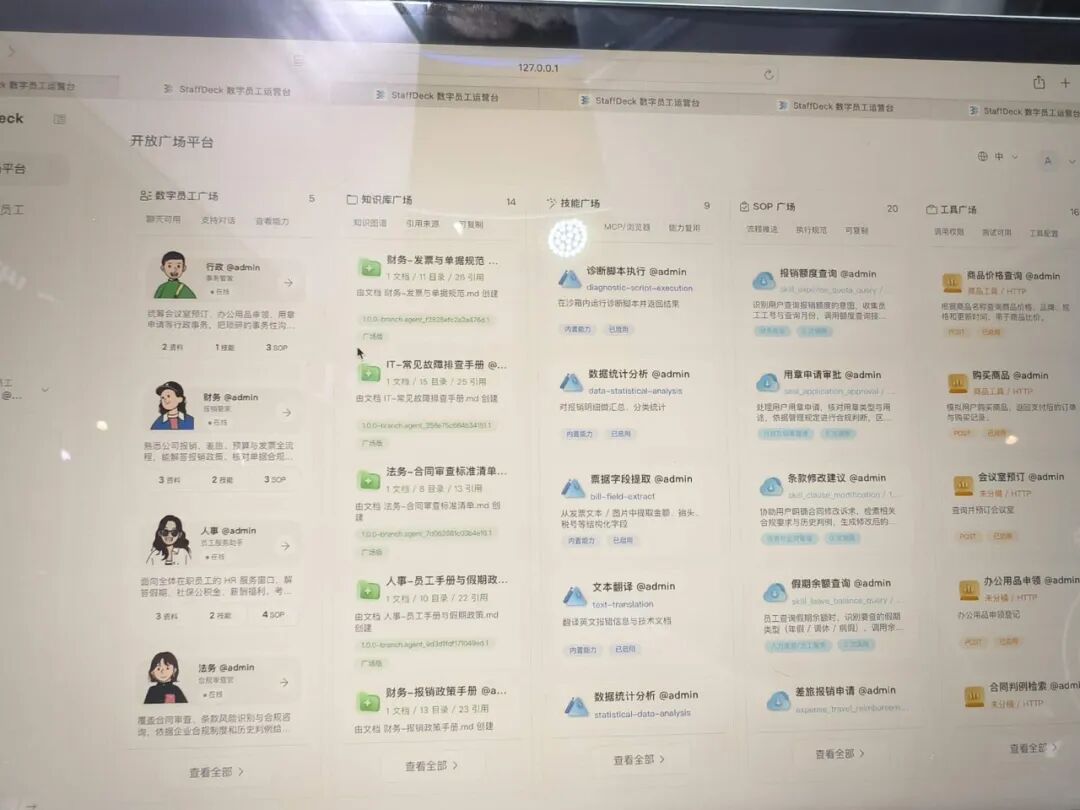
Taking NetEase Intelligence Enterprise as an example, its enterprise-level AI Agent platform ClawHive can build applications for small manufacturing enterprises around demands such as product quotation, raw material procurement, boss daily reports, and meeting decision-making. This can greatly reduce human labor spent on collecting, organizing, and analyzing information, and enhance the efficiency of process management, key decision-making, and project advancement.
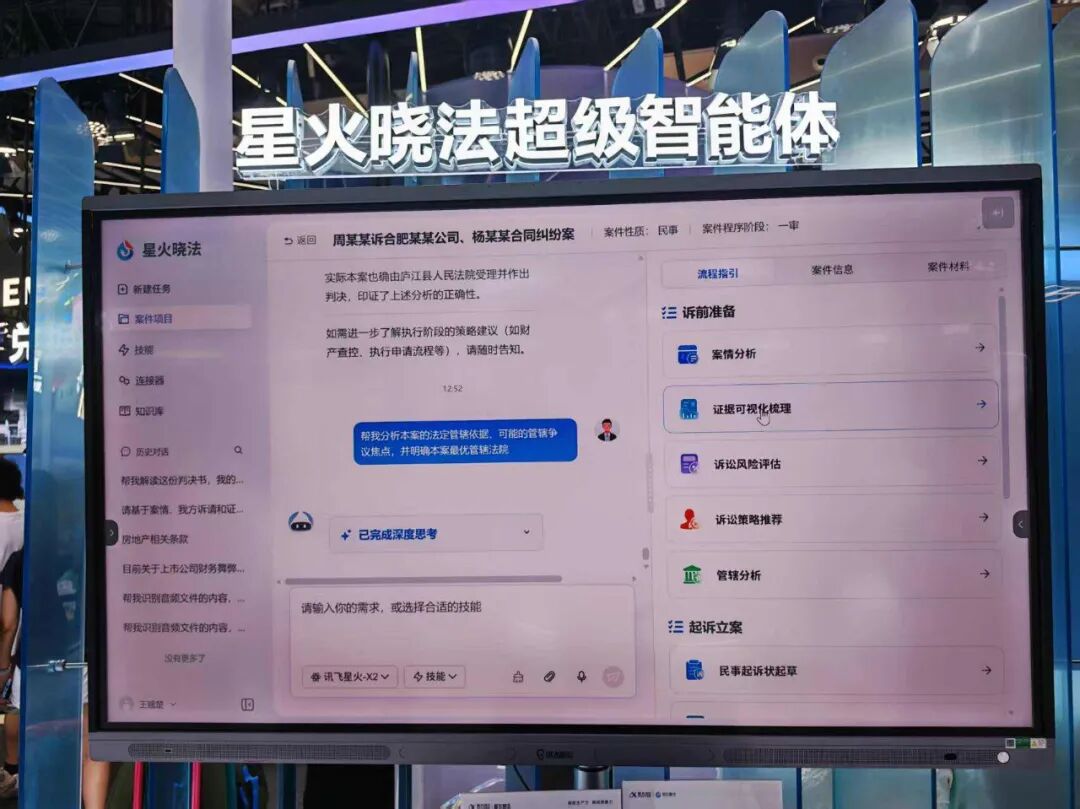
In vertical industries, launching Agents is no longer a surprise. Taking iFlytek as an example, its employee told Light Cone Intelligence that they launched the "Spark Xiaofa Super Agent" this year and established an independent company. Targeting legal industry roles such as lawyers, it connects litigation processes including case discussion and acceptance, pre-litigation preparation, case filing and preservation. AI can now directly complete tasks like evidence sorting and verification, risk point identification, and generation of various litigation documents. This is extremely useful for lawyers, because in practice, clients often can't even clearly state their own demands.
Compared to the C-end, the B-end competes in implementation. Last year, Agents were mainly used to reduce costs and increase efficiency, but this year, based on understanding work projects, Agents can take over more complex tasks.
A client of Siemens Industrial Agent shared the actual effects at the WAIC site. One scenario is remote switch control for equipment like pressure vessels, which previously required on-site operations but is now directly dispatched by AI, significantly reducing operation and maintenance costs. The other scenario is maintenance scheduling for overseas wind farms, where AI needs to simultaneously predict wind turbine status and weather, complete maintenance within the appropriate time window, and minimize wind power loss.
The B-end, which pursues higher task success rates and reliability, still needs to put more effort into engineering details.
When talking about the current technical bottlenecks of Agents, a staff member from Facewall Intelligence said that the implementation experience of Agents is built from massive engineering details. At this stage, there is still much work to be improved, such as the memory issue of Agents. In the next step, Facewall Intelligence wants Agents to "proactively discover tasks". "You are overseeing the project, but people can go rest, and AI will take over to fill in the gaps and check for missing details."
In addition to standard products, Light Cone Intelligence noticed another obvious change in the B-end market: the FDE model has become popular. At the WAIC site, more and more enterprises are promoting their support for FDE, which means they can go deep into enterprises to dig out AI capability demands first, and then develop customized products.
A staff member from Kingsoft Office WPS told Light Cone Intelligence that they started deploying FDE in the second half of 2025: "We have already completed some successful scenarios, such as human resources, finance, and legal affairs. Now we are extending to helping enterprises handle their business, developing various AI capabilities such as Agents for their specific business scenarios."
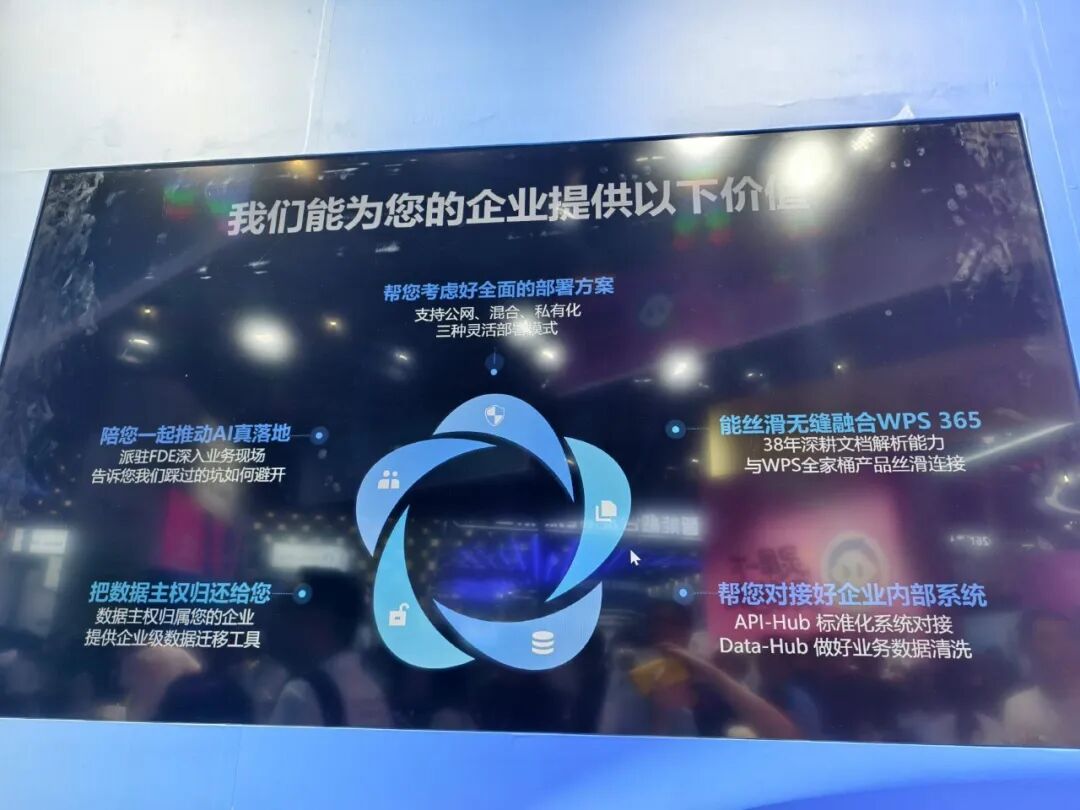
What's the necessity of doing FDE? The staff member from Facewall Intelligence told Light Cone Intelligence, "Enterprises must have a small team, even if there's only one person, who must understand both business and technology." He further revealed that Facewall Intelligence is also preparing to launch this business.
This is actually somewhat ironic. AI was created with the expectation of "multiple solutions for one problem" and generalization capabilities, but B-end implementation has returned to the highly customized, closely communicated FDE model. This is almost identical to the on-site implementation and consulting-based delivery in the SaaS era. No matter how capable AI model manufacturers are, the last mile of delivery still requires people who understand both business and AI to fill in the gaps.
Perhaps the FDE model is a stopgap measure for the current insufficient AI productization capabilities. But in any case, a strategy that works and can drive sales is a good one, and model manufacturers can only stick to this path for now.
LLMs Retreat Behind the Scenes, World Models Are Hot, and Hardware Becomes a New Battlefield
Returning to the underlying foundation of AI applications — LLMs, this year's changes are still noteworthy. This year, Moonshot AI, as always, only provided a booth for visitors to check in. But outside WAIC, the 2.8T Kimi K3 has drawn attention that has even spread to Silicon Valley.
At the WAIC site, the popularity of world models is comparable to the initial frenzy around LLMs.
"A more critical change is happening: AI is no longer just generating content. It's starting to understand how the world operates and predict what consequences actions will bring. We firmly believe that 2026 will be the first year