What exactly is the background of the "Cyber Godfather" who controls the Codex quota?
「There you go, it's you! Did you think I was going to announce a reset? Actually no. I was just scrolling through Twitter to see what feedback everyone has on ChatGPT Work.」
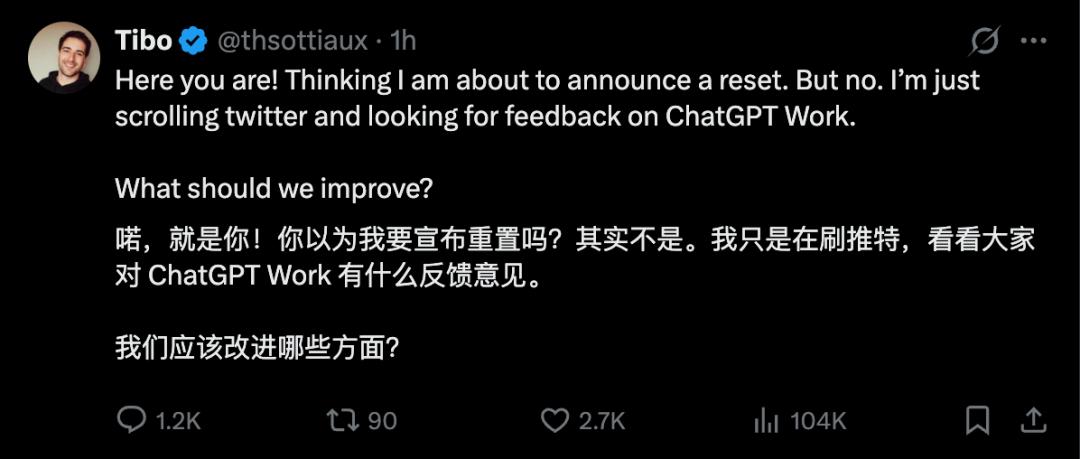
This rising X internet celebrity has been affectionately called by enthusiastic netizens 「Cyber Godfather」, 「The God in charge of Codex quota」 thanks to his repeated 「I'm going to press the reset button」 antics.
Just how absurd are these resets? When Codex's active users exceeded 8 million, reset; 7 million, reset; 6 million, reset; 5 million, reset; users report a bug, reset; bug gets fixed, reset……
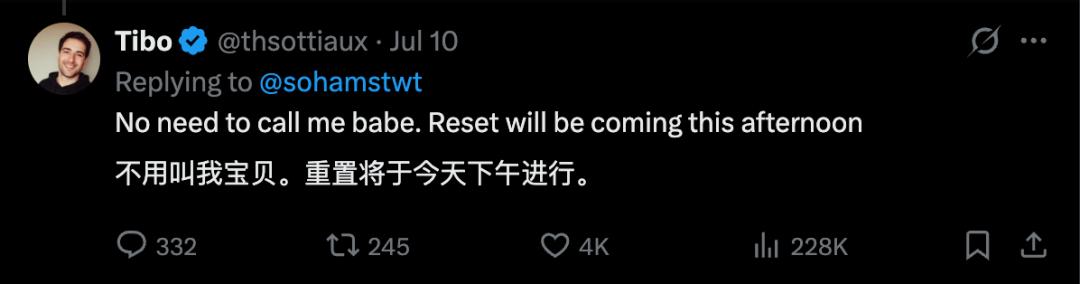
Don't call me baby, the reset will take place this afternoon
We went through all his tweets, there are nearly a hundred posts that mention the word 「RESET」 alone. The earliest one was last November, when Tibo performed a quota reset to compensate affected users after noticing a growing number of errors in the Codex system.
What's more interesting is that in early April, media outlets broke the news that OpenAI was facing severe computing power shortages: 「Internal OpenAI projections show that the $122,000,000,000 they raised this year will only sustain operations for 18 months, after which they will need to raise funds again.」
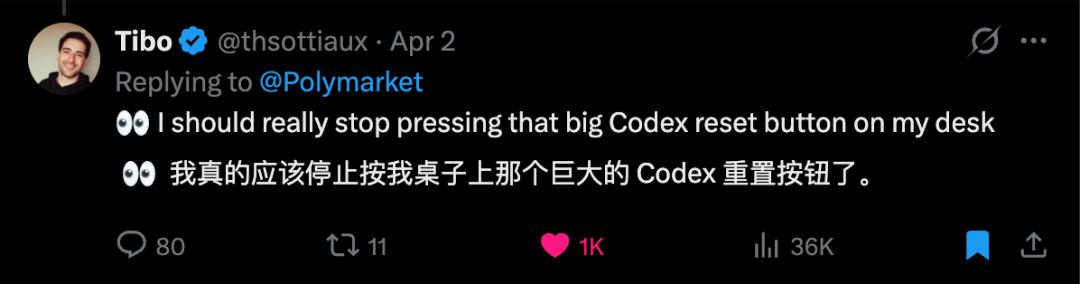
Tibo quickly replied under this post: 「I really should stop pressing that huge Codex reset button on my desk.」
But there was no way to stop it. From announcing they hit 500 active users at the end of May, to the release of GPT-5.6 in July, Codex's active user base has been growing by 1 million users per day. As of July 14, there were already 8 million active users, while previous projections didn't expect to hit 8 million until September.
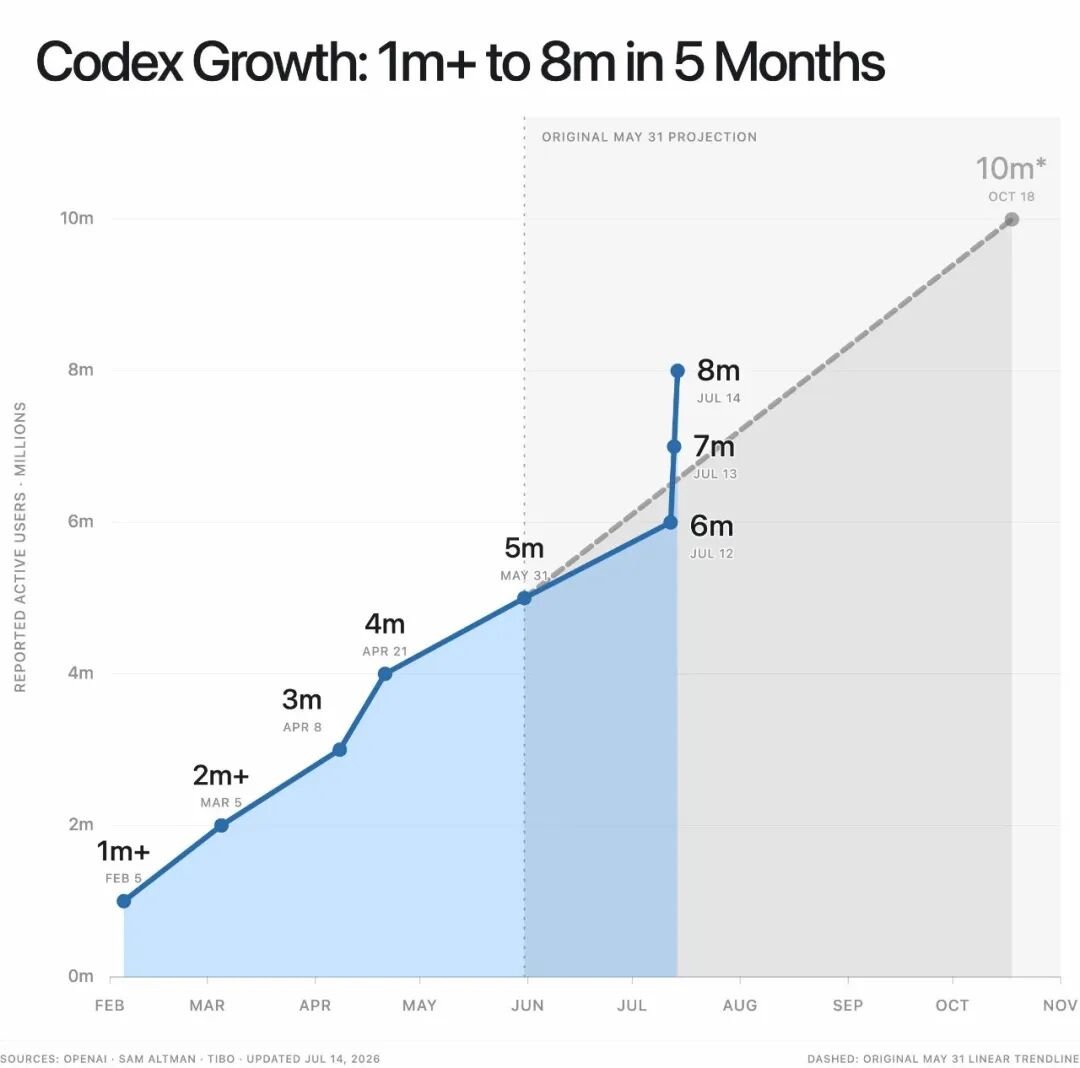
When Codex hit 3 million weekly active users in April, OpenAI announced it would reset user quotas, and promised to reset again for every additional 1 million users after that, continuing until they hit 10 million total users.
At the current pace, Tibo has been pressing the reset button almost every day these days. He even joked about his own schedule on X, saying it's just an endless loop of rest, reset, rest, reset.
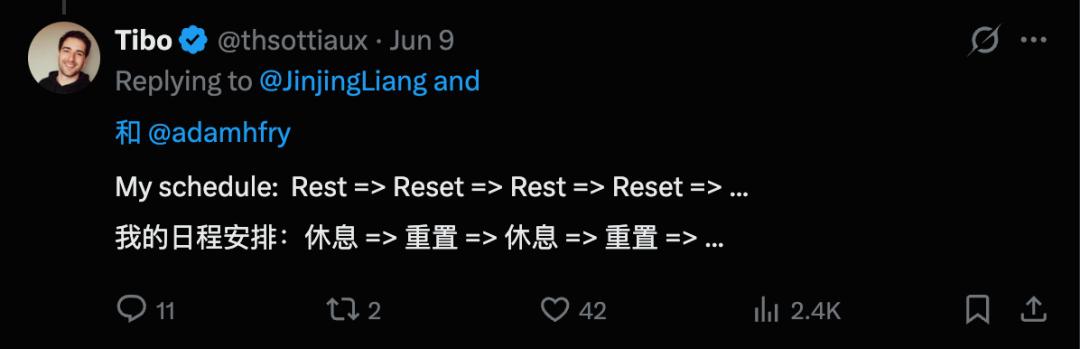
Aside from the growing user base, Tibo's high level of activity in the community, as well as his personal responses to user quota requests, outages and bugs, make it completely reasonable for netizens to see him as the person in charge of the token faucet. His X account was only registered in August 2025, and by mid-July this year, it had accumulated nearly 250,000 followers.
And the meme of 「The God of Codex Quota」 even has a dedicated unofficial website: Has Tibo reset Codex usage limits?, the site is called TiboGPT, and the answer on the page has long been stuck on 「Probably」.
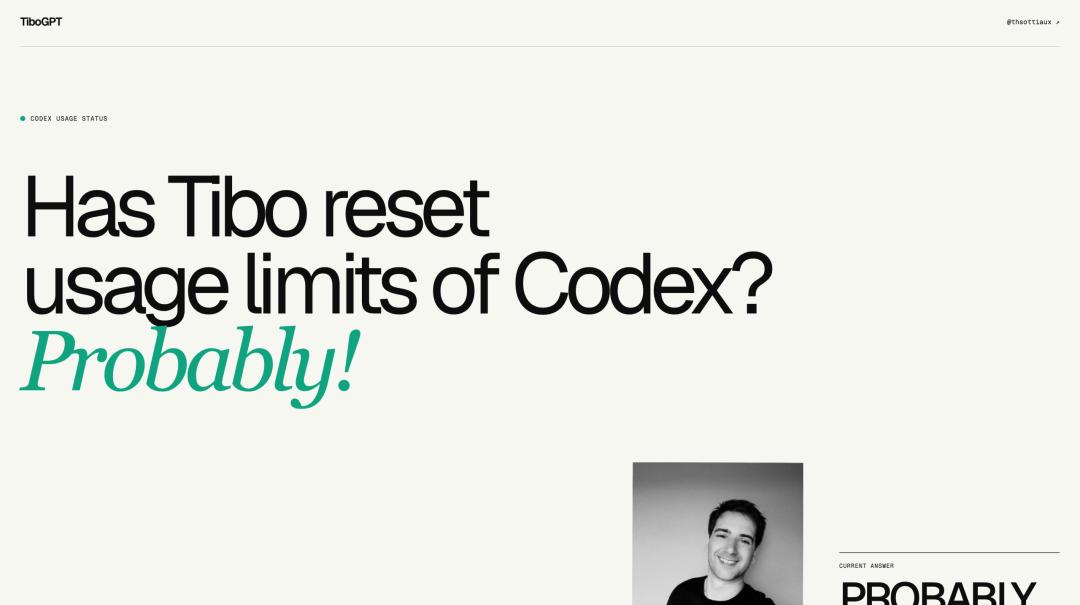
Website address: https://tibogpt.com/
There were no festivals in the world at first, but after Tibo pressed the button enough times, one was born.
Even more absurd is that this 「God of Codex Quota」, whom developers keep chasing after for more quota, has long outgrown the role of community operations.
He joined OpenAI in 2024 and started working on Codex a few months later; he launched Codex to the public in 2025; by 2026, he had taken charge of OpenAI's core products and platforms, merging ChatGPT, Codex, and the developer API into one super app.
Any complaints or feedback we have about Codex and the upgraded ChatGPT can now be posted directly on X, and they will get addressed.
Seeing him hanging out and interacting with users all day long on X, it's really easy for users to think he's just a funny 「community operations guy」. In fact, the heavy responsibility of redesigning an AI entry point for nearly a billion people and merging ChatGPT with Codex has fallen precisely on this seemingly most unorthodox person.
Started programming at the age of seven
Because behind his playful and easy-going facade, Tibo is a bona fide technical genius.
Tibo's full name is Thibault Sottiaux, he grew up in Belgium, and was an 「atypical child prodigy」 from an early age. He wrote his first program at the age of 7. Back then, the family computer could already play chess with him, but what he really wanted was a machine that could talk to him.
And that program didn't solve any serious problems, it just simulated the computer having a conversation with him.
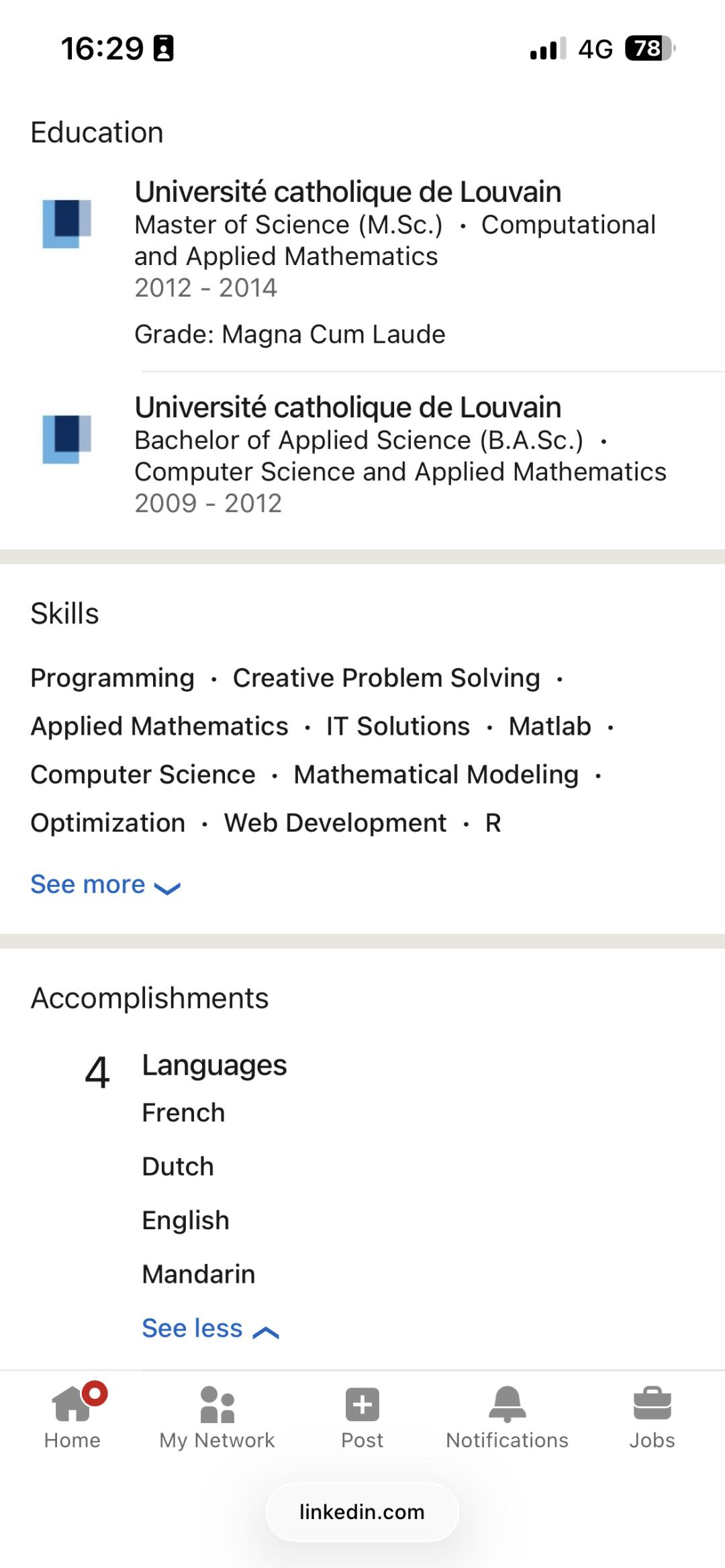
Later, he was admitted to KU Leuven (UCLouvain), Belgium's top university, majoring in Computer Science and Applied Mathematics. Interestingly, even though he successfully earned his master's degree, he openly admitted: 「Actually, I barely attended any classes at university.」
Just like the career trajectories of many Silicon Valley talents, where there are countless people who dropped out of Stanford, Tibo's growth seems to have happened outside of school too.
According to the education, skills and achievements information shown on LinkedIn, we also discovered that Tibo can even speak Mandarin. Under the language category in the achievements section, it lists French, Dutch, English, and Mandarin.
The Golden Age of DeepMind
After graduation, Tibo joined Google's London office, initially working on Google Maps, before moving to Google's flagship lab DeepMind.
During his six years at DeepMind, he witnessed DeepMind's 「Golden Age」, and personally helped build the infrastructure and data pipelines that supported super projects like AlphaGo and AlphaStar.
Before leaving DeepMind, he even briefly led Gemini's human data team, expanding the team to hundreds of people in preparation for the launch of the first batch of Gemini models.
But at the end of 2022, the sudden breakout success of ChatGPT made Tibo, who had spent six years at DeepMind, completely unable to sit still.
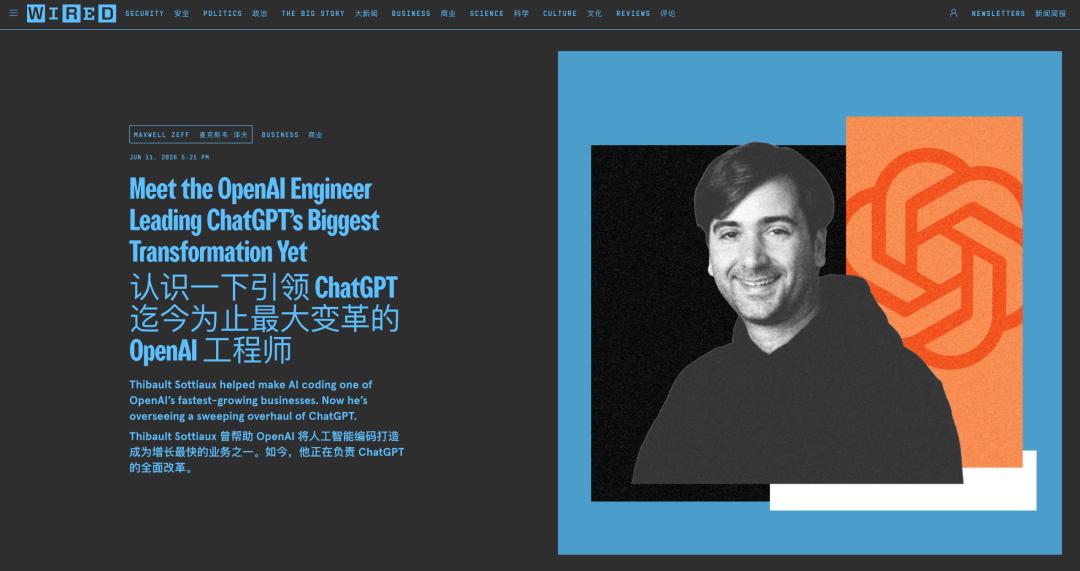
Later in an interview, he bluntly complained about his former employer, 「We at DeepMind had already built this kind of conversational large model, we sat on it for almost two years, and just never pushed it out to users!」
Fed up with the slow bureaucratic culture inside giant corporations like Google, Tibo decided to switch to the more aggressive OpenAI.
He didn't leave DeepMind because the company lacked models; he left precisely because he believed the company already had something great, but lacked the courage or speed to deliver it to users. This probably explains why he later valued rapid releases, openly listening to feedback, and getting products into users' hands as soon as possible.
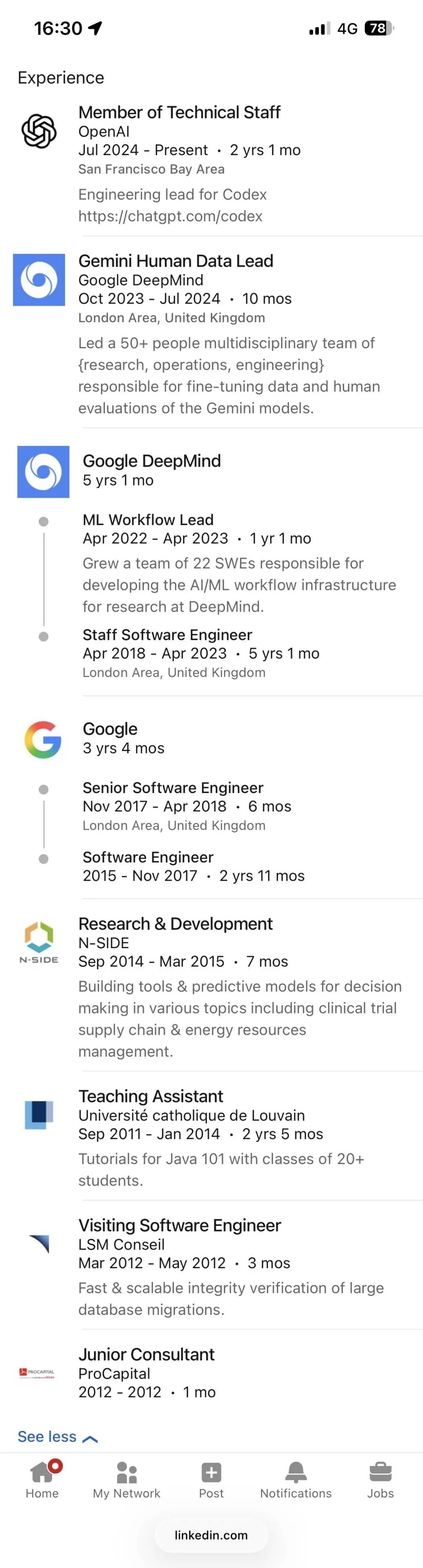
Interestingly, Tibo left Google DeepMind in July 2024, while Logan Kilpatrick, OpenAI's star head of developer relations, announced his departure from OpenAI in March 2024 to join Google AI.
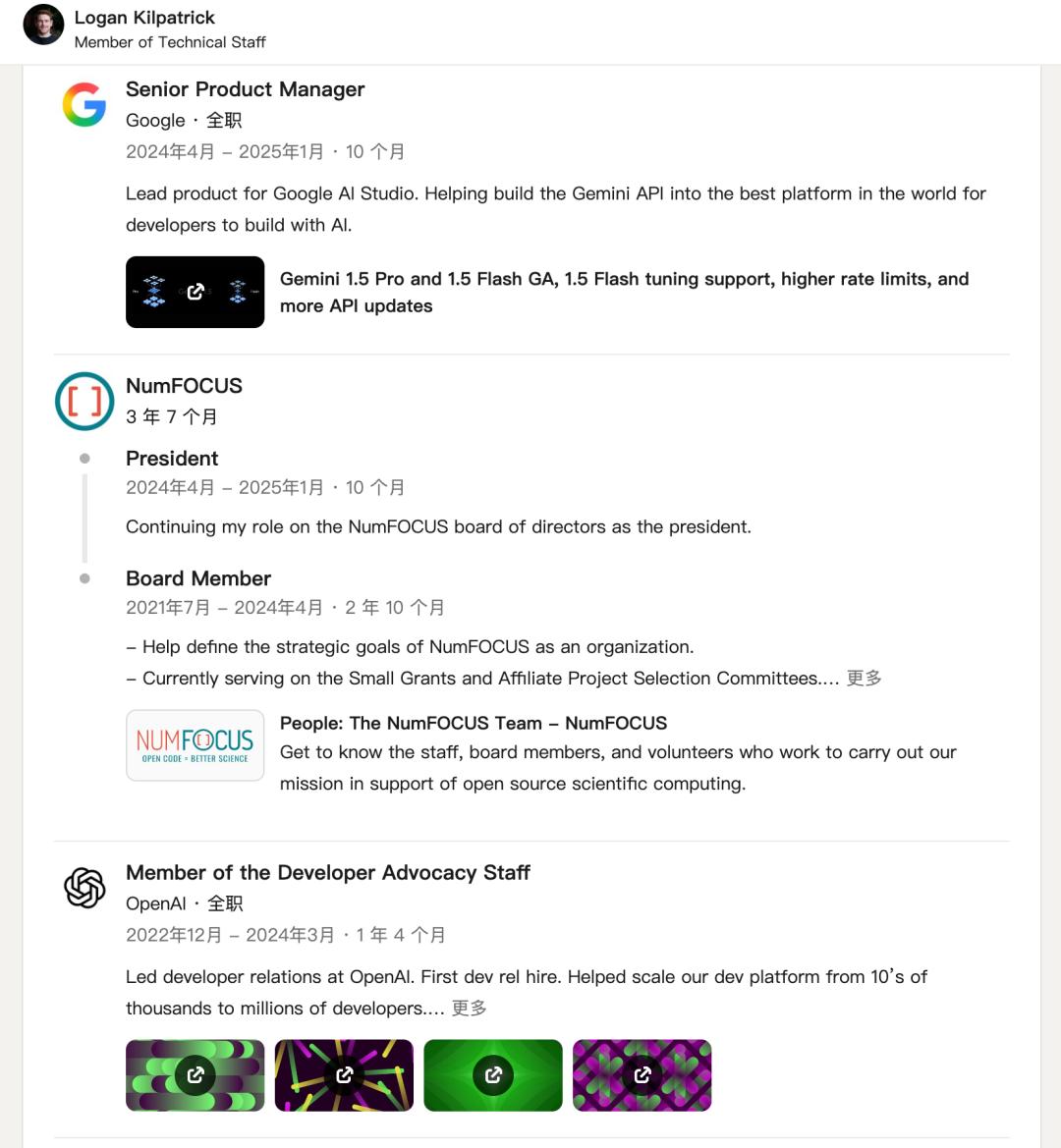
The two social media faces of the two AI giants just passed each other in the San Francisco Bay Area, and Logan is now a popular internet celebrity who posts regular updates about the Gemini model and Google AI Studio related developments.
Leading the Codex Super App at OpenAI
When he first joined OpenAI, Tibo was doing his old job, developing internal tools for researchers to help them experiment and train models faster, which was a completely marginal, back-office role.
A few months later, his perspective shifted. Models would continue to improve, but the real bottleneck was no longer 「whether the model is smart enough」, but 「how to safely deliver these capabilities to users」.
So he led a very small team, initially only about 30 to 40 people, and started working on internal experiments for Pre-Codex.
Early Codex actually consisted of two separate paths. One ran in the terminal, based on the o3 model at the time, using prepared context to help the model solve problems directly; the other was more like the later cloud-based Agent, which could gather context on its own and execute tasks in an isolated environment.
The former initially had about 50 internal users, and the latter gradually grew to hundreds of users. Later, they merged the two technical paths of 「terminal execution」 and 「cloud Agent」, and officially launched Codex Web on May 16, 2025.
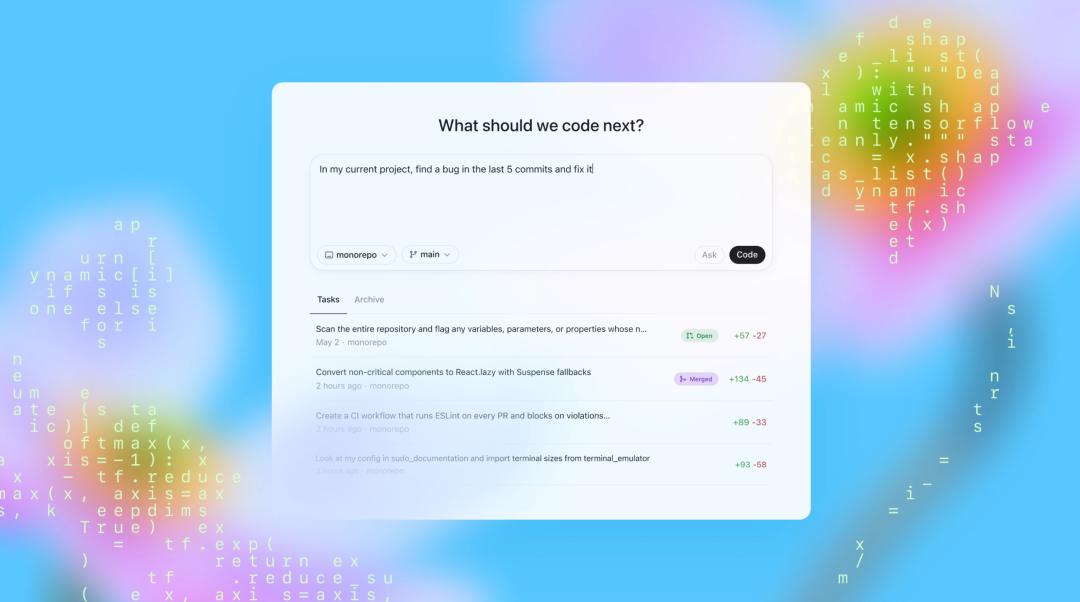
The first public version ran on the cloud, and could handle multiple tasks at the same time, from prompts all the way to code modifications and GitHub pull requests. At the time, it was very clearly a software engineering product, and you even needed to connect to GitHub to use it.
The rest of the story is well known to everyone: as the 「Lobster」 coding tools blew up, Claude Code became a hit, and all kinds of local Agent tools exploded in popularity, Codex also pivoted to become a general-purpose local Agent product.
In May 2026, OpenAI went through a major internal restructuring. Against the backdrop of a series of independent projects being shut down, like Sora, the scientist work platform being scaled back, and multiple senior executives leaving, more resources flowed to the 「super app」 that Tibo was in charge of, and Tibo's team also expanded significantly.
OpenAI decided to merge ChatGPT, Codex, and the developer API all together, and this 「core product and platform」, which forms a super entry point for a billion users, was fully handed over to Tibo for unified execution, with Greg Brockman responsible for overall product strategy.
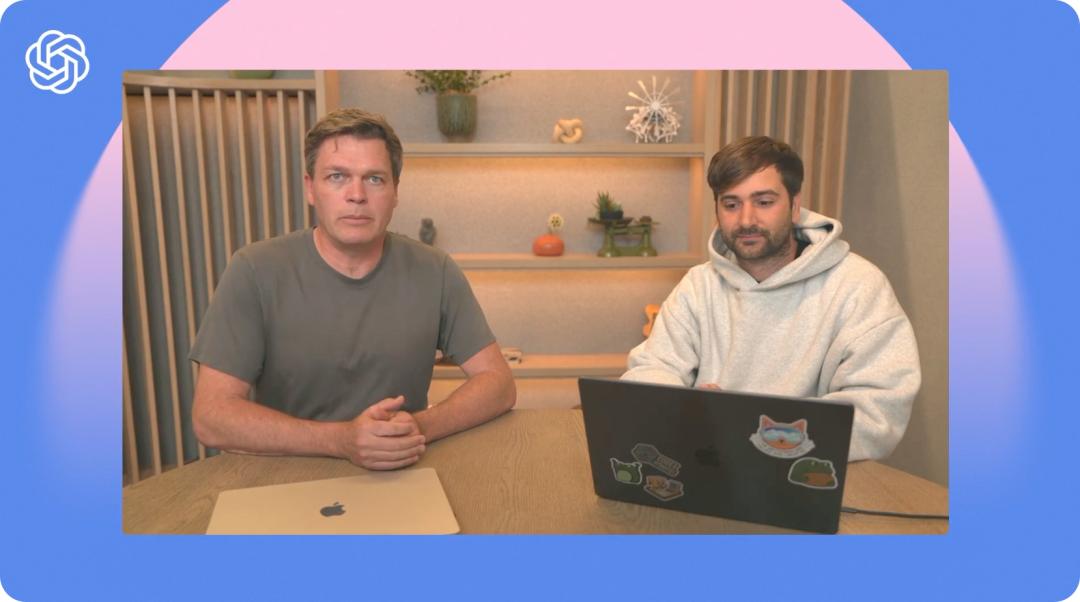
Tibo (right)
Writing a product lead off as an internet mascot sounds a bit like he's slacking off from his real job. But for Codex, this public 「slacking off」 has actually become part of the product experience.
After all, Agents with ever-growing capabilities are, in many cases, products full of uncertainty and surprises. The model, the interface, the quotas are all constantly changing, and even a task that ran perfectly yesterday might get stuck halfway through today.
<