Fuel cars have made a comeback in the top 10 once again.
In June this year, two gasoline-powered cars quietly returned to the top 10 of the sales rankings, taking the market by complete surprise. In fact, this is not a "major counterattack" of gasoline vehicles, but an increasingly fierce "shrinking-circle knockout competition". In this race, the internal fragmentation and polarization within the gasoline vehicle camp are becoming more intense than ever before.
01
In the family sedan market, gasoline cars are still clinging to survival
While everyone's attention is fixed on the surging penetration rate of the new energy vehicle market, the passenger vehicle sales ranking in June unexpectedly staged a dramatic "veteran's surprise comeback".
According to the retail sales ranking of passenger vehicles in June released by DCar, Toyota Camry ranked 9th with 17,114 units sold, and Volkswagen Lavida ranked 10th with 15,444 units, breaking the situation where no gasoline-powered cars made it into the top 10 of the sales ranking in May.
It should be noted that the exit speed of gasoline vehicles far exceeded market expectations. In January this year, there were still 7 gasoline-powered cars in the top 10 of passenger vehicle retail sales, with Geely Boyue L ranking 2nd with monthly sales of 34,000 units, second only to Xiaomi YU7; in March, the number of gasoline vehicle positions shrank to 5; in April, only Geely Bin Yue barely held onto a top-10 spot; by May, gasoline vehicles had completely disappeared from the leading rankings.
Zhang Xiang, a researcher at the Automotive Industry Innovation Research Center of North China University of Technology, told *Caijing Tianxia* that changes in subsidy policies in the first half of the year directly affected consumers' car purchase decisions. "Judging from the market performance in the first half of the year, during the policy gap at the beginning of the year, gasoline vehicles took advantage with higher cost-effectiveness; after the government introduced stimulus policies such as 'trade-in for new vehicles' in March and April, the competitive edge of new energy models re-emerged, and consumers flowed back to the new energy camp accordingly."
A closer look at the sedan market reveals that it is not surprising that Camry and Lavida have fought their way back into the top 10 of passenger vehicle retail sales. After all, one is the global benchmark for B-segment sedans, and the other is the evergreen family sedan in China. These two models ranked in the top five of the sedan sales rankings in June, with sales even exceeding popular new energy models such as the Model 3, XPeng MONA M03, BYD Qin PLUS, and Dolphin.
This shows that in the family sedan market, gasoline vehicles still have strong combat effectiveness.
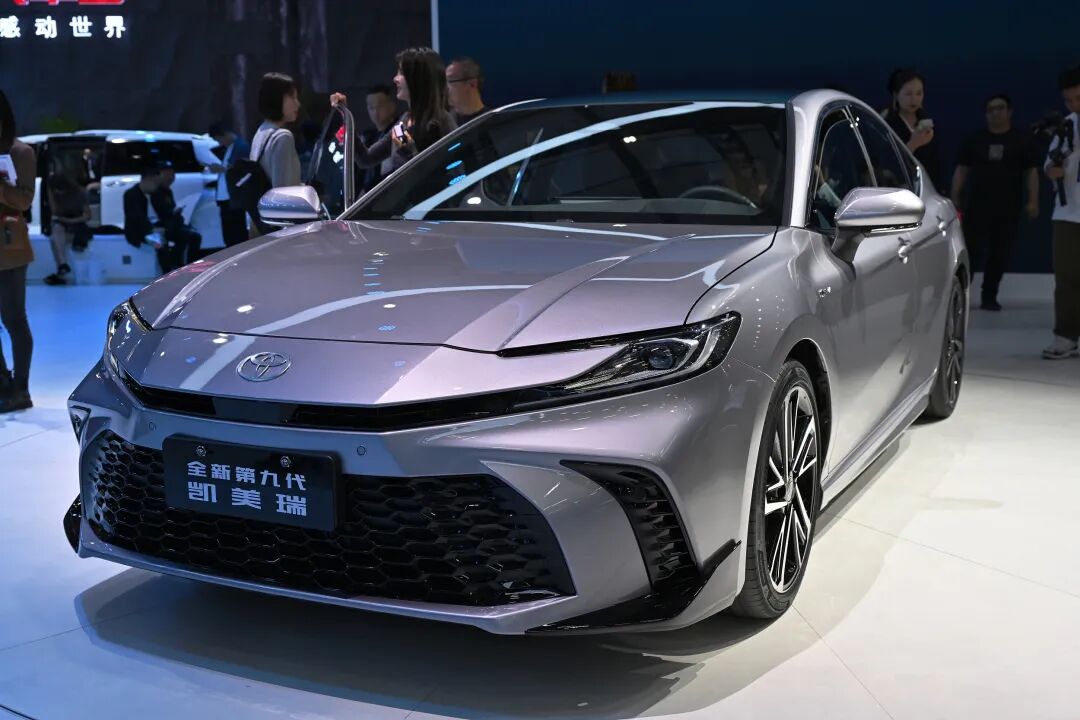
Looking back at the first half of this year, Camry has always stayed in the top three in the B-segment sedan market, firmly controlling the core market of this segment together with Passat and Magotan. As for Lavida, as the absolute main force in China's family sedan market, it won the "eight consecutive annual sales championships" from 2010 to 2017, and also claimed the championship in 2019. It was not until the wave of electrification and intelligence arrived that their positions began to be shaken by new energy models such as BYD Song family and Tesla Model 3.
Currently, the guide price of available Camry models ranges from 171,800 yuan to 259,800 yuan. For other midsize sedans, Seal 06 DM has a guide price of 96,800 yuan to 139,800 yuan, and Qin L DM is priced from 96,800 yuan to 126,800 yuan, making Camry's guide price significantly higher than the latter two.
However, judging from the actual transaction price in the terminal market, Camry's price is very attractive. Take the Camry Elite gasoline model as an example, the current guide price is 171,800 yuan. After a 43,000-yuan discount at the dealership, the bare car price is less than 130,000 yuan. Even after adding fees such as purchase tax, insurance, and license plate registration, and deducting the 3,000-yuan first-car purchase subsidy, the final take-home price is 143,000 yuan. This means that with the money that used to buy the top trims of Sylphy and Lavida, you can now drive away a B-segment sedan directly.
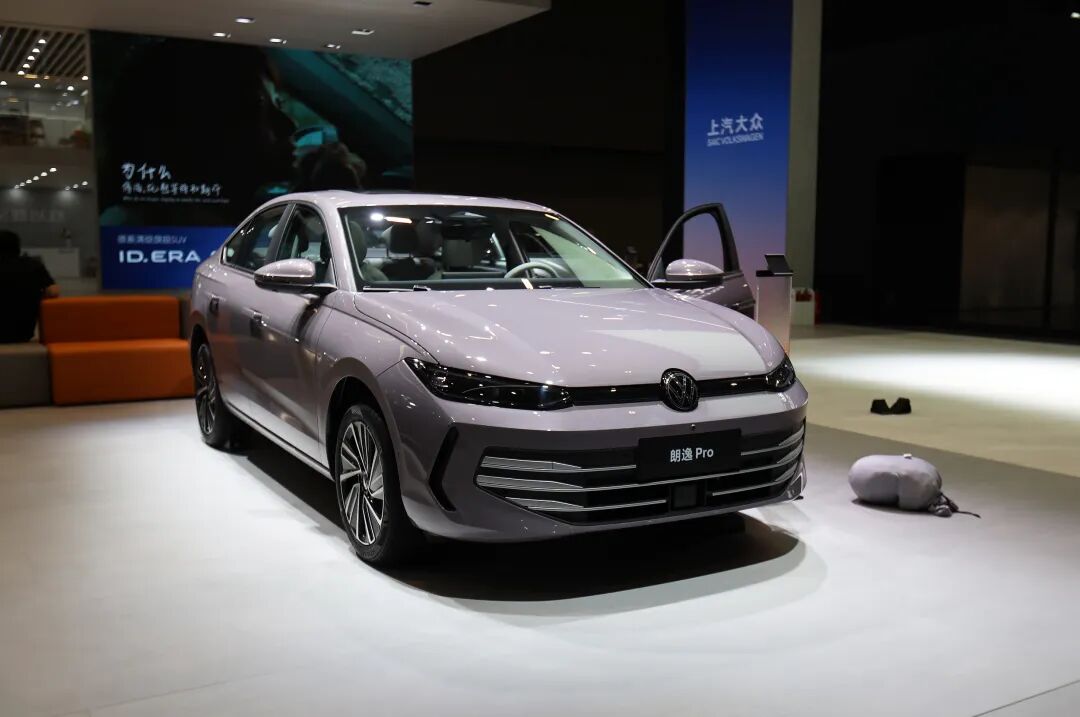
Today's Lavida is no longer a car "only bought by the elderly". Since the Pro version was launched in November 2025, as the fourth member of SAIC Volkswagen's Pro family, the guide price of currently available models ranges from 80,000 yuan to 151,900 yuan, with the actual transaction price below 80,000 yuan. Meanwhile, the same-segment model Sylphy has a guide price of 79,900 yuan to 174,900 yuan, with the actual transaction price under 60,000 yuan. The Pro version attracts young users with its larger size and intelligent configurations. According to data provided by SAIC Volkswagen, for the Lavida with a starting price of 88,800 yuan, young users under 30 years old have become the main purchasing group. As of December 2025, the proportion of female users of Lavida Pro has increased by 12% compared to the regular Lavida.
A post-200s female Lavida owner told *Caijing Tianxia* that she did not consider electric vehicles for her first car, so she spent 89,000 yuan buying the 2026 Lavida 1.5L Automatic 5 Million Edition, with relatively low overall car purchase pressure. "Although I looked at Changan Yidong, Chery Arrizo 8, and Geely Emgrand, I eventually thought Lavida's appearance was more enduring. For less than 90,000 yuan, I got a joint-venture car, and I don't have high expectations for its power—it's completely sufficient for daily commuting. Besides, with Volkswagen's proven sales and reputation, I bought peace of mind."
02
Top-selling gasoline cars thrive, while other joint-venture cars struggle
Apart from price cuts, another important reason why gasoline-powered cars have returned to the top 10 rankings is the stabilizing oil price.
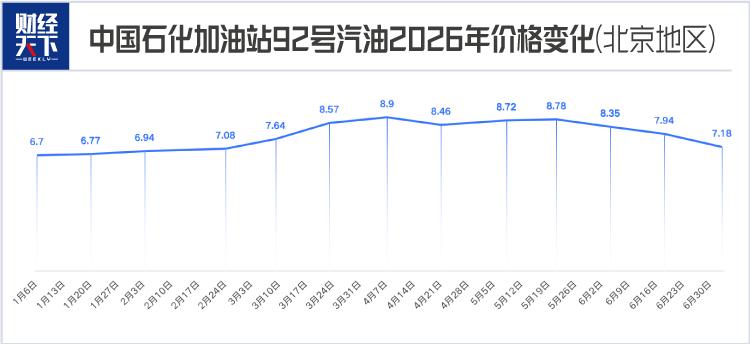
Cui Dongshu, Secretary-General of the China Passenger Car Association, told *Caijing Tianxia* that the drop in oil prices is the core factor. Domestic refined oil prices saw their third reduction of the year in June. Starting from June 19, the prices of gasoline and diesel (standard products) in China were reduced by 515 yuan and 495 yuan per ton respectively. The price of No. 92 gasoline was reduced by about 0.4 yuan per liter, with the average retail price returning to the 7-yuan range, a drop of more than 6% from the high point in the first quarter.
Cui Dongshu further pointed out that under the combined influence of falling oil prices, policy support, the emergence of new energy vehicle pain points, and the bottoming out of gasoline car prices, some gasoline car brands have seen a phased rebound. However, this cannot fundamentally reverse the overall long-term shrinking trend of gasoline vehicles. Data from the China Passenger Car Association shows that in June this year, the penetration rate of new energy vehicles reached 62.8%, exceeding 60% for three consecutive months. In the first half of the year, the average retail penetration rate of new energy vehicles was 57.4%.
Not all gasoline vehicles can replicate the counter-trend breakthrough of Lavida and Camry. In the same market environment, joint-venture gasoline vehicles are experiencing structural differentiation: top-selling gasoline cars like Camry and Lavida are thriving, while other joint-venture cars are struggling.
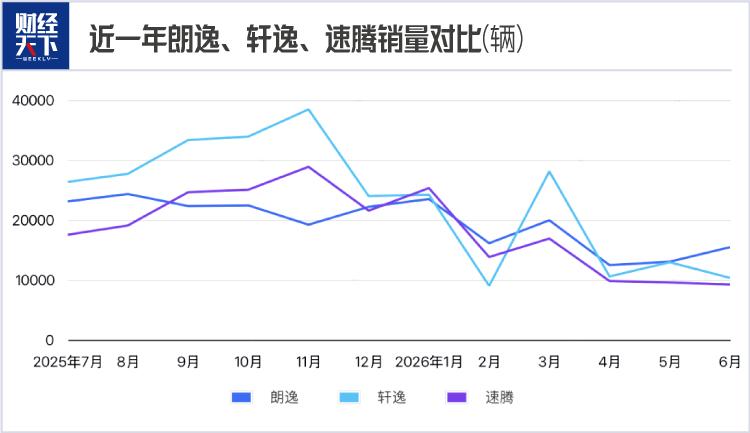
*Caijing Tianxia* sorted out sales data and found that in June this year, Nissan Sylphy's retail volume was just over 10,000 units, down about 58% year-on-year, falling out of the top 10 in the sedan market; Sagitar's sales further dropped to 9,221 units, down 54% year-on-year, leaving a gap of nearly 6,000 units from Lavida.
In the B-segment sedan market, the gap between the "Japanese trio" of Accord, Teana, and Camry has continued to widen. Their combined sales in June totaled only about 11,800 units, less than the sales of Camry alone. Industry insiders said that when Camry uses the combined strategy of "hybrid + price cut" to capture the market downward, it first eats into the market share of its two old rivals.
The lost market share of other gasoline vehicles in the same segment, apart from being replaced by new energy vehicles, has also been partially divided by a handful of top-selling models such as Camry and Lavida.
In the first half of 2026, in the gasoline sedan sales rankings, only Lavida exceeded 100,000 units in cumulative sales, while Sylphy and Camry both recorded cumulative sales of over 85,000 units. Sagitar and Passat still stayed in the leading positions of the rankings. Meanwhile, once-popular models such as Corolla, Xingrui, Emgrand, and Accord have gradually fallen behind, overtaken and replaced by leading joint-venture products.
A Camry salesperson said that Camry has always been the top seller in the dealership, contributing nearly half of the monthly performance, with personal monthly sales steadily at 7 to 8 units. Looking at the user structure, many are replacement users, such as long-time Toyota Levin owners, and owners of 12-year-old Volkswagen and other joint-venture brand cars. It has even attracted some family users who already own a pure electric SUV and want to add a traditional sedan to balance their travel needs.
The biggest reason why Camry and Lavida were able to return to the rankings against the trend is that today, when the penetration rate of new energy vehicles exceeds 62%, joint-venture automakers are working hard to get rid of the "backward in intelligence" label.
For example, the Lavida Pro has stretched its body length to 4720mm, nearly 160mm longer than the previous Lavida's 4561mm body. Entering the A+ segment sedan size range, it competes head-on with models such as Sagitar, Geely Xingrui, and XPeng MONA M03. In terms of configuration, Lavida Pro adopted four-wheel independent suspension for the first time in the Lavida family, a configuration that previously only appeared in higher-priced models such as Sagitar and Civic, becoming a major selling point of its "increased configuration with reduced price". In terms of intelligence, Lavida Pro has also kept pace with new car-making forces, equipped with the Qualcomm Snapdragon 8155 chip and AI large model.
Camry has another trump card of "fuel efficiency" — the THS intelligent hybrid dual-engine system. Among the 17 versions of the 2026 Camry currently on sale, 13 are gasoline-electric hybrid models. A Camry owner told *Caijing Tianxia* that the main consideration for buying the car is "buying expectations and seeking peace of mind", as it can maintain a low long-term failure rate even after 5 or even 10 years. In particular, its dual-engine system, with the design of "planetary gear set + power split", replaces the gearbox that is most prone to damage in gasoline cars, and this design has withstood 30 years of testing, making it reliable.
In terms of intelligence, the new 2026 Camry is also equipped with the Qualcomm Snapdragon 8155 chip and TSS 3.0 PRO intelligent driving system. Although there is still a gap compared to new car-making forces, it is at least "sufficient and not a drag".
03
Gasoline vehicles are shrinking faster, yet automotive giants still won't give up
"From January to May this year, a total of 542 new cars were launched in the Chinese market, an average of 3.6 per day. A new car requires an investment of over 1 billion yuan and a development cycle of more than two years, but the market popularity usually lasts no more than three months. With so many new cars, the overall domestic market has still declined by 20%. This competition is not just fierce, but brutal." On July 14, He Zhiqi, Executive Vice President of BYD Co., Ltd., said these words on social media.
Among these numerous new cars, there are very few new gasoline-powered models. *Caijing Tianxia* observed that among the new cars launched in the first half of 2026, SAIC Roewe i5, Chery Arrizo 8, Nissan Sylphy, Honda Fit, the new Audi Q5L, and Volkswagen Talagon are all facelift models.
Cui Dongshu believes that in the future, gasoline vehicles will form a niche development pattern of "high-end premium + tool specialization". On the one hand, luxury performance and hardcore off-road models priced above 300,000 yuan will retain their market relying on mechanical texture and emotional appeal; on the other hand, commuter, commercial, and remote-area vehicles priced below 150,000 yuan will give full play to their advantages in energy replenishment and environmental adaptability, "mid-range family gasoline vehicles will be basically completely replaced by new energy models".
Mainstream automakers still have not given up on gasoline vehicles.
Yang Dayong, Executive Vice President of Changan Automobile, predicted that in the future, pure electric (EV) and gasoline-electric hybrid (HEV) will become the two mainstream routes, with market share expected to be 65% and 35% respectively. He believes that the "new gasoline" models represented by HEV can still firmly hold a basic market of about 35%.
Gan Jiayue, CEO of Geely Automobile Group, once emphasized the irreplaceable practical value of gasoline vehicles at the 2025 mid-term performance communication meeting. He made it clear that Geely will not and cannot give up gasoline vehicles. The profit from gasoline vehicles determines how much money Geely can invest in new energy.
Many joint-venture automakers still highly rely on gasoline vehicles for survival. SAIC Volkswagen's nearly 360,000 sales are mainly supported by veteran gasoline models such as Lavida, Passat, Tiguan L, and Tharu; GAC Toyota's sales of over 340,000 units are sustained by gasoline models including Camry, Sienna, Frontlander, and Wildlander.
While consolidating the basic gasoline vehicle market, joint-venture automakers are accelerating their embrace of new energy with a more pragmatic attitude. On the basis of launching plug-in hybrid models such as Passat ePro and Tiguan L ePro, SAIC Volkswagen has further expanded its new energy product lineup. Its extended-range large 6-seater SUV ID.ERA 9X has been officially launched, and the plug-in hybrid sedan ID.ERA 5S is also expected to debut in the third quarter of this year.
GAC Toyota is also making efforts on both tracks. The compact pure electric SUV bZ3X, with high cost-effectiveness, sold over 40,000 units in the first half of the year, becoming an