Upstream orders are off the charts, and downstream players are sparing no expense. "Big Short" Chanos: Why the AI math doesn't add up
In this current AI infrastructure boom, capital is pouring into a track with unproven economic logic at a scale and speed rarely seen in history, while the market has chosen to price for "promises" rather than "realities".
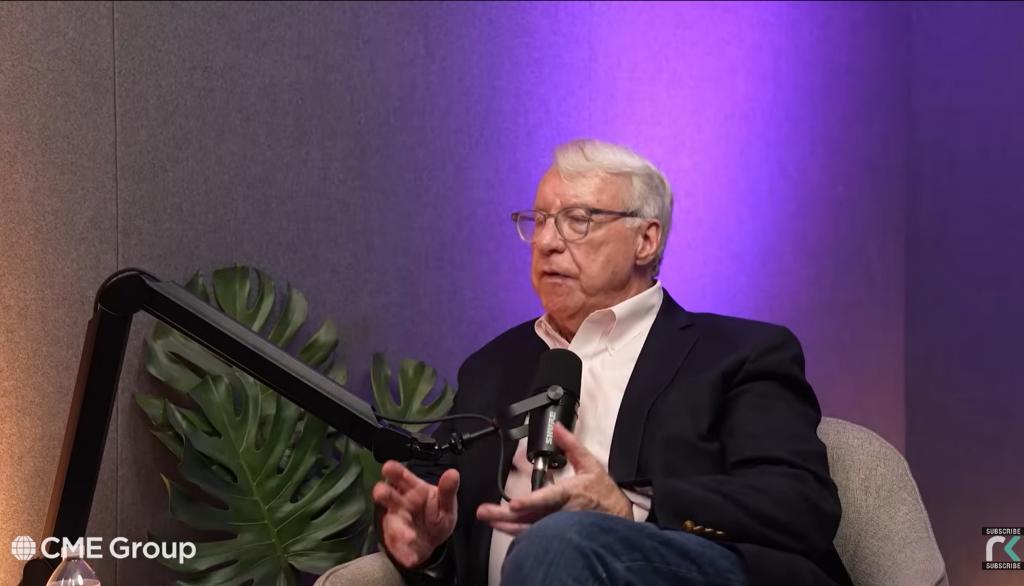
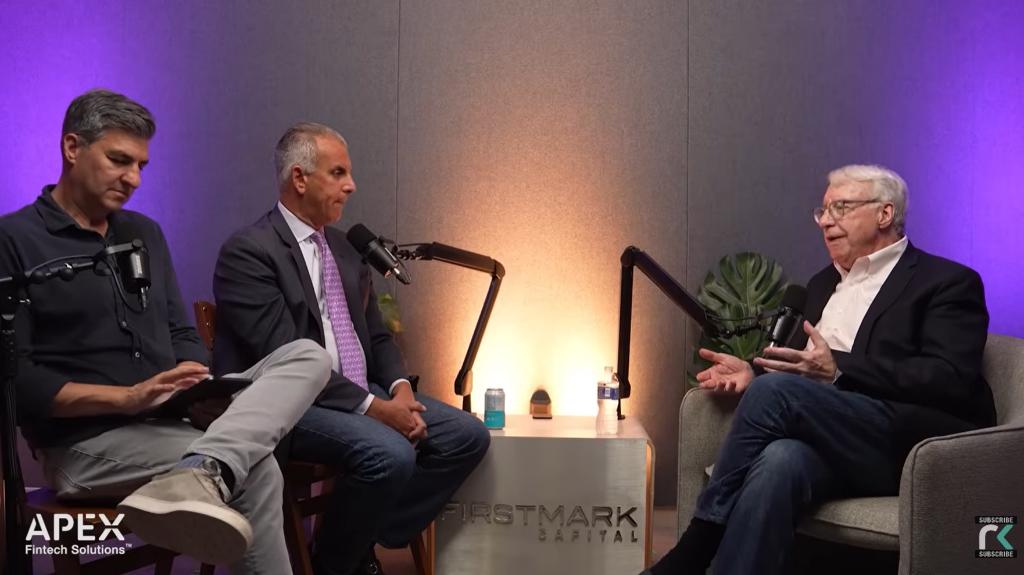
Recently, the well-known Wall Street short seller and founder of Chanos & Co., Jim Chanos, issued a warning on the Risk Reversal podcast: The current scale of AI infrastructure investment far exceeds that of the dot-com bubble era. Hundreds of billions of dollars in capital expenditures are built on short-term spot pricing, yet are being used to make 20-year asset investment decisions; a large amount of equipment is piling up in warehouses and has not yet been put into use, with depreciation recognition delayed through accounting manipulation; upstream chip suppliers are overwhelmed with orders, while downstream buyers are sparing no effort to lock in computing power at all costs — but fundamentally, the math does not add up. Chanos stated that this is one of the most extreme long-short divergence moments he has seen in his career.
This judgment directly affects the pricing logic of the capital market. Chanos believes that the return on incremental invested capital (ROIC) of hyperscale cloud vendors has dropped from 40% about 18 months ago to around 20% currently. If the spending pace continues, this figure could further decline to 10%. At that point, the management of these tech giants will face a real test of capital allocation — and once they hit the brakes, the entire Neocloud (emerging cloud computing) ecosystem that relies on their orders will face a chain reaction of shocks.
01
Structural Problems More Dangerous Than the Dot-Com Bubble
Chanos directly compares this current AI infrastructure boom to the internet infrastructure bubble of the late 1990s, but his conclusion is: This time the situation is worse.
The data he cites is quite intuitive: Between 1998 and 2002, the two most typical "cash-burning" industries in the dot-com bubble — Competitive Local Exchange Carriers (CLECs) and fiber-optic cable deployment — spent a total of about $1 trillion over five years, roughly $20 billion per year. Yet in this current AI cycle, the annual data center and AI infrastructure spending of a single company has far exceeded the combined total of these two industries over five years.
More critically, the nature of the funding sources differs. Chanos points out that during the dot-com bubble, the corporate customers who actually paid the bills — whether Bank of America, General Electric, or Coca-Cola — remained profitable throughout the entire cycle; they simply "cut their orders". In this current cycle, hyperscale cloud vendors are the only entities that are truly profitable and bearing the expenditures, while nearly all other participants in the ecosystem rely on venture capital or highly leveraged financing to sustain their operations.
He also draws an analogy between this investment boom and the asset-liability mismatch before the 2008 financial crisis: Back then, institutions used short-term funds from the repo market to finance long-term derivative books, and the maturity mismatch eventually triggered a systemic crisis. "It's basically a 'Finance 101' level mistake," Chanos says. "People are committing to long-term capital projects based on short-term spot pricing."
02
The Real Depreciation Pressure Hidden by Accounting Tactics
Chanos specifically highlights an accounting issue that has been widely overlooked by the market: A large number of GPUs and data center equipment that have been purchased but not yet put into use are currently recorded under the "Construction in Progress" account on the balance sheet, with depreciation recognition not yet started.
"This means these assets are undergoing both economic and technological depreciation, yet none of this is reflected in the income statement," he says. Calculating based on an approximate 18-month time lag between GPU procurement and official deployment, even if the nominal depreciation period is set at five to six years, the actual amortization cycle is stretched to six and a half to seven and a half years.
Chanos states that Chanos & Co. uses a 10-year depreciation period in their own models, "Even then, we still can't make the economics work for most data centers." He also notes that this accounting treatment creates a macro-level distortion: The S&P 500's earnings growth expectation for this year is as high as 28%, and around 20% next year, far exceeding the long-term historical trend of about 6% per year — "One of the reasons is that one party's huge capital expenditure is recognized as revenue on the other party's income statement, while the spending party itself capitalizes the expenditure instead of recording it as a current expense."
03
Neocloud's "Asset-light Transformation" Is a Self-Contradictory U-Turn
This current AI infrastructure boom has spawned a group of emerging cloud computing companies (Neocloud) operating under an asset-heavy model, but recent market movements are undermining this narrative.
Chanos specifically names Nebius in the interview. The company recently announced a transformation to an "asset-light" business model — no longer owning data centers and GPUs, but instead reinventing itself as a "computing power management service provider" similar to a hotel franchisor, leaving capital expenditures to third parties while collecting management fees. Chanos's assessment of this is a "pretty significant self-contradictory U-turn":
"Over the past two years, these Neocloud companies have been telling us that asset-heavy operations are the core competitiveness, the 'money-printing machine', and now one of their biggest players comes out and says 'Forget it, we don't need to own these assets anymore'."
He also offers a deeper explanation: Whether traditional data center companies or emerging Neocloud players, they are all beginning to realize that due to labor shortages and equipment shortages, the cost of new construction projects is rising sharply, and future maintenance capital expenditures will far exceed the figures previously described to investors. "So they are now rushing to offload their assets as quickly as possible."
He also points out that several deals surrounding the rental of computing power from SpaceX's XAI data center — including agreements with Anthropic and Google for roughly $1 billion each — come with extremely short exit clauses that allow withdrawal as quickly as three months. "I think these deals have a very strong promotional flavor."
04
Interest Rates Are the Real "Time Bomb"
In Chanos's analytical framework, interest rate risk is the most underrated systemic threat in the entire AI infrastructure bubble.
He points out that currently a large number of assets — whether office buildings, data centers, or warehouse facilities — are transacting at capitalization rates (cap rates) of 5% to 7%, while the 10-year U.S. Treasury yield is around 4.5%. With such a narrow spread, project sponsors are piling on leverage and using aggressive mezzanine financing to promise equity investors 15% returns:
"Once interest rates rise to 6% or 7%, all of this will collapse, triggering a chain explosion across various asset classes one after another."
He believes the credit market currently shows no signs of concern, but this state could change abruptly when interest rates clearly approach 5% — the widening of credit spreads will be the key warning signal. He also notes that spreads on the lowest-rated CCC junk bonds have started to widen, but the BBB to BB range has not yet followed suit.
Chanos also pours cold water on the so-called "power bottleneck" narrative. He states that electricity costs for data centers account for only about 5% to 6% of revenue, the smallest proportion among all cost items, "Our country absolutely does not have a shortage of electricity." He expects that the premium logic for related assets built around the scarcity of power is not solid.
05
When Returns Fall Below the "Treasury Line", Hyperscale Cloud Vendors Will Face a Reckoning
Chanos's core judgment is that the capital efficiency of hyperscale cloud vendors is systematically declining, which will trigger a real strategic shift within the next 12 to 18 months.
According to his calculations, as a group, Google, Meta, Amazon, Microsoft, and Oracle have seen their incremental return on invested capital (incremental ROIC) drop from 40% about a year and a half ago to roughly 20% currently. If the pace of capital expenditure continues, this figure could fall further to 10%.
"At that point, the management of these companies will face a real question: Should we continue spending money like this, or would it be more worthwhile to just buy Treasury bonds?" Chanos says. He expects this reckoning to become unavoidable between the end of 2026 and 2027.
He uses Oracle as an example: The company's incremental ROIC related to AI infrastructure ranks at the bottom among its peers, and its stock price has fallen by a cumulative 65% to 70% from its highs.
"CEOs who are truly performing their duties conscientiously must be looking at Oracle and telling themselves: We cannot let that happen to us."
Chanos concludes with a sentence that sums up the current market's pricing logic and potential turning point:
"In a bull market, people are willing to pay a premium for 'promises'; in a bear market, they are only willing to discount for 'realities'. We are clearly in the former right now. Will we end up in the latter? I don't know."
This article is from the WeChat public account "Wall Street CN Max", written by Zhang Yaqi, and republished with authorization from 36Kr.