Starting a company at 7? Filming a movie at 9? Post-90s parents are nurturing "AI child prodigies"
Recently, the "war" between humans and AI has shifted from brutal to utterly bizarre.
Yet even on this bizarre track, "kid AI" is leaving everyone far behind, and I'd call it the unnameable anomaly in the AI industry.
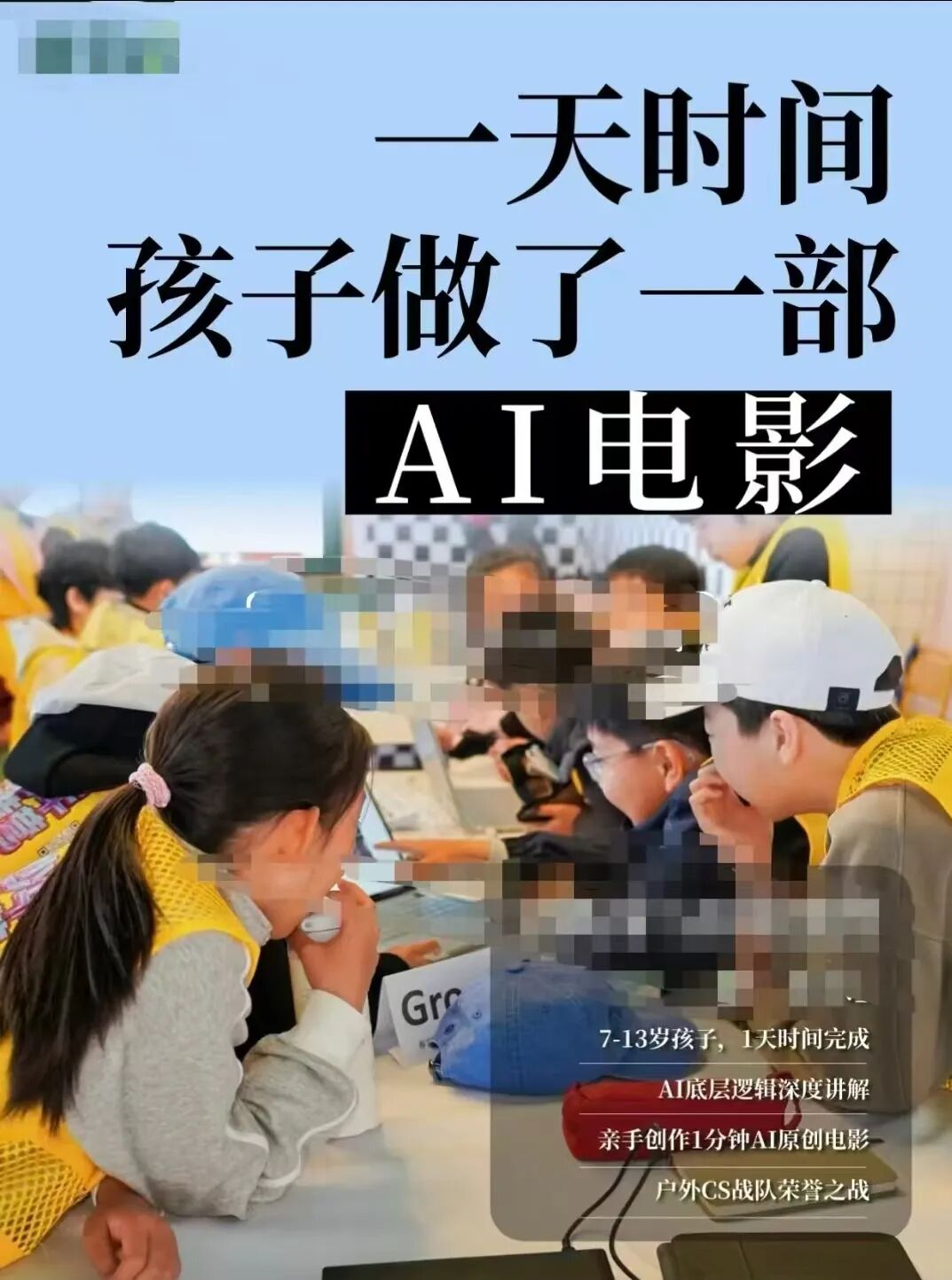
Especially with the summer vacation arriving, the whole world is flooding social media with tiny ads for AI study programs. Just yesterday, I saw an ad for an AI study camp on Xiaohongshu: "Kids aged 7-13, make an AI movie in one day." I sent it to my friend who works on AI animation series, and after one glance, she cried under the covers for three days and nights, so desperate to step down and hand over her position that she almost moved back to her hometown to farm.
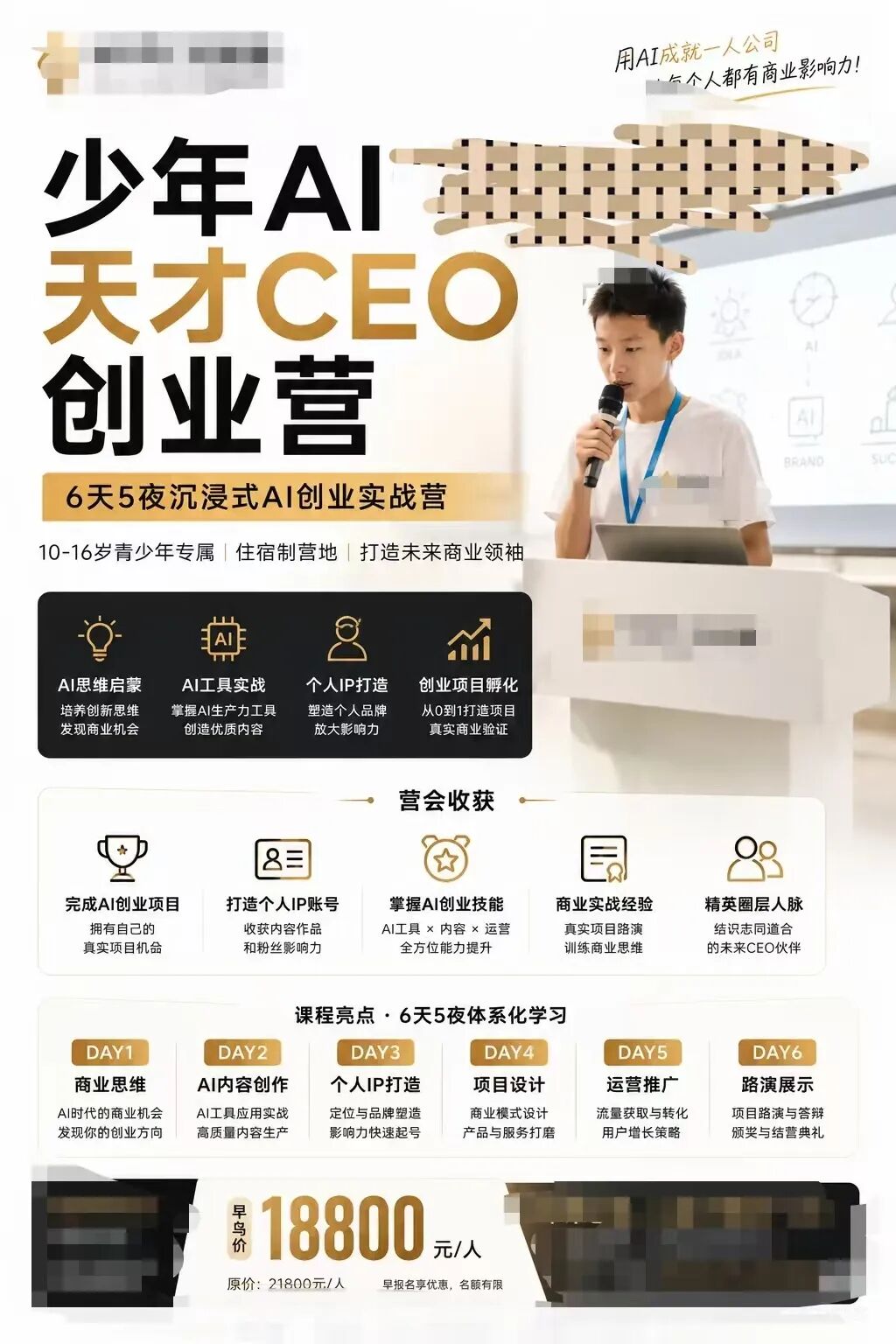
There's even more outrageous stuff: "10-year-old kids launch an AI company in 6 days, incubate a startup project from 0 to 1." Hardworking small business owners who toil over business plans might slowly type a single "?" on their screens in utter confusion.
Meanwhile, parents just stare quietly at the posters, as if something has tugged at their hearts:
"30% comes from hard work, 70% is destined by fate. This might be the only chance my kid ever gets in their life. It's just 18,800 yuan, right? Spend it, I must spend it!"
From this perspective, AI is just like the rare heavenly treasures and top-tier spirit stones in cultivation novels: the young outer-sect disciple grabs it, and immediately can challenge the sect's grand elder across levels, reach the peak of life directly, become a genius child prodigy, and even make their whole family rise to success with them, becoming the "Generation 0 Rich" at a very young age.
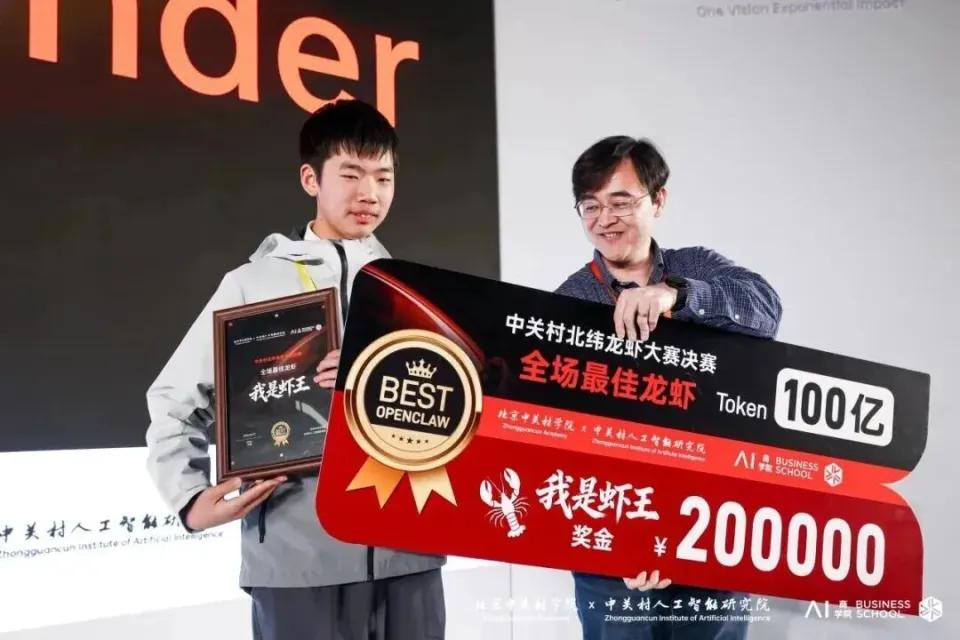
Plenty of people must be saying, "Isn't this just the fancy sales pitch of AI study programs to empty everyone's wallets?" But the Latitude AI Lobster Competition held in Zhongguancun, Beijing this March, delivered a resounding slap in the face to all the doubters:
Jiang Muran, a 14-year-old 8th grader, won the championship with his AI startup pipeline project ClawFounder, and was awarded the title of "Zhongguancun Lobster King". Along with the title, he also received 100 billion tokens and a 200,000 yuan cash prize.
The new "other people's kid" has already been born, how could we dare to lag behind (just kidding)
01
Has your kid started their AI business yet?
Study programs happen every year, but this summer vacation there are way more than usual — especially AI study programs. If you don't put the letters "AI" in your ad, you'd be embarrassed to promote it to anyone.
In the study classrooms, little kids sit upright in front of computers in meeting rooms, having serious, confusing conversations with AI. At first glance, I thought I'd traveled through time into a novel world — specifically Liu Cixin's *Supernova Era*.
That book tells the story where everyone on Earth over 13 is forced offline by some alien force, leaving only a group of children to show up to work diligently every day and try to rebuild human civilization.
Putting it this way, it feels both eerily accurate and wildly inappropriate.
Are all the adults gone, so kids have to carry the flag of entrepreneurship now?

If you take a close look at these wildly popular AI study programs this year, you'll find they're very different from the AI programs of past years.
Back in 2022, when GPT exploded in popularity, many training institutions quickly followed the trend and launched AI learning camps for kids. But back then, the focus was still on visiting labs, testing new equipment, and listening to lectures from famous experts, with the very down-to-earth goal of "cultivating AI thinking". We can treat that as a spinoff of the classic programming training camps, mainly meant to spark kids' curiosity.
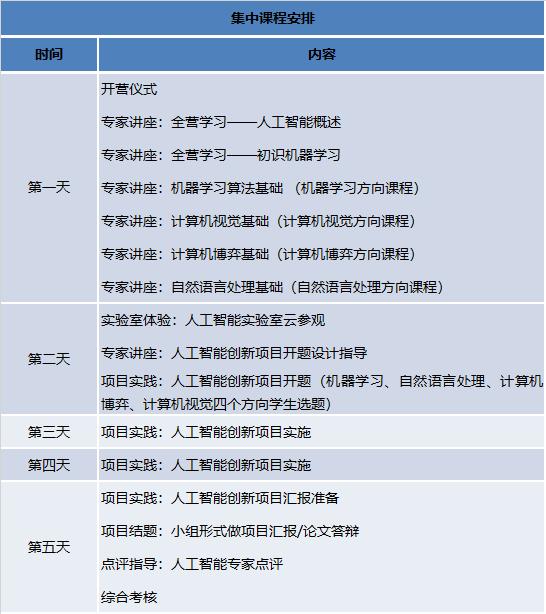
But this year, the vibe of AI study programs has completely changed. The core slogan is two words — hands-on practice, hands-on practice, and still hands-on practice!
Some programs are business-focused: kids become a company CEO in 6 days, build an Agent product in 10 days, and even have to go on stage for a roadshow. Let me just ask: do kids even know what the word "roadshow" means? And "explaining the business model canvas"? In the end, kids learn nothing useful, but pick up a whole mouthful of internet corporate jargon.
A perfectly good AI study program has been turned into pre-job training for big tech companies — what a mess.
Other programs are just software-focused: the teacher opens the Doubao page, and directly teaches kids how to generate copywriting and videos, and make a few stiff-looking little images to post on Douyin. Kids spend 1 minute generating content, and 2 hours playing on the phone. This trick just gives kids a perfect excuse to sneakily play with their parents' phones.
After doing this kind of "hands-on practice" too much, kids start talking exactly like Doubao — sometimes I even have to check their body temperature to make sure this is still the carbon-based life form I gave birth to (just kidding).
There's even more bizarre stuff. Parents take their kids home after the AI class, and are surprised to find their grades have improved a lot, their homework gets done super fast, with every page marked "excellent". Months later, the parents finally catch them red-handed:
Damn that AI, why did it teach my kid to copy homework?!
This is the legendary "pull the rug out from under you" move: to avoid the scenario where your kid works hard through college only to get their job stolen by AI, they skip the hard work entirely and get a low-effort education now. No future career, no future pain, right?
The parents angrily question the AI study teacher, but the teacher is also very aggrieved: "Didn't you say you wanted us to teach your kid to use AI? If the kid figured out how to copy homework on their own, what can I do? Dare you say you never use AI to copy documents at work? Isn't your kid learning workplace skills a full ten years early?"
It's only at this point that parents realize that being an "AI native" or "cultivating workplace thinking" is all empty talk. Without a solid basic education, everything else is just a castle in the air — that's the real truth.
We belong to the generation that honestly went through basic education, and built a solid, if not perfect, foundation for ourselves.
But these kids today haven't even finished their compulsory education, and they're already being hurriedly indoctrinated with ideas like "AI is the future" and "make good use of AI tools". How could their mindset not get warped? If I were them, I'd also think: Why bother studying at all? Drop out right now to do AI startups, make a few Agents to cash in, isn't that way more fun?
Only people who've been beaten down by the real world know how naive that kind of thinking is.
As for the simpler text generation and image generation functions, the saying "if you learn slowly enough, you'll never need to learn it" applies even more to kids. A 12-year-old learning to use Doubao to make PPTs now — by the time they enter the workplace and actually need AI to handle work, more than a decade will have passed, and the technology will have updated more than ten versions. Even if you want them to start working at 14, learning these skills at 13 and a half is still plenty early.

No wonder Ke Jie, the man who personally kicked off the history of human defeat by AI, said bluntly on a live stream: "Making kids learn AI is nothing but a money grab scam, isn't it?"
But rather than simply criticizing parents for falling for this scam, we're more curious: what made these highly intelligent parents walk right into this trap?
As we all know, a mouse steps on a mousetrap because there's cheese on it. These parents aren't exactly mediocre people — they're outstanding talents in their own right. Why would they willingly jump into this mysterious AI study program trap? What's the real temptation hidden inside?
The answer probably lies with this generation of parents themselves.
02
What's it like fighting with AI for a job?
This generation of parents built their careers and settled down during the rapid expansion of the internet, and now they're riding the waves of the AI boom.
Foreign companies are even more blunt about AI-related layoffs. In the latest job cuts report from Challenger, Gray & Christmas, in April 2026, major companies announced a total of 83,387 layoffs, of which 21,490 positions were cut because of AI — nearly a quarter of the total.

Domestic companies are more secretive about this, but everyone knows exactly how many people who got layoff notices were replaced by AI, and how many more will be turned into AI "skill modules".
Two months ago, the Hangzhou Intermediate People's Court released a very ridiculous case: Mr. Zhou, an AI quality inspection supervisor at a fintech company in Hangzhou, was demoted and reassigned by the company on the grounds that "AI can do your job". After review, the Hangzhou Intermediate Court ruled that this was just an excuse for illegal layoffs, and all claims of "incompetence" were complete nonsense.
That so-called "organizational restructuring" is just a lie they tell themselves.
For most ordinary workers, it would be bad enough if AI just replaced one person after another in a predictable way. But in reality, AI can do a little bit of everything, and can mess up at any time, forcing real employees to clean up after it. As long as AI does one thing slightly well, everyone has to face the anxiety and pressure of being compared to it.
It's not so much that AI has completed a huge amount of work — more like that catfish in the fish tank of the company, creating a whole "atmosphere of anxiety".
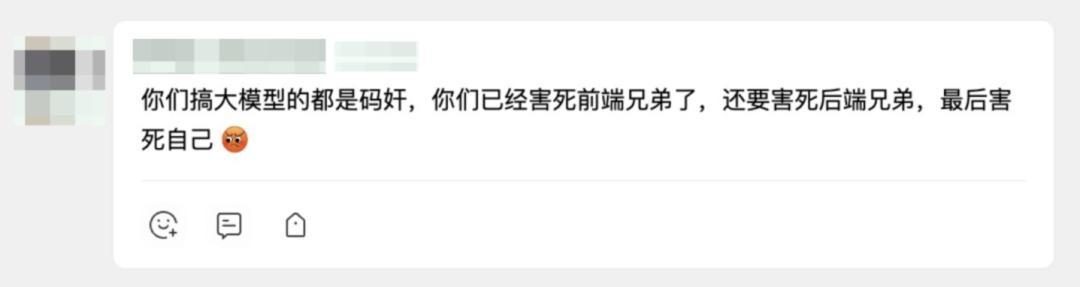
Everyone is scrambling to learn new agents, racking their brains to inflate their token usage, and increasing the proportion of AI use in their work, for fear that their leaders will think they're not embracing AI. People only dare to vent their anger under full anonymity, calling the small group of programmers obsessed with AI large models "traitors to the coding community".
When all employees' work decisions are driven not by efficiency, but by fear, it's hard to imagine the company's business making any real progress.
And this fear is passed down from parents to their children through the family. Prioritizing practical application and flashy demonstration in learning is typical workplace thinking. If we look back at those AI study programs, that eagerness to skip solid basic knowledge and show off immediately is exactly the same mindset.
In the old days, kids were pushed to sing and dance in front of relatives. Now, kids compete to be the first to develop an AI Agent to post in the family group. The pain of East Asian families still has the same old