Raised 1 billion yuan, a new 10-billion-yuan unicorn is born
A major funding round has landed in the embodied intelligence track.
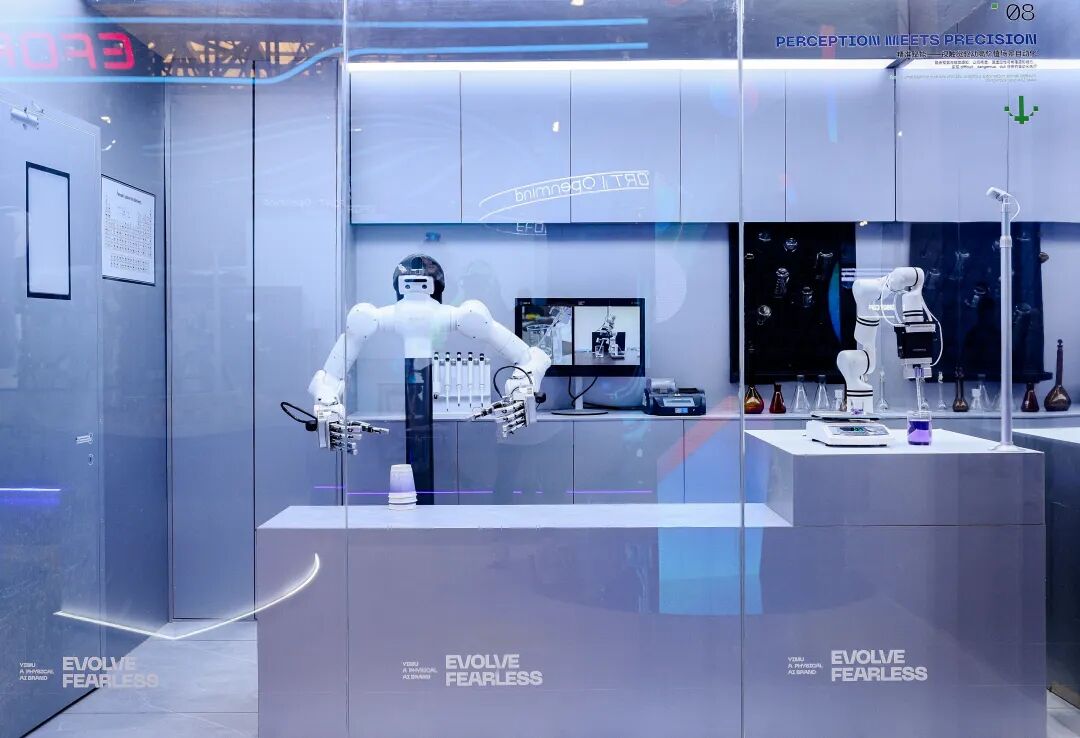
Recently, OneSight Technology announced the completion of over RMB 1 billion in Series E financing, with a post-money valuation exceeding RMB 10 billion, making it a member of the "RMB 10 Billion Valuation Club" for embodied intelligence. Multiple industrial stakeholders, top-tier RMB funds and global USD institutions have jointly backed the company. The proceeds will be used for large-scale mass production and delivery of production line orders, as well as continuous iteration of underlying technologies such as materials, chips, algorithms and data.
As soon as the news broke, almost everyone wanted to ask the same question: What makes this company worth RMB 10 billion? The answer may lie in the key bottleneck restricting robots' dexterous operation capabilities.
A harsh reality is that today's humanoid robots can run, jump, punch and dance, delivering full emotional value, but they immediately show their limitations when it comes to fine manipulation. Take buttoning a shirt as an example: this action, which is trivial for humans, is a huge challenge for robots. The sliding of buttons and the texture of fabrics can hardly be judged solely by vision. What is missing behind this is precisely the most core human perception ability: tactile sensation.
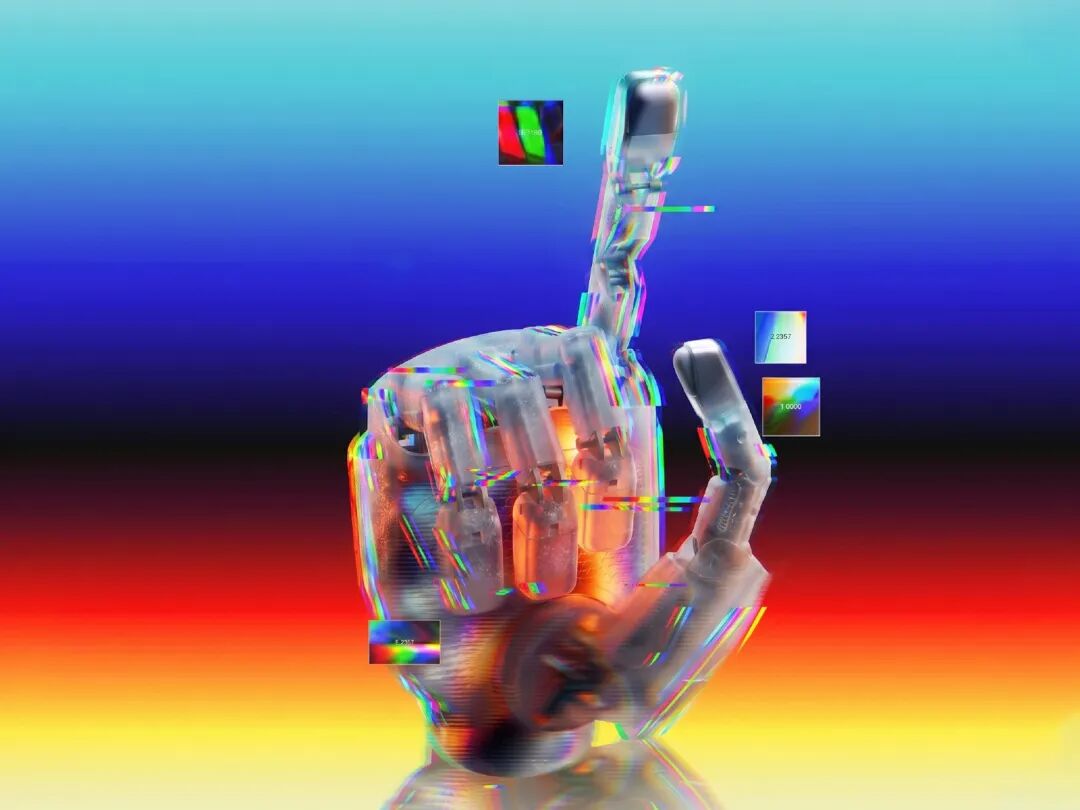
It is the amplification of this pain point that has pushed tactile sensors to the forefront of capital attention. From the start to the middle of the year, we can observe the evolution of keywords in funding news: in the first half of the year, everyone was talking about "large models", then it shifted to "humanoid robots", and in the second half of the year, "tactile sensation" and "perception" began to appear frequently.
Looking at the overall market size: the domestic market for dedicated tactile sensors for humanoid robots is expected to exceed USD 320 million in 2026, with a year-on-year growth rate of over 160%, making it the fastest-growing segment among all components. Globally, the market size surpassed USD 150 billion in 2024 and is projected to exceed USD 350 billion by 2031.
In this rapidly expanding market, OneSight Technology is more like a relatively "low-key" hidden gem company, focusing solidly on basic scientific research. It is very much like a "shovel seller" during the gold rush, dedicated to crafting the most suitable "shovel" — one that targets the scarcest tactile perception capability in the era of Physical AI.
Endowing Robots with Human "Five Senses"
90% of Core Tactile Indicators Reach Human-Level Performance
The story of OneSight Technology began with a technical vision of LI Zhiqiang, founder and CEO: to endow machines with the human "five senses".
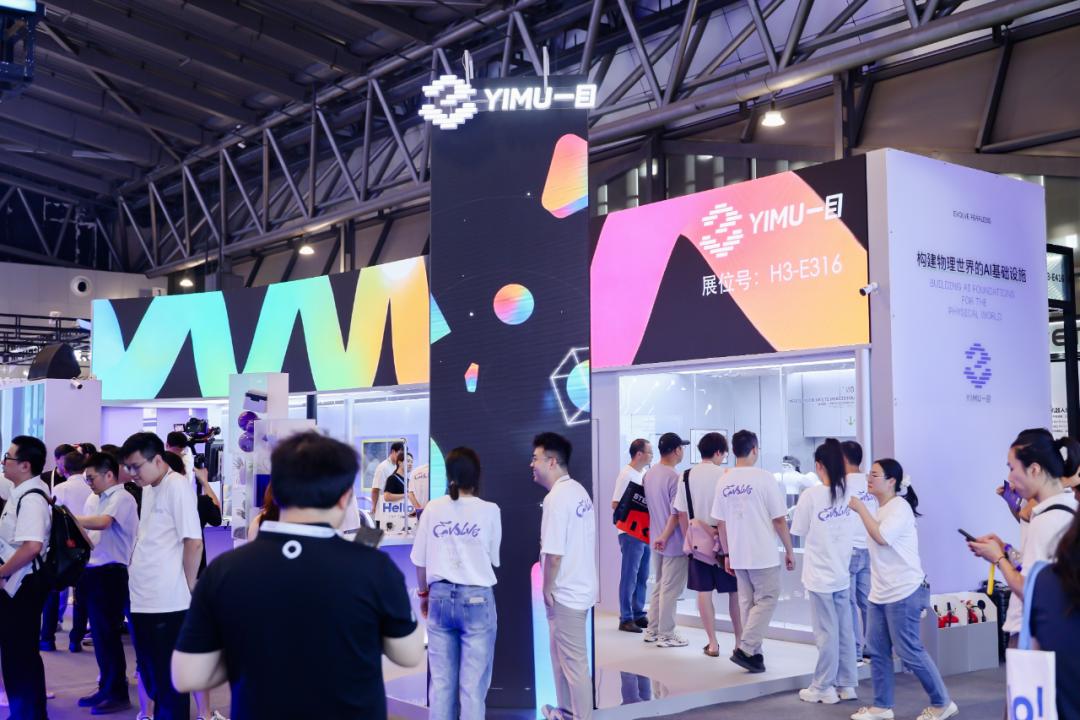
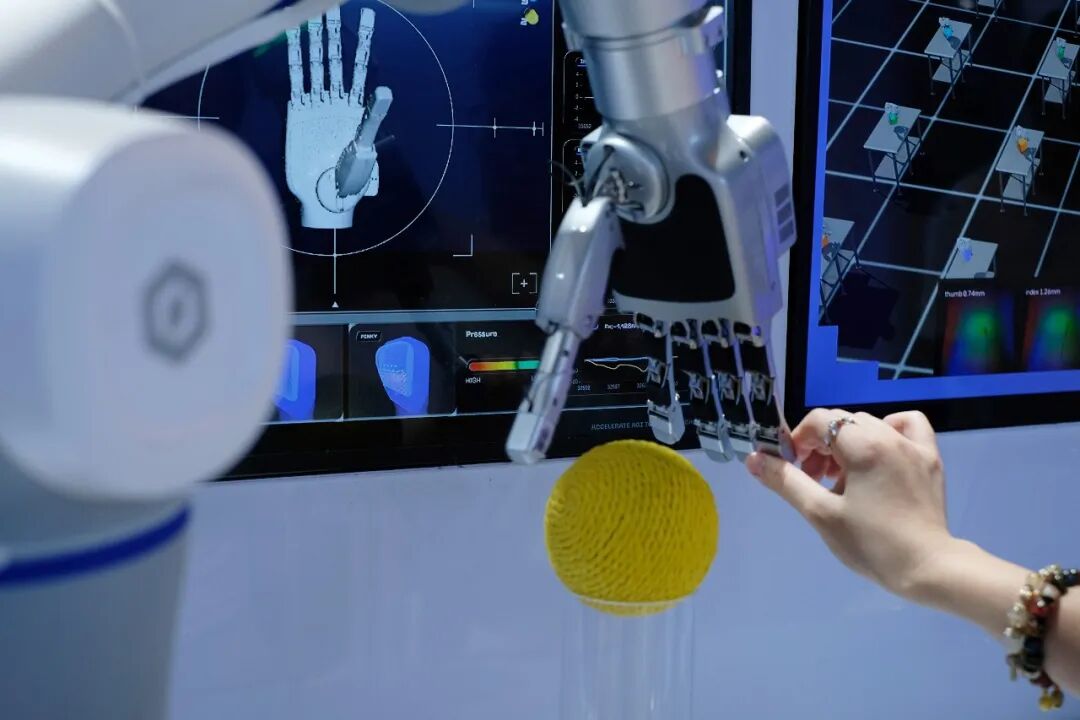
On-site view of the WAIC booth
Founder LI Zhiqiang holds a PhD in Environmental Engineering from Carnegie Mellon University, with research focusing on microfluidic biosensors and spectral chips. According to public information, he won the Best Academic Presentation Award at the National Chemistry Conference during his doctoral studies.
After entering the embodied intelligence track, the team spent months visiting customers, from dexterous hand manufacturers to robot body enterprises and gripper suppliers. After this round of visits, the most concentrated feedback from customers was only one issue: excessive volume.
Traditional visuo-tactile solutions generally have a thickness of over 20mm, making them difficult to fit into small robot hands. Even when adapted to mainstream dexterous hands, they occupy operating space and reduce motion flexibility, rendering them unusable in many scenarios. Therefore, developing a sufficiently thin visuo-tactile sensor that can be easily integrated became the breakthrough point for OneSight Technology.
What is visuo-tactile technology? Simply put, it refers to installing a set of micro-optical systems on the back of a flexible material. When the sensor comes into contact with an object, the material surface deforms, and the camera captures the light and shadow changes caused by the deformation. AI algorithms then calculate information such as pressure, texture and sliding tendency. Figuratively speaking, it is like installing a microscope on the robot's fingertip that "sees" tactile sensation using light. Compared with traditional piezoresistive and capacitive solutions, visuo-tactile technology can capture far higher information density, approaching the perception level of human fingertips, but the volume issue has long been the biggest obstacle to its large-scale application.
Through continuous optimization across geometric optical design, model solving and chip-based technology, OneSight Technology has reduced the sensor thickness to half that of similar products in the industry. Its bionic visuo-tactile sensor adopts a shape imitating the human fingertip, with dimensions and thickness very close to those of human fingertips. The core technology is OneSight's self-developed metasurface silicon photoelectric sensing chip, whose performance determines the limit of volume reduction. According to OneSight Technology, the thickness of its sensor has been iterated to less than 3mm, which the company claims is at a leading level among publicly disclosed mass-produced products of the same type.
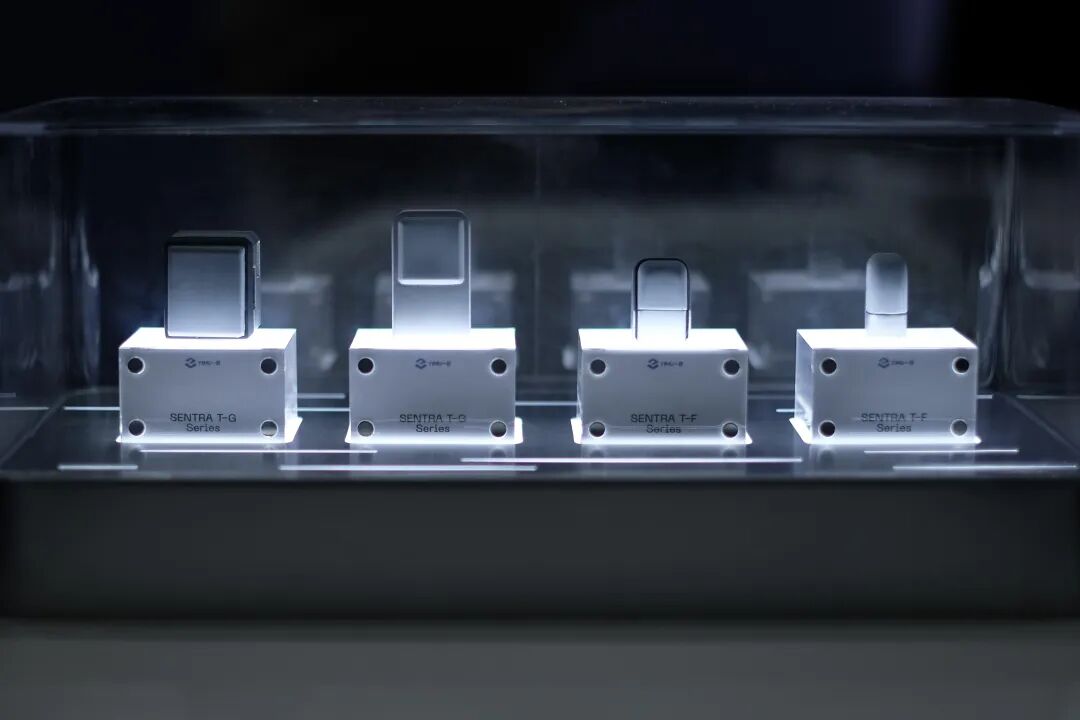
Product Matrix: The Sentra-T series visuo-tactile sensors are widely compatible with mainstream grippers and dexterous hands
Apart from volume, the development of visuo-tactile sensors is also restricted by two other key factors: materials and algorithms.
The material needs to be soft enough to perceive tiny deformations, yet durable enough to withstand repeated presses in industrial scenarios. These two properties are theoretically inherently contradictory. However, OneSight Technology established its own team to develop flexible electronic skin materials, starting research from the monomers of high-molecular polymers, exploring the self-recovery of functional groups and the rigidity of the skeleton structure. Currently, it has achieved stable performance that does not degrade even after millions of presses and tens of thousands of lateral shear force applications.
The third factor is algorithms. The sensor captures the deformation of the elastic material when it contacts an object through its built-in camera, generating a sequence of "tactile photos", which are then processed by AI to calculate information such as pressure, texture and sliding tendency. In terms of perception performance, the sensor can achieve micron-level deformation solving, 0.005N force resolution, and a maximum output frame rate of 120fps. To address the temperature drift and perception blind spots that commonly occur in traditional solutions, OneSight Technology has made optimizations with self-developed algorithms, realizing full-coverage solving with no blind spots, and reaching an IP65 protection rating.
Tactile Foundation: Endowing robots with the ability to continuously perceive and record contact behaviors
Overall, 90% of the core tactile indicators of OneSight Technology have reached human-level performance. The integration of these three dimensions forms OneSight's current full-stack capability, and all technologies from underlying chips to perception algorithms are independently developed by the company. Up to now, OneSight Technology has deployed over 700 intellectual property rights globally, obtained the National High-Tech Enterprise certification and the Provincial "Specialized, Refined, Differential, Innovative" Small and Medium Enterprise certification, passed the ISO three-system certification, and won 12 international awards within four years.
A RMB 10 Billion Bet Placed on the Robot's "Hand"
"In the field of large models, China is a follower. But in the field of Physical AI, China and the United States are basically on the same starting line, with almost no gap." LI Zhiqiang, founder of OneSight Technology, made this judgment in an interview at the recently opened WAIC 2026.
This statement sounds very confident, but where does this confidence come from? The answer is simple, even somewhat unexpected: everyone is stuck with the same problem — robots can run and jump, but they cannot perform fine tasks. It is this "fine task" bottleneck that countless people have overlooked that underpins OneSight Technology's RMB 10 billion valuation.
A detailed breakdown shows that this RMB 1 billion financing is far more than an investment in a single sensor company. It represents a key consensus: when embodied intelligence has already "taken steps" in terms of mobility, yet the "hands" remain rigid, whoever enables robots to truly "manipulate objects" will secure the most valuable ecological niche in the next decade.
In LI Zhiqiang's view, there are currently three different development approaches in the industry.
The first category is purely model and algorithm-focused. Companies represented by NVIDIA's Cosmos 3 and Physical Intelligence's π-series models believe in developing a general embodied intelligence brain, paying little attention to hardware and mainly focusing on data and algorithms.
The second category is integrated software and hardware. Tesla's Optimus, Figure, and China's Agibot develop everything from the robot body to algorithms in-house. These companies require extremely strong R&D capabilities to unify hardware R&D, manufacturing, software algorithms and models.
The third category is the path taken by OneSight Technology. LI Zhiqiang said: "We believe that at this point in time, for embodied intelligence to develop, division of labor and openness are very important approaches." OneSight Technology focuses on the infrastructure layer, the middle layer that connects hardware and algorithms, opening up the entire chain from perception entry, to data flywheel, and finally to model empowerment.
Why is the infrastructure layer so critical?
LI Zhiqiang breaks down the bottlenecks of Physical AI into three key points. The first is the perception layer: how robots collect data from the physical world. The second is the operation execution layer: how to achieve human-like precise manipulation. The third is the brain layer, for which data is a prerequisite.
These three bottlenecks are progressive and indispensable. However, the biggest problem in the industry currently lies at the very front end: the perception capability is too weak. Without precise perception, there is no high-quality data; without high-quality data, it is impossible to train a brain that understands the physical world. This is exactly the logic behind OneSight Technology's choice of tactile sensation as its breakthrough point.
This judgment echoes the remarks made by NVIDIA CEO Jensen Huang at the 2026 NVIDIA GTC Taipei. When NVIDIA released its first humanoid robot reference design, tactile dexterous hands became an important component of the official reference architecture for the first time.
Of course, some people may ask: Tactile technology is still at a level of 40-50 points (far from maturity), is it worth such a valuation? LI Zhiqiang's reasoning is honest and convincing. 2026 is known as the "First Year of Tactile Sensation", and this is by no means accidental. In terms of value, the industry has reached a high degree of consensus; in terms of technology, the visuo-tactile route is converging to become the mainstream solution; in terms of cost, visuo-tactile technology is the only tactile modality that can continuously reduce costs following Moore's Law. The combination of these three certainties has transformed tactile sensors from a niche research topic into a capital anchor that can support a RMB 10 billion valuation.
In industrial scenarios, this logic is being verified. Take the assembly process of inserting and removing battery packs as an example: a worker takes about 30 seconds to complete one process, which traditional industrial robots are still difficult to handle. OneSight Technology's feedback-enabled solution took 100 seconds in the first test, far slower than manual labor. But by April this year, the time was reduced to 50 seconds, and now it has dropped to 15 seconds, doubling the efficiency of manual labor.
"This is like AlphaGo, which was difficult to beat before convergence, but once it breaks through, the progress becomes irreversible," LI Zhiqiang said. Through reinforcement learning, robots learn this skill in a learning-based manner, which is equivalent to digitizing the craftsmanship of experienced workers. Its advantage is that it can train 24 hours a day, while humans can work at most 8 hours a day.
In terms of business model, OneSight Technology adopts a three-layer structure that is "flexible for disassembly and integration". The bottom layer is tactile hardware, including sensors and dexterous hands equipped with sensors, which currently contributes the most to revenue. The middle layer consists of tactile datasets and standardized capabilities. The top layer is model empowerment, including simulation capabilities and semantic understanding encoders, to help customers reach AGI capabilities faster. Customers can choose and match solutions according to their own needs.
The ambition for infrastructure is most prominently reflected in the data dimension. LI Zhiqiang pointed out that the biggest shortcoming of Physical AI currently is data assets. Large language models have massive text data, and computer vision has ImageNet, but high-fidelity tactile data of the physical world is almost completely blank. Therefore, he is promoting an open-source dataset project called TouchNet, striving to build a standardized data foundation for Physical AI similar to ImageNet.
"This definitely cannot be achieved by one person alone, but the prerequisite is that we must first standardize and open up the standards, interfaces and the entire chain. Then we can form such data assets and data flywheels." Behind this statement, it means that OneSight Technology is attempting to take a proactive step to define industry rules. Whoever masters the standards and interfaces of the dataset has the potential to become the "data gatekeeper" in the era of Physical AI. Once this position is established, a RMB 10 billion valuation may only be a starting point.
Therefore, OneSight Technology positions itself as a Physical AI infrastructure provider. The underlying confidence of this positioning lies in that no matter which technical route the embodied intelligence brain takes in the future, to achieve dexterous manipulation beyond pre-programmed scripts, it must rely on real physical interaction feedback. While most players are still competing to develop complete robots, OneSight provides exactly that set of standardized physical interaction data solutions, outputting standardized, high-fidelity physical signal input interfaces for various "embodied intelligence brains".
So who is leading the development of the next-generation infrastructure? There is no definitive answer to this question yet. Over the past 20 years, the construction of data centers has solved the flow, storage and computing of information. Now, the Physical AI world requires capabilities to perceive and understand the physical world. In this new track, whoever takes the lead in building an infrastructure based on tactile perception and multi-modal fusion will seize the first-mover advantage.
This article is from the WeChat Official Account "ChinaVenture", authored by Riemann, and published with authorization from 36Kr.