When arts graduates flounder in the vast ocean of AI
It's rather tough. The "discrimination" against liberal arts students in the AI era seems to have become even more severe. The quality of AI-generated text has evolved from merely boosting efficiency to fully meeting the standards of many positions, such as journalism, advertising, consulting, finance... Some traditional document tools have even successively launched "AI continuation" features. If I type the character "you" at the start, the default continuation can directly draft an entire classical-style novel for me...

People who make a living from this line of work are gradually being impacted — pay cuts, layoffs, and unemployment.
Some people choose to remain stubbornly unyielding, trying to spark a "Renaissance" in the AI era; while another group of people decide to "join them if you can't beat them" — even with a liberal arts background, they want to see if there are any technical jobs they can take on in this era. We talked to four liberal arts graduates who are trying to transition into the AI industry. Some of them have successfully landed stable positions, while others are still struggling to keep up. Their stories are filled with distinct highlights and unique anxieties.

(The following personal experiences are narrated by three protagonists and have been edited and organized by the author)
Standing at the Threshold but Not Entering the Room
I had just stepped off the subway when I received a call from an unfamiliar number. A headhunter was recruiting for a high-profile large model company that was gaining huge momentum. I immediately got excited, wondering: could a humble writer like me also land a job in the AI industry?
We talked for twenty minutes, and I roughly understood that the position was called an "AI Trainer". The gist of it was that large models nowadays generate a lot of professional content, and this content needs to be polished by people who understand the relevant fields. For example, I studied finance in college and worked as a financial reporter for several years, specializing in writing financial analysis, so I could be responsible for polishing economic and financial content.

I didn't follow up on the opportunity later, because the working conditions were extremely harsh: there was no break on Saturdays, and overtime was very common. The headhunter told me directly that employees often had to work until 9 or 10 p.m.
However, this call gave me an inspiration: this might be a great opportunity for liberal arts students to break into the AI industry.
Sure enough, after I posted on Xiaohongshu, many people replied to me saying that they had already landed jobs in this exact position.
One mom named Manman left a deep impression on me. Manman studied graphic design in college and had been working in design-related roles after graduation. She quit her job to take care of her child, but when she tried to return to the workplace, she found everything had changed completely. "AIGC has become increasingly mature, and with my several-year career gap, it's extremely difficult for me to find a design job now."
After several twists and turns, Manman finally found a job as an AI Trainer. "There are two reasons why I chose this job: first, this is not an outsourcing role, I am directly employed by the first-party company; second, this job rarely requires overtime, so I have time to take care of my child." Manman introduced the AI labeling process in her large company to me: the upstream party is the demand side, which refers to the product and R&D teams, who put forward demands based on problems fed back from product usage; the midstream is the AI Trainer role where Manman works, whose core task is to evaluate and train the model according to the demands from the product side, and formulate rules for data processing; Manman's downstream are AI Labelers, who perform more hands-on labeling work following the established rules. Occasionally, Manman also covers part of this labeling work.
To make the transition smoothly, Manman paid out of her own pocket to take specialized courses at a training institution. "The training courses taught me basic concepts of data labeling, workflows, data processing knowledge, and so on. Personally, I think it was very helpful for my career transition, because my educational background had absolutely nothing to do with these fields."
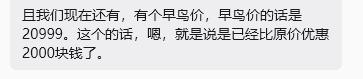
Conversation between Manman and the course sales | Provided by Manman
Speaking of her current job, Manman can't say she is particularly fond of it. "My previous jobs were all divergent, relying on creativity and ideas. But this job is completely different. It makes me feel like a line worker on a production assembly line. Most of my work is coordination: aligning with upstream teams on demands, and aligning with downstream teams on workflows. I only need to understand, convey, and follow the rules. I have a very motivated colleague who also has a liberal arts background; she transitioned upstream to become a product manager two years ago. But I really can't say I love this job — I just want stability."
Talking about people without a science or engineering background transitioning to AI jobs, Manman feels: it's less about me taking the initiative to transition, and more about being pushed forward by the times. Regarding data labeling, I heard a joke a long time ago — artificial intelligence means that the amount of "artificial" (human labor) determines the level of "intelligence". After actually taking this job, I deeply understand this saying. If you want a stable position, you definitely need to make choices that align with the general trend of the times. But if I could follow my own heart completely, I would still prefer the era before AI existed.
Following the Capital Flow

Lala has worked as a financial editor for five years. Before becoming an editor, she did content marketing for a first-party company for a period of time.
"I switched from the first-party side to the service provider side back then because I didn't like dealing with people, and only wanted to work with information and reports. Now I want to switch back to the first-party side, because I see an opportunity for liberal arts students to catch the AI wave," Lala says.
The opportunity that led her to notice this trend was rather subtle. Every once in a while, Lala would open job recruitment apps. "I have a habit: every spring and summer, I go to several job interviews. On one hand, I've been at my current company for years, and my work content is very niche, so I want to see what the job market is like outside. On the other hand, I've always been a writer by trade, so getting in touch with more opportunities can help me develop side hustles — it's a win-win situation for me."
This summer, Lala noticed a new trend.

At first, Lala saw a position called "Financial Media PR". She thought this was exactly the kind of work her current first-party client was doing, which perfectly matched her experience, so she submitted her resume. The two rounds of interviews progressed very quickly and smoothly. Generally speaking, this was an AI hardware company that had gone through several rounds of popular financing recently, but looking back, they felt their publicity efforts for investors and consumers were insufficient. After getting the financing funds, they wanted to expand their PR team.
The two rounds of interviews moved forward very quickly, and Lala soon received a formal job offer. However, because the company's public reputation had always been rather poor, she ultimately turned it down.
But this gave Lala a huge inspiration: maybe this year was a great chance for her to catch the AI express train. So she began to focus intensively on positions that had publicity demands during the financing and investment windows.
"I interviewed with one of the 'Six Little Dragons' (rising AI startups), a mid-to-late stage company with a strong investor background that is sprinting for an IPO, and a startup in a track I am very optimistic about." Lala summed up her feelings: companies in the financing stage have very specific requirements for positions, and they value your resources and capabilities the most. For example, if they need to do publicity, they will give you some publicity topics to let you design plans as a written test. They want to get results in a short time, so they are relatively more lenient with abstract questions like your understanding of the industry and other similar topics.
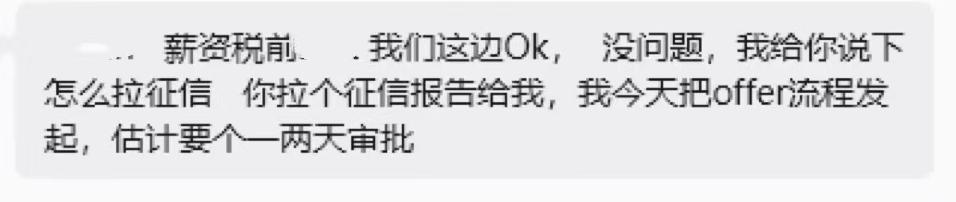
Job offer Lala received | Provided by Lala
"I think as AI has developed to this day, everyone who wants to make a living creating content should think carefully about their career choices." Talking about her transition, Lala said: I can increasingly feel that AI is severely hitting the confidence and passion of content creators. This year, I also connected with some small, high-quality pure content teams. I think the confusion for traditional content teams is that their clients are mainly large internet companies, and the most popular industry right now is undoubtedly AI. But AI startups rarely have sufficient marketing budgets to monetize content teams. Combined with the fact that AI is extremely capable of replacing human content creation, the threshold for producing good content has been greatly lowered. So whether from the perspective of creating high-quality content or achieving good commercial returns, many content teams are in the painful period of transformation. At this time, going to a first-party company to see if you can give play to your differentiated advantages in content creation is also a viable choice.

Entrepreneurship Has Become Even More Challenging
Vicky (pseudonym) is a current student at the University of Cambridge, majoring in digital humanities. She studied film production in her earlier years. "Watching everyone around me catching the AI wave, I felt extremely anxious."
On one hand, ultra-high-quality AIGC videos are appearing on major video platforms. On the other hand, surrounded by the prestige of a top university, her classmates have been transitioning to AI-related fields one after another. Vicky started trying to get involved in AI-related areas.
However, problems came before opportunities. The AI trend has become a universal consensus. To put it bluntly, everyone hopes to take off in this boom, a grand scene comparable to the mobile internet craze in the past. But AI has already passed the chaotic period where everyone could jump in and make quick gains. Take AIGC as an example: when AIGC first emerged, a large number of film creators flooded into the field, showing their works to attract traffic, then sold courses to their private follower groups. But this kind of courses could only make money in the early stage of AIGC tools, when the usage difficulty was very high. Now the usage barriers for various AIGC tools have gradually lowered, so Vicky missed the first entry opportunity.
If she looked for a proper full-time job, Vicky would face another difficulty: how to handle the location and time constraints. As a postgraduate student, she spends most of her time in the UK. "I think finding a remote internship to do trivial tasks is not what I want at all. After careful consideration, I finally decided to start my own business."
Success in entrepreneurship is not the top priority. The key is to enter the AI circle through this experience, even if it just means meeting some peers or investors. With this mindset, Vicky started looking for entrepreneurial projects.
"At first, I wanted to develop a productivity software, which is easy to get started with, and I could give full play to my advantages in design. But after the rise of vibe coding, the threshold for this kind of small tools became too low. It's impossible to reach the financing stage, and it would easily end up as a project that only posts content on social media. So I changed direction, and finally settled on an English learning project." Recalling the whole process of building the project, Vicky said that she eventually developed a software-hardware integrated English education project.

There are only four people in the core team, plus a few remote programmers hired from China. The project is a product designed for children under 12 to learn English, with a hardware device that looks like a toy handle, combining storylines designed in the software for interactive challenges.
The University of Cambridge gave Vicky a very useful stepping stone. After posting on social media, she soon received many replies, most of which came from writers working for domestic entrepreneurship communities or media outlets. Several of them even recommended investor contacts to her, and put forward some innovative ideas for business models.
