The 40-yuan viral cake brand closed 180 stores within a year
KUMO KUMO, which once drew long queues of customers, is rapidly disappearing.
According to data from Zhaimen Catering Eye, over the past year, KUMO KUMO has closed more than 180 stores, gradually withdrawing from provinces and municipalities including Gansu, Sichuan, Shanxi, and Tianjin. As of June 16 this year, it only has 56 operating stores left, with just 2 in Beijing and no more than 8 in Shanghai.
Another bakery brand founded by the same founder, the Roll'ING Handmade Swiss Roll, is also experiencing a similar decline — nearly 60 stores have closed within a year, leaving only 31 operating stores.
With their striking orange and blue packaging and price tags of 40 to 50 yuan, KUMO KUMO and the Roll'ING, which carry a light luxury vibe, have long been jokingly referred to as the "Hermès of the bakery industry."
So why have they fallen from prominence in just a few short years?
The internet-famous cake that required 3 hours of queuing
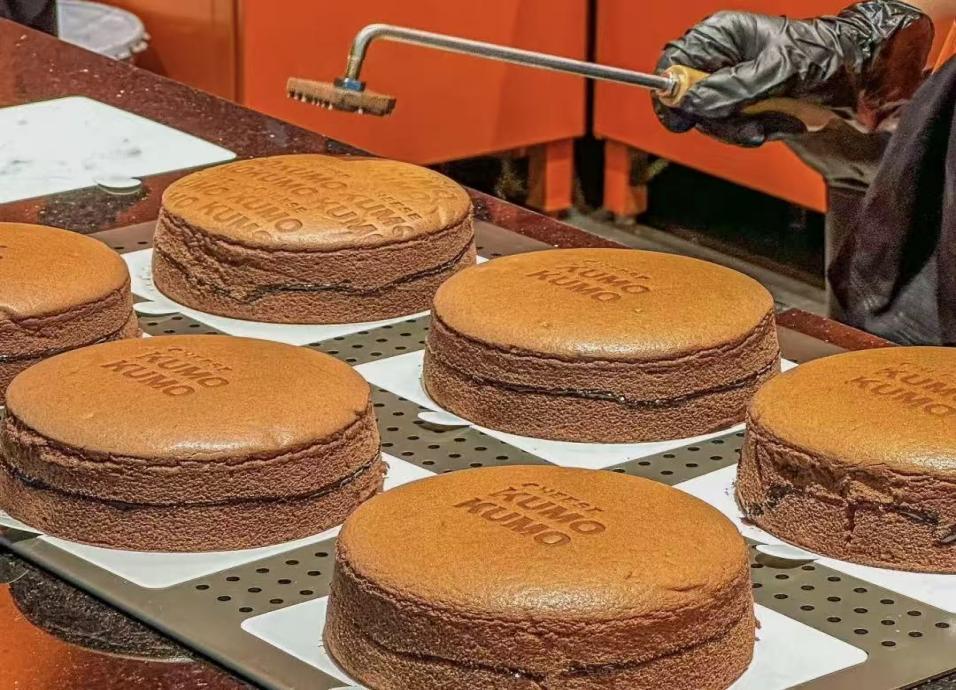
Image source: KUMO KUMO
A few years ago, KUMO KUMO was the top draw for queues on the B1 floor of shopping malls. Long lines of 30 to 40 meters would often form outside its stores, waiting times of several hours became the norm, and the two-item purchase limit was standard practice. Scalpers even drove up the resale price to more than three times the original amount.
In 2020, KUMO KUMO opened its first store in Shanghai, focusing on cheese cakes in various flavors priced between 39 yuan and 59 yuan. Then between 2022 and 2023, it opened nearly 50 directly-operated stores and secured angel round financing.
In 2023, the Roll'ING also opened its first store, focusing on handmade fresh-made Swiss rolls priced between 39 yuan and 49 yuan.
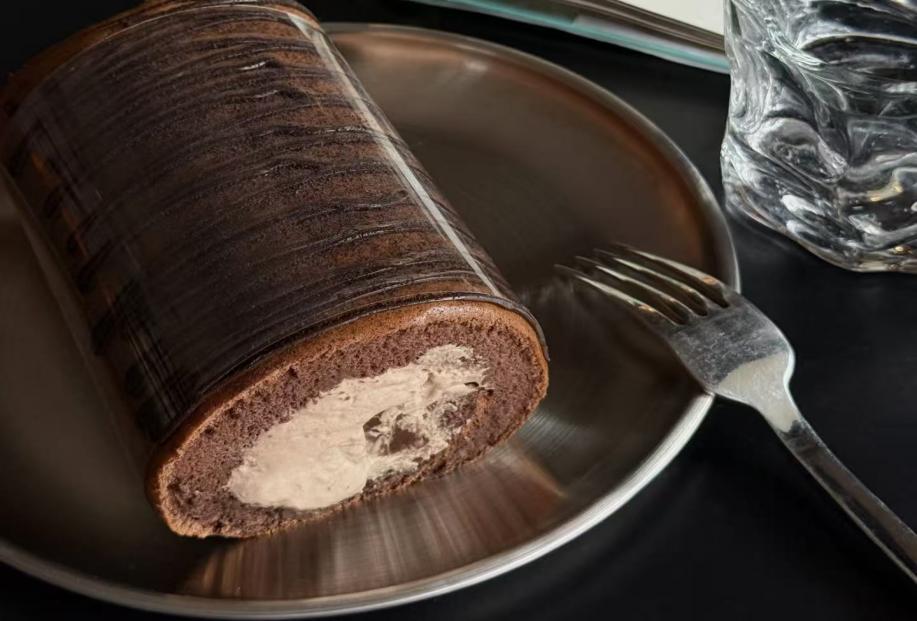
Image source: the Roll'ING Handmade Swiss Roll
Later in 2024, both KUMO KUMO and the Roll'ING successively opened up franchise opportunities.
According to public information, KUMO KUMO's site selection requirements specified locations on the dining floor or retail floor of shopping complexes, with store areas of 25 to 40 square meters, and a single-store investment budget of about 348,000 yuan excluding rent and renovation costs. After opening up franchising, KUMO KUMO launched 200 new stores that very same year.
For the Roll'ING Handmade Swiss Roll, total upfront costs including training fees, performance bonds, system usage fees, and design fees start at no less than 199,800 yuan, with an additional 3% to 5% operational management fee charged based on monthly turnover. According to data from Zhaimen Catering Eye, its total store count once reached around 70 locations afterwards.
Looking back at the development paths of the two brands, it is not hard to see they followed the exact same formula.
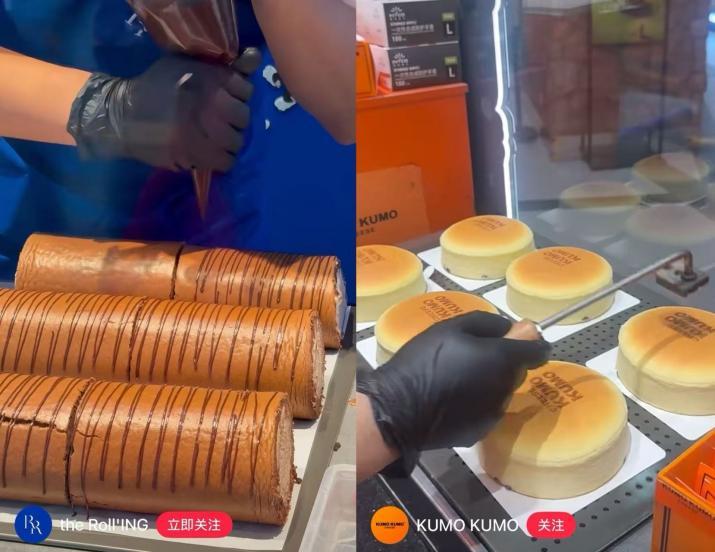
Staff hand-stamping patterns and drizzling sauce on-site | Image source: KUMO KUMO and the Roll'ING Handmade Swiss Roll
In terms of products, both focused on a single category: one on cheese cakes, the other on Swiss rolls. Visually, they both used highly recognizable colors, with the former adopting the striking Hermès orange and the latter Klein blue. In marketing, both brands showcased their product preparation processes to consumers through glass service counters, creating a sense of scarcity via queuing mechanisms and purchase limits.
After building up their brand recognition, both expanded their reach to second-tier and lower-tier cities through franchising. According to information from Zhaimen Catering Eye, KUMO KUMO was once distributed across 21 provinces nationwide, having entered second- and third-tier cities including Xining in Qinghai and Qingyuan in Guangdong. The Roll'ING also previously entered locations such as Huizhou in Guangdong, Taizhou in Jiangsu, and Yiwu in Zhejiang.
However, since the start of 2025, both brands have been closing stores and scaling back operations. In response, founder JIANG Haowen once told media outlets: "Some stores have indeed closed or relocated due to expired contracts and operational issues, and we will continue to expand steadily in locations where consumer demand exists."
Yet the reality does not match his claims. The former "Hermès of the bakery industry" now has very few remaining stores — what exactly went wrong for them?
Internet-fame brands struggle to maintain long-term popularity
From the perspective of franchise expert LI Weihua, "Both KUMO KUMO and the Roll'ING fall into the category of internet-famous bakery brands, and their shared problem is their failure to convert transient traffic into long-term customer retention."
For one thing, new product launches have been insufficient.
LI Weihua believes that the traffic gained from cheese cakes and Swiss rolls is only short-lived. Brands need to continuously launch new products to maintain a youthful and trendy image, satisfying consumers' desire for novelty.
However, according to official account information, over the years the two brands have mostly only experimented with new flavors in their product updates, and the number of new offerings remains small. While KUMO KUMO expanded its product line from cheese cakes to cheese bakery items, subsequent new products such as "semi-ripe cheese" did not generate any noticeable traffic momentum.
A white-collar worker in Beijing who has purchased KUMO KUMO products multiple times told *Interesting Report* that she usually brings a cheese cake to friend gatherings, but only chooses the original and chocolate flavors. "I have tried the semi-ripe cheese too, but the taste is just average, I didn't really like it."
ZHAN Junhao, founder of Fujian Huace Brand Positioning Consulting, added that although KUMO KUMO later expanded into the broader bakery sector, it essentially relied on its old operational logic. It failed to refine new hit products or break away from its established traffic marketing routines, making it impossible to regain consumer approval.
Secondly, the brands failed to cultivate a high repurchase rate.
ZHAN Junhao pointed out that cheese cakes and Swiss rolls are high-calorie, non-essential desserts that are naturally geared towards low-frequency consumption, making it difficult to get consumers to place orders on a daily basis. Once a single product category becomes a hit in the bakery industry, all other brands will quickly roll out their own competing versions of that product.
Once more affordable alternative competitors emerge, KUMO KUMO and the Roll'ING will see their customer base further split, and their repurchase rates decline.
In the past two years, Swiss rolls and cheese cakes have become standard bakery items on instant retail platforms such as Sam's, Freshippo, and JD 7FRESH.
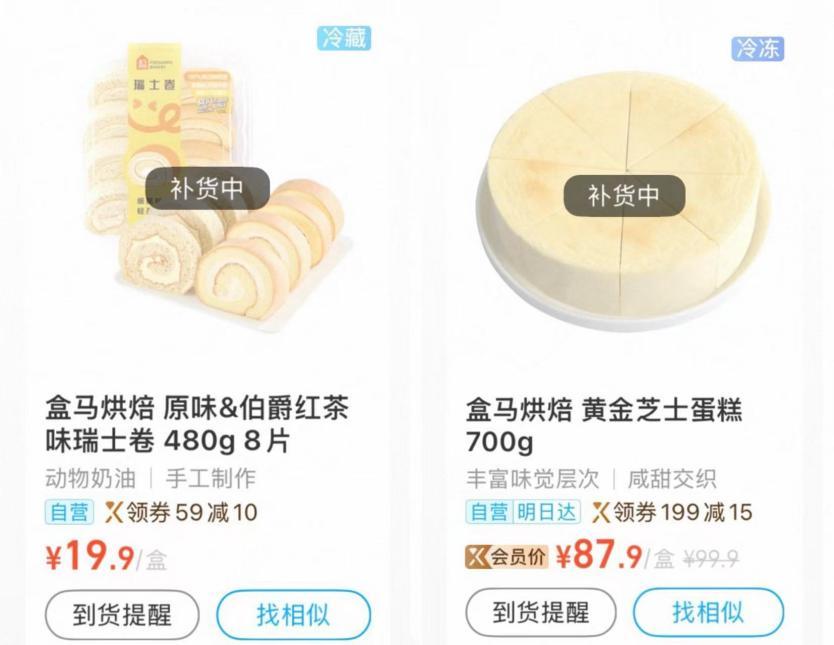
Image source: Freshippo App
When *Interesting Report* searched on a weekday, multiple Swiss roll products on the Freshippo App were already marked as sold out, including Earl Grey tea Swiss rolls, chocolate truffle Swiss rolls, and red velvet Swiss rolls. Among them, a box of 16 pieces (around 480g) combining Earl Grey tea and original flavor Swiss rolls was priced at only 19.9 yuan.
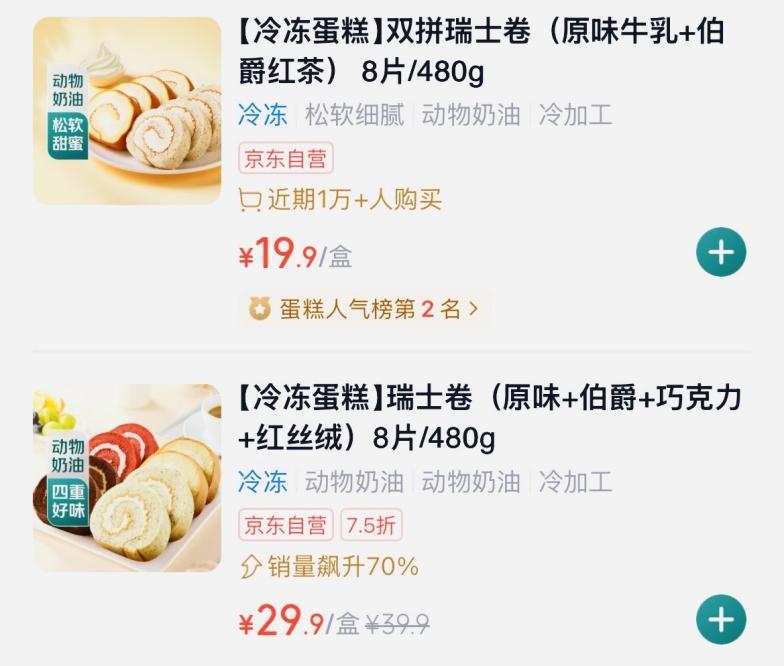
Image source: JD 7FRESH App
The JD 7FRESH App shows that the prices of various available Swiss roll products are between 19.9 yuan and 29.9 yuan. One dual-flavor Swiss roll pack of 8 pieces (around 480g) is priced at 19.9 yuan, with more than 10,000 confirmed purchases in the recent period.
"In an era of rational consumption, many more cost-effective alternatives have emerged, so consumers will naturally make new choices," LI Weihua noted.
Worse still, KUMO KUMO and the Roll'ING have been constantly impacted by counterfeit brands. On various platforms, similar brands such as "Rolling Swiss Roll", "Rolling Beans Handmade Swiss Roll", "KUMO KUXO" and "KUMO ZAWA" can be found, further diluting the original brands' value.
Once KUMO KUMO and its peers lost their appeal and customer flow declined, their originally glossy stores gradually could no longer sustain their high operating costs.
According to public information, most of the two brands' stores are located in core business districts, with rent accounting for 15% to 25% of total revenue. Taking Beijing as an example, KUMO KUMO and the Roll'ING mostly opened in commercial areas such as Xidan, Hopson One, and Wangfujing. Once revenue cannot cover costs, stores will easily end up closing down.
The contraction of KUMO KUMO and the Roll'ING can be seen as a microcosm of the internet-famous bakery era. Consumers now care more about product quality and pricing, and are no longer willing to keep paying a premium purely for a sense of ritual.
Author: GAO Yue
Editor: Andy
Duty Editor: Li Wu
This article is from the WeChat public account "Interesting Report", written by GAO Yue, and published by 36Kr with authorization.