I got the mini version of iPhone 17 Pro for 299 yuan. Even counterfeit phones now support AI?
Lei has a slightly unhealthy little hobby: browsing Xianfeng in his spare time. It's not that he's constantly trying to score a bargain, but this platform is genuinely full of surprises. You never know what you'll stumble upon next — a flagship Android phone from a decade ago, an engineering prototype that even the manufacturer's employees might not recognize, or some bizarre gadget that makes you marvel at "how incredible the global supply chain is."
Recently, Lei came across a very abstract tiny smartphone.
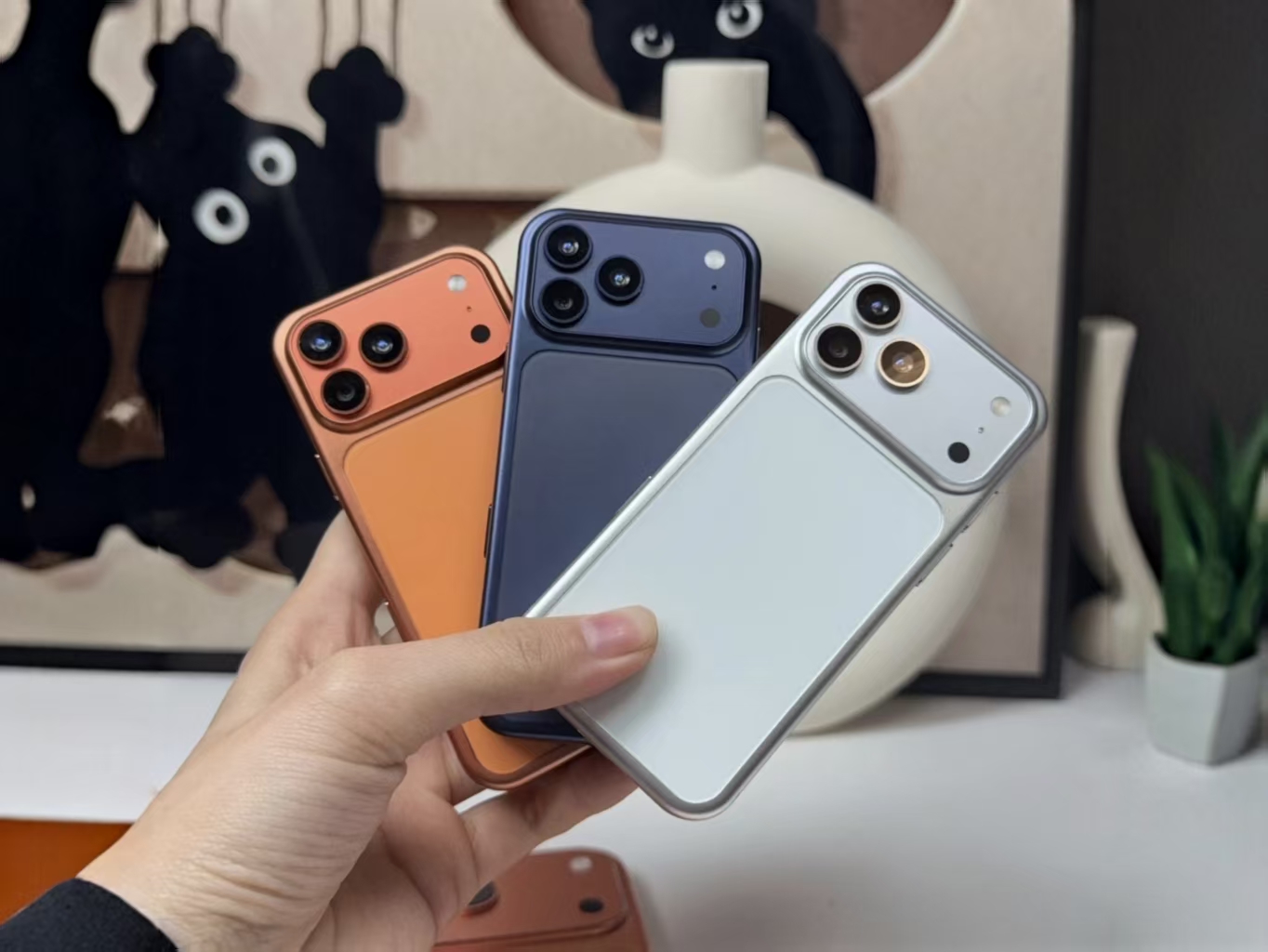
(Image source: Xianyu)
This device is called the IP17 Pro Mini, which looks like a shrunken version of the iPhone 17 Pro. It features a three-tone metal casing and a 4.5-inch small screen. The product page also advertises generous RAM, large storage, and an AI intelligent system, with a price as low as 299 yuan. You can immediately tell there's definitely something tricky going on here.
Apple no longer makes mini iPhones, but knockoff phones have fulfilled the dream for small-screen enthusiasts first?
With that thought in mind, Lei Tech couldn't resist and decided to buy one. Today, we'll show you whether this tiny Huaqiangbei iPhone is a compact-screen marvel or just electronic junk.
Extremely accurate in appearance, even Apple would be impressed?
When Lei first got the IP17 Pro Mini, his first reaction was: Not bad, it actually has some merits.
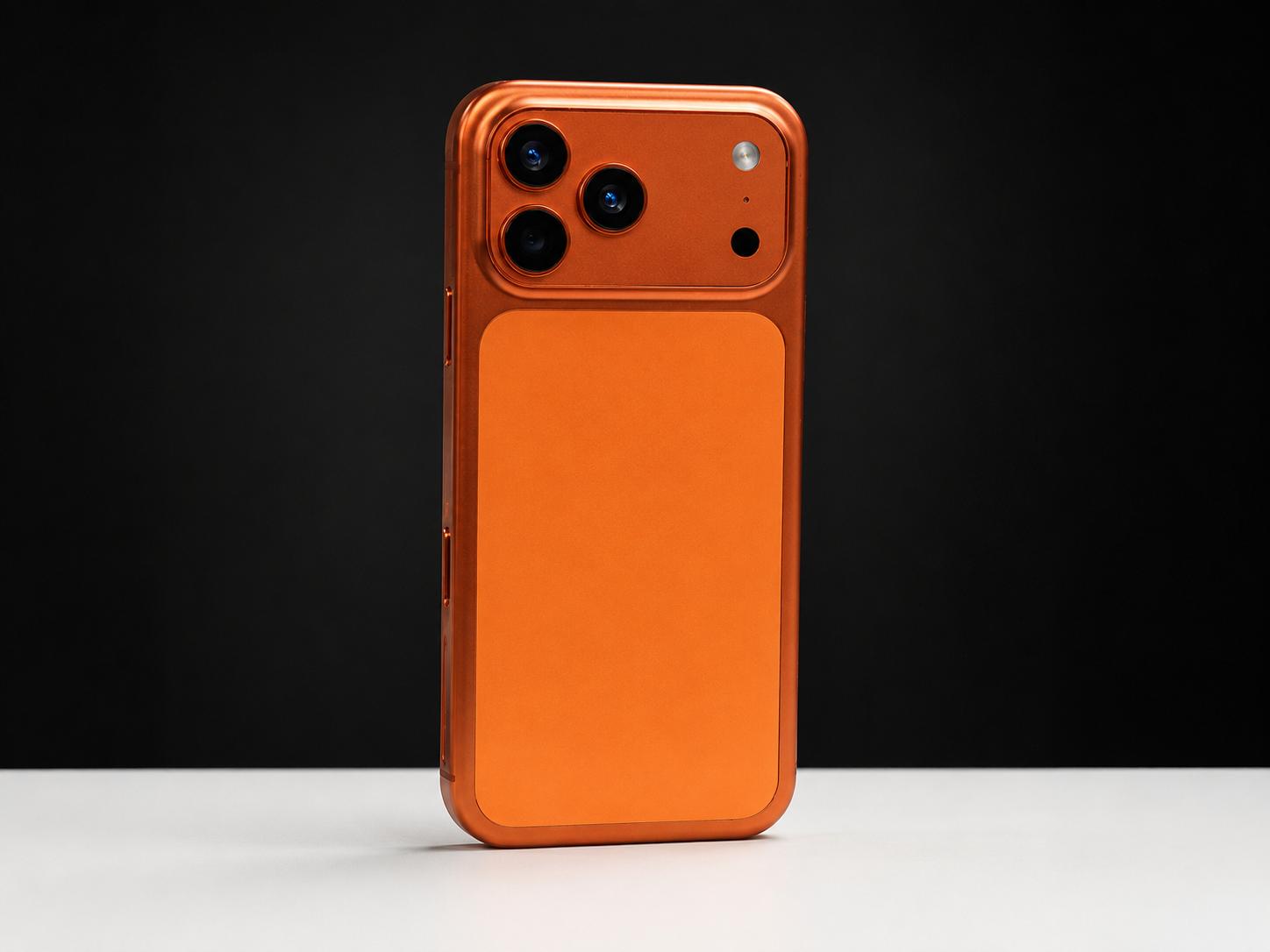
You probably remember the signature orange color Apple used last year. The casing of this phone also tries hard to mimic the orange metal style of the iPhone 17 Pro, and its back features a large camera module, even adopting a splicing process with two different materials.
(Image source: Lei Tech)
At first glance, it's not identical to the genuine iPhone 17 Pro, but it's about 70% similar.
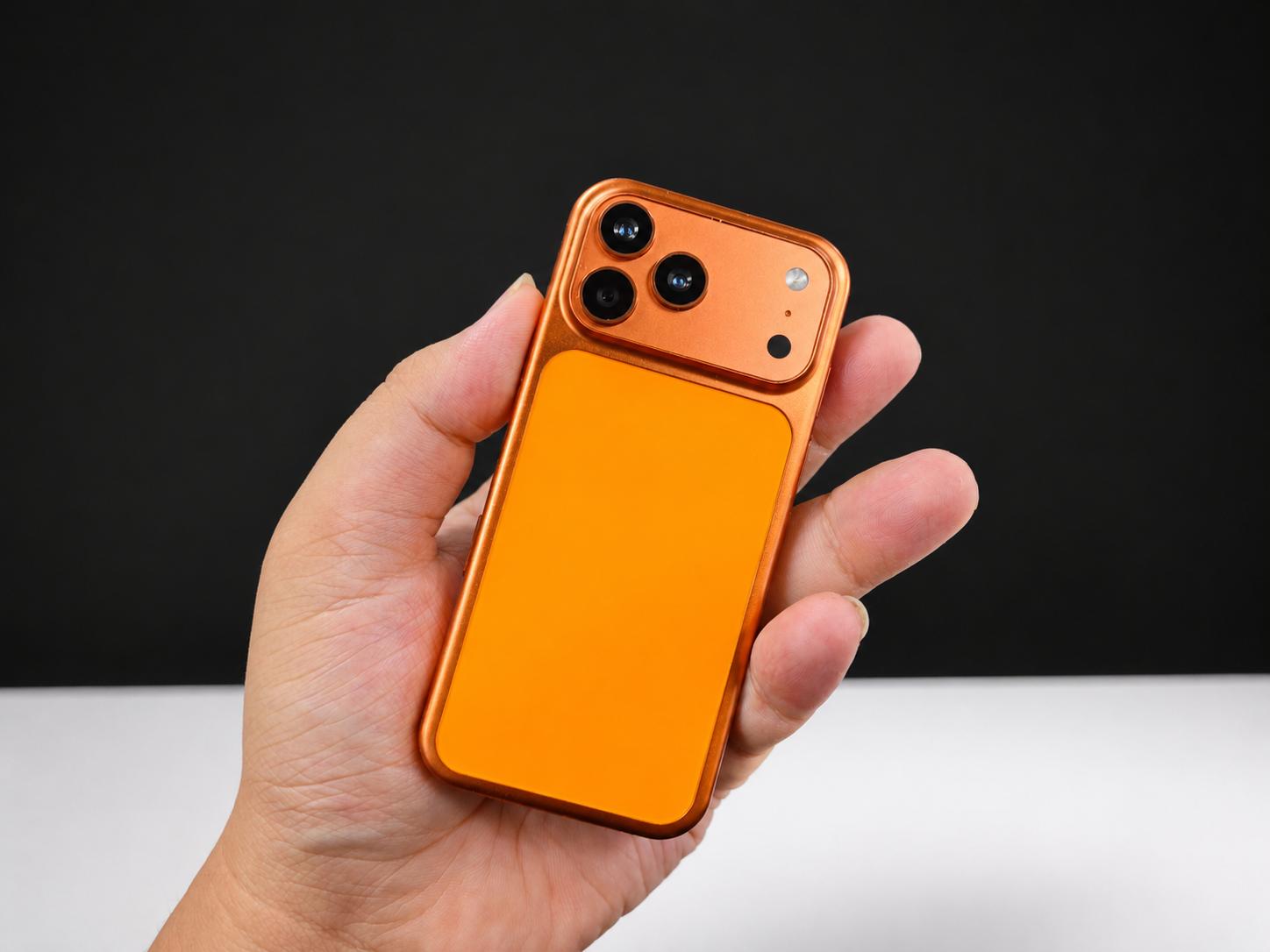
And it's so small, really tiny. Holding a 4.5-inch phone in your hand is definitely much more comfortable than the huge 6.7-inch or 6.9-inch "bricks" that are common today, making the DNA of small-screen enthusiasts tingle a little.
However, all these good impressions only last as long as you look at it from a distance.
(Image source: Lei Tech)
As you get a little closer, you'll notice the phone is full of makeshift compromises.
The metal body is pieced together from several different metal parts, and the bezel around the front screen is thick enough to "park an aircraft carrier" — no exaggeration. When the LCD panel lights up, the grayish, cool-toned, and dim display instantly pulls you from the illusion of an iPhone 17 Pro back to a decade-old Android backup phone.
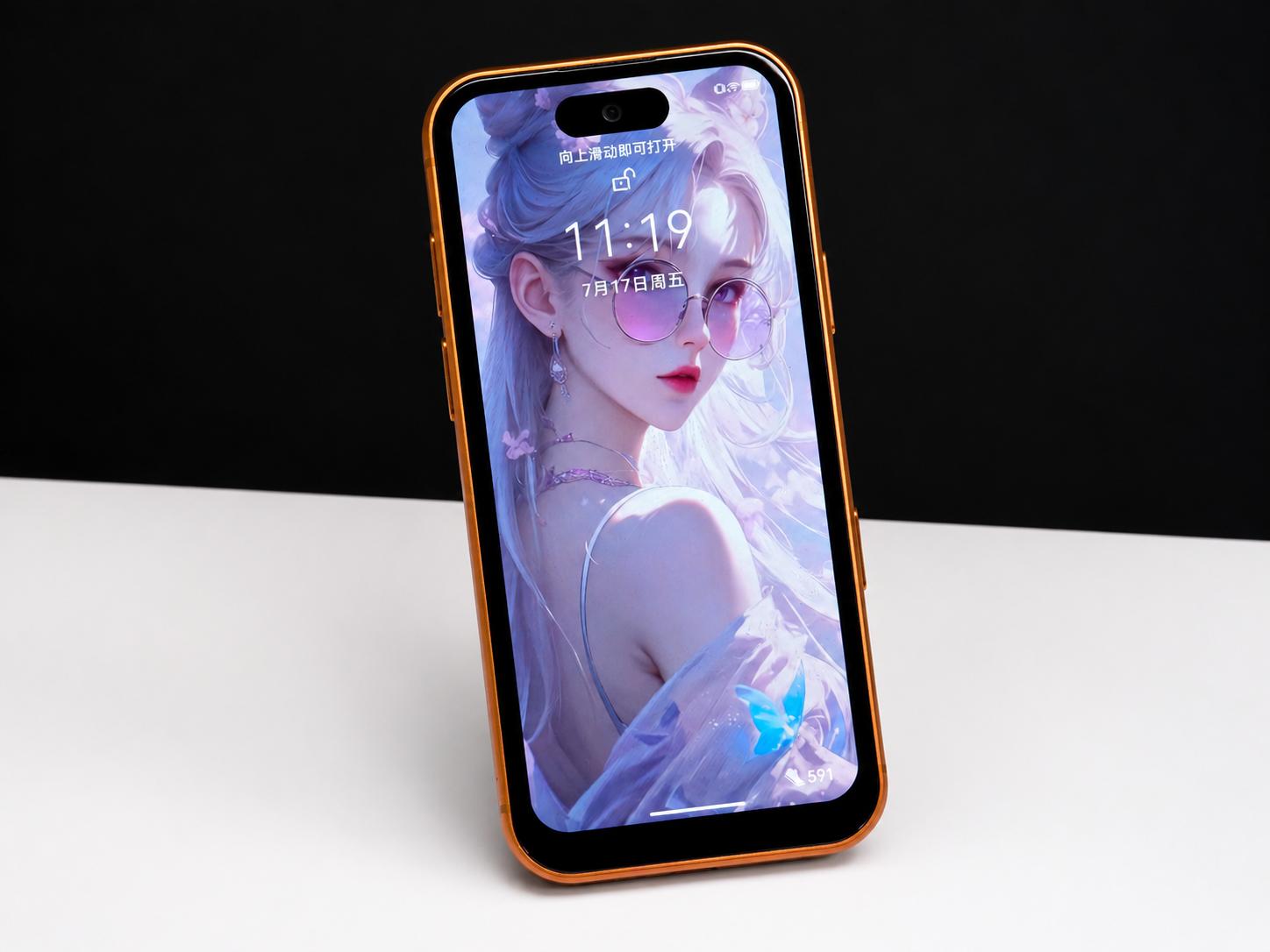
The most obvious flaw is probably the single front camera.
That's not entirely unacceptable, but the problem is that to align with Apple's design, the phone has forced a "fake Dynamic Island" for that single camera, which can't even be turned off in the settings, ruthlessly eating into the already limited display area.
(Image source: Lei Tech)
The back is even more comical. The triple-camera module looks intimidating at first, but when you look closely under the light, you can clearly see there are no sensors at all in the top two lenses. Those two are just for show, a typical one real, two fake design.
But to be honest, this design gives a rather nostalgic, retro vibe.
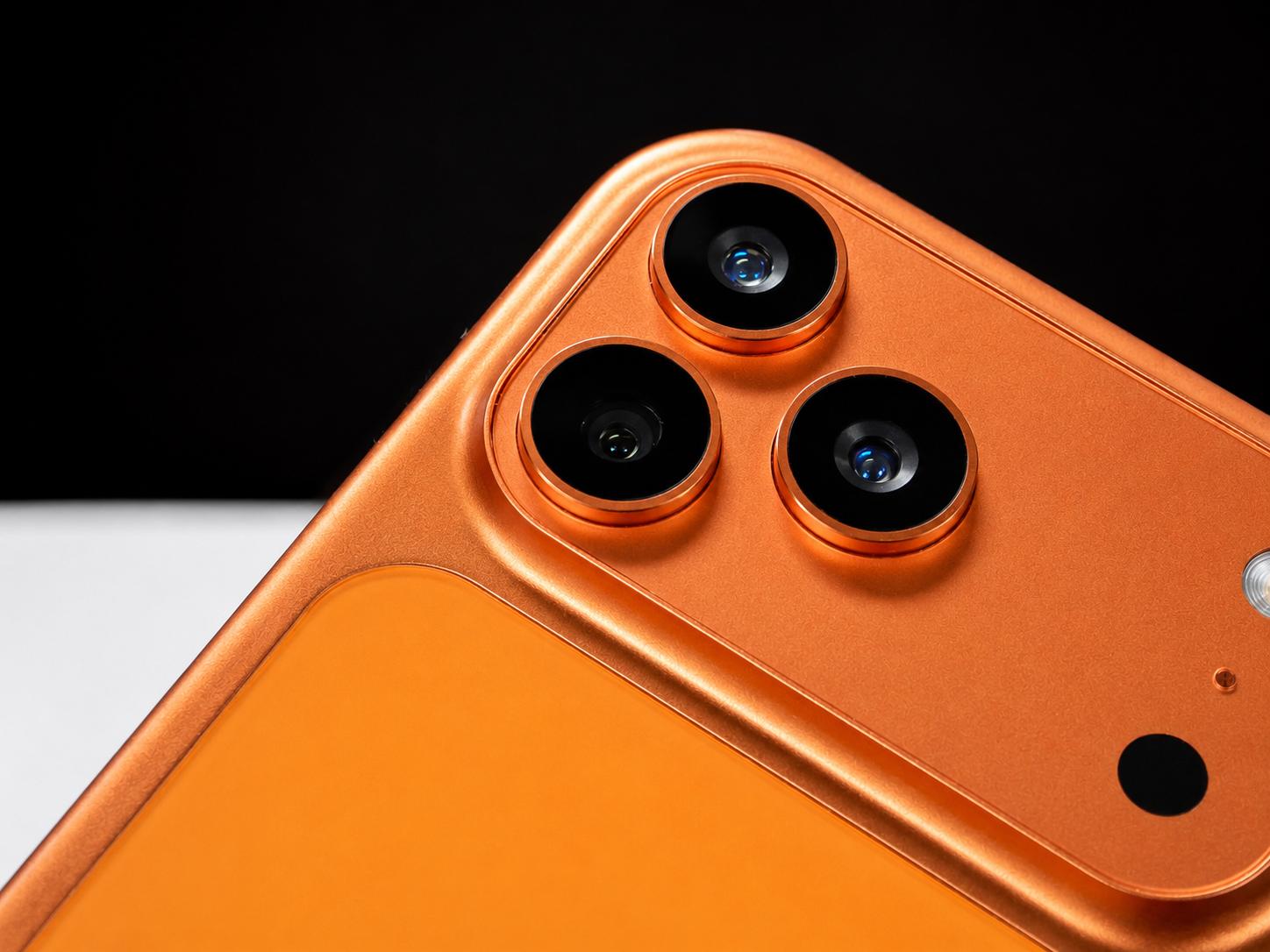
(Image source: Lei Tech)
After all, those old knockoff phones loved doing this: they'd make four holes instead of one, and stick huge lens rings instead of leaving blank space. Even in 2026, this time-honored craft hasn't been lost. If they drilled a few more holes, they could probably get "nine holes returning to one."
As for the biggest selling point of this gadget, it must be the small screen.
Nowadays, mainstream manufacturers barely make small-screen phones, because small screens mean small batteries, limited internal space, and troublesome app adaptation. Especially after the iPhone mini line was discontinued, small-screen enthusiasts have very few options in legitimate smartphones. The emergence of this product shows that there is indeed a small market demand for "I just want a tiny phone."
Unfortunately, the build quality is extremely shoddy, and with the relatively thick body, there's no sense of refinement at all in the hand. It's just barely a fun toy for small-screen lovers.
Flaws exposed as soon as it boots up: the spec sheet is fake, and it even claims to have AI
The appearance can at least fool your eyes, but once the system boots up, the "entertainment effect" kicks in immediately.
This IP17 Pro Mini runs FreemeOS from Zhuoyi Technology. You read that right, it's the same Zhuoyi behind Zhuoyi Tong — that's their long-standing business.
The system is based on a customized Android, but its interface obviously tries to mimic iOS. The icons, layout, and control center are all working hard to create an "Apple-like feel," but this vibe isn't the authentic Apple aesthetic — it's more like the Apple-inspired style you'd find at a screen protector stall outside a county-level phone shop.
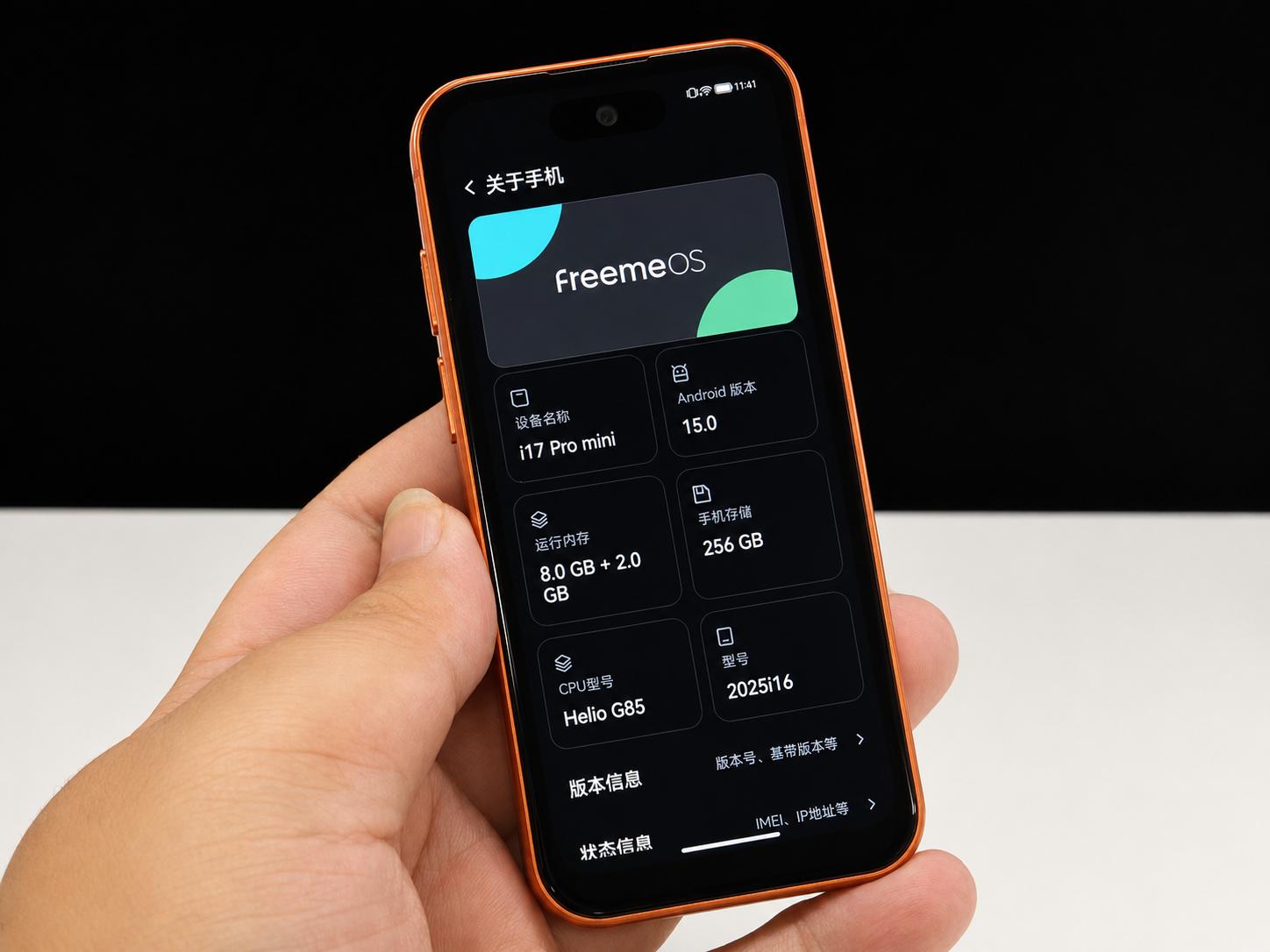
(Image source: Lei Tech)
It does have animations, but they're not smooth enough, and the touch response isn't very precise.
Swiping the home screen, opening settings, and switching apps all trigger responses — it's not so slow that it's unusable, and it's actually better than I expected.
However, the specifications listed in the "About Phone" section have many tricks worth talking about.
The shop's product page looks pretty good, advertising a Helio G85 processor and 8GB+256GB storage. That's not top-tier, but considering the newly released REDMI 17C has similar specs yet costs at least twice as much, you'd think this phone is a real bargain, right?
Actually, you're wrong.
How could a knockoff phone like this provide real spec information? A quick check with a diagnostic app shows that the processor isn't the advertised G85, but the P65, commonly known as MT6768V. The storage isn't 8+256 as the page claims — it's actually closer to 4+64.
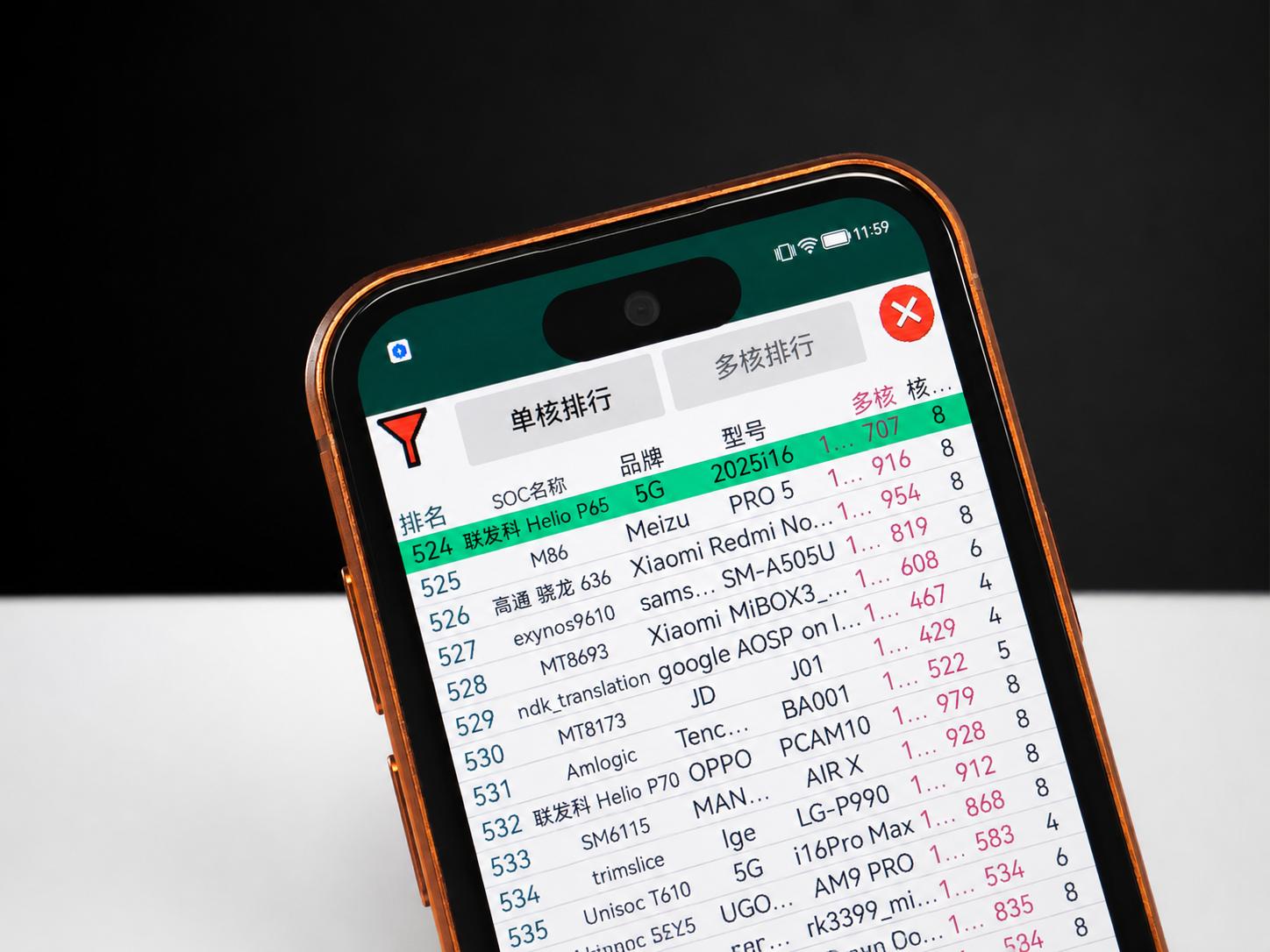
(Image source: Lei Tech)
Its performance is roughly comparable to the Snapdragon 636 from nine years ago.
Of course, if your daily use only means making calls, receiving verification codes, scanning QR codes, keeping WeChat running in the background, and occasionally watching a couple of short videos, then it can barely handle daily tasks.
Although this device only supports 4G, the current network coverage in China is sufficient. I didn't encounter any signal issues during my few days of experience. As long as you don't run too many apps in the background, don't expect apps to open instantly, and set background limits in the developer options like I did, it can barely meet the basic requirements of a backup phone.
But if your daily use is what normal people consider daily use, then it's not good enough.
Today's average user's real-world usage scenarios are very demanding: WeChat, Alipay, Douyin, and Bilibili are all resource-hungry apps, most of which need to stay resident in the background. Making this IP17 Pro Mini handle all of them at once is like asking an elementary school student to run an adult marathon — the spirit is commendable, but the outcome is hard to praise.
In actual experience, after opening three apps in a row, Kuaishou becomes so laggy that it's barely usable.
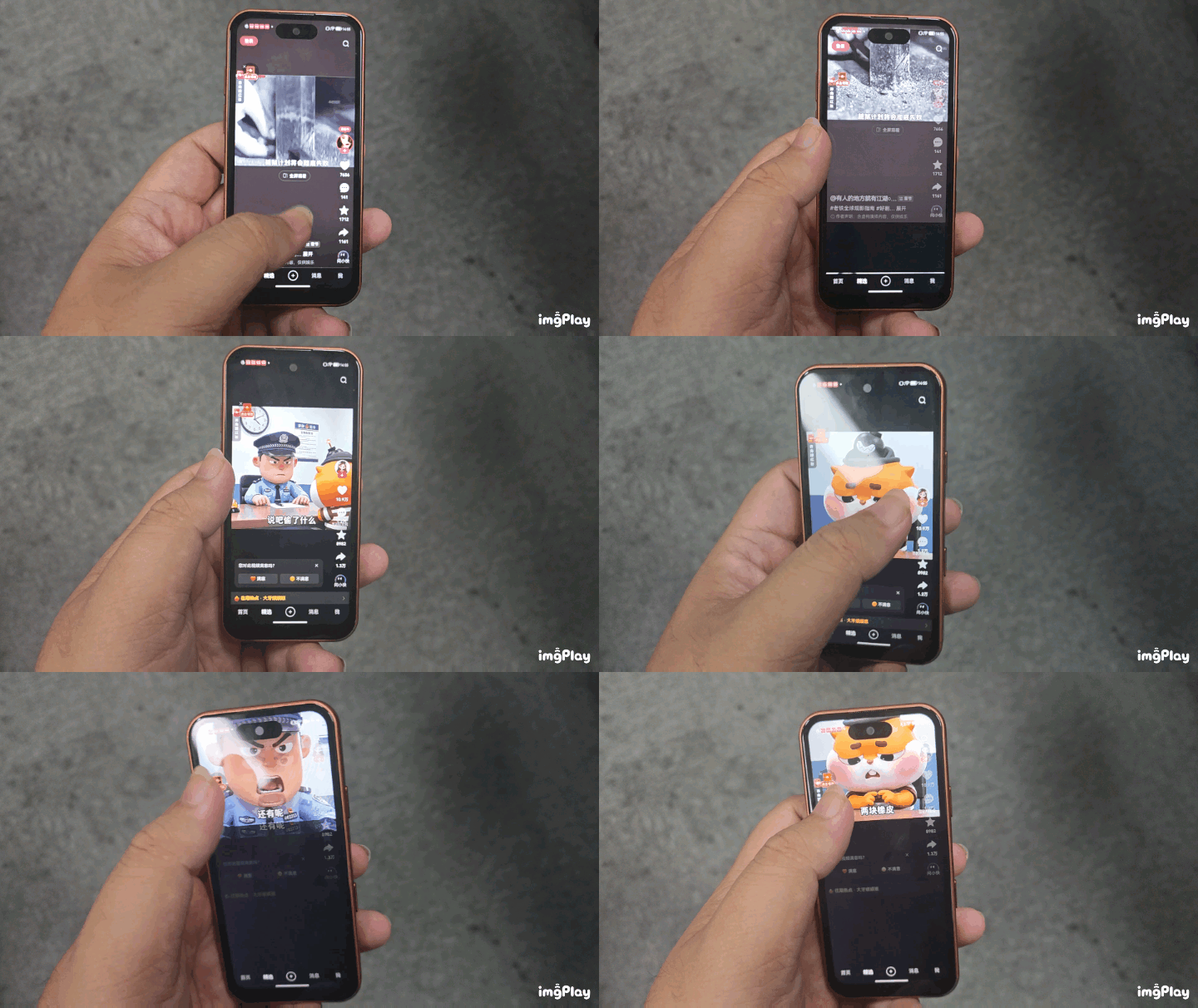
(Image source: Lei Tech)
Don't expect much from gaming either.
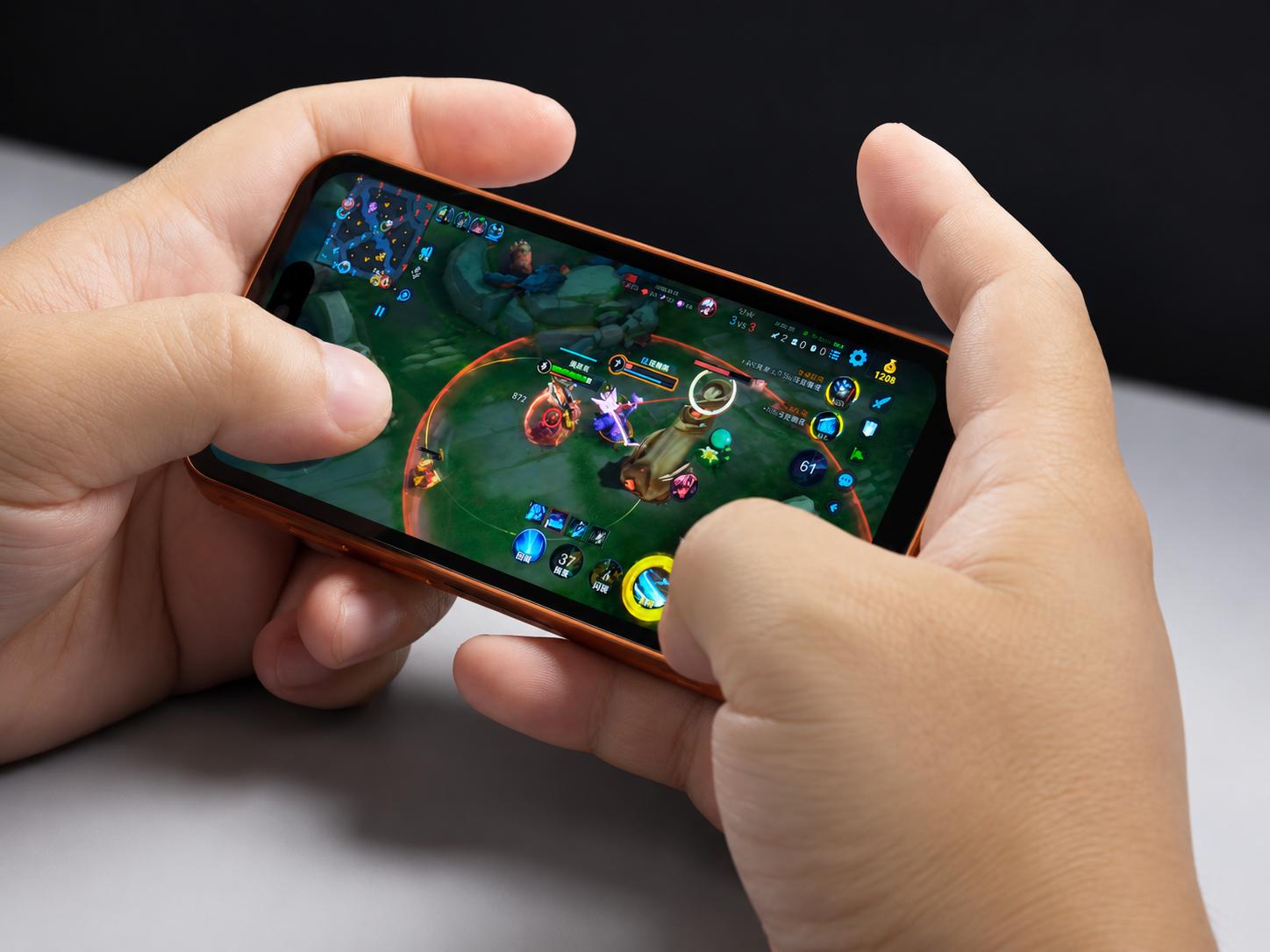
With this 4.5-inch small screen and low-end hardware, playing mainstream mobile games is pure torture. The screen is tiny, the on-screen buttons are cramped, and the performance can't handle complex graphics — gaming is just a painful experience.
In actual testing, Honor of Kings can barely run on high definition at 60 frames, but the chance of accidental touches is really high, making it quite frustrating.
(Image source: Lei Tech)
The official claims a 5000mAh battery, but actual testing shows it's only 2300mAh. Even in standby mode, the battery drains extremely fast — it can barely last a full day. When gaming, a 30-minute session of Honor of Kings consumes 22% of the battery, so it can only last a maximum of two and a half hours.
When the battery is dead, you can only recharge it with a classic 5V1A charger, which takes about two hours to fully charge the phone.
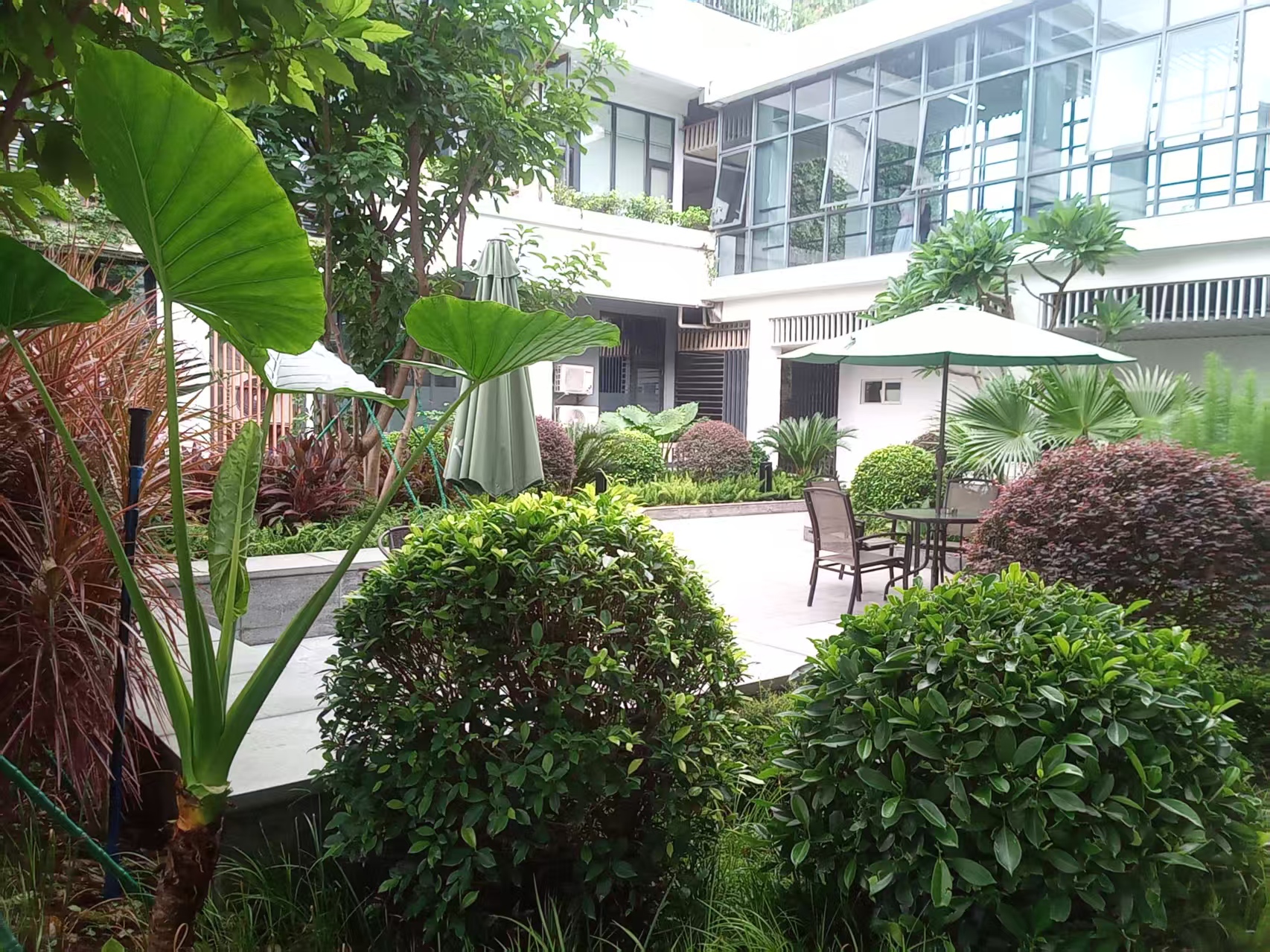
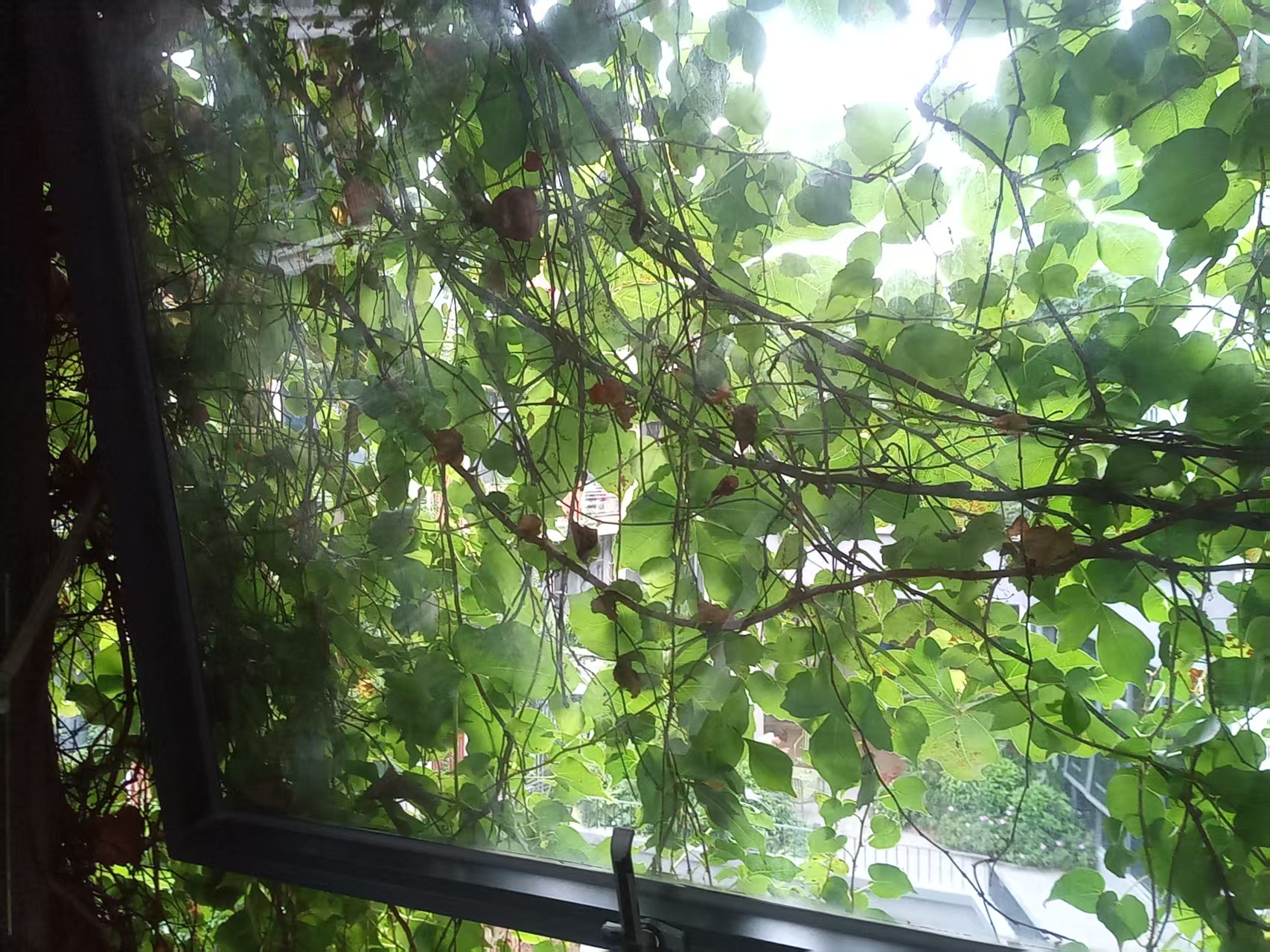
As for photography, the rear camera can barely take photos. It's fine for scanning QR codes and shooting express delivery forms during the day.
But if you want to shoot night scenes, portraits, telephoto shots, or ultra-wide-angle photos, that's asking too much of this phone. Even scenes with high contrast at dusk are very challenging for it.

(Image source: Lei Tech)
The most absurd thing is that even knockoff phones are now jumping on the AI bandwagon.
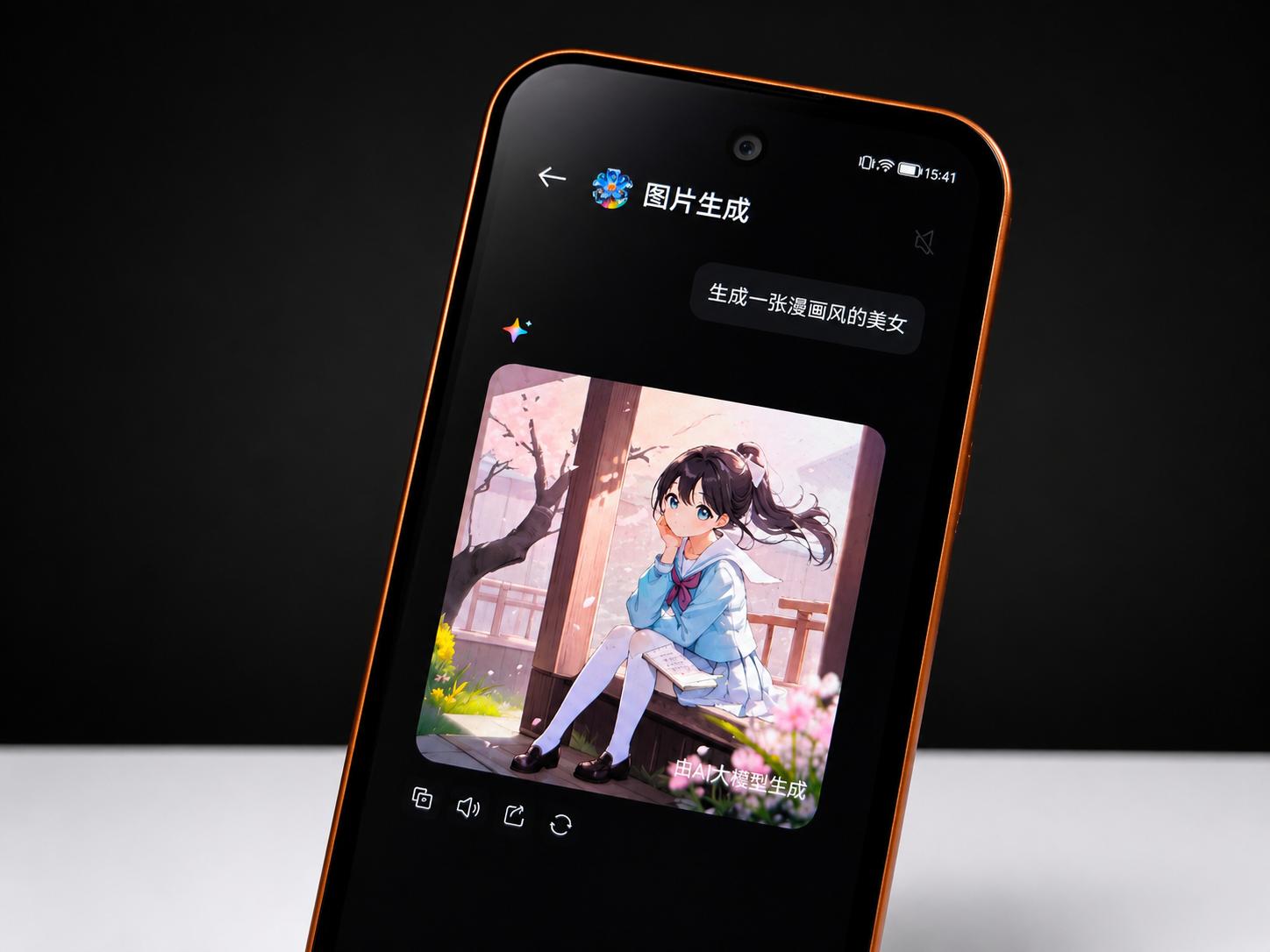
This IP17 Pro Mini also has an AI assistant that looks no different from those of mainstream brands. It features AI conversation, AI search, various intelligent agents, and text and image generation capabilities, all based on the Qwen large model at its core. So the experience isn't bad at all.
(Image source: Lei Tech)
As for Agent capabilities... do you really expect a Helio P65 processor to have any meaningful Agent performance?