Who on earth is buying those "tacky" products that have been universally mocked across the internet?
Recently, Valentino launched a new pair of high-heeled shoes priced at $1,100, featuring a vertical slit on the upper that only connects the footbed to the sole via a single thin transparent strap. As soon as this unconventional shoe design was revealed, negative comments like "so ugly it's horrifying", "looks like a pig's trotter", "the designer has regressed to primitive instincts" flooded in nonstop.
Yet the more backlash it drew, the greater its exposure became. This "pig trotter shoe" quickly dominated headlines across major fashion media, emerging as the most talked-about item this summer.
The "ugly oddities" in the luxury circle usually follow a self-consistent consumption logic: the more absurd the design, the more memorable it is; the more controversial it gets, the stronger its social currency attribute. After all, those who can afford to spend $1,100 on a pair of "pig trotter shoes" are never paying for "good looks", but for a status marker and an exclusive social signal for their inner circle.
If you shift your focus from luxury goods to the mass consumer market, you will find another equally thought-provoking scene unfolding.
GREE's Rose Air Conditioner, mocked by internet users as "ugly and overpriced" and "with a 1990s photo studio kitsch vibe", has surpassed 50,000 units in cumulative sales, with its highest price tag reaching 32,999 yuan. HOKA, described by netizens as "foam boards" and "grandma shoes", raked in $2.233 billion in global revenue. Back braces brand Backo, which has been dismissed as a "scam to fool consumers" for 20 years, set a record of exceeding 100 million yuan in Douyin sales in 90 days. Golf apparel brand Birdeye, labeled as "a symbol of tacky middle-aged tastelessness", recorded a 18.36% year-on-year revenue growth in the first quarter of 2026, hitting an all-time high since its public listing...
If luxury "ugly oddities" sell for their absurd premium, then what exactly do the "tacky grassroots products" in mass consumption sell for?
Written off for years, the Rose Air Conditioner and Backo are still flying off the shelves
In reality, many products that are ridiculed as "tacky" in public discourse are raking in real money at an astonishing pace.
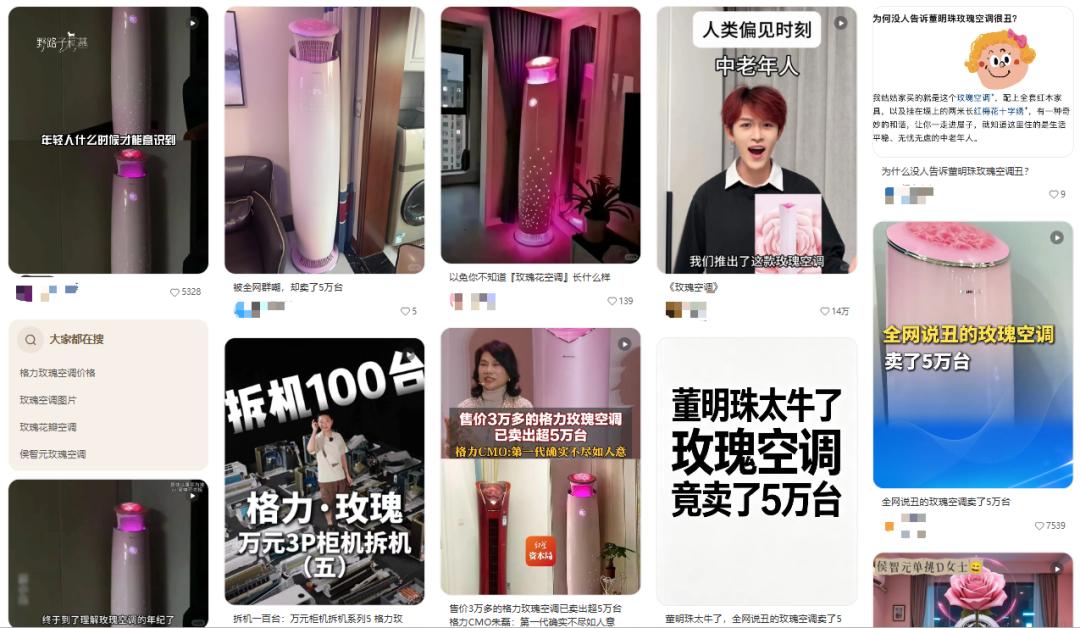
GREE's Rose Air Conditioner is the most representative example. This product, whose design Dong Mingzhu personally participated in, features a rose gold body and a three-dimensional bionic rose decoration on the top. After its launch in 2024, it quickly became a trending topic online, with related discussions racking up hundreds of millions of views. Reviews like "ugly, tacky, and overpriced" and "30,000 yuan can buy three ordinary air conditioners instead" spread everywhere.
Yet amid the overwhelming negative reviews across the internet, Zhu Lei, CMO of GREE Electric, disclosed in June 2026 that the Rose Air Conditioner has been iterated to its third generation, with cumulative sales exceeding 50,000 units. Estimated at an average price of 30,000 yuan, this single product alone has contributed roughly 1.5 billion yuan in revenue to GREE.
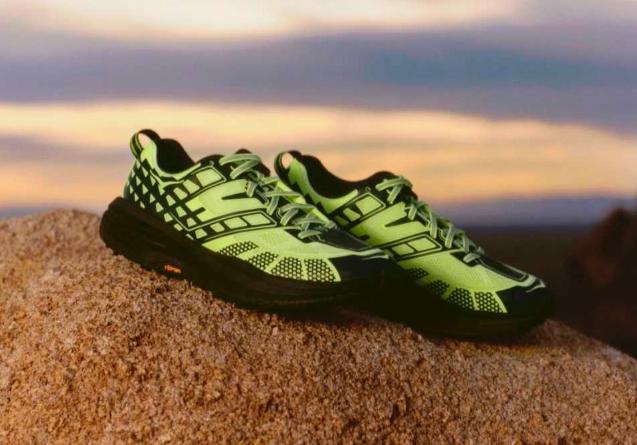
HOKA is a parallel case in the sports consumption sector. This running shoe brand, defined by its ultra-thick shock-absorbing midsole, has barely escaped "ugly" labels on Chinese social media, with comments like "foam board", "big-headed fish", "uglier than UGG in a very tangible way", and even netizens joking that its thick sole feels like stepping on half a brick.
Yet for all the complaints, HOKA's sales figures are soaring wildly: its global revenue reached $2.233 billion in the 2025 fiscal year, marking a 23.6% year-on-year increase. Even more thought-provoking is its user profile: among its Chinese consumer base, people aged 35 and above account for as high as 58.3%, which is 12.1 percentage points higher than that of Arcteryx, a brand widely regarded as a "must-have for middle-aged people".
Source: HOKA's official Weibo account
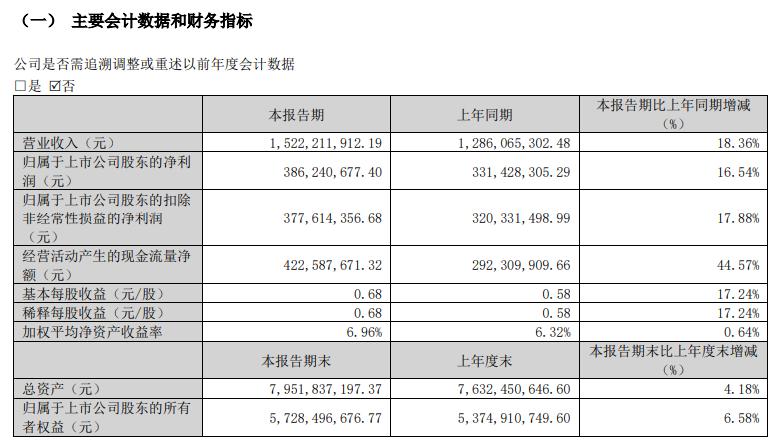
Birdeye is another example of "profiting quietly without making a fuss". This men's apparel brand, joked about by netizens as "the representative of tacky middle-aged tastelessness", recorded 4.314 billion yuan in revenue in 2025; its first-quarter revenue in 2026 hit 1.522 billion yuan, up 18.36% year-on-year, with both revenue and profits hitting all-time highs for the corresponding period since its public listing. Its gross profit margin has consistently stayed above 75%, even higher than that of some luxury giants. Yet on social media, almost all reviews about it are uniformly "not youthful, not good-looking, a little bit with the vibe of a stuffy government office".
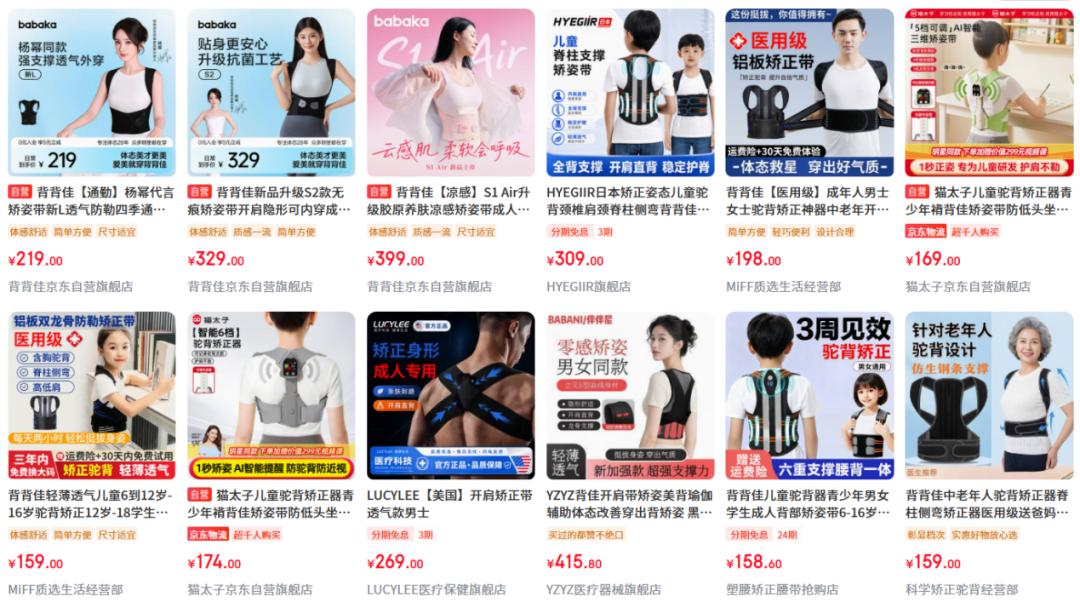
Compared with the products mentioned above, Backo has obviously gone through a much longer cycle of controversy. This national posture-correction brand, born in 1998, was labeled as a "consumer scam" for two full decades. After being acquired by Kefu Medical in 2022, the product gained a second life through livestreaming on Douyin, setting a record of exceeding 100 million yuan in cumulative sales in nearly 90 days. In 2025, the full lineup of posture belts and body correction products including Backo generated a total sales revenue of 500 million yuan.
Backo is selling well on e-commerce platforms
It is not hard to notice that these products are sharing the exact same fate: the more fiercely they are criticized in public discourse, the more solid their position in the consumer market becomes.
One consumer shared that her mother paid in full for the Rose Air Conditioner at home; she herself finds its design overly gaudy, even covering it with a cloth when it's not in use, but that doesn't stop the elder family member from loving it. Relevant data shows that the negative review rate of the Rose Air Conditioner among post-90s consumers reaches 76%, while the approval rate among post-70s consumers is as high as 82%.
Perhaps the loudest voices in public discourse exactly come from the group of people who are the least likely to place an order. And this is the underlying reason why the phenomenon of "public opinion backfire, sales surge" keeps appearing so frequently.
Some criticize, some buy: each group follows its own consumption logic
If you take a closer look at China's mass consumer market, you will find it has long been split into two parallel worlds that barely overlap with each other.
One world lives entirely online. Consumers here are predominantly young people, active on platforms like Weibo, Xiaohongshu, and Douyin, who hold the dominant say in aesthetic standards. Their preferences shift rapidly with changing trends, and their evaluations of products are usually based on first-sight visual impressions and the prevailing fads on social media.
They are keen on sharing their shopping experiences, with extremely high demands for "good looks" and "internet-famous attributes". Once a product fails to meet their aesthetic standards or keep up with the latest trends, it will easily spark a wave of complaints across the internet.
As a result, information spreads fast in this world, and word-of-mouth effects are prominent, yet they are often accompanied by emotional expressions and one-sided judgments: the Rose Air Conditioner is "overly decorated", HOKA is "the peak of tackiness", Birdeye is "the symbol of tastelessness", every judgment is made with full confidence, and every complaint sounds utterly convincing.
Birdeye's financial report for the first quarter of 2026
The other world exists in real offline consumption scenarios. It consists of a broader and more diverse consumer group, including but not limited to middle-aged and elderly people, housewives, and pragmatic consumers. They may not pay much attention to the trending updates on social media, and focus more on product practicality, cost-effectiveness, and brand reputation.
For them, purchase decisions do not need to be approved by public opinion, nor do they need to be explained to anyone. Whether a product can meet their daily needs, is durable, and priced reasonably, is the core factor that determines whether they will buy it.
Therefore, in this world, they will even walk into physical offline stores, touch the fabric, feel the texture, and check the actual product in person. Product reputation here relies more on recommendations from friends and family, real usage experiences, and long-built brand trust.
Thus, the decision-making logics of these two worlds are completely different.
Consumption in the first world is an outward expression: what products you buy is telling the world "who you are". A pair of shoes, a piece of clothing, an air conditioner, all serve as demonstrations of your self-identity.
Consumption in the second world, however, is an inward pursuit of stability: buying a product is not for showing off to others, but to solve your own practical problems.
For example, when a Birdeye customer walks into a store, they most likely won't say "this design is quite interesting", but ask "is this appropriate to wear for client meetings?" or "do leaders also wear this brand?" What they buy is never better-looking clothes, but a no-brainer, hassle-free choice.
An air conditioner priced at around 30,000 yuan would be hard to justify its high price to others if its appearance is not much different from an ordinary floor-standing unit. But the highly decorative design of the Rose Air Conditioner makes its premium price clearly visible, making the fact that "you've bought a one-of-a-kind air conditioner" much easier to perceive.
Latest sales figures reversed the public opinion of the Rose Air Conditioner Source: Xiaohongshu
The priority of functions is also completely different in the two worlds.
Consumers in the first world are willing to pay a premium for aesthetics, such as a good-looking phone case, or a pair of trendy shoes, even if their functions are mediocre.
But consumers in the second world are the exact opposite: functionality always comes before aesthetics. As HOKA is often recommended by physical therapists for effectively relieving plantar fasciitis and knee pain, its "ugliness" means nothing at all compared to its practical benefits.
More importantly, the sales channels of these two worlds sometimes do not overlap: the first group is accustomed to placing orders online and getting products delivered to their homes; the second group prefers offline experiences and face-to-face transactions.
GREE's nationwide network of offline specialty stores and home appliance malls is the real battlefield for Rose Air Conditioner sales; most of Birdeye's 1,400 stores are located in airports, high-speed railway stations, and high-end shopping malls, targeting high-net-worth business people who travel frequently and have no time for online shopping... Relying on offline channels, they have quietly sold out products that were written off across the internet.
The Rose Air Conditioner has sold 50,000 units in total, Birdeye recorded 4.314 billion yuan in full-year revenue in 2025, and Backo exceeded 100 million yuan in sales within 90 days. Behind these numbers lies a long-hidden truth overlooked by internet public opinion: those who criticize the product will never buy it, and those who buy it will never complain about it.
For brands, instead of thinking about how to "turn the tide" in public discourse, it is better to figure out one question: who exactly is this product designed for? Is it for the person typing on their keyboard on social media, or for the person who will actually take out their wallet to place an order?
Different answers lead to different products, and different ways of surviving in the market.
This article is from WeChat official account "Zinc Scale" (ID: znkedu), authored by Zinc Scale, published with authorization from 36Kr.