When all the positive factors have been fully discussed, how can ordinary people buy gold?
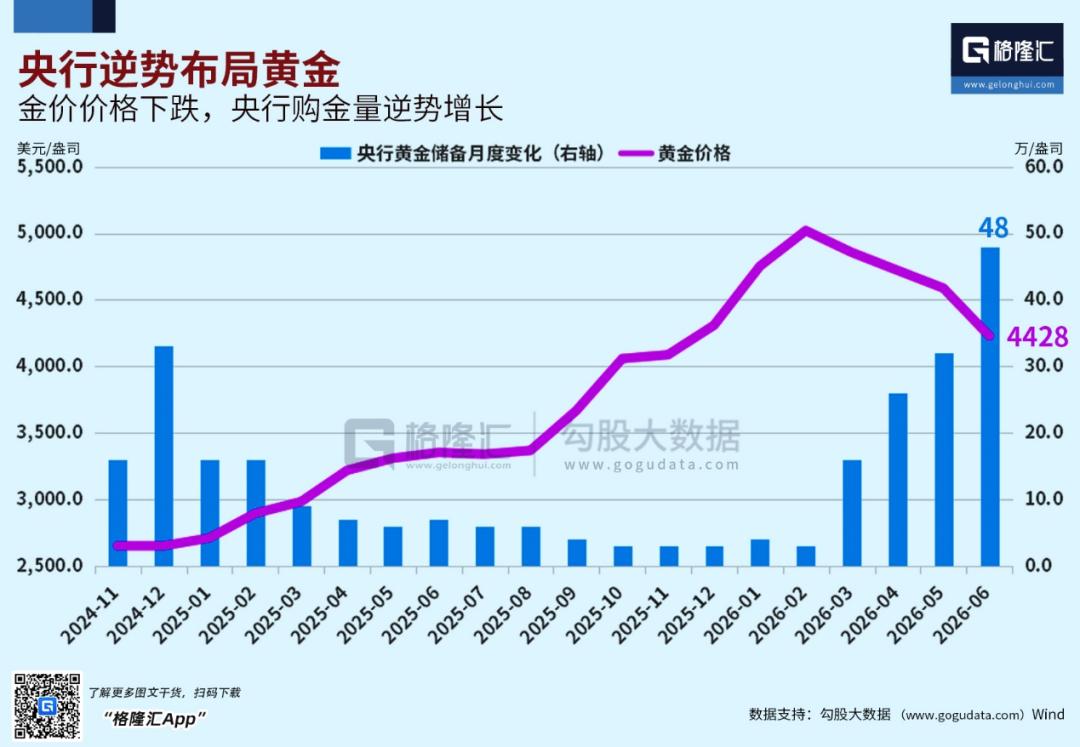
Recently, countless readers have sent private messages through our backend asking about gold: the price of gold plummeted from a peak of $5,586, hitting a low of $3,963. In just a few months, the maximum drawdown neared 30%, with many gold mining stocks losing half their value from highs, and some even dropping by 60%.
Some investors are panicking to cut their losses and exit the market, while others are gearing up to buy the dip. With idle cash on hand, should you stock up on gold right now?
At the end of January 2026, gold prices surged from $4,368 to $5,586 in just one month, posting a staggering monthly gain of 28%.
Back then, bullish market signals were everywhere, each one strong enough to push gold prices higher: global central banks kept buying gold in large volumes, the credibility of the dollar continued to weaken, fiscal deficits across countries kept expanding, geopolitical conflicts around the world kept escalating, and the market widely bet on the Federal Reserve cutting interest rates...
With multiple bullish factors stacking up, a perfect upward logic was presented to everyone, and almost no one was bearish on gold.
But no one expected that after all these bullish signals were repeatedly hyped and fully priced in by the market, the trend reversed sharply. Gold prices kept drifting lower, hitting the $3,963 low at the end of June, leaving investors who chased highs in the early stage with heavy losses.
Clearly, the long-term upward logic hasn't disappeared, so why did the price drop so drastically? This is the core question that everyone looking to invest in gold must figure out.
01 The long-term bull market story is not a fabrication
First, let me reassure you: the underlying logic for gold's long-term bull run has not collapsed, and it remains solid and reliable.
After the Russia-Ukraine conflict broke out in 2022, one event completely changed the reserve mindset of central banks around the world: Russia's foreign exchange reserves were frozen.
Before that, central banks prioritized liquidity and credibility for their reserve assets, with US Treasuries and euro-denominated assets being the top choices. After that incident, the "sanction-free, self-controlled" nature of assets became the primary consideration.
Gold does not rely on any country's sovereign credit. Stored domestically or in neutral regions, it can be fully controlled independently, directly upgrading its safe-haven attributes.
Since then, the traditional correlation between gold and real interest rates has weakened significantly. In China, Russia, and neighboring emerging economies, the proportion of gold in foreign exchange reserves has been rising steadily.
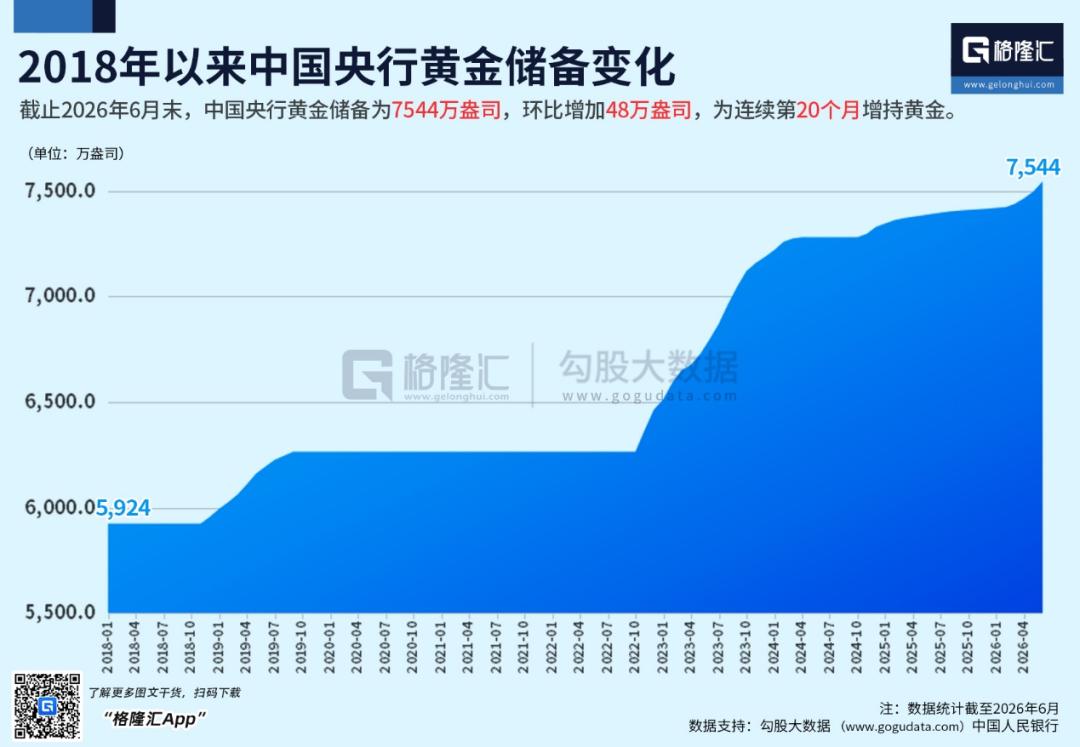
Global central bank gold purchase data further validates this long-term trend.
From 2022 to 2024, the average annual net gold purchase by central banks stabilized at around 1,000 tons, doubling from the 473-ton annual average of the previous decade. In 2025, net purchases dipped slightly to 863 tons, still far exceeding normal historical levels. In the first quarter of 2026, central banks made a net purchase of 244 tons, increasing their holdings more than in the same period last year.
Emerging markets represented by China and Poland, which previously had a relatively low proportion of gold in their reserves, have huge room to continue increasing holdings in the future. Long-term buying from central banks will keep underpinning gold's value.
Looking at the global monetary environment, the general trend of fiat currency depreciation is also favorable for gold.
The US is pursuing expansionary fiscal policies, coupled with continuously rising military spending in the Middle East, the risk of US Treasury sell-offs persists, and the dollar and US Treasuries often weaken simultaneously. In Europe, internal partisan divisions are intensifying, energy costs remain high, defense spending has risen sharply, and the European sovereign debt market is constantly fluctuating. Japan continues to face pressure from energy shocks, with heavy fiscal subsidy burdens, a long-weakened yen, and rising sovereign debt risks.
As the global money supply keeps expanding and the credibility of fiat currencies continues to erode, gold, as a hard currency to hedge against credit depreciation, will not lose its medium- and long-term allocation value.
The long-term logic holds, so why did gold prices plunge at the start of this year? The core answer: all bullish factors were fully priced in by the market in advance.
02 The bullish story gets fully exhausted ahead of time
The problem lies in "how to map long-term logic to short-term price movements".
The initial upward momentum for gold came from long-term buying by central banks, when Western speculative funds were not heavily involved.
After 2024, three hot themes — interest rate cut expectations, a weaker dollar, and geopolitical risks — attracted massive amounts of leveraged capital from ETFs and futures into the market. In 2025, global gold investment demand surged 84% to 2,175 tons, with the size of investment capital reaching 2.5 times the volume of central bank gold purchases. The daily pricing power of gold completely fell into the hands of short-term financial funds.
In early 2026, the market trend became completely frenzied, with global gold ETFs adding 120 tons in a single month, hitting a record high in holdings. Central banks were still buying steadily, but what drove gold prices to peak was not long-term capital, but highly leveraged speculative funds and retail investors following the trend.
The market fully priced in all the bullish factors that would normally take years to materialize, all within just a few months.
With all bullish narratives exhausted, fewer and fewer new buyers could be convinced by the logic to enter the market, naturally draining the upward momentum.
The "Reflexivity Theory" proposed by financial tycoon George Soros perfectly explains this round of gold market movement:
When the real underlying trend starts to rise, higher prices reinforce the market's bullish perception, drawing a steady stream of capital to follow the trend. Pullbacks are seen as buying opportunities, skepticism fades away, market positions become highly concentrated, and the trend enters its "twilight phase".
With the trend only supported by inertia, market divergences gradually widen. Once funds start taking profits, concentrated leveraged liquidation will trigger a negative feedback loop, leading to a sharp plunge in gold prices.
03 Abandon speculative mindsets and focus on long-term allocation
For ordinary investors: you can trust the long-term logic, but don't chase in when everyone already believes in it.
The foundation for gold's long-term rise has not been shaken. The two core logics of continuous central bank gold purchases and eroding global fiat currency credibility remain effective in the long run. However, the early-year trend fully exhausted all bullish factors, and the market has now entered a phase of sideways consolidation to digest gains.
In the second half of 2026, gold's long-term value remains intact.
But the timing of entry matters more than the direction: buy in batches at low levels, hold patiently, and avoid leverage. Profit from market cycles, not from emotional speculation.
This article is from the WeChat public account "Gelonghui Finance Hotspot" (ID: glh_finance), authored by the Gelonghui editorial team, and published by 36Kr with authorization.