A 200,000-yuan monkey is still out of stock: Why have monkeys become a national strategic resource?
Recently, the most sought-after commodity in the pharmaceutical industry is neither a new drug nor high-end medical equipment, but monkeys.
In July, multiple experimental monkey farms in Guangxi, Guangdong, and Sichuan shared the same news: This year's crab-eating macaques have been almost fully reserved.
Even when stock is available, the prices are staggeringly high.
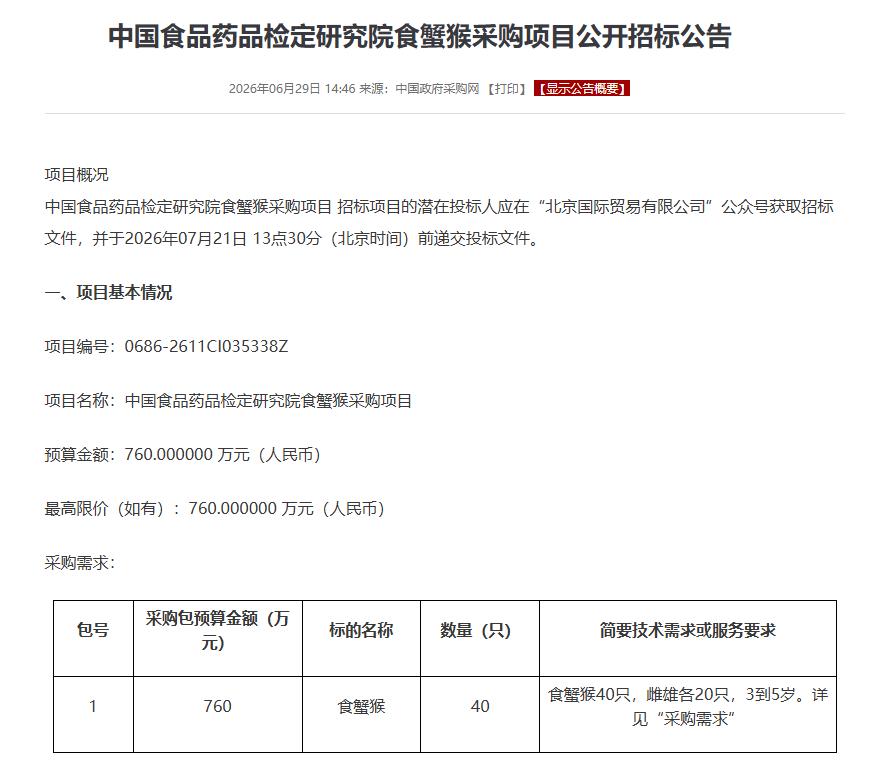
In June this year, the National Institutes for Food and Drug Control of China purchased 40 crab-eating macaques, with a winning bid unit price of 178,000 yuan. In another procurement announcement released at the end of the month, the budget rose to 190,000 yuan per monkey. Market quotations for adult crab-eating macaques have even exceeded 200,000 yuan.
At this price, the value of a single monkey is almost on par with a BYD Han EV.
More troublesome is that even with sufficient funds, you may not be able to secure a purchase.
Many CRO companies have fully booked their experimental monkey schedules, and pharmaceutical enterprises looking to conduct preclinical trials often need to "wait in line for monkeys" for five or six months in advance. This round of monkey price hikes began in the fourth quarter of 2025 and accelerated sharply after entering 2026, approaching the peak levels seen during the pandemic.
Why have monkeys become so expensive again?
The answer lies in the renewed upsurge of innovative drug development in China.
In 2025, the total number of registered clinical trials for new domestic drugs in China exceeded 5,000 for the first time, including 2,997 clinical trials for new drugs, representing a year-on-year increase of 18%. In the first half of 2026, the total value of China's pharmaceutical out-licensing transactions reached 99.7 billion US dollars. With an increasing number of innovative drug projects, the demand for experimental monkeys has surged accordingly.
On one hand, pharmaceutical enterprises are rushing to launch new projects, while on the other hand, monkeys typically produce only one offspring per year, and juvenile monkeys need to be raised for at least 3 years before they can be used in laboratory settings.
With demand spiking suddenly while supply cannot keep pace quickly, the phenomenon of "one monkey is hard to come by" is hardly surprising.
But here comes the question:
Why are monkeys indispensable for developing a new drug?
How can a single experimental monkey bottleneck an entire massive innovative drug industry chain?
Human Stand-ins
New drug R&D is a high-stakes endeavor with slim chances of success.
As a high-risk, high-reward activity, new drug development typically takes a decade and costs billions of US dollars.
After analyzing the R&D costs of 106 investigational new drugs and biological agents (covering 1442 compounds), the US research institution Tufts Center found that successfully developing a single drug requires an expenditure of 1.395 billion US dollars.
When factoring in the time value of capital and opportunity costs, the total cost of developing a new drug reaches 2.558 billion US dollars.
The difficulty of new drug R&D lies not only in massive capital investment, but also in formidable technical challenges.
The R&D process for a new drug includes the discovery phase, pharmaceutical research phase, preclinical biological research phase, and clinical research phase, before it can finally be approved for market launch.
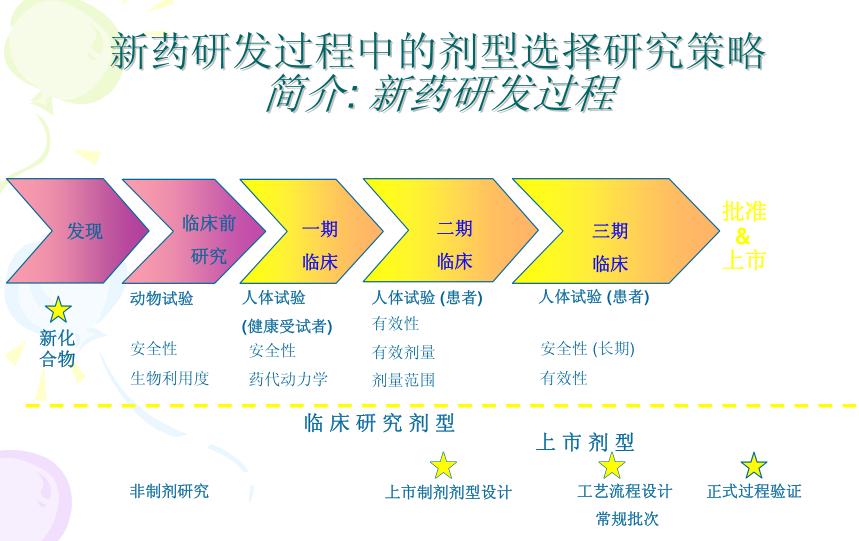
New Drug R&D Process
Before entering the clinical research phase, animal testing must be conducted.
The purpose is to use animals as human stand-ins to preliminarily evaluate therapeutic effects and potential adverse reactions, so as to provide a reasonable basis for dosage selection, trial design, and adverse reaction monitoring for subsequent clinical trials.
Laboratory mice are regular residents in research labs, to the extent that the term "lab mouse" is often used metaphorically to describe people treated as test subjects or used for practice.
However, mice are rodents, and there are significant differences in physical structure and genetics between them and humans.
To improve the accuracy of animal experiments, there is an urgent need to find alternative animal models.
Monkeys are undoubtedly one of the best choices.
As non-human primates, monkeys share higher similarity to humans in physical structure and genetics.
Scientific research shows that monkeys share 93% to 98% of identical DNA with humans, and possess similar brain anatomical structures and bodily systems.
Monkeys can be regarded as perfect human stand-ins, and have become critical for the research of new drugs, vaccines, and biological agents.
Many countries, including China, explicitly stipulate that all new drug R&D must obtain reliable conclusions from non-human primate experiments before proceeding to clinical research.
As such, monkeys have become an indispensable component for the birth of every new drug.
Apart from new drug R&D, monkeys also hold an irreplaceable position in life science research.
Recently, a research team from the Chinese Academy of Sciences published important findings in the journal *Nature*.
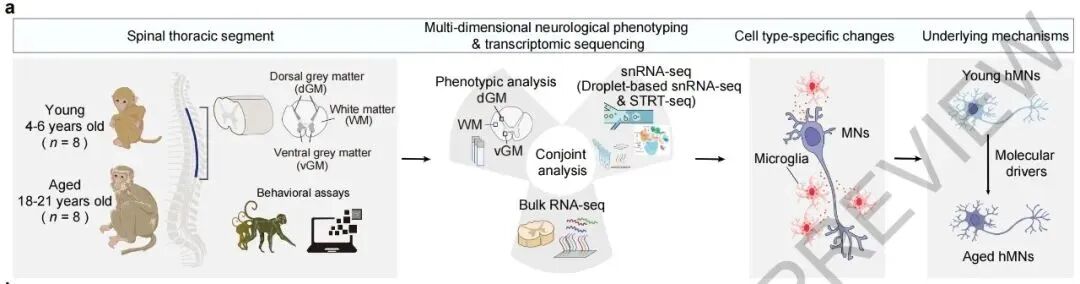
Research Framework
By studying the thoracic spine tissue of monkeys, the researchers explored the specific changes in the spinal cord during the aging process.
Because non-human primates are highly similar to humans in walking patterns and fine motor control, their neuroanatomy and physiology can represent human characteristics to a certain extent.
In addition, studies on surgical methods, medical devices, radiotherapy, and chemotherapy are mostly tested on monkeys before entering human clinical trials.
It can be said that monkeys have played an indelible role in the development of modern medicine.
Scarcity of Experimental Monkeys
Although experimental monkeys are vital to modern medicine, they usually only draw attention from industry insiders.
Back in 2020, the price of experimental monkeys experienced a dramatic surge.
In 2014, the price of one experimental monkey was around 6,500 yuan, and by 2018, the price only rose to 14,000 yuan.
In 2020, the peak price skyrocketed to 230,000 yuan per monkey.
According to data from China's Procurement Network, the National Institutes for Food and Drug Control purchased a batch of 120 experimental monkeys at an average unit price of 170,000 yuan per head.
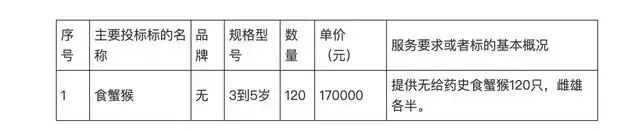
Procurement Price
Prices in the US are even more outrageous, once surging to 60,000 US dollars (approximately 420,000 yuan) per monkey.
Even at such "sky-high prices", these monkeys are still snapped up quickly.
The reason is simple: "The whole world is facing a monkey shortage", with demand outstripping supply.
The scarcity of experimental monkeys can be analyzed from both the demand and supply sides:
First, look at the demand side.
The sharp price surge of experimental monkeys occurred in 2020.
That year, the COVID-19 pandemic spread across the globe.
To defeat the virus, countries and enterprises devoted all their efforts to scientific research, leading to a sharp increase in R&D demand for vaccines and COVID-19 treatments.
Taking drug clinical trials as an example, their numbers have continued to grow in recent years.
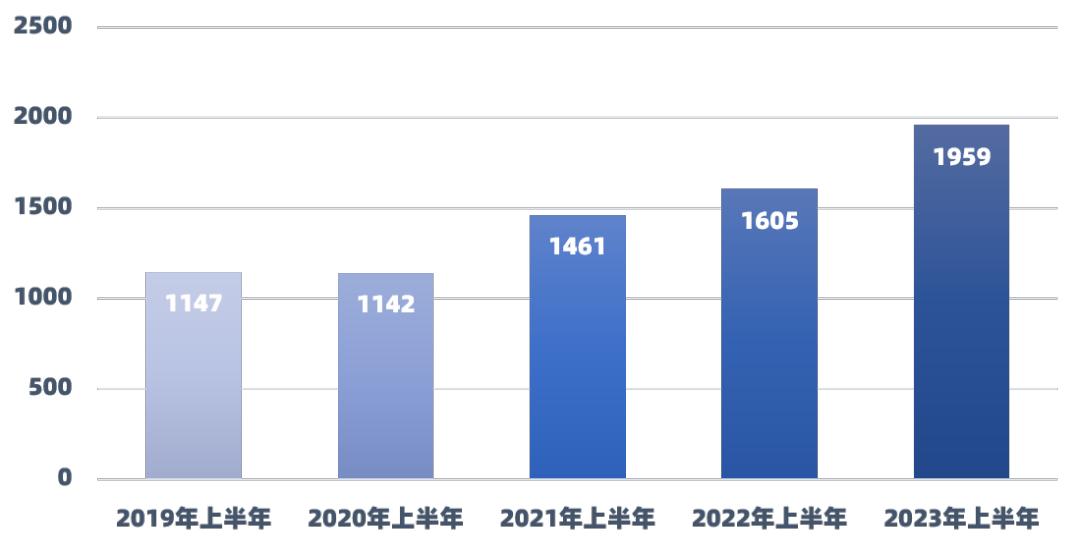
Number of Drug Clinical Trials Registered and Publicized by CDE
Generally speaking, each project requires 60 experimental monkeys.
As the number of drug R&D projects increases, the demand for experimental monkeys has risen accordingly.
Next, look at the supply side.
We are familiar with monkeys, but not all monkeys are qualified for experiments.
The threshold for experimental monkeys is quite high: they must have excellent genetic backgrounds and be in good health.
Similar to humans, monkeys have a slow reproduction rate, usually producing only one offspring per litter; their growth cycle is long, as juvenile monkeys must reach 3 years of age before they can be used in experiments.
These characteristics not only extend the supply cycle of experimental monkeys, but also make it difficult to increase production in a short period of time.
In addition, after the "scarcity of experimental monkeys" phenomenon emerged, many pharmaceutical enterprises, fearing a shortage of monkeys, began to hoard them frantically.
Enterprises with limited financial resources buy a few extra monkeys; wealthy giants go as far as acquiring entire monkey farms.
For example, on June 6, 2022, JOINN Laboratories announced that Yingmao Bio had become its wholly-owned subsidiary, bringing 20,000 experimental monkeys from the latter under its control.
In China, breeding experimental monkeys requires special qualifications, and there are fewer than 60 farms nationwide holding a production license for experimental monkeys.
Pharmaceutical giants acquiring monkey farms for self-sufficiency have disrupted the original supply system, further tightening the supply of experimental monkeys.
Supply Chain Security
Currently, the main experimental monkey species used are crab-eating macaques from Southeast Asia, with a small number of rhesus monkeys as substitutes.
In the post-pandemic era, the total volume of global COVID-19 vaccine and treatment R&D has declined, leading to a significant drop in experimental monkey prices.
Although prices have fallen, we still need to pay attention to the supply chain security of experimental monkeys.
On one hand, crab-eating macaques are mainly produced in Southeast Asian countries such as Thailand and Laos, and they prefer to inhabit tropical rainforest areas.
In March this year, the International Union for Conservation of Nature (IUCN) officially announced that crab-eating macaques have been added to the *IUCN Red List of Threatened Species*.
The IUCN is an independent organization with governmental and non-governmental members. It does not directly regulate wildlife trade, but the *IUCN Red List of Threatened Species* it formulates carries significant influence.
After crab-eating macaques are listed as endangered species, the 184 countries that are parties to the *Convention on International Trade in Endangered Species of Wild Fauna and Flora (CITES)* are required to obtain trade permits for any transaction involving crab-eating macaques.
This will affect the global supply of experimental monkeys.
On the other hand, while global pharmaceutical R&D has cooled down, China's pharmaceutical R&D is still growing.
China is the second-largest consumer of experimental monkeys in the world. With the gradual enhancement of Chinese pharmaceutical enterprises' independent R&D capabilities, the demand for experimental monkeys is expected to rise in the long run.
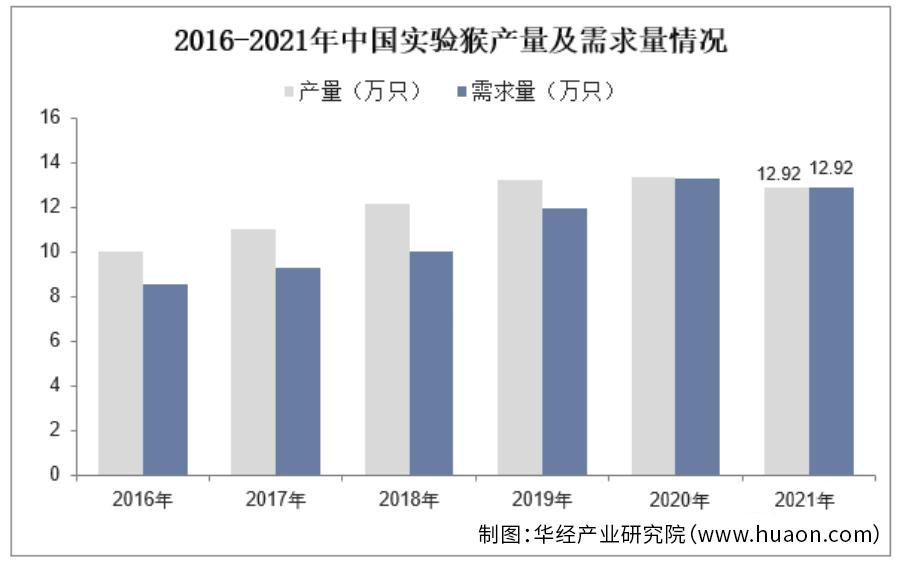
China's Experimental Monkey Production and Demand Volume
From the perspective of the global supply chain of experimental monkeys, China is the world's largest breeding country and the largest exporter of experimental monkeys.
Europe and the United States have almost no wild monkey resources, and they mainly import experimental monkeys from China and Southeast Asia.
From 2017 to 2019, more than 50% of experimental monkeys in the US came from China.
After the pandemic, China banned the export of experimental monkeys, which changed this situation.
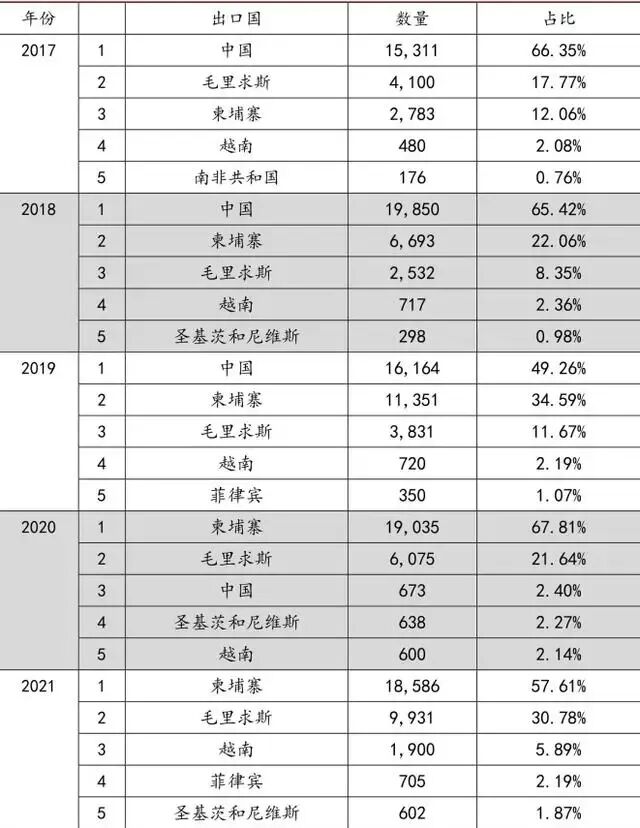
Overview of US Experimental Monkey Imports 2017-2021 Source: China Post Securities
It is worth noting that a large proportion of the experimental monkeys exported by China are wild monkeys imported from Southeast Asia, which are then bred into qualified experimental monkeys before export.
In other words, China's experimental monkey supply also heavily relies on Southeast Asia to a large extent.
In the past two years, monkey-source countries such as Cambodia and Vietnam have strengthened the management of experimental monkey exports, which has partially reduced China's access to monkey resources.
Looking at domestic farms, statistics from the China Experimental Primate Breeding and Development Association in 2021 show that the national inventory of crab-eating macaques and rhesus monkeys is more than 240,000, with an annual output of only about 30,000 monkeys, while domestic demand has reached 40,000, resulting in a supply deficit.
Notably, the female monkeys used for breeding in domestic farms are severely aging, with declining reproductive capacity, which will affect future production capacity.
The biomedical industry is closely related to people's livelihood and national security.
Experimental monkeys are indispensable in pharmaceutical R&D and have become an important strategic medical resource.
The United States listed experimental monkeys as a national strategic resource as early as 2002, and countries including South Korea and Japan have also joined the competition for monkey resources in Southeast Asia.
China should plan ahead and make early arrangements.