Transformation of the Home Furnishing Industry in 2026: Cut the "Fat" and Keep the "Muscle"
In the summer of 2026, the global home appliance and furniture industry is permeated by a three-word mantra — "doing subtraction".
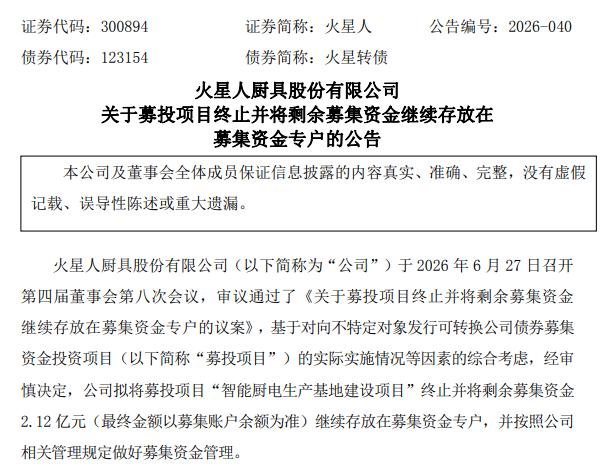
The list of moves is extensive: Jiangxin Home announced the deregistration of four subsidiaries; Manwah Holdings quietly withdrew from Jingmu Decoration; Zhongyuan Home signed a plant sale agreement worth 122 million yuan; Easyhome divested its microfinance business; Marsman terminated its 560 million-yuan smart kitchen appliance expansion project; Sleep Science halted its 99.9 million-yuan private equity investment; Oppein and Vanward Electric both issued internal notices to cut non-essential positions; some production lines at Laika's Huadu factory were suspended for a 3-month break; the new general manager of Jinggu Forestry voluntarily gave up his salary until the company achieves four consecutive profitable quarters...
Contraction, decluttering, and letting go are becoming a collective posture across the global home appliance and furniture industry in 2026. But this may not be the final chapter. By observing the development trajectory of Japan's home furnishing industry after the burst of its real estate bubble, New Home Paradigm finds that for some enterprises, the current situation is more like a deep squat before a leap.
From "Expanding Territory" to "Surviving by Cutting Losses"
In the domestic market, the contraction has evolved into several typical paths:
First, deregistering or transferring non-core subsidiaries to refocus on main business. The four companies deregistered by Jiangxin Home all had zero revenue, which is a typical move to clear idle shell companies. Manwah Holdings, which took a 51% stake in Beijing Jingmuxuan through strategic investment in 2025 and opened its first full-home furnishing store, withdrew in less than two years with a clear statement to "focus on its core functional sofa business". Easyhome made its wholly-owned subsidiary exit the microfinance industry, citing the low contribution ratio of the microfinance business. La-Z-Boy completed the divestment of its cabinet assets to focus on its core casual furniture business.
Second, selling heavy assets to replenish cash flow. Zhongyuan Home cashed out 122 million yuan by selling its factory building in Anji, with a straightforward logic: releasing the capital trapped in real estate and redirecting it to core businesses. The judicial auction data in the ceramics industry reflects a bipolar trend: in the first half of 2026, assets of about 11 ceramic enterprises were listed for auction, with unsold lots and suspensions becoming the mainstream, while the entire plant assets of Guangdong Xinshunjing Ceramics were finally sold for 300.2 million yuan, a premium of 36 million yuan. This shows that the market abandons "idle and inefficient assets" while chasing "high-quality production capacity".
Third, suspending capacity expansion and halting investments. Marsman terminated its 559 million-yuan smart kitchen appliance base project, for no other reason than that "the industry is in an inventory destocking cycle, and continued investment carries the risk of returns falling short of expectations". Sleep Science canceled its 99.9 million-yuan equity investment. Jiecang Drive postponed the completion of its European production base to the end of 2027, reflecting practical challenges faced by overseas factory construction such as complicated administrative approval procedures and long equipment supply cycles.
Fourth, restructuring on the organizational side. Oppein Home's internal notice titled "No Position Should Exist Without Value Creation", despite public relations revisions, did not deny the reality of "a significant shrinkage in the market pie". Vanward Electric even explicitly stated that it would "integrate overlapping departments and cut non-core positions" to promote the transformation to the DTC (Direct-to-Consumer) model. The new general manager of Jinggu Forestry, Ye Zhengda, voluntarily gave up his salary until the company becomes profitable, pushing the sense of urgency of "being at a critical moment of survival" to a new height.
New Home Paradigm found that the proportion of bankruptcies and factory closures is even higher overseas.
Australian retailer Adairs posted a net loss of 43 million Australian dollars and has withdrawn from the New Zealand market; Denmark's 60-year-old home furnishing brand Bolighuset Werenberg went bankrupt, leaving unsecured creditors with nothing; the 150-year-old British mattress manufacturer Airsprung went bankrupt, resulting in 71 layoffs; himolla, Europe's largest functional sofa manufacturer, initiated judicial restructuring; Japan's LIXIL closed its Namie factory in Mie Prefecture, which was put into operation in 1970, and merged its production lines into the Kuga factory.
A comparison between China and foreign countries reveals obvious differences: Chinese enterprises are currently mostly at the stage of "divesting non-core assets, terminating capacity expansion, and optimizing organization", with very few entering bankruptcy liquidation; while enterprises in Europe, America, Australia, and some Nordic countries have already entered a deeper stage of "store closure - asset impairment - CVA restructuring - bankruptcy". The former is taking the initiative to "slim down", while the latter is more like being forced to "clear out".
The Cycle Question: Why 2026?
The underlying logic of this round of contraction is not difficult to piece together.
First, the simultaneous sluggishness of global consumption and the construction industry. The "in-depth adjustment of the real estate market" and "industry inventory destocking cycle" mentioned by Marsman in its announcement are the common macro background faced by all players. The application documents of himolla clearly point out the triple pressures: weak European consumption, sluggish construction industry, and low-price competition. This combination of shocks will be painful for any home furnishing enterprise.
Second, the return verification of diversified expansion has failed. Looking back at the "diversification impulse" in the past few years, many side businesses — from cross-sector full-home furnishing and microfinance to medical technology layout and overseas mergers and acquisitions — were highly expected during the industry's upward period, but have become a burden during the downward phase. Manwah's failed attempt in full-home furnishing, the zero revenue of Jiangxin Medical Technology, and the meager profit of Easyhome's microfinance business are all typical examples of "we thought we needed to expand back then, but now we need to retract".
Third, organizational inertia and efficiency bottlenecks. The huge organizational structure and redundant positions formed during the high-growth era appear particularly burdensome in the era of stock market competition. Oppein's "position value theory" and Vanward's "determination to cut losses" are essentially corrections to the extensive management of the past. When revenue and profit margins both decline, "streamlining institutions and optimizing personnel" has changed from an optional measure to a necessary one.
Putting all these factors together, what New Home Paradigm sees is not a single enterprise "failing" in 2026, but the entire industry collectively re-evaluating "what is worth continuing to invest in, and what should be stopped".
From Japan's Experience to China's Current Situation: Where to Go After Decluttering?
Extending the timeline further, this scenario of "overall industry contraction - leading enterprises focusing on core business - recovery after a new round of market clearing" has actually played out in Japan's home building materials history.
The experience of Japan's LIXIL provides an important reference. As a leading giant in Japan's home building materials industry, LIXIL has gone through multiple cycles of "aggressive mergers and acquisitions - indigestion - divestment - refocusing on core businesses" over the past decades: it expanded globally by acquiring brands like GROHE and American Standard in the early years, and later successively divested non-core assets, closed old factories, and merged production lines. The recent closure of the Namie factory, which was put into operation in 1970, and the concentration of production lines into the Kuga factory, is precisely to address the operational efficiency decline caused by aging plant and equipment and the shrinking demand for new residential buildings.
After the burst of Japan's real estate bubble in the 1990s, the home building materials industry embarked on a path of "cutting overcapacity, reducing diversification, and deleveraging" that lasted for at least 20 years. The common move of the surviving leading enterprises (LIXIL, TOTO, Panasonic Housing Solutions, etc.) was to cut unprofitable product lines, merge production capacity into more efficient large-scale production bases, and concentrate resources on high-value-added core tracks.
For Chinese home appliance and furniture enterprises, New Home Paradigm believes that this 2026 contraction wave provides at least several reference points:
First, contraction does not equal collapse, and "active retraction" is far less costly than "passive collapse". Jiangxin's deregistration of zero-revenue subsidiaries, Manwah's withdrawal from full-home furnishing, and Easyhome's divestment of microfinance are all small but correct moves — redirecting resources and attention back to the main business that still has competitiveness. From Japan's experience, almost none of the enterprises that survived from 1990 to 2010 turned around through side businesses; all of them increased their market concentration in the stock market by relying on their core businesses.
Second, "regular dynamic optimization" on the organizational side will become more common than one-off layoffs. Oppein's proposition of "streamlining institutions, optimizing personnel, and implementing regular dynamic adjustments" will likely become the standard practice for leading enterprises in the next 3-5 years (Oppein issued a "Letter to Colleagues": Regular personnel optimization for survival). The organization can be bloated in the high-growth era, but it must be lean in the zero-growth era, and leanness is not achieved in one year, but adjusted in phases.
Third, AI and model innovation may open another window for "transformation amid contraction". IKEA is an interesting reverse example: it used its AI customer service Billie to handle nearly half of the inquiries, and converted 8,500 customer service staff into remote interior design consultants, making its paid design services generate about 1.3 billion euros in revenue in the first year. Vanward's promotion of DTC model and Oppein's organizational transformation in China are essentially moving in the direction of "getting closer to users and reducing management layers".
Institutions are not overly pessimistic about the market outlook. Multiple securities research institutions point out that the current home appliance and furniture industry is in a period of triple superposition: the real estate market bottom, inventory bottom, and valuation bottom. In the short term, leading enterprises can maintain their cash flow bottom line by contracting non-core businesses and optimizing organizational structure; in the medium to long term, as industry clearing accelerates, the market concentration of leading enterprises in their core tracks will further increase.
Conclusion: Only After a Deep Squat Can You Leap
Jiangxin's deregistration of subsidiaries, Manwah's withdrawal from full-home furnishing, Zhongyuan's plant sale, Easyhome's microfinance divestment, Marsman's suspension of capacity expansion, Vanward's organizational transformation... These 2026 "subtraction" moves vary from enterprise to enterprise, but their core is the same: only by putting down the unnecessary burdens can you hold on to what truly matters.
When LIXIL closed its 50-year-old factory in Japan, it did not say "we are failing", but said "merging production lines into the Kuga factory will improve efficiency". When IKEA converted 8,500 customer service positions into design consultant roles, it did not say "AI replaces humans", but said "let humans do what AI cannot do".
Contraction is never the end of the story. For the 2026 home appliance and furniture industry, New Home Paradigm believes it is more like a collective deep squat — the lower you squat, the further the next leap can reach the new springboard of human settlement that integrates "stock renovation, intelligence, and servitization".
After all, as long as people live in houses, home appliances and furniture will never disappear.