The era of easy profits is over, and robot leasing now hinges on delivery capabilities.
Opportunities are shifting from "those who own devices" to "teams that master scenarios and service capabilities".
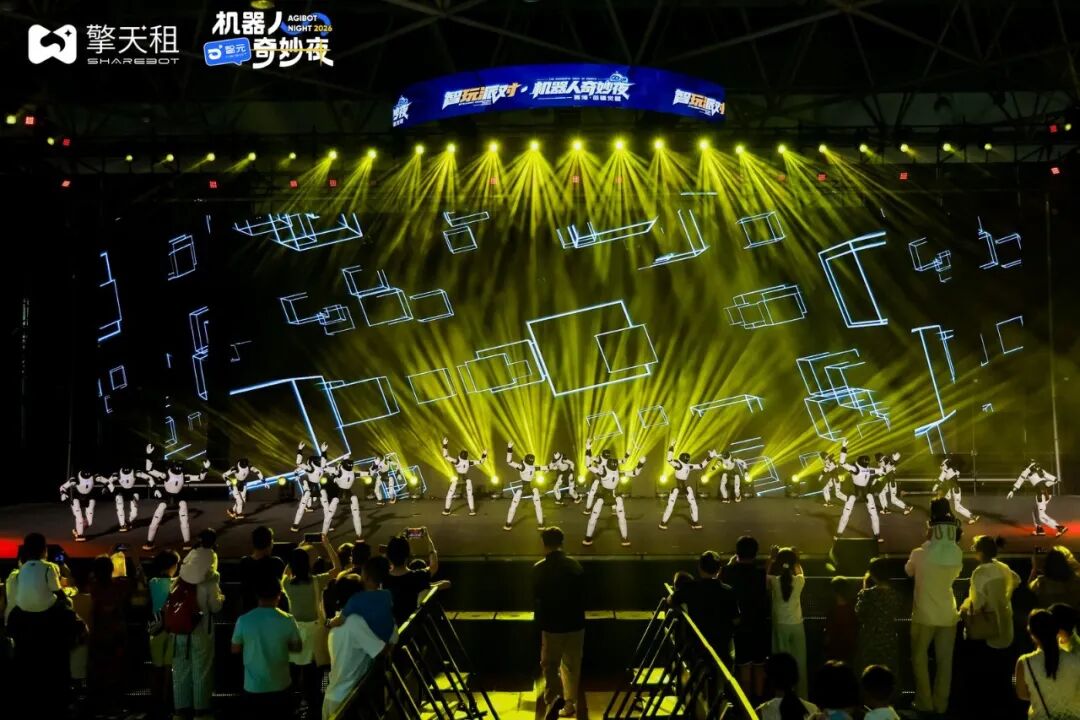
During the 2025 Spring Festival Gala, Unitree Robotics' robots performed Yangge dances on the stage. The "Spring Festival Gala Effect" drove robot prices skyrocketing: at that time, the daily rental fee for a Unitree G1 exceeded 10,000 yuan, and renting it out for 10 days could recoup the full purchase cost.
By the second half of 2025, the daily rental rate for the same model had been cut in half. "When we first started in April or May last year, we wouldn't take any daily rental jobs below 10,000 yuan, but by September or October, the price had dropped to 4,000 to 5,000 yuan a day," said the operator.
Xiao Cai, a robot rental operator in Shanghai, told *Narrowcast* (WeChat Official Account ID: exact-interaction) that she caught the industry's high-margin window in 2025, recouping her initial investment in just over two months. But the market changed noticeably in 2026, and she even began considering exiting the business by the end of the year.
While some are considering leaving, others are accelerating their market layout.
Qingtianzu, a robot application and service platform launched in December 2025, announced a new round of financing almost every month in the first half of 2026, and its current valuation has reached 7 billion yuan.
At the same time, robot rental platforms such as Wanji Yizu and Jishi Zu have gone online one after another; traditional rental platforms like Aizuji and Renrenzu, as well as local service giants including Meituan and JD, are also deploying robot rental services.
On one side, rental prices are falling and individual operators are exiting; on the other, platforms, capital and new service providers continue to enter the market. These seemingly contradictory changes point to a clear trend:
The robot rental industry is shifting from fanaticism to rationality. Increased device supply has driven down rents, clients are moving from novelty-seeking to performance evaluation, and service providers are shifting their focus from competing on device quantity to competing on customer acquisition and delivery capabilities.
The attention brought by the Spring Festival Gala once made this a business that profited from device scarcity; but now, some operators with devices on hand cannot even secure a single profitable order.
The industry is at a critical juncture where short-term traffic needs to be converted into long-term business. It holds opportunities for scale expansion, the emergence of leading platforms, but also hidden traps for blind speculative investment.
*Narrowcast* spoke with more than a dozen robot rental service providers and industry insiders, who previously worked in sectors including intelligent device sales and rental, exhibition services, automotive, construction and engineering. These practitioners hold different views on the robot rental business: some are planning exit strategies, some are still making heavy asset investments (even reinvesting all their profits), while others are embracing platforms to test the market with a light-asset model.
Beneath these differing judgments, entry barriers and competitive moats in the robot rental industry have begun to take shape.
It is increasingly resembling a chain-style local service business — it tests operators' ability to select high-quality robot units that can naturally attract clients, while also requiring comprehensive capabilities in customer acquisition, service and delivery to ensure efficiency and stability. Those who can combine their existing resources and experience with this business will gain a competitive edge.
The "easy money" era is over
Xiao Cai was introduced to the industry by a friend in the early days. She handled both online customer acquisition and offline services, and soon purchased her own devices to build a team, mainly serving clients in the Jiangsu-Zhejiang-Shanghai region.
Having been in the industry for over a year, she has witnessed the full cycle of rental price fluctuations and changing customer demographics driven by supply and demand shifts: "In the early stage, when daily rents were 10,000 to 20,000 yuan, our clients were almost all large players like commercial complexes, brands and auto shows. When rents dropped to 4,000 to 5,000 yuan, schools, small stores and individual clients started reaching out."
"This year, the price competition has become extremely fierce, and orders priced at around 1,000 yuan have already appeared in the market," Xiao Cai calculated for *Narrowcast*. "If the price is 1,000 yuan, you spend 300 to 400 yuan per person on labor, plus about 200 yuan on transportation, and you still have to cover robot depreciation and insurance. That leaves you with just 300 yuan profit per event — at that point, I don't see the point of continuing."
Intensifying competition has brought more chaos to the market.
On one hand, some operators under business pressure are using ultra-low prices of a few hundred yuan a day to attract clients, only to add various hidden fees when clients make inquiries. On the other hand, service and delivery quality are inevitably compromised.
Some operators agree to any request first without confirming delivery capacity, then try to solve problems later. During the May Day holiday, several peers contacted Xiao Cai the night before to ask for help servicing their next-day events. "If arrangements aren't properly made, you'll end up ruining the client's event," Xiao Cai said.
The flip side of price competition is that as a large number of players enter the market, production capacity on the supply side is released, and platform providers get involved, the supply-demand relationship has begun to shift.
The early market's supply shortage and high unit prices only lasted for a few months. Without explosive growth in the customer base, robot rental has returned to a buyer's market, with the initiative now in clients' hands.
Currently, the robot rental customer base is dominated by B-end and G-end clients, with C-end accounting for a small share. Once B-end and G-end clients move from novelty-seeking to regular rental usage, they tend to lock in fixed robot rental suppliers.
In this process, resources in some regional markets have started to converge toward operators with strong device scheduling capabilities and local client resources. Such operators can often deploy dozens of robots locally, undertake high-standard, high-value projects, and have stronger risk resistance.
Lao Chen worked in automotive sales in Shandong for 15 years. He believes the robot market will expand just like the automotive industry, and early entrants have better chances to make profits. Last October, Lao Chen bought two robots to test the waters, reinvested all his earnings into more devices, and now owns 22 units, most of which are Unitree robots and quadruped dog robots.
Lao Chen entered the Shandong market relatively early, and with strong customer acquisition capabilities, his client resources are sufficient to support a team of more than 10 people. "Our current partners are mainly schools (including middle schools and technical secondary schools) and tourist attractions," Lao Chen said. Such clients are hard to secure partnerships with, but their cooperation cycles are long and relationships are stable, which can offset the pressure of off-season downturns.
As rental prices fall and customer acquisition becomes more difficult, new players without local resources and a fulfillment team can hardly make the business model work solely by purchasing devices. "I think it's much harder for those who entered the industry after February this year to recoup their investment compared to earlier entrants. Some peers I know went out of business even before this year's Spring Festival. I believe only the top-performing operators in this industry can make money and stay in the game — the rest face an uncertain future," Xiao Cai said.
Moreover, the peak and off-season cycles of festival commercial performances directly determine rental operators' performance. Individual operators and small businesses without stable customer sources will face excessively high robot idle rates in the off-season. Without enough devices and resources to take on large orders, they can only scramble for orders in peak seasons and bear losses in off-seasons. This tough, low-margin business model cannot last long amid competition from platforms and leading operators.
Profits come not just from devices, but from scenarios and services
Kang Kai, an analyst specializing in the rental industry, pointed out: "Compared with the standardized rental of digital products, robot rental is non-standard, focusing heavily on customer acquisition and local delivery — the most labor-intensive part of the business is undertaken by service providers."
The core point is that clients are not just paying to rent a device; they are paying for the robot to complete specific services such as performances, greeting guests, and guided tours. This requires operators to deliver a bundled package including "robot unit + operator + customized content + transportation and insurance", providing a complete scenario-based solution and service.
"From the operator's perspective, many players are not suitable to enter this market. If you lack front-end customer acquisition capabilities and have to bear high labor costs for back-end delivery, then in the long run, as unit prices fall and profits shrink, operators with stretched cash flow will not survive once their payback periods extend," Kang Kai explained.
In the early days when robots were in short supply, clients were just looking to rent any available device out of curiosity, without paying much attention to service quality. Once robot rental becomes a regular procurement service, clients will conduct comprehensive evaluations from multiple dimensions including cost-effectiveness, stability, and user experience.
At this point, what truly determines rental rates and profit margins is not the devices, but the team behind them.
This means opportunities are indeed shifting from "those who own devices" to "teams that master scenarios and service capabilities". Among the practitioners *Narrowcast* interviewed, operators who remain profitable or continue expanding their investments usually share three common traits:
First, strong customer acquisition capabilities — they either already have local client and scenario resources before entering the rental industry, or can efficiently acquire clients online. Second, they can provide complete services including transportation, debugging, operation, content arrangement and event planning. Third, they have sufficient capital and device scheduling capabilities to withstand peak-off-season fluctuations.
Wang Peiyu and Li Shuhui are typical examples of such operators with abundant resources and comprehensive service capabilities.
Wang Peiyu works in the exhibition and event planning industry in Shanghai. He initially purchased quadruped robots to meet clients' robot-driven traffic attraction needs. When he found that robots deliver better traffic-drawing effects than traditional devices and market demand is growing, he pivoted to robot rental and exhibition planning, smoothly converting his existing client base.
In the first half of 2026, Wang Peiyu joined Qingtianzu and became a gold-level city partner in Shanghai. He believes the robot rental market is large enough, but only operators with core competitiveness can survive. "The era when you could make money just by owning a robot is over. Now it's a competition of comprehensive capabilities — including your ability to grasp and understand client needs, plan and arrange content, master product features, and solve on-site problems."
"Our company has more than 20 employees, covering online and offline customer acquisition (including key account services) and on-site execution," Wang Peiyu introduced. His team not only undertakes projects from large enterprises, such as a Fortune 500 foreign company's tech festival, but also long-term projects for schools and robot exhibitions.
"There is stable demand for scenarios like school tech festivals and sports events. We have also hosted more than a dozen robot exhibitions since 2025. The robot exhibition we held in Jiading, Shanghai during the May Day holiday had an average of 5,000 daily visitors and was overall profitable," Wang Peiyu said. The exhibitions feature static displays, human-robot interactions and robot performances, attracting mostly family audiences. Children gather around the robots, making the exhibition an educational and entertaining experience.
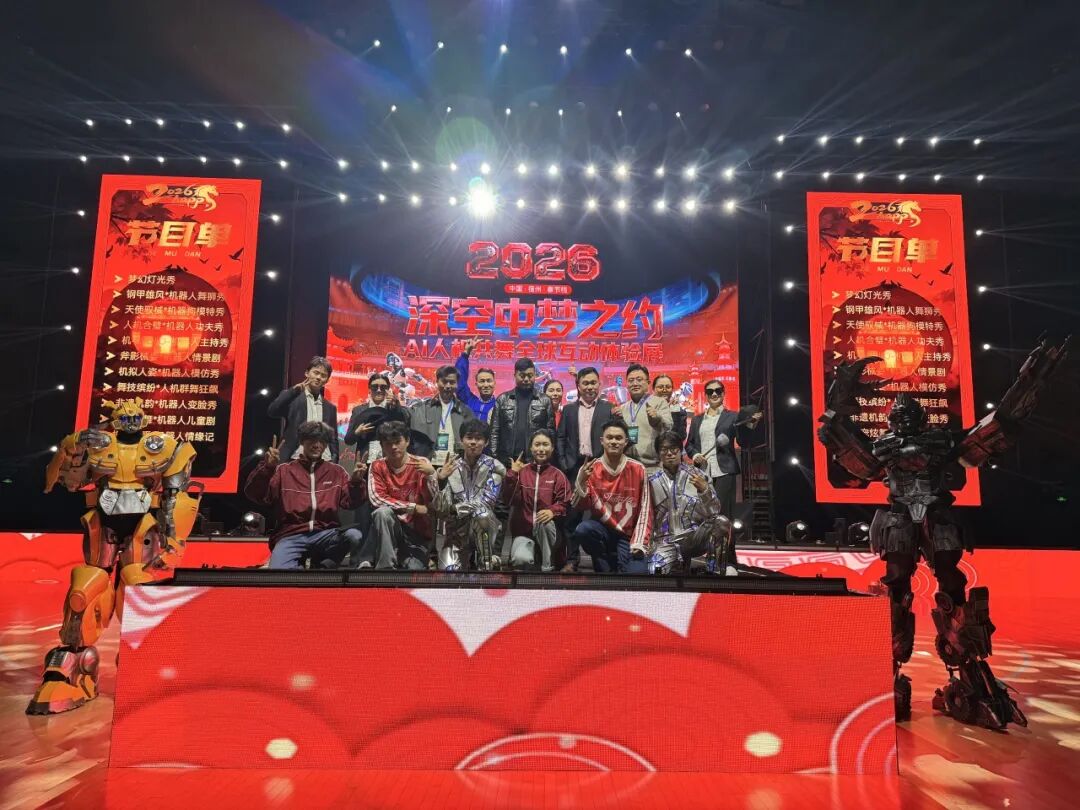
Image source: Provided by Wang Peiyu
Li Shuhui previously worked in the cleaning robot industry, and her team accumulated extensive local sales and service experience. Last December, her company Huaji Technology opened the first robot 6S store in Guiyang. The 1,000-square-meter store houses nearly 100 types of industrial and consumer robots, most of which are not directly purchased, but operate on a revenue-sharing model with brand partners.
This store is a comprehensive robot retail and service format. In addition to traditional 4S store-style exhibitions, sales and after-sales services, it also offers educational research tours, rental services and customized solutions. Rental is just one of its extended services. In half a year, Li Shuhui's team has already undertaken dozens of large-scale events.
"Compared with ordinary rental operators, we have a showroom to receive government agencies and school visitors. Moreover, our store's product portfolio is differentiated: in addition to robots from Unitree, Fourier Intelligence and Galaxy Intelligence, we have piano robots from Lingxin Qiaoshou, interactive chess-playing robots, as well as industrial robots for cleaning, inspection and security scenarios. We can cover more scenarios and provide more solutions, so many key local clients choose us," Li Shuhui said.
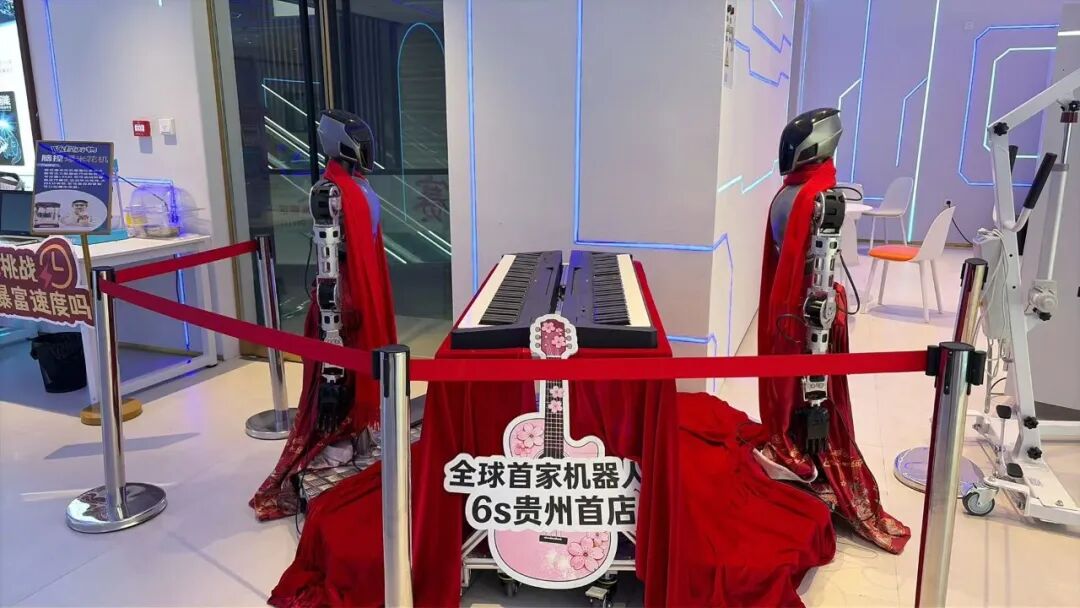
Image source: Huaji Technology
For Wang Peiyu and Li Shuhui, robot rental is not a completely new business that emerged out of nowhere, but an extension of their original business integrated with new technologies: exhibition companies turn robots into new event solutions, and device service providers integrate rental into their exhibition, research tour and after-sales systems. Existing clients bring down customer acquisition costs, while operators gain new revenue streams through new products and service capabilities.
This "resource-intensive business" judgment made Lao Liu abandon her plan to enter the robot rental industry. She worked in the luxury goods sector for more than a decade, served as a store manager for leading brands, and began researching robot rental after noticing the market trend. She visited several robot manufacturers, communicated with more than 30 industry insiders, and even set up an industry community.
"I believe there is huge market demand for robot rental, but after talking with industry practitioners, I realize this is an extremely resource-dependent business. You can only enter this industry if you have abundant resources, strong operational and marketing capabilities, and can guarantee high robot utilization rates." Although optimistic about the long-term development of robots, Lao Liu decided to give up the rental business and focus on operating self-media accounts and robot industry communities.
A mature supporting infrastructure system is required
If we shift our perspective from individual operators to the entire industry, we will find that robot rental has evolved from one-off device transactions to a sustainable operational business. It requires not just more robots and more orders, but a complete supporting infrastructure covering transaction matching, delivery, insurance, maintenance and asset disposal.
First of all, robot rental inherently has platform-based development requirements.
On one hand, demand is scattered across diverse scenarios including commercial performances, schools, cultural tourism and shopping malls, which a single rental operator can hardly cover independently. There is a clear need for a role that enables resource sharing between operators from different regions, just like what Xiao Cai does.
On the other hand, a single order involves device scheduling, transportation, operation, content configuration, on-site support and after-sales maintenance. This not only requires a platform to match supply and demand, but also to standardize the scattered service resources across different regions.
Qingtianzu is an active practitioner in platform building. It has built an offline fulfillment network by recruiting city partners, and provides training in customer acquisition, robot operation and on-site services. In mid-February this year, Qingtianzu started recruiting city partners. In March and April, the platform held three city partner launch events in Shanghai and Shenzhen, attracting more than 20,000 applicants. Currently, nearly 400 people have become gold or silver-level city partners of the platform.
At present, Qingtianzu still needs to expand its market presence and increase order supply. Some partners said that besides relying on the platform for customer acquisition, they also develop new clients on their own. Ye Xu, a silver-level partner of Qingtianzu, said his performance is at the medium level, but the platform cannot allocate enough orders to him for now, so he has to develop clients independently.
Another gold-level partner, Lao Yu,