All the pressure facing Qinghai Spring has been left for the second half of the year.
In the first half of 2026, *ST Spring shifted from profitability to losses, with operational pressures continuing to intensify.
The recurrence of this situation is primarily driven by its business structure. The company has long targeted the high-end consumer market with two core product lines: ultra-premium Baijiu and Cordyceps sinensis, whose key customer base is concentrated in business banquets and holiday gifting scenarios. As high-end consumer demand continues to shrink, both core businesses have struggled to achieve meaningful growth.
More critically, after two postponements, the company still failed to submit its response to the 2025 annual report inquiry letter, creating dual pressures from historical financial hidden risks and this year's mandatory delisting prevention requirements.
Deteriorating Fundamentals
Ten years after the collapse of the commercial myth surrounding Jicao 5X Cordyceps tablets, *ST Spring (600381.SH) has been in continuous transformation, exploring new business avenues and eventually forming a dual-core layout of large health and liquor operations. However, its operations have never stabilized on a positive trajectory, and its business conditions have instead grown more challenging.
Recently, the company released its 2026 semi-annual performance forecast, predicting a net profit attributable to shareholders of -32.28 million yuan to -37.52 million yuan, marking a shift from profit to loss; its non-recurring items excluded net profit is projected to be -34.55 million yuan to -39.79 million yuan, with the scale of losses expanding significantly.
This dramatic performance reversal is jointly affected by industry cycles and the broader consumer environment. The company's core products, Tinghua Liquor and Cordyceps sinensis, are primarily positioned for high-end gifting and business consumption. Currently, high-end consumer demand continues to contract, and the Baijiu industry has not yet emerged from its adjustment phase, leaving the enterprise facing severe operational challenges.
Compared to its traditional Cordyceps sinensis business, Qinghai Spring entered the Baijiu sector relatively late. At the end of 2020, the company abandoned its small-format liquor business to focus resources on developing the Tinghua Liquor product line. It was not until the end of 2023 that the upgrade and finalization of the Tinghua Liquor and Duhua Liquor product series were completed.
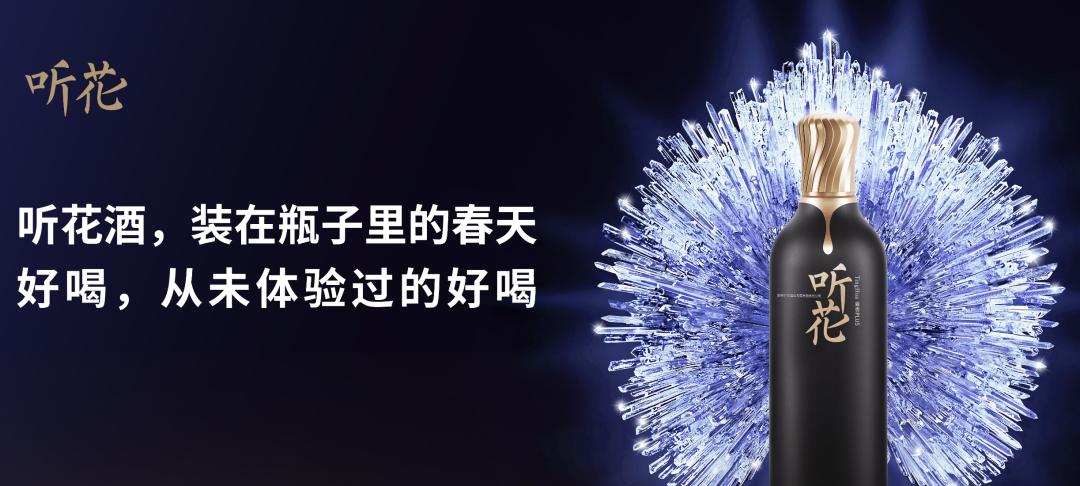
Among these offerings, Tinghua Liquor is positioned as the flagship for the high-end Baijiu market, priced at over 5,000 yuan per bottle, relying on closed-circle experiential marketing to cultivate a niche market. The mid-premium Duhua Liquor is priced at 500-600 yuan, directly competing against established best-selling products from traditional Baijiu giants such as Gu 20, Yanghe M6+, and Jiannanchun, a challenge whose difficulty is self-evident.
Due to its extremely high price point, Tinghua Liquor has long been the focus of market attention. In 2024, its brand promotion was fully hindered following exposure during the 3·15 consumer rights program, resulting in annual liquor segment revenue of 46 million yuan, a 44.05% year-on-year decline.
In 2025, the company's liquor business gradually recovered, generating full-year revenue of 122 million yuan, a substantial 163% year-on-year increase, while its sales expenses decreased by 61% year-on-year. This severe mismatch between revenue and expenditure became one of the key focuses of regulatory inquiries.
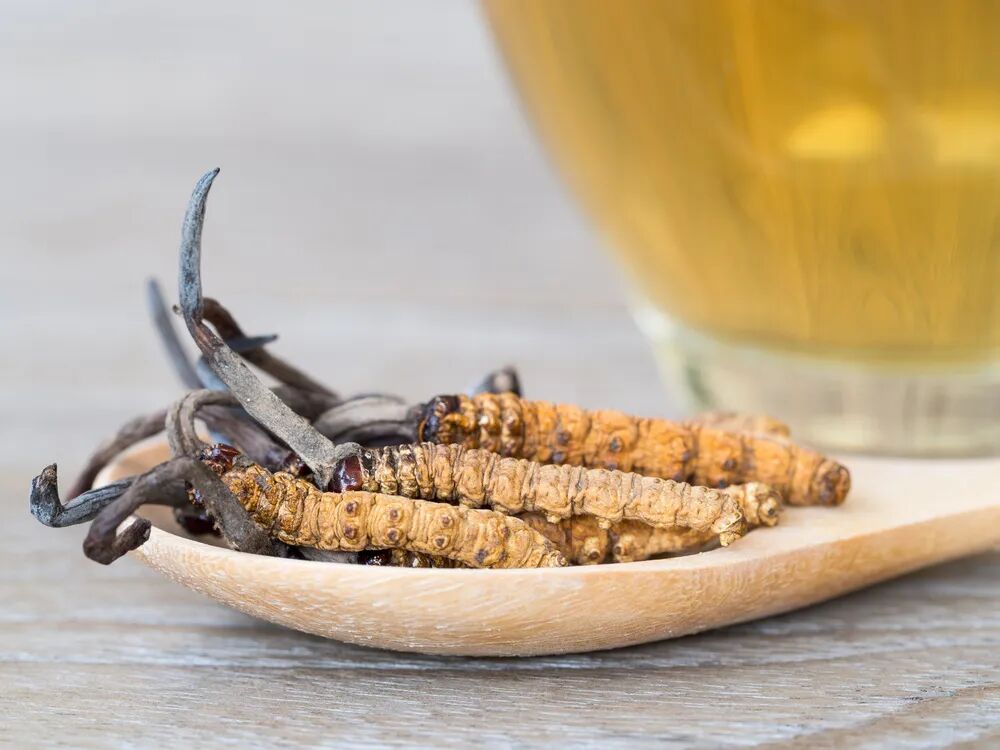
Beyond its liquor operations, the company's Cordyceps sinensis business primarily relies on selling raw Cordyceps products, with weak profit stability. From 2024 to 2025, its revenue reached 152 million yuan and 157 million yuan respectively, with gross profit margins of -4.87% and 11.68%, showing significant profit volatility and insufficient operational risk resistance.
Risks Are Far From Resolved
2026 is a critical year that will determine whether *ST Spring maintains its listing status; even minor missteps could lead to mandatory delisting.
The first challenge is financial delisting risk. If the company's full-year net profit turns negative this year, and its revenue after excluding items unrelated to core operations and lacking commercial substance falls below 300 million yuan, it will trigger the financial delisting criteria.
The first quarter has traditionally been the peak consumption season for Cordyceps sinensis and Baijiu gifting. However, in Q1 this year, the company reported operating revenue of 44 million yuan, already halved from 84 million yuan in the same period last year; the off-season Q2 will find it extremely difficult to make up for this revenue gap. The company faces considerable pressure to maintain the 300 million yuan revenue lifeline for the full year.
Qinghai Spring's annual revenue is highly concentrated in the fourth quarter. In Q4 2025, Cordyceps sinensis revenue accounted for 55.02% of the business's full-year total. Given the current situation of high channel inventory and continuously shrinking end-consumer gifting scenarios, it is unlikely that the company will replicate last year's sales scale in the same period this year.
The second risk relates to historical restatement-based delisting. The company received the 2025 annual report inquiry letter from the Shanghai Stock Exchange on May 19, and after two postponement applications, it still has not officially published its response.
The inquiry letter covers four key areas: compliance of liquor business revenue recognition, reasons for Q4 Cordyceps sinensis revenue growth, prepayments to related parties, and other outstanding matters.
Prior to receiving the inquiry letter, Zhengdan Zhiyuan (Shenzhen) Certified Public Accountants issued a special audit report, confirming that the 100 million yuan investment prepayment and corresponding interest paid by the company to Yibin Tinghua had been fully recovered, eliminating all risks associated with this fund.
Moving forward, whether the Q4 2025 Cordyceps sinensis revenue and other related items possess genuine commercial substance will be critical. If regulators determine that partial revenue requires retrospective downward adjustment, the company's 2025 operating revenue could fall below 300 million yuan, directly triggering delisting risks.
After two approved postponements, the company is still in the process of preparing response materials, leaving the final audit outcome subject to major uncertainty.
With the delisting crisis looming, prior market rumors claimed that Qinghai Spring was planning a major asset restructuring, but the company has not released any formal announcements to date.
In recent years, regulators have tightened scrutiny on major asset restructuring applications for listed companies, and such processes typically require a lengthy timeline. *ST Spring faces extremely low odds of completing an asset injection within this year, making it impossible to offset the dual pressures of operational struggles and delisting risks.
This article originates from the WeChat Official Account "BANMA Consumer" (ID: banmaxiaofei), authored by Yang Wei, and published by 36Kr with authorized permission.