Google is forced to open up, and ChatGPT will gain access to search data and Android permissions
In the summer of 2024, OpenAI sent an email to Google, seeking to integrate Google's Search API into ChatGPT. At that time, it was using Microsoft Bing but found its performance unsatisfactory. According to trial testimony reported by Reuters, Google rejected the request in August that year, citing that the business involved too many competing parties.
Two years later, on July 16, 2026, the European Union did not secure that API for OpenAI, but instead added two far more irreplicable elements to its regulatory list: Google's search feedback and Android's system-level access points.
On the same day, the European Commission announced two binding decisions targeting Google: one requires the Android system to open system-level access to third-party AI assistants, granting ChatGPT and similar tools treatment equivalent to Gemini; the other mandates Google to share search data with competitors starting in January 2027. If found to be in non-compliance, the maximum fine can reach 10% of global annual revenue. Based on Alphabet's newly exceeded $400 billion annual revenue, this represents a potential penalty on the order of $40 billion, which can be doubled for repeated violations.
This time, the EU did not even establish new charges against Google — it merely set specific interfaces and implementation timelines for obligations Google was already bound to under the Digital Markets Act. Yet these provisions are entirely targeted at the next competitive battle.
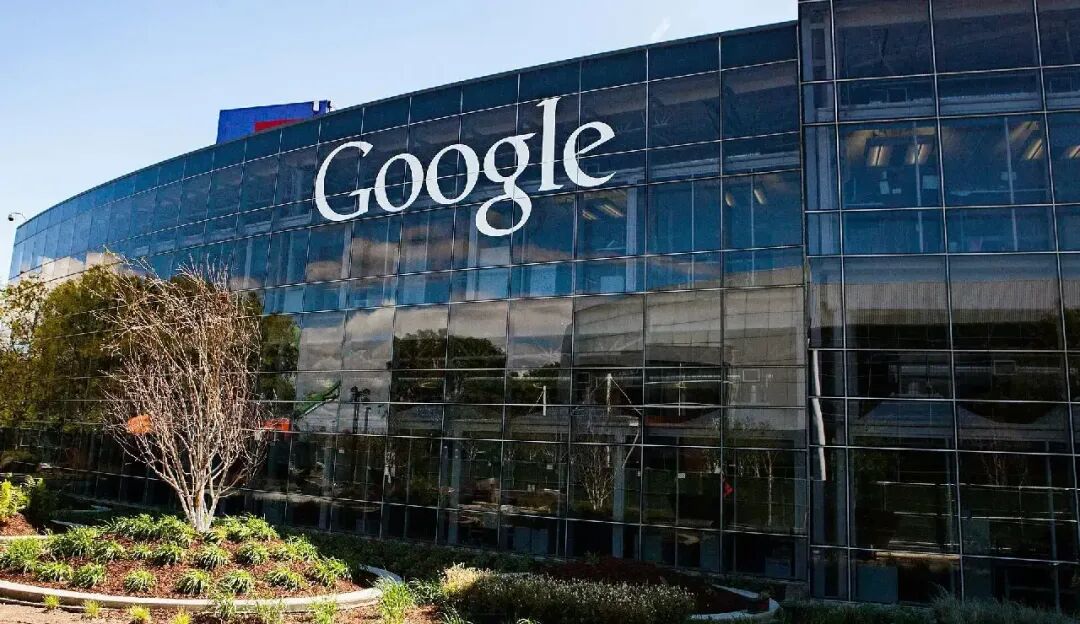
Google Headquarters
I. Brussels Did Not Deliver a Fine — It Handed Over a Permission List
The first decision targets Android. Once implemented, this is what will happen on an Android device in Europe: a flight confirmation email for a late-night arrival at Haneda Airport sits on the screen. The user speaks their custom wake word, ChatGPT activates immediately, reads the arrival time, opens maps to plan the route, launches a ride-hailing app, and pre-fills the airport and hotel addresses. The user never needs to exit the email or manually open those three separate apps. Today, this continuous sequence of permissions from viewing to action is exclusive to Gemini.
The EU has compiled a list of 11 system functions, all required to be opened under the standard of "free and effective interoperability": custom wake words, long-press Home key activation (an access point that currently only leads to Google's own services), screen and device context reading, system-level model invocation with mobile AI computing power, proxy screen interaction, and background execution.
According to the timeline published on the European Commission's developer portal, these features will be rolled out no later than August 1, 2027, with Android 18; the capability for multiple AI assistants to run concurrently and listen for their respective hotwords will arrive no later than August 1, 2028, in Android 19. As reported by AP, the European Commission's Executive Vice-President for Tech Sovereignty Věra Jourová stated: "We hope these measures will foster the emergence of alternatives beyond Google Search and Gemini."
From the EU's perspective, AI assistants represent a competitive layer on Android that Google cannot monopolize.
There is also a subsequent fine print: any new capability Google adds to Gemini after this point must be opened to third parties on the exact same day it launches for its own service. In other words, Google cannot hand over existing features first and then widen the gap again through system updates.
The second decision targets search data. Ranking signals, search queries, click and browsing data will be anonymized and opened to qualified competitors starting in January 2027. Access will not be free: recipients must first pass eligibility reviews, and Google may charge fees under the "fair, reasonable, and non-discriminatory" framework. The search business powered by this data generated approximately $224.5 billion for Alphabet in 2025, accounting for more than half of its total annual revenue exceeding $400 billion; meanwhile, Google's share of the European search market has long hovered around 90%.
Before AI can book a ride for them, that passenger arriving at Haneda has to take manual action: searching "how to get to downtown from Haneda Airport after midnight", opening two results, then going back to search "Haneda Airport night bus". For Google, what holds value is not just these two queries, but also what the user clicked, where they backtracked, and whether they completed their search. Such actions occur billions of times daily, accumulated over more than two decades. This scale of user feedback is something competitors cannot replicate in the short term.
Search data determines whether AI can understand what users want, and Android permissions determine whether it can fully execute the task. Combined, the two decisions allow the EU to simultaneously intervene in Google's feedback mechanism and distribution access points.
The beneficiary list extends far beyond OpenAI. In multiple foreign media analyses of the decisions, Anthropic's Claude is also named as a potential recipient, with equal opportunities to obtain system-level permissions on par with Gemini; AI search startups like Perplexity and European domestic ventures are also included.
The EU's actions almost coincided with Gemini taking over Android's access points. This January, Google was in the process of replacing Google Assistant as Android's default assistant with Gemini, allowing its large language model to gradually seize control of system entry points. In the same month, the EU opened its investigation. A public consultation on the proposal launched on April 16, and the final decision took effect on July 16 — 11 days ahead of the legal deadline of July 27. Google could file a lawsuit at the Luxembourg court or apply for a stay of execution, but neither action will take automatic effect. This time, delaying the process will not be easy.
Google's pushback came quickly, framing its arguments around privacy and security. Chief Legal Officer Kent Walker warned that these measures would "undermine the privacy of European citizens, jeopardize trade secrets, and even threaten national security", claiming that Europeans' private search histories would be exposed to "unfamiliar companies".
This is not entirely empty posturing. Search boxes contain sensitive information about illnesses, debts, and marriages — details many people would never share with friends but will first confide in search engines. But risk is one thing, using it as justification for permanent data monopoly is another. Moreover, this rhetoric sounds eerily familiar: over two decades ago, Microsoft used the exact same arguments of security and user experience to defend bundling Internet Explorer with Windows.
II. Judge Mehta Preserved Chrome, But Unlocked Google's Core Assets
Brussels was not the first to act. Across the Atlantic, the same process has already been halfway completed.
In August 2024, U.S. Federal District Judge Amit Mehta in Washington D.C. ruled that Google illegally maintained its search monopoly. The trial documents laid out figures more bluntly than the judgment itself: in 2021 alone, Google paid $26.3 billion for various default search placements, with the payment to Apple rising to approximately $20 billion per year by 2022.
At the remedy phase hearing in April 2025, Nick Tilly, the head of ChatGPT, testified in court, delivering two statements widely cited by global media. One was that if the court forced Google to sell Chrome, "we would be interested in buying it, and many others would too"; the other was an admission that ChatGPT is "still several years away" from being able to answer 80% of user queries using its own native technology. During this same testimony, that rejected 2024 email was submitted as evidence.
On September 2 that year, Mehta issued his ruling: no break-up of Chrome, no break-up of Android, and Google may even continue paying Apple as long as the contracts are no longer exclusive. The next day, Alphabet's stock surged, with Wall Street interpreting this defeat as a victory.
But Wall Street only read the first half of the ruling. In the second half, Google was ordered to grant "qualified competitors" access to portions of its search index and user interaction data, as well as provide co-distribution services for search results and search ads. As outlined by TechPolicy Press, this co-distribution license lasts five years, covering up to 40% of the competitor's own query volume in the first year, with coverage gradually decreasing each subsequent year. Essentially, the court allows challengers to leverage Google's search capabilities to get started, but prohibits permanent dependency.
The ruling explicitly included generative AI companies as "qualified competitors", with unambiguous reasoning: to prevent Google from replicating the exact tactics it used to monopolize search distribution in the new era of AI assistants.
The final judgment was issued on December 5, with a validity period of six years. Both Google and the U.S. Department of Justice have appealed, but in opposite directions: Google argues the obligations are too onerous, while the government claims the penalties are insufficient. The case will proceed to the U.S. Court of Appeals for the District of Columbia Circuit, but the five-member technical committee specified in the ruling has already assembled its first batch of members to oversee implementation.
Mehta acknowledged an awkward reality in his opinion: no company can afford Google's price to win bids for those default placements. This is not because competitors are underfunded, but because the math simply does not add up: Google generates more revenue per query than anyone else, so it can naturally outbid everyone else. Default placements are nominally open for bidding, but the ability to make competitive offers has long been locked in by monetization capacity. In other words, the old search market cannot be restored, and this remedy is fundamentally betting on AI.
Every antitrust fine over the past two decades only collected interest from Google; this time, regulators are targeting the principal.
III. Antitrust Does Not Rescue Losers — It Deals Cards to the Next Winner
Why did U.S. courts avoid ordering break-ups, while the EU moved directly toward "data sharing and access opening" from day one of its investigation? The two jurisdictions use fundamentally different tools: one relies on ex-post litigation, the other on ex-ante regulation, yet their outcomes converge at the same point.
Google's truly valuable asset is the compounding value of data accumulated over 20+ years through billions of daily queries: search quality is improved by user data, data is accumulated through market share, and market share in turn reinforces default status. The monopoly Mehta identified locks in this self-reinforcing cycle. Breaking up Chrome cannot disrupt this cycle — only data sharing can.
Both are core proprietary assets, but why has no regulator ever dared to order Coca-Cola to hand over its formula to Pepsi, while mandating Google to open search data seems entirely justified? The difference lies in how these assets are created. The Coca-Cola formula remains intact locked in a safe; search feedback, by contrast, is meaningless without user contributions. Google built the infrastructure for search, but the billions of traces left behind are created by its users.
Neither the U.S. nor the EU has reclassified these user traces as public property — the data still belongs to Google. Instead, both regions have established a regulated access mechanism with eligibility reviews and usage restrictions, similar to how power grids are managed: utility companies own the grid, but they do not get to unilaterally decide who gets access and how much to charge. Google has not lost ownership of the data — it has lost the right to monopolize it.
With data monopoly no longer sustainable, Google has shifted its defensive focus to access points. The $20 billion annual payment for Apple's default placement demonstrates that, per Google's own calculations, access points are more valuable than underlying technology. Yet what the EU has now granted competitors is something money cannot buy: custom wake words, long-press Home key activation, screen context access — those few centimeters of Android interaction closest to users. ChatGPT can gradually build out its own search index, but as long as it requires one extra step compared to Gemini, even a superior model cannot overcome established muscle memory.
Of course, Google still has cards to play. Buried within the data-sharing obligation is a dilemma regulators themselves cannot fully resolve: the more thoroughly data is anonymized, the less useful it becomes for competitors; the more signals retained, the more real the privacy risks Walker warned about. The EU is essentially asking Google to deliver data that is both highly useful and completely harmless — a dataset that may not exist at all.
Therefore, after 2027, negotiations over how many signals to retain in anonymization, how broad interfaces should be, and at what price data should be licensed will unfold in repeated rounds, and Google has the capacity to prolong this process indefinitely. If AI search companies become dependent on this data, Google will transform from a direct competitor into an upstream supplier for its rivals.
This exact scenario played out in history, with nearly identical defense arguments. The Microsoft antitrust case settled in 2001 also avoided break-up, focusing entirely on behavioral remedies. The settlement did not save Netscape — Netscape collapsed. But what space did this lawsuit ultimately create? The industry later arrived at a widely accepted conclusion: under court supervision, Microsoft never again used the same tactics that killed Netscape to suppress emerging innovations within Windows and Internet Explorer. The breathing room created in that competitive landscape was seized by a tiny three-year-old startup.
That startup was Google.
Interpreting this as regulators learning lessons and taking pre-emptive action overstates the speed of law enforcement. Antitrust timelines have never aligned perfectly with market reality: when Microsoft's remedies took effect, the browser wars were already decided; when Google's investigation opened in 2020, the complaint was entirely focused on search boxes and default settings, with not a single mention of chatbots.
It was ChatGPT's unexpected emergence in the middle of the litigation that completely reshaped the debate during the remedy phase. Even Mehta wrote in his ruling that generative AI "changed the trajectory of this case". The courts did not speed up their process — the competitive game simply restarted before the ruling landed, and the delayed judgment happened to align with this new round.
Antitrust benefits often materialize across generations: the named plaintiffs in complaints almost never see remedies take effect, but challengers in the next wave of technological innovation gain entry tickets. Yahoo did not wait long enough, Netscape did not survive, and this time, services like DuckDuckGo will likely not benefit either. This cannot be blamed on any individual judge — remedy provisions are inherently structured to "help challengers catch up to the incumbent's scale". But once a company reaches that level of dominance, what happens next? Google itself is the perfect example.
Standing at this newly created gap today is OpenAI: search data addresses its core weaknesses, Android access points solve its distribution challenges, and even the five-year co-distribution license in Mehta's ruling seems like a tailor-made transition plan for ChatGPT, which is "still several years away" from full self-sufficiency. But this round's challenger is no longer a pair of graduate students working in a garage. OpenAI is valued at hundreds of billions of dollars, backed by Microsoft — the very defendant from that 25-year-old antitrust case.
Looking back at Tilly's testimony now, its implications have shifted. He said he wanted to buy Chrome, and the court ultimately did not force Google to sell it. But the two things he truly desired are now on the table: data access has been opened by the U.S. ruling, and system permissions have been formalized by the EU decision. The exact extent of access he will ultimately secure still depends on eligibility reviews, pricing negotiations, and interface specifications. But he no longer needs to buy Chrome to get a seat at the table.
This battle is far from over, with continued negotiations and legal disputes expected both inside and outside the courts. Android's access points will only be gradually opened in 2027 and 2028. The decision of whether to open them is no longer Google's alone, but the scope of opening will still be contested line by line. Years from now, will the current beneficiary of these open access points one day stand in the defendant's dock, listening to a judge read another ruling about opening up its own ecosystem?
After all, the last time regulators cleared the path for a challenger, the one who walked through was Google.
And later, it learned how to close that door behind it.
This article is from WeChat Official Account "Singularity Outside", author: wiwi, published with authorization from 36Kr.