Silicon Flow Sprinting for Hong Kong IPO: Behind the $7.7 Billion Valuation, the "First Token Factory Stock" Is Trapped in Negative Gross Margins
When Tokens are regarded as the "water, electricity, and coal" of the AI era, capital competition centered on the inference computing power layer is rapidly intensifying. Recently, Silicon Flow submitted its prospectus to the Hong Kong Stock Exchange, aiming to become the "first stock of the AI Token factory."
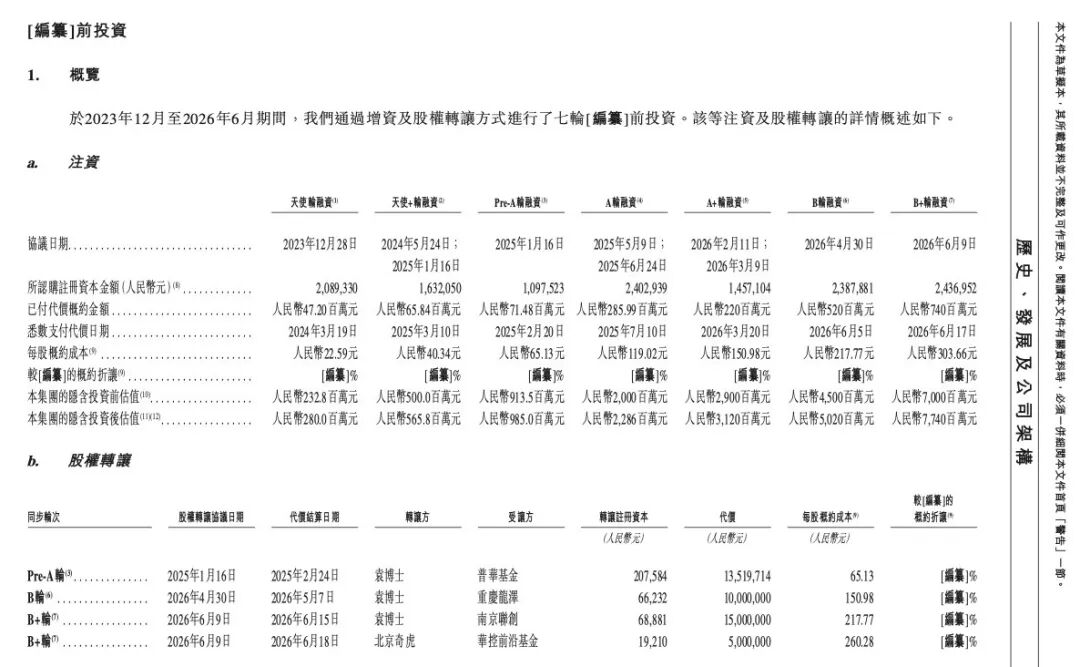
This young company, founded in August 2023, has completed seven rounds of financing at an astonishing speed and set the record for the largest single financing in China's third-party MaaS track (MaaS stands for "Model as a Service") in 2026, attracting investments from Alibaba, Meituan, and others, with a post-investment valuation as high as 7.74 billion yuan.
Behind the high-growth capital narrative lies the harsh reality of a cumulative net loss of 440 million yuan over three years and a negative gross profit margin of -24% in 2025, especially the negative growth of gross profit margin that has drawn market attention.
As an independent intermediate layer, Silicon Flow is widely compatible with diverse chips such as NVIDIA and Ascend, supporting 170 mainstream models including DeepSeek. However, as China's fourth-largest token supply platform, its 1.5% market share pales in comparison to the three major giants.
When leading industry players hold strong pricing power and ecological barriers, the living space for third-party platforms is drastically compressed, and their efforts to acquire users through subsidies may evolve into a catalyst that accelerates their own cash burn.
At the same time, price fluctuations have further complicated Silicon Flow's situation. Focusing on domestic computing power optimization and government-enterprise private deployment that large manufacturers are "unwilling to do or not economically viable," how to find a self-consistent growth rhythm between "avoiding giants" and "economies of scale" may become one of the core challenges facing its IPO story.
The continuous injection of capital not only provides ammunition for this breakout but also sets a time window. When capital's patience races against the speed of cash burn, can its business model as an independent AI infrastructure provider withstand the test of profitability?
Explosive Growth Cannot Hide the Profitability Dilemma
The so-called "Token factory" refers to an MaaS infrastructure platform that standardizes and encapsulates underlying GPU/domestic chip computing power through computing power scheduling and inference engines, and charges users by the Token on a pay-as-you-go basis.
According to the prospectus, Silicon Flow is positioned as the "intermediate layer" of AI inference infrastructure, which converts underlying computing power into standardized token supply through self-developed inference engines and computing power orchestration systems, hence being analogized to a "Token factory."
In terms of business model, the company mainly adopts two implementation paths:
The first is private deployment services (i.e., on-premise deployment solutions), which output software solutions for enterprises that have already procured computing power, enabling them to upgrade their internal computing resources to a Token factory with one click;
The second is public cloud services, providing out-of-the-box Token services for technology-oriented enterprises.
In 2025, public cloud services accounted for 52.9% of revenue, while on-premise deployment solutions accounted for 47.1%, making public cloud the largest source of revenue.
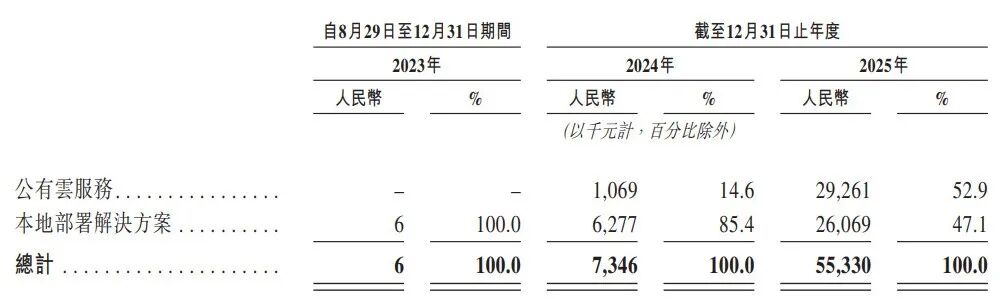
Figure / Prospectus
The prospectus discloses that the company's revenue surged from 7.35 million yuan in 2024 to 55.33 million yuan in 2025, a year-on-year increase of 653%. As of April 30, 2026, the number of registered users on the platform exceeded 10.28 million, with a daily average token throughput of approximately 578.5 billion.
This explosive growth is attributed to the 1602.6% year-on-year increase in China's token supply market, as well as the company's rapid expansion in the two major business segments of public cloud services and on-premise deployment solutions.
In terms of token throughput, China's token supply market size increased by 1602.6% from 2024 to 2025, and is expected to reach approximately 5320 exa-tokens by 2030, with a compound annual growth rate of 638.3% from 2025 to 2030.
It is worth noting that Silicon Flow is classified as a non-commercial company under Hong Kong Stock Exchange Chapter 18C. The company expects to meet the revenue requirements for a commercial company under Chapter 18C by the end of 2026, that is, to achieve HK$250 million in revenue in the most recent fiscal year. Calculated at the current exchange rate, this corresponds to approximately 216 million yuan, meaning that Silicon Flow's revenue growth rate in 2026 should reach at least about 293%.
However, this explosive industry growth has not brought about an improvement in profitability.
In 2023 (the 4-month period from the establishment date to the end of the year), 2024, and 2025, Silicon Flow recorded losses of 12.22 million yuan, 81.92 million yuan, and 345 million yuan respectively, with a cumulative loss of nearly 440 million yuan over three years. Even after excluding non-cash items such as share-based payments, the adjusted net loss in 2025 still reached 187 million yuan.
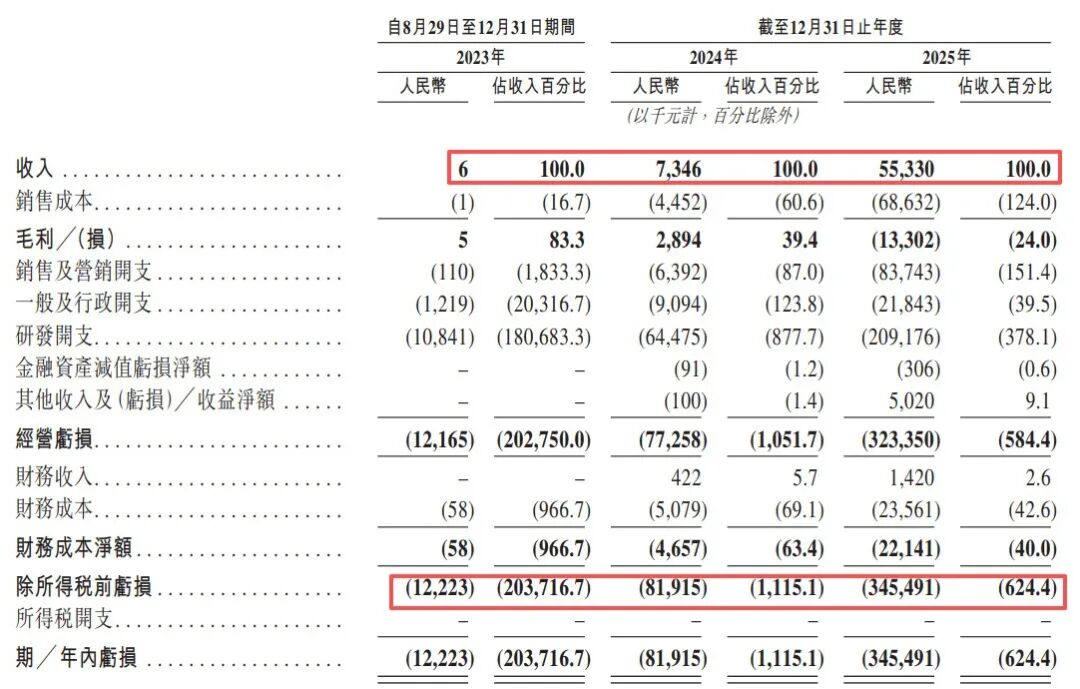
Figure / Prospectus
The sharp decline in gross profit margin more intuitively reveals the essence of the problem. The company's overall gross profit margin dropped from 83.3% in 2023 to 39.4% in 2024, and further turned negative to -24% in 2025.
Among them, the gross profit margin of the public cloud service segment is as low as -119%, which seriously drags down the overall gross profit margin. Even a gross profit margin of 82.5% in the on-premise deployment solutions business cannot turn the tide.
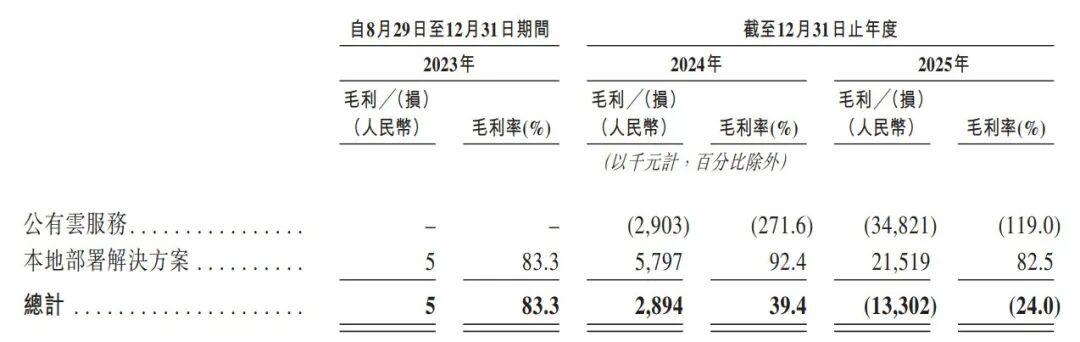
Figure / Prospectus
The overall profit margin contraction is mainly due to the large costs incurred by leasing computing power. The prospectus discloses that Silicon Flow's sales and marketing expenses surged by 1210% from 6.39 million yuan in 2024 to 83.74 million yuan in 2025, accounting for 151.4% of revenue.
Among them, 54.213 million yuan (64.7% of the total) was spent on distributing free token vouchers, essentially acquiring users through subsidies.
In addition, high R&D investment has further exacerbated cash flow pressure. In 2025, the company's R&D expenses reached 209 million yuan, 3.78 times the revenue of that year, mainly used for the iteration of self-developed inference engines and computing power orchestration systems.
Although the company states that continuous investment in R&D is to support long-term growth and scale expansion, in the foreseeable future, the combination of high R&D expenditures and a business structure with negative gross profit margins means that the loss situation cannot be reversed in the short term.
Regarding issues such as the negative gross profit margin, Silicon Flow told *Bullet Finance* that the company's current overall positive gross profit mainly comes from dedicated instances and on-premise deployment businesses. The main loss comes from the public cloud Serverless API business for small and medium-sized users, which is currently in a strategic loss stage. Once the losses from the Serverless API business continue to narrow, the company as a whole can achieve break-even.
How Genuine Is It as the Largest Independent Token Supplier?
Currently, the token supply market has mainly formed two types of business models: independent ecosystems and closed ecosystems.
In an independent ecosystem, the token supply platform is usually not bound to any cloud provider, model, or application scenario. Instead, it connects multiple types of computing power, diverse models, different computing centers, and enterprise customer demands to provide token supply services across multiple models, computing resources, and deployment environments.
In a closed ecosystem, cloud service providers, large technology companies, or model vendors rely on their own cloud resources, models, computing power foundations, and application scenarios to achieve resource integration, model invocation, and service closed-loop within their own ecosystems.
Silicon Flow positions itself as an "independent ecosystem token supply platform," not bound to any single cloud, chip, or model vendor, but acting as a system software intermediate layer connecting upstream computing power, midstream models, and downstream applications.
According to the prospectus, the company's platform has supported a total of 170 models, including mainstream advanced models such as DeepSeek, GLM, Kimi, and MiniMax; its cross-chip and multi-model adaptation capability ranks first globally, supporting internationally leading chips (such as NVIDIA and AMD GPUs) as well as major domestic AI chips (including Huawei Ascend, MUSA, and Moore Threads).
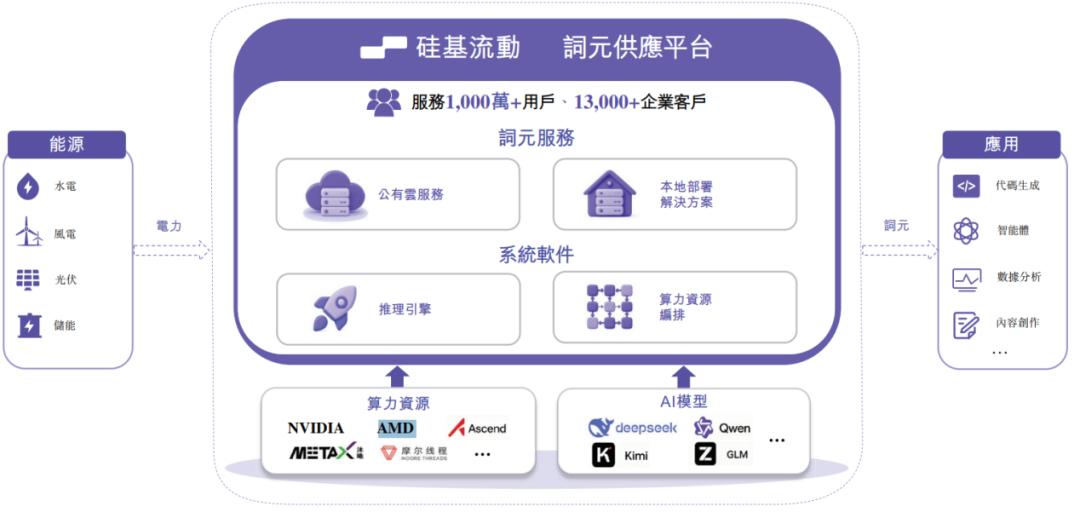
Figure / Prospectus
According to information from Frost & Sullivan, in terms of annual token throughput in 2025, Silicon Flow is China's largest independent ecosystem token supplier with a market share of 1.5%.
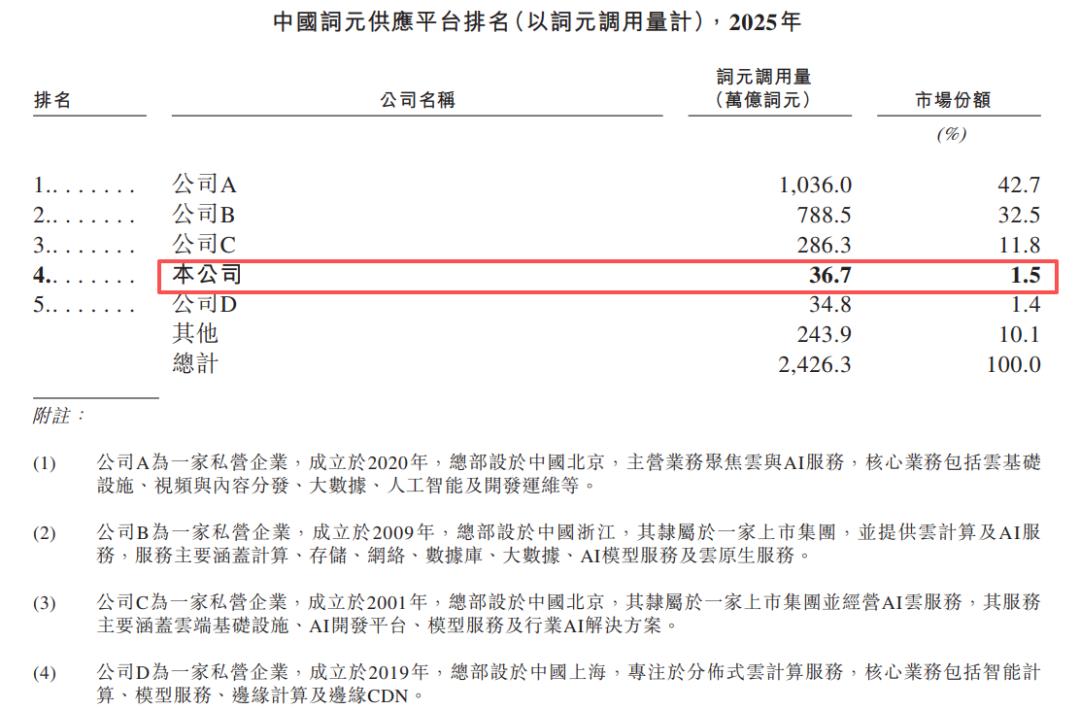
Figure / Prospectus
However, if closed ecosystem vendors that rely on their own cloud resources and models are included, Silicon Flow is only China's fourth-largest token supply platform, and its market share is not in the same league as the top three.
IDC reports show that in the first half of 2025, Volcano Engine ranked first with a 49.2% market share, Alibaba Cloud ranked second with 27%, and Baidu Intelligent Cloud ranked third with 17%, with the three collectively capturing approximately 93% of the entire market. (Editor's note: This statistical caliber only covers the public cloud MaaS market.)
From Silicon Flow's perspective, this gap has unique value: closed ecosystems tend to lock customers into their own computing power and models, while Silicon Flow maintains neutrality and openness. In the industrial landscape of diversified domestic computing power and multi-party competition and cooperation, this neutral positioning is more likely to win trust and make Silicon Flow a hub connecting chip vendors, model parties, and enterprise customers.
However, customer concentration is a hidden concern. In 2023, 2024, and 2025, the top five customers accounted for 100%, 85%, and 45% of revenue respectively, with the proportion of the single largest customer dropping from 83.3% to 61.1% and then to 13.6%.
Although the concentration is declining, the top two customers still accounted for 14% and 13% of revenue in 2025 respectively. In the industry environment where Token prices continue to fall, the bargaining power of large customers shows a trend of continuous increase, leaving limited room for the company to pass costs upstream.
More challenges come from the price war. According to data from the China Academy of Information and Communications Technology, the average price of domestic large model APIs has dropped by more than 90% cumulatively since 2023, and leading large model vendors have lowered their API prices more than ten times in total.
Taking DeepSeek as an example, in June 2026, DeepSeek V4 Pro officially launched a permanent price reduction, with the adjusted price being only a quarter of the original.
As an intermediate layer, Silicon Flow cannot control the upstream computing power costs, and at the same time faces continuous downward price pressure downstream, resulting in a two-way squeeze on profit margins.
In response to market competition strategies, senior management of Silicon Flow publicly stated last year that the company focuses on areas where large manufacturers currently have low willingness or are not economically viable, especially in-depth optimization of domestic computing power, providing services for medium and large enterprises and government-enterprise customers who are cost-sensitive and require private deployment, and promoting the penetration of products from top customers to more mid-to-lower tier enterprises with large-scale application demands.
Deploying in areas that large manufacturers are unwilling to engage in is a rational choice to fight for living space. However, this differentiated path that avoids the giants' firepower raises the question: could it potentially lock the company in the long term in a "high investment, low gross profit, slow growth" predicament?
Regarding related issues, Silicon Flow told *Bullet Finance* that in the field of domestic chip adaptation, Silicon Flow provides a rich set of computing power solutions and is the only heterogeneous computing platform compatible with both NVIDIA and mainstream domestic computing power, meeting the diverse needs of downstream customers. On-premise deployment solutions have deeply penetrated high-value-added scenarios such as the Internet, finance, energy, and transportation, with benchmark customer cases implemented. This business mostly provides standardized software solutions with positive gross margins, and there is no "diseconomy of scale."
The AB Sides of Deeply Integrated Full Industry Chain
Leveraging its neutral positioning, Silicon Flow has taken a unique path in strategic collaboration and obtained full-industry-chain capital investments spanning the Internet, chips, computing power, energy, and operators.
From the perspective of financing rhythm, Silicon Flow is highly favored by capital. Since launching the angel round in December 2023, the company has completed a total of seven rounds of financing.
On June 16, 2026, the company announced the completion of a Series B financing of over 2 billion yuan, setting the record for the largest single financing in China's third-party MaaS track since 2026. At this point, the company's post-investment valuation reached 7.74 billion yuan.
However, *Bullet Finance* noticed that Silicon Flow's prospectus submitted to the Hong Kong Stock Exchange on June 30 shows that its Series B and Series B+ financing amounts were 520 million yuan and 740 million yuan respectively, with a total fundraising of 1.26 billion yuan.