The "Hidden Rivalry" Among New Energy Vehicle Manufacturers, CATL, and Tier 2 Suppliers: Valuing Scarcity and Prioritizing Harmony
In the summer of 2022, a 50-page PPT was delivered to CATL's headquarters.
This PPT was produced by the Zeekr team. What they were striving for was the launch right of the Qilin Battery — at that time, mass production of this battery was still half a year away, but Li Auto, Avatr, Seres, and Neta had all rushed in. Whoever secured the launch right would gain an extra trump card in the high-end pure electric vehicle market.
Zeekr's PPT did not only state their willingness to cooperate. They promised a large advance payment in advance to directly lock in the first batch of mass production capacity in the first quarter of 2023; they were willing to cooperate with CATL to adjust the chassis and thermal management of the SEA vast architecture for joint calibration...
On the other side, Li Auto's offer was: CATL's share in the MEGA's entire life cycle would be no less than 70%, with a minimum purchase volume guaranteed and a partial deposit paid in advance.
In the end, Zeekr won the launch right.
This scramble reveals an unwritten rule in the power battery industry: for the launch right of top-tier battery technology, money is not the only bargaining chip, nor even the most important one. A closer partnership, more in-depth joint R&D, and a better-matched product launch rhythm — these are more persuasive than simply offering a higher price.
Meanwhile, another hidden development was also unfolding.
Second-tier suppliers were not only competing for orders in the low-end market but also standing by to fill the gaps for CATL at any time. The "dual-sourcing" strategy adopted by automakers has become the industry standard: among the top 20 best-selling models by sales volume, over 80% use a dual-sourcing or triple-sourcing strategy.
For a vehicle with the exact same configuration, it could be equipped with a CATL battery today and switch to a Sunwoda battery tomorrow, as long as the configuration has been filed with the Ministry of Industry and Information Technology.
A more covert operation is called "shadow designation": automakers require second-tier suppliers to complete compatibility verification, PPAP documents, and small-batch trial production in advance, but only CATL is mentioned in the product launch event. Once CATL's capacity allocation is insufficient in a certain quarter, the second-tier supplier will be immediately activated to fill the gap.
To the outside world, it appears that "the battery was suddenly changed", but in reality, the hidden cooperation has been ongoing for 3 to 6 months.
A hidden battle centered on scarce resources has never ceased.
CATL's defense of the high-end market, the second-tier suppliers' offensive in the gaps, and the automakers' game of maintaining a balance among giants together form the most authentic picture of China's current power battery industry.
The core contradiction of this "hidden battle" lies in the fact that the supply relationship has never been truly equal. When resources are scarce, price determines everything; when resources are abundant, partnership binding becomes key — when capacity is sufficient, the depth of cooperation is the hard currency. Even CATL, when facing independent sampling retests from Mercedes-Benz's laboratories, has to accept the "buyer's right of re-inspection", while domestic automakers usually only recognize the factory's quality inspection certificate.
From the 700-page German specification document between CATL and BMW, to Sunwoda delivering a modification plan within 48 hours at Li Auto's Changzhou factory, to Gotion High-Tech exporting German reports for Volkswagen auditors at 2 a.m.
China's power battery industry has spent more than a decade building a system that German automakers took half a century to establish. But the true competitiveness of the industry does not lie in the parameter sheet, but in the unseen repetitions, trial and error, and standards refined through constant feedback from customers.
Be an apprentice first, then a partner, and only after a long period of growth can you talk about having a say. This is perhaps the underlying logic of the entire hidden battle.
CATL: Value from Scarcity
The depth of cooperation and the pattern of bargaining power across the industrial chain are essentially determined by supply and demand.
Even for CATL, the "battery overlord" that leads in technology, ranks first in market share, and has deep partnerships with mainstream automakers, its bargaining power is built on the foundation of supply and demand.
We can get a glimpse of CATL's strong position from a playful remark made by Neil Shen to Zeng Yuqun: "If Nio, Li Auto, and Xpeng want to secure battery capacity, do they need to drink more toasts or make more trips to CATL's headquarters in Ningde?"
Zeng Yuqun's response was straightforward: (Automakers) pay to reserve the production lines, and I will produce for you... or we can negotiate a long-term partnership where you promise that production volume fluctuations will stay within ±15%.
Li Lin (a pseudonym), a power battery industry practitioner, told Future Auto Daily that for a long period in the past, there was a "rush order locking" cooperation model between power battery suppliers and automakers: capacity was prioritized for top customers who paid huge deposits in advance, and remaining capacity was then allocated to second-tier customers.
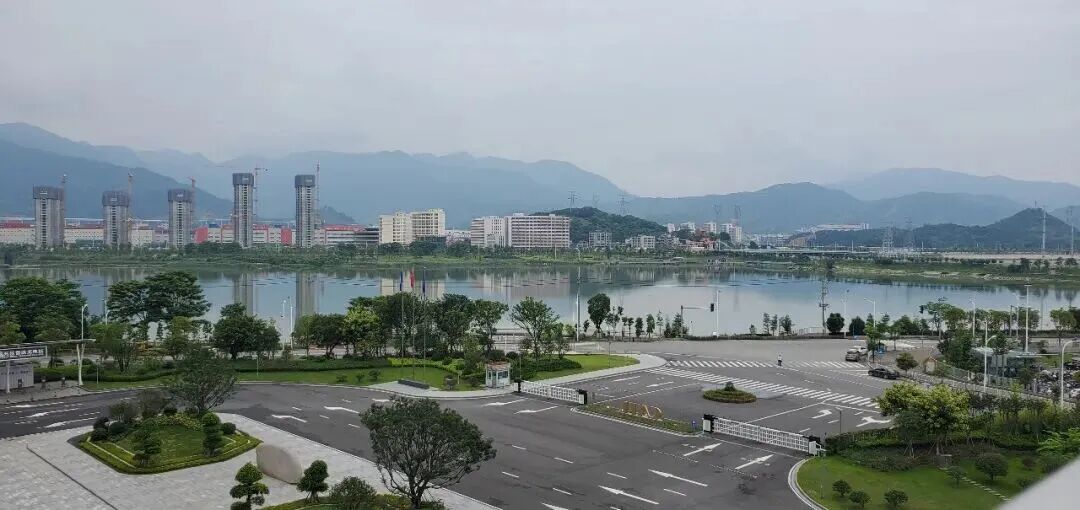
A corner of CATL's Ningde factory, photographed by Future Auto Daily
Li Lin also revealed that CATL currently has around 10 Top Strategic Accounts, who are entitled to exclusive benefits such as dedicated production lines, joint laboratories, and smaller annual price reduction ranges.
Even during annual price reduction negotiations, Zeng Yuqun will personally participate in the discussions with these customers.
But this only addresses the supply relationship for regular power batteries. For CATL, the allocation rights of high-end power batteries go far beyond these simple arrangements.
In June 2022, CATL officially launched the Qilin Battery, with the promotional slogan "No Qilin, No High-End". At that time, mass production of the Qilin Battery was still half a year away, but Li Auto, Avatr, Seres, Neta, and Zeekr had all joined the competition to secure the launch opportunity.
This launch selection process was completely free of emotional factors, and was entirely guided by commercial value.
An insider from CATL revealed that in the first round of screening, CATL classified these customers based on their partnership depth. Li Auto and Avatr were classified as S-tier (Li Auto was once a top customer, and Avatr has a deep partnership), prioritized for consideration; Zeekr and Seres were classified as A-tier (with a 5-year strategic partnership, and CATL participated in Zeekr's Pre-A round of financing), also eligible for consideration; Neta was classified as B-tier and eliminated directly.
The second round conducted an in-depth evaluation of the product launch rhythm and implementation value of each customer's model. In the end, Zeekr 009 secured the launch right and also obtained an early exclusivity period (the same-specification Qilin battery pack would not be made available to competitors for a short period of time), while Seres and Li Auto missed the launch opportunity.
"In addition to having a deep partnership with CATL, Zeekr also spared no expense," said a Zeekr employee close to the cooperation.
First of all, the initial production capacity of the Qilin Battery was extremely limited, and Zeekr paid a large advance payment in advance to directly lock in the first batch of mass production capacity in the first quarter of 2023.
"And Zeekr was also willing to cooperate with CATL to adjust the chassis and thermal management of the SEA vast architecture for joint calibration." It is reported that to demonstrate how the SEA vast architecture can maximize the energy efficiency of the Qilin Battery, "Zeekr produced a 50-page PPT."
According to another insider, to lock in the Qilin Battery launch right, Li Auto promised CATL that its share in the MEGA's entire life cycle would be ≥70%, with a guaranteed minimum purchase volume and a partial deposit paid in advance.
"But CATL used the launch right to screen for automakers that are truly willing to stake their primary supplier share, not just those who asked first," the insider added.
The final result is obvious to all: compared to Li Auto, Zeekr's offer was more attractive to CATL.
Since its launch in 2022, the Qilin Battery has undergone two rounds of technological iterations, with continuously improved product capabilities. This year, CATL officially launched the brand-new Qilin condensed battery, further raising the technological ceiling of high-end power batteries.
Even before the new technology was implemented, Li Auto and Nio had already locked in core capacity in advance to secure their positions in the high-end battery segment: Li Auto finalized a dual-battery matching plan where the Shenxing battery is adapted for hybrid vehicles and the Qilin Battery is exclusively for pure electric vehicles; Nio ET9 even secured the exclusive supply qualification for the Qilin condensed battery.
The priority supply rights of these two major automakers stem from their deeply integrated strategic partnerships with CATL.
In terms of capacity, the joint venture factory between Li Auto and CATL will reach an 8GWh capacity ramp-up in the third quarter of this year, stably guaranteeing battery supply for their models. In terms of ecosystem, Nio is working with CATL to implement a joint battery swapping station construction plan in Europe, deepening long-term cooperation through overseas ecosystem collaboration.
Currently, the overall supply and demand in the power battery industry has become relatively balanced, but the production capacity of scarce high-end batteries such as the Qilin and condensed batteries remains tight.
Looking back at the battery shortage period in 2021, Zeng Yuqun's statement at that time — "A promise without payment is not a serious one" — in response to the chaotic rush for production by automakers, still remains the core principle for high-end battery capacity allocation today: to secure top-tier battery technology and scarce capacity, what ultimately matters is a closer partnership.
"You can purchase any battery from CATL, but the launch rights of those high-end batteries that can enhance product capabilities cannot be bought with money," Li Lin said.
"From CATL's perspective, the batteries we produce with such great effort naturally need to maximize their value, rather than just acting as a simple commodity."
Second-Tier Suppliers: Value from Harmony
The industry generally classifies CATL and FinDreams Battery, with annual installed capacity exceeding 150GWh and a combined domestic market share of around 60%-65%, as the first tier of power battery suppliers;
Companies such as CALB, Gotion High-Tech, EVE Energy, and Sunwoda, with annual installed capacity usually ranging from 20 to 150GWh and a combined domestic market share of around 15%-20%, are regarded as the second tier.
The timeless commercial logic in the trading market clearly defines two types of supplier postures: leading players with advantages in technology, production capacity, and scale hold a firm stance on pricing, commercial terms, and supporting services, making very few concessions on bargaining space;
In contrast, second-tier battery suppliers, struggling to compete for the existing orders from the leading giant, are generally willing to offer more favorable quotations and more flexible supporting services to secure a larger share of automakers' orders.
In terms of quotations, for power batteries of the same specification, the price of second-tier suppliers is 10%-20% lower than that of CATL. For example, CALB's quotation is about 10%-15% lower than CATL's, which translates to a cost saving of about 3,000 yuan to 5,000 yuan per vehicle.
Compared to FinDreams Battery, the quotations of second-tier suppliers are also about 10% lower.
And second-tier suppliers are also willing to offer longer payment terms to automakers. "Their payment terms generally range from 80 days to 160 days, and they will make further concessions for their major customers."
Some second-tier suppliers can even only supply battery cells to automakers. Automakers can perform the packaging on their own, which can further save the premium added by module packaging.
However, merely offering lower prices and longer payment terms is not enough to convince automakers to place orders.
In the second quarter of this year, a sub-brand of a major automaker completed the replacement of its power battery suppliers, with CALB and EVE Energy taking over from FinDreams Battery as the main suppliers.
An insider close to this supply chain adjustment revealed that CALB and EVE Energy offer more cost-effective procurement pricing; the more critical issue lies in the division of rights and responsibilities for FinDreams' external supply: it does not provide full-coverage quality assurance for externally supplied batteries. Once a battery cell malfunctions, all after-sales costs and customer complaint risks have to be borne by the automaker itself.
Wang Wei, Chairman of Sunwoda, once stated that second-tier suppliers cannot simply rely on low prices to win orders. Services must run through the entire life cycle of the vehicle model to upgrade from a temporary secondary supplier to a core strategic supplier.
This means that behind all the rhetoric of joint R&D and deep collaboration, the essence is the simplest commercial relationship between Party A and Party B: the automaker is the absolute Party A, and the battery supplier is a replaceable Party B.
All the "high-quality services" provided by second-tier suppliers are essentially passive game tactics under the pressure of idle production capacity.
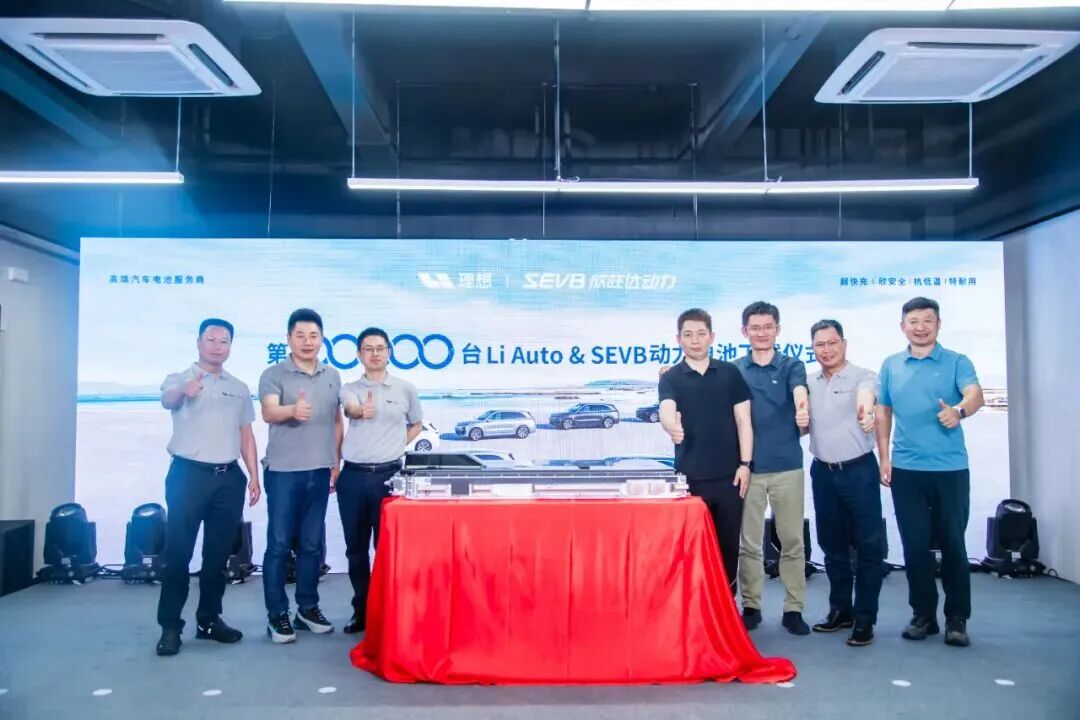
The offline ceremony for the 100,000th battery pack of Li Auto & Sunwoda Power, Source: Sunwoda Official
According to an insider from Sunwoda, to cope with the supply anxiety caused by the battery shortage, Li Auto actively introduced Sunwoda as a second-tier supplier.
At that time, Li Auto's self-developed PACK thermal management plate had already been finalized, but they required the positive and negative terminals of the battery cells to be flipped in a mirror image compared to the original design.
"A modification plan was released at the Changzhou base within 48 hours, the first sample was completed within a week, and mass production started within a month." For comparison, CATL would take two months to complete a design change of the same scale.
Behind this efficiency gap is not the lack of technical capabilities of leading suppliers, but different priorities of rules.
Leading suppliers prioritize maintaining standardized mass production order and production capacity utilization, and will not disrupt their overall rhythm to meet the customized needs of a single automaker; second-tier suppliers, without the confidence of large orders, can only take "meeting all the needs of Party A" as their top priority.
To secure their orders, second-tier battery suppliers have generally established an on-site AE (Application Engineer) system, which is their core competitiveness that differentiates them from leading suppliers. Different from the SLA service standards of leading suppliers that rely on remote communication and process-based closed-loop management, the AE teams of second-tier suppliers are supporting positions deeply embedded in the automaker's system.
In every stage such as SOP accompanying production for new automaker models and jointly debugging BMS with access to raw data, on-site AEs must respond at any time.
Insiders revealed that it is normal for AE teams to be stationed at automakers' factories for 3 to 6 months. Most companies stipulate that AE engineers must arrive at the automaker's production line or final assembly workshop within 2 hours, instead of traveling across cities the next day.
To this end, the HR departments of second-tier suppliers have also established policies such as "on-site allowance + home visit leave compensation".
"There are also a few hundred yuan of reimbursements every month, which can be used to buy milk tea or coffee for the automakers' engineers," the insider said. This is all to maintain a good relationship with their Party A, the automaker.
As one of the second-tier suppliers, after Volkswagen's capital injection, Gotion High-Tech's AE team strictly followed the German working schedule (including late-night meetings in German) and accompanied the project for nearly two years.
An insider close to the project said that Volkswagen auditors once requested to adjust the raw self-discharge data of a certain batch at 2 a.m. The AE team at Gotion's Hefei base exported the Chinese-German bilingual report from the system and sent it within 30 minutes.
This "2