40,000 units has become the new passing line for new EV makers, but it is not a "get out of jail free" card for everyone.
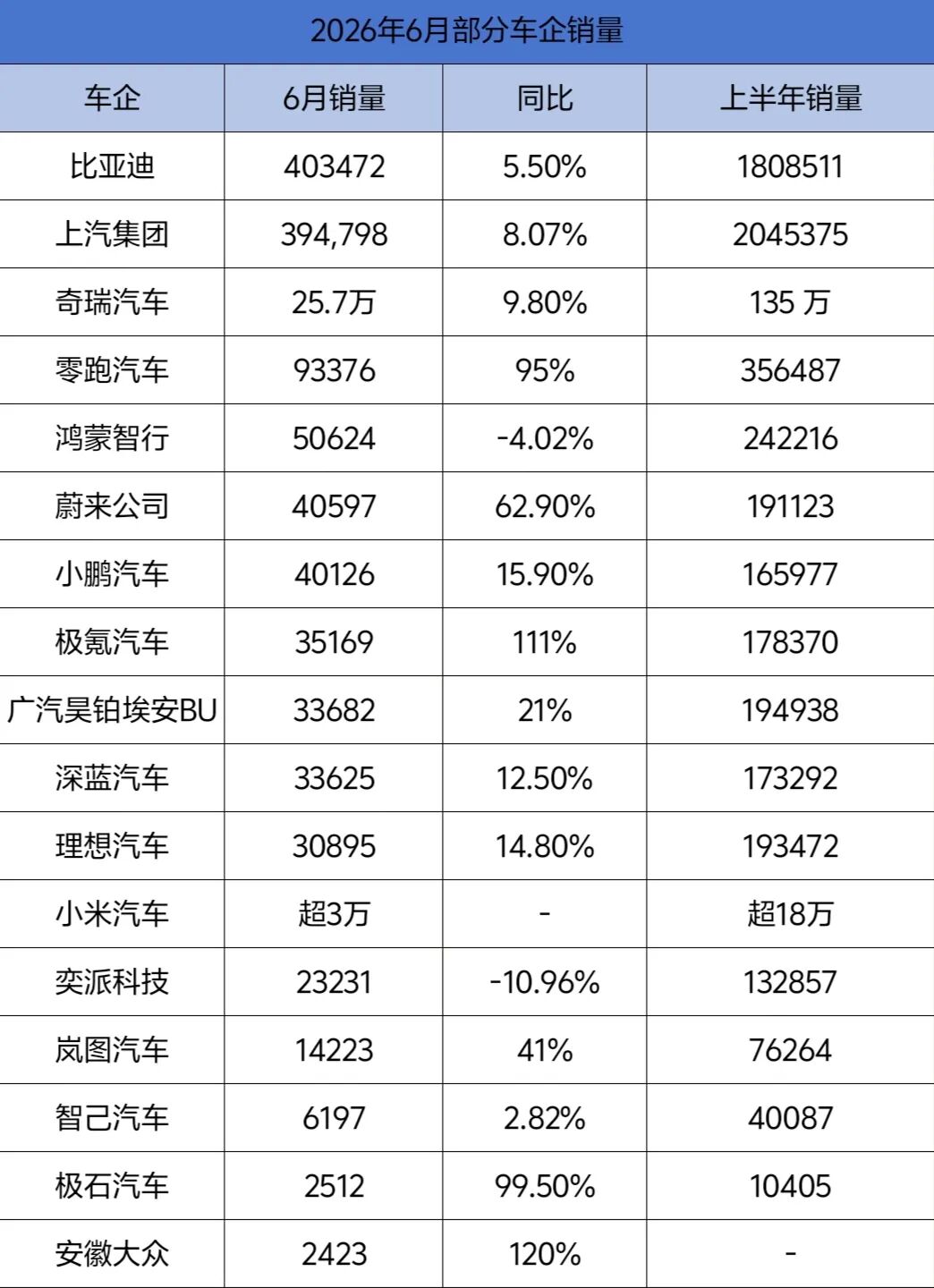
In June this year, more new energy vehicle manufacturers sold more new cars. Leapmotor delivered 93,000 units, Harmony Intelligent Mobility 50,000 units, NIO 40,500 units, and Xpeng approximately 40,000 units. Li Auto and Xiaomi each sold 30,000 new vehicles, marking a month-on-month decline.
Beyond the sales figures, another set of data deserves greater attention: from January to May this year, retail sales of passenger vehicles reached 7.099 million units, down 19.5% year-on-year; the industry profit margin stood at 3.4%, the lowest in five years; 630 new models hit the market, averaging more than 3 launches per day.
The carnival on the supply side and the chill on the demand side are unfolding simultaneously.
From January to May this year, cumulative retail sales in China's passenger vehicle market reached 7.099 million units, a 19.5% year-on-year decrease. The industry profit margin dropped to 3.4%, hitting a five-year low. With 630 new models flooding the market — no fewer than 3 per day on average — the excitement is superficial, while the cold spell runs deep.
NIO's William Li offered a forecast at the Chongqing Forum: the industry should prepare for a 15% to 20% decline in domestic full-year retail sales. Based on the 2025 baseline of 23.74 million units, this implies that 3.56 million to 4.75 million units of sales will vanish into thin air.
In the unseen shadows behind the sales carnival, a growing number of new products struggle to survive the "3-Month Death Valley", passively fading to the very bottom of sales rankings, stripped of the glory they enjoyed at launch.
The "flood-the-market" strategy has failed, and stacking excessive specifications no longer works. Consumers are beginning to prioritize the long-term value behind brands, rather than trivial differences in screen size or battery range.
Profit pressure is forcing the entire industry to recalculate its books: introducing secondary battery suppliers, streamlining organizational structures, and drastically trimming product lines.
The unifying logic behind these moves is shifting from pursuing scale to prioritizing survival.
40,000 Units Becomes the New Watershed
In the June sales rankings for new EV startups, the stratification of automakers' performance has become increasingly pronounced.
Leapmotor maintains an undisputed lead, with global deliveries exceeding 93,000 units in June, up 95% year-on-year and approaching the 100,000-unit milestone. If sales continue to rise in July, it will compete head-to-head in the top tier with traditional automakers like Great Wall Motors and Changan Automobile, whose monthly sales hover around 100,000 units, in the narrow passenger vehicle segment.
This month, updated variants of Leapmotor's C10, C11, and C16, along with its first MPV, the Leapmotor D99, are gradually hitting the market. The Leapmotor Lafa5, purpose-built for right-hand-drive markets, made its global debut, further completing the full product matrix and forming a key pillar for sales growth.
Harmony Intelligent Mobility delivered 50,000 units in June, up 9.7% month-on-month. Breaking down by model: the new-generation AITO M9 saw scaled deliveries starting June 16, surpassing 8,000 units in two weeks; the AITO M6 reached 30,000 deliveries in just 54 days; and the STELATO Z7 series exceeded 10,000 deliveries in a single month. The brand's cumulative deliveries in the first half of the year hit 240,000 units, up 18.6% year-on-year, with continuous penetration into the high-end market.
Among the "NIO-Xpeng-Li Auto" trio, two have already broken through the 40,000-unit sales mark.
NIO delivered 41,000 new vehicles in June, hitting its highest level this year and marking a 62.9% year-on-year increase. The NIO brand accounted for the largest share, delivering 21,000 units (up 50.1% year-on-year); the ALPS brand delivered 11,000 units (up 83.5% year-on-year); and the Firefly brand delivered 6,946 units (up 76.7% year-on-year). To date, NIO has cumulatively delivered over 1.18 million new vehicles.
Xpeng also delivered an impressive performance, handing over 40,000 new vehicles in June, up 15.9% year-on-year, trailing NIO by just a few hundred units. In June, Xpeng GX delivered 6,739 units, performing solidly, and Xpeng will soon launch high-volume models like the Mona L03. On July 1, with the 10,000th Xpeng vehicle officially rolling off the production line, the brand's delivery pace will accelerate, driving a simultaneous increase in sales.
Li Auto recorded 30,895 deliveries in June, a slight decrease from 33,350 units in May, representing a 14.8% year-on-year decline in monthly sales. Affected by the product transition cycle, Li Auto's cumulative deliveries in the first half of the year reached 193,472 units, down 5.13% year-on-year.
An endless stream of large five-seat and six-seat extended-range SUVs are continuously eroding Li Auto's market share. However, in the high-end new energy market above 200,000 yuan, the Li Auto i6 has maintained its core sales base, with over 150,000 units produced to date, ranking first in midsize to large SUV sales for four consecutive months.
Like Li Auto, Xiaomi Auto delivered over 30,000 units in June, though it has yet to release detailed figures.
State-owned and central-state-owned new energy brands also hit new sales highs in June. Zeekr stood out most, delivering 35,000 units in a single month, up 111% year-on-year, marking five consecutive months of growth. In the first half of the year, the brand delivered a total of 178,000 new vehicles, surging 97% year-on-year.
GAC's Hyper-Aion BU and Deepal Auto each delivered 34,000 units, up 21% and 12.5% year-on-year respectively; BAIC's Arcfox delivered 25,600 units in June, skyrocketing 219.3% year-on-year, with cumulative first-half deliveries exceeding 80,000 units, up 65.88% year-on-year. AITO delivered 23,000 new vehicles; IM Motors delivered 40,000 new vehicles from January to June, up 58% year-on-year; Voyah Auto delivered 14,000 new vehicles, up 41% year-on-year, with cumulative first-half deliveries reaching 76,000 units, up 36% year-on-year.
Source: Future Auto Daily
Among traditional automakers, BYD's June sales exceeded 400,000 units, up 5.46% year-on-year, with overseas sales surpassing 170,000 units. Its cumulative first-half sales topped 1.8 million units, with total cumulative new energy vehicle sales exceeding 16.9 million units. SAIC Motor's total vehicle sales in June reached 394,800 units, up 8.07% year-on-year, of which new energy vehicle sales hit 201,000 units, up 66.61% year-on-year. Chery Group's June sales reached 257,000 units, up 9.8% year-on-year.
Beyond Year-on-Year Growth, Automakers Are Re-evaluating Their Expenditures
The flip side of new energy vehicle sales growth is unregulated cutthroat competition.
This has created a fragmented landscape in China's auto market during the first half of the year.
According to data from the China Passenger Car Association and DCar, 550 new models were launched domestically from January to May this year, with a total of 630 new releases by the end of June. On average, no fewer than 3 new vehicles flood the market every day. From sedans, SUVs, MPVs to off-road vehicles, from affordable city cars under 100,000 yuan to high-end flagships above 300,000 yuan, new energy vehicles account for over 70% of the total offerings.
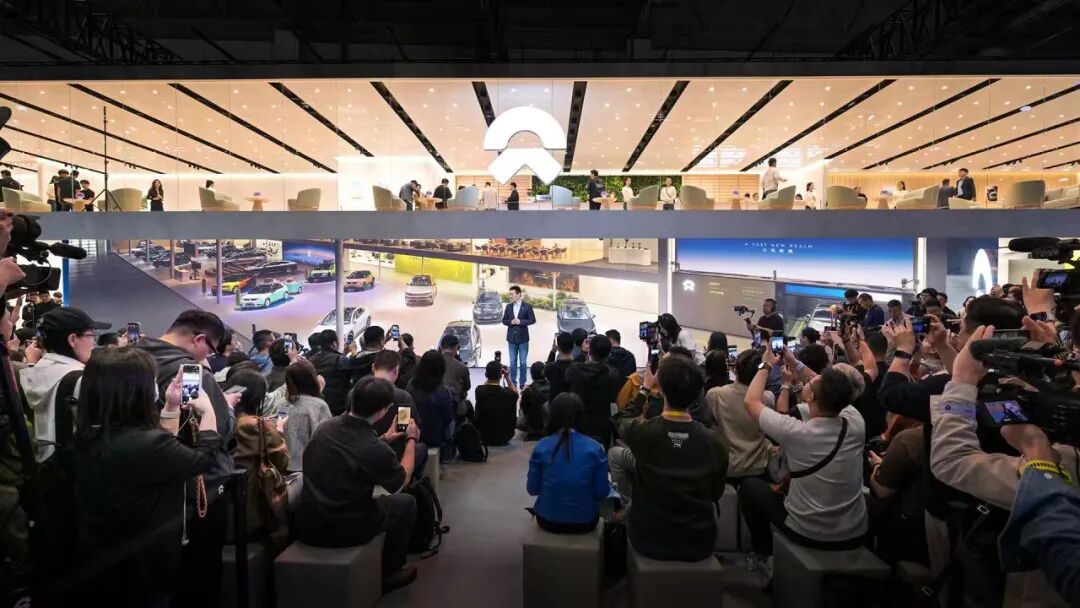
The supply side is undeniably bustling, with new car launches happening so frequently and covering such a wide range of categories that consumers can barely keep up.
Source: NIO Official
However, this excitement has not translated into terminal sales growth.
From January to May this year, China's automobile consumption decreased by 11.8% year-on-year, with cumulative retail sales in the passenger vehicle market reaching 7.11 million units, plummeting 19% year-on-year. Even more alarming is the profit performance: the total profit of the automotive industry reached 144 billion yuan, down 20% year-on-year, and the industry profit margin fell to 3.4%, hitting the lowest level for the same period in five years.
NIO founder William Li offered a forecast at the Chongqing Forum: the industry should mentally prepare for a 15% to 20% decline in full-year domestic retail sales. Based on the 2025 baseline of 23.74 million units, this implies that 3.56 million to 4.75 million units of sales will vanish this year, potentially pushing the total market volume back to the 19 million to 20.18 million unit range.
Behind this "extremes of hot and cold" scenario lies the total failure of the flood-the-market strategy.
Despite the dense launch of new models, over 80% of them are nothing more than minor range adjustments, interior color changes, or spec stacking on existing vehicles, with less than 20% being true generational models built on entirely new architectures.
As 800V high-voltage platforms, urban intelligent driving, and Qualcomm Snapdragon 8295 chips gradually become standard features, the gaps between different manufacturers' products in fundamental technologies are visibly narrowing.
McKinsey's 2026 China Auto Consumer Insights shows that among the key purchasing factors for electric vehicles, "brand" has jumped from its long-held 5th position to 2nd place, second only to range and charging time. This means consumers are no longer easily swayed by trivial differences in battery capacity or screen size; they now prioritize the long-term value and reliability represented by the brand.
Those minorly updated models can barely make any waves in the market.
As a result, meticulous cost control has become a mandatory lesson for the entire industry.
The first target for optimization is power batteries. Battery packs, which account for 35% to 40% of a vehicle's total cost, are the most direct and effective area for cost reduction.
Harmony Intelligent Mobility has begun fully introducing suppliers outside CATL this year, with its AITO, Luxeed, and Stelato brands simultaneously adding Gotion High-Tech, CALB, and Sunwoda to their supply chains.
Insiders reveal that for battery packs of the same specification, these new suppliers quote prices roughly 10% lower than CATL.
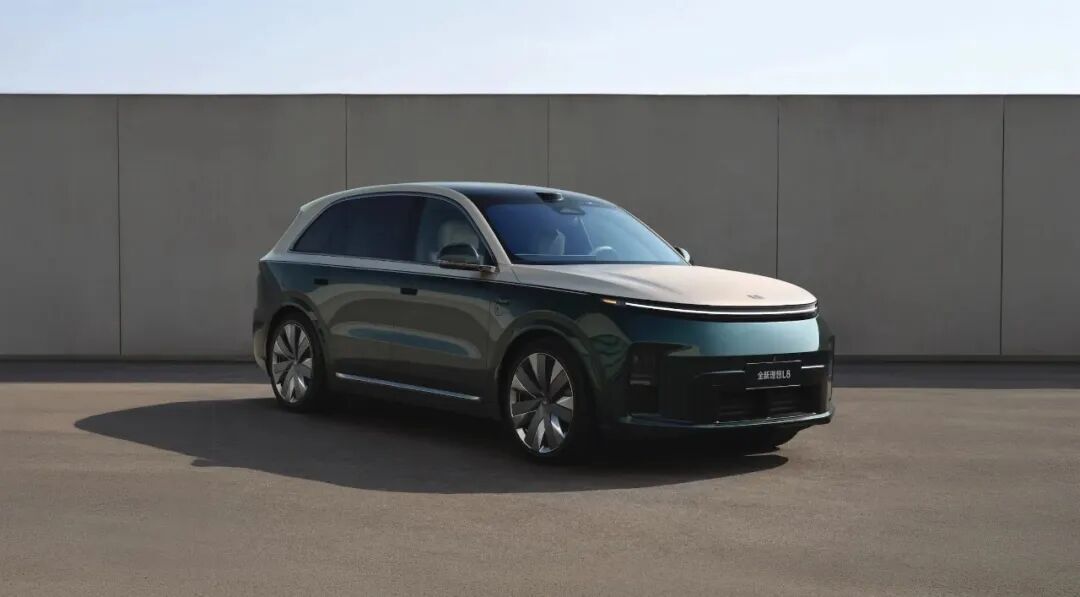
The all-new Li Auto L8 launched in June uniformly uses Sunwoda cells across all trims, removing CATL from the model's supplier list. Tesla has also added Sunwoda to its battery supply system this year. Automakers are no longer tolerating the premium hegemony of a single giant, using the introduction of "disruptor" suppliers to gain bargaining power and squeeze out profit margins at the source.
Source: Li Auto Official
At the organizational level, a "streamlining campaign" is quietly underway. BYD was recently reported to be splitting its engineering research institute, retaining only technology platform development functions, while its five major brands will each establish their own research institutes, directly accountable for market performance.
This move targets the internal contradictions that have long plagued BYD — severe product homogeneity and vague positioning across different brands. With product definition delegated to the brands themselves, each brand must independently take responsibility for its own survival, drastically shortening the chain from market feedback to product innovation.
This aligns perfectly with the integration approach under Geely's "One Geely" strategy, where Zeekr and Lynk & Co have each established their own full-vehicle research institutes, independently responsible for product definition and marketing, with redundant entities set to be consolidated or shut down. Changan Automobile also announced in June this year that it will integrate its Avatr and Deepal brands to resolve internal friction and reverse continuous losses.
The subtraction in product lines has been even more resolute. Changan Automobile has trimmed its product plan from 63 models to 36, cutting nearly half of its original lineup.
After four consecutive months of declining sales in China, Toyota has declared war on inefficiency, streamlining some model trims and derivative variants, and even canceling the mass production plan for Lexus's next-generation pure electric sedan, the LF-ZC.
Volkswagen, Great Wall Motors, Geely, and other domestic and foreign players have also been reported to be scaling back their product lines. Those "zombie models" that occupy production capacity but fail to generate positive cash flow are being phased out one by one.
Adding diversity on the supply side by bringing in multiple suppliers to compete for pricing power, while subtracting in internal management and product planning by merging inefficient brands, cutting redundant features, and trimming product portfolios — this combination reflects a fundamental shift in the entire industry's survival logic.
The disappearance of millions of units in sales is destined to trigger a large-scale market clear-out of redundant products and weak brands.
The era of easy profits in the internal combustion engine vehicle age is long gone. With industry profit margins falling below 4%, and three new models launching every day yet failing to drive overall sales growth, the clarion call for China's automotive industry knockout round has sounded.