85,000 stores closed within a year, becoming the overstock king in the second-hand recycling market — what on earth has happened to the baking industry?
The baking industry has entered an "ultra-hell" mode.
According to data from Zhaimen Canyan as of July 13, 2026, the bakery and baking sector has only seen 3,334 new store openings in the past year, with a "net growth" of "-81,700" stores. This means that over the course of a year, more than 85,000 outlets have disappeared.
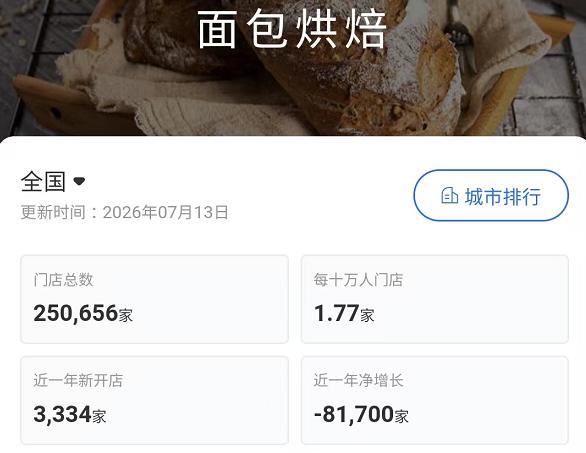
▲ Image source: Zhaimen Canyan
And this wave of closures does not discriminate between large and small brands, nor between old and new establishments.
On one hand, long-standing baking brands such as Christine, BreadTalk, and Paris Bagutte have seen consecutive store shutdowns across multiple regions. On the other hand, independent small shops scattered across the streets have quietly posted "transfer" notices... What on earth has happened to the baking industry?
01. Even big brands can't hold on, second-hand equipment warehouses are overflowing, everything is being sold at "low prices"

Christine, known as "China's first publicly listed baking company", which operated over 1,000 stores in the Yangtze River Delta region at its peak, was delisted in 2024 and officially entered bankruptcy liquidation proceedings in 2025 due to its inability to repay debts.
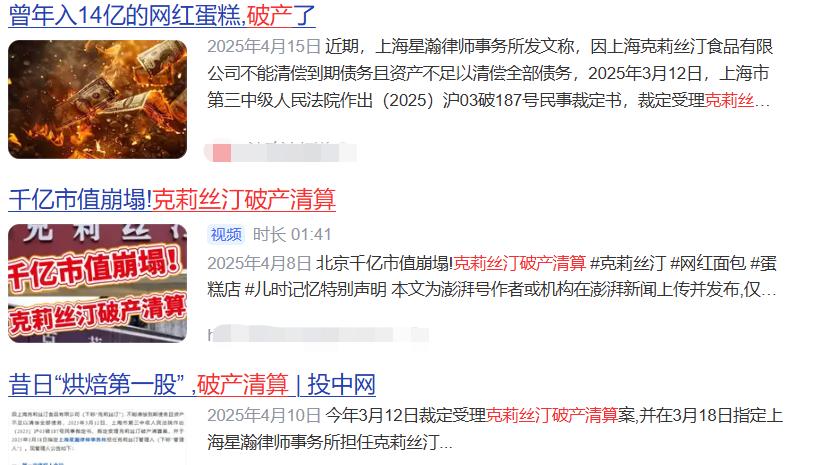
▲ Image source: Related reports
BreadTalk, which entered the Chinese market in 2003, had more than 400 stores at its peak. After successively withdrawing from cities including Zhengzhou, Fuzhou, Xi'an, Chengdu, and Beijing, it now only operates 129 stores (data from Zhaimen Canyan).
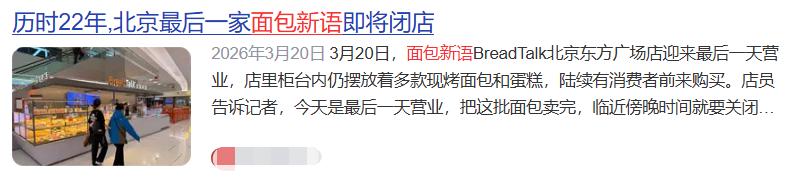
▲ Image source: Related reports
Paris Bagutte, which entered China in the same year as BreadTalk, is also facing the awkward situation of store closures. As recently as May 2026, its only store in Xi'an officially shut down, having operated for less than three years.
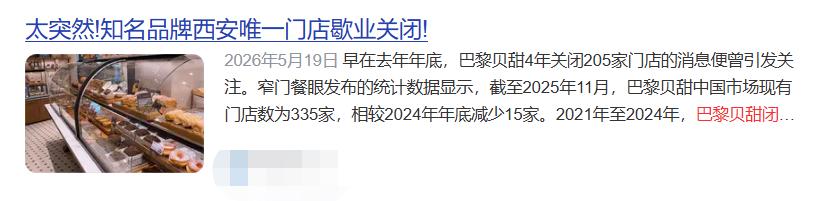
▲ Image source: Related reports
Regional established brands are also struggling to stay afloat. In March, the owner of Nantong's long-standing local brand Lebeizi fled; in April, Hot Air Bakery, which once raised tens of millions in financing, was exposed to widespread store closures; in May, Dongguan Dingdong Bread Garden and Wuxi Tous Les Jours successively ceased operations...
Even more shocking than brand closures is the "rapid rise and fall" of viral product categories.
The Roll'ING Handmade Swiss Roll, dubbed the "Rolls-Royce of Swiss rolls", sold for 40 to 50 yuan per roll, with scalpers once reselling them for as high as 120 yuan. Now, multiple stores in Beijing have closed one after another, including its first Beijing outlet, leaving only 28 stores nationwide.
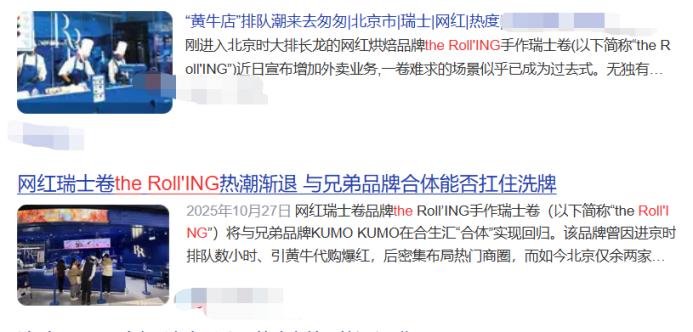
▲ Image source: Related reports
Lady M, which rose to fame from New York all the way to Shanghai and Beijing, was once the top-tier brand in the mille crepe cake sector. It suddenly closed all its mainland China stores in 2022. It made a comeback under a direct-operated model at the end of 2024, but the grand scenes of 6-hour queues in the past are now a thing of memory.
Affordable product categories also cannot escape the curse of "rapid decline". Categories such as 2-yuan bread, large yogurt fried dough twists, and dirty bread swept through the industry like a tornado, leaving a trail of chaos in their wake.
In response to the store closure wave, second-hand baking equipment suppliers are facing warehouse overflow.
On social platforms, some people describe second-hand baking equipment recycling warehouses: "Looking around, it's like stepping into a 'graveyard' of the baking industry", with piles of equipment stacked high, completely deserted.

▲ Image source: Xiaohongshu screenshot
Some second-hand recycling merchants can't help but wonder: "The once highly sought-after equipment that was popular not long ago now piles up in dozens or hundreds of units with no one showing interest"; "Our 3,000-square-meter warehouse is completely full".
Some overwhelmed business owners have already launched a "clearance sale" plan: "Near-new condition, sold at rock-bottom prices!"
Behind the mountain of accumulated second-hand equipment lies the massive gap between 3,000 new store openings and 85,000 closed stores.
02. The surviving players are all desperately "transforming"

Under the raging wave of store closures, the baking industry has been divided into two tiers. One tier consists of the brands and outlets swept away by the tide, forced to close and exit the market. The other tier is the players still at the table, desperately innovating and iterating to survive through the industry cycle. The latter group has unanimously embarked on a "metamorphosis" journey to adapt to the new reshuffling rules of the industry.
1. Chain brands are collectively "becoming restaurant-like", adding meals and drinks to expand consumption boundaries
A group of leading baking brands have collectively ventured into the core of the catering industry.
In February this year, Baosheng opened its first 1,000-square-meter two-story "super complex store" at MixC World in Yibin, Sichuan. The 1,000-square-meter two-floor layout retains an open kitchen on the first floor, focusing on classic pastries such as pork floss mini cakes and egg tarts, along with coffee. The second floor features a Western dining area, specializing in wood-fired pizza, pasta, and steak, priced roughly between 30 and 108 yuan, with both booth seating and free tables. All three areas for baking, Western cuisine, and coffee are designed with open kitchens, highlighting the concept of "freshness you can see".
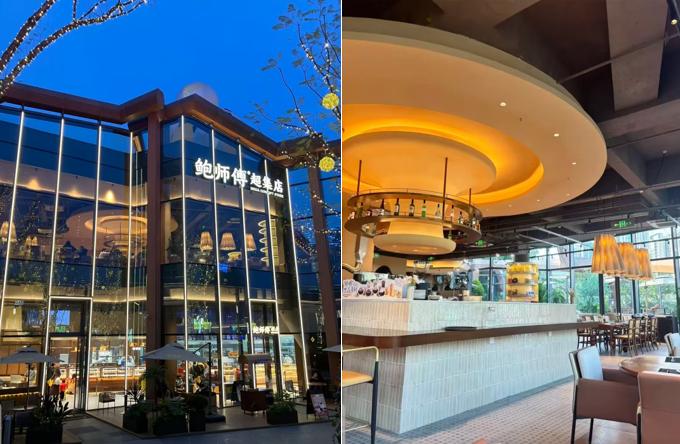
▲ Image source: Dianping
Toly Bread, known as the "Bread King" that has sold packaged bread for nearly 30 years, under the pressure of five consecutive years of declining net profit, opened its first in-store fresh-baked bakery outlet "Toly Outlet Store" in Shenyang in April 2026. The store is divided into multiple counters by category, including a baking zone, a "Wei Wudi" zone, and a "Re Hu" zone, expanding its product range from baked goods to both Chinese and Western fast food.
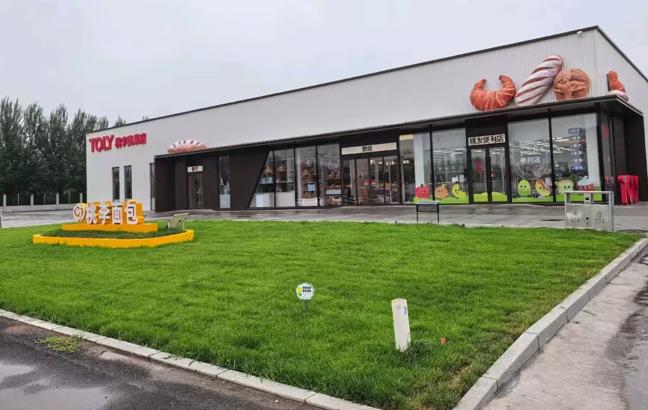
▲ Image source: Dianping
Luxixi also opened its first two-story integrated store in Nanjing in February this year, with the slogan "Savor tea and coffee, enjoy pastries at a leisurely pace". The first floor features an open-kitchen fresh-baked sales area and the "Lu Jia Shui Pu" tea and coffee zone; the second floor is set up as a dine-in area with sofa seating. While retaining classic Chinese pastries such as walnut cookie and mochi, the product line has added Western desserts including donuts, croissants, and egg tarts.

▲ Image source: Dianping
These baking brands are attempting to find a way out by adopting an "additive" strategy.
2. Mastering social platforms: Big brands build "personal brands", small shop owners all go live to post "vlogs"
Social platforms are becoming the second battlefield for the baking industry.
Big brands are building their "personal personas". Luo Cheng, the "socially awkward second son" of Holiland, has gained countless fans on Douyin with his persona of "daily life of a socially awkward boss". His personal IP has directly injected a youthful vibe into Holiland, reviving the 30+ year old established brand among Generation Z.
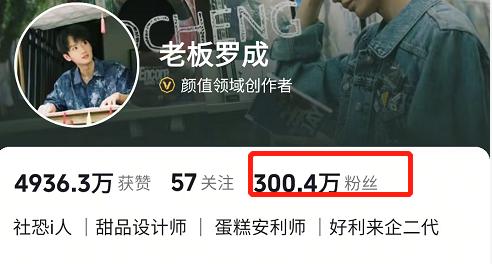
▲ Image source: Douyin account "Boss Luo Cheng"
It's not just Holiland. More and more baking brands are putting their founders in the spotlight — sharing entrepreneurial stories, showing behind-the-scenes kitchen daily life, and responding to customer feedback. Consumers' trust in a brand is shifting from "products" to "people".
For small shop owners, the approach is more direct — everyone gets online to "shoot videos".
At Uncle Li's Cake Shop in Xihua County, Zhoukou, Henan Province, the 51-year-old owner Li Anliang had no customers when he first opened. But after a few casually posted short videos went viral, the store not only attracted nearby villagers to rush to buy, but even drew customers who drove across counties to make purchases. As recently as June this year, "Uncle Li" opened a new store in Zhoukou city.
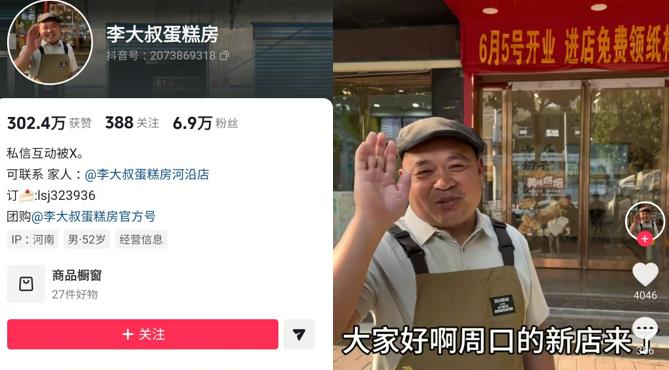
▲ Image source: Douyin account of Uncle Li's Cake Shop
Just like "Uncle Li", shooting "vlogs" while making cakes has almost become a standard operation for independent bakery shops. Behind this trend lies the unavoidable reality for bakeries in the traffic era: being skilled only at making cakes is no longer sufficient.
3. The end of selling bread is selling emotional value
The reason why everyone is "shooting videos" is that the selling point of bakeries is extending from the single dimension of "selling products" to "selling trust" and "selling emotions". A large number of outlets are already competing on emotional resonance and aesthetic appeal.
Take Holiland as an example. In the first half of 2026 alone, Holiland completed multiple rounds of intensive cross-brand collaborations, partnering with well-known IPs such as *Light and Night* and Minions, covering multiple circles including games, animation, and cartoon characters. The resulting co-branded products and IP peripherals have drawn young people to queue up for visits.
