The knife of Oliver Blume has been held back, but the German automotive industry is still bleeding.
Factory closures, layoffs, pay cuts... The sky over Germany's automotive industry is shrouded in dark clouds.
German auto industry workers have found themselves transformed from "manufacturing aristocrats" into "involution-ridden laborers".
Mercedes-Benz has delayed the "transformation bonus" for its 90,000 employees to next year, and the weekly working hours may be extended from 35 to 40 hours without overtime pay. Calculated annually, each employee will have to work 260 extra hours.
Volkswagen has taken even harsher measures. Group CEO Oliver Blume proposed a reform plan to "close 4 German factories and cut 100,000 jobs". On July 9, this reform proposal was rejected by the Volkswagen Supervisory Board with a 12-7 vote; the Supervisory Board only approved a business adjustment plan to "streamline the model lineup by up to 50% and reduce production capacity". The factories have been saved for now, but as vehicle production volumes shrink, they will sooner or later become empty shells.
BMW has also failed to withstand the pressure. It has issued profit warnings for three consecutive years, lowering the 2026 EBTI margin target for its automotive business from 4%-6% to 1%-3%, triggering a single-day stock price plunge; it plans to cut another 7,700 jobs by the end of 2026.
Layoffs and pay cuts can indeed make financial statements look better in the short term, but they do not address the root cause of Germany's auto industry's troubles. The problem for German automakers is that their traditional mechanical mindset is no longer suited to the era of intelligent electric vehicles, and they need to shift to a "software-first mindset" to pursue innovation.
"Everyone will say, 'I've already done a lot'... But if you just came back from China, you'll feel it even more clearly: our competitiveness is no longer strong enough."
In February this year, German Chancellor Merz said these words at an internal meeting after returning to Berlin from his visit to China. Although Merz did not name any specific companies, the CEOs of Volkswagen, Mercedes-Benz, and BMW all knew perfectly well that the "competitiveness" he referred to included the automotive industry.
NO.1 [ Volkswagen's Drastic Measures, Each Leadership More Ruthless Than the Last ]
Oliver Blume is not Herbert Diess.
Diess was an "outsider" who joined Volkswagen from BMW in 2018 and was known as the "cost killer". Shortly after taking office, he cut 30,000 jobs globally, but was eventually ousted by the labor union in 2022. Diess first lost his position as CEO of the Volkswagen brand, then was stripped of responsibility for the China region, and finally was completely dismissed.
Blume is an "insider" who worked his way up from being an Audi engineer, and knows full well the power of the labor union. Having witnessed Diess's downfall, he should have been more cautious, but he ended up being even harsher than Diess.
In December 2024, Blume held the longest negotiation in Volkswagen's 87-year history with the labor union - 70 hours - and finally reached an agreement: to cut 35,000 jobs by 2030, with a commitment not to close any factories. The labor union praised this as a "Christmas miracle".
Eight months later, he personally shattered that "miracle". In August 2025, Blume admitted in an internal letter: the cost-cutting plan is far from sufficient.
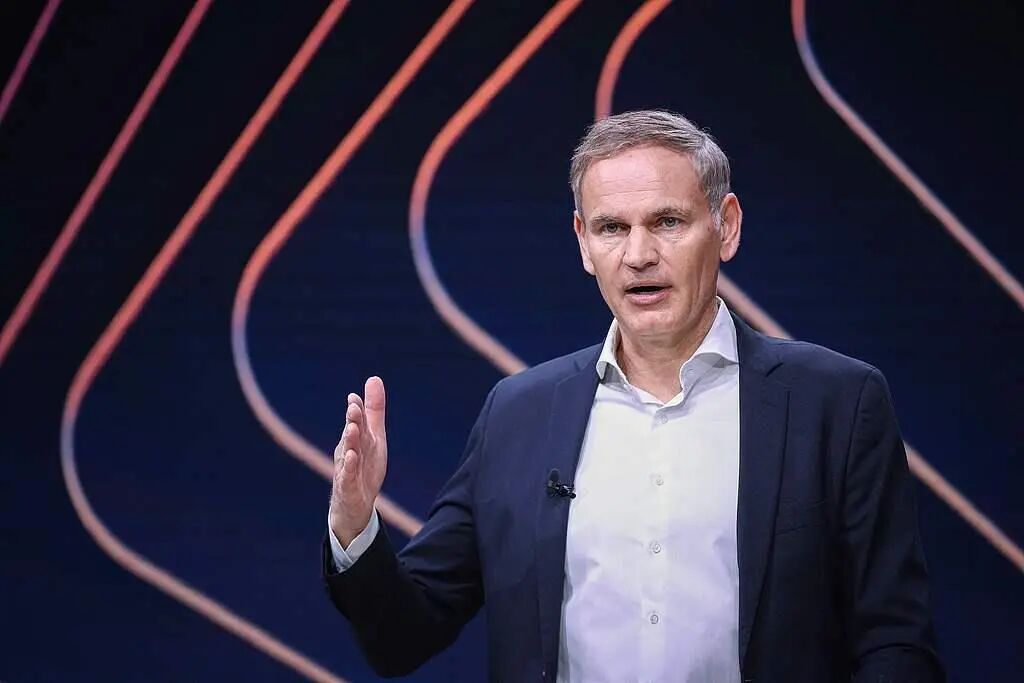
Oliver Blume, CEO of Volkswagen Group
Why would an "insider" be more radical than an "outsider"?
Just look at the financial statements. In 2025, Volkswagen's operating profit plummeted 53.5% to 8.9 billion euros, hitting the lowest level since the 2016 "Dieselgate" scandal. Among its divisions, the Porsche unit - once Volkswagen's biggest profit generator - saw its automotive business profit nearly evaporate: its return on sales dropped from 14.5% to just 0.3%, and operating profit collapsed from 5.3 billion euros to 90 million euros, a staggering 98% decline.
Slow progress in electrification has caused Volkswagen to lose ground in the Chinese market, with its market share falling from 14.7% in 2015 to 9.7% in 2025; annual sales have dropped from a peak of over 4 million units (in 2019) to 2.69 million units in 2025. It must be remembered that this is Volkswagen's largest single-country market worldwide - on average, 3 out of every 10 Volkswagen vehicles sold go to the Chinese market.
In the Chinese market, Volkswagen is struggling in a shrinking internal combustion (ICE) vehicle segment, with its new energy vehicle penetration rate currently at only around 5%, far below the industry average of over 60%.
Last December, Volkswagen closed its "Transparent Factory" in Dresden, marking the first time it has shut down a domestic German vehicle assembly plant in its 88-year history. This 186 million euro glass palace produced fewer than 200,000 vehicles over 22 years, less than half the annual output of the main Wolfsburg plant. Now, it is being converted into an innovation park for a university.
From the "pride of Industry 4.0" to a "university innovation park", this factory's transformation took only 22 years.
Blume understands better than Diess: it's not that the reforms are too radical, but that they are coming far too late.
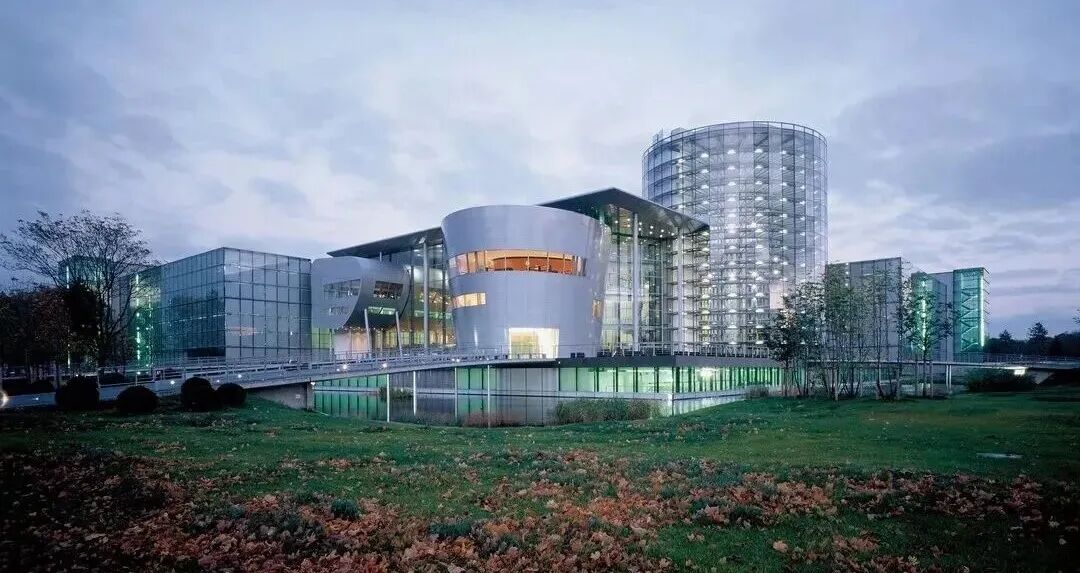
Volkswagen's "Transparent Factory" in Dresden
The shifts in power dynamics have also intensified Blume's determination to push through reforms. In 2022, Blume took charge of both Volkswagen Group and Porsche, becoming a "dual CEO", which was seen at the time as the peak of his power. But in 2025, Porsche's electrification strategy completely failed: sales of the Taycan plummeted, the Macan EV found almost no buyers, forcing Porsche to "retreat back to ICE vehicles". Investors were furious, and in October 2025, he was forced to step down as Porsche CEO.
With Porsche gone, he has only Volkswagen left. Volkswagen Group initially proposed in March 2026 to increase layoffs to 50,000, and officially announced this plan on June 18. Just over a week later, Blume submitted an even more radical proposal to cut 100,000 jobs (adding another 50,000 on top of the existing 50,000) and close 4 German factories.
Blume still underestimated the power of the labor union. Christiane Benner, Chairwoman of Germany's IG Metall union, firmly opposed the plan: "As long as we are here, we will never allow such a thing to happen!"
The "100,000-job cut plan" was rejected by the Volkswagen Supervisory Board with a 12-7 vote. In the end, the public plan announced by Volkswagen is: gradually streamline its model lineup in the future, cutting up to 50% of its model range, and reduce global production capacity to 9 million units (down from the previous nominal capacity of 12 million units).
Stephan Weil, Minister-President of Lower Saxony, also previously stated: "Factory closures are unacceptable." Back in April, he proposed an alternative solution: Volkswagen should introduce models developed in China to be produced at its domestic German factories.
Using Chinese technology to save German factories. The "teacher" who invented the automobile now has to borrow technology and platforms from its former "student" to preserve its own livelihoods.
NO.2 [ Mercedes-Benz and BMW Are in No Better Position ]
While Volkswagen is engaging in a head-on confrontation with the labor union in the Supervisory Board, Mercedes-Benz and BMW are taking relatively gentler measures to save themselves.
Mercedes-Benz has handled things with a modicum of dignity. In the same week that Volkswagen's 100,000-job cut plan was exposed, Mercedes-Benz announced it would postpone the "transformation bonus" for its 90,000 German employees, originally scheduled for July 2026, to April 2027, while retaining the right to cancel it entirely. This bonus is equivalent to 18.4% of an employee's monthly salary.
At the same time, the management is pushing to extend the weekly working hours from 35 to 40 hours without paying overtime. Each employee will work approximately 260 extra unpaid hours per year, which amounts to "squeezing" around 9,100 euros (about 70,000 RMB) from each person.
Ergun Lümali, Chairman of the Mercedes-Benz Works Council, criticized: "Do they really think they can improve the company's competitiveness just by making employees work overtime for free? That idea doesn't hold water."
Back in 2025, Mercedes-Benz launched its largest-ever "voluntary separation" plan: offering generous severance packages to encourage 30,000 employees to leave voluntarily. In the end, around 5,500 people accepted the compensation and departed. Although this figure is far below the target, it at least preserved a modicum of public face.
That same year, Mercedes-Benz's annual net profit plummeted 48.8% year-on-year to 5.3 billion euros, with global sales of 2.16 million units down 10% year-on-year, retreating to levels from a decade ago. Yet CEO Ola Källenius could still brush it off with the phrase "performance remains within our expected range".
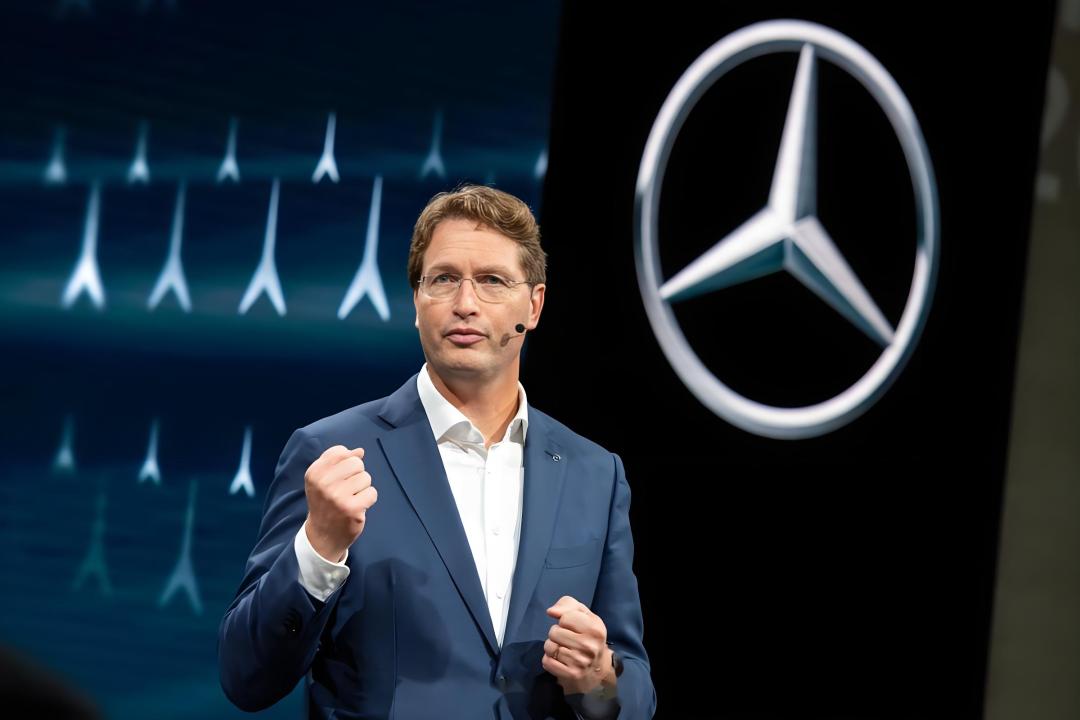
Ola Källenius, CEO of Mercedes-Benz
Mercedes-Benz is also grappling with headaches in its electrification transformation.
In 2021, Mercedes-Benz CEO Ola Källenius proposed investing over 400 billion euros over 9 years, with the goal of "full electrification by 2030". But in 2025, Mercedes-Benz's global pure electric vehicle sales accounted for less than 11% of total sales, and even declined by 7.8% year-on-year. In the Chinese market, the EQE SUV sold only 4,432 units for the entire year; the all-new pure electric CLA sold just over 1,300 units in its first month on the market, while Tesla's Model 3 retail sales exceeded 20,000 units in the same month - the two vehicles' sales performance is worlds apart.
In the first half of 2026, Mercedes-Benz sold only 210,000 vehicles in the Chinese market, a staggering 28% year-on-year decline, with some dealerships starting to close. The era that belonged to Mercedes-Benz seems to be fading away.
Compared with Volkswagen Group and Mercedes-Benz, BMW has made relatively minor adjustments, mainly issuing profit warnings and implementing small-scale layoffs.
In June this year, BMW announced it was lowering its 2026 performance guidance, cutting its margin target from 4%-6% to 1%-3%, triggering an 11% single-day stock price plunge; it was also exposed that it planned to reduce its global workforce by 5% by the end of 2026, approximately 7,700 jobs. BMW, which once promised "no layoffs", is about to break that pledge.
In the past, BMW was once considered the most stable of the "German Big Three".
In 2024, BMW's global pure electric vehicle sales reached 427,000 units, exceeding the combined pure electric sales of Mercedes-Benz and Audi; new energy vehicles accounted for 24.2% of total sales, meaning 1 out of every 4 BMWs sold was an electric vehicle.
In 2025, BMW's annual net profit was 7.451 billion euros, a marginal 3% year-on-year decline; its pre-tax margin was 7.7%, unchanged from the previous year, making the group's overall profitability more stable than that of Mercedes-Benz and Audi. Furthermore, in early 2025, BMW officially stated publicly that it would not cut costs through layoffs.
However, BMW is also facing various pressures, and its perceived stability is only superficial.
In the Chinese market, BMW's sales fell 13.4% in 2024, then dropped another 12.5% to 625,500 units in 2025, and continued to decline by over 10% in the first quarter of 2026. The Chinese market's share of BMW's global sales has fallen from a peak of 33.5% to 25.5%.
Fortunately, its new-generation models are scheduled to launch in the second half of 2026, which may bring new growth opportunities.
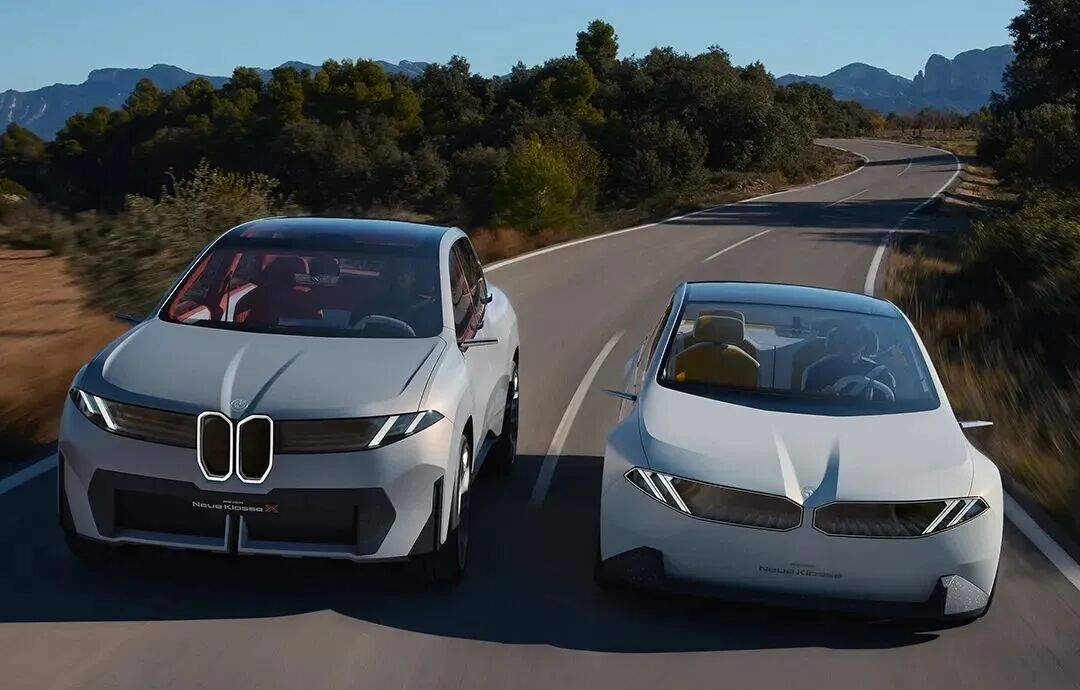
BMW's new-generation models
NO.3 [ Layoffs Cannot Save Germany's Auto Industry ]
The crisis facing vehicle manufacturers is just the tip of the iceberg. Beneath the surface, suppliers are collectively bleeding financially.
In 2025, in Germany alone, automotive component suppliers cut tens of thousands of jobs. Bosch and ZF Friedrichshafen each announced layoff plans for over 10,000 employees this year; Continental, after cutting 7,000 jobs globally last year, plans to cut another 3,000 in 2026.
Behind these layoffs lies a collapse in profits. In the ICE era, traditional component giants such as Bosch, Continental, and ZF Friedrichshafen sustained EBIT margins of 6%-8% for a long time, even reaching double digits; today, around 4% has become the norm in recent years.
A March 2026 survey by the European Association of Automotive Suppliers (CLEPA) shows that 76% of automotive suppliers expect their 2026 profitability to fall below 5% - a level generally regarded as the minimum threshold required to maintain long-term investment in innovation and industrial capacity.
But can layoffs, factory closures, and pay cuts really get Germany's auto industry back on its feet?
These measures can indeed give German automakers a moment to catch their breath in the short term. But the money saved through layoffs cannot fill the massive funding gaps in software R&D. Closing factories temporarily eases financial pressure, but it cannot generate new competitiveness.
To some extent, the past success of German automakers has now become a shackle preventing their transformation.
In the past, the core business of automotive manufacturing was simply producing cars; today, software and electrification account for an ever-growing share of vehicle value. Software, AI, and battery technologies now make up 80% of a vehicle's total value, becoming the core technologies of the automobile. But at present, Germany does not hold advantages in these future