Controversies over Payment Models and Competition Systems: Survival and Breakthrough of Youth Soccer Academies in the US
The 2026 FIFA World Cup in the United States, Canada and Mexico is underway. Taking advantage of the opportunity to cover the World Cup on the ground, Lanxiong Sports conducted an in-depth investigation into American soccer. We visited the headquarters of Major League Soccer (MLS) and interviewed league executives; we toured youth training clubs and soccer schools, communicating with youth coaches, owners of soccer schools and youth training clubs, parents of young players and other groups, aiming to present a more authentic and three-dimensional picture of the development of American soccer — is it really a "soccer desert" in the eyes of many people?
While soccer in the United States still lags far behind American football, basketball and baseball in terms of influence, it is undeniable that supported by a profound sports culture and a mature professional sports system, American soccer has entered a fast track of development. At the same time, we hope that this series of reports "Five Chapters on American Soccer" can provide valuable references for countries and regions that are exploring paths for soccer development.
The full text is as follows:
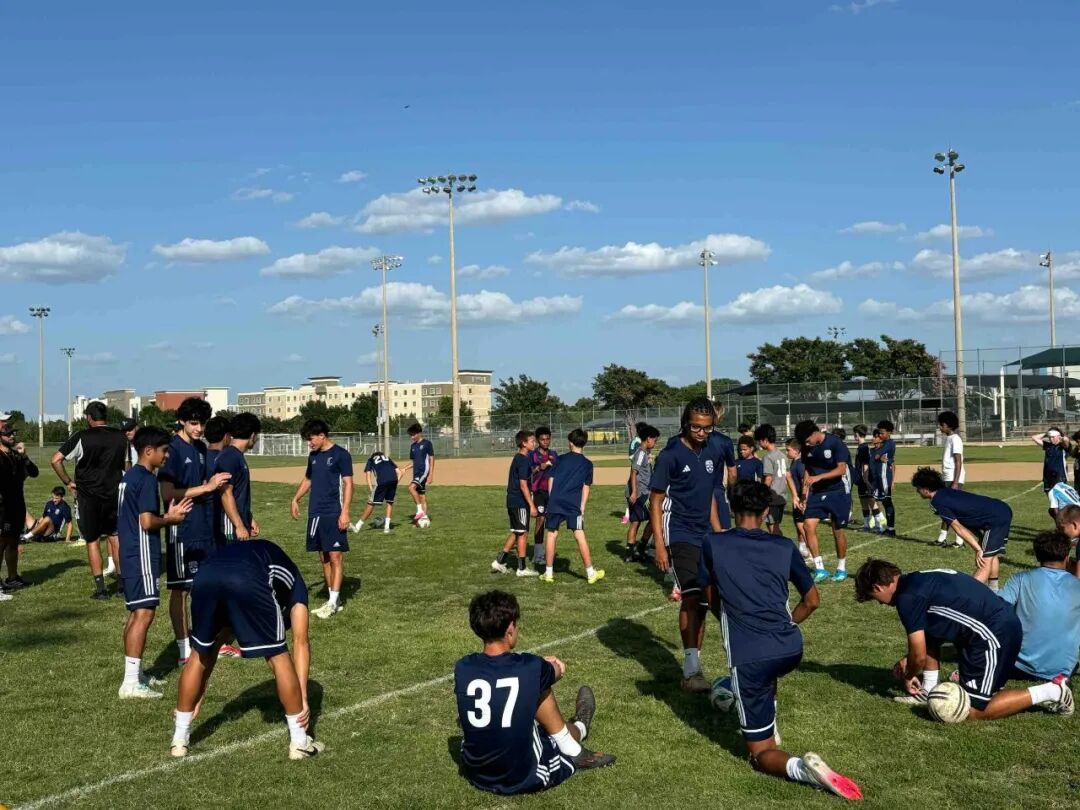
At noon on June 29, the maximum temperature in Dallas, a central U.S. city, reached 36 degrees Celsius. Standing in direct sunlight, the perceived temperature exceeded 40 degrees Celsius.
By 5 p.m., the weather had not cooled down. The sun was still hanging high in the sky, scorching the ground and everyone on it.
Near a baseball field on the outskirts of Dallas, vehicles began to pull over one after another. Then, children in soccer training kits stepped out of the cars. Their skin tones varied from white, black, brown to yellow. An hour later, these children would start their training sessions with the Dallas Hornets FC.
Founded four years ago, the Dallas Hornets FC now has more than 700 registered players, and obtained qualification to participate in MLS NEXT (the U.S. youth soccer league) last year. Cody Warden, the club's owner, told Lanxiong Sports that among all youth training clubs in the United States, the Hornets is a club of small-to-medium scale, but he has no intention of expanding blindly. Instead, he prefers to build an excellent youth training product, because "a high-quality product will always bring corresponding revenue as a return."
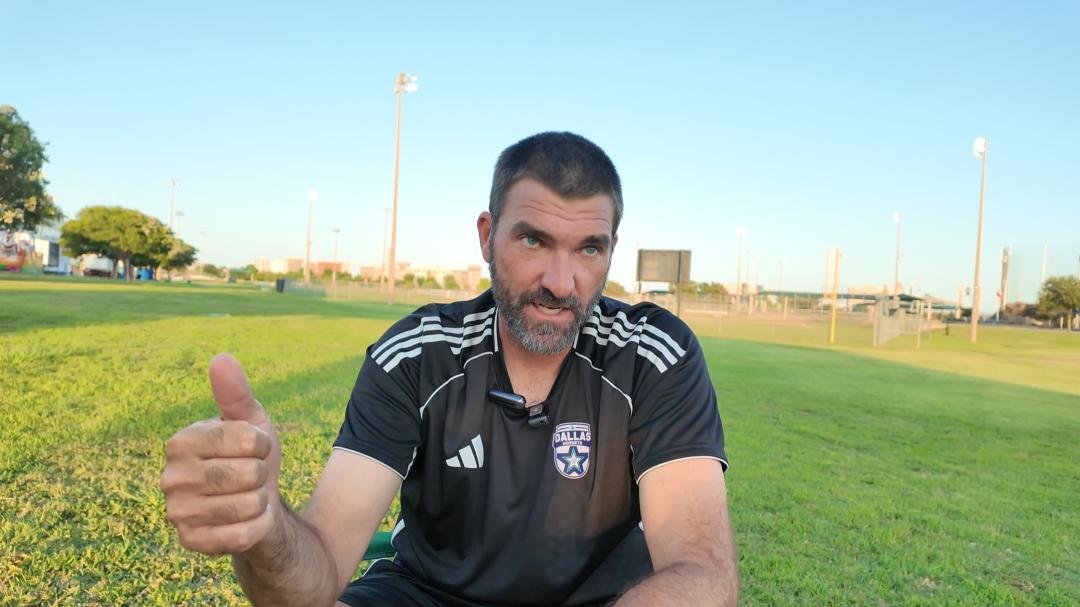
Cody Warden, owner of Dallas Hornets FC
Like many U.S. youth academies, the Hornets charges children for training — tuition fees are a necessary condition to maintain the club's operations. "When you come to my club to play soccer and I charge you, it means that one day I will help you reach a higher platform," Warden said. The "higher platform" not only refers to professional clubs and universities, but also to growing into a well-rounded individual.
Different training arrangements for different tiers
The Dallas Hornets Youth Training Club was founded four years ago. Before moving to Dallas, Warden served as the director of the Real Salt Lake Youth Academy. The club currently has about 700 players, including more than 100 junior players under the age of 12, and nearly 600 players aged 13 to 18. Each age group has at least 5 teams, and the top team of each age group represents the club to compete in MLS NEXT, with the opportunity to face the youth teams of MLS professional clubs. Teams outside the top tier also participate in professional or amateur matches every weekend.
The club arranges different training frequencies based on the competitions that teams participate in. Teams playing in MLS NEXT train four times a week, and play at least one match every weekend. Other teams train 2 to 3 times a week, and play one match on weekends.
Andrew Davidson, the coach of the club's U13 top team, said that players eligible for MLS NEXT already have a solid technical foundation. As a coach, his main job is to further improve their technical abilities and cultivate their problem-solving skills.
"The area we need to improve, and also the area that deserves the most attention, is to make these children confident enough to take the initiative to hold the ball. At the same time, they need to learn to observe what is happening around them and find the best solution on the field," Davidson said.
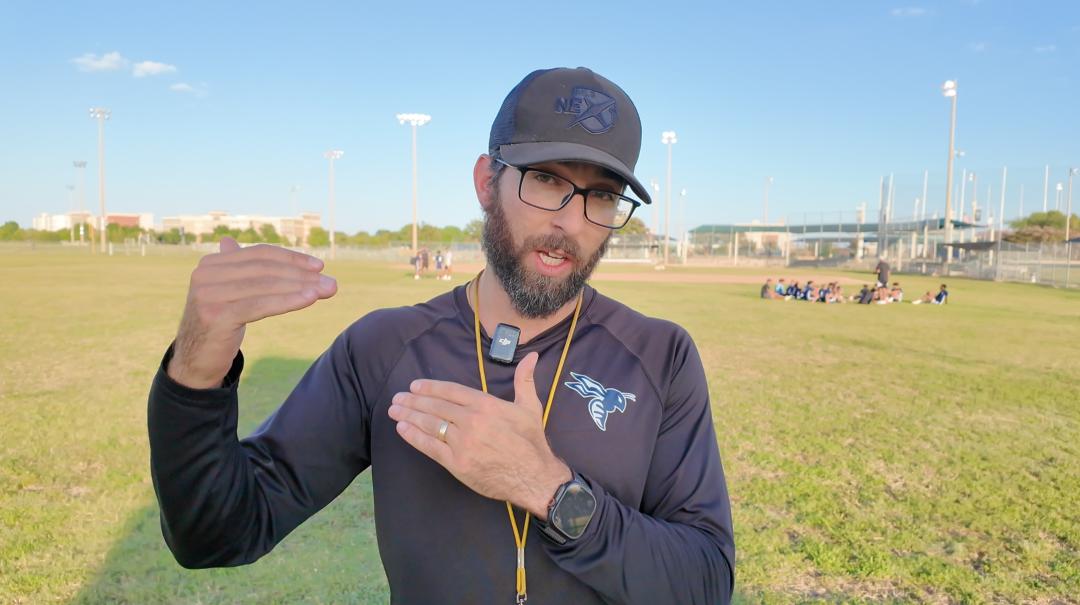
Andrew Davidson, coach of the club's U13 top team
The Dallas Hornets currently has more than 30 staff members, including 6 to 7 full-time employees, and the rest are part-time. Coaches hold different professional certifications based on the tier of the teams they lead. Jeff Cesar, who coaches the oldest age group team competing in MLS NEXT, holds a professional-level license, qualifying him to lead an MLS team.
Warden, as the club owner, also coaches teams himself. He holds the Youth Academy Director license from the U.S. Soccer Federation, and has also completed a joint program organized by MLS and the French Football Federation. He spent three years finishing the program and obtained a qualification equivalent to a European youth professional coaching license.
Operational and financial pressures
Warden admitted that the Dallas Hornets is a small-to-medium scale club among all youth soccer training clubs in the United States. He said the club will not expand blindly, because he wants to provide refined services for children. "We believe that service quality is more important than just growing larger."
The Dallas Hornets offers scholarships for the top team of each age group. As long as a young player makes it to the top team of their age group, they are exempt from training fees — but they still need to cover travel expenses for away matches and the cost of training kits. Other players pay tuition fees ranging from 2,500 to 4,500 U.S. dollars per year, based on their skill level, tier and training frequency.
After the U.S. men's national team failed to advance to the World Cup quarterfinals, the American soccer community launched a new round of discussions on youth training issues, and the long-debated topic of overly expensive training fees was brought up again.
Talking about the fee issue, Warden said: "Since we charge children, we must deliver real value. This value is not just soccer training, more importantly, it is to help them secure a promising future through soccer."
"Does operating such a club in the United States bring financial pressure?" In response to this question, Warden gave a positive answer. The daily operating expenses of the Dallas Hornets include training ground rents, coach salaries, and referee fees for matches. In the United States, renting a natural grass full-size soccer field for 11-a-side matches costs an average of about 200 U.S. dollars. Apart from tuition fees, the club's revenue also comes from a small portion of sponsorships from individuals or enterprises.
Warden emphasized that the greater the operational pressure, the more necessary it is for the club to provide better products for players. In his view, with high-quality products and services, securing funding will become relatively easier. "I have always believed that what we are doing now is the right path."
Up or Out
In China, the current situation is that if a young player who receives free training decides to leave the club, they have to pay a penalty fee. In the United States, do children who are exempt from tuition also need to pay a penalty when they leave? Warden's answer was: "Here at our club, if a child wants to leave, they can go anytime. Our philosophy for developing players is 'Up or Out'."
"Up" means that the child moves up to a higher age group team within the club every year, while "Out" means leaving the club. "If a Dallas Hornets player is recruited by a professional youth academy at the age of 14, that proves our training quality is good, and professional clubs are already scouting talent from our club," Warden said. Once a player joins a professional club's youth team, all their training fees, match expenses and travel costs will be covered by the professional club, which is a great benefit for the player. In his view, it is a common phenomenon in the youth soccer industry that amateur clubs develop talented players who are then recruited by professional clubs. "They should leave our club, and they absolutely deserve the opportunity to develop in professional teams."
In addition, Warden believes that "Out" also includes earning university scholarships through soccer. Last year, 50 players from the Dallas Hornets continued to play soccer after enrolling in universities, a number Warden considers remarkable. "Developing professional players and university-level players is our mission."
The "Out" that Warden emphasized mainly refers to helping children join professional club youth teams or enter universities. But in reality, there is another way for players to leave the Dallas Hornets — to continue their soccer training at other youth clubs, such as the Hornets' competitors. Warden said that even if this happens, he will never use a contract to tie players to the club. "What we need to focus on is improving our products, so that players are willing to stay here."
"Has the Dallas Hornets considered forming a first team to participate in professional leagues in the future?" In response to this question, Warden replied that it is not realistic in the United States. "The professional soccer system in the U.S. is not open enough. If I were in England, I could form a team, start from the lowest-tier league, and work my way up step by step, theoretically even reaching the Premier League. But the professional soccer system in the United States is closed."
Warden told me that to enter a higher-tier league in the United States, a huge amount of capital investment is required. Even for the second-tier professional league in the U.S., the USL, it costs at least 20 million U.S. dollars to obtain an entry qualification, not to mention covering all kinds of match-related expenses after joining. "From a financial perspective, this is not the path we want to take."
No intention to build our own stadium
For youth training clubs, the FIFA-mandated training compensation and solidarity mechanism payments can be a considerable source of revenue. However, since the Dallas Hornets has only existed for four years, it has not yet developed a truly professional player.
Warden told me that the youth training compensation and solidarity payment system in the United States is currently in a state of chaos. DeAndre Yedlin, a former U.S. international who has represented the U.S. men's national team in two World Cups, received youth training at the Seattle Sounders Academy in his childhood. After turning professional, he first played in MLS, then transferred to Tottenham Hotspur and Newcastle United in the Premier League. But the compensation paid by the Premier League clubs was held up after being submitted to the U.S. Soccer Federation, forcing the Seattle Sounders to file a lawsuit to claim the payment.
Therefore, Warden believes that the U.S. compensation system has not yet been fully institutionalized. He hopes that the Dallas Hornets can develop professional players in the future, but he does not want to rely on compensation payments to sustain the club's operations. On one hand, after the multi-level distribution of compensation, the amount that clubs can actually receive is very limited; on the other hand, there are widespread concerns about whether the compensation can actually be collected. "We will never treat this as a source of operating revenue to rely on. If one day compensation becomes our main source of income, that will mean the entire industry has undergone tremendous changes."
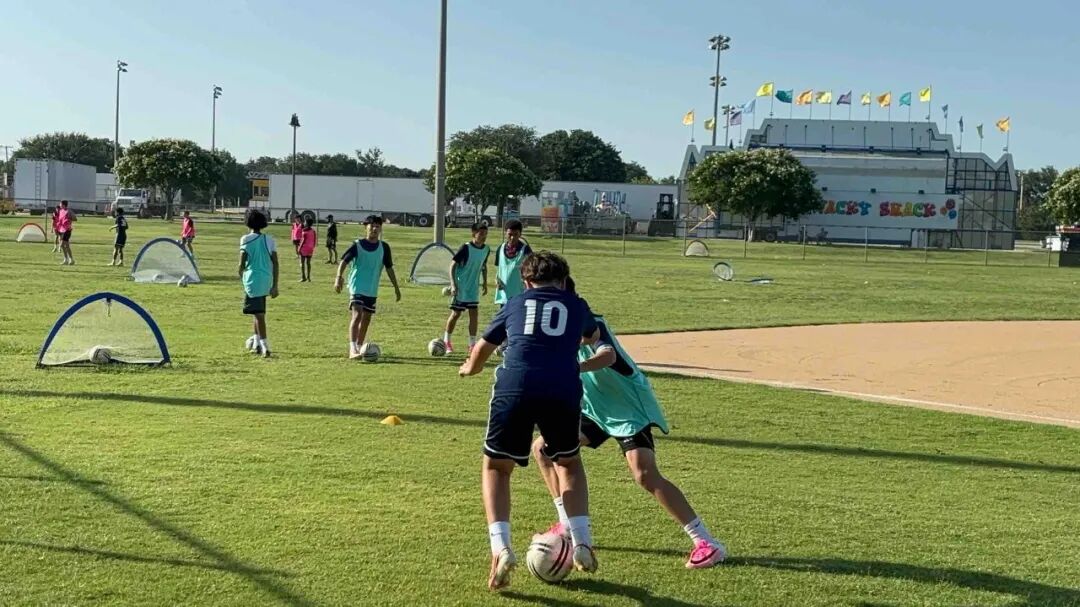
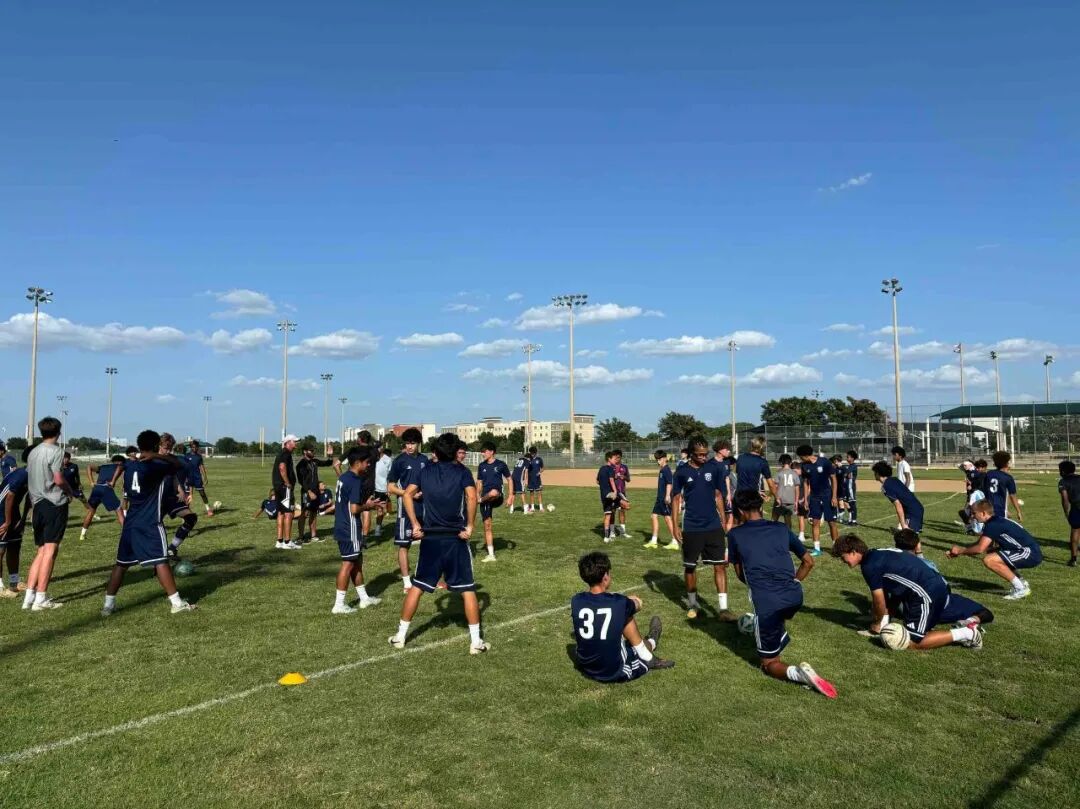
When I visited the Dallas Hornets' training session, the team was training at a baseball field in Dallas. Warden told me that their main training ground was in the process of switching from winter grass to summer grass, so they had to temporarily use the baseball field to protect the turf. Whether it is their main training ground or the temporarily used baseball field, all of them are rented — the Dallas Hornets does not own its own stadium.
Warden made it clear that the club will continue to operate by renting training grounds in the future. "The rent for training grounds is already very expensive. If we build our own stadium, we will never recover the investment cost," Warden said. More soccer fields are being built in the United States, and he hopes that after 100 more fields are completed in the future, the rent will become more affordable.
The model of specialized soccer training classes
Apart from full-scale youth training clubs like the Dallas Hornets, many youth soccer training institutions in the United States operate in the form of "soccer tutoring classes", which provide targeted specialized training to help young players improve specific skills.
In the New York and New Jersey area, I met Mike Bello, the head of the Tech Academy training institution. He told me that the training camp he co-founded with his friends focuses on helping children understand the specific requirements of each position. Each session lasts for one hour, and the training content is broken down into categories such as ball control, shooting, and in-game decision-making.
"Defenders, midfielders and forwards all have different characteristics, and our courses are designed around these differences. For example, when arranging training for forwards, we conduct a large number of shooting drills. If a player scores a wonderful goal in the World Cup, we will recreate the scenario of that goal in our training sessions," Bello said.

Mike Bello, head of Tech Academy
The children who train at Tech Academy are all registered players of their own clubs, and their main purpose for taking extra training sessions here is to enhance specific positional skills on the field. The fee for Tech Academy is 300 U.S. dollars for 10 sessions, and the courses are usually scheduled on Mondays, Wednesdays and Fridays, allowing children to choose sessions based on their own schedules.
In the United States, youth training clubs are usually on vacation or semi-vacation during winter and summer breaks, but Tech Academy offers training sessions all year round, which ensures a stable flow of customers. Bello said that many of the trainees are repeat customers. "We are not in a competitive relationship with the clubs that the children belong to. Instead, we provide a supplementary training option."
This year, Tech Academy has also started to form selected teams based on the performance of children who participate in their training. Although these children usually represent their respective clubs in matches, they are also allowed to represent Tech Academy in various amateur competitions. As long as the schedules can be coordinated, there are no restrictions.
Constraints brought by the fragmented system
The youth training system of American soccer is not a tiered, hierarchical structure like that in Europe. There is a wide variety of amateur and professional youth training clubs, plus different types of specialized training classes. Even for youth leagues, they can be divided into the MLS NEXT (professional league youth training) system, the US Club Soccer (elite