900 stores closed down completely, the top-selling unbranded product that once outperformed big brands has collapsed entirely
When paid traffic is no longer a brand's moat, the beauty industry landscape is being completely rewritten.
The beauty industry is adept at crafting "overnight success" stories, but once the traffic dividends fade, the disillusionment often arrives unexpectedly.
A brand can go from surpassing Estée Lauder in transaction volume on content e-commerce channels to falling into debt-ridden bankruptcy with unwanted assets, all in just four short years.
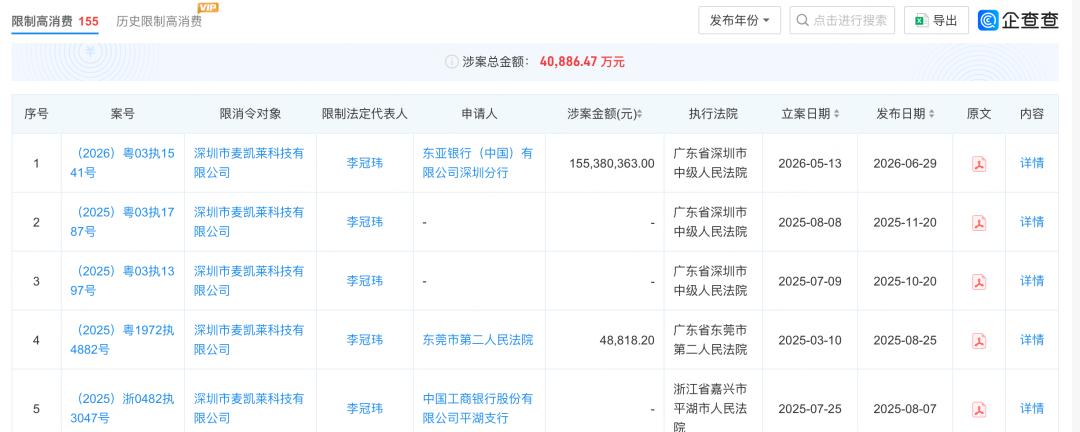
On June 29, news of a "high-consumption restriction order" once again pushed M'CLAND, the parent company of JI XUAN SHI, into the spotlight. Corporate information platform Qichacha shows that M'CLAND and its chairman Li Guanwei have accumulated over 155 high-consumption restriction orders, with the total enforced amount under Li's name reaching 660 million yuan, and the company involved in more than 1,540 judicial cases.
At its peak, M'CLAND operated over 900 stores on e-commerce platforms, leased three full floors of office space in Nanshan District, Shenzhen, and employed nearly 4,000 people. Today, the premises are deserted. Currently, JI XUAN SHI, the core brand under M'CLAND, no longer has an official flagship store on content e-commerce platforms, with its related products scattered across individual third-party stores.
In 2024, JI XUAN SHI officially entered bankruptcy liquidation proceedings, marking the very beginning of the collapse of the white-label aggressive traffic investment model. The endless stream of lawsuits and cases today is just a long shadow reflecting the dramatic shifts in the beauty industry.
It is worth noting that recently, short-video e-commerce platforms have started to split white-label businesses into three independent segments for refined operation: premium goods, daily lifestyle products, and general daily necessities, while imposing heavy penalties on non-compliant merchants. This means platforms no longer tolerate the unregulated wild growth of white labels, instead choosing to incorporate and restructure them through formal rules.
Clearly, the era of white labels relying on burning money for traffic investment and extensive expansion is drawing to a close. When paid traffic can no longer serve as a brand's protective moat, the collapse of the pure traffic-investment business model has become an inevitable outcome.
Aggressive Traffic Investment Fails, White Labels Face a Complete Divide
The captivating yet risky side of the beauty industry is that it constantly creates an illusion of "low entry barriers".
In 2009, in Nanshan, Shenzhen, M'CLAND was still a typical digital OEM, honing its muscle memory for rapid inventory turnover and extreme cost control in the slim-margin business of manufacturing accessories for Apple and Microsoft. This set of ideas was cross-applied to the beauty industry in 2015. Under the influence of internet traffic-centric thinking, whether it was power banks or beauty products, different items were seen as nothing more than carriers for traffic.
Starting out as an agent for brands like Kao and Lion, M'CLAND quickly grasped the full dynamics of the industry. During Tmall's Double 12 event in 2019, a single product of its self-owned brand "JI XUAN SHI" exceeded 5 million yuan in daily sales. At its peak, JI XUAN SHI even invested heavily in celebrity endorsements from stars including Yan Ni, Carman Lee, and Lin Chi-ling. With celebrity backing, it continued to amplify its presence through traffic investment and maintained top rankings across platforms. After breaking through the industry in unregulated fashion, M'CLAND attracted capital investment: in 2020, Cowin Capital poured nearly 100 million yuan into its Series A round.
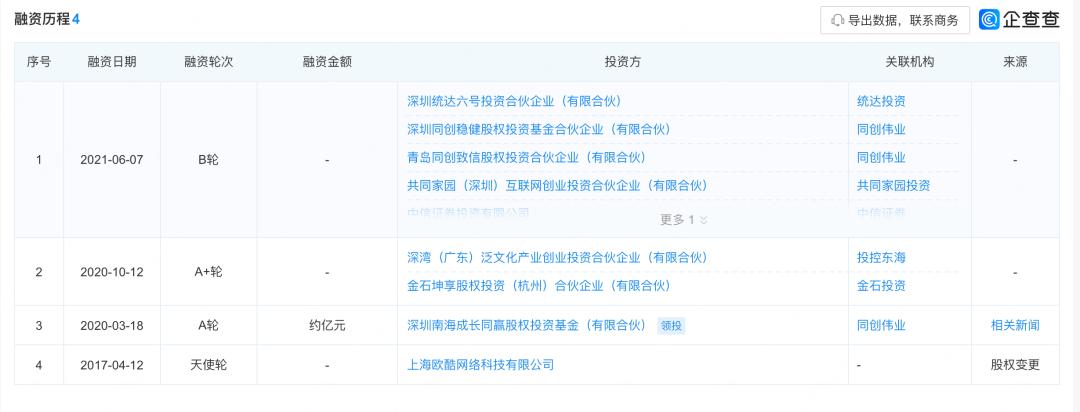
M'CLAND rode the wave of the crazy era when white labels were being built into overnight success stories. Back then, most white labels adopted the OEM model, concentrating resources on paid traffic investment to push traffic efficiency to its absolute limit. The algorithmic mechanisms of content e-commerce acted as a catalyst, and platforms even supported white labels for a period to drive GMV growth.
Between 2023 and 2024, white labels such as Jiao Run Quan, Wen Bo Shi, and VC frequently occupied top platform rankings, even leaving international big brands behind them.
JI XUAN SHI also burned hundreds of millions of yuan in advertising costs within three months, pushing its 2022 GMV up to 825 million yuan. But just one year later, it plummeted from top-tier status into a quagmire of debt. On the Alibaba Assets platform, the total starting bid price for M'CLAND's assets amounted to over 6 million yuan — less than one-tenth of its peak annual sales, and most of the assets received no bids and ended in failed auctions.
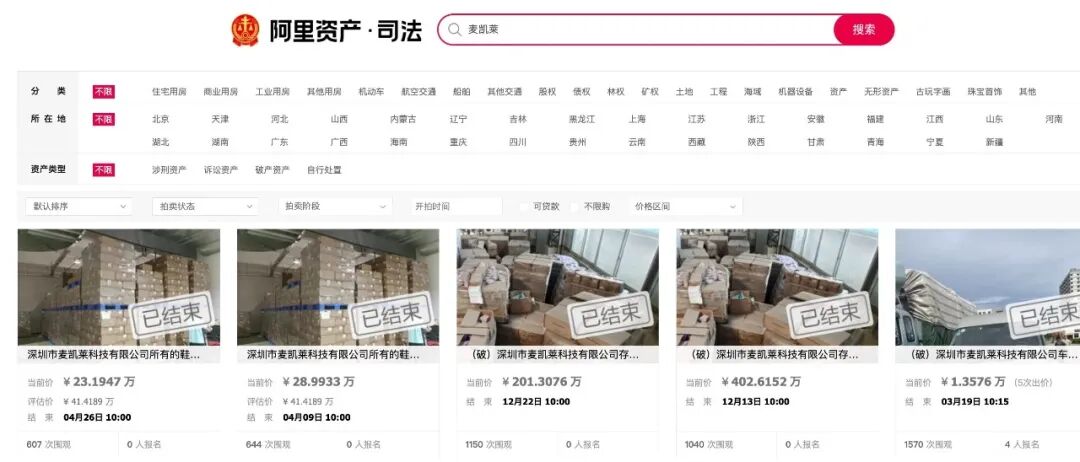
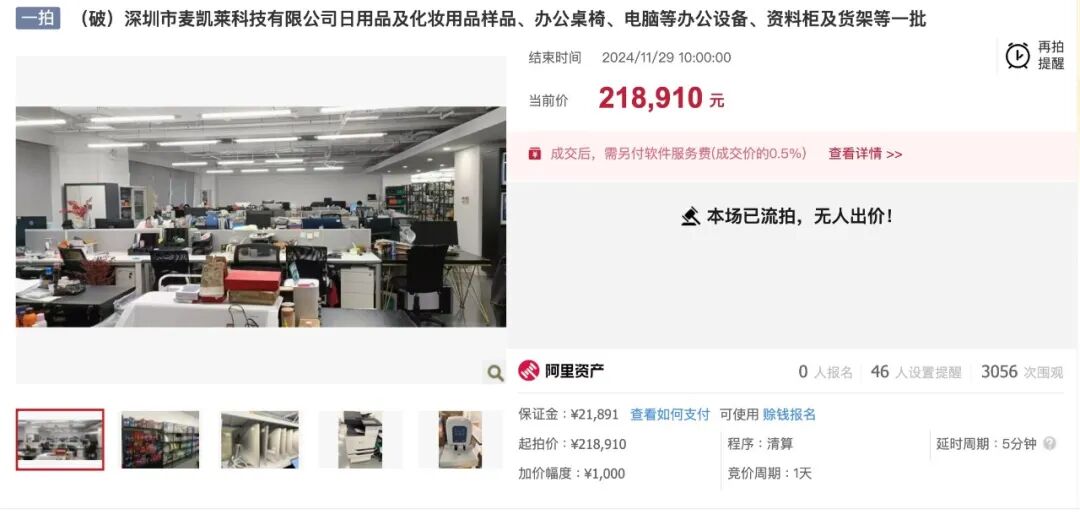
Asset auction information for M'CLAND on Alibaba Assets
Media statistics back then showed these white labels had extremely short lifecycles, averaging less than 8 months.
However, the collapse of companies like M'CLAND does not mean the complete disappearance of the "white label" category. On the contrary, after going through the initial growth phase driven by aggressive traffic investment, some brands have successfully established a solid foothold through timely strategic adjustments.
Cosmetics brand Dirovi may serve as a valuable reference example. Also growing up in content e-commerce, it invested heavily in short-video content and collaborated with tens of millions of influencers, repeatedly claiming the top spot on the platform's monthly cosmetics rankings, and now achieves annual sales exceeding 2 billion yuan.
Different from most white labels that rapidly launch a large number of new products at extremely low prices, Dirovi only released 5 products over four years, targeting the mid-to-high price range of 100 to 200 yuan. In March this year, Dirovi reclaimed the top spot on leading platform's cosmetics rankings, and maintained a position in the top 20 of the beauty category during the 618 shopping festival.
"Focusing on a single product line delivers more lasting results than launching countless new items; half-baked product development is all futile work," founder Zhang Yue once publicly stated. Dirovi has gradually reduced its reliance on traffic algorithms and expanded its presence offline. Currently, it has deployed its products in over 15,000 offline stores across chains including Watsons, Sanfu, and Sephora.
Similar success stories can be found with brands like KAZOO, San Zhi Tang, and BABI. Last December, San Zhi Tang, BABI and other brands successfully entered Sephora, which previously maintained strict requirements of "premium quality and exclusive offerings" for all its settled brands.
Traffic can act as a booster to kickstart a business, but it cannot form the solid foundation that sustains long-term operations. Every surviving white label has successfully completed the arduous leap from "selling products" to "building a brand" through dedicated investment in R&D and channel development before the traffic dividends fully dissipated.
Brand Effect Returns, Foreign Big Brands Launch Dimensionality Reduction Attacks
While white labels are diversifying and adjusting their strategies, the top rankings are now occupied by familiar legacy names.
The 2026 618 shopping festival has concluded. Data from StarMap shows that total sales of the skincare category across all platforms fell by 1.62% year-on-year, while the fragrance and cosmetics category dropped by 4.9% — marking the first overall negative growth for the entire beauty market in the history of the 618 event.
At the micro level of this shrinking market, white labels are receding, and big brands have reclaimed their dominance.
Amid the overall downward trend, SkinCeuticals claimed the top spot on Tmall, with only one domestic brand, Proya, breaking into the top 10, while all other positions were taken by foreign big brands. On Douyin, Helena Rubinstein, Estée Lauder, and La Mer occupied the top three spots in the skincare category. The top 10 beauty rankings during JD.com's opening promotion were fully dominated by well-known big brands.
In the past, foreign big brands were often criticized for their slow decision-making processes. But during this round of counterattack, they demonstrated extremely strong adaptability. Helena Rubinstein's new products can start preheating on content e-commerce platforms 9 months in advance, with influencer promotions accounting for nearly half of its GMV, and its live-stream sales scripts are refined down to the minute. Media reports show that influencer promotions contribute nearly 50% of Helena Rubinstein's total GMV, with top-tier live streamers including Jia Niliang, Yu Hui Travel, and Guangdong Couple driving sales for the brand.
Behind the big brands' overtaking, they have adopted the "business playbook" originally created by emerging domestic brands, and superimposed their long-established brand power on top of it.
In a sense, brand effect acts as a "risk hedging mechanism" for consumers.
Beauty products carry negative feedback attributes: once a brand fails to retain users, the cost of repairing that damage becomes extremely high. In 2026, when consumer confidence is fluctuating, consumers crave certainty far more. Compared to a white label that may withdraw from the market at any time, international giants with nearly a century of history are far more capable of winning consumer trust.
A notable phenomenon is that big brands investing heavily in live-stream traffic are also using bundled product sets and generous free gifts to encourage impulsive purchases from users. But the harsh reality of competition is that the resources and historical advantages held by different brands are inherently unequal.
Leading domestic brands have spent years of effort pushing their core product price points up to the 300 to 500 yuan range. However, big brands, through massive promotional giveaways, have maintained their official price tags while bringing their actual average transaction prices down into the core market territory of domestic brands.
Premium beauty brands generally maintain gross profit margins exceeding 80%, so they still retain profitability even when offering 50% discounts, continuously siphoning off users that originally belonged to mid-tier domestic brands. A large number of mid-tier domestic brands lack both the long-cultivated user mindset buffer and deep capabilities in global supply chains and upstream raw material R&D, leading to continuous sales decline under this dual pressure.
Domestic Brands That Defend Their Position Break Out in a Stagnant Market
Under the pressure of big brands' counterattacks, every domestic brand that successfully defended its market position has gone through the painful process of "de-trafficization".
Yatsen Holding (parent company of Perfect Diary) is a typical case study. After experiencing massive losses caused by over-reliance on traffic investment, Yatsen initiated a strategic transformation.
Through acquiring premium brands EVE LOM and Dr.Wu, and continuously increasing R&D investment, it successfully transformed from a single "traffic-dependent brand" into a multi-brand driven group. This transformation, although slow and capital-intensive, allowed the company to retain full operational autonomy even during the 2026 growth slowdown. In the second quarter of this year, Yatsen's total revenue grew by over 10% year-on-year, achieving counter-cyclical growth, with its skincare business becoming the core growth driver.
At the same time, domestic brands including Proya, Kan, and Mao Geping retained their top-tier positions during the 618 event. The industry still holds incremental opportunities, but the underlying rules of competition have completely changed.
Now that big brands have mastered the playbook of domestic brands and operational methodologies have become fully transparent, rather than fighting fiercely in the limited stagnant market, it is far more important to defend one's core position, find incremental opportunities in the gaps of consumer demand, and redefine product scenarios and emotional value.
When every brand is competing over product concentration and ingredient lists, consumers have long suffered from decision fatigue. During this year's 618 event, brands including Rocking Zoo and An Ye Wu achieved over 200% growth, driven by differentiated competitive advantages built on unique aesthetics and ritualized consumer experiences. In another sense, the beauty industry is shifting its focus back from "mathematical product parameter competition" to "aesthetic value", and the next breakthrough point may lie in tapping into consumers' psychological dopamine triggers.
In 2026, the fashion industry saw the rise of "beauty bag charms", which turn colorful lipsticks, powder compacts, nail polishes and other beauty products into wearable accessories, integrating them into daily outfit coordination and social display scenarios, precisely capturing young consumers' demand for products that are both refined and practical. At the same time, the emergence of niche scenarios such as scalp care and post-outdoor skin repair reflects that brands are identifying unrecognized consumer behaviors among their existing user base.

Niche community-focused brands have also carved out unique survival paths. Fan Beauty Diary broke into the top 20 of Tmall's beauty rankings and entered the "100-million-yuan annual sales club", while Flower Knows also achieved double-digit growth. Their resilience in segmented communities demonstrates an alternative survival path beyond the traditional "full-channel distribution" narrative, targeting specific consumer groups to achieve extremely high emotional connection and repurchase rates.
In an era where traffic dividends have faded away, only long-term focused brands that can retain their pricing power and define new consumer scenarios can shine again after the market bubble bursts.
This article originates from the WeChat official account "Tianxia Wangshang" (ID: txws_txws), authored by Zhang Hangying, and published by 36Kr with authorization.