With LYFEN, Juewei, and ChaYan all stepping into the market, will fresh snacks become the next 100-billion-yuan industry trend?
Another "snack" trend is emerging, but this time the protagonist is not bulk snacks, but fresh snacks.
iBrandi learned that recently, Laiyifen opened the world's first Laiyifen Fresh Life Store, located on the basement floor of Wujiaochang Wanda Plaza in Shanghai. In addition, in early June, new tea drink brand Lemon Right also opened a fresh snack store, which settled in Changfeng Park Longemont in Shanghai, covering an area of about 100-200 square meters. According to the good news about the store's operation released by the brand recently, the total turnover of the store exceeded 3.53 million yuan in the first month of opening, and the monthly sales per square meter converted to more than 26,946 yuan.
Even earlier, the braised duck neck giant Juewei also crossed over to enter this track. During the May Day holiday, "Juewei Fresh Snacks" opened two stores simultaneously at Kaade Plaza in Yuhua, Changsha and Raffles City in Chengdu. The Changsha store covers about 200 square meters, displaying nearly 200 SKUs; the Chengdu store has expanded to 300 square meters, forming a stepped store model.
From established snack chains, new tea drink brands, to braised food giants, different types of players have almost set their sights on "fresh snacks" at the same time.
According to the research report of Zheshang Securities, from 2020 to 2025, the market size of fresh snacks in China grew from less than 5 billion yuan to 18 billion yuan, with an average annual compound growth rate of over 40%, and it is expected to increase significantly to 40-50 billion yuan in 2026. The CICC research report believes that the fresh snack industry is expected to reach a scale of 50-100 billion yuan.
After bulk snacks have pushed "low prices" to the extreme, the snack industry seems to be telling another story: no longer just selling cheaper and more abundant packaged snacks, but re-integrating short-shelf-life, freshly made, low-additive, instant consumption and in-store experience into snack shops.
Obviously, fresh snacks are not a simple continuation of bulk snacks, but a new offline store model. On one hand, it retains the high-frequency, craving-satisfying and impulsive consumption attributes of snacks, and on the other hand, it combines categories with more "foodiness" such as baking, braised food, drinks, roasted seeds and nuts, and short-shelf-life pastries.
Perhaps what fresh snacks really change is not the "snack" itself, but the way consumers buy snacks. But what is more noteworthy is that fresh snacks are not a simple "store-opening business", but a "heavy fulfillment business". Otherwise, what is "fresh" may only be a "concept" and store decoration.
From regional players to cross-industry giants, fresh snacks are becoming bustling
Before discussing this track, let's briefly talk about the category concept of "fresh snacks".
Simply put, "fresh snacks" focus on health and low additives. The categories are mainly channel-customized and freshly made for immediate sale, with the core innovation being the addition of short-shelf-life drainage categories such as baked goods, milk tea, and braised food.
It is not simply shortening the shelf life of snacks, nor is it decorating traditional snack shops to look more like premium supermarkets. More accurately, it is a new store combination: on one hand, retaining the high-frequency, craving-satisfying and impulsive consumption attributes of snacks, and on the other hand, putting categories with more "foodiness" such as baking, roasted seeds and nuts, braised food, short-shelf-life pastries, freshly made meat jerky, drinks, and coffee into the same space.
This also creates a clear distinction between fresh snacks and bulk snacks. Bulk snacks are more like an efficient offline snack warehouse, solving the problems of low price and rich variety; fresh snacks try to turn snacks back into "food", emphasizing short shelf life, fresh production, low additives, visible production process and instant consumption.
In other words, the opportunity of fresh snacks is not only about "selling snacks", but also that it reopens the imagination space for offline stores.
Perhaps this is why the concept of fresh snacks has become popular in the past year, and more and more players that originally did not belong to the traditional snack track have set their sights on this business.
First of all, bulk snack brands have entered the market.
In January this year, a fresh snack store named "A Little Recommendation" opened at Wushang Dream City in Wuhan. Although relevant parties have stated externally that the brand has nothing to do with listed companies, according to industry reports, the brand is somewhat related to the Mingmang Busy system. For bulk snack players, the value of fresh snacks lies in that it no longer just continues the logic of low prices and SKUs, but tries to use short shelf life, fresh food and stronger in-store experience to open up new space beyond price wars.
Second, established snack chains have also started to make layouts.
Just like Laiyifen, it is not a new player in the snack track. As an established snack chain, it already has a store network, supply chain foundation and user accumulation, and it also put forward the "fresh snacks" strategy relatively early. But this time, the opening of the Fresh Life Store in a core business district such as Wujiaochang Wanda Plaza in Shanghai means that Laiyifen has to re-answer a question: after fresh snacks have been popularized by a group of new brands, can established snack enterprises regain the right to define "freshness"?
Third, in the second half of this year, the fresh snack track has also welcomed cross-industry players from categories such as braised food and new tea drinks.
In April, the first fresh snack store of Cha Yan Yue Se, "Ji Shi Shi Wei", started trial operation in the core business district of Wuyi Square in Changsha, adopting a "store-in-store" model embedded in the original stores of Cha Yan Yue Se. More than 70 fresh food items were launched in the first batch, covering categories such as braised cooked food, Chinese pastries, roasted nuts and seeds, and preserved fruits.
During the May Day holiday, Juewei Food directly entered the market with an independent new store model, opening two fresh snack stores at Kaade Plaza in Yuhua, Changsha and Raffles City in Chengdu. As a braised food chain brand, Juewei already has the capabilities of fresh food, cold chain and daily distribution. Its entry into fresh snacks is obviously not a simple cross-industry move, but an attempt to convert its supply chain capabilities beyond braised food into new retail scenarios.
In June, new tea drink brand Lemon Right opened its first national fresh snack store at Longemont in Changfeng Park, Shanghai.
If cross-industry players since 2026 have made fresh snacks a more "noticeable" new trend, in fact, before that, a group of regional brands had already taken the lead in forming an initial scale.
For example, "Jin Li Men", which started in Changsha, originally had the attributes of chestnuts, roasted seeds and nuts, and fresh food retail, and later gradually integrated categories such as baking, drinks, braised food, nuts, dried fruits, and meat products into the same store. Compared with traditional snack shops, Jin Li Men is more like a "community version of Sam's Club + fresh snack collection store". At present, Jin Li Men has more than 20 directly-operated stores, and is accelerating store expansion in Jiangsu, Hubei, Guangdong and other regions.
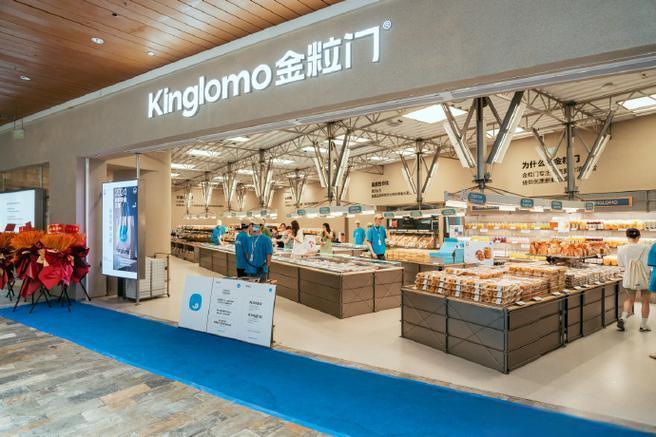
Jin Li Men's "trump card" is: 99% of the products sold in its stores are private brands, and most of them are exclusively developed, trying to fundamentally avoid homogeneous competition.
"Ji Duo Quan" is another type of representative. This fresh snack brand backed by the Black Classic system was officially launched in March 2025, starting from the Hunan market, and has now entered cities such as Chongqing, Chengdu, Hangzhou, Nanchang, Guangzhou, and Dongguan. Public information shows that Ji Duo Quan has covered 69 cities in 14 provinces, and has proposed a plan to open more than 600 stores in 2026 and strive for a scale of 2,000 stores in 2027.
The representative player in northern China is "Yi Li NUTCO". This brand also started with categories such as chestnuts, nuts, and freshly ground nut butter, and then expanded to richer fresh snack stores. At present, it has covered cities such as Beijing, Tianjin, Nanjing, Shenyang, and Harbin.
In the early stage, fresh snacks can be more summarized as store innovations made by regional brands based on roasted seeds and nuts, baking, local snacks and fresh food retail; by mid-2026, different types of players such as bulk snacks, new tea drinks, braised food, and traditional snack chains have entered the market intensively, making this track truly placed under the spotlight.
Bulk snacks can't compete any further, so fresh snacks are becoming popular
When a category is highly competitive to a certain extent, the so-called innovation will naturally occur, and fresh snacks are no exception.
Zheng Zhenghuan, the founder of "Pu Mama", another representative of fresh snacks, once said bluntly: "Discount snacks compete on supply chain scale, and ultimately it is a game of capital." As the former founder of the "Happiness" discount snack brand, he experienced the industry's price war involution, with leading brands opening stores intensively, and regional brands forced into a cycle of "low price - low quality - even lower price". Therefore, in 2025, Zheng Zhenghuan chose to transform decisively and founded Pu Mama, taking "short-shelf-life freshly made + healthy and clean" as the breakthrough point to directly hit the core demand of consumption upgrading.
Therefore, the popularity of fresh snacks is first related to the development stage of bulk snacks.
In the past few years, bulk snacks have expanded rapidly, pushing the "low price" to the extreme. More SKUs, lower prices, and higher turnover have brought consumers back to offline snack shops. But when more and more stores are selling low-priced snacks, problems also begin to emerge: low prices can bring customer flow, but not necessarily brand memory.
Consumers will enter the store because it is cheap, but they may not care which store they are entering. For brands, when competition increasingly relies on price, location selection and supply chain efficiency, the differences between stores will be continuously leveled. For regional brands, when they do not have advantages in supply chain scale, capital strength and store opening speed, continuing to compete on low prices is not necessarily the optimal solution. Instead, finding new store value has become a more realistic choice.
Fresh snacks provide just another answer.
It no longer only tells consumers "I am cheaper", but tells consumers "I am fresher", "I am more like freshly made food", and "I look cleaner". Short shelf life, fresh production, low additives, transparent packaging, and on-site processing - these elements essentially rebuild consumers' trust in snacks.
Obviously, this is also related to the current changes in food consumption psychology.
In the past, when consumers bought snacks, they mainly focused on taste, price and brand; now, ingredient lists, low additives, low sugar and low fat, and short-shelf-life freshly made products also begin to influence purchasing decisions. Especially in scenarios such as family consumption, children's snacks, young women and office sharing, "freshness" is a value that is easily understood.
When visiting Yi Li NUTCO stores, National Business Daily mentioned that a consumer said that queuing and high prices are "worth it" because buying for children makes them feel more at ease even if it is a little more expensive. Lin Yue, a retail industry expert, also pointed out that fresh snacks capture consumers' concerns about additives, focusing on "visible safety".
This is also the most fundamental difference between fresh snacks and bulk snacks: bulk snacks solve the problems of "low price" and "rich variety", while fresh snacks solve the problems of "delicious, fun to visit and trustworthy". The former is more like an efficient offline snack warehouse, while the latter tries to turn snacks back into "food".
Moreover, from the perspective of store model, fresh snacks are closer to "new tea drink transformation in the snack industry". That is, using on-site atmosphere and immediacy to increase consumers' purchasing desire, which can extend the consumption period of snack shops.
This also explains why fresh snacks often appear in high-frequency locations such as the B1 floor of shopping malls, community businesses, and transportation hubs. This is a state between "buy a little on the way" and "go there specially to stroll around". Consumers may be attracted by the aroma of freshly baked products, or stay for tasting, and finally take away a box of short-shelf-life pastries, a few bags of dried fruits, and a drink. Traditional snack shops are more like replenishment scenarios, where consumers go there with a clear purpose.
In particular, the greater attraction for cross-industry players lies in: snacks are no longer just shelf products, but an offline entrance that can continuously overlay instant consumption scenarios.
Fresh snacks are not a "light business", essentially a "supply chain company"?
However, fresh snacks seem to have more of a down-to-earth vibe, but running them is a heavy business.
Freshness itself is a cost.
Short shelf life means a shorter inventory cycle, fresh production means more complex store operations, low additives mean higher difficulty in preserving freshness, and daily distribution and cold chain mean faster supply chain response. Compared with traditional packaged snacks, fresh snacks have higher requirements for store operations and back-end capabilities.
A research report from Zhongtai Securities points out that the average loss rate in the fresh snack industry is between 8% and 15%. This data can almost explain the core contradiction of this business: consumers love freshness, but enterprises have to pay for the loss cost of freshness. Especially products such as freshly baked goods, freshly braised food, and short-shelf-life pastries are inherently unsuitable for long-term inventory. If you prepare too many products, they will be lost if not sold out; if you prepare too few products, they are likely to be out of stock, affecting store experience and repurchase.
Whether it is regional players with backing that have taken the lead, or cross-industry players that have just entered the market, supply chain capability is the key to victory.
To support the stable operation of the short-shelf-life model, Jin Li Men has built a full-chain supply chain of "direct procurement from bases + central kitchen + fresh production in stores". Ji Duo Quan has taken an even heavier path. According to media reports, its business model is to achieve full independent control of "R&D - production - distribution - terminal", forming a vertical closed loop of the industrial chain. Its current product self-development rate exceeds 85%, core products are 100% self-produced, and more than 50% of all products are self-produced. In terms of distribution, it focuses on cold chain daily distribution, and plans to build a regional sub-warehouse layout across the country in the future, establishing a three-level cold chain daily distribution system of "factory - regional warehouse - store" to shorten the distribution radius and reduce transportation losses.
Fresh snack brands seem to be store-opening businesses, but behind the scenes they are increasingly like supply chain companies. If the brand only solves the front-end display, decoration, tasting and marketing, but does not solve the back-end production, distribution, inventory and quality control, "freshness" can easily turn from a selling point into a risk point.
Therefore, for regional players such as Jin Li Men, Ji Duo Quan and Pu Mama, the key in the next stage is not to prove that "fresh snacks are bought by people", but to prove that fresh snacks can be replicated on a large scale. For new cross-industry players such as Juewei and Lemon Right, which already have certain supply chain capabilities, the challenge is how to convert their original stores, supply chain and user base into a truly fresh new retail model, rather than simply putting coffee machines, sausage grills and short-shelf-life products into the store.
Therefore, fresh snacks are of course a trend, but it will not be the next bulk snack.
The core of bulk snacks is to bring down the price; the core of fresh snacks is to build trust. The former competes on low prices, SKUs and turnover, while the latter competes on products, experience, supply chain and stable delivery.
When low prices are no longer the only answer in the snack industry, fresh snacks are bringing competition back to products, experience and supply chain. But this time, who can truly stand out does not depend on who shouts "freshness" first, but on who can deliver "freshness" stably for a