Why are Huaqin and its peers following Star Step to switch their game table?
On the evening of July 13th at Shanghai West Bund, Yin Qi, Chairman of StepVR, picked up a smartphone. The moment the screen lit up, he whispered to the camera: "Hi Amoo, welcome to this world."
This is the world's first large-model-native agent smartphone, the STEPX Neo.
Yin Qi specifically emphasized that this was not an official launch, but merely a debut. There was no hands-on experience zone, no pricing announced, and no release date scheduled. Only a massive PPT was displayed, with three lines of text on it: "If you start too late, you won't need to do it at all. If you start too early, you might waste all your effort. If you don't do it, you'll have nothing to work on in the future."
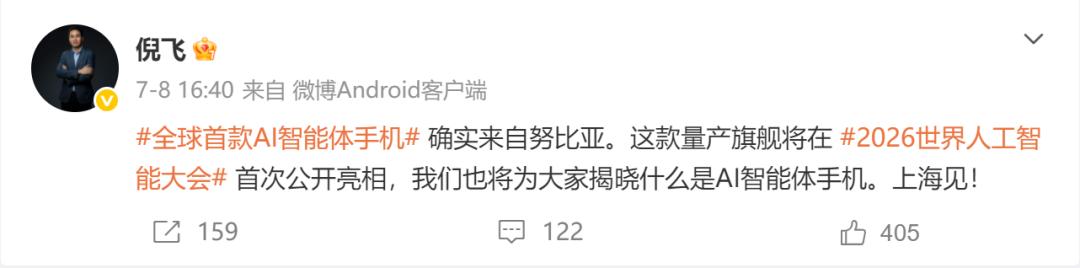
Nubia, Source: Ni Fei's personal Weibo account
Less than a week prior, on July 8th, Ni Fei, President of Nubia, officially announced that the world's first AI agent smartphone would make its debut at the World Artificial Intelligence Conference.
The two "world's first" claims collided head-on. StepVR's world's first device carries a lengthy modifier: large-model-native, with its core foundation being the self-developed Step AOS operating system, which reconstructs the runtime environment for agents at the underlying level to embed model capabilities deep into the system. Nubia's world's first device, by contrast, has a shorter but bolder descriptor: mass-produced flagship.
The former is an AI company building an operating system from scratch, while the latter is a traditional smartphone manufacturer shipping products backed by existing production lines and distribution channels. The AI agent smartphone market can no longer afford slow, gradual progress. The first player to make a public claim stands a chance to seize control of the industry standards.
At 38 years old, Yin Qi is no stranger to standing under such intense spotlights.
Thirteen years ago, the company he founded, Megvii, was the brightest star among China's "AI Four Dragons". It made an attempt to list on the Hong Kong Stock Exchange in 2019, then shifted its target to the Shanghai STAR Market in 2021. Over five and a half years of prolonged listing efforts, the firm accumulated a total loss of 15 billion yuan, and its original plan to raise 6 billion yuan ended up yielding zero funds.
Before the listing attempt collapsed, Yin Qi was targeted in a failed 3 million yuan extortion scheme by his driver. Shortly afterward, Dr. Sun Jian, the core technical leader of the company, died suddenly due to illness. This once-high-flying AI star ultimately stepped down from the center of the industry stage.
But Yin Qi never stayed stagnant. In 2024, persuaded by Li Shufu of Geely, he invested 2.4 billion yuan to take control of the listed company Qianli Technology (formerly Lifan Technology). At the brand's launch event in September 2025, Li Shufu put his arm around Yin Qi's shoulder and said, "This is your era." In January 2026, he assumed the position of Chairman at StepVR, and the company secured over 5 billion yuan in financing on the very same day. Seven months later, the agent smartphone was in his hands.
The audience at this launch event included not just journalists and investors. Leading names with decades of experience in the smartphone industry—Huaqin Technology, Longcheer Technology, Will Semiconductor, and ZTE—all appeared on StepVR's shareholder list almost simultaneously.
This past January, StepVR completed a Series B+ financing round of over 5 billion yuan, with Huaqin Technology, the global top smartphone ODM leader, officially joining as a strategic investor. In May, it closed a Pre-IPO financing round of nearly 2.5 billion US dollars, with Longcheer Technology, Will Semiconductor, and ZTE Venture Capital all joining the investment lineup.
This is no ordinary OEM partnership. In a basic white-label manufacturing model, the brand places an order, the factory produces according to provided blueprints, and the relationship ends once delivery is complete. The brand retains full control over product definition, pricing, and user access, while the OEM only earns marginal processing fees.
The partnership between StepVR and firms like Huaqin extends far beyond that scope. Their relationship is framed as a deeply integrated collaborative alliance, with real capital injected to align shared interests and distribute risks collectively.
They are all betting on a single outcome: switching to an entirely new game table.
1. Hundreds of Billions in Revenue, Barely Scraping By
In 2025, Huaqin Technology recorded total revenue of 171.437 billion yuan, a 56.02% year-on-year increase. Its attributable net profit reached 4.054 billion yuan, marking a 38.55% year-on-year rise. A hundred-billion-yuan scale would be impressive in any industry.
However, a closer look reveals the numbers are far less glossy than they appear. Huaqin's annual gross margin stood at 7.97%, down 1.33 percentage points from the previous year. Gross margins across all four of its core business segments—mobile terminals, computing and data centers, AIoT, and innovative businesses—declined simultaneously: the mobile terminal segment posted a 9.24% gross margin, while the computing and data center segment only hit 6.26%.
Furthermore, the company's annual net profit margin was further compressed to 2.39%, a 0.26 percentage point drop year-on-year. This means for every 100 yuan worth of products sold, less than 2.4 yuan actually remains in the company's pocket.
If shrinking gross and net margins reflect a sustained deterioration in profitability, the company's cash flow and balance sheet structure reveal even deeper underlying troubles—where did all the money go? In 2025, Huaqin's operating cash flow turned negative, registering at -223 million yuan.
Even as revenue and profits grow, the company finds itself with no cash on hand.
A review of financial statements shows that capital is tied up in inventory and receivables: total inventory reached 14.624 billion yuan, up 27.43% year-on-year; accounts receivable hit 34.18 billion yuan, a 34.52% year-on-year increase, both hitting all-time highs since the company went public.
At the same time, the company's asset-liability ratio climbed to 72.62%, with short-term borrowings reaching 14.421 billion yuan, surging 81% year-on-year. Cash flow pressure is clearly spreading from operational activities to the liability side of the balance sheet.
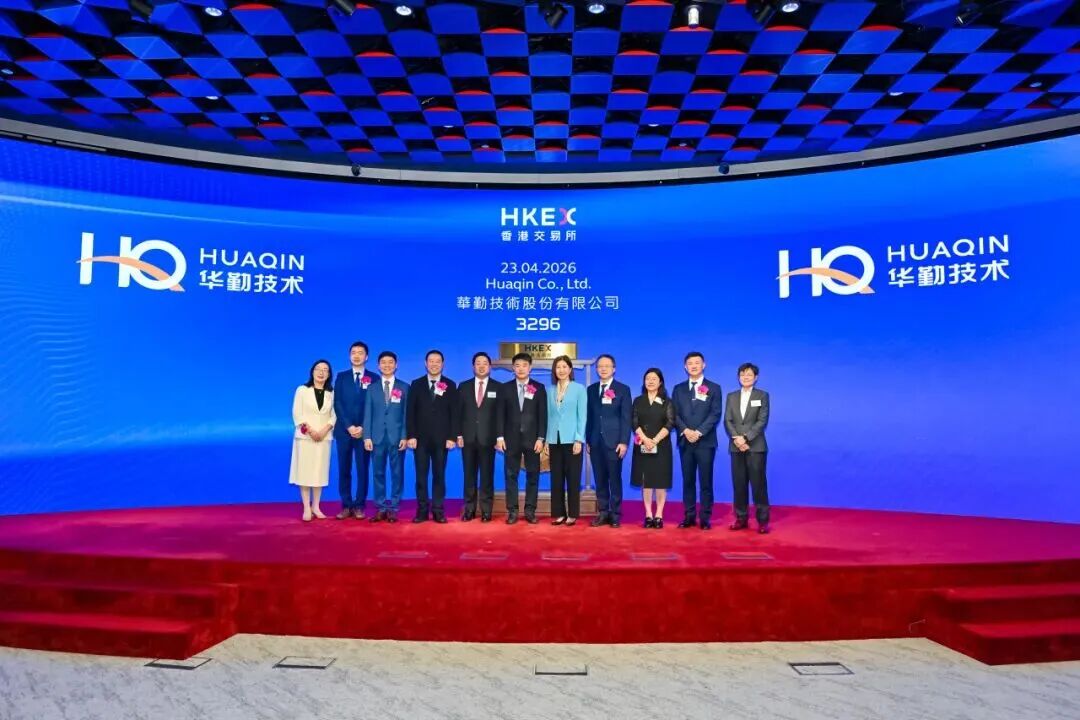
Huaqin Technology's IPO, Source: Huaqin official WeChat public account
This predicament is not unique to Huaqin. In 2025, Longcheer Technology reported total revenue of 42.125 billion yuan, down 9.18% year-on-year. Its attributable net profit was 585 million yuan, a 16.76% year-on-year increase, but its non-recurring-gain-adjusted net profit only reached 323 million yuan, representing a 15.91% year-on-year decline.
Government subsidies totaling 182 million yuan, along with 144 million yuan in gains from fair value changes and disposals of financial assets, masked the true downward trend in core business profitability. In the first quarter of 2026, Longcheer's attributable net profit plummeted nearly 90% year-on-year.
In terms of gross margins, the smartphone segment posted 7.91%, the tablet segment 7.28%, and the overall net profit margin was only 1.4%—a full percentage point lower than Huaqin's.
Once operations scale up to their maximum limit, the profit ceiling becomes clearly visible. It's worth noting that Huaqin and Longcheer together hold approximately 68% of the global smartphone ODM market, making them genuine dual oligopolies—yet their profits remain persistently low.
In the second half of 2025, global sales of smartphones priced under $150 fell 11% year-on-year, a segment that forms the very lifeblood of ODM manufacturers. Prices of core components such as memory chips have risen, yet ODM firms cannot pass these cost increases on to customers the way branded vendors do, nor do they have the bargaining power to pressure upstream suppliers.
The disconnect between expanding scale and stagnant profits is the harshest arithmetic problem facing the ODM industry. Revenue is growing, market share is rising, but profits remain completely stuck in place.
Upstream suppliers of core components like chips and displays hold full pricing power, while downstream branded customers squeeze profit margins through their distribution advantages. This structural flaw in the business model traps ODM manufacturers in the middle, forcing them to earn nothing but hard-won marginal income.
In 2025, Wingtech Technology sold its entire ODM business segment to Luxshare Precision for 4.389 billion yuan. This transaction acted as a mirror, reflecting the widespread predicament across the entire industry.
Once one of the three major ODM giants, Wingtech reported 2025 revenue of 73.598 billion yuan, with an attributable net loss of 2.833 billion yuan. The persistently low gross margin of its ODM business was the core reason Wingtech chose to divest the segment. From 2022 to 2024, the gross margin of its product integration business kept falling, dropping sequentially to 8.6%, 8.23%, and 2.49%—by 2024, the segment was barely profitable at all.
Following Luxshare's acquisition, the ODM industry landscape shifted from a three-player competition to a dual-dominance scenario between Huaqin and Longcheer, with TCL Mobile ranking third. The signal sent by this merger is far more unsettling than just a change in market structure: leading industry players are willing to sell their businesses at a discount just to escape.
Currently, to reduce over-reliance on the single smartphone business and find new profit growth points, ODM manufacturers have been expanding into a broader range of sectors, scaling up diversified operations in smart vehicles, wearables, and other verticals. Huaqin launched its "3+N+3" strategy to consolidate its core consumer electronics base and explore new growth drivers in automotive electronics and robotics. Longcheer rolled out its "1+2+X" strategy, centered on smartphones, to extend its reach into personal computing, automotive electronics, and AIoT.
The essence of these diversification efforts is that ODM manufacturers are attempting to replicate their years of accumulated R&D, supply chain, and smart manufacturing capabilities from the smartphone category into many other industry tracks.
However, these new business lines face similar challenges, with persistently low gross margins. For example, Longcheer's AIoT product revenue surged 41.19% to 7.869 billion yuan, yet its gross margin was only 12%—slightly higher than its smartphone business, but far from enough to transform the company's overall profit structure.
This is because the inherent DNA of the ODM model dictates that no matter which new category they enter, they are still operating on a "scale-for-margins" business model.
When revenue scales reach their absolute limits, the market ceiling is within reach, and diversification efforts cannot fundamentally overhaul the profit model, there are very few remaining options left on the old game table.
Huaqin has initiated a dual "A+H" public listing plan, while Longcheer is accelerating its development of AI PCs and smart glasses. All their actions point in a single direction: escaping the old game table.
2. Why Is It So Hard to Escape the Old Game Table?
The old game table is nearly impossible to abandon, not just because profits are thin, but because the entire industry's power structure has become completely rigid. Brand vendors control product definition, pricing, and user access—meaning the larger an ODM manufacturer grows, the more tightly it gets locked into place.
To fully understand this "trapped" situation, we first need to clearly grasp how the ODM business model actually operates.
Huaqin's core problem stems from a business practice called "Buy & Sell": the company first purchases raw materials directly from its downstream customers, then sells the finished products back to those exact same customers after manufacturing.
According to its Hong Kong Stock Exchange prospectus, in 2025, four of Huaqin's top five customers were simultaneously among its top five suppliers. These four entities collectively contributed 79.9 billion yuan in revenue, accounting for 47% of the company's total annual revenue. The company's single largest customer generated 25.5 billion yuan in sales for Huaqin, while Huaqin's total purchases from that same customer reached 18.9 billion yuan.
This business model where customers double as suppliers directly caused Huaqin's gross margin to decline for three consecutive years, and was also a key focus of regulatory scrutiny during the company's Shanghai STAR Market listing application.
The "customer-as-supplier" dynamic represents external pressure squeezing the company from upstream. Meanwhile, its structural over-reliance on the low-to-mid-tier market is another shackle that ODM manufacturers cannot shake off.
The lifeblood of ODM manufacturers depends on low-to-mid-tier device shipments, a market currently battered by dual headwinds of rising costs and shrinking demand. Overall ODM/IDH design shipments have already dropped by 10%, leaving ODM firms in a no-win situation: they cannot afford to exit the low-end market, as it forms their core operational base, yet they cannot withstand mounting cost pressures, since their margins are so thin they cannot absorb any unexpected disruptions.
A structure heavily reliant on a single product category means every industry fluctuation directly impacts operational performance, with zero room for buffer.
Upstream pressures and market over-reliance push ODM manufacturers into a very vulnerable position, but what permanently locks them at the bottom of the value chain is the invisible barrier of brand premium. ODM firms have attempted to build their own independent brands, but brand building requires long-term investment and gradual user recognition—resources that contract manufacturers inherently lack.
The cost of missing out on brand premium is that ODM manufacturers are forever stuck in a position of being selected. In the ODM bidding processes run by branded vendors, each device model is unique and customized, and is awarded to only one service provider. This means competition between ODMs is a zero-sum game: the order you win is the order your competitor loses, leaving absolutely no room for price negotiation.
These three layers of predicaments are tightly interconnected: upstream players squeeze profit margins, operations are dependent on a single narrow market, and the complete absence of independent brands solidifies all these disadvantages into a permanent fate.
Industry analysis points out that Huaqin's gross margin is less than 8%, far below Luxshare Precision's 15%+ level, and also lower than Wingtech Semiconductor's 37% gross margin—barely staying above the industry break-even point.
When even the leading firm in the industry can only achieve a 2.39% net profit margin, the entire industry's value distribution structure has become completely rigid. The old game table was intentionally designed to keep ODM manufacturers trapped at the very bottom of the value chain forever.
3. AI Is Starting to Redistribute Industry Power
Right as ODM giants are scrambling to escape the old game table, a brand-new game table is being set up.
The core logic of this new table is that AI terminals will likely reshape value distribution across the entire smartphone industry. As the core competitive advantage of smartphones shifts from hardware specifications to AI agent capabilities, whichever party controls large models, operating systems, and user access will emerge as the new arbiters of value distribution.
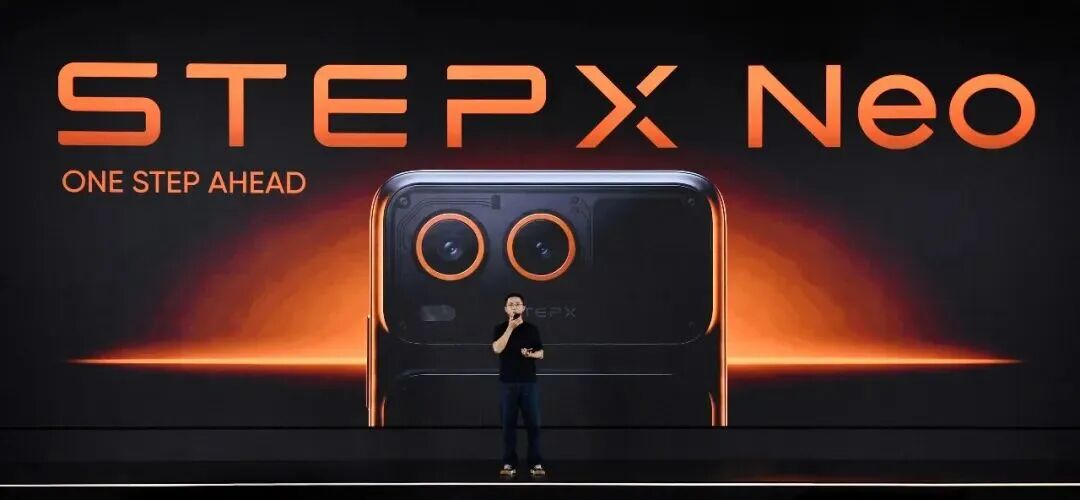
STEPX, Source: StepVR
StepVR provides exactly this kind of fulcrum. Instead of building a traditional AI smartphone that merely adds AI features on top of a legacy