6.6-rated "Kung Fu Women's Soccer Team" is heading for 3 billion box office: How many people still owe Stephen Chow a ticket?
Douban rating of 6.6, Maoyan projects a 3 billion yuan box office.
These are the two key figures for Kung Fu Girls. At a time when "box office aligns with word-of-mouth" has seemingly become a universal rule, the market has once again proven that from production to release, a film's fate is riddled with countless uncertainties and random factors, which can never be fully defined or locked in by statistics and established rules.

It grossed 260 million yuan on its opening day, raking in over 500 million yuan in just two days. The film drove Sunday's total box office past 300 million yuan, marking the highest single-day performance since February 26 this year. The film market has finally welcomed a blockbuster that can carry the momentum, raising expectations for more "1 billion+" and "2 billion+" hits.
Showing Respect to Stephen Chow
Online discussions have erupted over the "debt of movie tickets" narrative and whether Kung Fu Girls is actually a good film.
Film fans, critics, and the mass market have offered vastly different reactions to Kung Fu Girls, creating its highly polarized reception. On its Douban page, 5-star positive reviews account for 15.6%, while 1-star and 2-star negative reviews combined make up 24%.
For the critics and disappointed fans, the film—from trailers to the final cut—reeks of "cheap, low-budget special effects". The arbitrary, unfocused soundtrack, plastic turf shot on a soundstage, and distorted stadium audience give the film a texture that feels half like a web short and half like a low-budget online movie. Coupled with over-the-top performances, the film lacks any real visual or audio aesthetic, leaving audiences wondering where the 380 million yuan production budget—including 190 million yuan for special effects—went. The first half hour of the feature is particularly grueling; unlike the character team-up setup in Shaolin Soccer, this film jumps straight into action without any character development or relationship establishment.
For viewers who love the film, however, "it's enough that it's a stress-relieving laugh riot". The loudest laughs in theaters come from children, clearly highlighting its family-friendly appeal.
The five major battle sequences, designed to reflect the characteristics of different countries, have the exaggerated flair of a manga adaptation. If audiences can get past the first half hour and buy into this absurd logic, they can find genuine joy in the film. There are clear homages to Captain Tsubasa, such as designs for the Drive Shot, Tiger Shot, and Twin Shot.
Creative gags like chewing pistachios that are actually teeth and the human-pyramid soccer shot show flashes of unexpected imagination. From overwhelming victories to the understated ending, the film deconstructs the obsession with winning. "Be water, my friend." The older Stephen Chow appears more relaxed, self-assured, and gentle than ever.
A major reason for the content controversy surrounding Kung Fu Girls is that Stephen Chow's genius as a comedic actor surpasses his talent as a comedy director. His unique acting style and control over physical comedy and emotional delivery are irreplaceable in the entire Chinese-speaking world. His acclaimed masterpieces Kung Fu Hustle and Shaolin Soccer were both directed and starred in by himself. When other actors try to perform his nonsensical, mo lei tau style of comedy, the result is more likely awkward than humorous, even bordering on forced, cringey overacting.
After the golden age of Hong Kong cinema faded, no production team could fully realize his wild, imaginative ideas. His iconic partner Ng Man-tat and his legendary voice dubber Shih Ban Yu have both passed away. Filmmakers like Lee Lik-Chi, Jeffrey Lau, Wong Jing, and Lin On, who once collaborated with him to create classics in screenwriting, directing, and editing, are no longer part of his new projects. Co-directors like Lam Chi-chung and Lu Zhengyu make the film feel like a "super fan's fan creation"—not a masterpiece, but still carrying the distinct Stephen Chow flavor.
The breakout success of Kung Fu Girls is reflected in several aspects. First, in terms of audience demographics, users from fourth-tier cities account for 38.5%, fully penetrating the lower-tier markets, and the fan base is expanding from its core group of middle-aged male fans to family audiences. Second, from a social media perspective, many viewers have shared their "screen-photographed check-in photos" and even pirated recording videos—while this behavior violates theater etiquette, it is a clear sign that a film has achieved widespread viral attention.

Have film critics been proven wrong by the skyrocketing box office? In reality, for commercial films, as long as they meet the basic standard of "being watchable", mixed reviews of content quality are not the most important factor affecting market performance. This was already proven by Chow's previous works: The Mermaid, which scored 6.7 on Douban, grossed 3 billion yuan, while Journey to the West: The Demons Strike Back, with a 5.5 Douban score, made 1.652 billion yuan.
The massive success of Kung Fu Girls is certainly boosted by favorable scheduling dividends: it faced almost no competing films in the same release window, and the World Cup was entering its crucial stages, pushing soccer-related topics to unprecedented popularity on social media.
Although the film features popular stars like Zhang Yixing and Dilraba Dilmurat, giving it a broader audience than The New King of Comedy, the core draw remains Stephen Chow himself. The distributor clearly understands this, as Chow's name is prominently displayed on all promotional posters.

The 260 million yuan opening day box office alone surpassed the total gross of Feng Xiaogang's Catch the Spy. The projected box office for Kung Fu Girls has surged from 1.4 billion to 1.8 billion, then 2.5 billion, and finally 3 billion yuan, multiplying several times over. Around the same time, the screening share for Catch the Spy dropped to roughly 0.3%.
Not long ago, Han Hong, who spoke in support of Catch the Spy, faced public backlash over her "show some respect" comments, forcing her to apologize and leading to rumors that she would step back from her charity work.
The power of public opinion is the power of collective emotion. The public was unwilling to "show respect" to Feng Xiaogang, but they widely declared that "it doesn't matter if the film is good or bad, we owe Stephen Chow a movie ticket". This only proves that Stephen Chow's name is still incredibly valuable. Audiences love him so much that they can't bear to criticize him.
In the peak era of Hong Kong cinema, the "Two Chows and One Cheng" were household names, but the other two superstars besides Stephen Chow never had such powerful nostalgic appeal—where every time a new film releases, countless people flood social media saying "I must repay that owed movie ticket".
He is no ordinary filmmaker, but a cultural symbol that defined an entire era. With the emotional nostalgia from the golden age of Hong Kong cinema and his iconic underdog characters, he became the "self" that countless men could identify with. They used "Zixun" (from A Chinese Odyssey) as their profile pictures, quoted his famous lines to mock themselves, confess their love, and cherish past memories. Almost every post-80s director's work shows Stephen Chow's influence, such as I Am What I Am and Nezha.
Countless silent but loyal middle-aged fans, who "don't go to Douban to rate films", will still "repay their movie debt" and defend their idol's reputation on Douyin. They form the main ticket-buying base for Kung Fu Girls. When Stephen Chow's next film releases, they will be there again.
What Other Cards Does the Summer Box Office Have Left?
The scheduling strategies for summer blockbusters are becoming increasingly unpredictable. Feng Xiaogang's new film Catch the Spy was scheduled just one week in advance, immediately starting its roadshow promotions. Kung Fu Girls initially adopted a "flexible scheduling" approach: Stephen Chow posted a video on social media on his birthday, June 22, stating that the film was tentatively set for release on July 10 or July 17, emphasizing that "it will definitely be released in July".
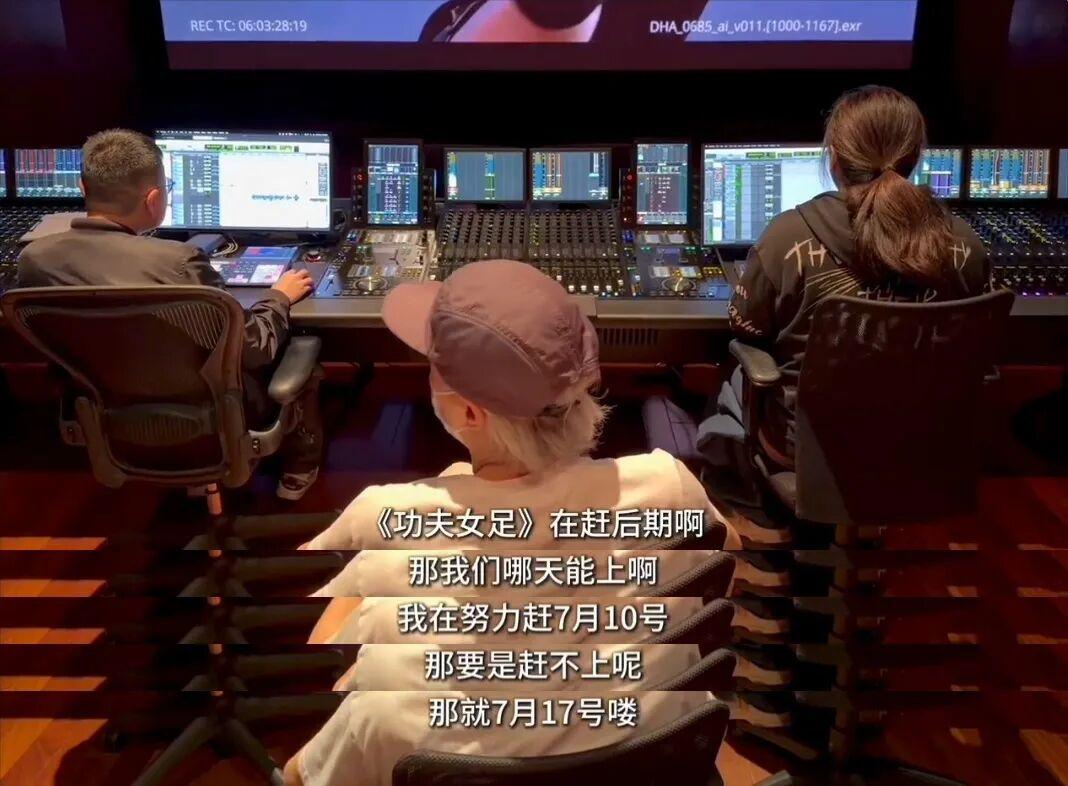
Later, the film adopted an "extreme scheduling" strategy, setting its release date for July 11 with only a 5-day window. There was very little promotional material: on the scheduling day, only a 20-second teaser and one poster were released, and a full-length trailer introducing the entire cast was only released the day before the premiere.
With almost no pre-release promotion, the film hit 10 million yuan in pre-sales in 9 hours, the number of people "wanting to see" the film on Maoyan exceeded 300,000, and pre-sales surpassed 80 million yuan within 5 days of scheduling. After its release, the projected box office continued to rise. As audiences increasingly delay their viewing decisions, the impact of pre-release promotions weakens, and the concept of "release window" becomes less relevant. In the future, the "extreme scheduling" of blockbusters may become more common, with more distributors choosing to cut promotion costs and shorten marketing cycles—without hurting the film's potential to go viral. This creates new challenges for both marketing teams and theater operators.
An increasingly sensitive public opinion environment and frequent online controversies have also led many films to choose a "quiet" promotional approach. One example is the historical film Penghu Naval Battle, starring Jackson Yee and scheduled for July 25.
Looking at the summer lineup, this year is packed with "sequels to classic IPs". Back when The New King of Comedy was released seven years ago, there were already accusations of "reheating old rice". Kung Fu Girls is the clear spiritual sequel to Shaolin Soccer, 25 years after the original. Following this pattern, every classic Stephen Chow film could potentially get a remake.
Self-referential homages and repeating past successes are usually signs that a creator is entering a creative decline. Even so, Stephen Chow still has unmatched audience appeal and can make theaters erupt in laughter—something no one else can replicate.
Hollywood films like Toy Story 5, Spider-Man 4: Brand New Day, and Minions and the Mega Monster, as well as the domestic sequel Never Say No to the Party 2!, are all IP sequels. The industry's preference for developing classic IP sequels and cinematic universes over creating original content is a safer, more conservative strategy, reflecting that the industry has entered a contraction phase.
A new pleasant surprise is the film The Backrooms, which we previously covered. Created by a Gen Z YouTube director, it has grossed over 200 million yuan, making it a small dark horse hit. Another globally successful Gen Z-directed horror film, Obsession, made over 400 million dollars on a 750,000 dollar budget, and is set to be released locally this month. Following these two films, more horror movies are likely to hit theaters soon.
Driven by the success of Kung Fu Girls, the summer box office has reached nearly 3.5 billion yuan at its halfway point. Compared to last year's total summer box office of nearly 12 billion yuan, there is roughly a two-thirds gap remaining, requiring at least one more blockbuster of the same scale as Kung Fu Girls to carry the market. What other trump cards are left in the summer lineup?
Hopes are pinned on two key figures—the two biggest box office draws in China: Shen Teng and Jia Ling. Chen Zhixi, the chairwoman of Ruyi Pictures, previously revealed during an appearance on the Blue Yu Living Room show that "we still have Turn Your Mind, Open the Flower and Welcome to Dragon Restaurant coming this summer."
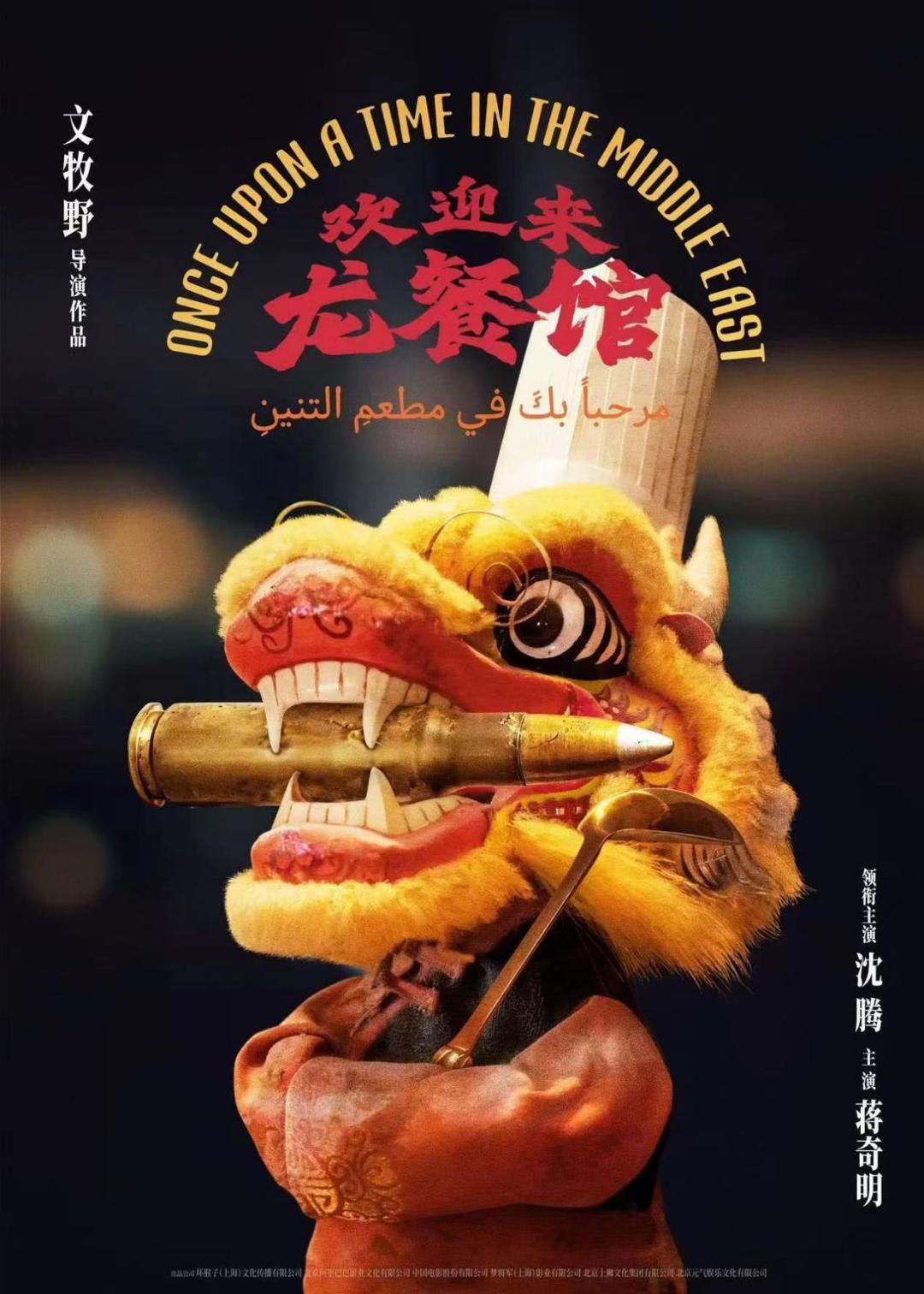
If these two films are successfully released this summer, they will most likely be scheduled for August. Judging from the intensity of promotional activities and rumored progress on censorship, the film Welcome to Dragon Restaurant, directed by Wen Muye and starring Shen Teng and Jiang Qiming, has a higher chance of being scheduled before Turn Your Mind, Open the Flower.
Recently, The Eight Immortals! expanded its limited screening scale on July 15, announcing that it would move its release date up to July 18. The buzz from the screenings has been growing, with reviews highlighting "plot twists" and "fun, queer-friendly chemistry", making it a potential dark horse hit. Traditionally, the summer season is the peak period for animated films. Although Light Chaser Animation's new film Three Kingdoms Part 1: Battle for Luoyang opened with a Douban score of 8.0, its audience is relatively niche and its box office has failed to break 100 million yuan. It remains to be seen whether The Eight Immortals! can break through to mainstream success.
The era of easy money in the film industry is over, but many audiences still consider going to the cinema a regular form of entertainment. Even when the market cools down, there will always be blockbusters and dark horse hits emerging. New online slang attracts younger generations, top filmmakers can still rely on nostalgia to draw crowds for years to come, and different films face vastly different fates. As the logic behind promotion mechanisms and box office explosions has fundamentally changed, a new reshuffling of the industry is on the horizon.