Establishing for three years and targeting a valuation of 100 billion yuan, will Lingxin Qiaoshou's Hong Kong IPO become a game of passing the parcel?
Recently, Lingxin Qiaoshou, a company established only three years ago, has been reported to have initiated preparations for a Hong Kong IPO, with plans to submit listing applications to the Hong Kong Stock Exchange in 2027. China Merchants Bank International, CITIC Securities, and HSBC will act as joint sponsors.
This company, which completed its industrial and commercial registration only in 2023, has achieved astonishing development speed, and its financing pace is equally eye-catching. From the seed round to the B+ round, it secured seven rounds of financing in less than two years, with leading institutions such as Sequoia Capital, Ant Group, and CICC flocking in. Lingxin Qiaoshou's valuation curve has risen almost vertically. After the B+ round of financing in April this year, its valuation exceeded 20 billion yuan.
However, the 20-billion-yuan valuation seems to be just the starting point for Lingxin Qiaoshou, and some institutions in the primary market have claimed that its valuation is expected to reach hundreds of billions of yuan. If Lingxin Qiaoshou's valuation really hits the 100-billion-yuan mark, this batch of primary market venture capital firms will reap huge profits. But behind this frenzy, is it the awakening of pricing power for hard technology, or another game of passing the parcel in the primary market?
01 What is the background of Lingxin Qiaoshou, established for three years
Industrial and commercial information shows that Lingxin Qiaoshou (Beijing) Technology Co., Ltd. was registered in July 2023, with its headquarters located in Haidian District, Beijing, and Zhou Yong as its legal representative. Although the company has just turned three years old, its technical research and development can be traced back to 2019.
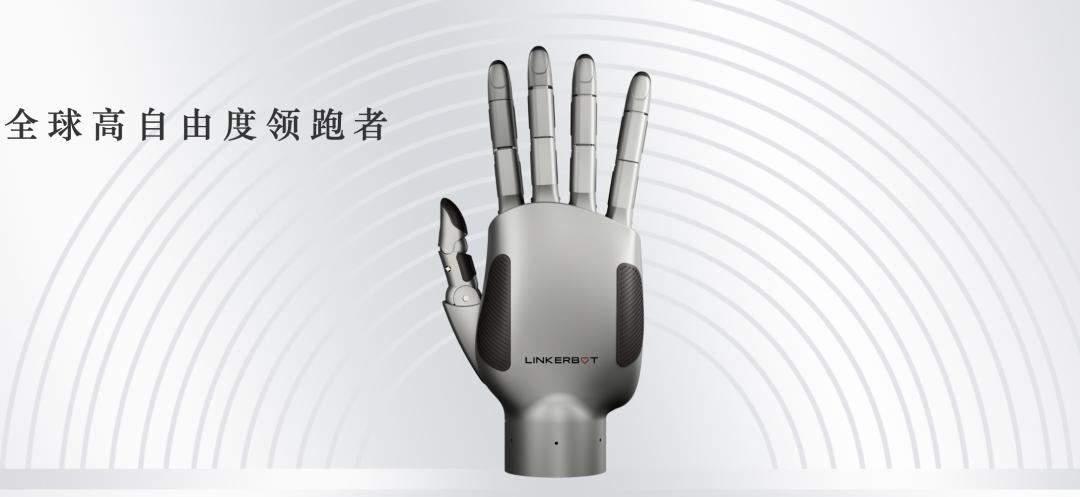
It is understood that Lingxin Qiaoshou's core R&D project was launched in 2019, and it officially started commercial operations after four years of stealth development.
Founder Zhou Yong graduated from the Young Talent Class of Huazhong University of Science and Technology, and has 15 years of experience in the internet and robotics industries. Before founding Lingxin Qiaoshou, he had two entrepreneurial experiences: the first was running a gaming community, which laid a foundation in 3D simulation and data frameworks; the second was developing intelligent autonomous vehicles, where he overcame the tough challenges of hardware engineering implementation.
Moreover, Lingxin Qiaoshou has a highly elite team. Co-founder Zuojiaping comes from UBTECH Robotics and Ninebot, a veteran in the fields of precision transmission and tactile perception who is in charge of hardware mass production. Su Yang, the Chief AI Architect, previously worked at Source Code Capital and the Zhiyuan Institute, responsible for cloud-based large models and data systems. Cao Gang, the head of algorithms, is the lead researcher for the national "New Generation Artificial Intelligence" major project, with his influence behind AI companies such as Zhipu AI, Galaxy General Intelligence, and MindAI.
Lingxin Qiaoshou's capitalization path has been extremely rapid. In March 2026, the company completed the shareholding system reform, changing its name from "Limited Liability Company" to "Joint Stock Limited Company", and its registered capital surged from about 11.83 million yuan to 920 million yuan in one go, a staggering increase of 7647%, and later further rose to 1.132 billion yuan.
Such a large-scale capital increase is widely regarded by the market as standard preparation before an IPO.
Previously, there were market rumors that Lingxin Qiaoshou planned to list in the second half of 2026, but the latest statement indicates that the listing application has been postponed to 2027.
02 Frenzied competition in the primary market: the true strength of Lingxin Qiaoshou
The capital's frenzy to grab shares is not entirely unreasonable, as Lingxin Qiaoshou holds a strong competitive advantage.
Cross-verification of multiple data sources shows that Lingxin Qiaoshou currently occupies more than 80% of the global market share of high-degree-of-freedom dexterous hands, making it the world's only enterprise that achieves monthly deliveries at the thousand-unit level, with a monthly production capacity exceeding 4,000 units. In comparison, the UK's Shadow Hand, a long-standing industry benchmark, has been on the market for more than 20 years with cumulative sales of less than a thousand units. Other domestic manufacturers such as InTimes, Unitree, and Sensible Robotics generally have annual production capacities hovering around the hundred-unit level. Therefore, in terms of mass production capability, Lingxin Qiaoshou is in a completely different league from its peers.
In addition, Lingxin Qiaoshou's performance growth has been extremely rapid. In 2024, its second year of establishment, the company's revenue was only at the tens-of-millions-yuan level, but the full-year revenue in 2025 soared to 260 million yuan, a year-on-year increase of over 25 times, with 250 million yuan contributed solely in the fourth quarter of 2025.
According to media reports, as of early 2026, the company's outstanding orders exceeded 400 million yuan, with overseas orders accounting for more than 30%. The company's 2026 delivery target is set between 50,000 and 100,000 units; if achieved smoothly, its revenue scale will reach a new level.
With solid technical strength and strong performance, Lingxin Qiaoshou's financing activities in the primary market have been almost dizzyingly frequent.
In 2025 alone, Lingxin Qiaoshou completed six consecutive rounds of financing.
In April 2025, the seed round was led by Sequoia Seed Fund and Wankai New Materials, with an amount exceeding 100 million yuan; in August, the angel round was led by Ant Group, with CICC Capital and Shanghai Semiconductor Equipment Fund participating. Then in October, the Series A round raised hundreds of millions of yuan, led by Jing Guorui and Bojia Capital; in November, the Series A+ round raised hundreds of millions of yuan, with investors including Zhejiang Innovation Investment, Deqing Industrial Investment, CDH Investments, Leju Robotics, and Aux Group; in December, the Series A++ round welcomed Sequoia China and Creation Ventures.
In February this year, the Series B financing raised nearly 1.5 billion yuan, pushing the valuation past 100 billion yuan; in April, the Series B+ round was led by Zhongguancun Science City Fund, bringing the valuation to 200 billion yuan.
The speed of financing and the rapid growth of valuation are truly astonishing.
Industry insiders have pointed out that compared with humanoid robot OEMs that are still in the stage of burning cash for R&D, "shovel sellers" like Lingxin Qiaoshou are more favored by capital. As a core component, dexterous hands have taken the lead in achieving large-scale shipments, and Lingxin Qiaoshou's product matrix is comprehensive, ranging from the best-selling Linker Hand O6 priced at 6,666 yuan to the 100,000-yuan-level research version, covering three major technical routes: linkage, direct drive, and tendon drive.
Lingxin Qiaoshou also has huge room for import substitution. A single Shadow Hand sells for more than 700,000 yuan, while its best-selling O6 model, weighing 370 grams, can lift objects up to 50 kilograms, with a payload ratio more than 100 times that of the Shadow Hand, but at only 1% of its price.
03 Countdown to Hong Kong listing: who will be the final recipient of the passing parcel
While everything seems promising, there is a need to pour a dose of caution. Calculated based on Lingxin Qiaoshou's 260 million yuan revenue in 2025, if it reaches a 100-billion-yuan valuation, the corresponding price-to-sales ratio (PS) will exceed 380 times, which is far higher than the PS level of around 30 times for listed robotics companies on the Hong Kong Stock Exchange such as UBTECH, and even exceeds the valuation premium of the most popular large AI model companies today. Some investors have bluntly stated that this price "has already fully priced in the growth of the next three years in advance".
Moreover, of the 260 million yuan revenue in 2025, the fourth quarter alone accounted for 96%, meaning the vast majority of income came from that single quarter. This raises questions about potential concentrated revenue recognition at the end of the year and channel inventory pressure. Meanwhile, the proportion of framework agreements versus firm orders in the claimed 400 million yuan of outstanding orders, as well as the order delivery cycles and payment collection status, have not been publicly disclosed.
On the other hand, the competitive landscape of the robotics market is evolving rapidly. The Zero Moment company under Unitree Robotics has a valuation exceeding 1 billion US dollars and has launched a 20-degree-of-freedom full-direct-drive dexterous hand; the DEX5 series from DeepRobotics is being shipped alongside its own humanoid robots; BrainCo's Revo 3 achieves 21 active degrees of freedom; manufacturers such as InTimes, Sensible Robotics, and Zhongke Lingxi are also accelerating their catch-up. The moat that Lingxin Qiaoshou built based on mass production and cost advantages is not unbreakable, and whether it can maintain its 80% market share remains uncertain.
The capital market has always been full of wealth-creation myths, but few people openly talk about the costs of losses. Judging from the pace of seven rounds of financing, Lingxin Qiaoshou appears more like a carefully designed pre-IPO capital feast. Leading institutions have entered the market one after another to push up the valuation in a stepwise manner, with the ultimate target pointing to the Hong Kong secondary market. However, when the baton of the 100-billion-yuan valuation is passed to secondary market investors, it may mark the beginning of a carnival for primary market institutional investors and the start of bubble deflation for secondary market participants.
This article is from the WeChat official account "Aotou Finance" (ID: theSankei), authored by the Leader of New Financial Media, and published with authorization from 36Kr.