"Three Musketeers of Optical Fiber" kick off the "money-printing" mode, this company raked in in half a year the profit equivalent to that of three years
The reporting season wrapped up on July 14, with domestic optical fiber leaders Yangtze Optical Fibre and Cable (YOFC), Hengtong Optic-Electric, and Zhongtian Technology all releasing their 2026 H1 performance forecasts. The AI computing boom has completely supercharged the profits of all three enterprises!
The most explosive result came from YOFC, whose H1 earnings alone have covered all its total profits from the past three years;
Hengtong and Zhongtian followed closely behind, with their H1 net profits nearly reaching or even exceeding their full-year profits of last year. The optical fiber industry, which once struggled through brutal price wars, has fully transformed and entered a high-profit cycle.

YOFC's Stellar Performance: Half-Year Profit Equals Total Earnings of Past Three Years
First, let's look at the biggest dark horse of this market rally: pure-play optical fiber leader YOFC.
Announced on the evening of July 14, the company forecasts its H1 attributable net profit to reach 2.4 to 3 billion yuan, surging 711% to 914% year-on-year; its non-recurring profit-deducted net profit is 2 to 2.6 billion yuan, with an even more staggering growth rate of 1349% to 1784%. This means the vast majority of its profits come directly from optical fiber sales.
Deep Water Finance observed that YOFC's full-year net profit was 1.297 billion yuan in 2023, 676 million yuan in 2024, and 814 million yuan in 2025, totaling 2.787 billion yuan across the three years.
This also means that YOFC's net profit in the first half of this year is very likely to exceed the sum of its profits from the past three years.
Breaking down by single quarter, its Q1 net profit was only 495 million yuan, while its Q2 net profit soared to 1.905 to 2.505 billion yuan, a sequential surge of 284% to 405%. The earnings from Q2 alone are far higher than the total net profit of the past two years.
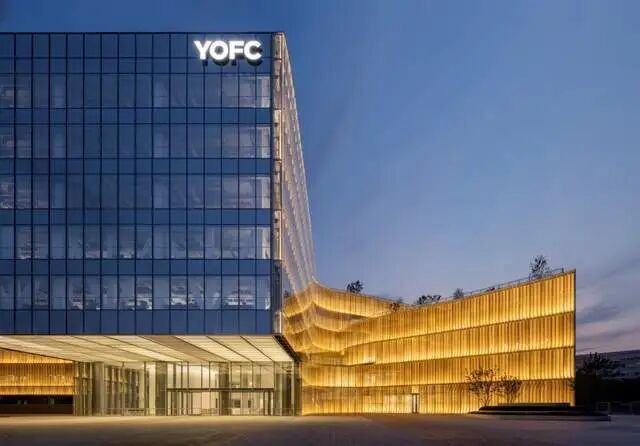
YOFC is the purest optical fiber manufacturer, with its business almost entirely focused on optical fibers and preforms, no other diversified cross-segment products.
During the past two years of cutthroat industry competition, optical fiber prices dropped to rock bottom. YOFC's gross profit margin never exceeded 30% before 2025, but broke through 30% for the first time in 2025.
In 2026, global AI computing demand exploded, driving the prices of preforms and high-end computing-grade optical fibers to multiply, pushing the company's gross profit margin up to 41.5%.
High-end G.654.E ultra-low-loss optical fibers and hollow-core optical fibers are being supplied in bulk to North American cloud providers. According to media reports, the order books of leading optical fiber enterprises including YOFC, Hengtong, and Zhongtian Technology have been filled through Q1 2027, completely shifting the industry from overcapacity to supply shortage.
Hengtong Optic-Electric: Half-Year Profit Has Surpassed Full-Year 2025 Earnings
The largest and most time-honored member of the three "giants" is Hengtong Optic-Electric, a long-established domestic optical fiber preform manufacturer that went public a full 10 years earlier than YOFC.
Hengtong Optic-Electric took the lead in releasing its forecast on July 13, with equally explosive performance: its 2026 H1 attributable net profit ranges from 3.016 billion to 3.568 billion yuan, jumping 86.94% to 121.20% year-on-year. In 2025, Hengtong's full-year attributable net profit was only 2.68 billion yuan.
Even taking the minimum H1 value of 3.016 billion yuan, it still steadily exceeds the total profit earned in the whole of last year. Calculated based on the median forecast of 3.29 billion yuan, it is 600 million yuan higher than the full-year 2025 profit, setting the highest net profit record in the company's history in just half a year.
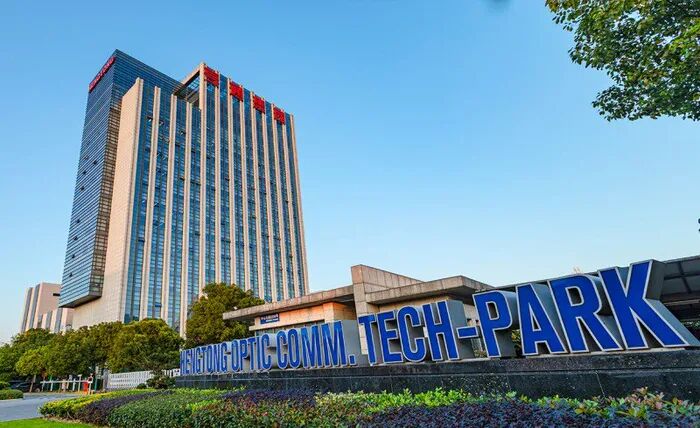
Although Hengtong Optic-Electric is the domestic optical cable R&D and manufacturing enterprise with the strongest technical strength and earliest market entry, it follows the dual-drive development path of optical communications + submarine cable power transmission, rather than relying solely on optical fibers like YOFC.
In recent years, the revenue proportion of Hengtong's optical preform products has become very low: in 2025, the company's optical communications segment revenue was only 5.6 billion yuan, accounting for just 8.30% of total revenue.
In previous years, fierce competition in the optical preform market kept prices depressed, so Hengtong has been expanding into fields such as new energy power equipment and submarine cables.
No one expected that optical preforms would suddenly become a highly sought-after product starting from the second half of last year, bringing much-needed relief to the business.
Specifically, its Q1 net profit was 1.105 billion yuan, while Q2 profit reached 1.911 to 2.463 billion yuan, growing 72% to 122% sequentially, with clearly accelerated earnings growth in Q2.
Zhongtian Technology: Half-Year Net Profit Is Close to Full-Year 2025 Earnings
The last to announce, Zhongtian Technology released its forecast simultaneously on July 14, projecting its H1 attributable net profit to reach 2.352 to 2.508 billion yuan, a 50% to 60% year-on-year increase.
Compared to its full-year 2025 net profit of 2.902 billion yuan, its H1 2026 profit is only about 500 million yuan short of the full-year figure for last year, similar to Hengtong, with half-year earnings nearly matching the full-year profit of last year.
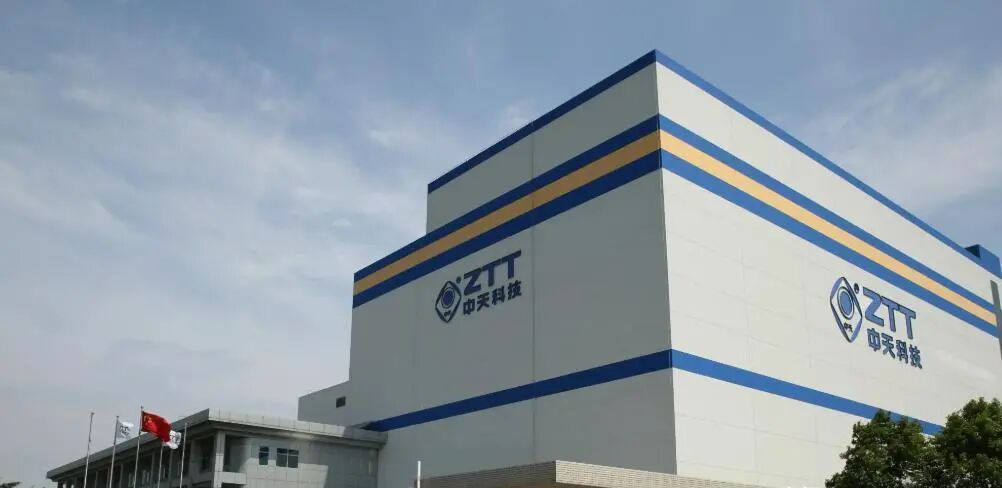
Zhongtian Technology's main business structure is somewhat similar to Hengtong's, with even more diversified operations.
The company's core businesses cover four major segments: optical fiber communications, ultra-high voltage power grids, offshore wind power submarine cables, and photovoltaic energy storage. Among these, power and new energy cables account for a very high proportion of total revenue, while the optical communications segment ranks only third.
Why Did Optical Preform Demand Suddenly Explode?
Many retail investors are confused: how did optical fiber factories that once suffered annual losses and brutal competition suddenly turn into "money printers" this year? Let's break down why optical preform demand has surged so rapidly in recent times.
Traditional ordinary data centers have limited optical fiber consumption, but for 10,000-GPU scale AI intelligent computing clusters, every GPU and every switch requires optical fiber interconnection, leading to 5-10 times higher optical fiber usage per cabinet than old data centers.
Meta, Amazon, and NVIDIA are aggressively expanding global computing centers, bringing a continuous stream of overseas orders. High-end ultra-low-loss optical fibers and hollow-core optical fibers command extremely high premiums, directly doubling profit margins.
Optical fiber preforms are the core of the entire industry chain, with 70% of total profits concentrated in the preform segment.
Data shows that in early 2025, the unit price of high-end preforms was only around 20 yuan, but it skyrocketed to 160 yuan in 2026, a growth rate close to 550%. The surge in raw material prices has driven across-the-board price increases for optical fibers, greatly improving manufacturers' gross profit margins.

In previous years, the brutal optical fiber price wars left many manufacturers suffering consecutive annual losses, forcing them to drastically cut capital expenditure. Now with AI demand suddenly exploding, existing production capacity is completely insufficient to meet market needs, so the three leading giants that hold preform production capacity naturally reap the biggest benefits first.
The once-overlooked traditional optical fiber industry has entered an epic prosperity cycle driven by AI computing. However, whether this high industry boom can be sustained in the long term requires continuous tracking of preform supply levels and the pace of global computing infrastructure construction.
This article is from the WeChat Official Account "Deep Water Finance", authored by Wu Hai, published under authorization from 36Kr.