From a net worth of 200 million yuan to selling his house to pay off debts, at which step did boxing champion Zou Shiming lose everything?
The full story of Zou Shiming's "200 million yuan wealth management loss" has become a hot topic in the sports industry recently.
This boxing champion, who won the first Olympic gold medal in Chinese boxing history with his fists, has been 18 years away from his glorious moment of rising to fame at the Workers' Stadium.
Today, he is the husband of Ran Yingying, a former CCTV bilingual anchor, the father of three children, and a 45-year-old middle-aged man mired in debt.
In the hit variety show Sisters in Charge 2, Ran Yingying, who has always been outspoken, publicly disclosed their family's financial crisis and current marital status for the first time. In the show, the two barely interact harmoniously even when eating at home, appearing to be together in name only. However, Ran Yingying said that growing up in a single-parent family, she will not get divorced for the sake of their children, and she also hopes Zou Shiming can pull himself together in the face of adversity.
Startup Loss + Management Dispute: Two Defeats After the Boxing Champion Retired
Zou Shiming is a landmark athlete in Chinese boxing. At the 2008 Beijing Olympics, he won China's first Olympic gold medal in boxing; he successfully defended his title at the 2012 London Olympics, then moved to the professional boxing arena and claimed the WBO Flyweight World Championship belt, completely rewriting the history of Chinese professional boxing.
Bonuses from Olympic competitions and commercial events, endorsement deals, and variety show collaborations left him with a net worth of about 200 million yuan when he officially retired in 2017, making him one of the top domestic sports stars in terms of commercial value at that time.
His wife Ran Yingying, who holds a finance major and has access to media resources, has long been in charge of the family's finances and business arrangements. The couple was once seen by the public as a model couple and a prime example of sports figures venturing into entrepreneurship across different fields.
After retiring, Zou Shiming owned properties in multiple locations. He and Ran Yingying purchased luxury residences for investment and living purposes in the United States, Shanghai, Beijing, and Guiyang.
At the peak of his success, Zou Shiming decided to develop a local high-end boxing industry. He built the 18,000-square-meter ZBOXING high-end boxing complex along the Huangpu River in Shanghai, which came with high rent and luxurious decorations, with an annual rent reaching 50 million yuan. The venue focused on premium-priced annual memberships and private training courses. In addition, they expanded into sectors such as catering and esports. However, due to their niche market positioning, insufficient operational experience, and the impact of the COVID-19 pandemic, most of their projects were shut down in 2022, with accumulated losses exceeding 200 million yuan over seven years.
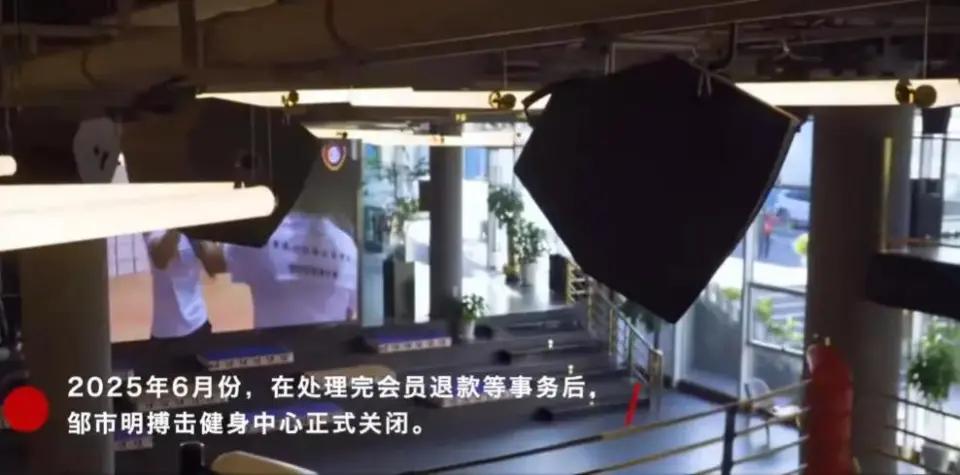
Apart from his failed business ventures, a long-standing management contract dispute from Zou Shiming's early years also came to light. Data from the Qichacha app shows that Zou Shiming has been involved in multiple legal disputes:
In 2018, Zou Shiming was sued by his then management company, stemming from the "Exclusive Agency Contract" signed by both parties in 2012. The contract stipulated that Superking would act as Zou Shiming's exclusive and full-service global agency for all his sports and related activities, with a validity period of 3+3 years. The initial cooperation expired on December 31, 2015, and unless Superking voluntarily waived its right of first renewal, the contract would be automatically extended for another three years until December 31, 2018. The company would charge a 15% agency service fee and 5% management cost based on Zou Shiming's after-tax income respectively.
So why did Superking Sports take Zou Shiming to court? According to the company, while they secured numerous competition and collaboration opportunities for Zou Shiming, he repeatedly breached the contract starting from 2015. He unilaterally arranged for, participated in, and promoted his boxing title defense match, took part in variety shows and advertising endorsements, and reached agreements or established partnerships with third parties, causing huge financial and reputational losses to the company. They demanded Zou Shiming compensate 16 million yuan in economic losses.
Eventually, after court hearings, considering Zou Shiming's contributions to the country, the court ruled that he should pay 4 million yuan in compensation for the breach of contract to the management company as a discretionary judgment.
Behind the Failures: Why Did the Heavy-Asset Model Collapse?
The core root cause lies first in the mismatch of the heavy-asset model and blind cross-sector expansion.
The "No.1 Sports Center" Zou Shiming opened in 2018 was a high-end boxing gym, spanning 18,000 square meters with an annual rent of 50 million yuan, equivalent to 140,000 yuan per day. During the renovation, they imported treadmills priced at 200,000 yuan each and installed a 3 million yuan chandelier, which Zou Shiming named "Fiery Golden Eyes".
The annual membership fee for ordinary boxing gyms in Shanghai ranges from 3,000 to 6,000 yuan, while Zou Shiming's pricing was about five times the market average. Boxing is a niche sport, and such sky-high pricing was far beyond the affordability of ordinary consumers, leading to long-term insufficient foot traffic and continuous financial losses. Coupled with the three-year COVID-19 pandemic, which forced the gym to close offline and face pressure to refund membership fees, the collapse of cash flow was hardly unexpected.
To fill the funding gap, the couple further invested in high-risk wealth management products and speculated in virtual assets, which eventually collapsed and exacerbated their debt crisis. At the same time, they scattered more than 20 companies across unfamiliar sectors such as catering and esports, lacking professional operation teams and risk control systems, which continuously eroded their original savings and the value of Zou Shiming's Olympic champion IP. This is no different from the unsatisfactory outcomes many entertainment stars face when venturing into the catering industry.
Secondly, there are shortcomings in the transformation of athlete IP. Zou Shiming had top-tier competitive prestige, but he lacked mature business management capabilities and long-term IP operation planning. Ran Yingying has stated on many occasions that she was determined to strive for progress and make their business bigger and stronger. The boxing gym, hot pot restaurants, and more than 20 affiliated companies were their industries during their heyday.
However, the value of sports IP is highly tied to competitive performance. After leaving their core sports field, their public prestige gradually faded, compounded by governance flaws in their family-run business model, which turned losses into heavy family debt. Zou Shiming himself said that the biggest reason for his failure was making decisions based on personal feelings, without doing any market research at all. A boxing champion, when stepping into the business world, handed over all decision-making power to his wife.
In addition, their marriage and family life came under immense pressure. Their once-glamorous life was gone, so they started selling their properties: first the one in Beijing, then the one in Shanghai, their hometown house in Zunyi, and even their vacation home in the United States was put up for sale. The 72 Hermès bags Ran Yingying once showed off could only be sold in second-hand markets. Ran Yingying tried to pay off debts through live-streaming sales, but the harsh reality made conflicts keep accumulating, and the image of the once-model couple was shattered by the overwhelming pressure of real debt.
Reflections: Lessons for the Transformation of Sports Star IP
Zou Shiming's experience is a typical epitome of the transformation dilemmas faced by retired sports star IPs.
The prestige of being an Olympic champion does not equate to permanent commercial value. When sports stars venture into cross-sector entrepreneurship, they must avoid blind expansion, heavy-asset gambles, and speculative wealth management. The foundation of sports IP value lies in clear positioning, risk control, and sustainable operation, rather than over-drafting short-term fame.
Many athletes have a very short wealth accumulation cycle, with their peak income concentrated in their prime competitive years. Without long-term stable cash flow guarantees, they easily fall into the pattern of "making quick money, spending recklessly, and investing blindly". Countless sports and entertainment stars, as well as people who benefited from the dividends of the times, have had the same misconception: when money comes too easily, they believe they can do anything.
In fact, operating sports IP requires in-depth cultivation of core sectors, establishment of professional management teams, and improvement of long-term IP development plans, rather than randomly venturing into completely unfamiliar industries. Zou Shiming's core value lies in boxing culture, sports spirit, and inspirational stories, not in high-end property operation or catering management. Athlete IP can be steadily developed around vertical sectors such as training, competitions, boxing cultural merchandise, and youth boxing education, extending the IP life cycle and building a sustainable business model, instead of blindly pursuing high-end positioning and heavy-asset operations. In other words, the money Zou Shiming earned through his natural talent exceeded his business management capabilities, and eventually the money went back to where it belonged.
In addition, athlete transformation also requires continuous learning of business management knowledge, establishing a modern corporate governance structure, breaking away from the family-run business model, introducing professional managers and a board of directors mechanism, and realizing the appropriate separation of ownership and management rights to avoid overly emotional decision-making. At the same time, they should also pay attention to public image management, reduce the practice of over-exposing personal family life to chase traffic, and return to shaping positive sports spirit values.
A sports legend can win in the boxing ring, but not necessarily in the business battlefield. The story of the fallen boxing champion serves as a wake-up call for all retired athletes: competitive careers are short-lived. Rational asset planning, in-depth cultivation of core sectors, and establishment of a sound risk control and management system are the paths to long-term success.
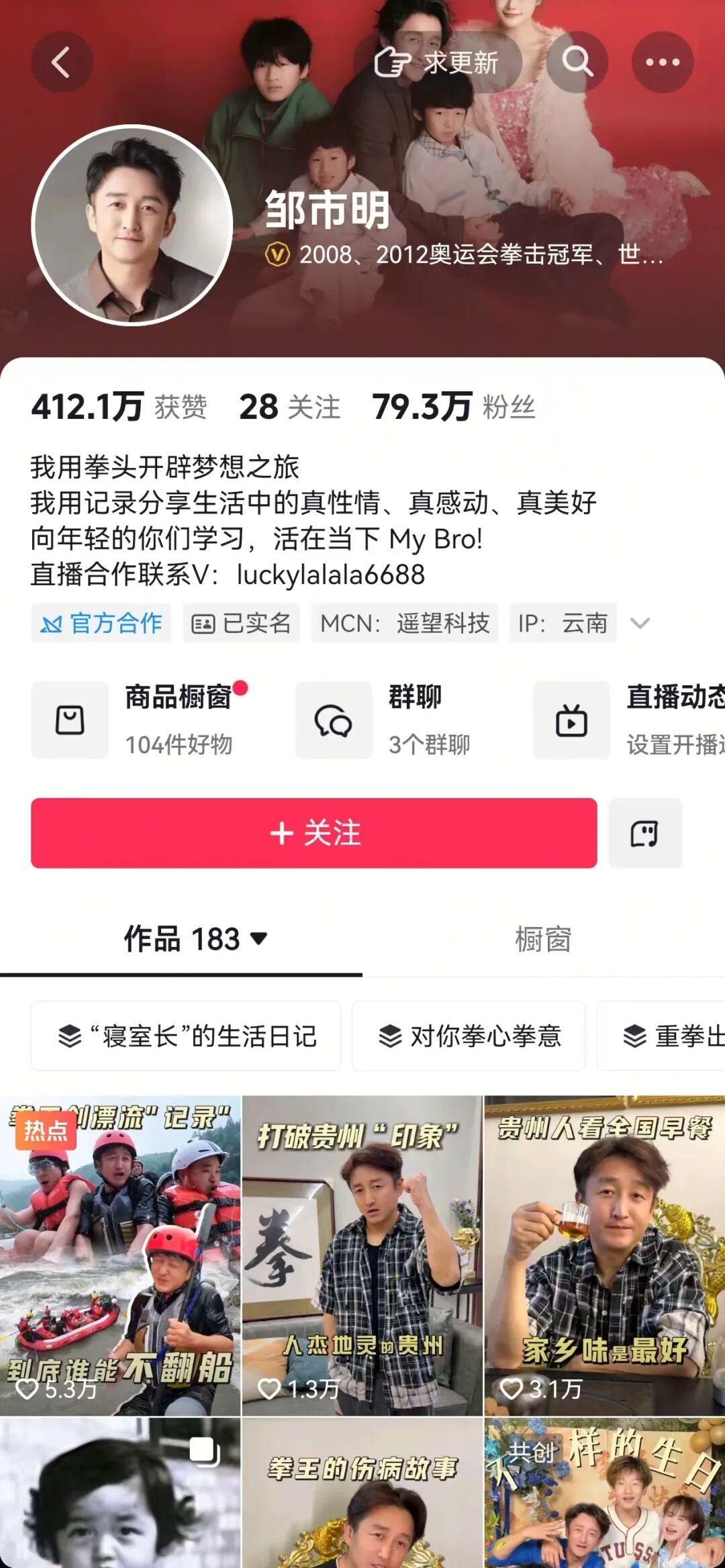
Zou Shiming and his wife are still working hard to pay off their debts and save themselves. They have signed with an MCN agency to engage in live-streaming sales on the internet, and their arduous transformation has shown the public the real and harsh business reality behind the glamorous facade of sports IP.
This article is from the WeChat public account "Sports Industry Economic Observer", written by Wu Yan, and published with authorization from 36Kr.