Cameras are getting cheaper, yet photography has become a new business for smart hardware.
A recent marketing campaign by a food company has shocked the hardware industry.
Snack food brand Weilong launched a gift-with-purchase promotion: customers who spend 100 yuan on spicy gluten snacks can receive gifts such as drones and CCD cameras.
A company selling spicy gluten has started putting imaging devices into its marketing prize pool. This seems somewhat absurd, yet it has accidentally exposed the underlying cost structure of camera hardware. Drones and digital cameras, which once carried a strong high-tech vibe, can now appear in fast-moving consumer goods promotions as free gifts to grab young consumers' attention.
The retail price of promotional gifts cannot directly represent their actual cost. Low-spec customization, bulk procurement, clearance of leftover stock, and limited-edition lucky draws can all drastically cut campaign expenses. However, the underlying industry trend revealed is easy to spot: a complete set of systems including lenses, sensors, main control chips, and storage that can handle basic photography is becoming increasingly affordable.
Interestingly, while the hardware value of cameras keeps declining, startups focusing on photography-centered smart hardware have noticeably multiplied.
In July 2026, Insta360 announced a new long-term product vision — building the Cameraman photography robot. According to Insta360's vision, such devices will automatically handle framing, snapshot capture, and final image production for users, without being limited to a single robot form factor. Panoramic cameras, gimbals, drones, and future mobile robots that may emerge can all become part of this vision.
On the other side, Miaodong Technology, founded by Yang Shuo — a former member of DJI and Tesla Optimus teams — launched the mobile photography robot Beni. Adopting a wheeled-legged design, it can autonomously follow, jump, overcome obstacles, and shoot from multiple angles, positioned as "the world's portable all-terrain autonomous photography robot." Within 12 hours of launching on Kickstarter, Beni's crowdfunding amount exceeded $1 million. For a photography robot still in the exploratory stage of a new product category, this figure at least proves that consumers are willing to pay for hardware that can move autonomously, continuously follow them, and complete shooting on their behalf.
Similar changes are happening across more product categories. Many quadruped robots can be equipped with gimbals, camera poles, and professional cameras on their backs to handle event live streaming, outdoor follow-shot, patrol shooting, and short video production; drones are continuously enhancing subject tracking and automatic camera movement; AI glasses and chest-worn accessories prioritize first-person perspective recording; thumb cameras and magnetic-attached cameras strive to reduce operational friction during shooting.
These products belong to different tracks such as cameras, robots, drones, and wearable devices, yet together they present an increasingly clear direction: Photography is becoming an independent smart hardware business.
Cameras Are No Longer Scarce, But High-Quality Shooting Remains a Rarity
Over the past two decades, the core mission of the consumer imaging industry has been to deliver a better camera to users. Manufacturers chased higher resolution, larger sensors, stronger image stabilization, longer focal lengths, and better low-light performance. Cameras moved from professional equipment into smartphones, then spread further to vehicles, glasses, door locks, home robots, and various IoT terminals.
Today, capturing a clear photo is no longer a challenge. What has not been fully addressed is the shooting process itself.
Users need to decide when to start recording, find shooting positions, adjust angles, maintain framing, and sift through massive amounts of footage after shooting. While image quality capabilities have improved rapidly, the labor involved in shooting has not disappeared accordingly.
Smartphones have put a camera in everyone's hands, making everyone a photographer. During travels, someone always has to stay behind the lens; when parents document their children's growth, they often end up missing out on being in the frame; in activities like cycling, skiing, running, and ball games, users can hardly perform the action while capturing it; wonderful moments of pets and children often happen before users can lift their phones.
The supply of camera hardware has become excessive, but proper shooting positions, timely judgment, and complete recording are still scarce.
This gap is now being filled by various hardware devices. Drones provide aerial shooting positions, quadruped robots deliver mobile ground shooting positions, AI glasses record first-person perspectives, chest-worn accessories reduce the frequency of pulling out phones, panoramic cameras allow users to shoot first and frame later, and mobile photography robots attempt to actively find optimal angles in space.
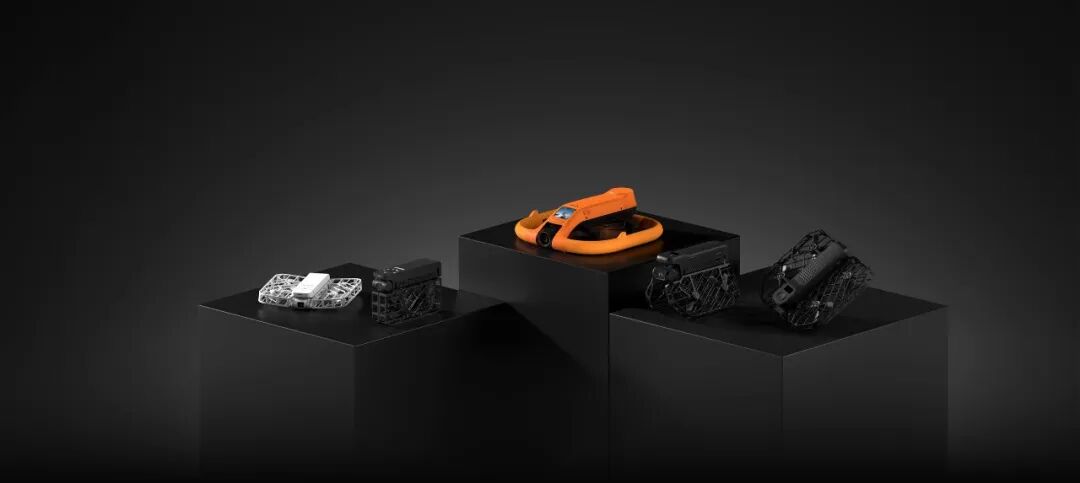
HoverAir, a brand under Zero Zero Technology invested by Anker, focuses on a series of pocket-sized "flying cameras" with no operational barriers and no remote control required. With its convenient "power on and shoot" interaction, it brings users a hands-free flying follow-shot experience. Leveraging its shooting capabilities across various sports scenarios, the brand's total revenue reached approximately 1 billion RMB in 2025, confirming the authenticity of such market demands.
In short, different products take different paths, all sharing the common goal of gradually freeing photographers from the shooting process.
Photography Is Becoming the Common Denominator of Smart Hardware
Smart hardware startups have long faced a fundamental question: What exactly does the device do for the user?
Household chores require complex mechanical operations, health management involves sensing precision, medical interpretation, and regulatory barriers, emotional companionship is hard to measure with stable value, and pure AI chat functions are easily replaced by smartphones. Photography occupies a very unique position.
It has relatively limited requirements for mechanical operation capabilities, yet can simultaneously leverage multiple technologies including perception, positioning, motion control, environment understanding, subject recognition, content generation, and human-computer interaction. The final photos and videos are clearly visible, making product value easily perceived by users.
For robots, photography can even become a task that matures earlier than household chores. A home robot needs to handle tasks like tidying desktops, folding clothes, and washing dishes, which requires solving dexterous manipulation, object generalization, safe interaction, and extremely high reliability. A photography robot, however, mainly controls its own position and lens orientation — it only needs to follow stably, avoid obstacles, maintain proper distance, and select angles to deliver a relatively complete result.

The addition of camera poles to quadruped robots can also be understood through this logic. Their legs not only drive the robot's movement, but also form a photography chassis that can traverse grass, stone steps, and complex terrain. The flight control of drones, the stabilization of gimbal cameras, the navigation of wheeled robots, and the lightweight design of wearable devices can all be converted into capabilities to obtain ideal shooting positions.
In the past, various smart hardware devices treated cameras as sensors for perceiving the environment. Robots relied on them to avoid obstacles, glasses used them to identify objects, and vehicles depended on them to understand road conditions. Today, more and more products are turning cameras toward users. Beyond serving the device's own decision-making, their visual capabilities have started to directly produce content that humans need.
Cameras used to be the "eyes" of smart hardware, and now they are becoming the working output of smart hardware.
Moving From "Able to Capture" to "Knowing What to Capture"
The fact that basic camera modules are getting cheaper does not mean the photography business has lost its value. As hardware prices drop, value will continue to shift to higher layers.
The first layer of value is shooting position. Photography is fundamentally a spatial task. For the same subject and the same action, changes in lens distance, movement direction, tilt angle, and background relationship can lead to completely different final results. Traditional cameras' shooting positions are determined by humans, while new-generation smart photography devices need to track subjects on their own, judge paths, avoid obstructions, maintain framing, and capture stable footage during movement. Drones, quadruped robots, and wheeled photography robots are all competing for this capability. In the future, motion control capabilities will very likely directly translate into photography performance.
The second layer of value is judgment. Automatic tracking does not equal automatic photography. A device can always keep a person centered in the frame, but it may not know which moment is worth preserving. Truly smart photography needs to recognize relationships between people, understand the sequence of actions, perceive expressions and emotions, and identify the climax of events. Moments like a child standing up for the first time, a pet suddenly jumping into arms, a player scoring a goal, or friends raising glasses at a gathering cannot be captured through simple face tracking.
The camera industry used to emphasize shutter speed, but in the era of smart photography, the more critical capability may be the ability to decide when to press the shutter.
The third layer of value is content processing. What users lack is no longer raw footage. Smartphone photo albums are filled with thousands of photos and videos, and action cameras, drones, and wearable devices will only further expand the volume of footage. Automatic photo selection, editing, background music addition, subtitle generation, subject categorization, and event summarization determine whether the shooting results can actually be viewed and shared.
The complete chain of smart photography has thus emerged: cameras are responsible for seeing, hardware carriers are responsible for reaching the right position, AI is responsible for understanding, and software is responsible for turning raw footage into finished works. Cloud storage, automatic editing, family photo management, event live streaming, creator tools, and subscription services may also become sustainable revenue sources.
First-Person and Third-Person: Two Development Paths Growing in Parallel
The currently emerging smart photography hardware can roughly be divided into two paths.
One path is to bring cameras close to the body. AI glasses, chest-worn accessories, magnetic-attached cameras, and miniature action cameras are all reducing the intrusiveness of the recording action itself. Users do not need to deliberately take out a device or continuously adjust the lens, allowing life to be recorded continuously from a first-person perspective.
The end point of this path may extend to personal memory. When devices accompany users for long periods, photos and videos will gradually be converted into searchable life archives. Users can inquire about where they have been, who they met, and where a certain item was last seen, and the system can also automatically organize important moments of a day, a week, or a year. Here, photography converges with AI memory.
The other path is to move cameras away from the human body. Drones, quadruped robots, wheeled robots, and automatic gimbals place the lens outside the user to provide third-person perspectives. They not only record the world seen by the user, but also make the user themselves part of the frame.
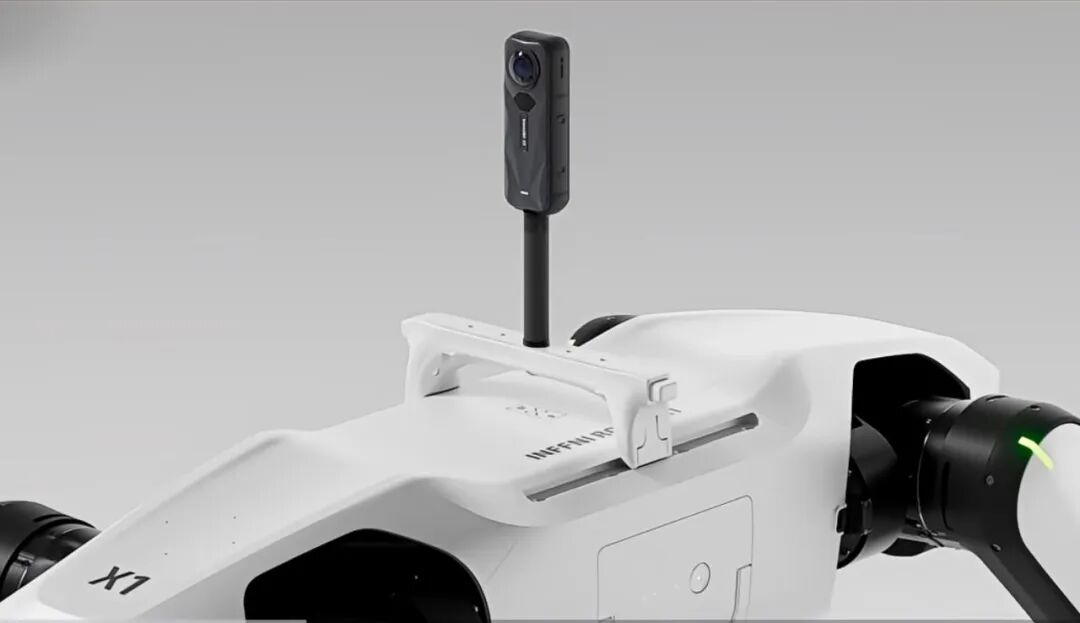
The capabilities offered by such products are very similar to a photographer who is always by your side. They will not miss the event because they are holding a phone, nor do they require another friend to step out of the gathering. They can follow runners as they move, keep a proper distance while children play, and continuously find optimal angles during camping, cycling, and travels.
First-person devices are responsible for preserving "what I saw," while third-person devices are responsible for preserving "what I looked like at that moment." The two paths correspond to different needs and may gradually integrate in the future.
This Business Still Needs to Overcome the "Abandoned in Drawer" Trap
While photography has clear user value, consumer imaging hardware has long faced an unavoidable problem: many products are purchased based on imagined scenarios that far exceed their actual usage frequency.
When users buy a drone, they imagine they will travel frequently; when they buy an action camera, they imagine they will keep exercising and creating content; when they buy a panoramic camera, they hope to capture a large number of unique shots. After the novelty wears off, the device easily ends up staying in a drawer for a long time. Photography robots and AI wearable cameras are also facing this test.
Beni's $1 million crowdfunding breakthrough in 12 hours proves that this form factor has strong appeal as a new product category. The more critical verification that follows lies in whether the purchasing impulse can be converted into long-term usage: what users end up buying — is it just a photography-capable robot toy, or a personal photographer that can repeatedly appear in their travels, sports activities, and family life?
Products need to be light enough, quiet enough, safe enough, and minimize operational requirements as much as possible. After shooting, content must be quickly synced to smartphones and automatically generate shareable results. Any complicated connection, control, export, or editing process will undermine the value of "automatic photography."
Privacy is also an unavoidable boundary. Chest-worn cameras and AI glasses may continuously record people around, mobile photography robots actively turn and follow subjects, and home scenarios involve children, conversations, indoor layouts, and living habits. The more capable a device is at recording, the more sensitive the information it collects.
Future smart photography products need to provide clear recording indicators at the hardware level, and offer local processing, permission control, and data deletion mechanisms at the software level. Social acceptance will very likely be as important as image quality, battery life, and AI capabilities.
There is also a more challenging question: can machines develop aesthetic judgment? Stable tracking, automatic framing, and subject centering can all be achieved through algorithms, but great photos often come from capturing relationships, emotions, and accidental moments. Photography involves rules, as well as experience and personal expression. Whether smart hardware can evolve from mechanical recording to genuine photography will determine the ultimate premium this track can achieve.
When Cameras Gain a "Body", Smart Hardware Finds a New Breakthrough Point
From the CCD cameras and drones in Weilong's promotion, to Insta360's proposed Cameraman, to Miaodong Technology's Beni, camera poles mounted on quadruped robots, chest-worn AI cameras, and AI glasses worn on the face, photography is breaking through the traditional boundaries of cameras and integrating into more smart hardware form factors.
The industry logic behind this wave of changes is not complicated. Camera modules have achieved large-scale popularization, AI has gained the ability to understand images and generate content, robots and drones can move autonomously in space, and short video platforms provide massive distribution channels for imaging content. When multiple technology and market curves intersect at the same time, photography gets a new opportunity to become a core product category again.
The camera industry used to solve the problem of "how to capture the world more clearly". The next challenge for smart photography hardware is to address "who shoots for the user, where to shoot, when to shoot, and how to process the footage after shooting". Competitors in this business are no longer limited to traditional camera manufacturers.
Drone companies have motion control and flight technology, robot companies have mobility and environment perception capabilities, wearable device manufacturers are close to users' bodies, AI companies excel at content understanding and organization, and imaging enterprises master imaging, stabilization, and creator ecosystems. Companies from all fields will enter the photography business based on their core competencies, and eventually converge in the same market.
Cameras themselves will continue to become cheaper. However, devices that can automatically find shooting positions, understand daily life, and preserve important moments will likely become increasingly valuable.
Smart hardware has been searching for a "killer application" for many years. At a stage where mechanical operations are not yet fully mature and general-purpose robots still require long-term development, photography provides a practical breakthrough: machines do not need to learn to change the world first; they can start by learning to understand the world, follow humans, and preserve memories for them.
Photography is therefore no longer just an auxiliary function of smart hardware. It is becoming the first form of intelligence that smart hardware can reliably deliver.
This article is from the WeChat Official Account "AI Wuzao", author: Peng Kunfang, editor: Lü Xinyi, published with authorization from 36Kr.